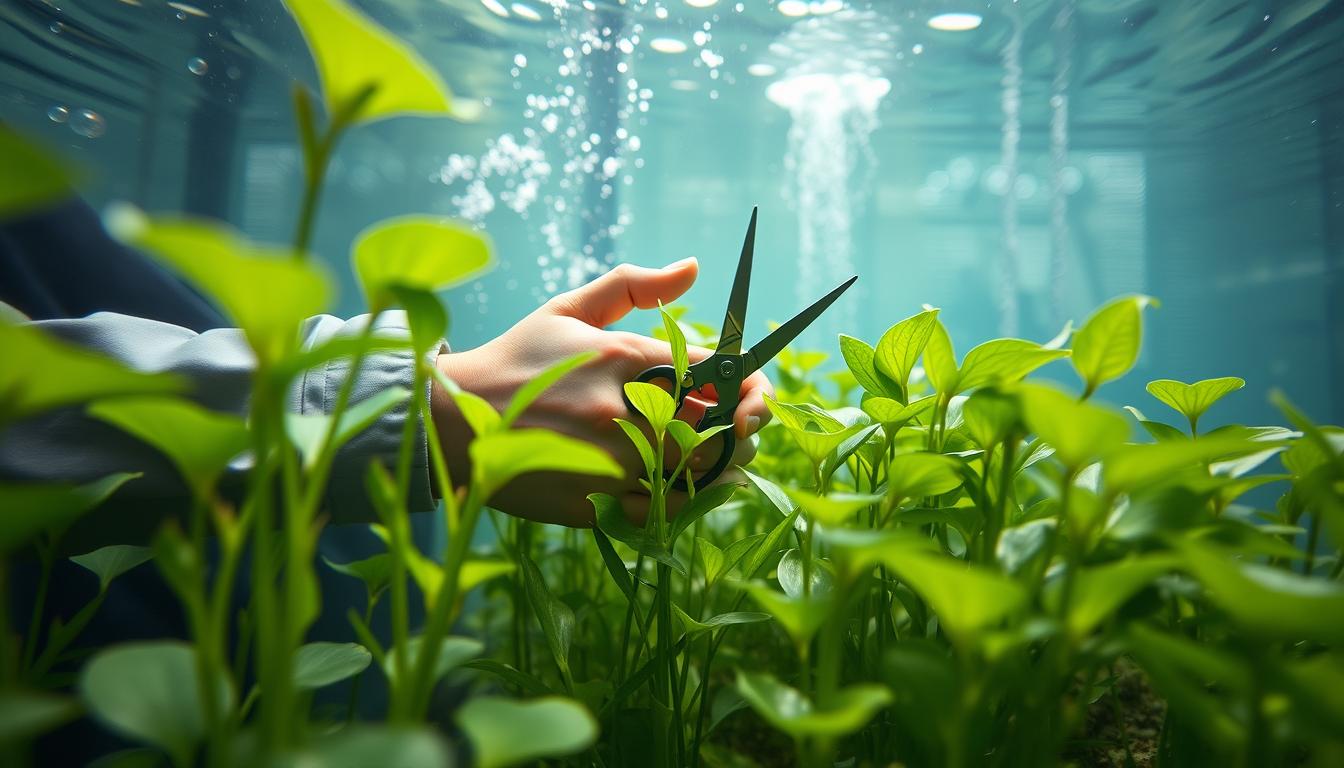
Pruning stem plants is about directing energy where you want it. Simple pruning and pinching techniques help. They make stems denser and bushier, just like in terrestrial gardening.
Removing the top 3–5 inches or cutting just above a leaf node removes the terminal bud. This bud suppresses lateral growth. It usually stimulates two or more new shoots beneath the wound, leading to more stems and foliage.
Always prune with purpose. Decide if you want to improve density, remove damaged tissue, control height, or boost vigor before you trim. Random cuts can stress plants, slow growth, or create gaps in the layout. Good planning reduces mistakes and keeps your aquascape healthy.
Timing matters. Early-season or active-growth periods are usually best for encouraging branching. More aggressive cuts can cause a brief delay in flowering or vertical growth, but they often lead to stronger, fuller plants later. These timing basics will be covered in more detail in the section on when to prune your aquatic plants.
Beyond appearance, denser stem plants enhance aquarium function. Thicker growth improves visual appeal, offers better habitat for fish and invertebrates, and can help even out light and water flow. Use these aquatic gardening tips and trimming aquatic plants techniques to lift both form and function in your tank.
The Importance of Trimming Aquatic Plants
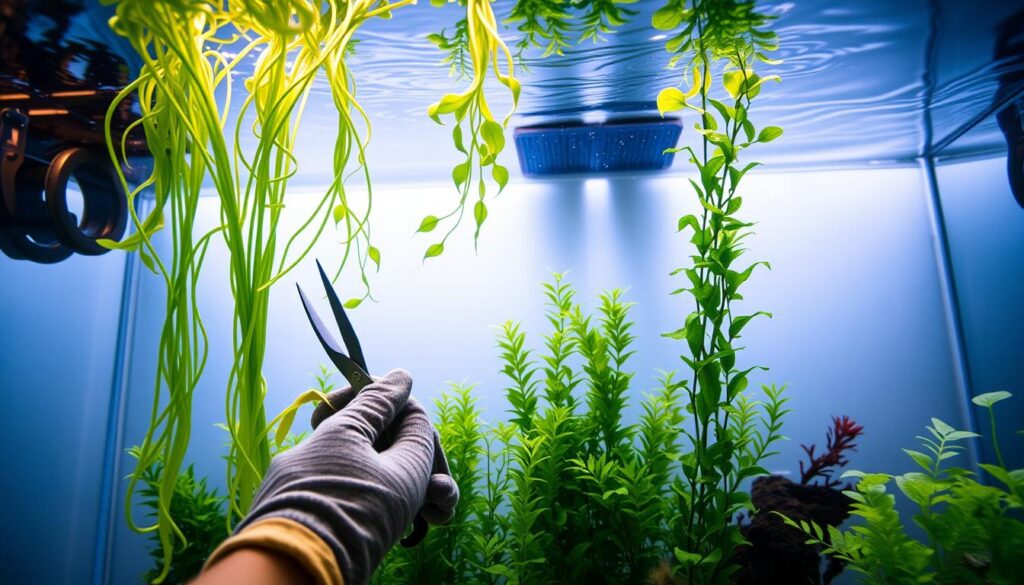
Trimming aquatic plants helps them grow better. It moves energy from old tips to new shoots. This makes the plants stronger and more vibrant.
Keeping plants trimmed keeps them bushy. This gives fish more places to hide and improves water flow. It also lets more light reach the leaves, reducing algae.
Healthy plants mean clean water. Pruning out dead parts stops decay and disease. It keeps pests away too. A good plan for trimming helps you care for your plants without harming them.
Trim plants regularly but not too much. Light cuts encourage growth, while heavy cuts rejuvenate. Always have a reason for pruning to avoid weakening your plants.
- Biological benefit: energy moves from removed tips to healthy shoots.
- Habitat gain: fuller stems provide shelter and better circulation.
- Visual outcome: maintained shapes prevent spindly, sparse growth.
- Management tip: plan cuts and follow underwater plant maintenance schedules.
When to Prune Your Aquatic Plants
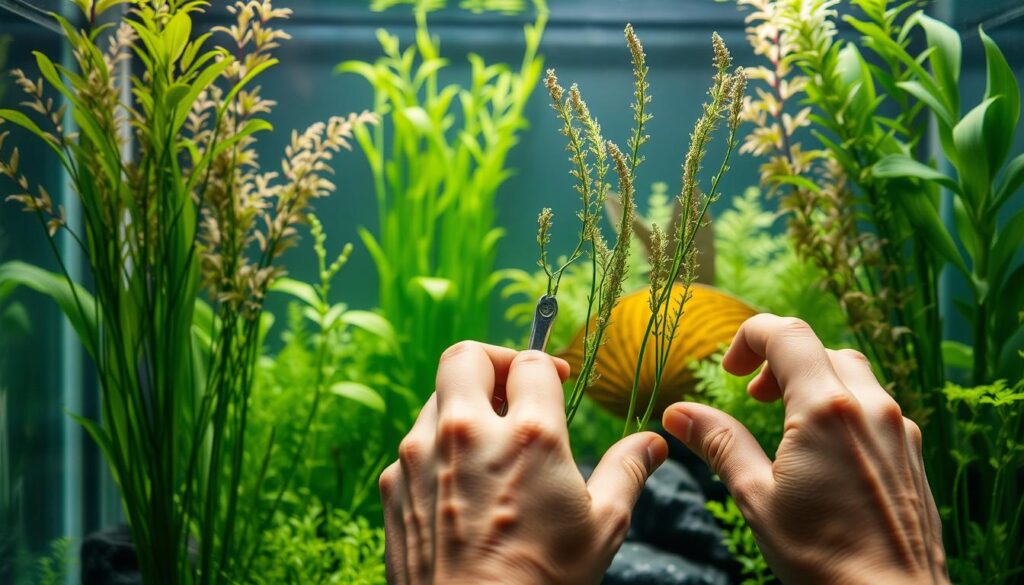
Prune your plants when they are actively growing. Spring and early growth phases are best. This lets them recover quickly and grow fuller.
Don’t prune right before stressful events. Avoid pruning before moving plants, changing water chemistry, or big lighting changes. These times can cause infections and slow healing.
Use two pruning methods: light trims and occasional big cuts. Light pinching every few weeks helps plants grow denser. For major thinning, cut up to one-third of top growth. Cut woody stems back by no more than one-third to avoid shock.
Prune based on your plants’ life cycles. Some plants set flower buds at certain times. If you want blooms, don’t remove these buds. For more vegetative growth, prune before they flower.
After big pruning, expect a recovery time. Growth or flowering might slow down. But, this pause often leads to stronger growth later. Keep plants in stable conditions with steady light, CO2, and nutrients.
Here’s a quick guide for pruning your aquatic plants:
- Time base: prune in active growth phases for fastest recovery.
- Stress check: avoid pruning before transport or big water changes.
- Trim strategy: use light pinches regularly; reserve heavy cuts for overcrowding.
- Species note: preserve flower buds if you want blooms; cut earlier for vegetative growth.
- Recovery plan: maintain stable conditions after pruning to encourage branching.
Learning to prune your aquatic plants improves their health and your aquarium’s look. With the right timing, you’ll see better growth and fewer problems.
Tools You’ll Need for Trimming
Begin with essential hand tools. Sharp scissors and pruning shears are key for precise cuts. For stem plants, use long-bladed scissors and curved micro-scissors to avoid damage.
For small growth, pinch stems with your fingers. This is good for light shaping. But for more, use scissors or pruners to prevent strain.
For bigger cuts, loppers or saws are best. But be careful not to force thick cuts underwater. Remove big pieces outside the tank to protect roots and fish.
Sanitation is critical. Clean and sharpen blades after each use to prevent disease. Dull tools can harm plants, so keep them sharp.
Have a basic kit for regular care. Include spare blades, a brush, and a container for clippings. This helps keep your plants healthy and your space organized.
If a job seems too hard, think about getting help. Professional services have the right tools and know-how for big jobs or delicate plants.
- Long-bladed aquarium scissors for stem precision
- Curved micro-scissors for close shaping
- Pruning shears for thicker stems
- Loppers or saws for woody material
- Disinfectant, sharpening cloth, and cleaning brush
Always follow the tool’s instructions and keep them dry and sharp. Good care means your plants stay healthy and you can keep them looking great.
Step-by-Step Guide to Pruning Stem Plants
Begin by carefully inspecting your plants. Look for stems that are too long, damaged, or block light. Choose whether to pinch for more branches, thin for less density, or cut for a fresh start. Planning helps make the process quicker and less stressful for your tank.
Pinch small growth when stems are 8–12 inches long or have three to five leaf pairs. Cut off the top growth by three to five inches just above a node or leaf pair. This encourages new shoots and keeps the plant bushy.
Use sharp scissors or aquascaping shears for clean cuts. Cut just above a growth node or lateral bud to promote new shoots. Avoid flush cuts that harm the plant’s recovery and invite decay.
Thin and shape by removing crowded stems to the base or to a main stem. This improves light and water flow. Limit thinning to about one-third of major stems per year for multistem plants unless you plan a full chop.
Remove damaged and dead tissue quickly. Brown, decaying, or diseased stems and leaves can harm water quality and spread problems. Pull trimmings out of the tank and dispose of them outside the aquarium to protect aquatic plant care and tank health.
After cutting, monitor water parameters and expect a brief lag before new growth appears. Consider small water changes to remove excess nutrients released by decaying trimmings. Careful follow-up supports recovery and steady regrowth after trimming aquatic plants.
Different Pruning Techniques for Various Plants
Soft-stemmed plants can be shaped by pinching and topping. Cut the top growth just above a node to encourage side shoots. This method is great for multi-node stems and makes plants bushier with less stress.
For dense stands and multi-stem shrubs, thinning and selective removal help. Remove stems at the base to let in more light and improve flow. When fixing an overgrown area, take out about one-third of major stems each year to avoid shocking the plants.
Chop-back or rejuvenation cuts are good for overgrown beds. Cut stems back to 6–12 inches or near the substrate to get new shoots from lower nodes. In bad cases, a more aggressive chop might be needed, but expect a recovery time while new growth grows. Use this method carefully when keeping water plants healthy.
Some plants don’t do well with pinching. Single-stemmed types and those grown for flowers or seed need different care. Don’t pinch if you want seed or blooms, and pick pruning methods that fit the plant’s growth habit.
- Treat delicate carpeting plants with frequent, small trims to keep a tidy carpet without stressing roots.
- For woody or thick-stemmed aquarium species, use staged reductions instead of one big cut to prevent dieback.
- Adjust timing and intensity based on plant type and overall aquatic plant care routine.
Use different pruning techniques for various plants. Thoughtful cuts keep plants strong and improve light penetration. This helps with oxygen levels and nutrient balance. Regular, targeted trimming is key to keeping water plants healthy.
Managing Plant Health Post-Pruning
After pruning, watch your stems for signs of stress like yellowing or softness. Remove any decaying cuttings quickly. This helps prevent infections and keeps your plants healthy.
Keep the nutrients and light levels consistent to help your plants recover. Trimming plants means they need balanced care. Too much fertilizer or light can lead to algae. Stick to good aquatic plant care and adjust dosages based on plant needs.
When thinning plants, remove about one-third each year. This gradual approach helps plants recover better. It also reduces transplant shock.
- Use clean technique: disinfect or rinse scissors between tanks to prevent cross-contamination.
- Make neat cuts at nodes instead of flush cuts to reduce tissue damage and disease entry.
- Avoid over-pruning; leave healthy nodes so plants can send new shoots and stay resilient.
Be on the lookout for fungal spots or slimy growth after pruning. If you find any, remove the affected area. Also, make sure water flow and filtration are stable. These steps are key to keeping your water plants healthy.
Stick to a regular maintenance routine. Good water chemistry and careful care will help your plants recover. This will lead to a fuller, healthier aquascape.
Boosting Buoyancy After Pruning
Pruning stem plants removes leaves that kept stems upright. This change can cause stems to float, lean, or form mats. It’s important to understand this shift for good aquatic plant care.
Replant trimmed stems quickly to stop them from drifting. Place cuttings at a slight angle and bury the lowest node. This helps roots grow and keeps stems in place during plant maintenance.
- Use plant weights or fine tweezers to secure loose cuttings until roots develop.
- Choose a stable substrate like ADA Aqua Soil or fine-grain sand to support new root growth.
Trim plants in stages, not all at once. This method keeps the plant bed stable. It reduces the risk of sudden buoyancy shifts that cause floating mats.
Encourage fast root growth by keeping nutrients balanced and CO2 levels consistent. Strong roots mean less need for frequent re-anchoring and easier plant care.
- Provide a slow-release fertilizer near the roots for steady nutrient uptake.
- Maintain gentle water flow to avoid dislodging new plantings while delivering nutrients.
Use simple aquascape techniques to hide or support leaning stems. Place small stones, driftwood, or foreground plants like Hemianthu callitrichoides for support and cover.
Follow these tips regularly. You’ll keep your plant beds neat, reduce floating, and help stems recover fast. Consistent care turns pruning into a chance for a fuller, healthier aquascape.
Dealing with Common Issues After Pruning
After pruning, act quickly to stop algae outbreaks. Trimmings and sudden changes in light or nutrients can cause algae to bloom. Remove cuttings fast, do partial water changes, and keep up with fertilization and CO2 to control algae.
Check cut surfaces for rot or disease. Bad cuts and dirty tools increase infection risk. Make clean cuts above nodes and clean tools between uses. These steps help prevent disease spread in your plants.
Floating trimmings can feed algae if left. Use a fine net or gentle siphon to remove debris. Quick cleanup helps keep water clear and your plants healthy.
After heavy trimming, plants may grow slowly. They often pause to recover. Keep temperature, light, and nutrients stable. Avoid disturbing them too much so they can grow back on their own.
- Remove cuttings right away to lower nutrient spikes.
- Disinfect scissors or aquascaping shears between tasks.
- Run small water changes after large pruning sessions.
- Monitor for discoloration or soft tissue that signals infection.
If problems don’t go away, it’s time to seek help. For tough diseases, big woody pruning, or a general decline, call aquarium experts or an aquatic plant trimming service. They can find the problem and do complex work safely for your system.
Encouraging New Growth
To get new growth in stem plants, cut just above growth nodes. This helps energy go to side buds, leading to more shoots from one cut. Learning to prune this way makes stems thicker and your display denser.
Harvest or pinch plants regularly, like with herbs. Light pinches stop stems from getting too long and encourage bushy growth. Your plant care will improve with short, frequent trims instead of big ones now and then.
Make sure trimmed plants have what they need to grow. Check the light, keep CO2 stable if you inject it, and balance nutrients. Poor light or nutrient balance can slow down growth, even with good pruning.
For plants with many stems, thin them out slowly. Remove about one-third of older stems each year. This opens up the plant and encourages new growth from the base.
Use healthy cuttings to grow more stems. Replant these cuttings to fill in gaps and speed up recovery after pruning. This method is great for expanding your plant coverage without buying new ones.
- Cut above nodes to stimulate lateral buds.
- Pinch lightly and often to keep plants compact.
- Balance light, CO2, and nutrients for fast regrowth.
- Thin old stems gradually to encourage basal shoots.
- Replant healthy cuttings to propagate and fill gaps.
Maintaining Your Aquatic Ecosystem
To keep your tank balanced, make underwater plant care a regular part of your routine. Prune plants and do regular water changes, substrate upkeep, and filter checks. This way, plants and animals can live in a stable environment together.
Pruning should match each plant’s needs. Some plants do well with light pinches often, while others need a full trim now and then. Always remove dead or damaged parts quickly to stop pests and diseases. Prune with a purpose, like controlling growth or shaping the plant, not just for the sake of cutting.
Make sure you have the right number of plants for your tank size and how much time you can spend on care. If you’re always struggling to keep up, think about getting help from a pro or talking to someone who knows a lot about aquatic plants.
Leave a Reply