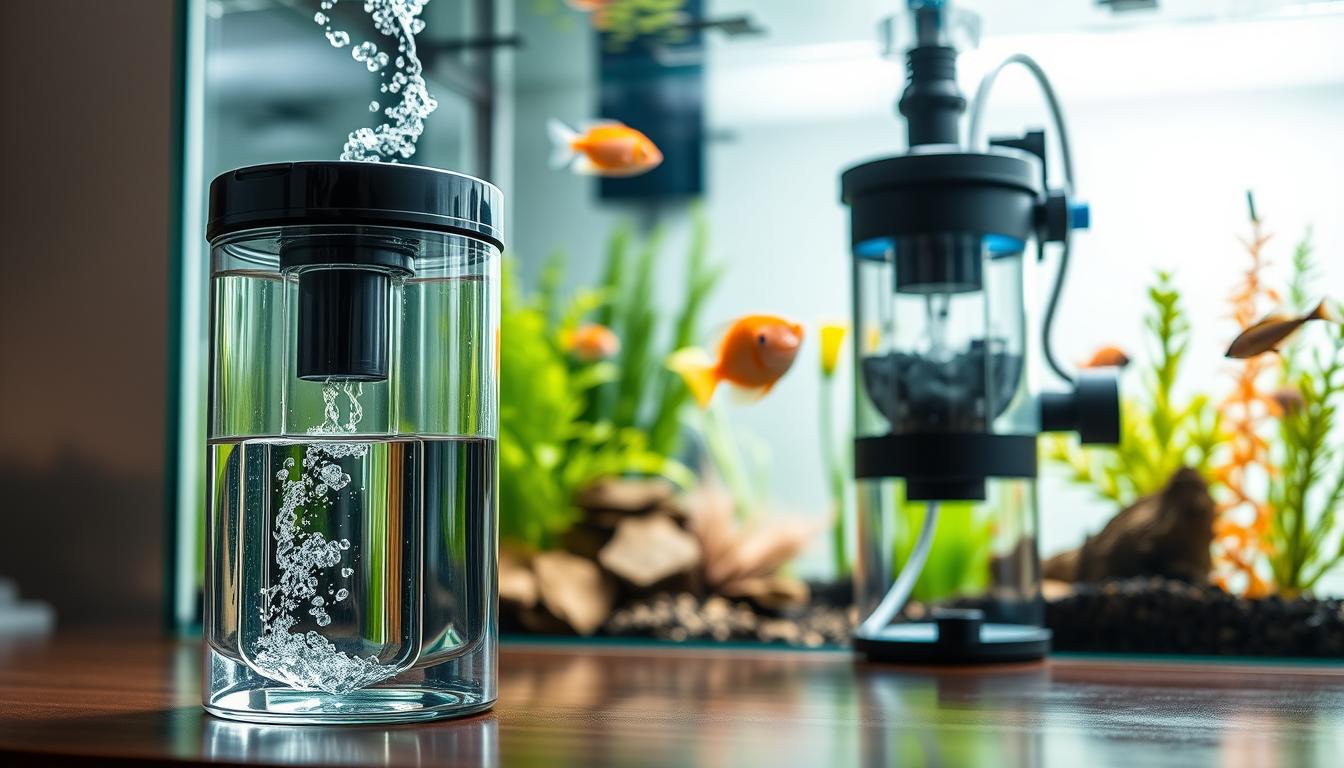
You keep an aquarium for the life and color it adds, not the clutter. In small spaces, picking the right filter is key. You might face tight spots or want to hide equipment for a clean look.
Poor filtration in small tanks can cause water quality to drop fast. With less water, ammonia and nitrite levels rise quickly. This means your filter must handle all tasks well, without taking up too much space.
This article looks at internal and external filters. We’ll compare them on important points like space, filtration, maintenance, noise, cost, and how they fit with your tank and fish. You’ll learn which filters work best in tight spaces and which are top choices for small tanks.
By the end, you’ll know how to pick a filter that fits your space, needs, and maintenance routine in the United States.
Understanding Filtration in Small Tanks
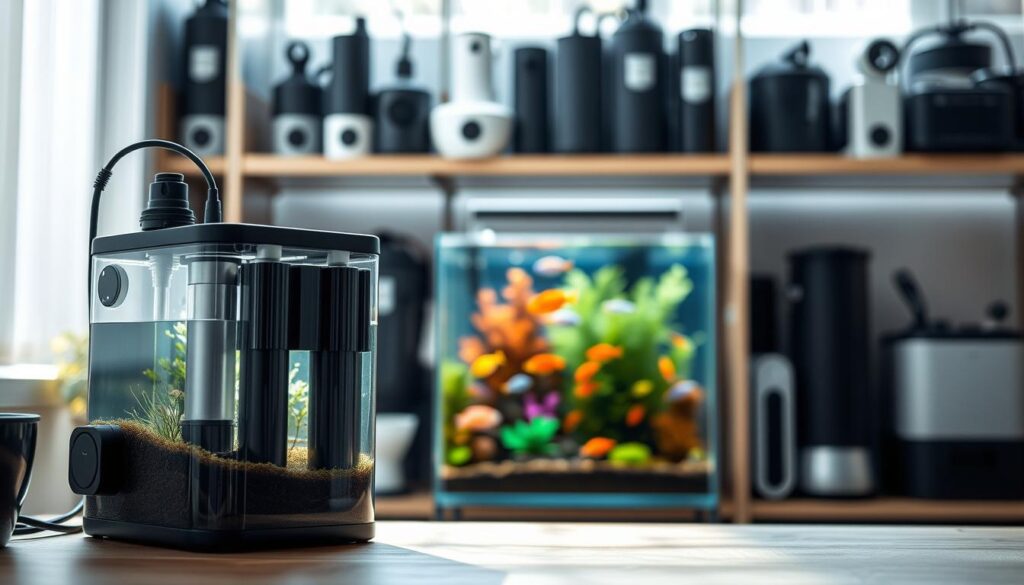
Filtration in small aquariums does three main things. It removes visible debris through mechanical filtration. It also hosts beneficial bacteria on media to break down ammonia and nitrite. Lastly, it uses media like activated carbon to clear dissolved organics and improve water clarity.
Small tanks have less water, so waste can quickly build up. This means ammonia and nitrite levels can spike fast. You need reliable small tank water filters and regular maintenance to keep these levels stable. Regular water testing and timely cleaning help avoid sudden water-quality issues.
When choosing a filter for small tanks, look at flow rate and surface area for bacteria. More surface area means more nitrifying bacteria can grow. This improves the biological capacity of your tank. External filters often have more media volume and surface area than internal ones.
Your filter must run all the time. If it stops, oxygen levels drop, and bacteria suffer. Bacteria populations can fall within 45 minutes of inactivity. This increases the risk of water-quality problems. Make sure your filter has reliable power and consider backup options for critical tanks.
Upgrading your filter’s media can boost its performance quickly. Replace basic media with higher-quality options like Seachem Matrix and Purigen. This increases biological capacity and water polish. Choosing the right media is key to keeping small tanks stable with modern filters.
Types of Filtration Systems Available
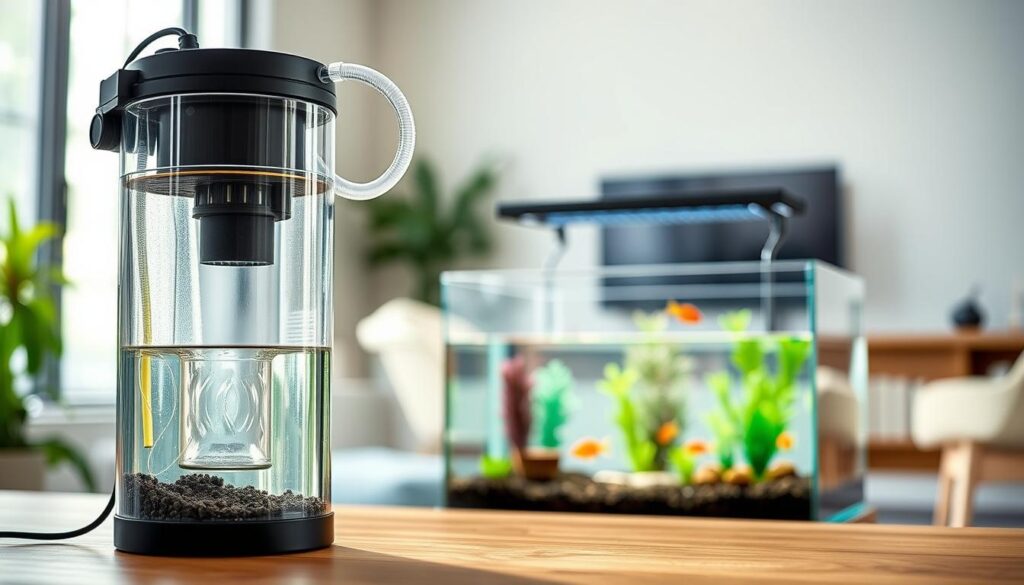
There are many options for filtering small tanks. Internal filters are inside the tank and come with sponges and basic media. Models like the Sicce Shark Pro and Oase Bio Plus are great for shallow tanks. They have horizontal housings and magnetic chambers for easy removal.
External filters, like canister and sump units, sit outside the tank. They use hoses for water flow and hold more media. They are more powerful and flexible for higher flow and varied media.
For small tanks, you can choose sponge filters, hang-on-back (HOB) filters, or small internal powerhead-based filters. Each has its own balance of space, flow, and maintenance. Choose the one that fits your tank best.
- Internal filters: easy to mount with suction cups, require room inside the tank and care to avoid blocking plants or hardscape.
- External filters: need cabinet space and hose routing, offer greater media volume and service options.
- Sponge and HOB filters: budget-friendly, simple to maintain, work well with community or fry tanks.
Small tank filter media includes coarse mechanical pads to fine-pored sponges. High-porosity biological media like Seachem Matrix support beneficial bacteria. Chemical options like Purigen or activated carbon handle discoloration and dissolved organics.
When choosing, consider installation constraints. External units need space for plumbing and a stable surface. Internal units must fit without blocking aquascaping and ensure proper circulation.
Match your chosen filtration to your tank’s size, stocking levels, and the types of fish or plants. Thoughtful media selection and placement will keep your small tank’s water clear and stable.
Advantages of Internal Filtration
Internal filters for small aquariums come with several benefits. They are cheaper than canister units, which is great for those on a budget. This means you can set up your aquarium without spending a lot of money upfront.
Internal filters fit inside the tank, so they don’t take up much space. This is perfect if you have limited room or your tank is on a shelf. Their small size makes it easier to plan your setup without worrying about hoses or plumbing.
- Easy installation and removal: most internal filters come pre-assembled and are simple to position and detach for cleaning.
- Reduced leak risk: with no external hoses, you avoid common leak points that affect external systems.
- Air inlet options: some models include an air input to boost oxygenation without extra gear.
You can use two small internal units placed on opposite sides to improve flow and add redundancy. This approach is similar to what professionals do when they need the best filters for small tanks. It’s also great for beginners because it makes starting up and maintaining your tank easier than more complex systems.
The main benefits of internal filtration are simplicity, cost-effectiveness, and compact design. These qualities make maintenance easy and keep your tank running well without needing a lot of plumbing or extra space.
Disadvantages of Internal Filtration
Internal units often have less media than external systems. This means your mechanical and biological stages might be cramped. With less space, the cleaning power of your tank can suffer.
Water clarity might be lower in tanks with only internal filters. There’s less room for polishing media and biological volume. This can make it hard to achieve the water purity you desire.
Internal filters take up space inside the tank. They can interfere with your aquascaping and make it hard to hide them, even with plants or decor.
- Visual impact: internal hardware is harder to conceal and may distract from your aquascape.
- Frequent cleaning: sponges and fine media clog fast and often need weekly or bi-weekly attention.
- Debris release: removing chambers or media can stir up trapped waste and cloud the water.
Small animals like cherry shrimp or fry are at risk near intake openings. Use suction guards or gentle flow models to protect them. This is important when using internal filtration for small tanks.
Suction cup mounts rely on clean glass and lose grip over time. Check them often. Adhesion usually degrades in six to twelve months, and you might need to replace them to avoid falls.
Advantages of External Filtration
External filters offer more media space. Brands like Fluval and Eheim have larger capacities than internal filters. This extra room allows for more bio-media, supporting bigger colonies of good bacteria.
This setup boosts biological surface area. It speeds up the process of removing harmful compounds. This is key for keeping water stable in small tanks.
These filters are hidden from view. They fit in cabinets or stands, keeping your tank looking clean. This is great for tanks with plants or shrimp.
Changing media is simpler without disturbing the tank. This reduces stress on fish and prevents cloudy water. It makes caring for your tank easier.
External filters also have stronger flow rates. This means water moves through the media more efficiently. It helps keep water conditions consistent, which is important for small tanks.
Some models hold a bit more water. This extra space helps small tanks handle sudden changes in water chemistry. It’s a big plus for those with limited tank size.
You can mix different media to tackle specific problems. Brands like Seachem and API offer specialized media. This lets you fine-tune your filtration to meet your tank’s needs.
- Greater media diversity and volume
- Superior biological surface area
- Out-of-sight installation preserves aquarium aesthetics
- Easier, less disruptive maintenance
- Higher flow rates for swift water turnover
- Extra water buffering inside the filter body
- Customizable media for targeted treatment
Disadvantages of External Filtration
Choosing an external canister or sump means a higher upfront cost. Brands like Fluval and Eheim charge more than basic internal filters. This can be a big factor if you’re on a tight budget.
External filters need space outside the tank. You’ll need room in a cabinet, on a stand, or a shelf for the unit and hoses. This can limit where you can place your tank, making it harder to find a good spot.
Setting up an external filter is more complicated. You’ll need to plan and use the right fittings to avoid leaks. If you’re new to this, it might feel overwhelming, and mistakes can be frustrating or even damage your tank.
In small tanks, an external filter might be too much. High flow rates and large media volumes are often unnecessary. This can waste energy and lead to more maintenance than you need.
Running costs are also higher. Stronger pumps use more electricity, and replacement parts can be expensive. Over time, this increases the total cost of owning a small tank filtering system.
Replacing media is another expense. Larger canisters need more or special media like bio-rings and carbon blocks. Replacing these can cost more than swapping a basic internal sponge.
There’s a higher risk of leaks with external plumbing. If hoses or fittings aren’t installed right, you could face problems. You’ll need to check connections often to keep your home and tank safe.
- Higher upfront cost compared to internal units
- Needs external space for placement and hoses
- More complex plumbing and installation
- Can be oversized for very small tanks
- Greater electrical and media running costs
- Additional leak points from hoses and fittings
When considering these downsides, think if the benefits are worth it for your tank size. Many hobbyists find that the simplest small tank filtering system meets their needs best after careful comparison.
Choosing the Right Filtration for Your Tank Size
First, match the filter’s size to your tank’s volume and how much life it holds. Choose a filter that fits your tank’s gallons and the number of fish and plants. This way, you won’t have too little or too much filtration.
Think about where you’ll put the filter. If you don’t have much space, look for internal or hang-on-back filters. They are compact. Or, if you want a clean look, consider canisters or a remote sump. They hide the equipment and keep your tank looking good.
- Choose models with adjustable flow for delicate fish and plants.
- Consider noise and vibration when deciding placement.
- Assess how often you will service gear before buying.
How easy it is to clean the filter matters too. Internal filters need cleaning often. External filters hold more media and can go longer without cleaning. If you want to clean less, choose an external canister or HOB with big media chambers.
Upgrade your small tank filter media to increase its power without taking up more space. Replace cheap sponges with better options like Seachem Matrix or Purigen. This boosts both biological and chemical filtration. A mix of these types of media creates the best environment.
If you have live plants or detailed setups, look for filters that don’t disturb the water too much. For lots of fish, choose filters that can handle more and have more media. By following these tips, you can find the perfect filter for your tank and your care routine.
Maintenance of Filtration Systems
Keeping your small tank water filters in good shape saves time and keeps fish healthy. Clean internal filter sponges every week or every two weeks. External units need less frequent attention because they hold more media, but you must inspect them regularly.
When cleaning mechanical media, rinse sponges and pads in tank water, not tap water. This protects beneficial bacteria. Replace chemical media like activated carbon or Purigen as the maker instructs. You can also upgrade factory media with options like Seachem Matrix for better biological capacity.
- Run filters 24/7 to avoid drops in oxygen and bacterial decline.
- Expect bacterial populations to fall after about 45 minutes of no flow.
- Use a drip tray for external filter service and follow priming steps to prevent airlocks.
Handle internal units with care when you remove chambers. Sudden jerks can release trapped debris into the tank. For external filters, keep hoses and clamps secure during maintenance to avoid spills. Check mounting hardware and replace suction cups every six to twelve months or when they stop sticking.
Protect small livestock by fitting inlet guards to block shrimp and fry from suction. Place outlets a few inches below the surface to provide steady surface agitation without excessive CO2 loss in planted tanks. These small adjustments are central to reliable small tank filtration solutions.
Use a checklist for each service visit. Inspect seals and hoses, rinse mechanical media in tank water, replace chemical media as directed, and note any upgrades to biological media. This routine keeps your maintenance of filtration systems efficient and extends the life of your equipment.
Noise Levels: Internal vs. External Filtration
You want a quiet tank, right? The choice between internal and external filtration affects noise levels. Internal filters, being in the water, often muffle sounds. But, they can vibrate against the glass if the suction cups don’t hold well.
External canister filters, on the other hand, keep the noise-making parts outside. The motor, impeller, and hoses can make sounds. To lessen these noises, place the unit on a rubber mat and keep hoses away from rubbing or kinking.
When space or sound is a concern, look at compact tank filtration options. Powerhead-style internal filters might run hotter and louder than fully submerged ones. Small sponges can clog easily, making the motor work harder and louder over time.
When choosing efficient small tank filtration, pick models with adjustable flow. This way, you can lower the RPMs when you don’t need full flow. Regularly clean the impellers and motors to avoid squeaks and growling sounds.
- Install external units inside a cabinet to dampen sound.
- Use rubber feet beneath canister filters to cut vibration.
- Secure suction cups or replace them to stop glass transmission.
- Check hoses so they don’t rub against edges or floorboards.
For quiet rooms, consider premium canister brands like Fluval or Eheim. They’re known for their low-noise models. Also, look at compact tank filtration options that focus on silent operation.
When choosing between noise and performance, think about your stocking levels. Regular upkeep and correct installation will help both internal and external systems run smoothly and quietly.
Cost Comparison: Internal and External Filters
When you look for filtration, the price is the first thing you notice. Internal filters like hang-on or sponge units are often cheaper at first. But, external canister or sump systems cost more upfront. They offer more space and flexibility for small tanks.
Think about the ongoing costs after buying. Internal filters use less power and electricity. External filters, with stronger pumps, might increase your electricity bill over time. Consider gallons per hour when comparing long-term costs.
Maintenance costs differ based on media and how often you need to replace it. Internal filters need regular cleaning or replacement of inexpensive sponges. External filters use more expensive media like Seachem Matrix and Purigen. These last longer and handle heavy loads better for small tanks.
- Replacement parts: suction cups and small impellers for internal units may need replacing every 6–12 months.
- Media upgrades: adding premium media increases expense but improves performance and stability.
- Space-related costs: cabinets or cutouts to house an external canister or sump add hidden expense.
Value depends on your goals. External systems offer stable water chemistry and less maintenance, despite being more expensive upfront. If you’re on a tight budget and have limited space, affordable small tank water filters are a quick and cheap start.
Make a simple cost checklist when deciding. Include the initial cost, electricity use, media replacement, and setup costs. This will help you compare and choose the best option for your small tank filtering system.
Impact on Water Quality in Small Tanks
Understanding how filtration affects small aquariums is key. Biological capacity is the most important factor. External canisters and hang-on-back units offer more space for nitrifying bacteria. This helps process ammonia and nitrite faster, reducing toxic spikes in tight systems.
Mechanical filtration improves water clarity. External systems use larger mechanical stages and media to trap fine debris. This results in clearer water compared to basic internal sponges that fill up quickly.
Chemical polishing completes the process. External filters can hold more chemical media like activated carbon or Seachem Purigen. These options remove dissolved organics and polish water better than most internal units.
Small tanks experience rapid changes. The larger media volume and higher flow in external filters buffer these changes. This lowers stress for fish. Yet, a well-maintained internal filter with quality small tank filter media can also keep a small tank stable.
Practical adjustments help planted tanks. To reduce surface ripple and limit CO2 loss, place outlets a few inches below the surface. Angle them for gentle circulation. This protects plants while keeping water moving.
- Maintain sponges frequently: neglect speeds water quality decline in small tanks.
- Use biological media with high surface area for steady nitrification.
- Add chemical media when you need extra polishing after feeding or trimming.
When planning aquarium filtration for small tanks, match media volume to bioload and schedule routine cleaning. This keeps beneficial bacteria healthy and water parameters steady for your fish and plants.
Conclusion: Which Filtration System is Right for You?
Choosing the right filtration system for your small tank depends on a few things. You need to think about space, budget, and how clean you want the water. Internal filters are cheap, easy to set up, and save space. They’re good for beginners or when you have very little room.
But, they can be ugly, need more cleaning, and hold less media. On the other hand, external canisters or sumps offer better water quality and look nicer. They have more media space and are easier to clean. But, they cost more and need extra space outside the tank.
For shrimp or fry tanks, it’s important to protect the inlet. Use sponge filters or guarded internal filters to keep them safe. You can also use two small internal units for extra safety. Upgrading to better media like Seachem Matrix or Purigen can also help.
Remember, no matter what you choose, always run the filtration 24/7. Keep up with maintenance, like cleaning sponge filters weekly and changing media for externals. Make sure the flow rate and media fit your tank’s needs. The key is to find a system that works for you and keep it up for a healthy tank.
Leave a Reply