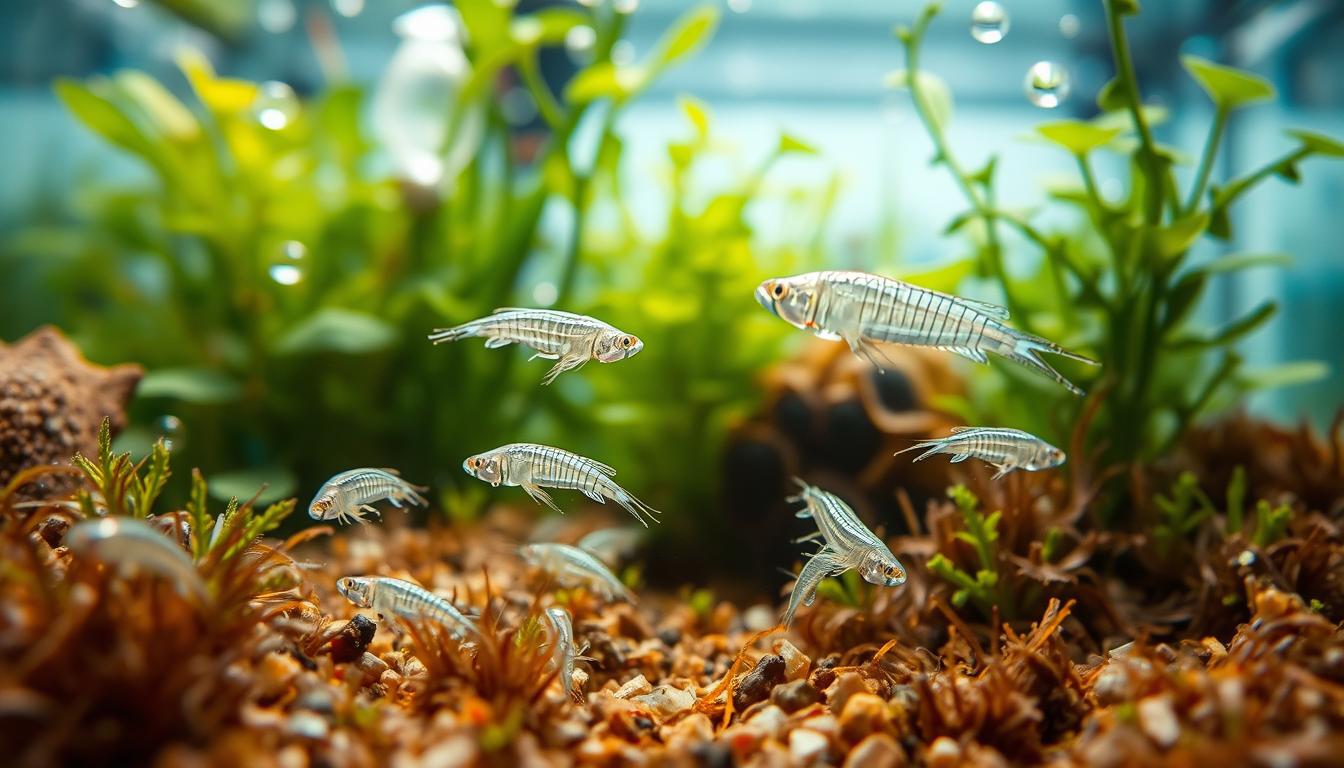
You love your nano tank because it’s alive and balanced. Copepods and detritus worms are key to this balance. They keep your tank healthy and thriving.
Copepods are like tiny workers. They eat algae and feed your fish and corals. By adding species like Tisbe, your tank starts to feel like a mini ocean.
Detritus worms help break down food and waste. They live on plants and substrate. This keeps your tank clean and healthy.
To keep your tank balanced, start by introducing copepods carefully. Feed them small amounts of phytoplankton regularly. Also, create quiet spots for them to hide among plants and rocks.
Using social media can also help. It lets you learn from other aquarists and find tips on seeding your tank.
In short, focusing on the tiny life in your tank makes it easier to care for. It also makes your corals healthier and your tank more self-sustaining. You get to enjoy watching it all thrive.
The Role of Microfauna in Nano Tanks
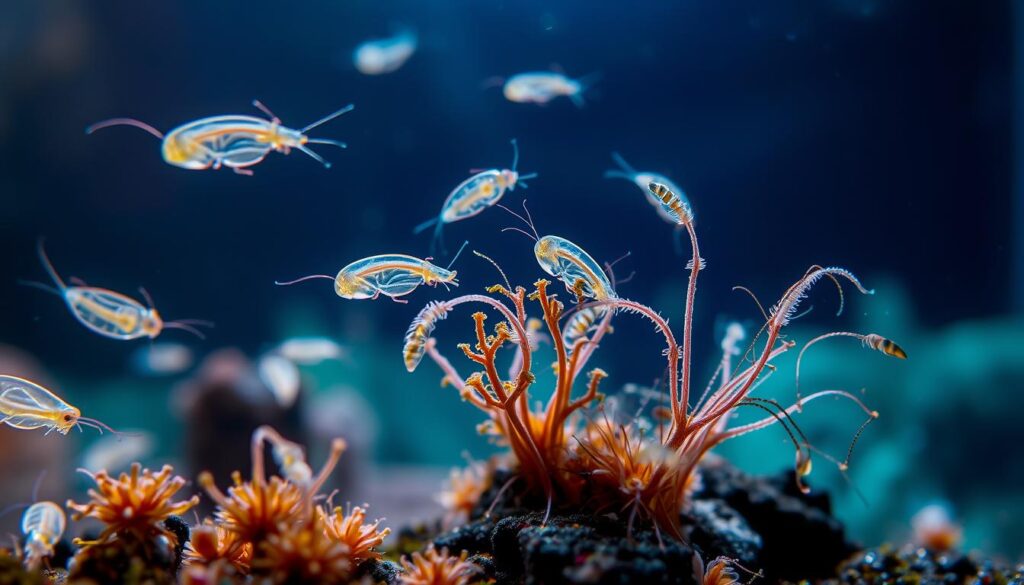
Microfauna is key to keeping a small tank balanced. Copepods and other tiny animals help by breaking down waste and eating algae. This reduces harmful nitrate and phosphate levels.
These tiny creatures also feed corals and small predators. They provide important nutrients like fatty acids and proteins. These nutrients help corals grow and stay healthy.
Adding different types of microfauna to your tank makes it more diverse. A growing copepod population feeds fish like Mandarin Dragonets and pipefish. This creates a self-sustaining food chain.
Plants in your tank help by providing homes for microfauna. They also help filter the water naturally. This keeps the ecosystem stable and healthy.
- Reduced maintenance: microfauna consume waste and reduce manual cleaning.
- Improved diet: tiny tank animals enrich the food web for specialized feeders.
- Greater resilience: a diverse community resists population crashes and stressors.
Learning from others can help you set up your tank better. Look at examples of refugium setups and how microfauna behave. This helps you choose the right species for your tank.
Copepods: Tiny Creatures with Big Benefits
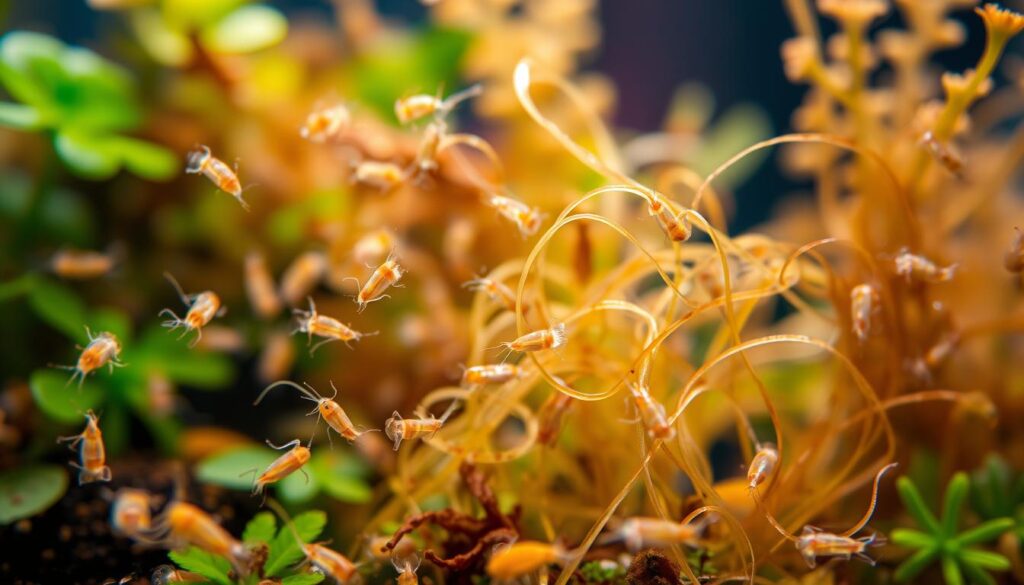
Copepods are small but vital for your tank. They come in different sizes and behaviors. Choosing the right mix helps fill your tank’s needs.
Tisbe biminiensis stays on the bottom and crawls on rocks and substrate. It helps control detritus and builds a lasting population.
Tigriopus californicus is bigger and swims near the surface. Its swimming triggers feeding in picky fish. It’s great for fattening or breeding projects.
Apocyclops panamensis swims constantly and reproduces quickly. It feeds pelagic corals and small predators.
Use blends or commercial products to seed your tank. Let bags warm up for 20 minutes. Turn off skimmers and powerheads briefly before adding.
Feed phytoplankton like Nannochloropsis or Isochrysis two to three times a week. Or dose lightly every day in a refugium. Plants and macroalgae increase surface area and biofilm, supporting more nano tank critters.
- Monitor at night with a flashlight to spot activity.
- If numbers drop, reduce excess filtration or lower flow.
- Use planted refugia to boost miniature tank fauna naturally.
Copepods provide valuable nutrition like HUFAs and carotenoids. With proper care, they become a continuous food source. They add resilience to your reef system.
Detritus Worms: Nature’s Clean-Up Crew
Detritus worms are common in small tanks. They eat leftover food and dead plants. You’ll see them in the substrate and on decorations when there’s too much organic matter.
These worms are part of the tank’s cleanup team. They break down waste into nutrients for plants and bacteria. By digging through the substrate, they help prevent water quality problems.
Too many detritus worms can mean you’re overfeeding or have poor water flow. If you see a lot of worms, cut back on food and improve water circulation. Also, clean the substrate and siphon it now and then to keep things balanced.
In planted tanks, detritus worms are less of a problem. Live plants absorb ammonia and nitrate, keeping the worm population in check. Fast-growing plants like Hygrophila and Rotala compete with bacteria for nutrients.
Photos and forum reports can help you tell if you have a problem with detritus worms. Use these resources to learn what’s normal and when you need to take action.
- Signs to watch: visible clusters on substrate, cloudy water, or sudden spike in worms.
- Immediate steps: cut feeding, increase gentle flow, and light substrate maintenance.
- Long-term strategy: add live plants and maintain consistent water changes.
Creating a Suitable Environment for Microfauna
You want a setup that shelters tiny life while keeping the system stable. Create low-flow zones in live rock, macroalgae, and coarse sand or rubble. These spots help nano tank biodiversity by giving copepods and worms places to rest and reproduce.
Balance circulation so food reaches microfauna without blasting them into skimmers or filters. Use adjustable powerheads for gentle, indirect flow. Set flow paths that feed miniature tank fauna but leave calm refuges behind rocks and plants.
Place a refugium or a strand of Chaetomorpha in a moderate-flow area. This provides shelter and grazing surfaces. Live plants, mosses, and carpet species expand surface complexity and boost biofilm. This extra habitat supports small tank inhabitants and increases available food.
Keep sand and rubble deep enough for burrowing species. A few centimeters of coarse substrate gives detritivores room to tunnel and hide. This depth supports healthy miniature tank fauna and more stable biological processes.
When introducing pods, acclimate gently. Float sealed containers for about 20 minutes, then release them into calm zones. Turn off aggressive skimming or pumps for the first few hours so nano tank microfauna can disperse into shelters.
Avoid overly aggressive chemical filtration if you want consistent microfauna numbers. If populations drop, pause carbon or GFO briefly and rely on planted refugia or live plants to rebuild biofilm. These measures encourage long-term nano tank biodiversity and keep small tank inhabitants thriving.
- Low-flow seeding zones: rocks, macroalgae clumps, rubble
- Balanced circulation: adjustable powerheads, indirect flow
- Refugium placement: Chaetomorpha or planted refugia in moderate flow
- Substrate depth: enough for burrowing miniature tank fauna
- Acclimation: float sealed pods ~20 minutes, minimize skimmer action
Feeding Your Microfauna
Feed copepods a steady diet of phytoplankton to keep them healthy. Use Nannochloropsis or Isochrysis two to three times a week. Or, dose lightly every day in a refugium to keep them nutritious for corals and small fish.
Detritus worms and benthic tiny tank animals love biofilm and decomposing matter. Keep macroalgae, live rock rubble, and leaf litter. This provides them with grazing surfaces and shelter in nano tanks.
Be careful not to overfeed. If pods coat surfaces or you see sudden blooms of green water, reduce phytoplankton. Too many nutrients can harm your display animals.
- Feed schedule idea: phytoplankton 2–3× weekly or light daily dosing in a refugium.
- Keep macroalgae and rubble for detritus worms and benthic tiny tank animals.
- Gut-load pods so they pass HUFAs and carotenoids to corals and fish.
Plants are great for feeding without fouling the water. Fast-growing plants take up extra nutrients. They also create biofilm that supports microfauna in nano tanks. Adjust lighting and plant mass to match your dosing routine.
Community schedules and visual guides from hobbyists can help refine timing and brands. Test a routine, monitor populations, and tweak feedings. This will keep your nano tank microfauna balanced and productive.
The Interaction Between Copepods and Detritus Worms
Copepods and detritus worms live together in a healthy nano tank. Copepods eat phytoplankton, biofilm, and fine detritus. Some benthic copepods also eat from the substrate.
Detritus worms break down dead plant and animal matter. They help turn the substrate into nutrient-rich soil.
The food supply is key to their balance. A steady amount of phytoplankton helps copepods reproduce. Too much food or low flow can lead to worm blooms.
Adjusting food and flow helps control the community. You can use dosing and feeding to favor copepods over worms.
Flow and filtration affect which organisms thrive. Strong skimming and high flow can wash out copepods. This leaves space for worms.
Low flow, on the other hand, favors detritus worms. Adjusting return pumps and refugium flow helps keep pods while reducing waste.
Habitat complexity allows both groups to coexist. Plants, macroalgae, live rock, and rubble create microhabitats. Pods hide in plants and macroalgae, while worms stay in softer substrate.
Practical management keeps populations stable. Use a planted refugium or Chaetomorpha for food and shelter. Adjust skimmer settings and flow to retain copepods.
If worms surge, cut feeding and boost substrate siphons. Increase gentle flow to discourage overpopulation.
Real hobbyists have seen success with small changes. Adding more plants can lower nutrients that cause worm outbreaks. Refugium changes and controlled feeding help maintain a balanced mix of microfauna in nano tanks.
Monitoring Microfauna Populations
Tracking nano tank microfauna is easy with regular checks. Use a small flashlight after the main lights go off. This will help you see if copepods are present.
Look for signs of a healthy miniature tank fauna. Good coral health, active fish, and visible pods are good signs. If pods disappear, check for water quality issues or feeding problems.
- Night flashlight test: perform weekly to note abundance trends.
- Visual markers: polyp behavior, fish activity, and visible tiny tank animals.
- Troubleshooting: reduce skimmer runtime or pause aggressive carbon and GFO use if populations drop.
Don’t count every single microfauna. Just watch for trends. More or fewer pods, changes in polyp behavior, or fish health can tell you a lot. Adjust your tank’s flow and add more phytoplankton if needed.
Planted tanks can be more stable for microfauna. Healthy plants, bright colors, and balanced nutrients show a thriving ecosystem.
Learn from others by watching videos and posts on Instagram and YouTube. Seeing what experienced hobbyists do can help you understand what’s healthy. You won’t need to count every microfauna to know your tank is doing well.
The Impact of Microfauna on Tank Aesthetics
Healthy copepod populations make a big difference in your tank. Corals grow faster, get richer colors, and spread out more. This is because copepods give them the nutrients they need.
Small fish also benefit. They get to hunt for tiny animals, which lowers their stress. This makes them more active and colorful, exploring their surroundings.
- Reduced visible waste: copepods help clear film algae and detritus from surfaces.
- Mixed-species pods feed a wider range of corals and fish.
- Continuous movement from microfauna adds subtle texture to the viewing experience.
Plants instantly change a nano system’s look. They host biofilm that attracts tiny animals. A planted area or a leafy display adds structure and depth.
More habitat for small animals improves balance. You’ll see more microfauna in crevices and on plants. This reduces visible pests and keeps the tank clean.
Hobbyist galleries and social feeds show amazing transformations. Tanks go from sterile to lively with microfauna and plants. Active corals, foraging fish, and more biodiversity give a museum-quality look to small tanks.
Designing with microfauna in mind adds motion, color, and cleanliness. These tiny creatures turn a basic tank into a rich, authentic ecosystem. It’s a treat to watch.
Conclusion: Embracing Microfauna in Your Nano Tank
Adding microfauna to your nano tank changes how you feed your fish. Start by choosing different types of copepods for the bottom and top of the tank. Make sure to introduce them slowly and give them places to hide.
Feed your tank with phytoplankton like Nannochloropsis or Isochrysis regularly. This keeps your copepods healthy and strong. It’s a simple way to keep your tank balanced.
Adding plants to your tank helps with cleaning and gives more space for beneficial bacteria. Check on your microfauna weekly with a flashlight. If you see any problems, adjust the skimmer, water flow, or food amounts.
These small changes can make a big difference. Your corals will grow better, and your fish will be healthier. For more tips, look at online forums, Instagram, and setup guides. They can help you create a thriving ecosystem in your nano tank.
Leave a Reply