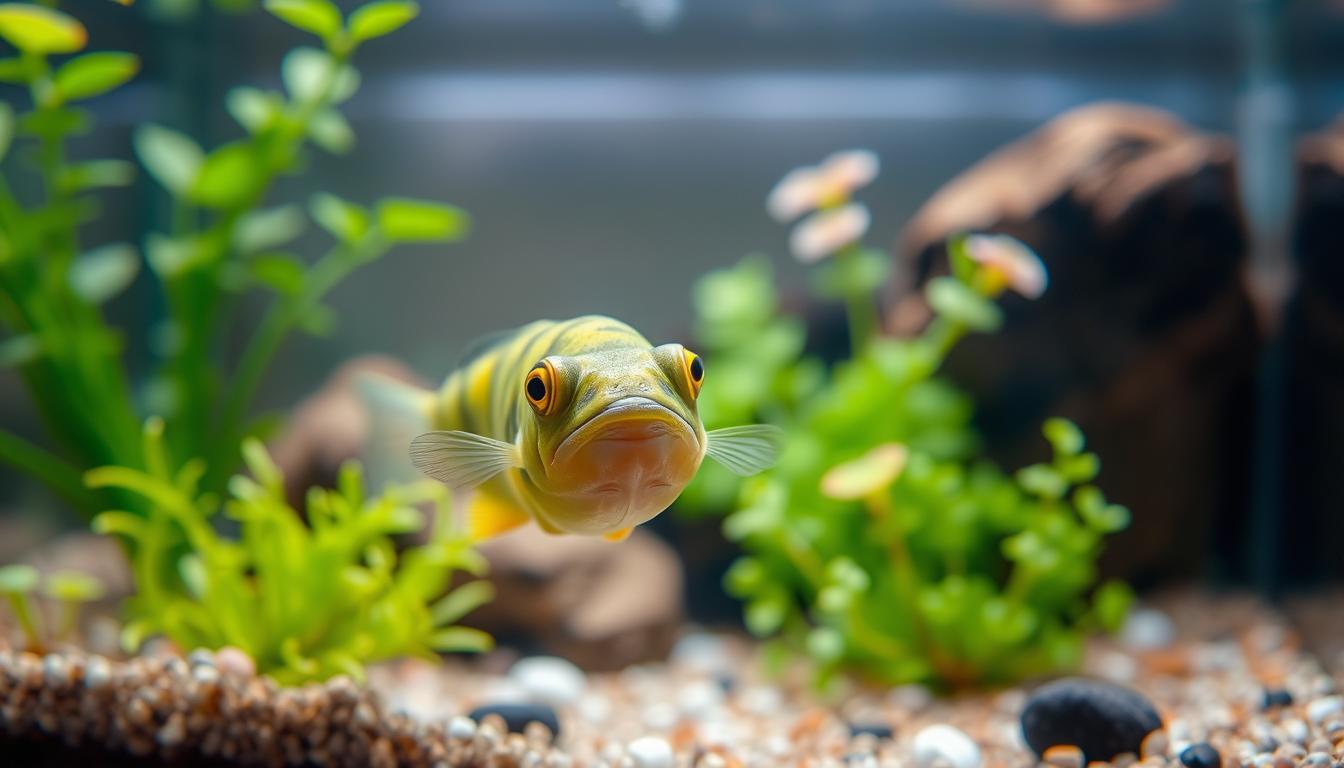
You’re about to get practical tips on caring for Dwarf puffer fish. This includes the title “The Unique Challenges of Keeping Pea Puffers in Small Tanks.” We’ll start with the pea puffer, a tiny freshwater fish from Kerala, India. They grow up to 1″ (2.5 cm) long when they’re fully grown.
Pea puffers are loved for their small size, vibrant colors, and fun personalities. They love to interact with their owners, check out plants, and show off their social skills. This makes caring for them both rewarding and challenging.
This article will cover setting up a dwarf puffer fish tank, keeping the water chemistry right, feeding them, understanding their behavior, breeding, and preventing diseases. You’ll find tips based on field ecology and hobbyist experiences. These are for U.S. aquarists looking for reliable care for their pea puffers.
Also, remember that the fish sold as dwarf puffers can be different species. Males often have ridges or keels and darker belly bands. This affects how they interact with each other and how you care for them in a community tank.
Understanding Dwarf Puffers and Their Needs
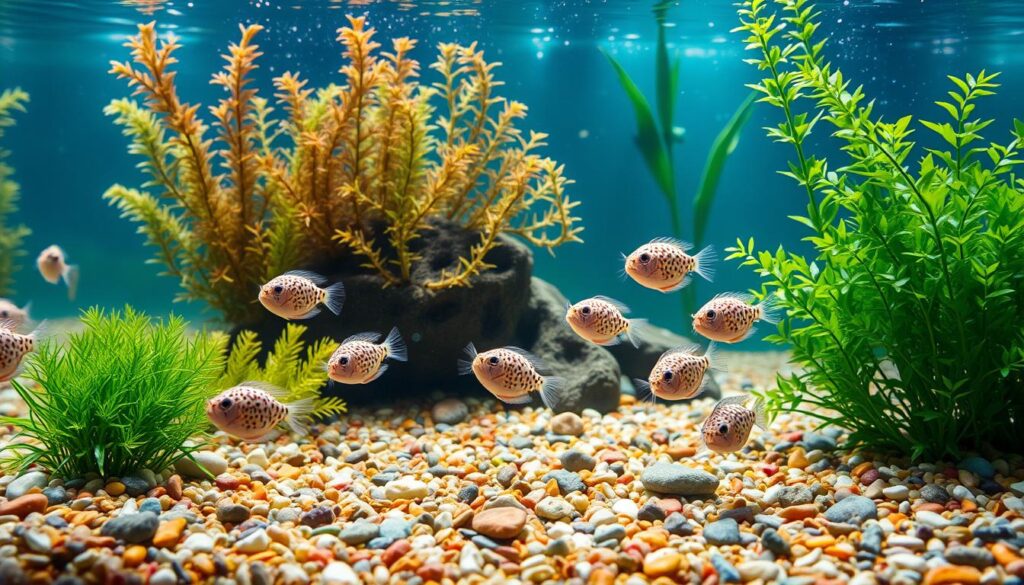
Dwarf puffers belong to the genus Carinotetraodon. The most common species are Carinotetraodon travancoricus and C. imitator. There are four other Carinotetraodon species, each with its own temperament. Knowing the exact species is key to providing the right care for your dwarf puffer.
Adult dwarf puffers are about 2.5 cm long, or one inch. Males have a keel, a dark belly band, and larger blotches. They also have iridescent wrinkles behind their eyes. Females and juveniles are golden-brown with reddish-brown speckles and white bellies. These differences help you tell males from females and plan for breeding.
In the wild, dwarf puffers live in Kerala and the Western Ghats. They prefer slow-moving, densely vegetated rivers and wetlands. Places like the Pamba River and Vembanad lakes are their home. Submerged plants, leaf litter, and sunken wood help them hide from predators like herons.
Wild waters are soft and slightly acidic to harder and more alkaline. Dwarf puffers can handle a range of water chemistry. But, it’s important to keep the water balanced to keep them healthy and active.
Dwarf puffers are curious and intelligent. They explore surfaces and plants with care. They even recognize their keepers and may beg for food. Males can be territorial and show brood care. Providing hiding places and defined territories helps reduce aggression and mirrors their natural habitat.
- Taxonomy and species differences to note for care
- Sexual dimorphism that helps you identify males and females
- Natural habitat features to recreate in the aquarium
- Water variability and limits to guide routine maintenance
- Behavioral traits that shape social setup and enrichment
Ideal Tank Size for Dwarf Puffers
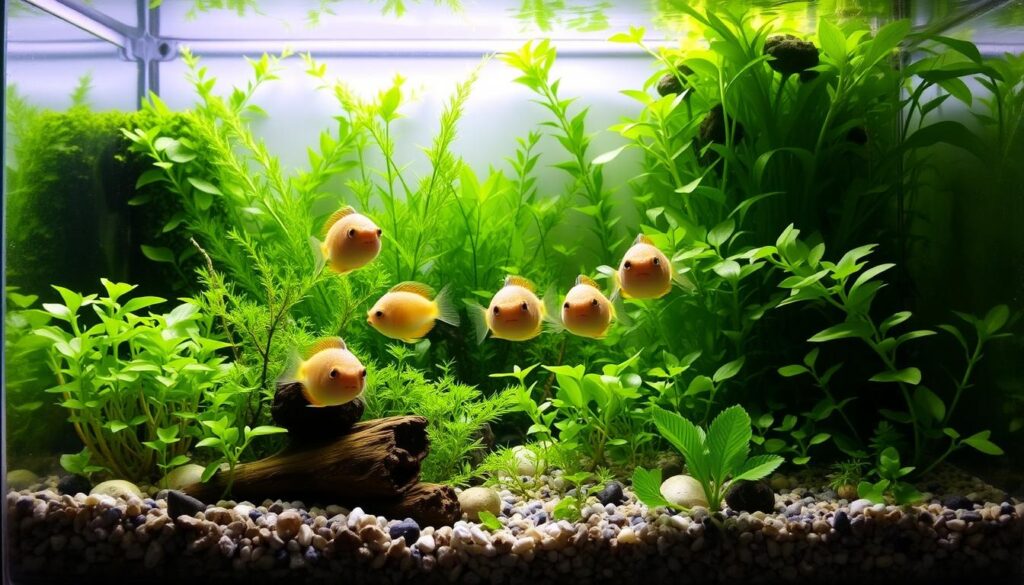
For a stable dwarf puffer fish tank, aim for at least 45 L (10 gallons). Small tanks may look appealing, but they often lead to unstable water chemistry. This can stress the fish and make caring for them more challenging.
Use a simple rule for stocking: plan roughly 10 L (2.5 gallons) per fish. This gives each puffer space to claim a territory and helps reduce aggression. If you keep a group, add hiding spots and plants to break sight lines.
When you consider groups versus pairs, remember males get territorial. A pair can do well in a modest tank, while a mixed group or multiple males needs more volume and visual barriers. If you want several males, choose a larger aquarium to avoid fights.
Filter and equipment sizing matter for caring for dwarf puffer fish. Strive for a filtration turnover of 4–6 times the tank volume per hour. That flow keeps water quality high and reduces ammonia and nitrite build-up.
- Minimum recommended tank: 45 L / 10 gallons.
- Stocking guideline: ~10 L / 2.5 gallons per fish.
- Turnover rate: 4–6x tank volume per hour for reliable water quality.
Stick to these guidelines when planning your dwarf puffer fish tank setup. Good sizing and proper filtration make caring for them much more predictable and rewarding.
Tank Setup for Dwarf Puffers
Begin by designing a tank that looks like their natural home. Use lots of plants like Java moss and Anubias. Add driftwood and rocks to create hiding spots and clear paths.
Include floating plants for shade and to help keep nitrates down. Moss clumps are great for hiding places. Sunken wood and leaf litter add texture and encourage exploration.
Keep the lights dim. Bright lights stress them out and promote algae growth. They prefer calm water, so place powerheads carefully.
Choose a filter that changes the water 4–6 times an hour. Sponge filters are best because they provide gentle flow. Make sure to cover all intakes to keep the puffers safe.
- Substrate: fine sand or smooth gravel with patches of moss.
- Hiding spots: caves, dense plant clumps, and leaf litter.
- Filtration: sponge filter or low-flow canister with protected inlets.
- Lighting: low to moderate and timed for 6–8 hours daily.
Make sure the tank has a tight lid. Dwarf puffers can jump if scared. This keeps them safe. Choose tankmates wisely to avoid too much stress. A well-thought-out setup helps keep them happy and healthy.
Water Parameters for Dwarf Puffers
Keep your tank heated to 77–82°F (25–28°C). Dwarf puffers need a warm environment to thrive. A stable temperature helps them stay healthy and active.
For a general environment, aim for a pH of 7.5 and about 10°dH. For spawning, softer, slightly acidic water is best, around pH 6.5–7.0 and 5–10°dH. Always make slow changes to water conditions to avoid stressing your fish.
Dwarf puffers are freshwater fish. Don’t add aquarium salt regularly. Most prefer no added salt and may not do well with it.
Always keep ammonia and nitrite levels at 0 ppm. Nitrate levels should be under 50 mg/L, ideally below 20 mg/L. Regular testing helps catch problems early.
- Filter turnover: 4–6× tank volume per hour.
- Water changes: 25–50% weekly, depending on how heavily you stock and feed.
- Remove uneaten food and siphon waste to control nitrate buildup.
Small tanks can have big changes in pH and chemistry. A bigger tank is more stable. If you have a small tank, check pH often and avoid sudden changes in water conditions.
For breeding and raising fry, keep the water extremely clean. Eggs and fry are prone to fungal infections in harder water. Regular waste removal and careful maintenance help them survive.
Good care for dwarf puffers means consistent testing, gentle adjustments, and quick removal of contaminants. Follow these guidelines to reduce stress and improve their lifespan.
Feeding Your Dwarf Puffers
Your dwarf puffer fish are meat lovers. They need live or frozen foods to stay healthy. Flakes and pellets don’t give them enough nutrients.
Give them a mix of foods like pond snails, Daphnia, and worms. Add earthworms, midge larvae, and live brine shrimp as treats. But remember, live brine shrimp are not a full meal.
Use frozen or freeze-dried foods like bloodworms and krill. Rehydrate them for 20 minutes before feeding. A pipette or baster helps feed shy fish.
- Feed small amounts two to three times daily.
- Aim for gently rounded abdomens, not swollen bellies.
- Remove uneaten food quickly to protect water quality.
Keeping their beaks in check is key. Give them hard-shelled snails to chew on. If their beaks get too long, don’t try to trim them yourself.
Teach your puffers to eat from your hand or a pipette. This makes feeding time less stressful. Watch how much you feed to avoid obesity and tank problems.
Regular feeding times help keep them healthy and happy. Proper feeding makes their colors bright and keeps their beaks in shape. With a little planning, you can ensure their well-being in your aquarium.
Social Behavior and Tank Mates
Your dwarf puffer fish behavior will shape how you arrange the aquarium. Males are territorial and can be aggressive toward tankmates and conspecifics. Use rocks, bogwood, and dense planting to break sight lines so each fish can claim a small zone. Out of sight often means less chasing.
If you keep a group, provide plenty of hiding spots and visual barriers. Group keeping can work, but males may escalate fights and pick at injured fish. Have a simple plan to isolate and treat any hurt puffer quickly.
Think carefully before adding other species. Most tank mates raise the bioload and increase nitrate levels. Dwarf puffers are known fin nippers and may harass slow or long-finned species such as angelfish, gouramis, or livebearers.
- Potential companions reported by hobbyists include Otocinclus catfish and some fast-swimming tetras.
- Otocinclus need a proper diet, groups of six or more, and a larger aquarium—ideally 90 L (20 gal) or more.
- Small shrimp like Amano or cherry shrimp may survive with adults, but juveniles are often eaten.
For a stable dwarf puffer fish tank setup, the safest route is a species-only tank. This simplifies feeding, lowers disease risk, and makes water quality easier to manage. When caring for dwarf puffer fish, focus on space, cover, and monitoring behavior daily.
Use regular observation to spot early signs of stress or aggression. Adjust décor or separate individuals if you see repeated attacks. Thoughtful planning will reduce conflict and keep your puffers healthier and less stressed.
Health Issues Common in Dwarf Puffers
Keeping water quality high is key to avoid dwarf puffer fish diseases. Make sure ammonia and nitrite levels are zero. Nitrate should be under 20 mg/L. Small tanks can quickly show water quality issues, so test weekly and change water as needed.
Ich and fin rot are common in stressed fish. Good water quality and quick waste removal help prevent these infections. Quarantine new fish to avoid bringing in diseases to your main tank.
Eggs and fry are more vulnerable to fungal infections. Keep the water clean and free of decaying matter to stop fungal growth. If you’re breeding, check eggs closely and separate fry when necessary.
Aggression can lead to wounds, which can get infected. Other puffers might pick at these wounds, so keep injured fish separate. Treat wounds quickly and watch for signs of fin rot or bacterial infections.
Some people think dwarf puffer fish are poisonous. But research shows this depends on their diet and the bacteria or algae on their food. Puffers raised in captivity and fed typical aquarium foods are safe for handlers.
Dental problems can happen if puffers don’t eat hard foods. Their beaks can grow too long without snails or hard foods to wear them down. Give them shelled snails or hard foods often. It’s risky to trim their beaks yourself and should only be done by a vet.
Preventive care is the best way to keep dwarf puffers healthy. Keep water quality high, vary their diet, quarantine new fish, and remove uneaten food quickly. A consistent routine helps prevent disease and keeps your puffers happy and active.
- Test water weekly and act on any ammonia or nitrite rise.
- Quarantine newcomers for two weeks before adding them.
- Include snails or hard foods to prevent beak overgrowth.
- Isolate injured fish to prevent pecking and infection.
Breeding Dwarf Puffers
Adult males show a keel, darker belly band, and brighter colors when ready. Females look round and full with eggs. Knowing these signs helps you breed without stressing the fish.
Males claim territories in feathery plants and moss. Java moss and willow moss are best for egg laying. Create moss pockets for males to display and protect their sites.
During courtship, males flare their keel and dance to attract females. Spawning is lively, and eggs fall into the moss. Then, the male chases the female away and cares for the eggs.
Eggs hatch in about five days. Fry stay non-swimming for a week. Once free-swimming, they need tiny live foods like microworms and Cyclops nauplii. Fry grow to about 1 cm in two months with good care.
Spawns thrive in slightly soft, mildly acidic water. Aim for pH 6.5–7.0 and 5–10°dH. Eggs are prone to fungal infections in harder water. Keeping the tank clean and removing waste helps survival.
- Use dense moss in the breeding tank to catch eggs.
- Isolate fry from adults once they are free-swimming.
- Provide abundant live food to support rapid growth.
Experienced hobbyists succeed in freshwater setups that mimic the wild. Paying attention to care and behavior during spawning boosts success. With dedication and careful monitoring, breeding dwarf puffers is possible.
Regular Maintenance for Your Tank
Check your tank every day. Look for changes in how your fish act and eat. Also, clean up any leftover food and check the filter for blockages.
Use a small tool to remove waste and prevent ammonia buildup. This keeps your fish healthy and happy.
Change 25–50% of the water once a week. This keeps nitrates low and water chemistry stable. Also, gently vacuum the bottom and trim plants to keep your tank looking good.
Keep your filter clean by washing the sponge in tank water. This helps keep beneficial bacteria. Make sure the filter is working right by checking its speed.
Test the water often for ammonia, nitrite, nitrate, pH, and temperature. Watch for pH changes, as they can happen in small tanks. Adjust your water changes to keep the water right for your fish.
Follow the instructions for changing filter media. Watch your fish for signs of trouble like aggression or disease. Give them a varied diet to keep them healthy.
Have a plan for emergencies. Keep a separate tank for sick fish. Have supplies like dechlorinator and treatments on hand.
- Daily: observe, remove uneaten food, spot-clean waste.
- Weekly: 25–50% water change, light substrate vacuum, plant maintenance.
- Monthly/long-term: replace filter media as recommended, full equipment checks.
Regular care helps your dwarf puffer fish stay healthy. Small steps each day prevent big problems. This keeps your tank perfect for your fish.
Challenges of Keeping Dwarf Puffers in Small Tanks
Keeping pea puffers in small tanks has its downsides. Small spaces make it harder to keep water stable. You need to watch for sudden changes in pH and spikes in ammonia or nitrite.
Filtration is key in small tanks. Many desktop filters don’t provide enough turnover for dwarf puffers. Make sure to choose equipment that ensures continuous flow.
Aggression can rise in tight spaces. Males may fight more when they can see each other all the time. Add lots of hiding spots to reduce stress.
- It’s important to control bioload in small tanks. They can’t handle extra waste from other fish.
- Snails or shrimp can’t clean the tank on their own. You’ll need to do regular water changes and clean the substrate.
Breeding and raising fry is tough in small tanks. Eggs and fry need clean water and constant care to avoid infections. Doing small water changes can stress the adults.
Experts often suggest bigger tanks for dwarf puffers. A 10-gallon/45 L tank can help manage water and territory issues. For groups, even bigger tanks are better for the fish’s well-being.
Unique Considerations for Dwarf Puffer Care
When you buy a pea puffer, make sure to confirm its species. Many places mix Carinotetraodon travancoricus and C. imitator. Look for a keel and male color patterns, but ID can be tricky.
Managing teeth and diet is key to avoid dental issues. Puffers need to wear down their beaks. Offer small freshwater snails to help with this. It keeps feeding normal and avoids risky dental trimming.
Plan for enrichment and regular observation. Dwarf puffers are curious and solve problems. Add hiding spots, floating plants, and change the tank layout every few weeks. Use a pipette or turkey baster for feeding to stimulate hunting.
Be aware of toxin myths and diet-linked risks. Some studies suggest certain puffers can be poisonous. But, there’s no solid evidence for Carinotetraodon travancoricus in captivity. Risk depends on diet and environment, not just species.
Protect the tank from escapes. Dwarf puffers can jump when scared. Fit a secure lid and avoid sudden noises near the tank. A covered tank reduces stress and injury risk.
Prefer species-only tanks for most setups. Dwarf puffers may nip fins and stress other fish. This raises nitrate levels and disease risk. Keeping puffers alone simplifies feeding and reduces aggression.
Know common disease signs and act fast. Look for color changes, lethargy, unusual breathing, or loss of appetite. Quick water tests, partial changes, and quarantine can help. Consult an aquatic vet or experienced aquarist if symptoms last.
- Species ID: expect mixed stock from suppliers.
- Teeth care: provide hard foods like snails.
- Behavioral enrichment: change scenery and use targeted feeding.
- Tank security: keep a tight lid to prevent jumps.
- Housing: prefer species-only tanks to reduce stress and disease.
Conclusion: Your Journey with Dwarf Puffers
Keeping dwarf puffer fish in a small tank is rewarding but challenging. Make sure the water quality is stable. This means keeping ammonia and nitrite levels at zero and nitrates low through regular water changes.
Use gentle filtration with a 4–6× turnover rate. Also, protect the inlets to avoid stressing your fish.
Remember, a 10-gallon (45 L) tank is the minimum size needed. Add a well-planted aquascape and plenty of hiding spots. Feed them a diet rich in live and frozen foods, like snails. This helps meet their nutritional needs and reduces aggression caused by a poor diet.
When setting up social groups, choose species-only setups unless you can ensure compatible tank mates and extra space. By following these guidelines, you’ll create a great environment. Here, your pea puffers will show lively, intelligent behaviors and might even breed under the right conditions.
Leave a Reply