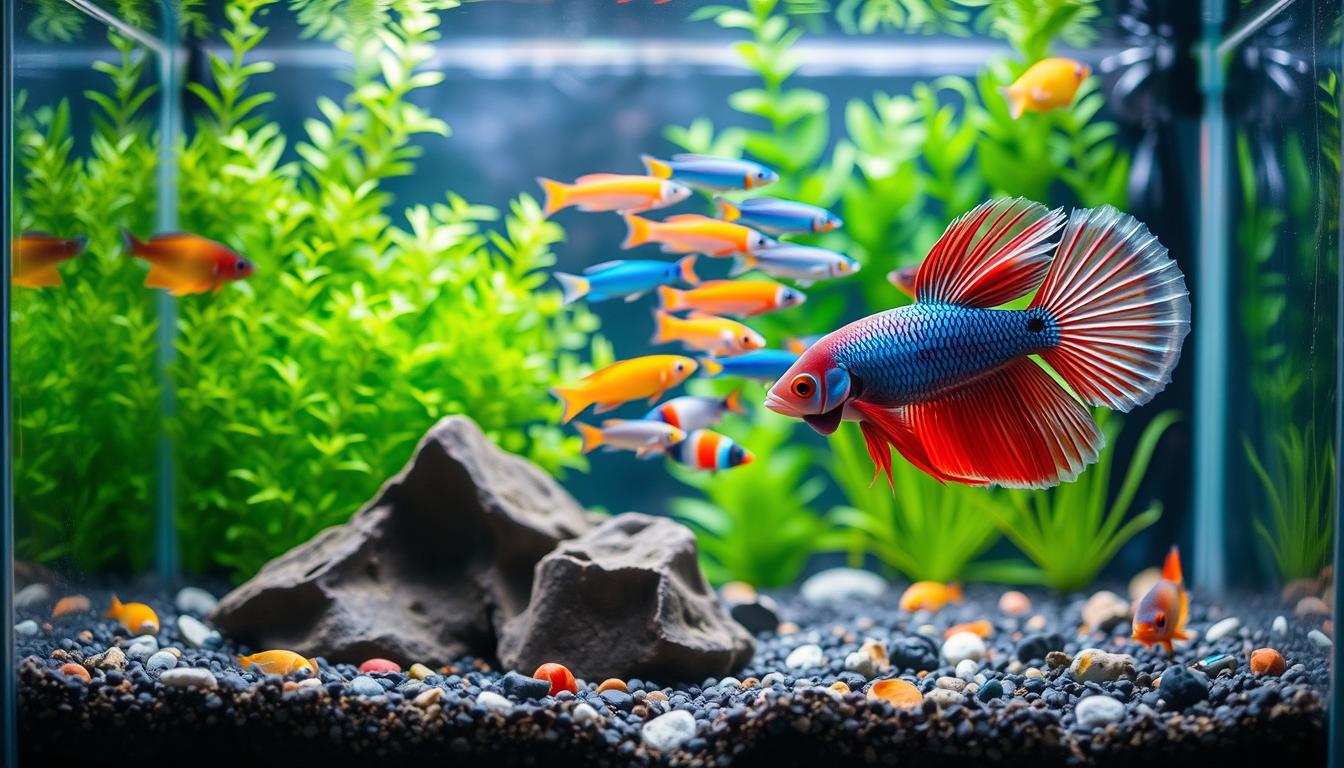
You want a peaceful and healthy aquarium. The first step is managing fish aggression. Modern tools like smart tank controllers and AI apps help monitor behavior. They keep conditions stable, reducing stress and aggression.
Keeping water chemistry steady is key. Temperature, pH, and hardness are important. Proper filtration, regular water changes, and emergency plans prevent sudden changes that cause fights.
Quarantine tanks and fishless cycling protect new fish. They lower the risk of violent interactions. A thoughtful stocking plan and aquascape also help.
In nano aquariums, choose species for 10-gallon setups. Avoid overcrowding. Use driftwood, caves, and layered hardscape for hiding spots and to break sightlines.
Prefer captive-bred fish when possible. Add timid species before bolder ones. This helps form social hierarchies with less conflict. You can’t eliminate all aggression, but with good care and the right tech, you can reduce it.
Understanding Fish Aggression
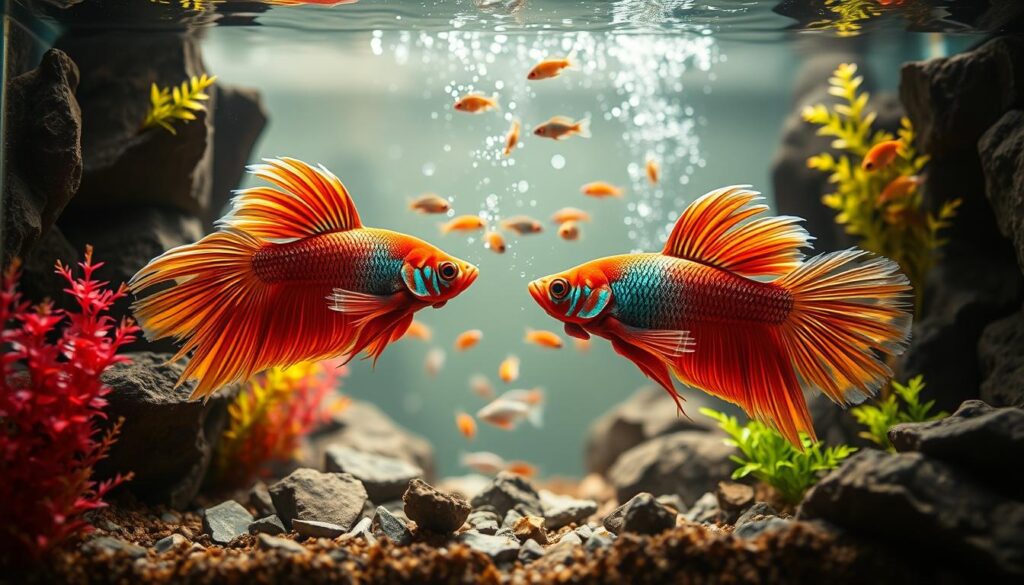
Aggression in fish is not about spite. It’s a survival strategy shaped by instincts, competition, and the need to protect territory. This behavior is seen in both wild and captive fish.
Stress in the tank can make fish more aggressive. Issues like wrong water temperature, unstable pH, and poor filtration can cause stress. This stress often leads to sudden attacks or chasing.
Creating a biotope setup, like a blackwater tank, can help. It provides a natural environment that reduces stress. Matching the tank to the fish’s natural habitat makes dealing with aggression easier.
- Provide shelters and visual barriers to cut direct lines of sight.
- Keep stocking levels moderate so competition for space and food drops.
- Pace introductions to prevent immediate fights between conspecifics.
Competition among fish of the same species is common. This is because they fight over the same space and resources. Fish bred in captivity often have less aggression due to socialization.
Many aggression problems can be prevented with proper care. By observing and intervening early, you can control territorial fish. This is supported by Tropical Fish Hobbyist guides.
Tools like visual checks and water testing help in early detection. Camera or AI-vision aids can also be useful. These tools help spot stress and prevent conflicts.
The Role of Tank Size in Fish Behavior
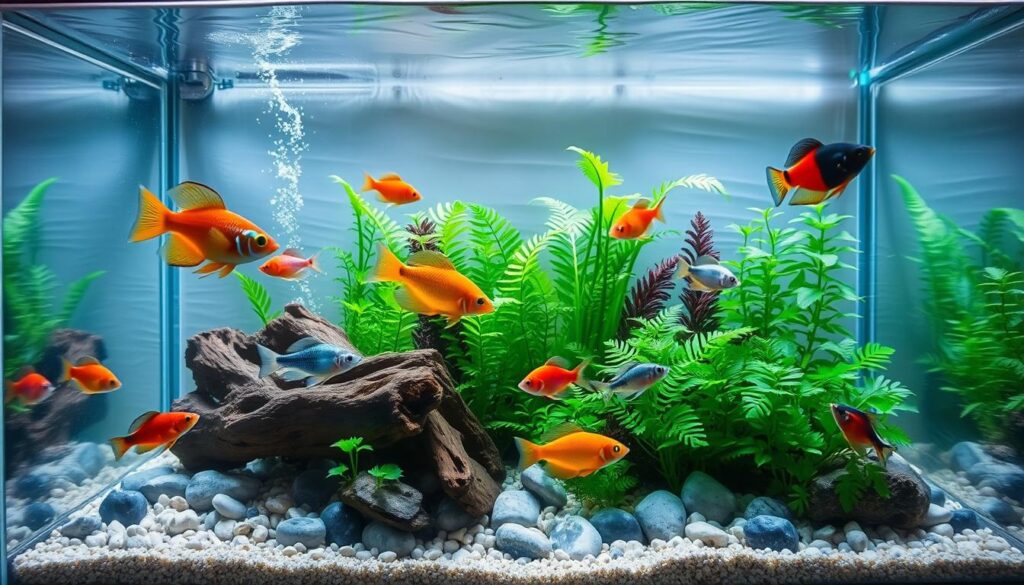
Tank size is key in controlling fish aggression. In a 10-gallon nano aquarium, space is limited. This means you must choose fish that do well in small spaces to avoid fights.
Small tanks are more sensitive to water changes. Temperature, pH, and hardness can shift quickly. To manage this, use reliable heaters, a good filter, and test the water often.
Adding too many fish can stress them out and make them aggressive. The inch-per-gallon rule is not always right. Watch how your fish behave and stop adding more when you see signs of bullying.
- Plan realistic stocking for nano setups.
- Favor low densities and strong filtration.
- Use aquascaping to break sightlines and expand usable territory.
A well-thought-out layout can help prevent fights. Rocks, plants, and driftwood provide hiding spots. These elements help keep the peace in your aquarium.
When dealing with fish aggression, remember a few things. Behavior is influenced by space, water stability, and habitat complexity. Small tanks can be beautiful and peaceful if you keep the fish count low and the conditions stable.
Territoriality in Fish Species
Many marine and freshwater species, like damsels and cichlids, have strong territorial instincts. To reduce aggression, recreate their natural environments. Use blackwater, caves, driftwood, and layered rock to set boundaries.
Conspecific aggression happens when fish compete for space or mates. Don’t stock too many territorial fish unless they form groups in captivity. For example, buy pairs or harems of clownfish and anthias instead of trying to pair them.
Guides for aquarium care suggest ways to handle aggressive fish. Offer hiding spots, introduce fish slowly, and use hardscape and plants as markers. These steps help control territorial behavior and reduce fights.
- Design territories with plenty of visual breaks to reduce stress.
- Use staggered introductions: place newcomer in a clear, observed location first.
- Monitor interactions and be ready to separate persistent aggressors.
Matching decor to species needs and avoiding overcrowding improves social balance. By focusing on habitat design and careful stocking, you can prevent aggression. This approach leads to healthier, more natural behavior in your fish.
Creating a Balanced Nano Aquarium Layout
Design your nano tank with clear zones. Place open swimming areas near the center. Add dense planting or rock clusters at the edges. This layout supports peaceful cohabitation in aquariums by giving fish room to display natural behavior without constant confrontation.
Start hardscape building by arranging smaller stones first. Then place larger Seiryu or similar rocks on top to form caves and ledges. Use driftwood like spider wood to break sightlines. Visual barriers create microterritories that help in reducing fish aggression.
Add multiple hiding spots so any stressed or bullied fish can retreat without forcing another occupant from its shelter. For reef setups, avoid packing live rock tightly; keep caves accessible. A home-building approach lowers stress and aids in managing fish aggression.
Balance low-light plants with open water. Control CO2 to keep plants compact and give consistent cover. This mix of cover and swim space is recommended by hobbyist guides to support peaceful cohabitation in aquariums while minimizing disputes.
- Use varied hardscape heights to create separate territories.
- Leave clear swim lanes to reduce accidental triggers.
- Scatter small caves so no single den becomes a flashpoint.
When you set up, think like a fish. A balanced nano layout reduces dominance displays and eases monitoring. These design choices are practical steps toward reducing fish aggression and managing fish aggression in a compact environment.
Environmental Factors Influencing Aggression
Keeping the water temperature stable is key for peaceful fish. Sudden changes can make them fight. Use a reliable heater, check the temperature every day, and avoid cold drafts.
Good filtration and regular water changes help keep the water clean. Test the pH and hardness levels often. This ensures the water is right for your fish. Proper oxygen and balanced lighting also help in busy tanks.
Blackwater or biotope setups can calm many tropical fish. They mimic natural habitats, reducing stress and aggression. This helps fish behave naturally.
Be ready for power outages. Use a battery backup or a small generator to keep the oxygen levels up. Quick action during emergencies helps keep the tank calm and aggression low.
Choosing the right fish and not overcrowding is important. Too many fish can lead to aggression. Pick fish that get along and are the right size. Captive-bred fish are often more friendly and less territorial.
Quarantine new fish and cycle the tank before adding them. This lowers disease risk and stress. Early action helps keep your tank peaceful for a long time.
Regular cleaning and watching your fish is essential. Daily checks help you catch early signs of stress or aggression. Small, consistent care habits prevent aggression problems.
- Keep temperature stable and monitor daily.
- Use good filtration and test water chemistry regularly.
- Provide hiding places and appropriate stocking levels.
- Quarantine newcomers and avoid sudden environment changes.
Following these steps helps manage fish aggression. Regular care, the right equipment, and careful fish selection are key. They help create a peaceful aquarium.
Strategies for Introducing New Fish
Begin by setting up a quarantine tank. This is where you can watch new fish for signs of illness or odd behavior. Keep them separate for at least two weeks. This allows you to treat any sickness and observe how they handle stress before adding them to your main tank.
When moving fish to your main tank, do it slowly. You can use drip acclimation or gradually add water to match the temperature and pH. This helps prevent shock and reduces the chance of fights.
Plan your stocking carefully. Start with the least aggressive species. This lets them claim shelter and establish territories. Then, add bolder or larger species later. If you have to choose between two species, add the smaller one first. This gives them time to settle.
- Stagger additions over days or weeks to give timid fish space to adapt.
- Introduce entire schooling groups at once so they feel secure and conflicts are diluted.
- Avoid adding a highly territorial species last without allowing others to establish.
Keep a regular routine with automated lights and timed feeding. A consistent schedule helps calm fish and reduces territorial behavior. Automation also lets you maintain a steady rhythm, which supports long-term harmony.
Watch fish behavior closely during the first month. If fights start, separate the aggressive fish or change the tank’s layout. This thoughtful approach to introducing new fish and handling aggression can improve survival and harmony.
Social Dynamics Among Fish
Watching fish group, chase, and avoid each other can teach us a lot. Their social behaviors come from how they evolved and where they grew up. Some fish, like neon tetras, feel safer in big groups. Others, like cichlids, have clear leaders.
Look for fish that always chase, lose color, or hide. Use close observation or video to spot early signs of stress. Fish raised in captivity may act differently than those caught in the wild.
Think about sex, size, and personality when stocking your tank. Competition and rivalry between males can cause fights. For schooling fish, keep groups small to avoid aggression.
- Watch who chases and who hides during meals.
- See who claims territory around decorations.
- Notice color changes that show stress or submission.
When dominance rules your tank, try changing decor or moving fish. Some keep pairs or small groups in separate tanks. This helps keep the peace in your aquarium.
Use what you learn to manage aggression in your tank. Make small changes to group sizes or hiding spots. These can help improve social stability and tank health.
Behavioral Interventions for Aggressive Fish
Change your tank layout to stop fish from fighting over territory. Add plants, rocks, and caves for hiding spots. Move decor around often to keep bullies from claiming the same spots.
Use timed lighting and regular feeding times to reduce stress. This can help prevent fights. An automatic feeder and timer make things predictable for your fish.
Keep your tank not too crowded. This reduces competition and fights. Don’t pair two dominant males or rival species together.
Choose captive-bred fish if you can. They are often less aggressive than wild ones. When adding a new, more aggressive fish, make sure the weaker ones have a safe place first.
- Rearrange decor to reset social order.
- Add refugia or extra cover for victims.
- Use temporary breeder boxes or quarantine crates to protect injured fish.
Watch how your fish interact and be ready to separate aggressive ones. Moving a single troublemaker can help balance things out without needing to move them permanently.
If aggression doesn’t stop, it might be time to find a new home for the aggressive fish. This protects the other fish and keeps your tank peaceful.
By following these steps, you can manage aggressive fish and keep your aquarium calm and healthy.
Feeding Practices to Minimize Aggression
Setting a clear feeding routine helps manage fish aggression. Regular, right-sized portions stop frantic chasing and competition. Quality flakes, pellets, frozen, or live foods provide balanced nutrition and reduce hunger fights.
Spread food over multiple spots to prevent dominant fish from controlling one area. Use a pipette or turkey baster to feed shy or weaker fish. This way, they get their share without stress. An automated feeder ensures consistent feeding when you’re away, promoting stable behavior.
- Follow species-specific schedules and portion sizes.
- Offer varied diets to meet protein, fiber, and vitamin needs.
- Use sinking wafers or surface flakes based on fish feeding habits.
Keep a close eye on water quality because overfeeding harms it and causes aggression. Remove uneaten food and do regular water changes to keep nitrate and ammonia low. Clear water reduces stress and lowers territorial disputes.
Avoid underfeeding as it increases competition and aggression. For hatchery-socialized captive-bred fish, consistent timing makes feeding predictable and calms feeding responses. For specific feeding tips, check our guide on how often to feed aquarium fish.
If you see persistent fights during meals, try spot-feeding or feeding in separate zones. These adjustments help manage aggression and keep your aquarium healthy and balanced.
Monitoring and Adjusting Fish Behavior
Check your tank daily for signs of stress and aggression. Look for fin nipping, hiding, color loss, or reduced appetite. Keep notes so patterns stand out.
Regular water testing for temperature, pH, and hardness helps you spot problems before they drive fights. Keep a simple log of readings and visual observations.
- Schedule routine water changes and filter checks to keep conditions stable.
- Clean algae and inspect equipment to prevent sudden changes that trigger conflict.
- Have an emergency plan for power outages to reduce stress-driven aggression.
If aggression flares after adding a new fish, you can reverse the stocking order or add extra shelters. Rearrange décor or increase hiding spots to break up territories.
Watch for chronic bullies. Removing an aggressor may restore peace faster than long-term interventions. Use temporary dividers when you introduce new fish to ease transitions.
- Keep a stocking list and a planned sequence for adding fish.
- Note behavior changes tied to each addition or layout tweak.
- Adjust stocking if certain species repeatedly cause trouble.
You can use vision apps and simple AI tools to flag abnormal activity early. These tools support your hands-on monitoring fish behavior and help with managing fish aggression before it escalates.
Publications like Tropical Fish Hobbyist recommend keeping detailed logs of additions, water parameters, and incidents. These records guide long-term fish tank aggression control and help you refine care routines.
Long-term Solutions for Fish Aggression
To keep your aquarium peaceful, use smart tank tech like automated lights and heaters. These tools help keep water conditions stable. This reduces stress, a big cause of aggression.
For planted tanks, controlling CO2 and keeping temperatures steady is key. This helps plants grow well and makes a calm environment. It stops fish from fighting over territory all the time.
When stocking your tank, choose captive-bred fish for better behavior. Introduce new fish slowly and quarantine them first. This helps avoid diseases and stress.
Make sure there’s enough space for fish to hide. Use driftwood, caves, and plants for cover. Changing the tank layout now and then also helps prevent territorial fights.
Keep a log of your fish’s behavior. Check out Practical Fishkeeping and American Aquarium Society for tips. Use AI or water tests to catch problems early. If aggression doesn’t go away, you might need to rehome some fish or change the tank’s setup.
Leave a Reply