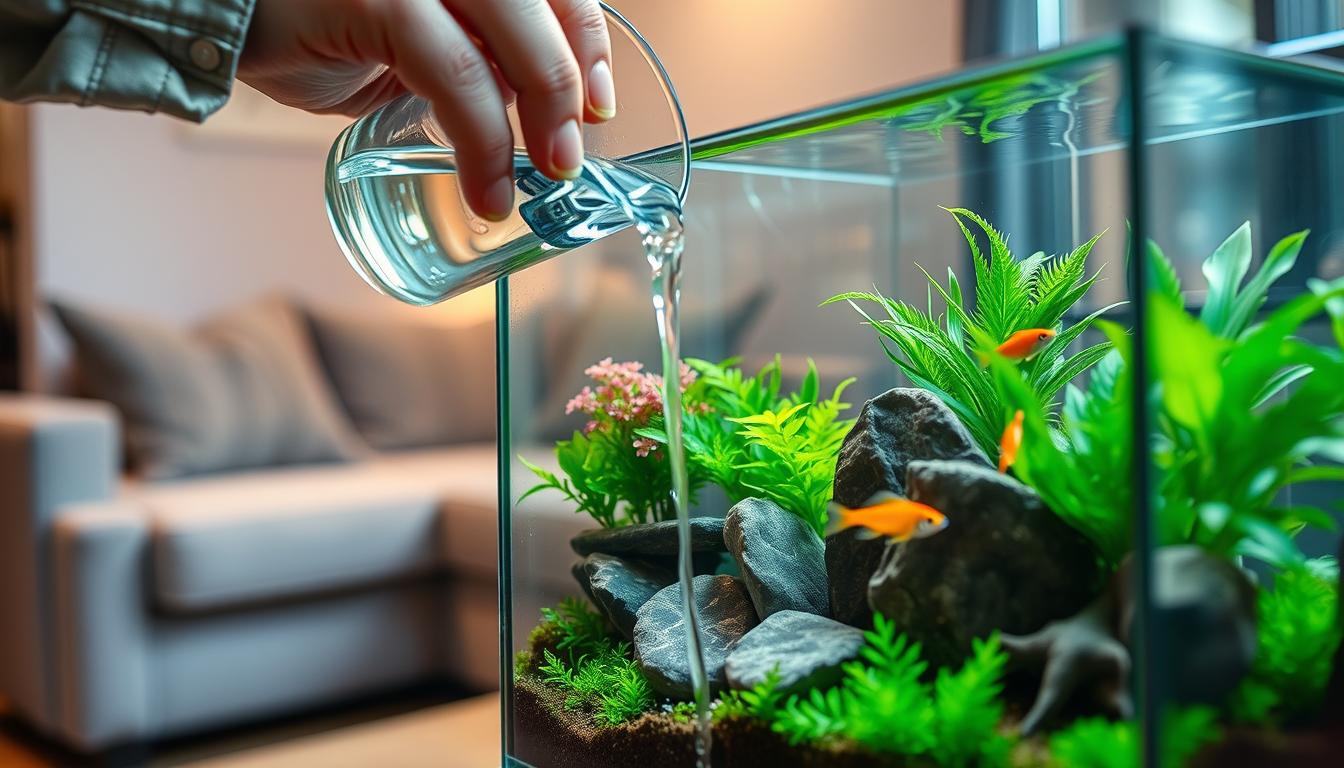
You love the neat, detailed look of your planted nano tank. In small setups, even a small splash can cause big problems. It can shift substrate, uproot plants, or cloud the water.
Refilling a nano tank the wrong way can be a disaster. It can mess up your days or weeks of work. Disturbances can move sand or soil, scatter leaf litter, and bury carpeting plants. This makes your scape look messy and the water cloudy.
But, experienced aquascapers have simple tricks to protect their layouts. They use a plate, a clear plastic sheet, or even a folded tissue over the substrate. These methods help disperse the water flow and cushion the impact. They keep hardscape and plants in place while adding water.
In this guide, you’ll learn how to refill your nano tank step by step. You’ll get practical tips on topping off your nano tank. The goal is to keep your original layout and clear water. This way, your scape will stay exactly as you designed it.
Understanding Your Nano Tank Setup
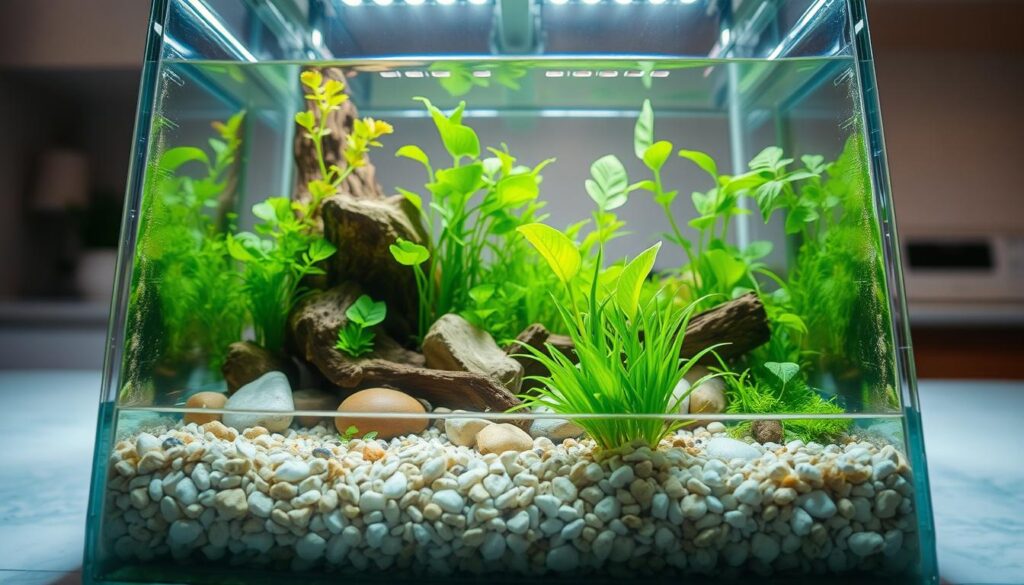
Before you refill your nano tank, it’s important to know each part. Start with the substrate. Options like Tropica Aqua Soil powder hold nutrients and shape water flow. Loose sand or fine gravel can shift if water hits it too hard.
This matters when you refill and when you run filters or powerheads.
Hardscape choices also affect water movement. Slate shards and bog wood alternatives create pockets and channels. These can trap or redirect flow.
If you place tall pieces near an inlet, refilling may push water through narrow gaps. This can disturb plants or create cloudy water.
Plant placement is key for refilling and ongoing care. Foreground carpet plants like Sagittaria repens root close to the substrate. Midground species like Anubias nana attach to wood and rock.
Mosses and stem plants add structure and slow currents. When you refill, aim for gentle flow to avoid uprooting delicate stems.
Lighting and CO2 systems shape growth and gas exchange. Custom LED floodlights or branded units help plants thrive. But CO2 delivery needs care.
Use drop checkers and adjust gradually. Sudden CO2 or pH swings during refilling can stress fish and invertebrates. So plan water additions to keep parameters steady.
Filtration type and flow pattern are key to nano tank care. Canister filters, hang-on-back units, and small sponge filters each move water differently. Powerhead placement and spray bars change surface agitation.
Strong jets near the substrate will displace sand during a refill. So you may need to block or reduce flow temporarily.
Tank specifics influence your approach. Note tank size and capacity. An AquaOne Nano60 holds around 100 liters, which changes the volume you replace and the refill speed.
Check for overflows and inlet locations. Added water should follow predictable paths and avoid flooding stands or equipment.
DIY modifications affect water dynamics. A copper gooseneck or homemade spray bar can soften incoming water. Custom LED mounts may alter where you can place tools while refilling.
Test how these tweaks change circulation as part of routine nano tank maintenance. This helps protect hardscape and plants during refilling.
Knowing your setup helps you choose the right tools for refilling a nano tank. A siphon, a turkey baster, or a soft tubing fed through a padded nozzle will reduce disturbance. Match your method to substrate type, hardscape stability, and plant sensitivity to keep the scape intact while you carry out nano tank care.
Preparing for Water Refilling
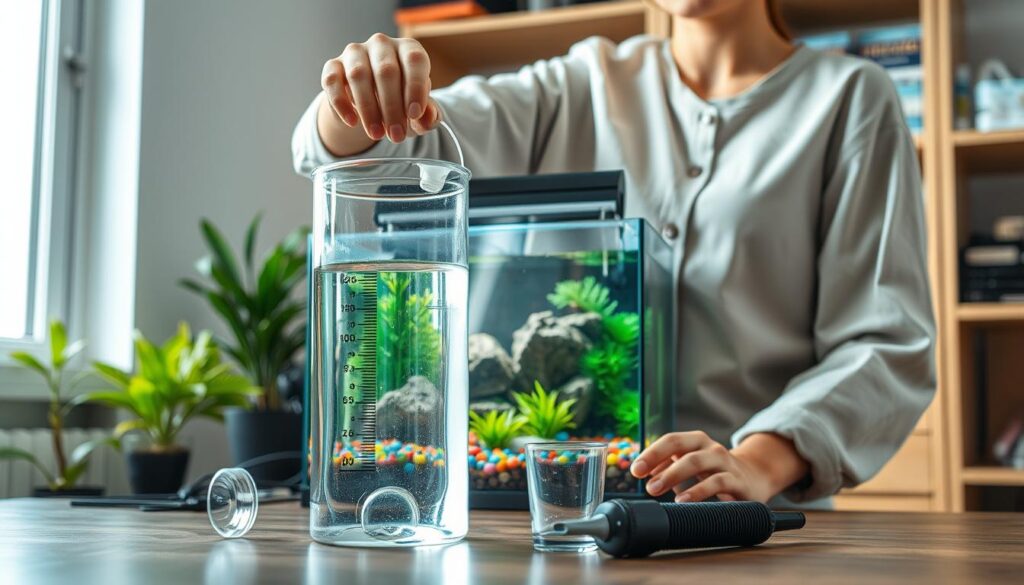
Before you start, gather the right tools. You’ll need a clean plate or plastic sheet, a small bowl, siphon tubing, a measuring cup, dechlorinator, and water conditioner. Also, a bucket, a hose with flow control, towels, and gloves. Having these ready makes the job faster and keeps your plants and livestock stress-free.
Prepare replacement water that matches the tank’s temperature and chemistry. Use your aquarium heater or let water sit until it’s the right temperature. Treat tap water with a dechlorinator like Seachem Prime or API Tap Water Conditioner. If using RO/DI water, mix in the right remineralization solution to restore hardness and trace elements.
Inspect the tank before refilling. Check the substrate and plants for loose pieces that might float up. Reduce filtration or powerhead flow to lower current and avoid substrate lift. If you run CO2, confirm delivery is stable and check your drop checker; a yellowish-green tone often signals CO2 is too high and needs adjustment.
- Have a plate or plastic sheet ready to catch incoming water. Place it near the substrate so new water pours gently onto the plate and disperses without stirring the scape.
- Use a small bowl for delicate flows when you need precise control over where water enters the tank.
Organize your workspace. Keep towels and buckets within reach to catch spills. Set aside a spot for removed equipment like a surface skimmer or spray bar so those pieces stay dry and out of the way. Staying organized prevents accidents and makes refilling a nano tank easier.
Follow a simple routine when topping off: verify water chemistry, reduce flow, place the plate, pour slowly, and monitor plants and substrate for movement. These steps help you avoid sudden changes and show how to top off a nano tank without disturbing the aquascape.
For quick reference, remember these preparing for water refilling checkpoints: tools ready, water matched, pre-checks done, plate in place, and workspace tidy. Using these practical tips for refilling a nano tank keeps your tank stable and your scape intact.
Techniques for Refilling Water
Follow a clear, calm protocol for step-by-step nano tank refilling to protect substrate, plants, and livestock. Start by turning down or turning off strong pumps and powerheads to reduce internal turbulence.
Place a plate, plastic sheet, or folded tissue where you plan to pour. Angle it so water runs down gently onto the surface, then disperses into the tank. This simple barrier is one of the best ways to refill a nano tank without disturbing the scape.
- Pour slowly and steadily using a measuring cup or small pitcher for precise control.
- For larger top-offs use a hose with flow control so you can reduce flow to a trickle.
- If you perform a partial water change, siphon out the desired volume first with siphon tubing and a gravel vacuum.
- Refill slowly while watching substrate and plant positions; pause if anything moves and adjust your angle or flow.
- Restore pumps gradually after the water level is stable to prevent sudden suction shifts.
For very gentle alternatives, aim a low-flow hose at an overturned bowl inside the tank to diffuse flow. Use a turkey baster for ultra-precise local top-offs when you need to target a small area.
Avoid direct high-velocity pours onto substrate or plants. Fast streams will scatter gravel and uproot stems, which creates extra work and stress for your animals.
When you follow these steps for how to top off a nano tank, you reduce risk and keep the aquascape intact. Small, steady moves protect roots and keep water parameters stable while you work.
Protecting Your Aquascape While Refilling
First, use physical barriers to protect plants and decorations. Place heavy plates under big rocks and driftwood to prevent them from moving. Use small rocks or acrylic dividers to block water from reaching the foreground plants.
When adding water, do it slowly to avoid disturbing the plants and substrate. Cover the area with a clean plastic or tissue to let water trickle in gently. Practice this until you can pour water without splashing.
Before adding water, adjust your equipment settings. Turn down the flow from return jets or spray bars to prevent plants from being uprooted. Also, lower the CO2 injection to avoid sudden pH changes and keep the water stable.
Don’t do a lot of pruning or replanting right before refilling. Loose leaves and cuttings can cloud the water and float on the surface. Wait until the water has settled to do any major trimming.
When you top off the tank, you might see surface scum. Many people notice this before they install a skimmer. Using a small surface skimmer helps manage this scum and keeps the water gas exchange efficient.
Make smart choices when designing your tank to make maintenance easier. Choose heavier materials like slate or denser stones for your decorations. This reduces the chance of them moving when you work inside the tank.
Follow a checklist every time you refill your tank. Slow down the return pump, place barriers, reduce CO2, and pour water gently. These steps help protect your delicate setup and make maintenance easier.
See nano tank maintenance as a skill you can improve. Practice refilling on the bench to get better at pouring water. This will help you feel more confident and make refills safer and smoother.
Testing Water Parameters Post-Refill
After changing the water in your nano tank, it’s important to check a few key things. First, quickly check the temperature and pH levels. Try to match the new water to the tank’s temperature to avoid stressing your plants and fish.
Then, do a more detailed test 30–60 minutes after adding new water. Wait up to 24 hours and test again to catch any late changes. This step is key for keeping your nano tank healthy.
- Critical parameters to test:
- Temperature
- pH
- Ammonia (NH3/NH4+)
- Nitrite (NO2-)
- Nitrate (NO3-)
- GH and KH (general and carbonate hardness)
- CO2 stability (via drop checker)
For planted nano tanks, aim for stable and modest values. Keep the temperature close to what it was before. Try to keep pH changes small, no more than 0.2–0.3. Ammonia and nitrite should be zero, and nitrate levels should be low to moderate.
Match the GH and KH levels to what your plants and fish need. Soft-water shrimp like Neocaridina need lower GH, while many stem plants prefer moderate GH. KH helps keep pH stable, so avoid sudden drops during a water change.
CO2 levels can change after adding new water. Check your drop checker color after things settle. If it shows too much CO2, slow down the bubbles and adjust slowly. For example, you might lower to about 1.4 bubbles every 2 seconds, then fine-tune over hours.
- Immediate checks (0–5 minutes): temperature, pH.
- Stabilization check (30–60 minutes): ammonia, nitrite, nitrate, GH/KH, CO2 drop checker.
- Follow-up (within 24 hours): repeat key tests to spot delayed swings.
If temperature or pH changes too much, make small adjustments. Use a partial water change with water that matches the tank’s temperature and chemistry, or adjust the heater slowly. If ammonia or nitrite show up, cut back on feeding and do a partial water change right away. Treating problems too aggressively can harm good bacteria, so be careful.
Regular testing after each water change helps you understand your tank better. This understanding lets you fine-tune dosing, CO2, and maintenance. Good testing habits are key to keeping your nano tank healthy for a long time.
Keeping Your Nano Tank Clean
Keeping your nano tank clean is easy with small, regular tasks. Skim the surface daily to remove oil film and debris. Use a small net or skimmer for scum until you get a permanent one.
Trim plants often to avoid too much detritus. Short trims prevent cloudiness and reduce disturbance. Start with hardy plants like Java moss or Anubias if you’re new.
Vacuum gravel during water changes, but do it slowly. This avoids uprooting plants. Use a narrow siphon and lift substrate a little at a time.
- Clean filters gently: rinse sponges in tank water and avoid scrubbing biological media.
- Inspect and reorient spray bars or powerheads to reduce substrate disturbance.
- Perform frequent small top-offs to limit large refills that could shift plants and decor.
Direct flow downward with spray bars to help CO2 dissolve. This reduces substrate migration. Balance circulation with gentle flow near the bottom.
Plant placement is key for long-term care. Use heavy-rooting plants to anchor the substrate. Group taller plants in the back for easy trimming.
Follow a weekly maintenance checklist: skim, spot vacuum, trim plants, and rinse filters. This keeps water clear and reduces big cleanings.
By following these routines, keeping your nano tank clean becomes a part of your hobby. Small, consistent steps protect your aquascape. This makes refills and daily care easier, keeping plants and visuals in top shape.
Establishing a Routine for Water Changes
Make a schedule for water changes to keep your nano tank stable. For planted nano tanks, small water changes of 10–25% weekly are best. The number of fish, plants, and nutrients will tell you how often to change the water.
Choose the change volume based on nitrate levels, debris, and bioload. A small water change is better for beneficial bacteria and your plants. If nitrate levels go up or there’s a lot of debris, increase the change amount a bit. But if levels are low and plants are doing well, stick to small changes.
Do maintenance when the tank is calm. Don’t do big water changes right after replanting, pruning, or cleaning the filter. Change water at the same time every day to keep biological rhythms and reduce stress on your pets.
Get your replacement water ready before starting. Make sure it’s the same temperature and use a dechlorinator like Seachem Prime. Let it sit for a bit to reach room temperature. Have a siphon, bucket, and a diffusion plate or spreader ready to pour gently and protect your plants.
- Use a diffusion plate or a rock to break flow and avoid disturbing substrate.
- Top off small amounts more often to limit parameter swings.
- Store pre-mixed water in a spare container to speed routine work.
Keep a simple log of dates, volumes changed, and parameter readings. Note nitrate, ammonia, and pH after a refill for several weeks to spot trends. This record will help you find the best routine for your tank.
Stick to your plan but be ready to adjust. If algae blooms or your pets seem stressed, change the frequency and volume. Over time, you’ll find the perfect balance for water quality and plant health, making water changes easier and safer.
Troubleshooting Common Issues
If you notice substrate or plants moving after refilling, use tweezers to gently move them back. Add heavy decorations like lava rock or small stones to keep plants in place. If plants collapse, do a controlled siphon and replant carefully to avoid disturbing the layout.
Cloudy water after refilling might clear up on its own. Let it settle or use your filter to remove particles. Make sure your filter is clean and working well. Use a clarifier only if needed. If agitation caused the cloudiness, stop refilling and let your filter work its magic.
Scum on the water surface can come from oils or too many organics. Skimming helps a lot. Consider adding a surface skimmer or adjusting your return flow to reduce scum. Also, check how much food you’re adding to avoid uneaten food at the top.
Changes in CO2 or pH can happen after adding new water. Reduce agitation and match the new water’s chemistry to your tank. Adjust CO2 slowly while watching a drop checker. If it shows yellowish-green, lower the bubble rate until it’s right.
Too much flow can move substrate during or after refilling. Try redirecting jets, using a spray bar, or lowering the pump speed. This helps keep the substrate and plants in place.
- Quick fixes: reposition plants with tweezers, slow down refill flow, let the filter clear cloudiness.
- Stability measures: add weightier decor, use spray bars, match water chemistry before topping up.
- When to get help: persistent unexplained parameter swings, widespread plant collapse, or mass animal stress should prompt consultation with a local aquarium shop or an experienced aquascaper.
Keep a troubleshooting nano tank checklist handy. This way, you can quickly solve nano tank refilling problems. Use these tips to refill your nano tank without issues and keep your aquarium healthy and stable.
Final Thoughts on Refilling a Nano Tank
When refilling a nano tank, start with careful planning and a gentle touch. Make sure the new water’s temperature and chemistry match the tank’s. Use a plate, overturned bowl, or tissue to soften the water flow.
Pour the water slowly to avoid upsetting the substrate, plants, and fish. This helps keep your tank’s ecosystem balanced.
For a stable water environment, do small water changes often. This method reduces stress on your plants and animals. After adding water, check the pH, ammonia, nitrates, and CO2 levels. Keep a log to track changes and improve your routine.
The right method for refilling your nano tank depends on its design and your tools. Try using an overturned bowl, a low-flow hose, or a turkey baster. This will help you find the best way to refill your tank, whether it has slate, bog wood, or soil.
Watch for scum on the water’s surface. If it’s a problem, consider using a surface skimmer.
Try using a plate or bowl for your next water refill. See how it helps keep your aquascape safe. Making small changes and keeping records will help you maintain a healthy nano tank over time.
Leave a Reply