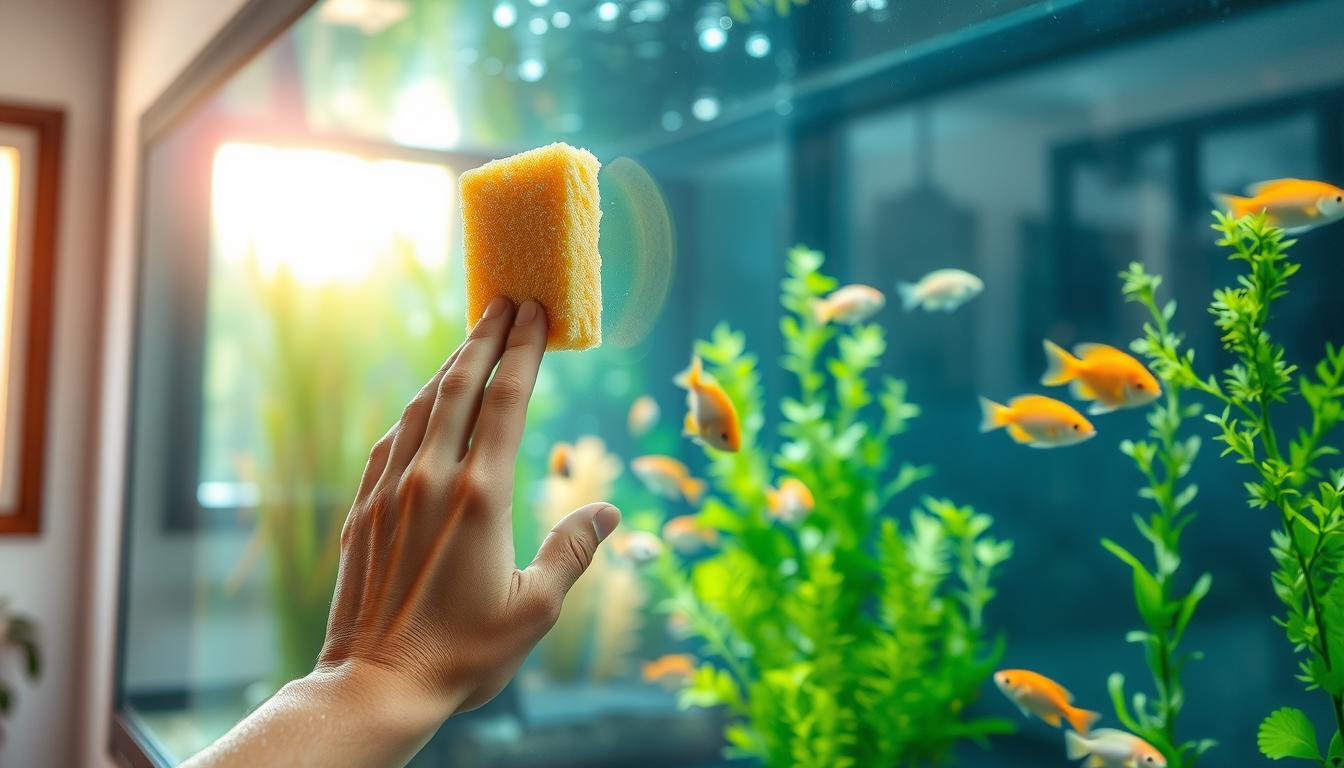
You want a clear view of your aquarium and healthy water for your fish. This guide offers tips on cleaning aquarium glass without scratching it. It uses only tools and methods safe for plants, shrimp, and fish, avoiding harsh chemicals.
Green Aqua’s team and experienced hobbyists agree on the best glass cleaning method. It involves regular, gentle maintenance. You’ll learn eco-friendly steps to prevent algae and limescale buildup.
Keeping glass clean enhances your tank’s look and water quality. Follow these easy tips for quick, safe, and effective cleaning. Your tank will stay crystal clear without the need for harsh chemicals.
Understanding the Importance of Clean Aquarium Glass
Clean glass lets you see your fish and plants clearly. It makes your aquarium more enjoyable. You get to see the colors, behavior, and details of your underwater world.
Ignoring the glass can signal bigger issues. Algae, mineral deposits, and waste often appear first. These signs can mean your water quality is suffering, stressing your fish.
Don’t use household cleaners or tools on your aquarium. They can harm your shrimp, corals, and fish. Instead, use tools made for aquariums to keep your glass clean and safe.
Regular care protects your glass and your investment. Professionals use gentle methods to clean your glass. This care keeps your tank looking great and supports a healthy environment.
- Spot-check glass weekly to maintain aquarium clarity.
- Address white mineral deposits promptly to prevent buildup.
- Choose aquarium-safe tools for streak-free glass cleaning.
Simple habits now can prevent big problems later. Clear glass means healthier fish and a happier aquarium.
Essential Tools for Cleaning Aquarium Glass
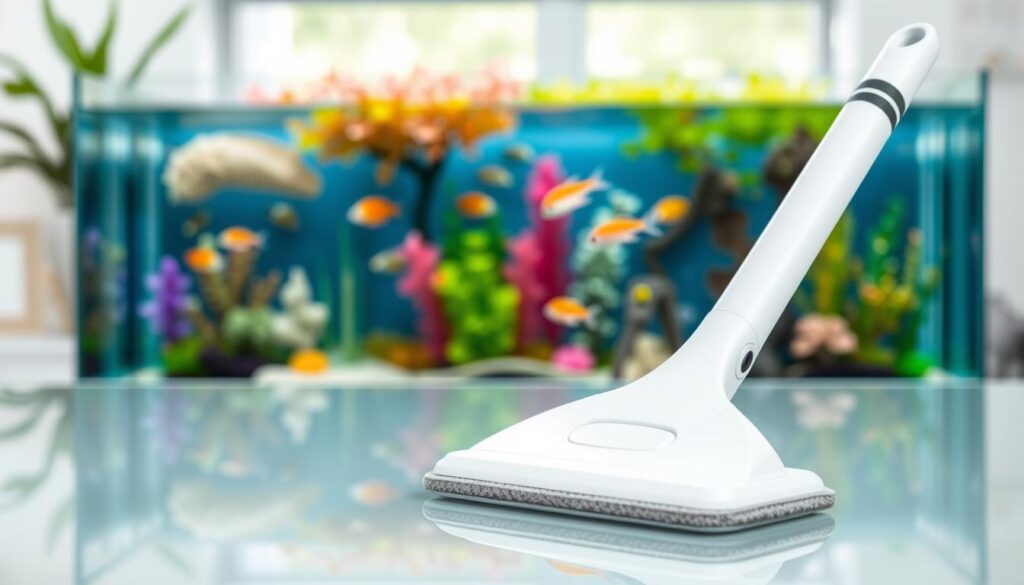
Before you start, pick the right tools for cleaning your aquarium glass. A sharp algae scraper with stainless-steel blades is great for removing tough deposits and lime. When the blade gets worn, flip it over and use strokes from top to bottom to avoid getting substrate stuck.
Also, keep about 0.5 cm away from the corners to protect the silicone seal. Make sure to store the scraper where kids can’t reach it.
For a magnetic aquarium glass cleaner, choose one that fits your tank’s glass thickness. These cleaners have two parts that slide together. To clean, move the magnet in a circle. If the inner piece floats, it’s loose, and you can easily get it back.
- Sponges made for aquariums are the best choice. Look for brands like Dennerle, which offers sponges with a stainless wool side for tough spots.
- Melamine foam is safe for acrylic tanks. But, avoid using household sponges because they might have detergent residue.
- Cleaning gloves, like JBL ProScape gloves, are great for reaching corners, silicone seams, and more. They also protect your hands.
For tight spots, use a soft brush. The Green Aqua angled maintenance brush is perfect for corners and around decorations. A soft toothbrush is a good backup for detailed cleaning.
To finish, use a soft, lint-free microfiber cloth. Dennerle microfiber cloths give a streak-free shine. Use a separate cloth for your aquarium to avoid contamination.
Look into battery-operated cleaners and compact models like the Fluval edge algae cleaner for quick clean-ups. Choose non-toxic, residue-free cleaners and wipes that are safe for aquariums when needed.
For removable decor and lids, use algae scrapers and toothbrushes for gentle scrubbing. For stubborn residue, soak items in hot water or boil them if the material can handle it. Never use soap on lids or decor that will go back into the tank for eco-friendly cleaning and a safe fish environment.
Step-by-Step Guide to Cleaning Aquarium Glass
First, turn off and unplug filters, heaters, and lights. This step is to keep electronics safe and prevent fish stress.
Next, gather your cleaning tools: an algae scraper or magnetic cleaner, a soft sponge or microfiber cloth, a bucket, and your chosen cleaner. Remove decorations and plants to make cleaning easier.
-
Start by cleaning the inside of the tank during a partial water change. Use an algae scraper from top to bottom. Lift at the substrate line to avoid stirring up sand or gravel. This method helps keep debris ready for vacuuming.
-
For the magnetic cleaner, move it in small circles across the glass. When done, slowly pull the outer piece off. This lets the inner magnet float to the surface without disturbing the substrate.
-
Vacuum the substrate and remove about one-third of the tank water. This step lowers debris and nitrates while keeping enough water for fish. Rinse sponge filters in tank water only during filter maintenance.
-
Clean the outside glass with a microfiber cloth for streak-free results. For quick cleaning, a water-and-vinegar mix works well on outside surfaces. Always rinse reusable tools well after use to avoid residue buildup.
-
Refill the tank with water that matches the tank temperature. Treat with a dechlorinator as needed. Turn on the filter and heater after refilling to restore water circulation and temperature control.
Regularly use these glass cleaning tips to prevent algae and film buildup. This way, you can clean glass without scratching it or stressing your fish.
Preventing Scratches During Cleaning
Start by removing loose substrate from the glass rim when cleaning your aquarium. Sand and fine gravel can scratch the surface if trapped. Always move scrapers in one direction, from the glass to the substrate, to avoid scratches.
Choose the right tools for the job. Soft melamine foam or an aquarium-specific Dennerle Clenator sponge are good for acrylic surfaces. They help prevent scratches. Avoid using household sponges or abrasive pads, as they can damage the surface.
Magnetic cleaners are great for most aquariums. They let you clean without touching the water, reducing the risk of scratches. For a safer option, consider the Oase plastic scraper. Just remember, the plastic edge can’t be replaced.
Understand the material of your tank. Tempered glass can handle more scrubbing than acrylic. For acrylic, use gentle pressure and soft tools. Melamine foam and nonabrasive brushes are best for keeping it clear.
- Don’t force a blade into corners; keep scrapers at least 0.5 cm from silicone seals to protect the seam.
- Use soft brushes for corners and silicone seams instead of metal or sharp blades.
- Make sure the magnetic cleaner fits your glass thickness for safer use.
Follow professional cleaning techniques for better results. Work in controlled strokes and use light pressure. Choose the right tool for your material and check for grit before each use. These steps will help keep your aquarium panels scratch-free and last longer.
Natural Cleaning Solutions You Can Make
You can clean aquarium glass without harsh chemicals. Use simple ingredients from your pantry. Mix equal parts distilled white vinegar and water for a vinegar glass cleaner. Spray it lightly, let it sit for a minute, then wipe with a soft cloth and rinse well.
For tough grime, make a baking soda paste with water. Apply it to the stain, rub gently with a soft brush or cloth, then rinse off. This solution is great for outside surfaces and doesn’t leave harmful residues.
Mineral or calcium deposits can be a problem. Citric acid in lemon juice or diluted vinegar can help soften them. Use these on drained tanks or removable parts only. A diluted vinegar rinse can also disinfect glass and plastic safely before rinsing well.
For calcium on in-use equipment, use recommended wipes like Tetratec Easy Wipes for glass and plastic. These are safe for aquarium inhabitants when used as directed.
Stay away from soaps or household detergents. Even a little can harm fish. After using DIY or vinegar glass cleaners, rinse all parts well with fresh water before putting them back in the tank.
- DIY glass cleaner: equal parts distilled white vinegar and water for exterior cleaning.
- Homemade glass cleaning solution: baking soda paste for scrubbing stains.
- Eco-friendly glass cleaning: lemon juice or diluted vinegar for dried mineral deposits on empty tanks.
- Safe wipes: use approved products like Tetratec Easy Wipes on in-place equipment when needed.
Maintaining Your Aquarium After Cleaning
Keep a steady water change routine to protect water quality and cut algae growth. Change 10–25% weekly based on test results. Test your water for nitrates, nitrites, and ammonia to know when bigger changes are needed.
Do glass cleaning tips during a water change so loosened debris can be vacuumed away. Use a magnetic cleaner or soft scraper inside the tank, then siphon the substrate to remove particles. Clean outside glass once or twice weekly to avoid buildup on viewing surfaces.
Make filter maintenance part of your schedule. Rinse sponge filters in tank water and replace cartridges as the manufacturer suggests. Check for slow flow, odors, or visible clogging and service filters monthly or as needed.
- Stick to consistent lighting with timers to limit algae.
- Include algae eaters like Amano shrimp or Otocinclus if suitable for your setup.
- Keep nutrients balanced by avoiding overfeeding and monitoring plant growth.
When you refill after vacuuming and a partial water change, use water at the same temperature and add dechlorinator in the bucket or tank. Turn filters and heaters back on; filters clear suspended debris within a few hours.
Regular checks and a simple schedule make maintaining aquarium care manageable. Small, steady steps help your tank stay clear and healthy without major interventions.
Dealing with Tough Stains or Deposits
Start by figuring out what kind of stain you have. White, chalky film usually means it’s from hard water. This stuff is safe for fish but looks bad.
To remove calcium deposits on parts you can take out, soak them in vinegar or lemon juice. These acids help break down the minerals. Then, you can wipe them off with a soft cloth or sponge without scratching.
For tanks that are always filled, use safe cleaning tools. Tools like the Superfish Power Glass Cleaner or the FLUVAL EDGE ALGAE CLEANER are great. They remove algae without getting your hands wet. Make sure to pick the right attachments for your glass type to avoid damage.
If the deposits are really bad, do a partial water change and vacuum. This helps get rid of the loosened debris. Tools like the Eheim Rapid Cleaner have brushes and sponges for different types of residue. For places where metal blades are too risky, use an Oase plastic cleaner to protect your glass and acrylic.
- Soak removable items in vinegar for glass to loosen minerals.
- Use battery-operated or blade-designed aquarium tools for in-tank cleaning.
- Perform a water change plus vacuuming when residues are extensive.
For tough calcium, try TetraTec Easy Wipes on parts you can use. They’re safe for fish. When you drain the tank, a fresh lemon rub can polish it well.
For regular upkeep, use professional glass cleaning methods. Clean often but briefly to stop buildup. This way, you avoid harsh scraping and keep your aquarium clear with less stress on your fish.
Common Mistakes to Avoid
When cleaning your tank, stay away from mistakes that can harm fish. Never use household cleaners or bleach while the tank is running. These chemicals can stay in the water and hurt fish, even after rinsing.
Don’t use soap on glass or equipment. Soap is toxic to fish and can be deadly. If you need to drain the tank for a deep clean, use white vinegar or lemon juice on the empty glass. Then, rinse it well before adding water back in.
Choose tools that help avoid scratches. Sand and gravel can get stuck between a scraper and the glass, causing damage. Use soft pads or single-use sponges made for aquariums to prevent scratches.
Always turn off and unplug filters, heaters, and lights before removing water or reaching into the tank. This step reduces the risk of electrical hazards and protects your equipment during maintenance.
- Don’t use old household sponges that touched cleaners. They can spread toxins between tanks.
- Avoid scraping too hard into corners. Aggressive scraping can weaken the silicone sealant and cause leaks.
- Rinse any tool that touches the tank with tank water or clean, dechlorinated water. This removes any residues.
Follow simple glass cleaning tips: work slowly, use gentle pressure, and rinse well. These steps protect your investment and keep your fish healthy. They also help you avoid common mistakes that hobbyists often make.
Teaching Kids to Help with Cleaning
You can make aquarium chores fun and safe for kids. Start by setting clear rules. Keep sharp tools like algae scrapers locked away. Also, never let kids handle chemicals or in-tank devices without an adult nearby.
Give kids simple, supervised tasks to build their confidence and sense of responsibility. Tasks like wiping the exterior glass with a microfiber cloth, cleaning lids, and checking lights and timers are great. These tasks help them learn and feel involved.
- Teach children to spot algae and report buildup instead of scrubbing the tank themselves.
- Let them prepare replacement water using a clean bucket while you monitor temperature and conditioner dosing.
- Show how to record basic readings from a test kit so they learn about water quality.
Show kids how to clean outside surfaces safely and affordably. For example, mix vinegar and water for an eco-friendly glass cleaner. Teach them quick glass cleaning hacks like spraying onto a cloth instead of directly on the glass.
When kids help with tasks like partial water changes or substrate siphoning, stay close and guide them. Keep water parameters in check and reduce fish stress by controlling timing and movements.
Make cleaning fun and educational. Praise their careful work and explain why you avoid soaps and household cleaners on aquarium parts. Encourage their questions to help them learn solid skills in aquarium care that will last a lifetime.
Conclusion and Final Thoughts
Keep your cleaning routine simple. Use tools like algae scrapers and magnetic cleaners. Also, aquarium sponges and microfiber cloths are great. Clean the inside glass during water changes to remove loose debris.
Use a top-to-bottom scraper technique. Save corners for softer tools to protect silicone seals and avoid scratches.
Choose non-toxic cleaning methods when you can. A homemade glass cleaning solution of diluted white vinegar works well. It’s good for mineral and algae deposits on drained tanks.
For live systems, use aquarium-safe wipes or gentle scrubbing. Never add household chemicals to the water. These methods keep fish safe and reduce residue.
Regular care prevents big problems. Test water often for ammonia, nitrites, and nitrates. Keep levels right.
Turn off equipment before big cleanings. Rinse well and refill with dechlorinated water at the same temperature. This prevents stress. Following these tips and maintaining regularly will give you clean glass and a healthy environment for your fish.
Leave a Reply