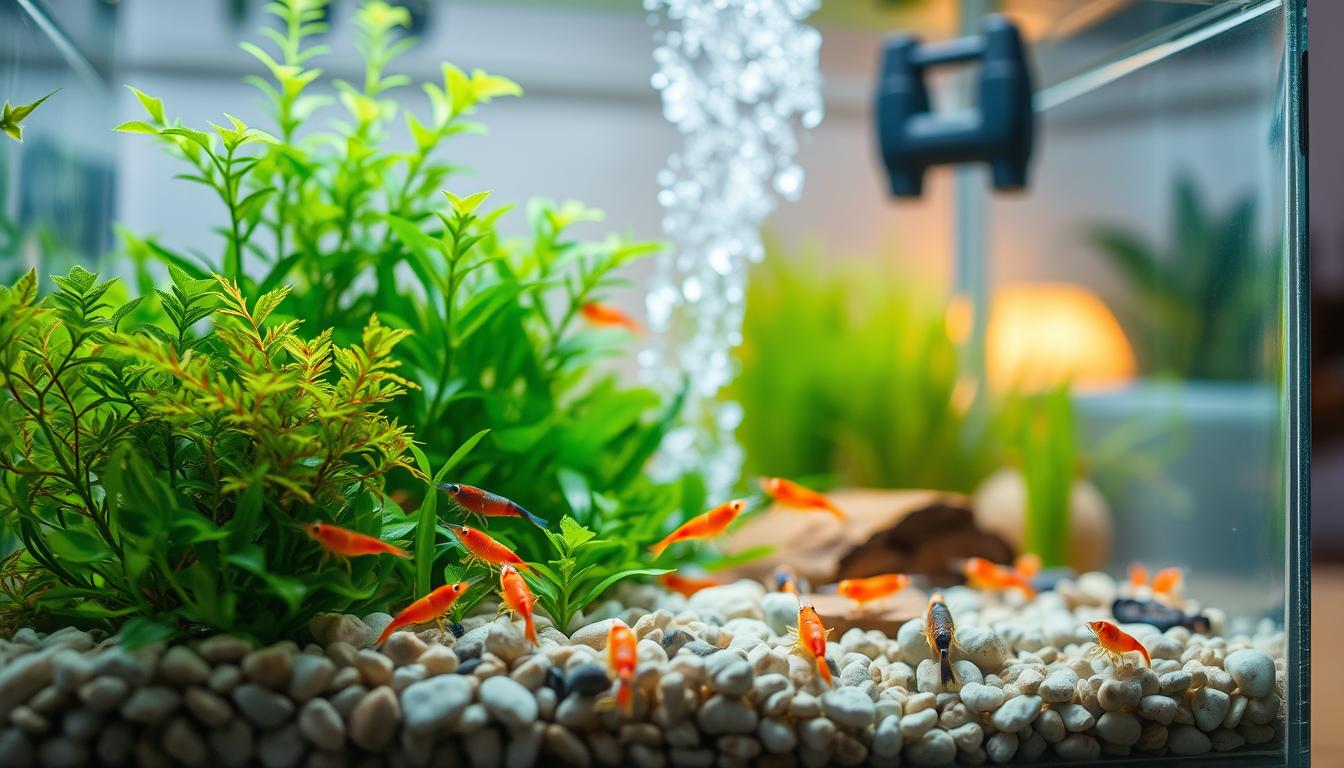
This guide will show you how to create a stable home for breeding ornamental shrimp. You’ll learn methods that focus on consistency, not perfection. Shrimp thrive when their environment’s temperature, pH, and water chemistry stay steady.
First, pick shrimp species that fit your skill level. Beginners can start with Neocaridina davidi like Red Cherry. More experienced breeders might prefer Caridina species, such as Crystal Red. Your choice will influence your tank setup and care routine.
Start with a small group of 5–15 shrimp. This size helps males find females and lets biofilm grow. A 10-gallon tank is better than smaller ones for stable conditions.
You’ll need some basic equipment for shrimp breeding. This includes an aquarium, a sponge filter, a heater, and a thermometer. You’ll also need dark substrate, live plants, hiding spots, a water test kit, water conditioner, and tools for maintenance. Stay away from copper-based medications and buy shrimp from trusted breeders or sellers.
The guide will walk you through choosing species, setting up your tank, and maintaining water quality. You’ll learn about filtration, feeding, and breeding behavior. It also covers managing breeding cycles, troubleshooting, lighting, advanced techniques, and a final action plan for breeding shrimp at home.
Understanding Ornamental Shrimp Species
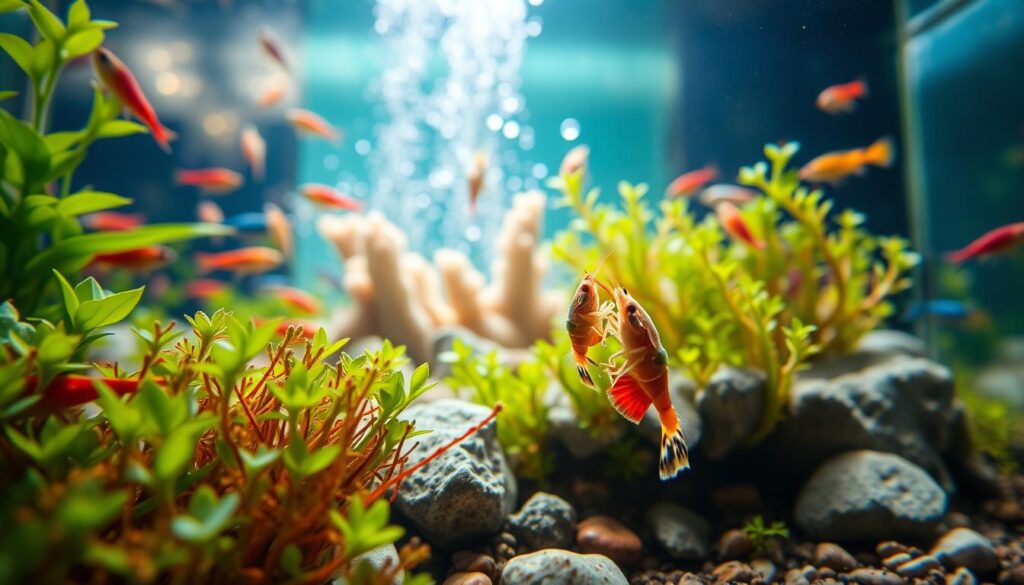
When you start breeding ornamental shrimp, you’ll find two main types. Neocaridina, like Red Cherry and Green Jade, are tough and can handle a wide range of pH and temperature. Caridina, including Crystal Red and Caridina cantonensis, need softer, lower-pH water and steady conditions.
Neocaridina adults grow up to 4 cm (1.6 inches). They eat both plants and animals and live one to two years with proper care. They thrive in pH 6.5–7.5, GH 6–8 dGH, KH 2–4 dKH, TDS 150–250 ppm, and temperatures between 65–82°F. This makes Neocaridina perfect for beginners.
Caridina species need more precise control over GH, KH, and TDS. For example, Crystal Red shrimp like pH 5.8–6.8, GH 4–6 dGH, KH 0–1 dKH, TDS 100–160 ppm, and 68–75°F. Caridina serrata, the Tangerine Tiger, can handle pH 6.0–7.0, GH 3–8 dGH, KH 1–4 dKH, TDS 130–250 ppm, and 64–78°F. These specific needs are key for breeding sensitive strains.
Be careful not to mix different color strains of the same species. This can dilute the colors over generations. If you want to keep a specific color line, breed only like-with-like and keep track of parentage.
For beginners, consider starting with Neocaridina or Amano (Caridina japonica) and ghost shrimp. These are more forgiving. Save the delicate Caridina strains for when you’re more experienced.
- Buy from local breeders or reputable vendors to lower disease risk.
- Ask sellers about the shrimp’s current water parameters and age.
- Watch for pests and pathogens such as Vorticella and Epibionts.
Getting healthy shrimp from trusted breeders increases your chances of success. Knowing the shrimp’s origin and conditions helps you match your tank’s parameters and protect your colony.
Essential Tank Setup for Shrimp Breeding
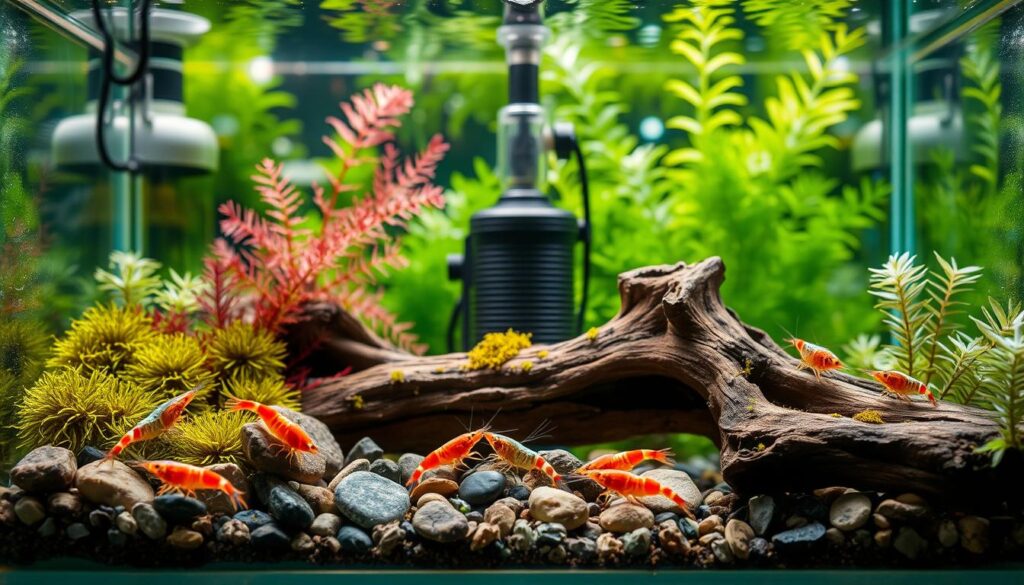
Start with the right tank size and placement. Choose at least a 5-gallon aquarium, with 10 gallons preferred to keep water chemistry stable. Set the tank on a sturdy, level surface you rarely move to avoid stress to shrimp and shifts in the shrimp tank setup.
Pick a substrate that supports color and biology. Coarse black aquarium gravel brings out hues and resists clogging. For Caridina species, consider shrimp-specific substrates that control pH and TDS. The substrate choice is a core part of any ornamental shrimp breeding guide.
Design hardscape that offers shelter and grazing surfaces. Use driftwood, lava rock, Ohko stone, cholla wood, and small shrimp caves or tunnels. Driftwood adds tannins that mimic wild habitats and boosts biofilm growth your shrimp will graze on.
Fill the planted shrimp aquarium with hardy plants and mosses. Bucephalandra, Anubias, and Java fern anchor well to rock and wood. Java moss or Christmas moss creates microhabitats for shrimplets and expands surface area for biofilm. Floating plants reduce light spikes and give extra cover.
Choose gentle filtration and stable heating. A sponge filter is ideal because it provides mild flow and protects baby shrimp. If you prefer other options, use a hang-on-back or canister filter with intake sponge guards. Add a small heater and thermostat to prevent temperature swings. Finish with a thermometer and an LED light that supports a clear day-night cycle for plants and biofilm growth.
Cycle the tank before adding animals. Perform a fishless cycle with pure ammonia to cultivate Nitrosomonas and Nitrobacter colonies. Only add shrimp after tests show 0 ammonia, 0 nitrite, and nitrate under 20 ppm. Cycling often takes a few weeks and is essential to any how to breed ornamental shrimp plan.
Match your water source to species needs. Most Neocaridina do fine on dechlorinated tap water. Delicate Caridina need RODI water remineralized to target GH, KH, and TDS values. Use a quality water conditioner for tap water and measure parameters regularly.
Consider trusted equipment brands used by breeders. Qanvee sponge filters are widely recommended for their reliability. For a compact canister, look at Ultum Nature Systems DELTA 60. The Mighty Aquarium hang-on-back filter serves as a quiet HOB option when paired with an intake sponge. These choices help your ornamental shrimp breeding guide remain practical and realistic.
- Tank size: 5–10+ gallons
- Substrate: coarse black gravel or shrimp-specific media
- Hardscape: driftwood, lava rock, Ohko stone, cholla wood
- Plants: Bucephalandra, Anubias, Java fern, Java/Christmas moss
- Equipment: sponge filter, heater, thermometer, LED light
- Cycle: fishless ammonia method to 0/0 and low nitrates
- Water: tap for Neocaridina, RODI remineralized for Caridina
Follow these steps to create an effective essential tank setup. A well-planned shrimp tank setup makes it far easier to learn how to breed ornamental shrimp and to keep a thriving planted shrimp aquarium.
Water Quality: Key to Successful Breeding
For breeding ornamental shrimp, focus on keeping ammonia, nitrite, and nitrate levels low. Aim for ammonia and nitrite levels at 0 ppm. Nitrate should be under 20 ppm. These levels are essential for keeping shrimp healthy and encouraging them to breed.
Before making any changes, check the specific needs of your shrimp species. For Neocaridina, aim for a pH of 6.5–7.5, GH of 6–8 dGH, and KH of 2–4 dKH. The temperature should be between 65–82°F. For Crystal Red Caridina, the pH should be 5.8–6.8, GH 4–6, and KH 0–1. TDS should be 100–160 ppm, and the temperature should be around 68–75°F. Use these guidelines as you learn to breed ornamental shrimp.
Consistency is more important than achieving perfect water quality. Shrimp can handle small changes, but sudden shifts can stress them out. Make changes slowly and check the water daily or every other day to keep it stable.
Use reliable liquid test kits to check ammonia, nitrite, nitrate, and pH levels. Test the water at least once a week. Test more often during tank cycling, after big water changes, or if you notice any changes in shrimp behavior. Regular testing is a key shrimp breeding tip.
Always treat your water before adding it to the tank. Use conditioners to remove chlorine and chloramine. If using RO/DI water, add a remineralizer to match the target GH, KH, and TDS for Caridina. Many hobbyists use tap water with a dechlorinator for Neocaridina with good results.
Temperature affects how fast shrimp breed and how long they live. Higher temperatures speed up breeding but shorten lifespan. Lower temperatures slow down metabolism and increase longevity. Find a balance that fits your goals and adjust slowly to avoid stressing the shrimp.
Keep the tank’s biofilm and ecosystem stable to support shrimplets. Biofilm provides essential food for young and adult shrimp. Let the tank mature before expecting reliable breeding success. A stable environment supports natural feeding and reproduction.
- Core targets: ammonia 0 ppm, nitrite 0 ppm, nitrate <20 ppm.
- Neocaridina: pH 6.5–7.5, GH 6–8 dGH, KH 2–4 dKH, TDS 150–250 ppm.
- Caridina (Crystal Red): pH 5.8–6.8, GH 4–6, KH 0–1, TDS 100–160 ppm.
- Test weekly, more after changes; use dechlorinators or remineralizers as needed.
Follow these practical tips and closely monitor the water quality for ornamental shrimp breeding. Proper water quality reduces stress and increases your chances of healthy broods.
Filtration Systems for Shrimp Tanks
Choosing the right filtration systems is key to success in ornamental shrimp breeding. A shrimp sponge filter is a top choice for many. It provides gentle flow, a large biological surface area, and protects young shrimplets.
Models like the Qanvee double sponge filter have bio-media chambers. These boost nitrifying bacteria without strong currents.
Hang-on-back filters are great for a low-profile look. The Mighty Aquarium HOB is a stylish option that hides its hardware. You need to add an intake sponge to keep baby shrimp safe.
Many hobbyists buy pre-made intake sponges or make their own DIY guard.
Canister filters are ideal for strong mechanical and biological filtration in larger systems. Use clear lily pipes to keep the display tidy. Fit small canister models like Ultum Nature Systems DELTA 60 for nano setups.
Protect the intake with sponge or mesh to keep shrimp safe. This also preserves the canister’s performance.
Maximize biological media and keep flow moderate. This supports nitrifying bacteria and oxygenation. Too much current can stress shrimp and strip biofilm from moss and plants.
Position filters to create gentle circulation across planted areas. This way, detritus moves to the intake without blasting shrimp.
- Place sponge filters near moss and low plants for targeted filtration.
- Use multiple small sponge filters for redundancy and even flow.
- Consider a HOB or canister for mechanical polish on larger tanks.
Maintenance is more important than brand. Clean sponge filters by rinsing in tank water during water changes. This keeps beneficial bacteria alive. Do not scrub media with tap water or fully sterilize it.
Routine care keeps biological filtration strong. This reduces ammonia spikes.
Build redundancy to avoid oxygen dips and equipment failures. Adding a second sponge filter or low-flow air stone improves aeration. This reduces the need for frequent water changes.
Thoughtful placement and regular maintenance make your filtration systems for shrimp tanks resilient and shrimp-friendly.
Feeding Ornamental Shrimp
Feeding ornamental shrimp well is key to their health and successful breeding. Start with biofilm as the main food source. Biofilm grows on leaves, wood, and tank surfaces. It provides natural microbes and algae that shrimplets need.
Also, add high-quality pellets and wafers to their diet. Use Repashy formulas, Shrimp Cuisine, and algae wafers in small amounts. Plankton blocks like Zoo Med Plankton Banquet add spirulina and trace minerals. These items help provide balanced nutrition for breeding.
Protein is important for growth and molting. Offer a high-protein option, like Repashy 45% protein formula, once or twice a week. But, don’t overfeed protein foods as it can harm the water and shrimp.
Use feeding dishes to keep the substrate clean. A small glass bowl or terracotta plate helps focus food and monitor feeding. Remove uneaten food after two to three hours, depending on the number of shrimp.
Natural supplements enhance biofilm and provide shelter. Add Indian almond (Catappa) leaves, cholla wood, and leaf litter to the tank. These items create surfaces for microfauna, release mild tannins, and offer antifungal benefits.
Powdered bacterial and microfood products are great for young shrimp. SL-Aqua Milione and SL-Aqua Vitality build microfauna and provide nutrition. Fine powdered foods are essential for tiny mouths.
- Feed sparingly: many breeders feed every other day or give one fasting day each week.
- Remove uneaten food after 2–3 hours to prevent pollution.
- Avoid copper in flakes, medications, or supplements; copper is toxic to shrimp.
Keep calcium and minerals available for molts and egg development. Provide mineral blocks, remineralized water, or calcium-rich foods. These steps are essential for successful breeding.
Keep notes on what your colony prefers and how it responds. Small adjustments to feeding frequency, portion size, and food types are key to success.
Breeding Behavior and Maturity
Many Neocaridina and Caridina species show clear differences between males and females. Females are usually larger and more colorful, like the Red Cherry shrimp. They have brighter reds. A visible saddle on females signals they are ready to mate.
Molting is when shrimp are ready to mate. Females are most ready right after molting, when their shell is soft. This time is short and they are vulnerable. Make sure your shrimp have plenty of places to hide with plants and moss to reduce stress.
After mating, females release pheromones to guide males to them. Mating is quick. Then, females carry their eggs under their abdomen for about 30 days. This time can vary based on species and temperature.
Berried females care for their eggs by fanning them. This keeps water flowing and prevents fungus and detritus. Keeping water chemistry stable and low stress is key for successful breeding.
Young shrimp hatch as tiny adults without a larval stage. They start eating right away. A mature tank with plenty of cover and microfauna is best for them.
How long it takes for shrimp to breed first varies. Neocaridina species often breed after three to five months. A warm environment and a rich diet can help them mature faster.
- Signs of maturity: larger size, vivid color, saddle on females.
- Key actions: provide hiding places before molt, keep water stable during berried period.
- Care for hatchlings: maintain biofilm, mature substrate, gentle feeding.
Managing Breeding Cycles
Keep water parameters steady to support predictable cycles. Stable pH, GH, KH, and ammonia-free water reduce stress. This helps you learn how to breed ornamental shrimp successfully.
Control temperature to adjust breeding pace. Raise it a few degrees to speed generation time for faster fry. Or lower it slightly to slow reproduction and extend adult life. Make changes slowly to avoid shock.
Feed a varied diet and offer higher-protein feeds occasionally. A mix of algae wafers, shrimp pellets, and blanched vegetables builds health. This encourages regular spawns.
Provide plenty of biofilm, moss, and hiding spaces. Leaf litter, cholla wood, and dense moss mats create microhabitats. These boost survival of shrimplets and support ornamental shrimp breeding tips you can rely on.
Monitor berried females and juvenile emergence. Keep a simple breeding log to track counts and timing. Tracking helps you spot trends and refine shrimp population management.
If numbers climb too high, set up a separate rearing tank for surplus shrimp. Or offer specimens to local hobbyists and reputable breeders. Avoid culling or introducing predators, which stress colonies and risk disease spread.
When rearing shrimplets, remove fish tankmates that eat young shrimp. Focus on moss, Java fern, and microfauna-rich setups. So juveniles find food and shelter immediately.
Quarantine new purchases and acclimate them slowly to your tank conditions. Isolate breeding lines when needed to prevent disease. This keeps genetic lines healthy as part of long-term managing breeding cycles ornamental shrimp.
Use these ornamental shrimp breeding tips to fine-tune your routine. With steady tanks, careful feeding, and mindful shrimp population management, you increase your chances of how to breed ornamental shrimp successfully.
Avoiding Common Breeding Challenges
To avoid shrimp breeding challenges, start with healthy stock. Buy from reputable breeders like Aquarium Co-Op or TheShrimpSpot. This lowers the risk of diseases. Quarantine new shrimp for two weeks before adding them to your tank.
Predators and tankmates can ruin your shrimp nursery. Small fish like danios and tetras will eat shrimplets. Keep your tank 100% fish-free or choose safe species like Otocinclus. Nerite snails and small pond snails are safe and help with algae.
Changes in water parameters and stress can harm shrimp. Avoid big water changes. Use conditioned water that matches your tank’s temperature and chemistry. Regularly test pH, GH, KH, ammonia, nitrite, and nitrate to catch changes early.
Overfeeding can pollute the water and harm shrimp. Feed sparingly and use feeding dishes. Remove uneaten food after a few hours. A good feeding schedule is every other day or six days a week with a fasting day.
Molting problems often mean a lack of minerals. Remineralize RO or distilled water. Offer calcium-rich foods like blanched spinach or mineral supplements safe for shrimp. Leave molts in the tank for shrimp to recycle calcium.
Mechanical hazards are easy to fix. Cover filter intakes and use sponge filters to protect shrimplets. Reduce strong currents with plants or decorations to keep shrimp safe.
Troubleshooting signs include lethargy, failed molts, or egg abandonment. Check water tests first. Look for visible fouling or parasites and treat with safe products. Reach out to experienced breeders for advice.
- Quarantine new stock to support shrimp disease prevention.
- Keep a predator-free nursery to solve ornamental shrimp breeding problems.
- Control feed and water changes to stop pollution and stress.
- Provide minerals and gentle flow to prevent molting issues.
Follow these practical steps to reduce common pitfalls and work toward successful ornamental shrimp breeding solutions in your home aquaria.
The Role of Lighting in Shrimp Breeding
When you plan shrimp tank lighting, you shape the aquarium’s atmosphere. The right light helps plants grow and supports biofilm, a key food for shrimp. It also guides their feeding and mating.
Keep the light intensity moderate. This favors mosses and low-light plants without causing algae. Most tanks have 6–8 hours of light a day. Adjust this to meet the needs of plants like Bucephalandra and Java fern.
Gentle light encourages biofilm growth on leaves and stones. Shrimp graze on this. But too much light can lead to algae and water problems. Use lighting to balance biofilm and tank clarity.
Provide shaded areas with floating plants and driftwood. This lets shrimp hide when stressed. Shade also helps with algae control and improves breeding.
Choose LED lights that you can adjust. They let you mimic dawn and dusk. This helps reduce stress and keeps shrimp behavior in sync.
- Set a 6–8 hour photoperiod and monitor algae development.
- Select low- to medium-light plants for steady grazing surfaces.
- Use floating plants for shade and secure hiding spots.
- Pick adjustable LEDs to fine-tune intensity and spectrum.
Integrate lighting into your shrimp breeding techniques. It supports plant health, biofilm growth, and stable daily rhythms. Thoughtful light management boosts shrimp behavior and tank balance.
Advanced Breeding Techniques
Take your hobby to the next level with advanced ornamental shrimp breeding. Set clear goals for color, pattern, or size. Keep separate tanks to prevent hybridization and genetic dilution.
Keep track of pedigrees and parentage for informed selective breeding. Good records help measure progress and avoid inbreeding.
- Set up small nursery tanks (10 gallons or smaller) with heavy moss and sponge filtration to raise juveniles away from predators.
- Use RO/DI water and measured remineralizers to dial GH, KH, and TDS to suit Caridina strains precisely.
- Employ powdered baby foods, bacterial supplements like SL-Aqua Milione or SL-Aqua Vitality, and commercial feeds such as Repashy or Shrimp Cuisine to boost survival.
Adjust temperature and diet to control breeding cycles. But, be careful as high temperatures can shorten lifespans and increase maintenance.
Keep multiple lines to avoid inbreeding depression. Refresh genetic diversity by introducing healthy stock from trusted breeders while keeping your goals in mind.
- Quarantine new arrivals and treat outside main tanks when parasites or disease appear.
- Consult experienced breeders and active forums for identification and shrimp-safe treatments.
Keep detailed records of water parameters, feeding, breeding frequency, and survival rates. This data helps refine your breeding techniques and improves consistency.
With disciplined record-keeping and careful line management, you increase the odds of successful ornamental shrimp breeding. Achieve predictable, desirable results.
Conclusion: Your Path to Successful Shrimp Breeding
To breed ornamental shrimp at home, start by choosing the right species. Begin with Neocaridina for beginners, then move to Caridina for more challenging water conditions. A well-cycled tank with the right substrate, moss, and sponge filter is key.
Follow essential breeding practices: cycle your tank, create gentle water flow, and provide hiding spots. Test your water weekly and feed a balanced diet. Use feeding dishes and avoid copper-based treatments. Quarantine new shrimp to protect your colony.
Start with a small, healthy group of 10–15 shrimp. Watch for berried females and use a grow-out tank for large broods. Connect with trusted vendors and communities for advice and new techniques.
Success in shrimp breeding requires consistent water quality, plenty of biofilm and shelter, and careful feeding. Use this guide as a starting point. Follow best practices and seek help from other hobbyists as your colony grows.
Leave a Reply