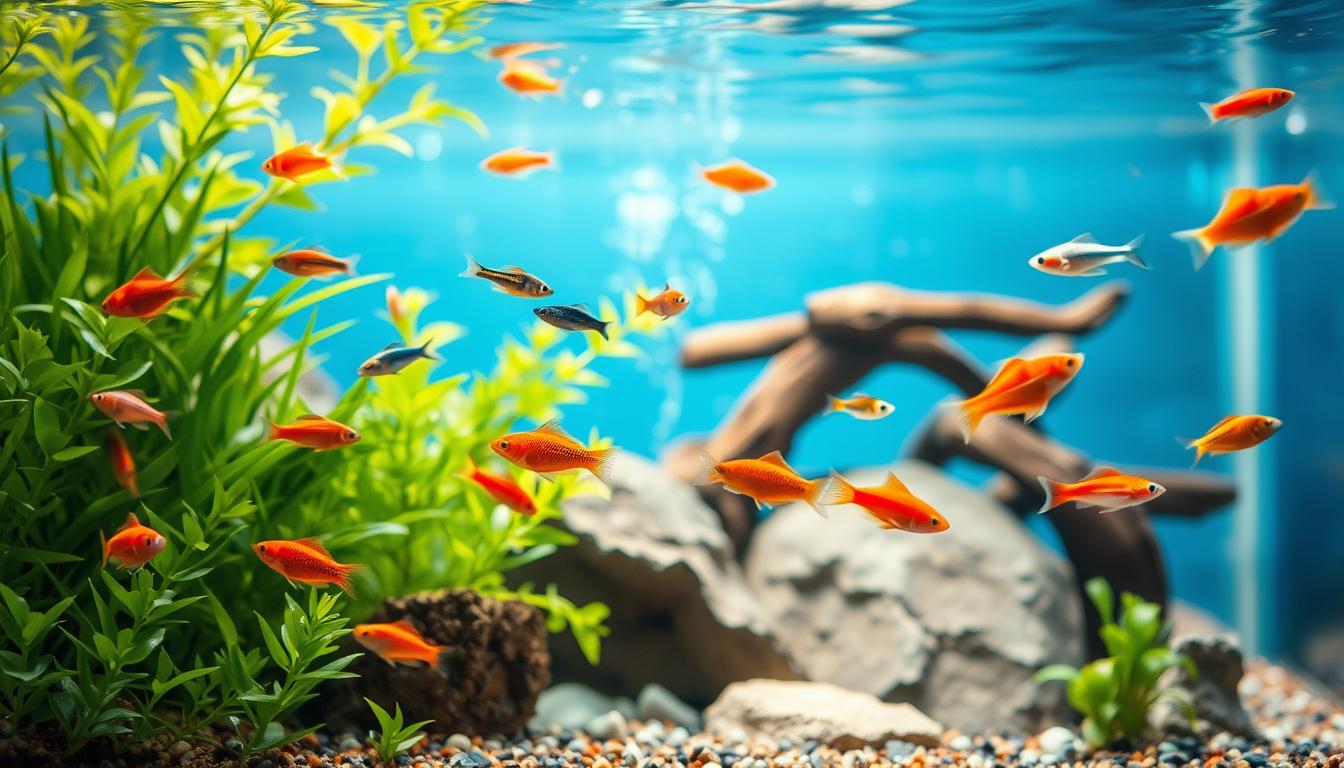
A compatibility chart helps you pick species that likely get along. It makes planning your nano fish community tank easier and less stressful. This way, you can avoid the trial-and-error process.
This guide is for freshwater and reef-style nano tanks, 2–20 US gallons. It focuses on small species that stay small as adults. The chart is most useful for pairing fish in small setups.
When looking at compatibility, consider temperament, size, feeding habits, and territorial behavior. Also, think about tank size and bioload. Remember, charts show likely outcomes, not certainties. Real harmony depends on tank size, decoration, hiding spots, and regular care.
Experts suggest starting with peaceful fish. Add semi-aggressive ones carefully. Avoid aggressive fish in mixed tanks. Always check the adult size, water needs, and behavior of each fish before adding them.
For more specific information, check out LiveAquaria and reef charts. They help you double-check your choices and plan a stable nano fish community tank.
Understanding Nano Fish Communities
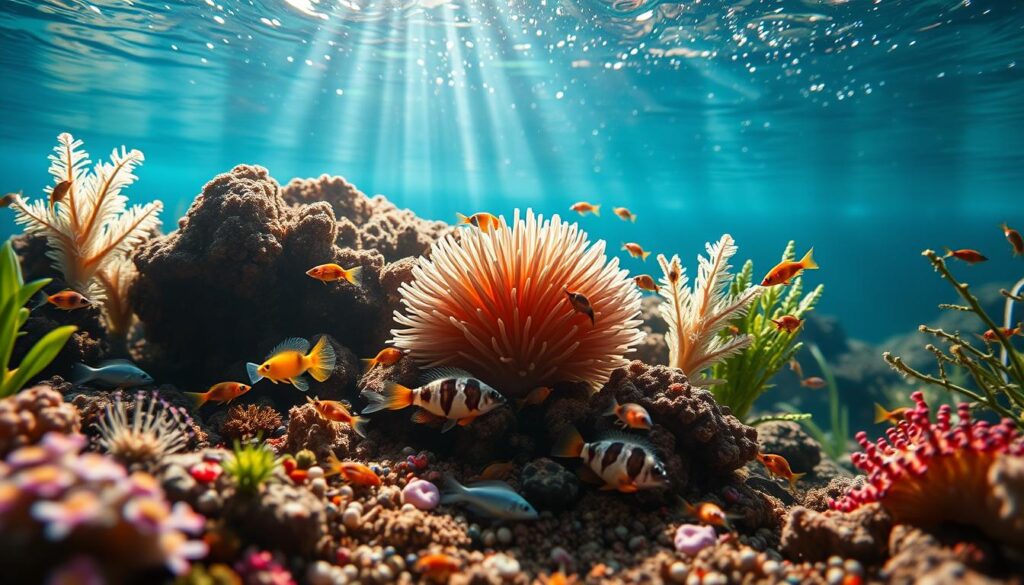
A nano community is a small aquarium home for many species. Each fish and invertebrate must be the right size and temperament. They also need to play different roles in the tank.
Choose fish and invertebrates that fill different ecological roles. Schooling fish in the middle of the tank add movement and help reduce stress. Bottom dwellers like Corydoras and Otocinclus clean the substrate.
Algae grazers, such as Nerite snails, keep algae in check. Invertebrates like Amano shrimp and small hermit crabs clean up leftover food and surfaces.
As the tank size gets smaller, territorial behavior increases. Peaceful fish are best for small tanks. Avoid large fish that might be aggressive.
Freshwater and reef nano tanks have different rules. Reef tanks can have reef-safe invertebrates and small fish like clown gobies. Freshwater tanks are home to livebearers, small tetras, and nano catfish.
The tank’s size, filtration, and feeding needs affect how many creatures it can hold. Use tools to figure out how much bioload the tank can handle. Good filtration and careful feeding help keep the tank healthy.
Key Factors in Fish Compatibility
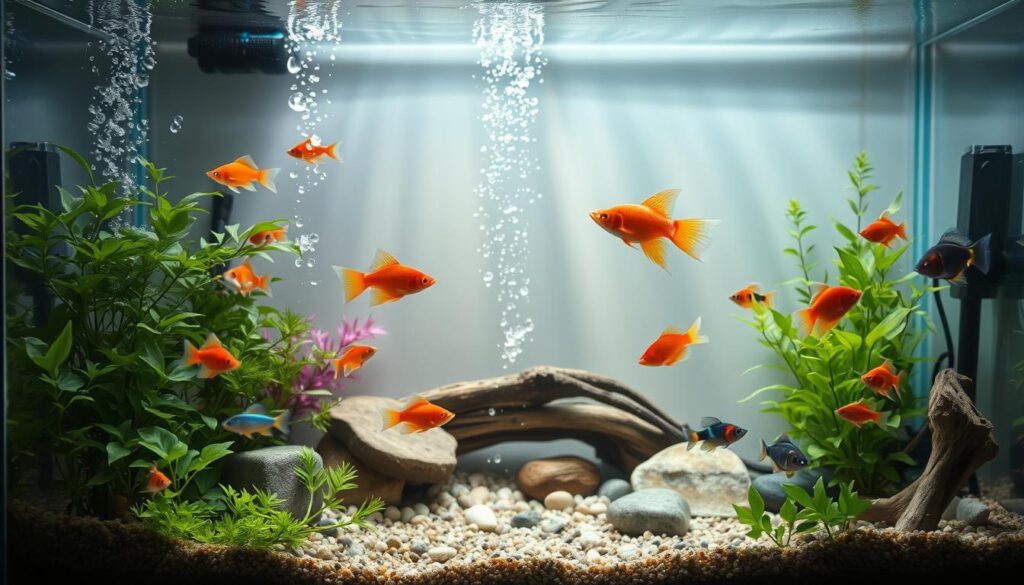
When picking fish for your tank, start with their temperament. Sort them as peaceful, semi-aggressive, or aggressive. Mixing calm fish with aggressive ones can lead to stress and harm.
Size is more important than how big fish are when young. Always look at the fish’s adult size when planning your tank. This prevents fights when fish grow too big for their tank.
Diet can cause fights too. To avoid this, feed your fish at the same time every day. Use different types of food and place it in various spots to reduce competition. This helps all fish get enough to eat.
Providing hiding spots and territories can reduce aggression. Add caves, driftwood, and plants to your tank. This helps fish feel safe and reduces stress.
Make sure the water and tank size fit all your fish. Match the water’s pH, temperature, and hardness to each fish’s needs. Use calculators to figure out how many fish your tank can handle. This prevents water problems and fights.
Acclimating new fish is key. Keep them in a separate tank for a week before adding them to your main tank. Use charts to help pick compatible fish, but always double-check their behavior and aggression levels.
Here’s a checklist to help you choose the right fish:
- Temperament: peaceful, semi-aggressive, aggressive.
- Maximum adult size, not juvenile size.
- Diet overlap and feeding strategy.
- Territorial needs and available hiding spots.
- Water parameters, filtration, and bioload estimates.
- Acclimation and quarantine procedures.
By following these tips, you can create a peaceful tank. Research and careful planning are key to a harmonious aquarium from the start.
Popular Nano Fish Species
When picking fish for your nano tank, think about what you want and how big it is. For freshwater setups, consider Ember Tetra, Chili Rasbora, Neon Tetra, and others. These fish are small and easy to mix.
In saltwater tanks, choose species like Clown Gobies and small Chromis. These fish are good for small tanks and don’t fight much. They fit well in tiny spaces.
Adding invertebrates like shrimp and snails is a good idea. They help clean the tank and are interesting to watch. They also keep the water clean.
Stay away from big fish and those that might fight. Don’t get lionfish or large angelfish. They’re too big for nano tanks. This keeps your tank peaceful.
Before buying fish, check their size and how they act. Use sites like LiveAquaria for information. This helps you pick the right fish for your tank.
- Freshwater list: Ember Tetra, Chili Rasbora, Neon Tetra, Celestial Pearl Danio, Pygmy Corydoras, Otocinclus, Neocaridina shrimp, Nerite snails.
- Reef/saltwater list: Clown Gobies, Neon Gobies, Firefish, Chromis (only in larger nanos), Royal Gramma, small blennies and gobies for algae control.
- Useful inverts: Lysmata amboinensis, trochus/turbo/nassarius snails, hermit crabs, emerald crabs, feather duster worms.
Stock your tank slowly and watch how fish interact. Choosing the right fish and invertebrates makes your tank lively and balanced.
Assessing Compatibility Among Nano Fish
Compatibility charts show if fish are peaceful, semi-aggressive, or aggressive. They also give ratings for pairing. Use the chart to check nano fish compatibility. Then, check each fish’s adult size and behavior before you decide.
Digital tools can summarize compatibility for you. They give a rating, tank size, bioload percentage, and advice for each fish. They also warn about possible conflicts.
To avoid surprises, follow a simple plan. First, list the fish you want. Then, figure out your tank size and bioload. Next, check the compatibility charts and notes for each fish.
- Look for signs of fin-nipping, predation, or territorial behavior.
- Plan your aquascaping to create hiding spots and barriers.
- Make sure not to overstock to keep water quality good.
Be careful with nano species cohabitation. Small differences in behavior or diet can make a big difference. Use the notes to plan introductions and avoid conflicts.
Watch your fish closely for the first two weeks after introducing them. Look for signs of aggression like chasing or hiding. If you see aggression, be ready to separate the fish or change the layout.
Micro fish compatibility depends on many factors. Things like water flow, feeding style, and substrate preference matter. Match these needs to reduce stress and conflict in small tanks.
Check your tank regularly as fish grow. Revisit the compatibility chart and bioload numbers. With ongoing observation and small changes, you can keep your nano fish community peaceful and balanced.
Ideal Tank Mates for Nano Fish
Choosing the right small fish tank mates is key to a peaceful nano community. For 10–20 gallon nanos with plants, peaceful schooling fish are best. Try Ember Tetras or Chili Rasboras with Pygmy Corydoras. They cover midwater and the bottom without taking up too much space.
In a community reef nano, pick calm, small species that get along well. A clown goby with a firefish and small shrimp or snails adds movement. Or, a goby pair with shrimp that live together can bring color without stress.
- Freshwater clean-up crew: Pygmy Corydoras for detritus, Otocinclus for soft algae, Nerite snails for glass algae, and cherry shrimp for biofilm.
- Reef clean-up crew: cleaner shrimp like Lysmata amboinensis, trochus or turbo snails, nassarius snails for substrate, blue leg or scarlet reef hermit crabs, and emerald crabs for bubble algae.
Be careful with predation risks when mixing species. Don’t pair fish that eat shrimp or small snails with invertebrates unless you have species-specific tanks. Some hermit crabs and starfish might eat corals or small fish if they’re hungry.
Stocking order is important for harmony. Add the calmest species first. This lets them settle before introducing more active fish. This way, you can watch how they react during nano aquarium fish pairing.
When planning combinations, aim for balance. Include active midwater swimmers, shy bottom dwellers, and diligent cleaners. Choosing the right nano fish tank mates keeps your tank healthy and your view beautiful.
Tank Size and Setup Considerations
When picking a tank size, think about the fish you want. True nanos need 2–10 gallons for micro rasboras, chili rasboras, and small shrimp. These tanks are strict to keep tiny fish healthy.
For small schools, more bottom dwellers, or plants, go for 10–20 gallons. This size lets you mix peaceful tetras, dwarf gouramis, and small Corydoras. It’s a good balance for a nano fish community tank.
Filtration and aeration are key in small tanks. Use sponge filters for gentle flow and safe spots for shrimp. For denser stocking, canister or hang-on-back filters are better. Good filtration and regular water changes keep nitrates low and stress down.
Cycling the tank is essential for all fish. Do a fishless cycle if you can, or start with a few fish and watch the levels. Use test kits to check pH, ammonia, nitrite, nitrate, and temperature. This ensures your tank meets the needs of your fish and keeps it compatible.
Decorate the tank to break sight lines and provide hiding spots. Dense plants, caves, and rockwork help reduce aggression. In reef tanks, arrange coral and caves to encourage peaceful behavior among fish.
Before adding fish, estimate the bioload. Use calculators or follow conservative stocking rules. Adjust for your filter’s efficiency and how much you feed. This helps avoid overstocking and keeps water quality stable for long-term tiny fish tank compatibility.
Plan your lighting, heating, and maintenance access. Choose lighting that supports your plants or corals without overheating. Install a reliable heater and leave space for water changes, test kits, and filter cleaning.
Stick to a maintenance routine. Test water weekly, do partial water changes, clean sponges gently, and watch your fish’s behavior. Small tanks react fast to changes, so regular care keeps them healthy and balanced.
Breeding Considerations in Nano Fish Tanks
Breeding in small tanks can quickly change your setup. Livebearers and small tetras breed easily. This means you need to watch your tank’s health closely.
Protecting fry is simple. Use breeding traps or a separate tank. Dense plants like Java moss help too. If adults eat fry, remove them or move the fry.
- Set up a 5–10 gallon nursery if you expect frequent spawns.
- Keep gentle filtration and frequent small water changes to maintain quality.
- Feed finely crushed flake, baby brine shrimp, or specialized fry food.
Some nano species get more aggressive when breeding. If this happens, separate the pair or change the tank’s layout. This helps reduce stress.
Managing genetics and population is key. Avoid too much inbreeding and overcrowding. Plan for rehoming or tank upgrades to keep your fish healthy.
Have a small quarantine tank ready for sick or breeding fish. A 10–15 gallon tank with a heater and sponge filter works well. Follow a 14-day treatment plan for common illnesses.
- Quarantine fish for 7–14 days before introducing them to the community.
- If disease appears, isolate affected fish and follow a medication schedule appropriate for the diagnosis.
- Track breeding pairs and separate them when necessary to control aggression and population size.
Focus on nano fish compatibility to keep your tank balanced. Good planning and attention to detail prevent stress and loss in small tanks.
Good nano species cohabitation starts with a plan. With a focus on fry survival, territorial issues, and genetic management, you can enjoy breeding without overwhelming your tank.
Common Misconceptions About Nano Fish Compatibility
Many think small fish always get along. But, this is not true. Tiny species can be territorial or even nippy. What really matters is their temperament and how they socialize, not just their size.
Another myth is that any fish can live in a fish bowl. But, this ignores the need for good filtration, enough oxygen, and stable water chemistry. For a tiny fish tank to work well, use the right filters, test the water regularly, and choose a tank size that meets the species’ needs.
Some believe all invertebrates are safe for reefs. But, some crabs and starfish might eat corals or small fish if they’re hungry. Before mixing them with other fish, learn about their diet and behavior to avoid problems.
While compatibility charts are helpful, they’re not foolproof. They show likely matches, but not guarantees. When planning your nano fish setup, also consider the tank size, how you decorate it, and your care routine.
- Don’t put predators like lionfish or groupers in community tanks; they can harm smaller fish.
- Only add reef-safe invertebrates after doing your research and observing them.
- Use bioload calculators and tank size guidelines to figure out how many fish you can have.
Always check compatibility tools against trusted sources like LiveAquaria and expert guides. Introduce new fish slowly and keep them in quarantine to lower disease risks. This helps ensure a peaceful nano fish community.
Keep track of how your fish behave and any changes you make. This helps you make better choices and keep your nano community peaceful over time. It’s based on real experience, not just myths.
Introducing New Fish to Your Nano Community
First, create a 14-day quarantine tank. This is to watch for parasites and stress signs. It keeps your current fish safe and improves compatibility.
For sensitive fish, use drip acclimation. Slowly match the water temperature and chemistry over hours. This method reduces stress and helps new fish settle.
Stock your tank in a peaceful order. Start with calm species, then add semi-territorial ones. Introduce fish one or two at a time to avoid overcrowding.
- Watch their behavior for the first 72 hours.
- Check daily for aggression or illness signs.
- Be prepared to change the tank layout if needed.
If aggression starts, use temporary dividers. They help fish adjust without fighting. If a fish is too aggressive, remove it to protect others.
Stick to a regular feeding schedule. Offer different foods to reduce fighting. This helps maintain a stable tank and better fish relationships.
Keep track of water tests and fish behavior. Small changes in water or tank setup can help a lot. Regular care makes adding new fish easier and more predictable.
Long-term Maintenance of Nano Fish Tanks
Start a simple daily routine to care for your nano fish tank. Watch for any changes in how your fish act, their color, or if they’re eating. Also, check the tank’s temperature and the sound of the equipment. Spotting stress or disease early can prevent bigger problems.
Make a weekly plan for water changes. For small tanks, change 10–30% of the water each week. Use water that’s the same temperature and pH as your tank to avoid shocking your fish.
Test the water regularly with a good aquarium kit. Check for ammonia, nitrite, nitrate, pH, and temperature. Keep a record of these tests to see any trends. This helps keep your tank healthy for fish like ember tetras and dwarf rasboras.
Follow the manufacturer’s advice for cleaning filters and equipment. Clean sponge filters in tank water to keep beneficial bacteria. Replace chemical media like carbon as needed to keep the water clear and safe for your shrimp.
Think about upgrading your tank before it gets too crowded. If your fish grow or you have more due to breeding, move them to a bigger tank. This helps keep your tank balanced and prevents problems.
Have a small hospital tank ready for sick fish and basic treatments. Quarantine new fish for two weeks to protect your tank mates. Use trusted sources for advice on treating sick fish.
Regularly review how your tank is doing. Remove or rehome extra fish to keep the population balanced. This helps prevent fights and keeps the water quality good for all your fish.
Keep a simple log of your tank’s maintenance, water tests, and any changes to the fish. Having clear records helps you spot issues and keep your tank healthy over time.
Resources for Nano Fish Enthuisiasts
Find reliable reference material to improve your nano aquarium fish pairing decisions. LiveAquaria offers species profiles that list temperament, adult size, and recommended tank mates. Use those pages to cross-check any community you plan.
Look for reefing guides and reef compatibility charts when you plan mixed reef-nano setups. Charts modeled on Reef KG-style trackers help you spot risky mixes and plan safe nano species cohabitation in planted or coral-rich tanks.
- Join active aquarium forums and hobbyist communities for firsthand reports and local water advice.
- Seek books on cycling, filtration, and aquascaping tailored to small tanks for practical setup tips.
- Use online compatibility calculators to compare overall ratings, tank volume in liters and US gallons, and estimated bioload; always verify adult size and water needs before buying.
When you shop, prioritize small reliable equipment. Choose sponge filters for gentle flow, compact heaters for stable temperature, and quality test kits for frequent checks. Buy plants, shrimp, and nano fish from reputable vendors to lower stress and disease risk.
Consider digital tools that flag per-species warnings and suggest safe nano aquarium fish pairing based on behavior and size. Treat tool outputs as a guide, not the final decision, and validate with species profiles and hobbyist feedback.
Connect with local aquarium clubs or social media groups for mentorship and rehoming options. These networks help you manage surprises and support long-term nano fish compatibility through shared experience and practical advice.
Conclusion: Creating Your Ideal Nano Fish Community
To create a peaceful nano fish community tank, focus on temperament, size, diet, and water needs. Start with compatibility charts, but check each fish’s adult size and behavior. Design your tank with hiding spots and visual barriers to reduce stress and fights.
Manage the tank’s load with good filtration and smart stocking. Quarantine new fish and acclimate them slowly to protect your existing ones. Keep a regular feeding schedule and watch the water quality closely. These steps help your tiny fish tank run smoothly and stay stable over time.
Here’s a final checklist: research each fish’s adult size and behavior; figure out your tank’s volume and load; quarantine and acclimate new fish; add plenty of hiding spots; and keep an eye on water quality, upgrading or rehoming as needed. Begin with small, peaceful pairs and grow your tank gradually. Use tools and community advice to perfect your plan.
With careful planning and regular care, your nano fish community will flourish. A well-thought-out nano fish tank is a calm, healthy home for your tiny aquatic friends.
Leave a Reply