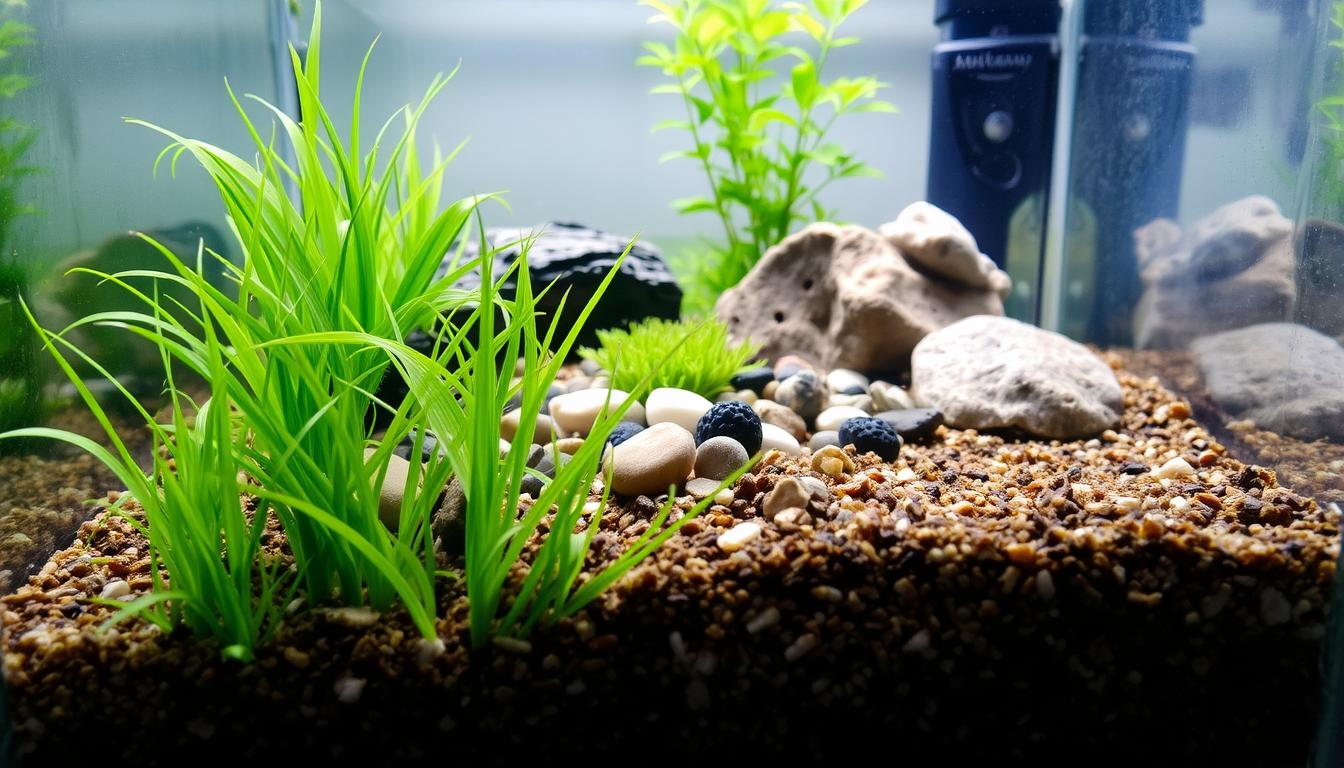
Substrate is the bottom layer in your aquarium. It holds plants and supports their roots. It also stores nutrients for plants and water creatures.
Choosing the right substrate is key for your aquarium’s health and look. It affects plant growth, water quality, and the tank’s appearance.
Hobbyists pick from two main types: nutrient-rich aquasoils and inert materials. Nutrient-rich options, like ADA Aqua Soil, boost fertility and adjust water chemistry. They’re popular among shrimp keepers and those who prefer soft water.
Inert substrates, like gravel and sand, last longer. They can be enriched with fertilizers. They also hold nutrients well.
Think about your plants’ needs when choosing a substrate. Some plants get nutrients from the water, while others need a nutrient-rich soil. Match your substrate to your plants for the best results.
Every setup is different. There’s no single best substrate for all nano tanks. Consider your water, plants, and fish. Talk to other hobbyists and test different substrates.
Don’t forget about substrate depth and size. A varied depth helps roots grow well. Avoid using very fine sand or large stones that hinder root growth.
Understanding Nano Tanks and Their Needs
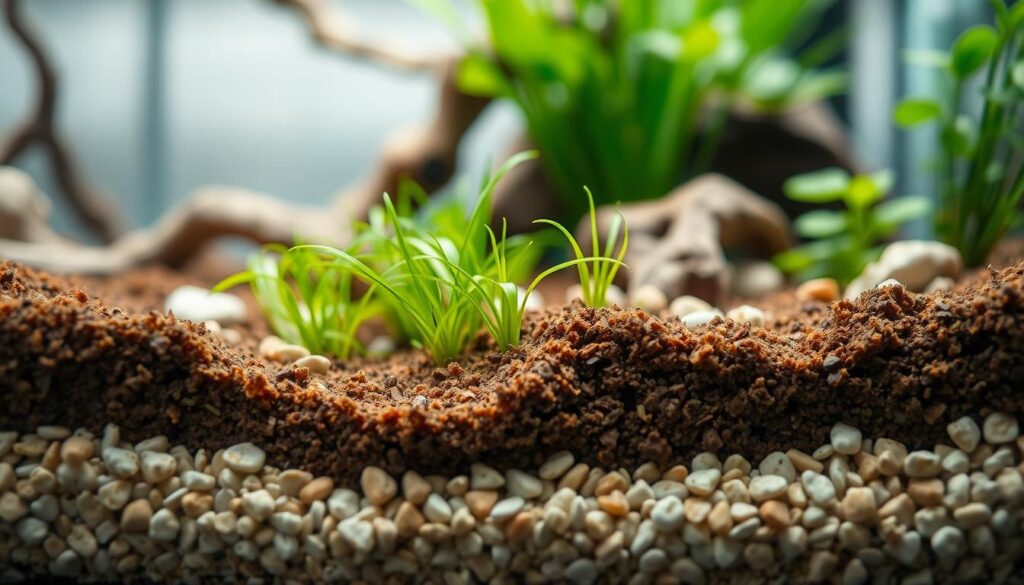
Keeping a nano aquarium is perfect when space is tight or you want a small, focused planted display. These tanks are usually between 2.5 and 20 gallons. Because they’re small, water chemistry can change fast.
Stocking levels, feeding, and fertilizing must be precise. This is because small tanks have less room for mistakes.
Choosing the right substrate for nano tanks is different from larger tanks. You need finer grains to fit small plants and create a nice look. Brands like ADA offer Aqua Soil Powder, and Seachem has Flourite Black Sand for nano tanks.
These substrates help build small planting beds and stable root zones.
Nutrient uptake and fertilization are unique in small systems. Some substrates, like ADA Aqua Soil, can release ammonia or ammonium early. This can harm fish.
So, it’s important to watch water chemistry closely. Run frequent water changes or do a fishless cycle before adding fish.
Choose a substrate that fits the animals you plan to keep. Shrimp and soft-water fish do well with active aquasoils that lower pH and KH. Hard-water fish, like African cichlids, prefer inert or aragonite-based substrates, like Seachem Gray Coast.
Think about grain size and type when planning your nano-scape. Powder or fine variants of popular media are best for delicate-rooted plants and tight layouts. Look at nano tank substrate types to find one that balances nutrient delivery, root anchoring, and visual scale.
Importance of Substrate in Nano Aquariums
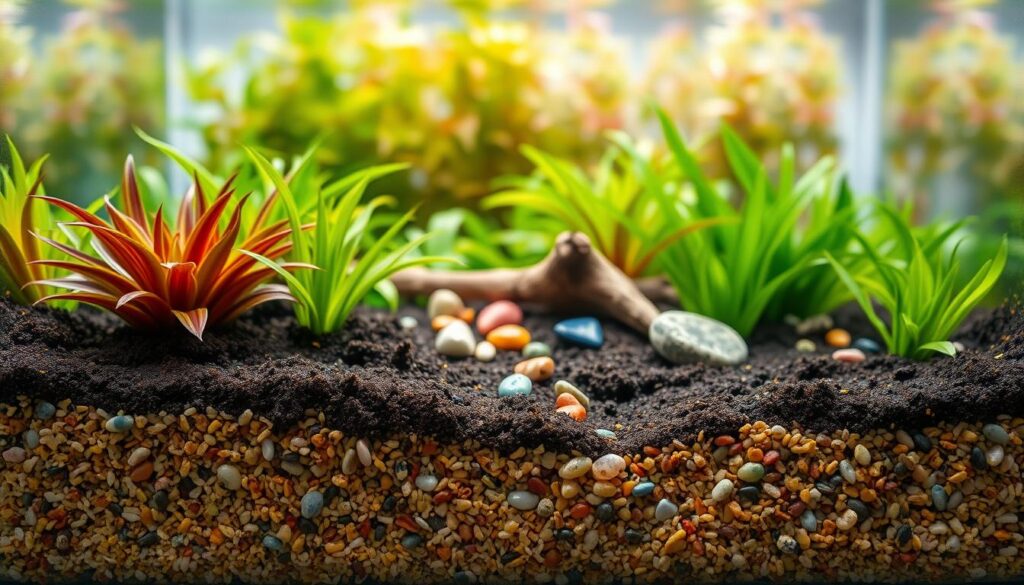
The substrate in a nano tank does many important things. It keeps plants upright by anchoring them. It also holds nutrients for plants to eat. Plus, it provides a home for beneficial bacteria and shrimp.
When picking a substrate, think about how it affects nutrients. Active substrates like ADA Aqua Soil and Aquavitro Aquasolum come with lots of nutrients. They can lower the pH and soften the water. They start feeding plants right away but might release ammonia first.
Inert substrates, like CaribSea Eco-Complete or Seachem Flourite, work in a different way. They need fertilizers to feed plants well. They stay stable for a long time and rarely break down.
- Primary functions: anchoring plants, supplying or holding nutrients, creating habitat.
- Active substrates: nutrient-rich, change water chemistry, may emit ammonia initially.
- Inert substrates: stable, need external fertilization, less frequent replacement.
Keeping your tank clean depends on the substrate. Nutrient-rich substrates might need to be replaced every 12–24 months. Inert substrates usually need less care.
The size of the substrate grains is also key. Fine sand can compact and harm roots. But coarse sand or medium gravel helps roots grow and water flow.
When choosing a substrate, think about your plants, maintenance, and water chemistry. Pick one that balances nutrients, bacteria, and structure for healthy plants and a stable tank.
Types of Substrates for Nano Tanks
You have many nano tank substrate options. They fit different plants and setups. Choose based on plant needs, water chemistry, and maintenance level.
Nutrient-rich active substrates like ADA Aqua Soil Amazonia and Aquavitro Aquasolum are compacted soils. They’re packed with nutrients, lower pH, and soften water. They’re great for plants that love to eat and soft-water biotopes. But, you’ll need to add more nutrients over time.
Inert substrates like Seachem Flourite, Flourite Black, CaribSea Eco-Complete, and Aqua Clay Ground are also good for plants. They hold onto fertilizer ions and don’t break down easily. This means your water chemistry won’t change much.
Base layers or additives can make plain gravel or sand more fertile. Products like Tropica AquaCare Plant Substrate, JBL AquaBasis Plus, Dennerle DeponitMix, ADA Power Sand Special, and API First Layer Laterite slowly release nutrients. Just remember to cover them with inert material to avoid cloudiness and protect roots.
Root tabs, capsules, and sticks are great for targeting specific plants. Tropica AquaCare Capsules, Nutrafin Plant Gro Sticks, and Easy Root Tabs add nutrients right where plants need them. They’re perfect for updating inert beds or refreshing old substrate. Replace them every 6–12 months.
Choosing between sand and gravel affects water flow and root health. Natural, coarser-grained nano tank sand substrate is less likely to compact and reduces anoxic pockets. On the other hand, nano tank gravel offers better anchoring and easier planting. Many people layer a nutrient base, cap with sand or gravel, and mix textures for both looks and function.
- Active soils: best for demanding plants and soft water.
- Inert yet nutrient-friendly substrates: balance durability and fertility.
- Base layers/additives: cost-effective nutrient sources under caps.
- Root tabs: targeted feeding for specific plants.
- Sand vs. gravel: avoid ultra-fine sands that compact; choose grain size to match plant types.
Match your planted nano tank substrate types to the species you plan to keep. Test water parameters after setup and adjust maintenance to keep plants healthy and substrate functioning as intended.
Choosing the Right Substrate for Your Plants
Choose substrate based on how your plants get nutrients. Plants with rhizomes and many stem species get nutrients from the water. On the other hand, plants with heavy roots get nutrients from the substrate. It’s important to match your choice to your plants’ needs for healthy growth.
For plants like Anubias and Java fern, you can attach them to wood or rock. An inert base or bare-bottom tank works well when using liquid fertilizers. This makes the substrate choice simple and low-maintenance for these plants.
Stem plants like Rotala and Limnophila do well with inert gravel or sand and regular liquid fertilization. You don’t need nutrient-rich soil for stems as long as you dose the water column consistently.
For plants like Amazon swords, Vallisneria, and Cryptocoryne, choose nutrient-rich media. Brands like ADA Aqua Soil or CaribSea Eco-Complete are good options. If you prefer an inert base, use root tabs like Easy Root Tabs or Tropica capsules for localized nutrition.
Carpet plants need a soft, fine-grain surface to anchor their fine roots. Use fine-grain aquasoil powder or fine Flourite Black Sand. This helps delicate roots spread without damage, improving carpeting success in small tanks.
- Substrate depth: 2–4 cm is common for mixed plantings.
- For heavy root feeders or full aquasoil setups, 3–6 cm gives better nutrient access.
- In nano tanks, keep layers shallower toward the front and create a gentle slope to avoid anaerobic pockets and preserve visual scale.
Mixing substrates can solve specific water chemistry issues. Blend ADA Aqua Soil with an inert base like Seachem Gray Coast for softness with some buffering capacity. Use local water tests to guide ratios for stability and plant health in your nano tank.
When choosing the best substrate for nano tanks, consider plant type, maintenance effort, and water data. A targeted mix or the right aquasoil will help each plant group thrive without too much work for you.
Factors to Consider When Selecting Substrate
Choose grain size that fits your plants and fish. Fine powder, like ADA Aqua Soil Powder, is good for delicate roots. Most stem and carpet plants do well with 1–4mm rounded grains. Avoid fine sand that can harm roots and cause oxygen loss.
Large stones can also prevent roots from growing.
Think about the water chemistry too. Active aquasoils lower pH and soften water, which is great for shrimp and many plants. Sands like Aragonite or Seachem can raise pH and GH, which is better for cichlids. Make sure the substrate you choose matches the needs of your fish and plants.
Match the substrate to your fish and plants. Bottom dwellers like Corydoras need smooth, rounded substrates or fine sand. Shrimp prefer substrates that keep water soft. Always check if the substrate is right for your specific species.
Consider how easy the substrate is to maintain. Inert substrates need little care but don’t provide nutrients. Nutrient-rich soils break down over time and may need to be replaced every one to two years. Plan your maintenance schedule and budget for this.
Also, think about your budget. Complete substrates like ADA Aqua Soil are more expensive but convenient. Mixing cheaper options with additives can save money. This way, you can also create a layered look with different materials.
Think about the look you want. Use thinner substrate at the front and thicker at the back for depth. Natural-colored sand or gravel hides imperfections and focuses on the plants. You can use sand in the front and aquasoil in the back for a nice contrast.
Plan how you will install the substrate. Decide if you need a base layer, nutrient soil, and a decorative top layer. Measure your tank and calculate how much substrate you need. Test small amounts from trusted brands before buying a lot.
- Grain size: fine powder, 1–4mm rounded, avoid very large stones.
- Water chemistry: choose active or inert based on pH/GH needs.
- Livestock: prefer smooth sand for bottom dwellers, soft-buffering soils for shrimp.
- Maintenance: inert = low care, nutrient soils = replacement cycle.
- Budget: mix premium and budget-friendly options to save costs.
- Visuals: slope substrate, use contrasting layers for depth.
When shopping, compare your options based on these points. Try out small amounts of different substrates to find the best one for your nano tank.
Popular Substrate Brands for Nano Tanks
There are many substrates for nano tanks to pick from. ADA Aqua Soil Amazonia and its powder are top choices for serious aquascapers. They help plants grow fast, look almost black, and are gentle on roots in small spaces. But, they can cause ammonia spikes, so plan a fishless cycle.
CaribSea Eco-Complete comes with fertilizer in the grains. It’s easy to use right out of the bag. It has different grain sizes for most small tanks and is a good value. Some users see short-term changes in water chemistry.
- Seachem Flourite and Flourite Black offer clay gravel rich in iron. The black sand version is perfect for nano tanks with fine texture. Be aware of slightly sharper grains in some mixes.
- Red Sea FloraBase uses volcanic ash to keep pH stable at 6.5–7.0. It’s light and good for plants, but can break down over time.
- Aqua Clay Ground is an affordable clay substrate that feeds roots with ammonia and ammonium. It fits a 1–4mm grain size but lacks the nutrients of premium soils.
ADA Power Sand Special and additives are top picks for boosting base soils. They add bacteria, carbon, and nutrients. But, they can be pricey, even with ADA Aqua Soil.
There are many base layers and additives for a nutrient-rich foundation. Tropica AquaCare Plant Substrate, JBL AquaBasis plus, Dennerle DeponitMix, Colombo Flora-Grow NutriPlus, and API First Layer Laterite all have peat, clay, or humic acids. Top them with gravel or fine sand to prevent clouding and stabilize the bed.
Root tabs and capsules are great for targeted feeding in nano tanks. Tropica AquaCare Capsules, Nutrafin Plant Gro Sticks, and Easy Root Tabs work well in inert substrates. Place them near plants that need extra nutrients to keep them growing without needing to redo the tank.
When choosing a substrate, consider the initial cost, long-term nutrient value, and how it affects pH and hardness. Pick a substrate that matches your plants and maintenance routine for the best results.
Preparing the Substrate Before Use
First, figure out what kind of substrate you have. Some, like ADA Aqua Soil, are ready to go but might release ammonia. Always follow the maker’s guide and cycle the tank without fish first. Watch the ammonia and nitrite levels until they’re gone before adding fish.
For gravels and sands, rinse them well to get rid of dust. If you’re using clay-based stuff like API First Layer Laterite, rinse it a lot to avoid color issues. But don’t rinse CaribSea Eco-Complete because it’s packed with nutrients and rinsing would take them away.
For base-layer stuff like Tropica AquaCare, JBL AquaBasis, or Dennerle DeponitMix, start with 1–2 cm of it. Then, add 2–4 cm of inert gravel or sand on top. Lay the top layer down gently to avoid clouding the water.
Mixing substrates can balance your tank’s water chemistry. Mix active aquasoil with inert stuff like Seachem Gray Coast to adjust minerals. Test your water to figure out the right mix.
In a nano tank, keep the substrate layer thin, 2–4 cm. Make the front shallow and slope the back for better depth. Avoid deep layers that trap dirt and cause bad pockets.
When switching to inert substrate, use root tabs for plants that love to eat. Bury Tropica capsules near roots and replace them every six months. Nutrafin sticks can last up to a year. Place them carefully to avoid messing up the substrate layers.
For the best nano tank setup, work slowly and carefully. Rinse, layer, and add stuff gently. This method helps prevent clouding, keeps the water stable, and gives plants a good start.
Setting Up Your Nano Tank with Substrate
First, test your tap water for GH, KH, and pH. Soft water works best with ADA Aqua Soil. Hard water species prefer inert or aragonite substrates. Choose based on your test results.
Prepare inert materials by rinsing sand or gravel until the water is clear. Don’t rinse substrates like Eco-Complete or ADA Aqua Soil. Rinsing them can remove useful compounds.
- Lay a thin base layer of additive material if you use root tabs or nutrient layers. Aim for 1–2 cm.
- Cap with 2–4 cm of your chosen top substrate. Create a gentle slope, thinner at the front to keep sightlines open.
- Position wood and rock before final top substrate adjustments to avoid burying plant crowns or roots.
Plant with tweezers to protect delicate stems and roots. Use ADA Aqua Soil Powder or fine Flourite Black Sand for fragile carpets. Add root tabs for heavy root feeders like Cryptocoryne.
Fill the tank slowly to avoid disturbing the layout. Place a plate or a plastic bag on the substrate and pour water onto it. Start the filter and heater once the tank is half full. Expect some initial cloudiness.
Fishless cycling is essential with nutrient-rich substrates. Cycle the tank or perform frequent water changes to manage spikes before introducing shrimp or fish. Test ammonia and nitrite daily until levels remain at zero for several days.
Choose plants suited to the substrate. Foreground carpeting plants need fine substrate to root well. Midground stems such as Rotala and Ludwigia tolerate inert substrates when paired with liquid fertilization. Epiphytes like Anubias and Microsorum attach to hardscape and need little substrate at all.
Mind scale and placement. Keep aquasoil thinner near the front glass to avoid a bulky look and limit anoxic pockets. A careful nano tank gravel setup or a restrained layer of aquasoil preserves depth and maintains a professional appearance.
Maintenance Tips for Substrates
Keep cleaning gentle. Vacuum only the top layer lightly to remove detritus and uneaten food. This helps preserve root systems and prevents stirring nutrient-rich base layers. Disturbing deep layers can cloud water and release bound nutrients that fuel algae.
Match fertilization to your substrate type. For inert substrates, dose water-column fertilizers like Seachem Easy Green or API Leaf Zone. Place root tabs near heavy root feeders. Active aquasoils such as ADA Aqua Soil usually supply nutrients early on. Supplement with water-column dosing when plants show signs of depletion.
Use a monitoring plan for water changes and testing. Nano tanks have small volumes, so they respond fast to changes. Perform frequent partial water changes in the first weeks after setup with aquasoils to control initial nutrient release. Test nitrate and phosphate regularly and adjust dosing as plant growth dictates.
Replenish slow-release products on a schedule. Replace root tabs or capsules every 6–12 months depending on plant demand; Tropica capsules tend to last around six months, while Nutrafin sticks can approach a year. Consider topping up or remineralizing aquasoil after 12–24 months when growth slows.
Watch for signs that substrate needs replacement. Severe compaction, persistent anoxic pockets, or breakdown into sludge indicate it’s time to act. Some volcanic-based substrates compact over long terms and reduce root activity. When plant growth drops despite proper lighting and dosing, assess the substrate health.
Handle base layers with care. Manufacturers like Tropica and JBL recommend minimal disturbance of products such as Tropica AquaCare or JBL AquaBasis. Avoid deep stirring or aggressive siphoning. Many hobbyists report heater cables are unnecessary, so follow the product instructions and your own observations.
- Vacuum top layer lightly; no deep stirring.
- Use water-column fertilizers with inert substrates.
- Supplement active soils only when plants need it.
- Replace root tabs every 6–12 months.
- Replace substrate if it sludges or compacts.
These practical planted nano tank substrate care steps will keep plants healthy and water clear. Apply these nano tank substrate tips in regular maintenance checks to protect roots and sustain growth.
Troubleshooting Common Substrate Issues
If your tank water turns cloudy after adding substrate, wait a bit. Clay-based substrates and loose laterite can release tiny particles. Use mechanical filters and change some water until it clears. Don’t add fish until the water tests show it’s safe.
Substrates like ADA Aqua Soil can cause spikes in ammonia and nitrite. Start a fishless cycle and test the water every day. Changing water often and keeping an eye on it will help your fish stay safe while the substrate settles.
Algae can grow too much if there’s too much food or light. Check how much you’re adding and if you’re using CO2. Cut back on light for a week and change water regularly. Use root tabs for plants that need a lot of nutrients and liquid fertilizers for others to keep things balanced.
Black sludge and anaerobic pockets can form if the sand is too fine or the substrate is too deep. Use a moderate depth and avoid very fine sands. Make sure the substrate is sloped gently and vacuum the top layer often to remove waste. If you’re seeing these problems, you might need to move plants and replace some substrate.
If your plants aren’t doing well, it might be because the substrate isn’t right for them. Plants that need a lot of nutrients need rich substrates or root tabs. Check the water for calcium, magnesium, and trace minerals. Adding aragonite or supplements can help fix any mineral deficiencies.
Some substrates, like volcanic and organic ones, can break down into sludge over time. Plan to replace some of it during maintenance. You can cover the old substrate with inert gravel or switch to a more stable one to avoid problems.
- Rinse new substrate well and wait before adding fish.
- Do a fishless cycle with active aquasoils to avoid ammonia spikes.
- Keep light and nutrients balanced to stop algae.
- Use moderate depth and vacuum top layers to avoid anaerobic zones.
- Use root tabs or change substrate if plants aren’t getting enough nutrients.
Fixing nano tank substrate problems early keeps your plants healthy and water clear. Regular testing and small changes can prevent big problems later. Use these tips to spot and fix issues quickly, and adjust your care routine as needed for your planted nano tank.
Conclusion: Making the Right Choice for Your Nano Tank
Choosing the right substrate for nano tanks starts with your plants and water. First, figure out if your plants need a lot of nutrients from the soil or if they get them from the water. Then, test your tap water for GH, KH, and pH levels.
For plants that need a lot of nutrients from the soil, active aquasoil is often the best choice. This is true for soft-water setups or those with shrimp. For plants that get nutrients from the water or live in hard water, use an inert base. Add root tabs and liquid fertilizers as needed.
Practical setup choices are key. Use powder or fine-grain options to protect delicate roots and fit small tanks. Cap nutrient-rich base layers with gravel or sand where recommended. Slope the bed thinner at the front to add visual scale and reduce anoxic pockets.
Review nano tank substrate options against these rules to match form and function.
Cost and maintenance are important too. Expensive substrates aren’t always necessary. Targeted root tabs or a thin base layer can save money while delivering nutrients. Remember, active substrates may lose buffering or nutrients and need remineralization within 1–2 years.
Expect regular water tests and routine changes to keep chemistry steady.
For final steps, consult local hobby groups and test your tap water to refine choices. Run a fishless cycle when using active aquasoils. Start with light stocking and conservative planting.
Selecting the right substrate is a balance of plant needs, water chemistry, aesthetics, and budget. Match your nano tank substrate options to your goals and follow proper preparation and care. This will help build a resilient mini ecosystem.
Leave a Reply