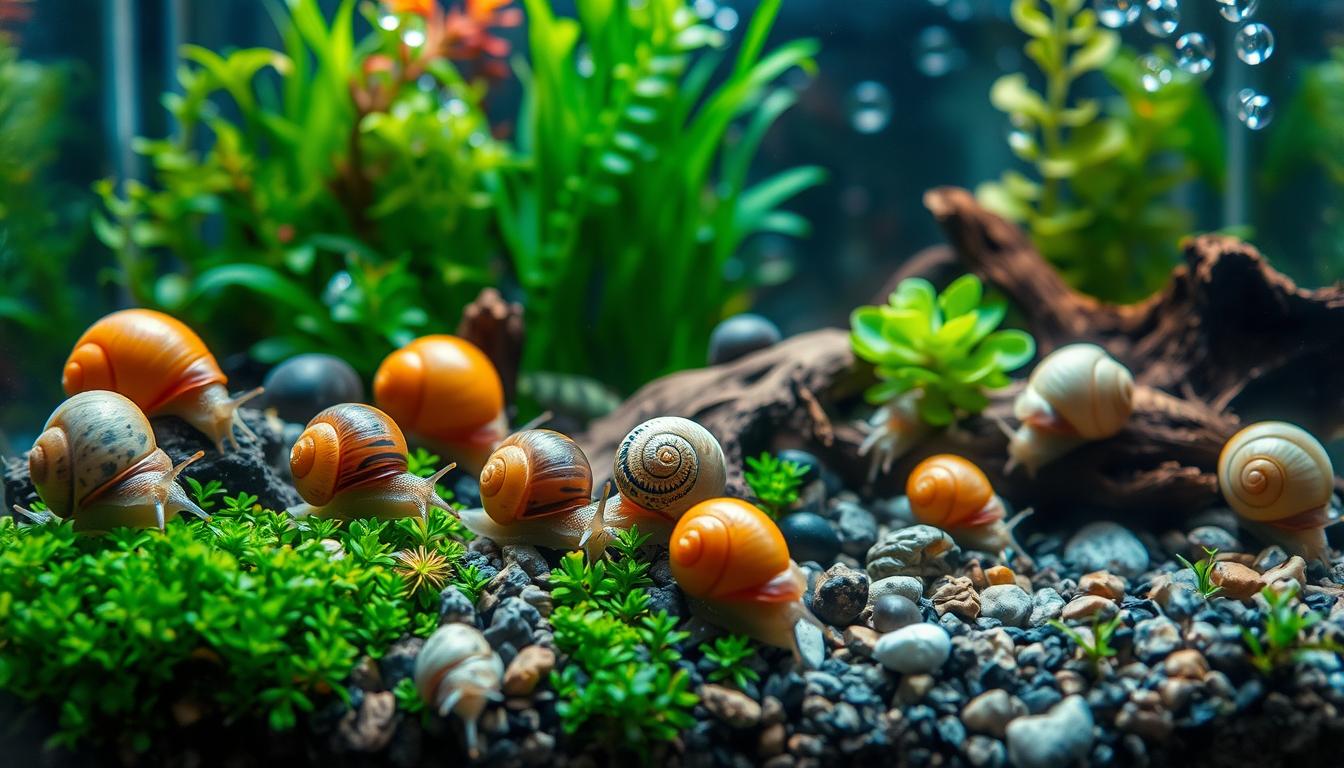
Have you seen tiny shells on new plants or driftwood? You might wonder if aquarium snails are good or bad. Many hobbyists first see them unwanted on substrate, decorations, or equipment.
Freshwater snails can multiply fast and be seen as pests. Yet, they have real benefits. They clean up detritus, eat algae, help with nutrient cycling, and even aerate the substrate in a nano ecosystem.
You might worry about where they came from, what species they are, and how to control their numbers. If their numbers get too high, they can increase the bioload, clog filters, and compete with other cleaners.
This article will cover what aquarium snails are, their roles in the ecosystem, and which species to know. It will also talk about their care, compatibility with tankmates, and benefits for algae control and beneficial bacteria. You’ll learn about common challenges like pest outbreaks and how to manage them.
What Are Aquarium Snails?
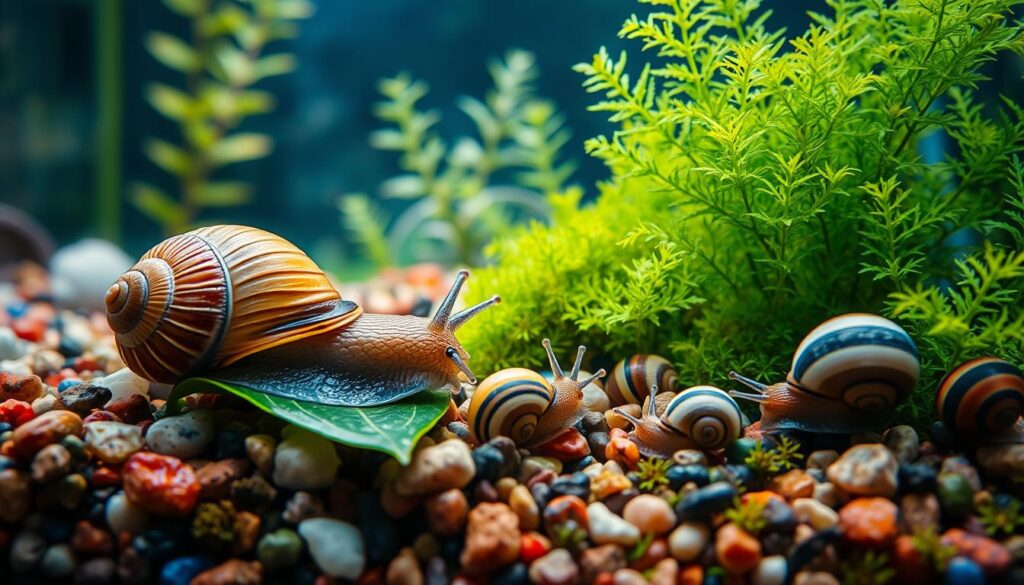
Aquarium snails are freshwater mollusks found in planted and community tanks. They eat algae, decompose plant matter, and clean up leftover food. You might find them intentionally added or as unwanted guests on plants and decorations.
The Bladder Snail (Physella acuta) is a common species. It has a gray shell with yellow spots, grows to ½ inch, and can breathe air. Bladder snails breed quickly, often reproducing in about 35–40 days, and can live up to two years in the right temperature.
Malaysian Trumpet Snails (Melanoides tuberculata) have a cone-shaped shell and burrow in the substrate. They grow to about 1 inch, carry young in a brood pouch, and are mostly active at night. MTS can clone without males and live up to 3.5 years in the right temperature.
Ramshorn snails have a coiled shell and can grow up to 1 inch or more. They are hermaphroditic, breathe air, and are active day and night. Their lifespan is about one year.
Nerite snails are known for controlling algae. They are 0.5–1.5 inches long and usually cannot reproduce in tanks because their eggs need brackish water. Some try to escape, and they tolerate higher salinity better than many other freshwater snails.
Mystery or Apple Snails (Pomacea bridgesii) can grow to 2–2.5 inches. They are not hermaphroditic and lay visible egg clusters above the waterline. You can manage their numbers by removing those egg clutches.
Assassin Snails (Anentome helena) are carnivorous and useful for controlling pest snail outbreaks. They are about an inch long and hunt other snails. This makes them a good biological control option if you want fewer unwanted gastropods.
Rabbit snails (Tylomelania) and other larger species can grow to 3–5 inches. They prefer warmer water around 80–86°F and reproduce more slowly. They are best suited for larger or species-focused aquaria.
Snails often arrive as hitchhikers on live plants or in decorations. Eggs appear as clear jelly-like sacs that survive shipping when plants are bagged. You can also transfer snails or eggs via substrate, tools, or items moved from other aquaria.
Many freshwater snails are hermaphroditic or capable of asexual reproduction. These traits, along with easy arrival routes, explain why snail populations can surge quickly. Monitoring snail reproduction in tanks is important for maintaining your aquarium’s balance.
The Role of Snails in Your Tank Ecosystem
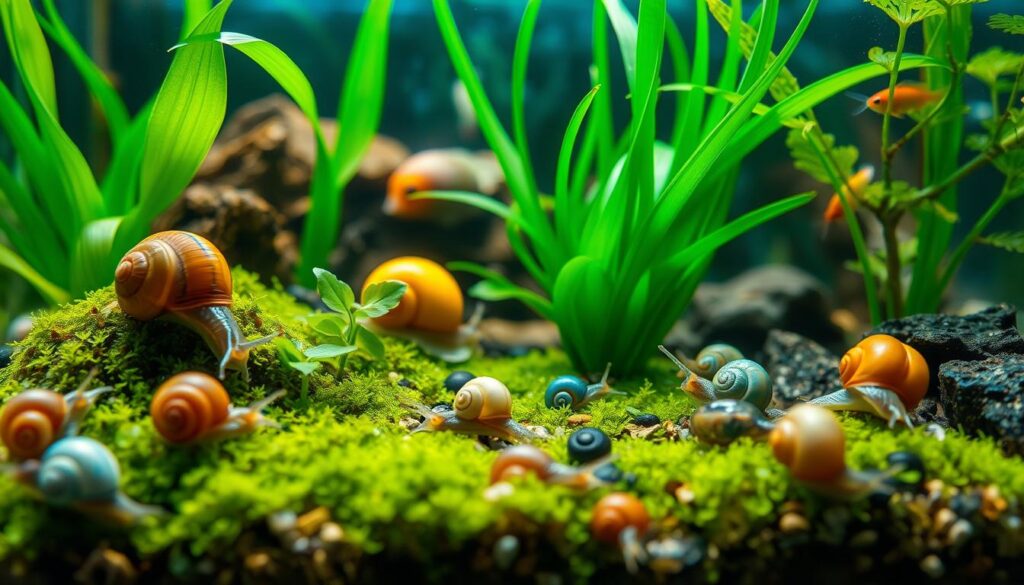
Snails are like quiet workers in your tank. They eat leftover food, fish waste, and dead plants. This turns big pieces into small bits that plants and bacteria can use.
Snails are like aquarium earthworms. They burrow and mix the substrate. This helps keep the water healthy by preventing bad smells and keeping the substrate aerated.
Snails also help plants by making nutrients available. They stir up mulch and mulm, giving plants what they need to grow. This helps plants thrive in your tank.
Snails can reach places fish can’t. They clean out hidden spots, keeping your tank clean. This is great for tanks with lots of plants or decorations.
But, too many snails can be a problem. They can overwork your tank’s systems and compete with other fish. It’s important to keep their numbers in check.
When snails are in balance, they help your tank a lot. They keep the water clean and help plants grow. Just make sure their numbers don’t get too high.
Benefits of Snails for Algae Control
Specific algae eaters can keep your tank clean with little effort. Nerite snails are great at fighting green spot algae and tough patches. They come in varieties like zebra, tiger, and olive, which are good grazers and won’t breed in freshwater.
Smaller snails also help a lot. Bladder snails and ramshorns eat soft algae and biofilm on glass and decorations. They work quietly, removing fuzz and slimy buildup that’s hard to get to.
Mystery snails are bigger and more visible. They can handle soft detritus and algae on broad leaves and substrate. Watching them clean up unsightly film is a plus.
Snails eat by grazing. They scrape off biofilm, nibble soft algae, and chip away at tough growths. Nerite snails might need extra food when algae is scarce. Give them blanched zucchini, canned green beans, or algae wafers to stay healthy and prevent them from wandering.
- Don’t rely only on snails for complete control; if algae levels drop too low, they might starve or try to escape.
- Pest snails usually go for decaying plant matter, so healthy plants are usually safe.
Use a mix of algae eaters to cover all bases. Pair nerites for hard spots with bladder snails for glass and mystery snails for visible cleanup. This balanced approach ensures steady snail algae control without stressing any one species.
Snails: Nature’s Clean-Up Crew
Snails are like a silent cleaning crew for your tank. They go through uneaten food, like pellets and leftover bits from meals. This helps prevent rotting that can increase harmful ammonia and nitrate levels.
Snails are detritivores, eating dead plant leaves and small animals. Their eating habits help break down organic waste and keep surfaces clean. You’ll notice less bad smell when snails clean out hidden food spots.
Snails eat in different ways. Some scrape algae and biofilm off surfaces with their radula. Others dig into the substrate to find buried waste, helping plants by releasing nutrients.
Snails are active at different times. Some are night owls, while others are active day and night. Knowing when they clean helps you keep up with food.
- Keep feeding balanced to avoid excess scraps that feed population booms.
- Regular substrate vacuuming removes deeply buried waste that snails cannot fully clear.
- Glass scraping prevents thick biofilm that outpaces snail grazing.
Snails are part of a good maintenance plan, but not the only solution. A healthy snail crew and other detritivores help with leftover food. You can manage feeding and keep the tank clean.
Supporting Beneficial Bacteria Growth
Keeping snails in your tank helps grow good bacteria. Snails eat decaying plants and leftover food. They break these down into smaller bits that bacteria can easily eat.
These smaller bits help turn organic waste into ammonia. Then, nitrifying bacteria change ammonia into nitrite and nitrate. This keeps the nitrogen cycle going and helps with biological filtration.
Burrowing snails like Malaysian trumpet snails also help. They mix up the substrate, spreading out organics. This lets oxygen reach deeper areas. Aerobic bacteria, which need oxygen, can then clean the water better.
Snails also reduce big chunks of decaying matter. This stops harmful microbes from growing in these areas. With organics spread out, there’s a better balance between good and bad bacteria.
Remember, snails and bacteria are great partners but not a replacement for equipment. You’ll also need a good filter and regular water changes. These keep the bacteria healthy and the water quality stable.
- Snail grazing creates smaller particles for bacteria.
- Substrate churning increases oxygen and spreads organics.
- Reduced decay lowers anaerobic zones and harmful microbes.
- Snails support biological filtration but do not replace maintenance.
Enhancing Tank Aesthetics with Snails
Adding aquarium snails can make your planted nano ecosystem pop. Mystery snails come in colors like ivory, yellow, blue, and purple. They create stunning contrasts against the green plants.
Ramshorn snails sport reds and pinks, while nerites show off eye-catching patterns. These snails add visual interest without overwhelming the tank. Just pick the right ones and numbers.
Snails bring unique behaviors that fish can’t match. Mystery snails climb up glass and slide back down, like tiny parachutes. Assassin and rabbit snails forage with purpose, adding subtle movement to your tank.
Some people like to keep their snail population low. This way, you enjoy their visual appeal without overcrowding. Nerites are great for controlling algae without breeding too fast in freshwater.
Healthy snail shells are key to their beauty. Feed them calcium-rich foods like Shrimp Cuisine or Easy Shrimp & Snail Shells. This keeps their shells strong and colorful.
Snails can be more than just tank inhabitants. They become part of the design, adding movement, color, and quiet charm. They enhance your tank’s overall look.
Compatibility with Other Tank Inhabitants
When picking snail tank mates, start by looking for peaceful species. Fish like guppies, tetras, and danios get along with snails. Snails like mystery, nerite, ramshorn, and Malaysian trumpet snails clean up debris without bothering fish or plants.
But, be careful with snail-eating fish. Pea puffers might eat small snails in small tanks. Larger loaches and yoyo loaches can uproot decorations and hunt snails in bigger tanks. Add these fish only if you want to control snail numbers and know their aggression level.
For targeted pest control, consider assassin snails. They eat pest snails and reproduce slowly. This makes them a good choice for reducing snail numbers without introducing broad predators.
Shrimp and snails can live together if you choose the right tankmates. Many hobbyists keep cherry shrimp with nerites or ramshorns. But, avoid snail-eating fish or aggressive predators, as they can harm shrimp too.
- Research each species’ behavior before adding it to your tank.
- Match environmental needs like pH, temperature, and diet across all inhabitants.
- Consider tank size and hiding places to reduce stress and predation.
Plan carefully to keep your tank balanced. Thoughtful choices help each species thrive without unnecessary losses.
How to Care for Snails in Your Aquarium
Keep the water chemistry steady for snail health. Many snails need calcium and a pH above 7.0. Aim for a general hardness (GH) near 8° (140 ppm) or higher for shell growth. You can add crushed coral to the substrate or dose Seachem Equilibrium to buffer hardness.
Match the temperature to the snail species. Malaysian trumpet snails do well from 65–85°F. Bladder and ramshorn snails often prefer 64–84°F. Mystery and rabbit snails like warmer water. Check species needs before you adjust heaters.
Feed sparingly to avoid pest outbreaks. Only give food that your fish finish in five minutes. When natural algae is low, supplement algae-eating snails with blanched zucchini, spinach, or commercial blocks like Shrimp Cuisine and Crab Cuisine. Offer Easy Shrimp & Snail Shells or calcium-rich treats if you see pitting on shells.
Protect snails from salt and treatments. Most snails are very sensitive to sodium chloride. Remove snails before using salt baths or freshwater fish medications that contain salt.
- Perform weekly water changes to cut detritus.
- Vacuum substrate lightly to remove excess waste.
- Scrape glass to control algae and reduce food for unwanted snails.
Control snail reproduction in tanks by limiting excess food and inspecting plants or decor you add. Pest snails can explode in number if conditions are rich in uneaten food.
Quarantine plants before adding them to the display. Hold new plants for at least two weeks. Consider a bleach dip for hardy species or buy tissue-culture plants to avoid hitchhiking eggs and snails.
Prevent escapes with a tight lid. Nerites and bladder snails may crawl out. Use mesh over openings or lower the water level if you see escape attempts.
Inspect items moved between tanks. Decorations, gravel, and equipment can carry eggs or small snails. Rinse and quarantine these items to limit accidental transfers and protect overall freshwater snails care.
Common Challenges with Aquarium Snails
Snails can be great for cleaning algae, but they can quickly become a nuisance. They often multiply when eggs stick to new plants. Some snails can even reproduce without a mate and grow up in just about a month.
Feeding too much can make snail numbers explode. This can lead to clogged filters and a higher bioload in your tank. Snails also compete with shrimp and algae eaters for food. Many people find too many snails unappealing.
Look out for snails climbing, substrate blooms, and filter blockages. These are signs of a snail problem.
Controlling snail numbers without chemicals is possible. Reduce feeding, vacuum the substrate, and remove old plants. Quarantine new plants for two weeks to avoid eggs. Buying tissue-cultured plants is also a good idea.
Manual removal and traps are effective. Catch snails by hand or use bait like lettuce. You can also make or buy snail traps to catch many at once. These methods are safe for fish and beneficial bacteria.
In some cases, biological control can help. Pea puffers or loaches might work in small or large tanks. Assassin snails are good for targeting specific snail species, but check their compatibility first.
Quarantine dips can stop snail eggs and tiny snails. A brief bleach dip for plants and careful rinsing can remove hitchhikers. Always follow safe procedures to avoid harming plants or future tank life.
Chemical snail killers are available, but they can harm fish, shrimp, and filter bacteria. Avoid them in community tanks. Long-term prevention involves regular maintenance, careful purchases, and quick action when you see the first signs of trouble.
Conclusion: Making an Informed Decision
Choosing the right snail species and keeping up with basic care can bring real benefits to your tank. Snails help control algae, remove detritus, aerate the substrate, and support beneficial bacteria. With proper management, they add value to your nano ecosystem without requiring a lot of work.
To make a smart choice, follow some key steps. Quarantine new snails or use a brief bleach dip for hardy species. Avoid overfeeding and do weekly water changes. Clean the substrate and provide calcium and suitable foods. Pick species that fit your tank size and won’t cause conflicts or overpopulation.
Consider the pros and cons of freshwater snails before adding them. Nerite, Malaysian trumpet, or mystery snails are good for natural cleaning with little effort. If you need to control population, choose species that won’t reproduce in freshwater or use assassin snails for biological control.
Keep an eye on your tank and act quickly. Small populations are easier to manage. With careful species selection and consistent care, you can enjoy snail benefits while keeping your tank healthy and pest-free.
Leave a Reply