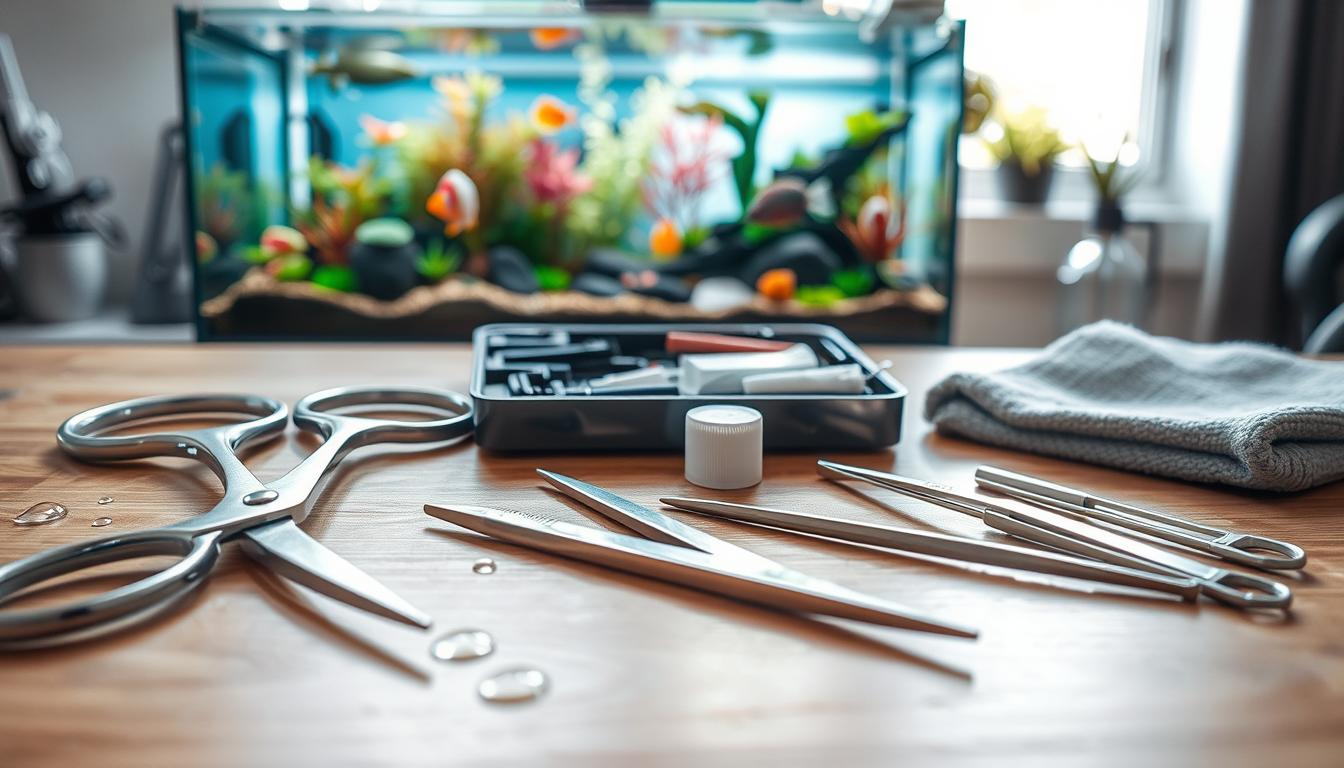
Starting with simple routines is key to keeping your nano tank tools in top shape. This includes rinsing, drying, polishing, sharpening, and storing them properly. These steps are essential for tools like stainless steel aquascaping scissors, tweezers, and scrapers used in planted and nano aquariums.
Most tools today are made of stainless steel or alloys. They are designed to be slim, ergonomic, and precise. This precision is favored by aquascapers who aim to create natural-style aquascapes with minimal damage to plants and stress to shrimp and small fish.
Proper maintenance offers clear benefits. It extends the life of your tools, keeps them sharp, and prevents rust. It also ensures your aquarium stays clean and healthy. This means paying attention to screws, blade points, and scraper edges, which are prone to wear.
This guide will show you how to rinse tools after use, dry them, and polish them. You’ll learn about sharpening methods and when to replace scraper blades. It also explains why shorter scissors and tweezers are better for nano tanks. They make handling easier and allow for finer control around delicate plants and fish.
Importance of Maintaining Your Nano Tank Tools
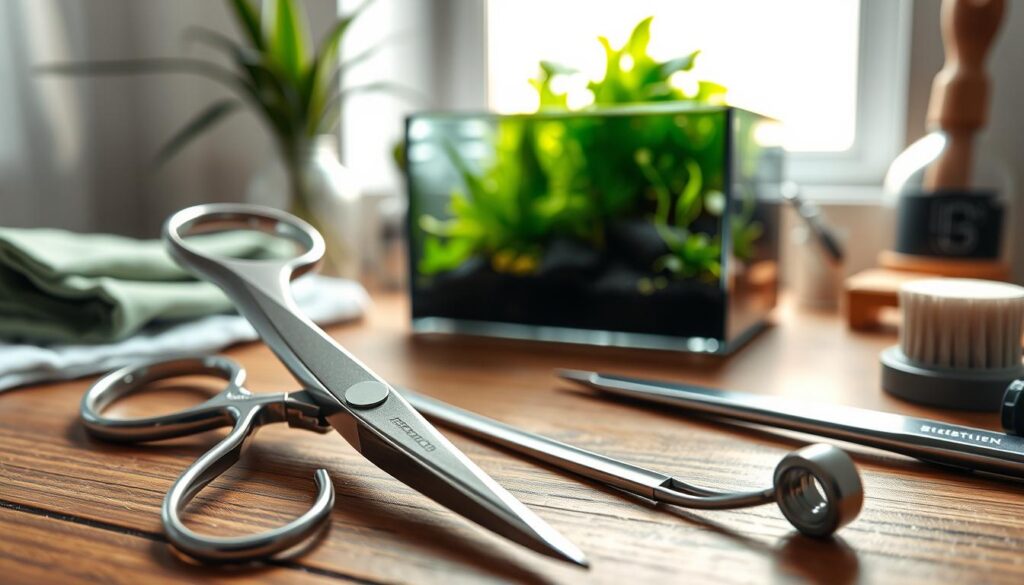
You use stainless-steel scissors and tweezers for trimming plants and placing moss. Keeping these tools sharp and smooth is key. Regular care prevents corrosion that can ruin their function.
Flash rust can form at connections like screws and blade pivots. Even stainless can rust if wet or contaminated. Debris makes rust stick, affecting tool movement and precision.
Saltwater accelerates corrosion more than fresh water. Rinse tools in fresh water after use and dry them well. Salt residue can cause deep corrosion if not removed.
Ignoring tool care leads to problems. Dull blades, stiff springs, and rusty flakes can harm your tank. These issues can damage plants and harm fish.
Good tool care makes maintenance easier. When tools work well, you enjoy the process more. This leads to a healthier and neater tank over time.
Tools You Will Need for Cleaning
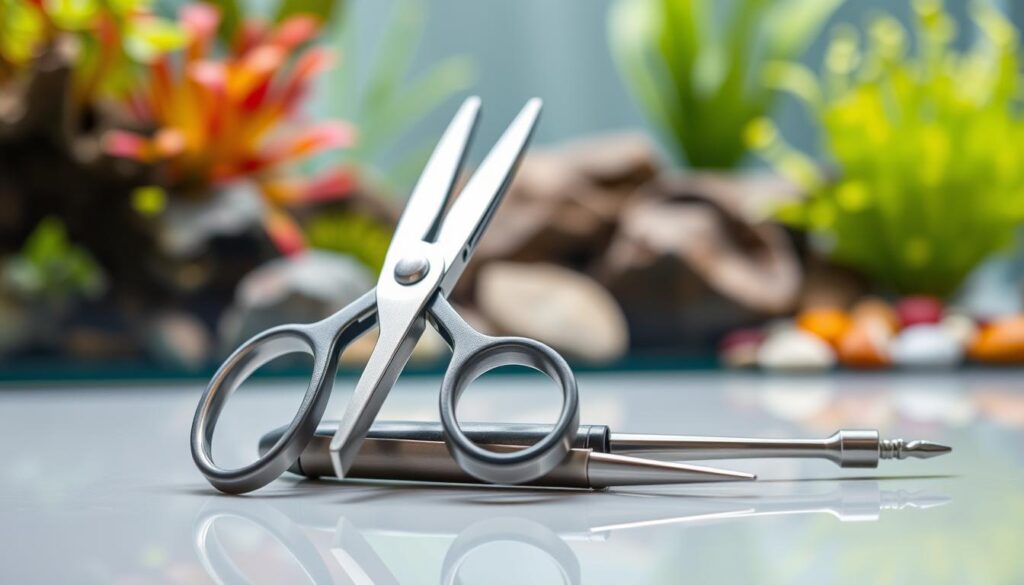
Start by gathering a small cleaning kit. You’ll need a soft towel for drying and fresh water to rinse off dirt and salt. Also, have isopropyl alcohol or a safe aquarium disinfectant ready for tough stains. But use these carefully to avoid damaging your tank’s finishes and seals.
Don’t forget small brushes for getting into tight spots. A toothbrush or a small brush is great for cleaning around hinges and in small crevices. If you see light corrosion, have a container ready to soak non-stainless parts.
- Polishing and rust-removal tools: look for multi-grit tools like Borneo Wild’s Polish Tip. Use them carefully near blade edges to avoid taking off too much material.
- Sharpening tools: a household scissor grinder is good for straight scissors if used carefully. For curved blades, like Wave Cutters, use a small hone or whetstone to keep the angle right.
- Replacement parts and consumables: keep spare scraper blades, replacement screws, and small O-rings on hand. They help when parts wear out or rust.
Make sure to organize your tools for easy storage and transport. Many tool sets come with protective cases. You might also consider an ADA FC Tool Stand, a RÅSKOG-style serving trolley, or wall-mounted holders for easy access. Eheim maintenance boxes are great for storing wet tools during maintenance.
Add more maintenance items to your kit. Use pipe brushes for filter hoses from Green Aqua or Chihiros, algae scrapers, soft brushes, dedicated towels, and gloves for handling marine salt. These make caring for your small tank easier and safer.
When buying replacements or upgrades, choose trusted brands. Chihiros, DOOA, ADA, Green Aqua, JBL, and Oase offer reliable accessories and parts for your aquascaping tools.
Step-by-Step Cleaning Process for Scissors
Always rinse your scissors after each use. Run them under fresh water to remove plant sap, debris, and salt. This quick rinse stops residue buildup and corrosion, which is vital for keeping your tools in good shape.
After rinsing, dry your scissors with a soft towel. Make sure to dry the pivot points, screws, and where the blades meet. If your scissors have removable blades, dry each part separately to avoid moisture getting trapped.
-
Use a polishing tool like Borneo Wild’s Polish Tip to remove dirt and rust. Start with the pink side to lift off rust and dirt, then use the white side to smooth, and the grey to buff. Work in short strokes and follow one direction near the edge to keep the blades sharp.
-
Sharpen your scissors only when they need it. For straight scissors, use a household scissor grinder carefully. For curved blades, like Wave Cutter or curved spring scissors, use a hone or small whetstone. Hand sharpening helps keep the blade curve and prevents uneven wear.
-
If the pivot feels stiff, add a small amount of food-safe mineral oil. Apply a tiny drop to the screw or joint, then wipe off any extra. Use aquarium-safe lubricants and clean up well to prevent dirt attraction. This step is key for your tools to last longer.
-
Check your scissors before storing them. Look for rust, loose screws, or chips on the blade edge. Replace or fix any damaged parts, like scraper blades. Only store your scissors when they are completely dry to prevent corrosion.
By following this cleaning routine, your scissors will be ready for precise aquascaping work. Good care includes gentle polishing, careful sharpening, and the right lubrication. These steps are essential for maintaining your aquascaping scissors and other nano tank tools.
Step-by-Step Cleaning Process for Tweezers
1. Rinse tweezers right after use to get rid of debris and salt. A quick rinse in fresh water stops grit from getting stuck and lowers corrosion risk. This is key for keeping your nano tank tools in top shape.
2. Dry tweezers gently with a soft towel. Focus on grooves, serrated parts, and spring areas. Keeping these areas dry helps avoid rust and damage.
3. Use a small brush or soft toothbrush to clean serrations and jaws. This removes trapped debris from the jaw ridges. For tough spots, soak, brush again, rinse, and dry to keep the tweezers in good condition.
4. Polish joints and surfaces if you notice discoloration or rust. Use a multi-grit polishing tool like Borneo Wild’s Polish Tip. This gently removes spots without harming the tweezers’ shape.
5. Check if the tweezers are aligned and spring action is smooth. Make sure tips meet cleanly and the spring works well. If tips are bent, try to adjust them carefully. If you can’t fix it, it’s time to replace the tweezers.
6. Store tweezers only when they are completely dry and safe. Use a protective case or tool stand to keep them dust-free and prevent bending. For nano tanks, choose shorter tweezers to fit the tank size and save space.
How to Properly Store Your Aquascaping Tools
Give your scissors and tweezers a special place to last longer and make upkeep simpler. A tool case designed for the job is perfect. The ADA FC Tool Stand is stylish and keeps tools in sight. For more flexibility, consider IKEA’s RÅSKOG trolley.
Always store tools dry to stop rust. In humid places, add silica gel packets to cases. Use an Eheim MultiBox or similar for quick storage during tasks.
If a tool stays wet, store it separately to avoid damage. Rinse and dry tools well before putting them away. This habit helps keep your tools in good shape and reduces corrosion.
Organize blades and spares in labeled spots. Hang tools by their handles to prevent damage. Keep short scissors and tweezers within reach to encourage regular use.
Use tip covers or foam-lined slots to protect fine tips. Avoid heavy items near precision tools to prevent damage. These steps help keep your tools sharp and your work precise.
Create a small maintenance station near your storage. Keep towels, polishing cloths, and spare blades handy. Include brushes and tools from Green Aqua or Chihiros for a streamlined routine.
- Dedicated case or ADA FC Tool Stand for display and access
- RÅSKOG trolley or Eheim MultiBox for mobile organization
- Silica gel in closed cases for humid climates
- Tip covers, foam-lined slots, and labeled compartments
Signs That Your Tools Need Replacement
Look for deep rust and pitting on blades and pivots. Surface rust can be cleaned off, but deep corrosion weakens the tool. It also ruins its sharpness. At this point, it’s better to replace the tool than risk it breaking during use.
If screws, springs, or joints stay stiff after drying, polishing, and lubricant, the tool might be failing. Seized pivots mean a new tool could save you time and frustration. This is important for your nano tank tool care routine.
Check blades for chips, severe dulling, or warping. Curved and wave scissors are hard to regrind. If honing doesn’t restore a sharp edge, it’s time to replace the tool. This protects your plants and ensures clean cuts.
Tweezers with misaligned or bent tips can bruise or tear delicate stems. If you can’t safely fix the tips, it’s best to replace the tweezers. This keeps your small tank tool care tasks precise.
- Non-stainless scraper blades rust faster than stainless steel. Replace these blades regularly and unmount them to dry after each use.
- Loss of serration or grip on tweezers makes handling plants and hardscape harder. If cleaning and light polishing don’t work, it’s time for a new one.
Think about the tool’s value when deciding to repair or replace it. Premium sets from ADA, DOOA, or Chihiros might be worth part replacement or professional service. For entry-level or heavily corroded tools, full replacement often gives better value. It restores reliable performance for your nano tank cleaning tools and overall small tank tool care.
Frequently Asked Questions About Nano Tank Tool Care
How often should you clean your tools? Rinse them after each use and towel-dry right away. For deeper cleaning, polish and check weekly or after long use. Sharpen only when needed to avoid shortening tool life.
Can you use the same set in freshwater and marine setups? Yes, but rinse with fresh water after marine use and dry well to prevent salt corrosion. Many hobbyists have a separate set for saltwater to avoid contamination and wear.
Are all aquascaping tools stainless steel? Most high-quality scissors and tweezers are stainless or stainless alloys. Some scraper blades are not stainless and rust easily. Remove non-stainless blades and dry them separately to prevent damage.
What is the best sharpening method? For straight scissors, use a household scissor grinder carefully. Curved or spring scissors do better with a small whetstone or honing rod. Avoid aggressive sharpening that removes too much material.
How do you store tools in humid climates? Use silica gel packs in cases and ensure tools are dry before storing. An open-holder display, like an ADA FC Tool Stand, helps air circulation and lets you polish occasionally to prevent rust.
When should scraper blades be replaced? Replace blades when sharpness drops or rust appears. Many blades are not stainless, so replacing them regularly keeps performance high and protects plants during mini tank maintenance.
- Rinse and dry after each use to prevent corrosion and algae buildup.
- Keep a separate set for marine tanks if possible to limit wear on nano tank care accessories.
- Store with desiccants in a ventilated holder to extend tool life.
Following these simple practices keeps your equipment ready and supports reliable mini tank maintenance without adding extra hassle to your routine.
Environmental Considerations in Tool Care
Opt for durable stainless-steel tools from brands like ADA, DOOA, Chihiros, or Green Aqua. This choice reduces waste and extends tool life. High-quality tools resist corrosion, making maintenance easier with simple care routines.
Use chemicals wisely. Start with rinsing, brushing, polishing, and honing before using disinfectants. If you must use isopropyl alcohol or sanitizer, apply it sparingly and rinse well. This keeps plants and fish safe and water quality high.
Organize and dispose of consumables properly. Recycle metal parts if your area accepts them. Store single-use blades in designated containers and follow local disposal rules. This reduces landfill impact and keeps tools clean.
Use separate tool sets for freshwater and marine tanks. This prevents corrosion and contamination between environments. Dedicated sets also reduce the need for frequent replacements, making maintenance easier.
Save water during cleaning. Use short, effective rinses and dry tools with a clean cloth. This method removes residue efficiently, saving water and being eco-friendly.
Choose repair over replacement when tools are safe and functional. Small fixes can extend tool life and save the environment. Replace tools only when they are no longer safe or functional.
- Pick durable brands to reduce turnover.
- Use mechanical cleaning first, chemicals sparingly.
- Recycle metals and dispose of blades responsibly.
- Keep dedicated sets for freshwater and marine use.
- Rinse briefly and dry to save water.
- Repair minor issues instead of discarding tools.
Conclusion: Keeping Your Tools in Top Shape
To keep your aquascaping scissors, tweezers, and accessories in good shape, make a simple routine part of your maintenance. Rinse tools right after use, and dry them well with a towel. For light dirt or rust, use a multi-grit polish gently. Sharpen only when needed for better cutting or alignment.
Replace non-stainless scraper blades regularly to protect plants and glass. This prevents damage and keeps your tank looking great.
Store your nano tank cleaning tools and accessories in a dry place to avoid corrosion. Keep cleaning supplies close to your storage to clean tools right away. Choose tools that fit your nano tank well. Short scissors and tweezers offer better control and reduce wear from hard angles.
Investing in premium brands like ADA, DOOA, Chihiros, or Green Aqua can make your tools last longer and feel better in your hand. Proper care keeps your tools sharp, aligned, and corrosion-free. This makes your work easier and more enjoyable. By following these steps, your tools will stay in top condition, helping you keep your aquascapes healthy and beautiful.
Leave a Reply