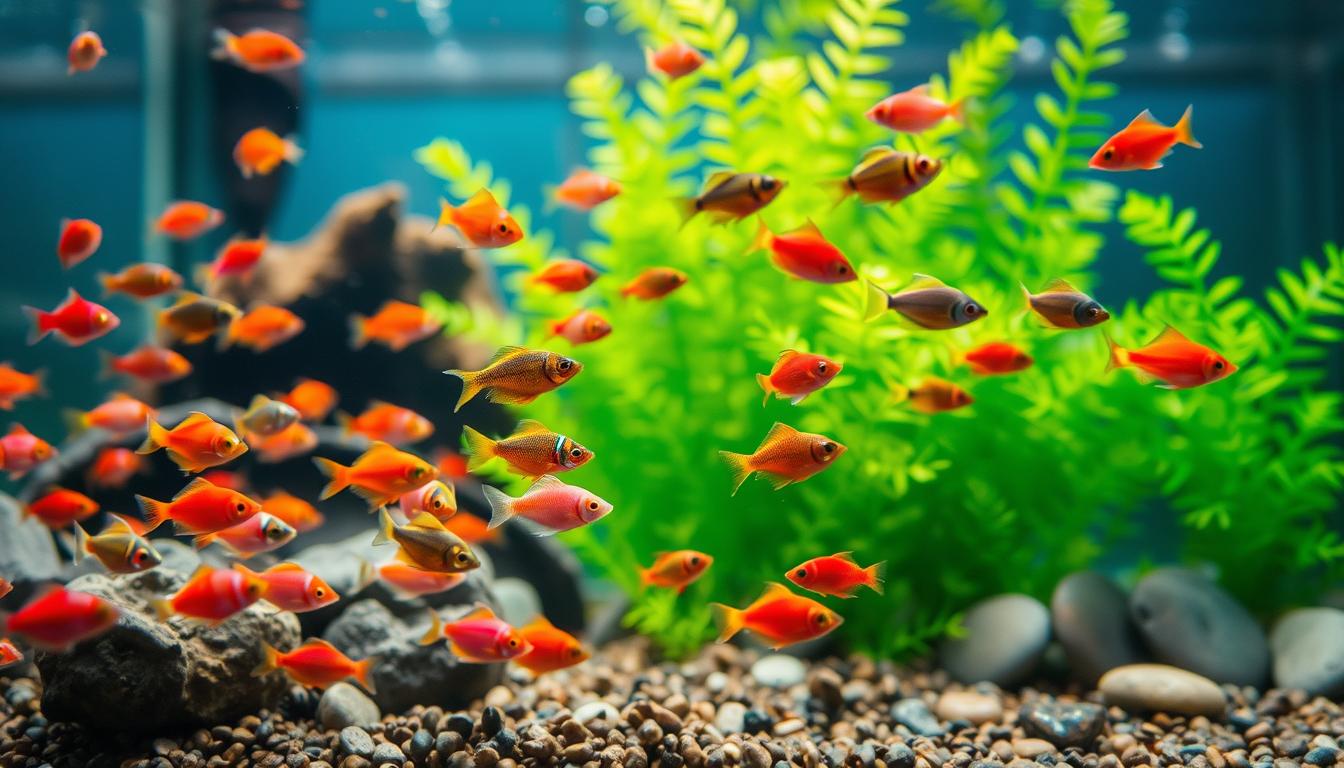
If you live in the United States and have hard tap water, this guide is for you. It helps you choose nano fish that are hardy and don’t need special treatment. You’ll learn about small fish that do well in water with high GH and pH levels.
This guide is for hobbyists who want easy advice. It covers species choices, care tips, and setup advice. Many popular nano fish, like livebearers and hardy tetras, are bred in hard water. They’ll do well in your tap water without needing an RO system.
Keep reading for a deep dive into water hardness basics (GH, KH, pH). You’ll also learn about the best nano fish for hard water. We’ll cover traits of resilient species, tank preparation, maintenance, feeding, and health signs to watch. This will help you create a vibrant, easy-to-care-for nano aquarium that matches your water and lifestyle.
Understanding Hard Water and Its Effects on Fish
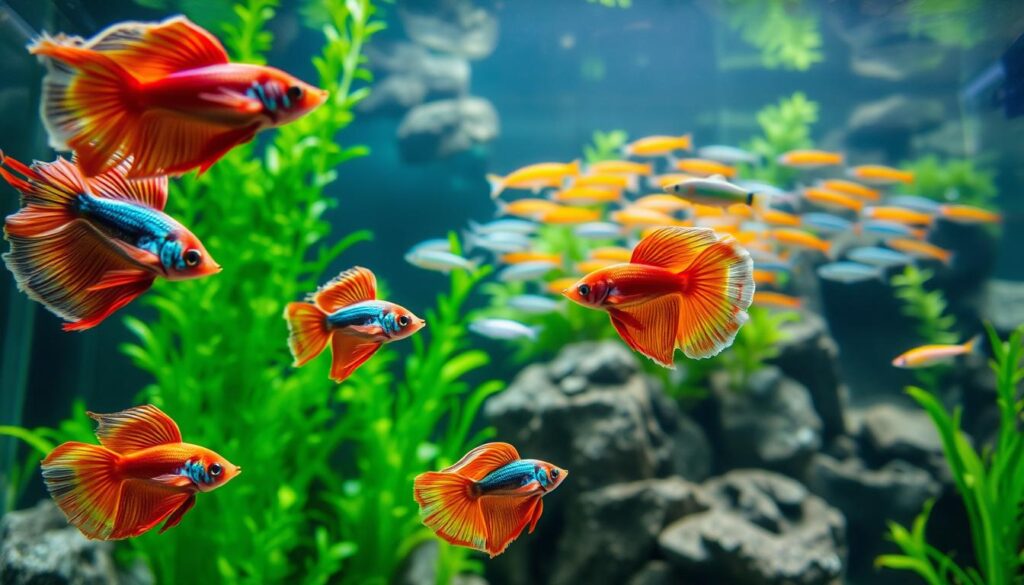
Hard water has minerals like calcium and magnesium. Aquarists measure this as General Hardness (GH). Carbonate Hardness (KH) measures carbonates and bicarbonates that help keep your tank’s pH stable.
Here’s how to classify your water:
- Soft: 0–4° dH (0–75 ppm)
- Moderately hard: 4–8.5° dH (75–150 ppm)
- Hard: 8.5–17° dH (150–300 ppm)
- Very hard: 17°+ dH (300+ ppm)
KH is important because it keeps pH stable. Higher KH means a more alkaline pH, which is common in many tap waters. This stability helps keep your fish healthy and reduces stress.
Some fish, like discus and crystal shrimp, prefer soft, acidic water. They may struggle in hard, alkaline water. You might need to treat or modify the water for them to thrive.
Many community fish, on the other hand, do well in harder, alkaline water. This makes it easier to keep hard water nano fish. You can match your fish to your tap water chemistry instead of changing the water.
Before adding fish, test your tap water for GH, KH, and pH. Choose fish that match your water chemistry. If you need to change levels, do it slowly and acclimate your fish properly to avoid stress and health issues.
When picking fish, look for hardy species like many livebearers and danios. They often do well in hard water. Choosing the right species saves time and money on water treatment systems.
Why Choose Nano Fish for Your Tank?
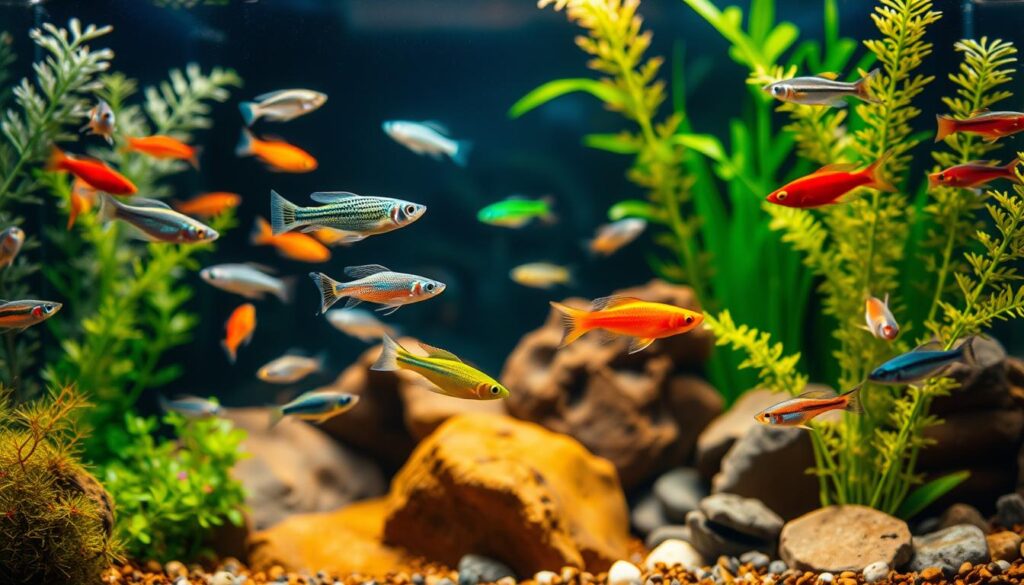
Nano fish are perfect for tanks under 20 gallons. You can keep micro rasboras, Celestial Pearl Danios, and dwarf corydoras in small spaces. They also include ember tetras and some dwarf rainbowfish.
These fish thrive in tight spaces and show bright colors. They don’t need a lot of room to be beautiful.
Nano tanks are great for small spaces. They fit well in apartments and busy homes. You’ll save money on equipment and can easily move the tank.
Many nano fish can handle hard water. Livebearers like guppies and mollies, rainbowfish, killifish, and X-ray tetras do well in alkaline water. This means you can choose fish that don’t need a lot of water changes.
Feeding nano fish is easy. They eat nano pellets, crushed flakes, microworms, or baby brine shrimp. This makes caring for them quick and simple.
Schooling behavior is important. Many nano fish look better and feel safer in groups. Plan your stocking to ensure they have a vibrant and secure environment.
If you’re new to fish keeping, choose species that match your water. This reduces the need for special water treatments. It makes caring for nano fish in hard water easier.
Keeping a nano tank has many advantages. It produces less waste and is easier to maintain. Small tanks warm up and cycle faster, helping you spot problems early.
In summary, nano fish offer vibrant colors and lively behavior in small spaces. They are easy to care for, making them perfect for everyday life.
Popular Nano Fish Species Thriving in Hard Water
Choosing the right nano fish for hard water is easy. Livebearers like guppies, platies, and mollies thrive in hard water. They are small, with guppies and platies growing up to 3 inches, and mollies up to 5 inches.
Feed them a mix of flakes, pellets, and calcium-rich foods. This helps them grow and stay colorful. If your water is very soft, add minerals or choose tank-bred fish.
- Dwarf neon and turquoise rainbowfish like Melanotaenia praecox and M. lacustris enjoy harder water and are lively mid-to-top swimmers.
- Blue-eyes such as Pseudomugil luminatus and P. gertrudae prefer alkaline GH similar to their native habitats and do best in small schools.
Smaller rainbows and blue-eyes are perfect for small tanks. They start at 10 gallons for dwarf species. They add color and movement without taking up much space.
X-ray tetra (Pristella maxillaris) tolerates a broad range of GH and pH. It’s great for small groups in compact setups. Congo tetra (Phenacogrammus interruptus) also accepts harder water but needs more space.
Hardy killifish and flagfish are low-maintenance options. Aplocheilus lineatus (golden wonder) and Jordanella floridae (flagfish) handle wide pH swings. They’re good for unheated or lightly heated tanks.
- Ember tetra (Hyphessobrycon amandae), chili rasbora (Boraras brigittae), and celestial pearl danio (Danio margaritatus) are popular in planted nano setups.
- Many of these small fish for hard water aquarium setups adapt if they come from commercial breeders.
When stocking nano fish for hard water tanks, check if they are wild-caught or tank-bred. Tank-bred fish are more likely to be acclimated to tap water. This reduces stress and boosts survival in your aquarium.
Characteristics to Look for in Nano Fish
Look for nano fish that can handle a wide range of water hardness and pH. Many livebearers, rainbowfish, some tetras, and certain killifish are good choices. They can handle hard or alkaline water, which is helpful if your tap water is hard.
Check if the fish are tank-bred. Tank-bred fish are easier to care for and less stressed. They are also more likely to thrive in your home aquarium.
- Size and social needs: choose schooling species that fit your tank. Many nano fish show their best color and behavior in groups of six or more. Examples include ember tetra, celestial pearl danio, and chili rasbora.
- Diet and feeding: pick fish with small mouths that accept crushed flakes, nano pellets, powdered fry foods, microworms, baby brine shrimp, or daphnia. Make sure the species’ dietary needs match what you can supply regularly.
- Temperament and tankmate compatibility: avoid slow or delicate plant species when keeping nibblers or algae eaters like flagfish. Match activity level so fast rainbowfish won’t stress calm dwarf corys.
- Environmental preferences: note whether a species is a surface dweller, midwater swimmer, or bottom-dweller. Plan planting, flow, and tank layout to suit their habits.
When researching nano fish species for hard water, compare tolerance, breeding history, and social needs. These factors help narrow down the best nano fish for hard water for your tank.
Use this checklist to pick compatible tankmates and to design a balanced tank. A thoughtful choice now reduces problems later and improves long-term fish health.
Preparing Your Aquarium for Nano Fish
Choose a tank that’s under 20 gallons. It should fit your space and the fish you want. Small tanks can hold many nano fish, but don’t overcrowd. Pick a filter that manages the bio-load and keeps the flow gentle for tiny fish.
Make sure the tank is cycled before adding fish. This step prevents ammonia and nitrite spikes. Test for ammonia, nitrite, and nitrate until they’re all zero.
Use a substrate and decor that work with hard water. Choose inert gravel or sand that won’t change the water’s hardness. Pick decorations and plants that like alkaline conditions, like Java fern or Anubias, for your hard water fish.
Set the heater and temperature right for your fish. Many nano fish like 75–78°F (24–26°C). Livebearers and flagfish can handle cooler or unheated tanks, so match the tank’s climate to your fish.
Acclimate new fish slowly, if their water is different from yours. Use drip acclimation for big differences in GH or pH. This method lowers stress and reduces losses when preparing your aquarium for nano fish.
Keep test kits for GH, KH, and pH ready. Document your tap water’s baseline values. Regular testing helps you make the right choices for your nano fish in hard water. Keep records to spot trends and make timely adjustments.
- Tank size: under 20 gallons for most nano setups.
- Filtration: efficient biological filter with gentle flow.
- Substrate: inert materials to preserve hardness.
- Temperature: match species, commonly 75–78°F.
- Acclimation: drip method for large water differences.
- Testing: GH, KH, and pH kits and a simple log.
Follow these steps to prepare your aquarium for nano fish. This groundwork makes caring for them in hard water easier. It helps your hard water aquarium nano fish thrive.
Maintaining Water Quality in Hard Water Environments
Test your tank weekly. Check GH, KH, pH, ammonia, nitrite, and nitrate. Keep a log to spot trends. This helps avoid sudden changes that harm your fish.
Do routine partial water changes on a schedule you can keep. If your tap water chemistry matches your fish’s needs, use straight tap water. Blend RO water with tap water only when you need to lower hardness for sensitive species.
If you must soften water for certain fish, use RO/DI blends and then remineralize carefully. Peat or driftwood can nudge pH down a little. But they rarely change very hard tap water enough on their own. Combining those methods with RO blending gives better results.
- Use mineral supplements like Seachem Equilibrium or Wonder Shell when your tap water is too soft for a species that needs higher GH.
- Raise GH gradually and test after each change to avoid stress.
Prioritize stability over chasing perfect numbers. Sudden shifts in KH or pH are more damaging than steady, higher hardness. A stable KH provides buffering that protects against wide pH swings, an important part of hard water nano fish care.
Maintain good mechanical and biological filtration. Clean filter media gently in tank water to preserve beneficial bacteria. Avoid overstocking; many nano tanks rely on careful, light stocking and heavy planting to keep waste low and water quality high.
Monitor your biological load and adjust feeding to match. Less uneaten food means lower ammonia and nitrate buildup. Good routines make maintaining water quality hard water simpler and safer for your community.
Feeding Your Nano Fish Properly
Feeding nano fish in hard water is all about the right food size. Use crushed flakes, nano pellets, and powdered fry foods. For meat-eaters, try freeze-dried daphnia and frozen cyclops.
For hard water aquariums, livebearers like guppies and mollies are good choices. They like plant matter and calcium-rich foods. Killifish and small rainbowfish need meaty foods like baby brine shrimp and bloodworms.
- Feed them small meals often to match their fast metabolism.
- Remove any uneaten food quickly to keep the water clean.
- Change up the food types to keep them interested.
It’s important to balance nutrients for nano fish in hard water. Use calcium-rich foods or supplements like Seachem Equilibrium. For herbivores, add vegetable pellets or blanched spinach.
Keep an eye on how your fish eat. If they’re picky or look dull, it might be time to change their diet. Increase protein for breeding, then go back to a balanced diet.
- Make sure the food is the right size for their mouths.
- Feed them small amounts several times a day.
- Add minerals if you’re breeding or see signs of deficiency.
- Keep the diet varied to keep them colorful and active.
By focusing on the right feeding, your nano fish care will improve. They’ll show better color, activity, and breeding success.
Common Health Issues in Nano Fish
Watch for stress from changes in water parameters. Poor acclimation or sudden changes in GH and pH can weaken fish. In a hard water tank, fish may seem fine one day and sick the next.
Bacterial infections, fungal growth, and parasites are common when water quality drops. Look for fin erosion, white patches, and clamped fins. Fish may also scratch decor or lose their appetite. Mollies and some livebearers may shimmy or swim oddly when moving to soft water.
- Prevent stress by matching tank GH and pH to the species’ needs.
- Quarantine new arrivals and prefer tank-bred specimens to reduce pathogens.
- Keep stocking low to avoid overcrowding and oxygen stress.
To treat illnesses, first identify the pathogen. Use specific medications for bacterial, fungal, or parasitic issues. Raising the tank temperature slightly and stabilizing pH can help medications work better.
Breeding and fry care require extra attention. Many livebearers spawn easily in hard water. Provide plants or breeding boxes for fry to hide. Adults don’t care for their young, so separate tanks and use infusoria or baby brine shrimp for food.
Good care in hard water tanks means steady water chemistry and frequent small water changes. Regular observation is key. A strong prevention routine helps keep your tank healthy and vibrant.
Creating an Inviting Environment for Nano Fish
Design your aquascape with the species in mind. Give open midwater space for rainbowfish and blue-eyes. Add dense plants and hiding spots for shy types like ruby tetras and celestial pearl danios.
Choose plants that tolerate higher GH and KH. Java fern, Anubias, Vallisneria, and many crypts handle hard water well. Avoid peat-dependent species if you plan to keep hardness high for hard water nano fish.
- Use floating plants and thick foreground planting to protect fry and offer cover.
- Provide driftwood and rock caves for visual interest and shelter; do not rely on driftwood to change chemistry significantly.
- Pick an inert substrate such as sand or gravel to maintain stable hardness for nano fish for hard water tanks.
Plan social groups to let natural behavior show. Ember tetras, chili rasboras, and celestial pearl danios thrive in schools of six to ten. Tail-spot and dwarf corydoras prefer groups of eight to ten.
Address jump risk with a tight-fitting lid or abundant floating cover. Many small top-dwelling species, including some killifish and blue-eyes, will leap if startled.
When creating environment for nano fish, balance aesthetics with function. Stable water parameters, proper plant choices, and correct group sizes create a calm tank where hard water nano fish can display color and natural behaviors.
Conclusion: Choosing the Right Nano Fish for Your Hard Water Home
To start a successful nano tank in hard water, first test your tap’s GH, KH, and pH levels. This knowledge helps you pick fish that can handle high mineral levels. Often, keeping the water stable is more key than trying to get perfect numbers.
Look for tank-bred, hardy fish that can handle different water conditions. Good choices include guppies, platies, and mollies. Also, consider dwarf neon and turquoise rainbowfish, x-ray tetras, and cherry barbs. Small killifish, blue-eye species, celestial pearl danios, ember tetras, and chili rasboras are also good. Make sure to buy from trusted sellers to increase survival and color.
After choosing your fish, test your water, pick compatible species, and cycle the tank. Add plants and filtration, and slowly introduce new fish. Stick to regular feeding and care routines to keep your fish healthy and happy.
By picking the right fish and caring for them well, you can have a lively, easy-to-keep aquarium. This guide helps you set realistic goals and achieve long-term success. So, your hard water home can be a great place for your nano fish to thrive.
Leave a Reply