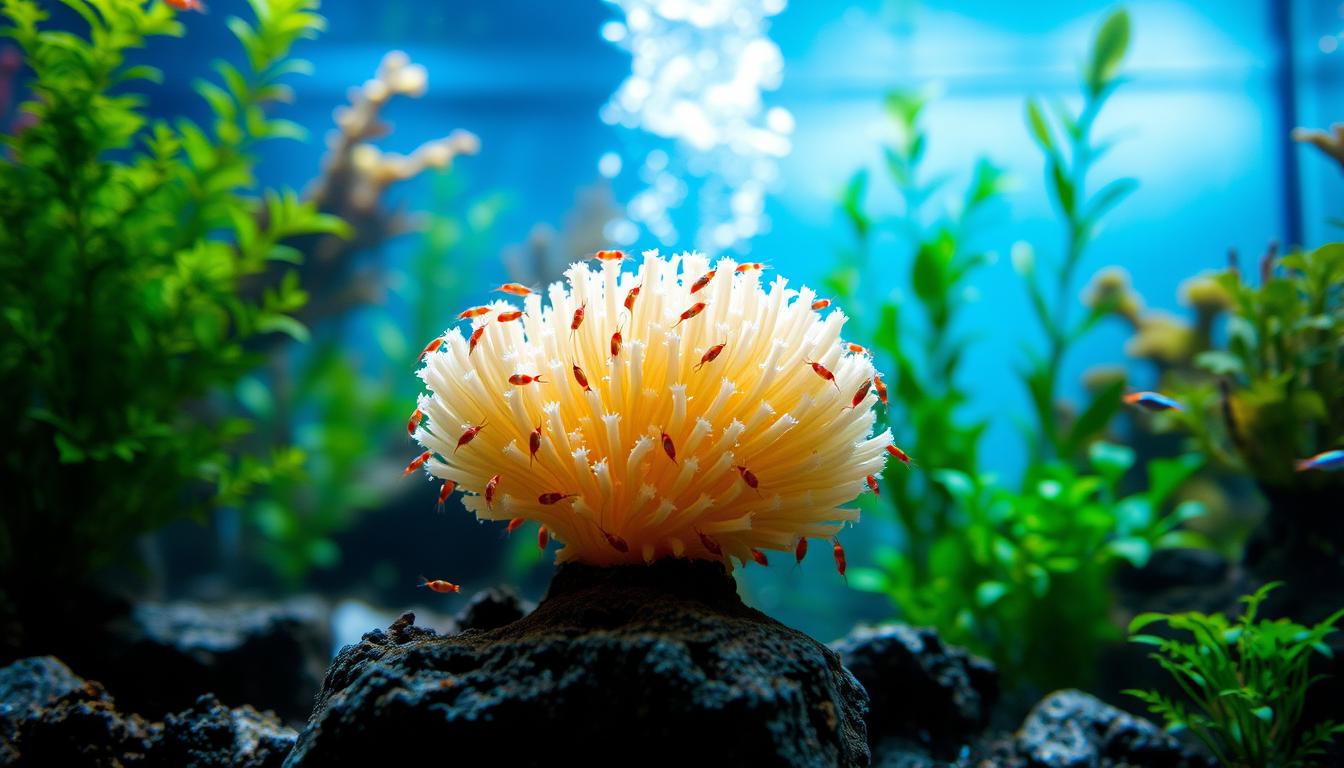
This article will teach you how to keep pre-filter sponges clean. This is to ensure baby shrimp and other small fish stay safe. You’ll learn the basics of cleaning these sponges and how to do it without harming tiny creatures.
Dwarf shrimp, like Caridina and Neocaridina, are very small. Adults are about 15–40 mm, and new shrimp are just 1–2 mm. These tiny shrimp can easily get caught in filters and skimmers, leading to injuries or death.
Next, you’ll find out how to pick the right sponge and install it correctly. You’ll also learn a safe cleaning method and how to avoid clogging the sponge. We’ll discuss how to spot pests in sponges and when it’s time to replace them. Keeping intake sponges clean also helps your aquarium’s filtration system work better.
Understanding the Importance of Cleaning Intake Sponges
Your intake sponge does two key jobs in a shrimp tank. It stops baby shrimp, snails, and plant debris from getting sucked into pumps. It also helps nitrifying bacteria grow, which is important for cleaning ammonia and nitrite.
Not cleaning them regularly can cause problems. Clogged sponges can lower the flow rate and reduce filter output. This can stress gas exchange and lead to spikes in ammonia and nitrite, harming your shrimp.
Some internal filters have open slits that can trap shrimp. If these devices run all the time, a clogged opening can trap shrimp. It’s important to check for vulnerable spots in your equipment.
DIY fixes like nylon stockings or sponge rolls can block debris. But, they might not work well or could damage the motor if not fitted right. Commercial guards, like Dennerle Nano BabyProtect, are safer and better for protecting your shrimp while keeping the flow good.
Cleaning intake sponges regularly helps your pump last longer. It also means you won’t have to do deep cleanings of your media as often. This keeps your biological filter stable and reduces the need for emergency maintenance for air and vacuum filter care.
Types of Pre-Filter Sponges
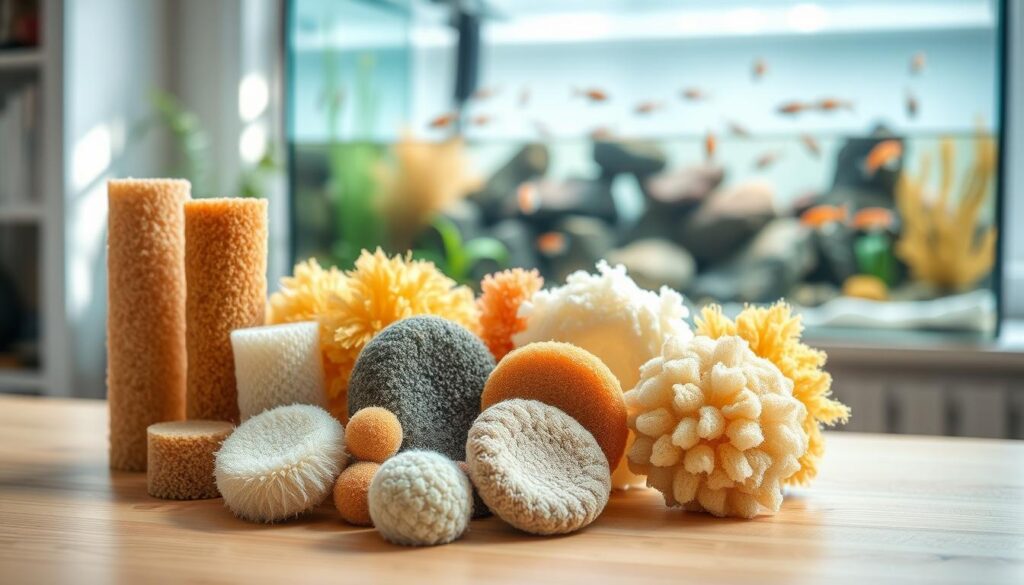
There are a few common types of pre-filter sponges for aquarium intakes. The most well-known is the coarse-porosity foam cylinder with a center hole. Brands like Fluval and Aqueon make these ready-made guards that fit over intake tubes.
Coarse foam pads cut-to-fit are great for DIY setups. You can trim a sheet to fit your internal filters or HOB intakes. Fine-pored sponges are less common but useful for protecting very small fry or adding extra mechanical filtration.
Molded guard assemblies combine rubber edges with stainless mesh. These guards are durable and look good. They’re often used on glass lily pipes or display-ready canister inlets where looks matter.
- Size options: small/mini for low-flow filters, medium for mid-range, large for high-flow units.
- Many brands map models to sponge sizes. Check charts from Aquarium Co-Op, Marineland, Seachem, Penn-Plax and Tetra when you match parts.
Installing a pre-filter can be simple or require some hardware. Some intakes need O-rings to hold a sponge. Others work with zip ties or hose clamps. You can turn a powerhead into a mini filter by zip-tying a sponge over the intake basket, but watch flow loss.
Choose the right pre-filter for your filter type for the best results. For internal filters, cover slits with a fine sponge or nylon stocking if a factory guard is missing. This keeps baby shrimp safe without blocking flow paths.
Canister filters work well with a nylon stocking over the inlet strainer or a dedicated pre-filter sponge on the intake tube. If you use glass lily pipes, pick stainless mesh or molded guards to keep aesthetics and safety aligned.
Hang-on-back filters accept sponge rolls shaped into rings when a rigid guard won’t fit. For surface skimmers, choose specialized shrimp guards such as Eheim Skim 350 shrimp guard or Green Aqua Guard, or run the skimmer on a timer that gives shrimp escape windows.
When choosing an intake sponge, consider safety versus performance. Commercial products from trusted brands often deliver tested flow and protection. DIY solutions work, but they can reduce pump output if the pore size or fit is wrong.
Follow basic sponge cleaning tips to keep any pre-filter sponge effective. Regular rinsing prevents clogging and maintains flow. For systems using air-driven inlets, learn the best way to clean air filters and incorporate that step into your maintenance routine.
Signs Your Intake Sponge Needs Cleaning
Watch for changes in water flow and how the surface moves. If the filter’s outflow drops or the surface agitation weakens, the sponge is clogged. Check the output after the pump runs. If it’s weaker than usual, it’s time to clean.
Look at the sponge itself. If it’s covered in brown or green gunk, it’s clogged. This means you need to clean the filters to keep water flowing right.
See if debris keeps coming back to the tank after the filter cycles. If waste bits keep returning, the sponge isn’t trapping well. You should learn how to detect clogged sponge before it gets worse.
Listen for strange noises from the pump. If it sounds different or struggles, it might be blocked. These sounds mean the motor is working harder because the intake is blocked.
- Long intervals without cleaning—monthly is a good rule for most setups.
- After heavy feedings, substrate disturbance, or plant trimming that raises particulates.
- High stocking or dense plant load that speeds clogging.
Watch your shrimp closely. If they’re stuck near the intake or missing after filter cycles, it’s a big risk sign. Excess biofilm on intake parts attracts shrimp, increasing entrapment attempts. If you see this behavior, clean the filters right away.
For regular care, clean the intake sponge once a month or sooner if you notice decreased output. Adjust how often based on stocking density, feeding habits, and plant numbers.
Knowing how to detect clogged sponge helps protect baby shrimp and keeps water quality good. Regular checks and timely cleaning keep your filtration working well and prevent accidents around the intake.
Step-by-Step Guide to Cleaning Your Sponges
First, turn off the filter and unplug it. If you have a protein skimmer on a timer or a smart plug, stop it. This keeps your tank calm while you clean.
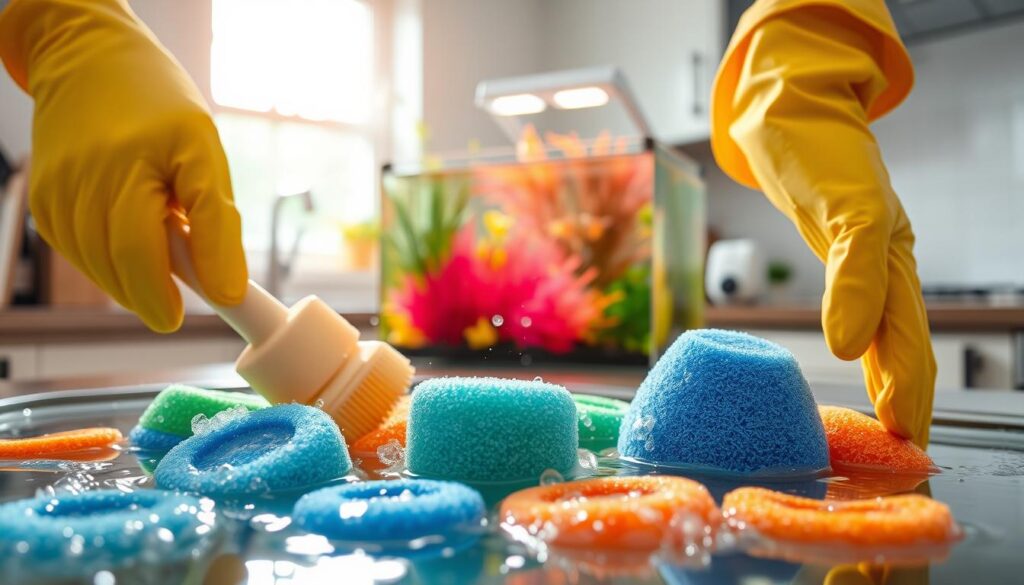
Next, remove the sponge carefully. Use a plastic bag or container to scoop it out. This helps prevent detritus from spreading into the aquarium. Aquarium Co-Op and other experts recommend this method for safe handling.
Now, prepare old tank water in a bucket or plastic bag. Don’t use tap water for rinsing; chlorine will harm beneficial bacteria. This step is key for successful DIY filter cleaning.
- Squeeze and wring the sponge in the old tank water until the rinse water clears. Repeat until debris is minimal.
- If the sponge is clogged, do more wringing cycles instead of replacing it. This helps keep the biological colonies alive.
- If the sponge is deteriorating or breaking, replace it. This prevents fragments from getting into the intake.
Optional: pour the dirty rinse water on houseplants or the lawn. It acts as a mild fertilizer and keeps waste out of the drain.
Put the sponge back on the intake tube securely. Use an O-ring, zip tie, or tight friction fit. Make sure it’s properly seated to prevent gaps and stray bits.
Restart the filter and check the flow. Listen for any unusual noises. Watch the intake area for trapped livestock or odd behavior in the first few minutes.
- For canister and HOB setups, clean the pre-filter sponge instead of the main media. This reduces disturbance to the biological filter.
- Keep sponge cleaning as a routine. Light, regular maintenance extends sponge life and supports vacuum filter care between major cleanings.
Follow these steps for safe and effective sponge cleaning. They help your sponges stay effective without harming beneficial bacteria or your shrimp population.
Best Practices for Regular Sponge Maintenance
Make a sponge maintenance schedule to protect baby shrimp and keep water quality good. Check intake sponges every week. Clean them at least once a month if flow is low or water is cloudy.
Keep up with air filter maintenance. Surface skimmer sponges need more frequent checks. Stick to a filter cleaning routine, even when busy.
- Use dedicated buckets and old tank water when you rinse sponges.
- Wear gloves if you prefer, and keep spare sponges, O-rings, zip ties, and rubber edge mesh guards on hand.
- Avoid soaps, bleach, and disinfectants; these strip beneficial biofilm.
Replace sponges that crumble, smell bad, or lose shape. Lifespan depends on material and cleaning frequency. Keep track of replacements to spot trends.
Keep a simple log of clean dates and sponge swaps. Note water parameter readings and shrimp behavior after each service. This record helps link sponge work to shrimp health and water chemistry shifts.
When you deep-clean canister media, stagger maintenance across different pieces so you do not remove all biological filtration at once. Do not sterilize sponges with tap water; preserve some biofilm to maintain nitrifying bacteria.
Apply the best sponge cleaning tips by rinsing gently in tank water and squeezing until runoff clears. If a sponge traps debris after several cleanings, swap it for a new one. Use the old one as backup for coarse filtering.
Consider trusted products designed for shrimp systems. Aquarium Co-Op pre-filter sponges, Dennerle Nano BabyProtect for internals, Eheim shrimp guard, Green Aqua Guard for skimmers, and select Oase models are made to protect delicate shrimp while keeping flow steady.
Keep your routine simple and consistent. A steady sponge maintenance schedule and a clear filter cleaning routine will cut stress on shrimp and extend the life of your equipment.
Tips for Preventing Future Clogging
Keep waste low by controlling feeding and stocking. Feed small amounts and clean up uneaten food fast. A balanced shrimp population helps reduce waste and supports filter flow.
Place the pre-filter sponge at the intake tube’s tip. This ensures water flows evenly through the sponge. Aquarium Co-Op recommends this to avoid hotspots that need frequent cleaning.
- Match sponge porosity to your pump flow: use coarse-porosity for high-flow setups and finer sponge for low-flow tanks.
- Use secure fits like O-rings or zip ties to stop slipping. Cut-to-fit coarse pad inserts can fill gaps and stabilize odd-shaped intakes.
- Install stainless-steel mesh or a small filter guard around the inlet to reduce direct suction on sponge faces and protect shrimp.
Vacuum substrate regularly to remove suspended particulates. Also, do routine partial water changes for better water quality. This makes cleaning clogged filters easier when needed.
Automate skimmer cycles with timers or smart plugs. This way, skimmers run in short intervals. Short breaks let trapped shrimp escape and reduce clogging.
For long-term health, combine vacuum filter care with periodic checks of seals and hose connections. Small fixes now prevent bigger clogs and support ongoing filter flow maintenance.
Identifying Common Pests in Sponges
Many pests hide in pre-filter pads. Planaria, hydra, and detritus worms live in biofilms. Small snail eggs and tiny snails stick to sponge fibers. Filamentous algae or Aphanomyces create stringy mats, while cyanobacteria shows as dark smears. Sometimes, small crustaceans or amphipods get stuck in the sponge.
Spotting pests in intake sponge is easy. Look for tiny, quick-moving creatures in rinse water for planaria or other microfauna. Green or black stringy material means filamentous algae or cyanobacteria. Tiny shells or egg clutches show snail growth.
Be careful when dealing with pests to protect shrimp. When cleaning sponges, squeeze them in old tank water to remove pests. For planaria or hydra that harm shrimp babies, use safe treatments or quarantine the sponge. Many chemicals are harmful to shrimp, so use them carefully.
Prevent pests from coming back. Check plants and new decorations before adding them to your tank. Rinse or dip them to remove eggs and small creatures before they reach your sponge.
Remember the balance of nature when removing pests. Small creatures are food for shrimp and help break down waste. Remove pests gently and clean sponges carefully to keep a healthy environment.
Enhancing Filter Efficiency with Quality Sponges
Choosing quality pre-filter sponges makes your tank better at handling waste and protecting baby shrimp. A coarse-porosity sponge gives nitrifying bacteria a place to work while letting water flow smoothly. This combo boosts biological processing and keeps mechanical capture effective.
There are sponges from Aquarium Co-Op, Fluval, and Aqueon in mini, medium, and large sizes. Choose the right size for your filter and water flow. The right size fits well, ensures even water flow, and reduces dead spots.
- Place the sponge at the intake tip so it does the work. This stops clogs and extends cleaning time.
- For units that might trap shrimp, use Dennerle Nano BabyProtect or Eheim shrimp guards. They keep fry safe without blocking water flow.
- Stainless-steel mesh filter guards with rubber edges are durable upgrades. They look good on glass lily pipes and metal intakes.
Upgrading to the right sponge means less cleaning and protects the pump from debris. This improves pump life and cuts down on maintenance time.
To clean air filters and sponge pre-filters well, rinse them gently in tank water during water changes. Avoid harsh detergents. This keeps beneficial bacteria and restores mechanical performance.
Use product fitment guides from trusted brands to pick sponges. This balances flow, capture efficiency, and shrimp protection. Making smart choices in sponges and filter guard upgrades leads to stable water and healthier fry.
Troubleshooting Common Problems
If flow drops after cleaning, check the sponge’s fit and water path. Make sure O-rings or zip ties don’t block the water. Reinstalling the prefilter often fixes flow issues without part replacement.
Look at the intake tube and upstream parts like canister strainers or baskets. Debris can cause problems further upstream. Regular checks help solve issues and keep performance up.
- When the sponge slips off, try an O-ring kit, a zip tie, or a small sponge piece for a tighter fit.
- If clogging persists, consider a larger or coarser sponge. Reduce feeding or vacuum the substrate to lower particulate load.
- Watch for algae blooms or cyanobacteria that add detritus. Treat light and nutrient issues to stop repeat clogging.
If baby shrimp keep getting trapped, add external guards like rubber-edged mesh or a nylon stocking over the strainer. Swap intake parts for shrimp-proof designs such as Dennerle Nano BabyProtect or Eheim shrimp guard to protect small livestock.
Skimmers can pull shrimp when they run constantly. Move skimmers to timed operation or choose models with smaller float openings to reduce capture risk. These small adjustments assist in troubleshooting filter problems tied to animal safety.
For excessive biofilm or pests in the sponge, rinse more often and remove visible colonies by hand. Quarantine new plants and check them for hitchhiking snails or rotifers before introducing them to the tank.
Know when to replace the sponge. Replace it if it breaks down, loses elasticity, or fragments when wrung. Clean in tank water to protect beneficial bacteria and avoid over-sterilizing the filter media.
Use regular maintenance to prevent most issues. Learning how to clean intake sponges and cleaning clogged filters on a schedule extends sponge life and lowers emergencies. Pair these steps with basic air purifier maintenance habits for whole-system health when you use similar small filters in other equipment.
Resources for Further Learning
For more detailed advice, turn to trusted sources. Aquarium Co-Op has great blog posts and videos on choosing and cleaning pre-filter sponges. They also have tips on Dennerle Nano BabyProtect, Eheim shrimp guards, and more.
Join community forums and aquascaping groups for real advice. You can find tips on safe intake modifications and DIY filter cleaning guides. Also, check out local fish stores and online shops for parts like O-ring kits and mesh filter guards.
Learn about filtration basics and biological cycling to understand sponge maintenance’s role. Read guides on shrimp care to ensure safety for different species. Also, find tutorials on air purifier and aquarium filter maintenance.
If you need specific help, contact the manufacturer’s customer service. They can offer advice on shrimp safety and equipment use. These resources will help you protect baby shrimp and keep your system running smoothly.
Leave a Reply