
Moving fish safely is key because your aquarium is a delicate, living space. It includes plants, beneficial bacteria, substrate, and equipment. All these work together to keep the water healthy. If you handle it poorly, you can damage the structure, upset the ecosystem, and stress or make your fish sick.
But, you can prevent these problems with careful planning, patience, and the right approach. This guide is for moving fish safely in nano aquariums, which are under 20–30 gallons. It’s perfect for apartment movers in the United States who face tight spaces and rules from landlords.
First, you’ll prepare your fish by fasting and gently netting them. Then, you’ll power down and protect your heaters, filters, and pumps. You’ll also save and transport water to keep the beneficial bacteria alive. Next, you’ll pack your plants and decorations, remove most of the substrate, and choose the right transport containers. These should have temperature control and aeration.
The guide then explains how to move your tank, set it up at your new apartment, and acclimate your fish. Follow these steps for a smooth fish relocation and to keep your aquarium healthy when moving.
Understanding Nano Fish and Their Needs
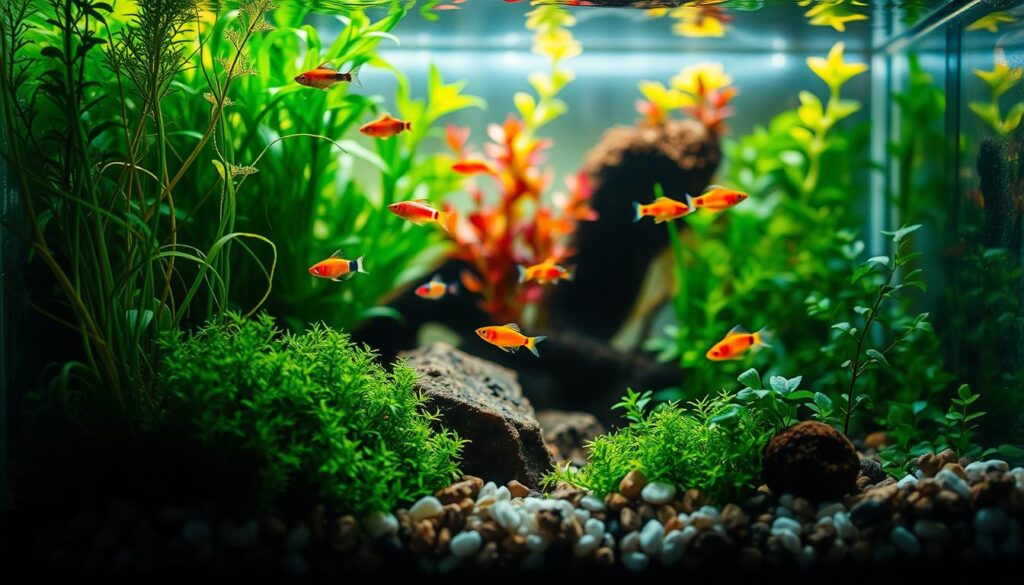
You might pick a nano aquarium for its small size and beauty. A nano tank is usually under 20 gallons. Sizes like 5, 10, and 20 gallons are common. Tanks under 5 gallons are best for shrimp and snails, not most fish.
Different creatures fit different tank sizes. In a 20-gallon nano, you can have bettas, most tetras, dwarf puffers, and more. You can also keep fancy guppies, dwarf Corydoras, and small loaches. Plus, white cloud minnows, platies, small gouramis, shrimp, snails, and African dwarf frogs are welcome.
A 10-gallon setup is good for bettas, neon or cardinal tetras, and dwarf puffers. You can also keep dwarf Apistogramma, guppies, and dwarf corys. For a 5–6.5 gallon tank, bettas, dwarf puffer, and white cloud mountain minnows are fine. Shrimp and snails are also good choices. But, avoid keeping fish in tanks smaller than 5 gallons permanently.
Nano tanks have advantages when you move. They save space and cost less. They’re also easier to light, plant, and pack for travel.
But, smaller tanks can be tricky. They can quickly change water chemistry, harming fish. So, you must carefully meet nano fish needs before, during, and after moving.
For those who move often, stable, modest setups are best. Pico tanks of 5–7 gallons are great for busy lives. But, large reef systems take months to settle and are not good for frequent movers.
Your moving plan should consider these limits. Nano systems react quickly, so focus on steady water, reliable aeration, and minimizing stress. Follow the best practices for moving fish to protect your stock and keep your tank healthy after the move.
Preparing Your Nano Fish for the Move
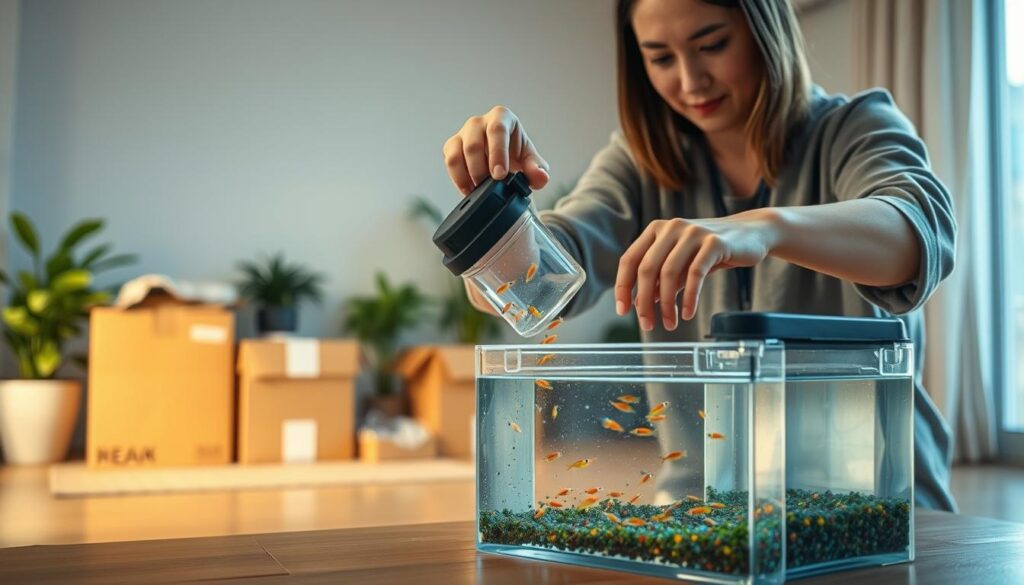
Begin planning a few days to weeks in advance. This allows time for permits, following landlord rules, and gathering supplies. A simple checklist can help you remember to pack nets, clean buckets, and other essentials.
Stop feeding your fish 24 hours before the move. This helps keep the water clean and reduces stress. A short fast before moving is beneficial.
Turn off all equipment before removing the fish. This includes heaters, filters, and pumps. Let them cool down for at least 30 minutes. Keep filter media moist in tank water to protect beneficial bacteria.
- Use nets sized to your fish, typically between 3″ and 10″.
- Pack multiple small bowls or lidded containers for individual or grouped fish.
- Prepare clean buckets with tight-fitting lids for water and live plants.
- Bring bubble wrap and padding for tank and equipment protection.
If your fish are territorial or aggressive, keep them separate. Label each container with species and tank water details. This helps you follow the best practices for moving fish.
Plan your transport route and choose a stable temperature time. Place containers on a flat, sturdy surface in your new home. Move the aquarium last and set it up first at the destination.
Review your checklist one last time before leaving. Make sure you have spare batteries, a siphon hose, and airtight lids. Proper preparation will make moving your fish safer.
Selecting the Right Transport Containers
Before you move, pick the right containers for your fish. Lidded bowls and sealable plastic tubs are good for short trips. For bigger groups, clean 5–7 gallon buckets with tight lids are sturdy.
Don’t use glass containers that can break. Also, avoid overfilled tanks that can slosh. Sturdy, sealable food-grade totes are great for moving water and plants together.
Match the container size to the number of fish and their behavior. This helps reduce stress. Small, peaceful nano fish can share a bowl or bag. But, aggressive or territorial fish need their own containers to avoid injury.
For trips longer than two hours, plan for aeration. A battery-operated air pump, like an Aqua One unit, keeps oxygen levels safe. For short moves, keep lids on and handle fish gently.
Keep filter media and live plants in separate containers with tank water. Don’t rinse substrate or media. Keeping media damp helps your biological filter recover quickly after the move.
Pack equipment carefully. Wrap heaters after they cool and keep filters damp in water. Use cushioning, bubble wrap, and sturdy boxes for pumps and the emptied tank if you transport it separately.
- Never stack heavy items on top of an aquarium.
- Label containers for quick identification at arrival.
- Plan a reliable fish transportation service if you face a long or complex move.
These steps make moving fish practical and reduce risks during transit. By following them, you ensure safe transport and protect your aquarium’s balance during relocation.
Packing Your Nano Fish for Transport
To move your fish safely, follow a simple plan. First, take out decorations and hiding spots like rocks and driftwood. Put each item in a water-tight container with some tank water to keep bacteria alive. Don’t stack items to avoid damage.
Then, remove live plants and put them in sealed containers with tank water. Trim big leaves if they’re too big. Keep plants away from heavy decorations to prevent damage during the move.
-
Start by siphoning 75%–80% of the tank water into clean buckets. Label them and seal them to keep the water quality good for later.
-
Use a soft net to catch fish one by one. Put them in lidded bowls or containers with some tank water. Turn off the lights and keep the containers dark to help the fish relax.
-
Next, remove filters and put the filter media in a sealed bag with tank water. This keeps the good bacteria alive. Wrap pumps and heaters in bubble wrap before putting them in boxes.
-
Then, siphon out the rest of the water and scoop up the substrate into watertight containers. Don’t rinse the substrate. This helps keep the bacteria alive when you set up the tank again.
-
Pad the empty tank with foam and bubble wrap, then put it in a strong box. Make sure it’s secure so it won’t move. For short moves, use a dolly or two people. For longer trips, use a battery air pump and keep the fish in dark, closed containers.
Keep aggressive fish separate and don’t feed them 24 hours before moving. This lowers waste and stress for the fish.
Managing Temperature During the Move
Your nano fish are very sensitive to changes in water temperature. Sudden changes can cause stress, weaken their immune system, and make them sick. Start by recording your tank’s temperature. Then, try to match that range at your new place for safe transport.
Before you take out your fish, turn off the heater and let the water cool for about 30 minutes. This helps avoid damage to the heater and keeps the water stable for moving.
- Insulate containers with towels, thermal bags, or a Styrofoam cooler to limit temperature shifts during transit.
- For short trips, good insulation and stable ambient conditions may be enough for safe fish transport.
- In very hot or cold weather, add heat packs or cold packs outside the container; never apply packs directly to bags or buckets.
For long trips or very sensitive species, use battery-powered aquarium heaters or temperature-controlled transport boxes. Place a small waterproof thermometer in a container to check the temperature while moving.
When you get to the new apartment, don’t put fish in water that’s too different in temperature. Use slow steps to adjust the temperature and acclimate the fish before putting them in the new tank. This helps keep stress low.
Transporting Your Nano Fish
Move your fish last and set up the tank first at the new apartment. Keep the journey short. Plan your route and parking to reduce carrying distance.
Keep containers inside the vehicle cabin to monitor them and keep temperatures stable. Place containers on a flat surface and secure them to prevent tipping or sliding. Avoid sudden stops and sharp turns for safe transport.
Check lids, watch for water sloshing, and listen to aeration during transit. For trips over two hours, run battery air pumps to maintain oxygen. Keep lights off in containers to calm the fish and support safe transport.
- Bring spare buckets and extra container lids.
- Carry additional tank water and a dechlorinator.
- Pack a small test kit for ammonia and nitrite if you expect delays.
If a container leaks, transfer fish into another clean, prepped container right away. These steps keep stress low and support healthy transport.
If you hire movers or a fish transportation service, explain special needs clearly. Tell them containers must stay upright, not stacked, and that fish should ride in the cabin. For long-distance moves, consider local professional fish movers experienced in secure fish moving and safe fish transport.
Setting Up Your New Apartment
Choose a spot that’s stable and level. Your tank, substrate, and water are heavy. Stay away from direct sunlight, vents, exterior doors, and busy hallways.
Check the floor load if your tank is big. Make sure to ask your landlord about any rules.
Start by setting up the stand or base. Make sure it’s perfectly level. Place electrical outlets and cords where you can reach them safely.
This makes moving your fish easier and helps with maintenance later.
Begin by following a clear setup sequence. Add cleaned or new substrate and return rockwork and ornaments. Fill the tank halfway with saved water to keep chemistry stable.
Top it off with dechlorinated tap water.
Install equipment in stages to avoid shocking your system. Use moist filter media to seed the filter and start biological filtration. Install pumps, heaters, and lights, then power them on gradually.
Let the heater reach the target temperature before adding fish.
- Replant live plants early so roots can settle.
- Prioritize finishing setup quickly to shorten the time your fish remain in temporary containers.
- Keep a thermometer visible and stable during startup.
Treat new water with a reliable conditioner like Aqua One Water Conditioner. Remove chlorine and chloramine. Use a quality kit like NT Labs Aquarium Lab Master Test Kit to test water.
Check ammonia, nitrite, nitrate, pH, and temperature until they’re stable.
When the water chemistry and temperature are stable, add fish. Moving aquarium fish after proper setup reduces stress and injury. Setting up your aquarium correctly lets your fish thrive once moved.
Acclimating Nano Fish to New Environment
When you move aquarium fish, it’s key to avoid sudden changes. These changes can stress the fish and increase their chance of dying. So, take your time to acclimate them properly.
For fish in sealed bags, use the float-and-equalize method. Float the bag on the tank’s surface for about 45 minutes to match temperatures. If they’re in lidded containers, add small amounts of tank water every 5–10 minutes over 30–60 minutes. This slowly changes the water’s conditions.
- Check temperature and pH before release.
- Watch salinity for brackish or marine nano species.
- Keep lights off for a few hours after introduction to ease stress.
Release the fish gently once the water conditions are similar. Use a net for careful transfers or pour the fish into the tank while leaving most transport water behind. Don’t dump the transport water into your display to avoid contamination.
Watch the fish closely after moving them. Look for signs of distress like gasping, erratic swimming, or hiding too much. If you see any, dim the room and check the water’s ammonia, nitrite, and temperature again.
If you saved the filter media and bacteria, the filter should recover fast. If you had to replace them, add a good bacterial supplement and test the water daily. Slowly cycling the tank helps stabilize conditions during the move.
Monitoring Your Fish After the Move
Check water chemistry within 24–48 hours after moving your fish. Use a good test kit, like the NT Labs Aquarium Lab Master Test Kit. It checks temperature, ammonia, nitrite, nitrate, and pH. Keep records to spot trends early and treat water as needed.
Watch for stress and disease signs in your fish. Look for lethargy, loss of appetite, clamped fins, rapid breathing, erratic swimming, discoloration, or visible spots. If you see these signs, dim the lights for a few hours. Then, see if symptoms get better.
Feed your fish carefully after moving them. Wait a few hours before giving a small amount of food. Then, slowly go back to regular feeding. Overfeeding can harm your fish by raising ammonia and nitrite levels.
- Test daily for the first three days, then every few days for a month.
- Perform partial water changes if ammonia or nitrite spikes appear.
- Keep tank equipment running and check heater and filter performance.
Watch your fish closely for a month after moving them. Track their behavior and water quality. Regular water changes help keep the environment stable while beneficial bacteria grow back.
If you have ongoing water problems, unexplained deaths, or disease signs, get help fast. Contact a local aquarium shop, a fish veterinarian, or a professional aquarium service. Quick action helps protect your fish and keeps them safe.
Troubleshooting Common Problems
If you notice an ammonia or nitrite spike after moving, act quickly. This usually happens when biological filtration is lost. This can be due to dry filter media or decomposing organics. Start by doing partial water changes with dechlorinated water.
Also, moisten the filter media or substrate and add beneficial bacteria. Reduce feeding and test the water daily until it’s stable.
Temperature changes are common during transport. Cold weather or lack of insulation can cause temperatures to drop fast. Move fish to a warm place and use a heater or insulated containers.
Slowly bring the temperature back to normal. Acclimate your fish to the tank’s temperature over an hour to prevent shock.
Stressed fish may hide or stop eating after a move. This can be due to transport stress, bright lights, or changes in water chemistry. Keep the lights off and provide hiding spots.
Limit handling and check the water’s basic parameters. Small water changes can help if the chemistry is off. Watch your fish’s behavior for a few days.
Aggression or injury can occur when fish are crowded or incompatible species are together. Separate aggressive fish into quarantine containers to prevent further harm. Treat wounds with aquarium-safe antiseptics if necessary.
Reassess the stocking levels and avoid mixing territorial species in the future.
Structural damage to tanks can happen when they are moved or hit hard. If you find minor leaks, drain the tank and fix the seams with aquarium-safe silicone. For broken seals or cracked glass, do not continue to use the tank.
Replace the tank or seek professional help. Contact a professional fish movers service or aquarium repair specialist for safe transport and advice.
If problems persist, don’t hesitate to ask for help. Reach out to local aquarium shops, aquatic veterinarians, or professional fish movers. They can offer hands-on solutions and guide you on moving fish safely.
Tips for Future Moves with Fish
Plan ahead and get a compact moving kit ready for last-minute changes. You’ll need nets, a siphon, buckets with tight lids, Aqua One Water Conditioner, a battery air pump, spare filter media, and a test kit like NT Labs. Keep a checklist and log of water parameters and medications to speed up future moves.
Store some used filter media and cool, dark water to maintain seeded materials. This helps your fish’s new home recover faster and cuts down on cycling time. If you move often or have unpredictable schedules, consider downsizing to a 5–7 gallon tank. Many find these smaller setups easier for moving fish.
For long trips or complex tanks, get professional fish movers. They know how to keep everything moist, transport upright, and ensure animals are comfortable. Choose hardy, the right-sized fish for busy lives or travel. Avoid starting big reef tanks that need a lot of time to settle.
Keep records and review them after each move. A simple log of supplies, baseline parameters, and successes or failures will help future moves. These habits—planning, using seeded media, downsizing wisely, and hiring pros when needed—are key to moving fish safely and reducing stress for everyone.
Leave a Reply