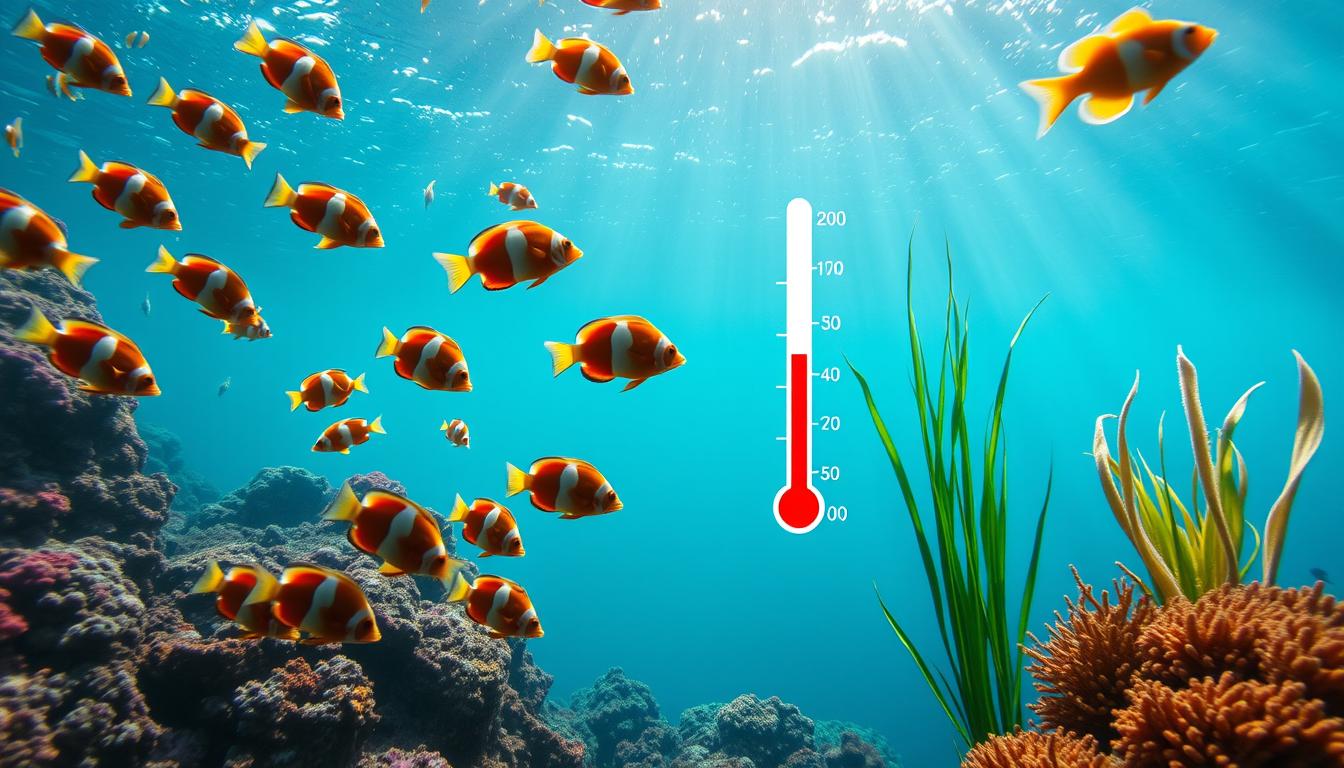
Keeping your fish active and healthy depends on a stable aquarium temperature. Fish, being ectothermic, rely on water temperature to regulate their metabolism. Tropical fish thrive between 75°F and 80°F, while cold-water fish like goldfish prefer below 70°F. Temperate species fall in between.
Temperature affects fish metabolism in your tank. Warmer water means fish eat and move more. Cooler water slows them down. This change impacts oxygen needs, feeding, growth, color, and breeding.
Outside your tank, environmental changes like heat waves affect water bodies and fish survival. For example, warmer water in places like the San Francisco Estuary can increase swimming speed and predation risk. Similar effects happen at home: wrong temperatures can stunt growth, reduce spawning, and make fish more prone to disease.
Remember this aquarium temperature guide: match species needs, avoid sudden changes, and watch your tank’s conditions. Temperature controls physiology, behavior, and ecosystem interactions. Controlling it is key to protecting your fish.
Understanding Metabolism in Fish
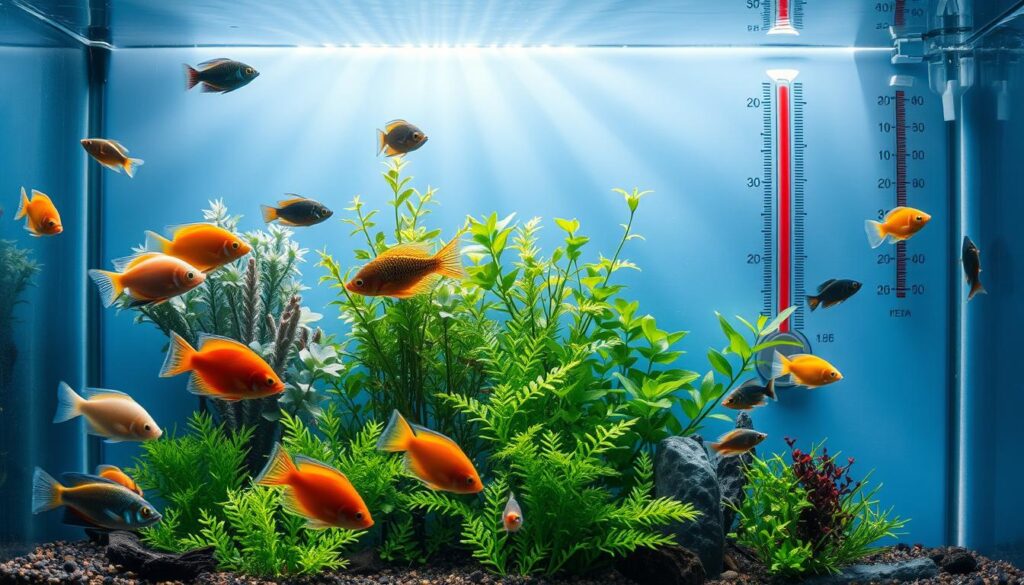
Fish are ectotherms, meaning their body temperature is set by their environment. Changes in the aquarium’s temperature affect their metabolism. This, in turn, influences their activity, appetite, growth, and immune system.
In colder water, fish move slower and eat less. Their immune system also weakens. On the other hand, warmer water speeds up their metabolism and oxygen needs. This can increase stress levels.
Metabolic rate is how fast energy is used in fish. It affects their feeding, digestion, growth, and reproduction. Each fish species has a best temperature range for its metabolism.
- When temperatures are off, stress hormones like cortisol rise. Energy shifts to coping with stress instead of growth and immunity.
- Behavior changes when fish need to adjust to temperature changes. They might use thermogenesis or cooling strategies.
- It’s important to match tankmates by their thermal needs. What’s good for one species might harm another.
To keep your fish healthy, adjust their diet and tank conditions to their metabolic rate and thermal preferences. Knowing how temperature affects metabolism helps reduce chronic stress. This improves their long-term health.
The Role of Temperature in Fish Metabolism
Water temperature controls how fast your fish’s body works. Warmer water makes fish move and eat more. On the other hand, colder water slows them down.
Big changes in temperature can be hard for fish to handle. Slow changes let them adjust better. But sudden changes can be too much for them.
Studies on fish like delta smelt show how temperature affects them. At 21°C, they swim faster and react more to alarm cues. This can lead to exhaustion and more chances of being eaten.
Temperature affects how fish digest food, keep the right balance of salts, and get oxygen. Fish can adjust to some temperature changes, but big or sudden changes can cause stress.
- Watch small changes: even a few degrees alter metabolic rate and oxygen needs.
- Match feeding to temperature-driven energy budgets to avoid malnutrition or waste.
- Improve aeration when you raise temperature to offset lower dissolved oxygen.
When you take care of your aquarium, think about how temperature works with other factors. Light, how many fish you have, and water quality all play a part. Balancing these helps keep your fish healthy and their metabolism stable. The right temperature is key to good care and happy fish.
Effects of High Temperatures on Fish
When water gets warmer, fish breathe harder and their bodies work faster. Warmer water has less oxygen, so fish need more but get less. This can make them gasp at the surface or move their gills quickly, showing they’re stressed.
High temperatures also make fish more likely to get sick. Heat raises stress hormones, weakens their immune system, and slows healing. In aquariums, bacteria that keep water clean die at temperatures over 90°F. This can lead to dangerous spikes in ammonia and nitrite levels, harming fish even more.
Studies show that warm water changes how fish behave. Delta smelt and others swim faster, break away from groups, and don’t calm down after being scared. These changes make them more vulnerable to predators like largemouth bass. They also have a harder time surviving in the wild when it’s too hot.
Heat also affects how fish reproduce and grow. Warmer temperatures can make embryos grow too fast, change when they spawn, and make it hard for larvae to find food. This can lead to a shift in the types of fish that live in an area, favoring fast-growing species that prefer warmer water.
- Watch for signs of heat stress: faded color, lethargy, rapid breathing, or surface gasping.
- In tanks, avoid placing setups near vents, windows, or heaters that raise temperature.
- Use quality heaters, thermometer probes, fans, or chillers for sensitive species when needed.
To help fish in natural systems, create cool spots for them to escape the heat. Restoring wetlands, protecting deep pools, and managing water releases can provide these safe areas. They help keep oxygen levels high, supporting fish health and metabolism.
Effects of Low Temperatures on Fish
Cold water slows down a fish’s metabolism and activity. They might eat less, show dull colors, and stop showing usual behaviors. This happens when the water gets too cold for them.
When fish eat less, they grow slower. Young ones might not grow right, and adults might not breed well. Some trout need cold water to spawn, but very cold water can mess with their development.
Low water makes fish focus on basic survival. Their immune system gets weaker, making them more prone to diseases like Ich. They also recover slower from stress and can’t avoid predators as well.
Even though cold water has more oxygen, it’s hard for fish to digest food. Slowly changing the water temperature helps fish adjust. But, staying in cold water for too long can make them less able to handle changes.
- Match replacement water temperature during changes to avoid sudden cold exposure.
- Keep true cold-water species, like goldfish, in their recommended ranges (often under 70°F).
- Provide seasonal cues if breeding is a goal, balancing natural cold needs with safe limits.
Knowing how temperature affects fish helps you take better care of your tank. Making small changes and keeping the water stable can help your fish stay healthy and active.
Importance of Temperature Stability
In nature, fish adjust to temperature changes by moving. But in your aquarium, changes happen quickly. This can stress fish a lot.
Small changes can cause big stress. This stress can weaken their immune system. You might see slower growth and more sickness.
Stable water is key for fish health. It helps their metabolism and keeps good bacteria. But sudden changes can harm these bacteria and fish.
Studies show that temperature changes affect fish behavior. They can impact schooling and survival. This is why keeping a steady temperature is critical.
- Use a reliable heater sized for your tank.
- Consider multiple heaters in large tanks to avoid total failure.
- Ensure good circulation so heat distributes evenly.
- Match temperatures during water changes to prevent shock.
- Avoid placing tanks near vents, drafts, or sunny windows.
Keeping the temperature stable is vital. It helps fish stay healthy and reduces stress. Stable conditions also protect them from diseases.
How to Monitor Water Temperature
Put accurate thermometers in your aquarium and check them regularly. Digital probe thermometers offer precise readings. Stick-on strip thermometers are good for quick checks but might not always show the real temperature.
Place sensors where they accurately reflect the tank’s temperature. Avoid areas like windows, exterior doors, heating vents, fireplaces, and drafty spots. These can give false readings. Also, keep probes away from direct heater exhaust to avoid high readings.
In bigger tanks, use more than one thermometer. The Aqueon Heater Guide and other manufacturer advice can help you choose the right size heaters. Using two smaller heaters can provide better redundancy and even heating than one big unit.
- Calibrate thermometers often to keep them accurate.
- Make sure there’s good water flow around heaters for accurate readings.
- Match the temperature of replacement water to avoid shocking fish.
For outdoor or complex setups, use data loggers or integrated controllers. These devices record temperature over time. They help track daily and seasonal changes linked to air temperature and climate.
Regular monitoring lets you react to changes in your tank’s environment. Watch for trends to spot temperature changes that could stress your fish.
Adjust your care routine when temperatures change. As water temperature affects your fish’s metabolism, you might need to change feeding, aeration, or filtration rates.
- Think about using alarm systems for sensitive species.
- Have backup heaters or chillers ready.
Adjusting Water Temperature Safely
When you change the water temperature in your aquarium, do it slowly. This helps your fish adjust without getting stressed. Try to change the temperature by just a few degrees each day.
Use a heater that’s the right size for your tank. Look for brands like Aqueon that offer guides for heater wattage. Place the heater so the warm water circulates well, avoiding hot spots.
To cool your tank, start with evaporative cooling. Open the lid a bit and use a fan to cool the surface. For cold-water fish, consider a chiller made for aquariums.
When mixing fish with different temperature needs, plan your changes carefully. Set the heater to a middle range and watch your fish closely. Make sure they have enough oxygen as their metabolism changes.
- Match replacement water temperature during water changes to avoid shocks.
- Use dual-heater setups for redundancy and quicker recovery from failures.
- Have emergency plans for power outages, such as battery-powered air pumps and insulating blankets for tanks.
In bigger systems and wild places, managers use cool-water releases and restored wetlands. These help fish find cooler spots and reduce stress from heat.
Be careful of chemical changes when you adjust the temperature. Higher temperatures can harm good bacteria and cause ammonia and nitrite spikes. Test your water often after changes and be ready to do partial exchanges if needed.
- Make changes slowly: a few degrees per day maximum.
- Ensure circulation and oxygenation as metabolic regulation shifts.
- Observe fish for stress signs and adjust strategy if needed.
Think about where you place your tank long term. Avoid direct sunlight and heat sources. Room temperature and sunlight can undo your careful adjustments and stress your fish.
The Impact of Temperature on Fish Behavior
Temperature changes how fish behave, whether at home or in nature. Cold water makes them move slower, eat less, and show less interest in breeding. On the other hand, warm water makes them swim faster, want to eat more, and can even harm their health.
When the temperature drops suddenly, fish may act differently. They might swim less, look duller, and stop schooling together. These signs can mean they’re stressed and might even get sick.
Studies on fish like the delta smelt show how temperature affects them. Warmer water makes them swim faster, spread out more, and stay scared longer. This can make them more vulnerable to predators and change how they live together.
Temperature also controls when fish have babies and migrate. Changes in temperature can mess up when they spawn, affect who eats whom, and make it hard for baby fish to grow. This can change how entire ecosystems work.
- Look for erratic swimming, gasping at the surface, or sudden aggression.
- Note changes in schooling tightness and feed response.
- Check oxygen, ammonia, and nitrite when behavior looks abnormal.
Wild fish adjust their behavior to stay comfortable. In tanks, you have to help keep things stable. Small changes can help fish avoid stress and keep their metabolism healthy.
Watch for changes in how fish eat, move, and interact. Catching these signs early helps you fix the problem. This way, you can keep fish healthy and their metabolism in check.
Temperature Considerations for Different Species
Match tankmates by their preferred temperature ranges. Tropical fish like it around 75–80°F. Goldfish and cold-water species prefer it under 70°F. Temperate species fall in between.
When two species’ temperature ranges overlap, neither might do well at a compromise temperature. Plan heaters to keep the middle of a shared range. Choose tankmates with similar needs.
Check the temperature needs of each species before buying. This simple step helps avoid chronic stress. Stress can change how they eat and their metabolism.
Wild species often adjust to small warming by changing where they live and how well they survive. For example, delta smelt in estuaries are very sensitive to temperature changes. This is because air and water interact and affect their food and home.
- Note thermal optima and tolerance limits for each species.
- Consider reproductive cues: trout need cold water for spawning.
- Account for temperature-dependent sex determination in some species.
For breeding or aquaculture, slowly change the temperature to mimic seasons. Sudden changes can mess with their metabolism and reduce chances of successful breeding. Slow changes help fish adjust and keep their metabolism stable.
Remember, oxygen demand goes up with temperature. Warm-water tanks might need chillers or more aeration to keep oxygen safe. Plan your equipment to meet the needs of your species.
Research the thermal needs of your species, avoid mixing incompatible ones, and monitor the environment. These steps help keep the right temperature ranges and reduce risks from temperature changes.
Conclusion: Keeping Your Fish Healthy Through Temperature Management
Keeping your aquarium or pond water stable is key. It helps your fish stay healthy. This means managing the temperature right.
Place your tanks away from drafts and direct sun. Use the right size heaters, and match the water-change temperature. This avoids sudden changes that can harm your fish.
Use accurate thermometers and data loggers to monitor the water. Make slow changes to protect your fish from shock. Have backup heaters and fans ready for emergencies.
Good water flow and regular water changes also help. This keeps the water healthy for your fish.
Remember, the environment outside your tank matters too. Rising water temperatures can harm fish and change ecosystems. Choose fish that like the temperature you can keep.
Watch for signs that your fish are stressed. Have a plan ready to help them. This way, you can keep your fish healthy and happy.
Here’s a checklist to help you: check the temperature needs of your fish, use reliable monitoring tools, ensure good water flow and oxygen, make water changes that match the temperature, and have backup plans. With these steps, you can keep your fish healthy, even when the environment changes.
Leave a Reply