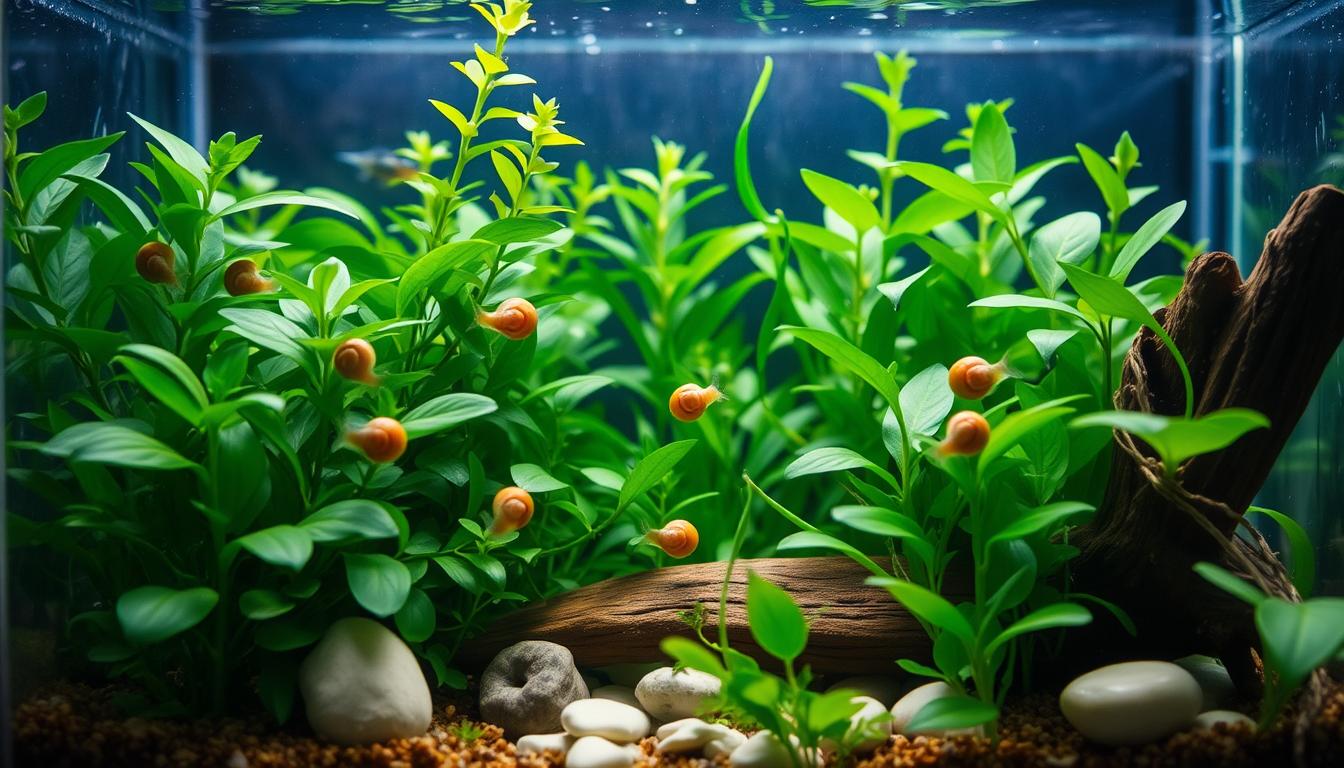
Snail outbreaks start quietly. They sneak in on live plants, substrate, decorations, or gear. Their eggs are tiny and clear, sticking to surfaces.
These eggs can survive in sealed plant bags. So, you might not see them until they start to multiply quickly.
Simple habits can help prevent snail problems. Quarantine new plants for at least two weeks. You can also dip them in bleach briefly or buy tissue-cultured plants.
When you get fish, check the dealer’s tank water. Snails and young fish often come together.
Common invaders include tadpole snails and Malaysian trumpet snails. They love areas with uneaten food and detritus. Getting rid of them is tough because their young hide in many places.
Snails are good scavengers in a healthy tank. But, an outbreak means you might be feeding too much or not cleaning enough. This guide offers solutions and control methods for managing snail outbreaks in your small planted aquarium.
Understanding Snail Populations in Aquariums
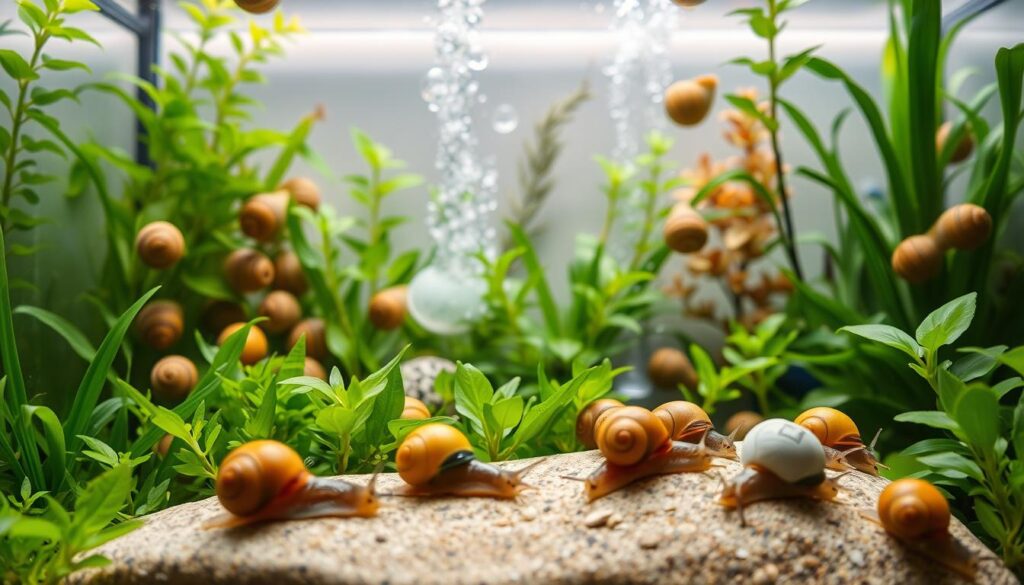
In a planted tank, you’ll find both helpful and harmful snails. Pest snails include bladder snails, Malaysian trumpet snails, and ramshorn snails. Knowing how to identify them is key to managing their numbers.
Bladder snails are shaped like teardrops and grow up to half an inch. They breathe air and can reproduce quickly, sometimes in as little as 40 days. They need calcium to keep their shells strong.
Malaysian trumpet snails are cone-shaped and can grow up to an inch. They give birth to live young and live in the substrate. They are mostly active at night and can survive in many tank conditions.
Ramshorn snails have a spiral shell and come in different sizes. Many are hermaphrodites and breed fast. They are active day and night and prefer certain temperatures and pH levels.
- Tadpole snails roam surfaces and lay jelly egg clusters.
- Malaysian trumpet snails stay mostly in the substrate and surface to feed.
- Overfeeding can let any of these species multiply into the hundreds even in small tanks.
Not all snails are pests. Snails like Mystery, Inca, Nerite, Assassin, and Rabbit snails help control algae and add beauty. Nerite snails need brackish water to breed, so they rarely overpopulate a freshwater tank. Assassin snails eat pest snails, making them a natural solution.
To manage snail populations, you need to know your snails. Observe their behavior and tailor your management to the specific snails in your tank. This approach helps keep the good snails safe while controlling the pests.
Signs of Overpopulation
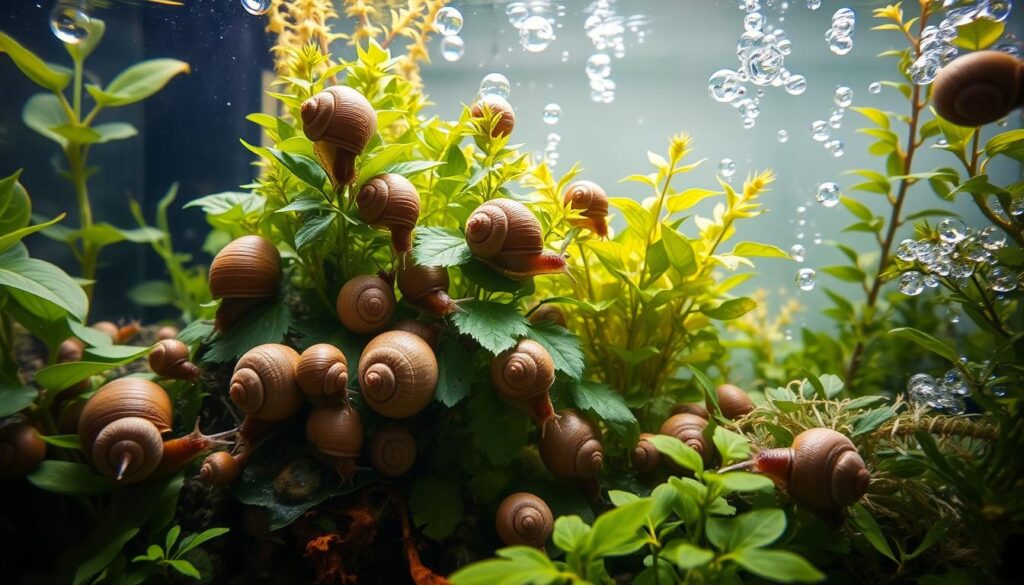
At first, you might see just one or two snails. But soon, their numbers start to grow quickly. You’ll notice clusters of snails on plants, glass, and driftwood.
Look for clear, jelly-like eggs stuck to surfaces. Also, check for tiny snails in the substrate, filter media, and pipes. These are signs that snails are taking over.
Seeing many snails partly exposed in the substrate or moving a lot at night is a warning. A big increase in snail numbers after adding live plants or new decor is another clue.
Snails eating brown, mushy leaves and extra algae mean your tank needs better care. Too much uneaten food, decaying plants, and dirt are perfect for snails to grow.
- Clusters on glass and decorations
- Clear jelly egg clutches
- Juveniles in filters and substrate
- Mass nocturnal movement
- Surge after plant additions
If you see these signs, it’s time to act. Cut down on food and remove extra snails to stop the problem. Catching snail outbreaks early keeps your tank healthy and balanced.
Effective Prevention Techniques
To stop snail outbreaks, keep new items isolated and clean. Quarantine plants for at least two weeks to spot any snails or eggs. Use a safe bleach dip on tough plants to kill snails without harming the plant.
Buying tissue-cultured plants lowers the risk. Inspect live plants and decor before adding them to your tank. Rinse items well and consider a vinegar or bleach treatment to kill eggs.
- Don’t move substrate, filters, or decorations from snail-infested tanks without cleaning them thoroughly.
- Let equipment dry completely; many snail eggs can’t survive without moisture.
- When buying fish, avoid bringing home the dealer’s tank water, as it may carry snails and eggs.
Feed your fish lean and change the water regularly to remove excess food. This helps prevent snail growth and keeps your tank healthy.
By being careful with purchases, quarantining plants, and keeping your tank clean, you can prevent snails in your aquarium. This is a habit you can keep up every week.
Manual Removal Methods
Quickly cut snail numbers with focused manual removal. Hand-picking at night or first light catches many common pond snails and ramshorn types. Place removed snails in a sealed container for disposal or relocation.
Use snail traps to concentrate snails overnight. Commercial bait like Aqueon Algae Rounds or bottom feeder tablets works well as a lure. Set traps before lights-out and empty them each morning to break breeding cycles.
- Try a lettuce trap: lay romaine or iceberg in the tank overnight, then lift it out with the clustered snails in the morning.
- Combine trap types: one-way door snail traps and sinking baits increase capture rates.
Siphoning snails with a gravel vacuum helps remove individuals and hidden Malaysian trumpet snails from substrate. Run the vacuum slowly and focus on corners and plant bases where snails hide.
Substrate vacuuming removes detritus and egg clutches that fuel outbreaks. In severe cases you may remove and replace substrate while keeping filter media to preserve beneficial bacteria.
Consistency matters. Daily or nightly trapping and a mix of methods over several weeks will reduce populations far more than one-off efforts. Pair manual techniques with regular glass scraping and spot checks to keep numbers down.
Biological Control Methods
You can manage snails naturally without chemicals. Choose the right natural predators for your tank size and community. Biological snail control works best when combined with manual removal and prevention.
Snail-eating fish are an active way to lower snail numbers. In small tanks, pea puffers target snails but may nip other species, so research compatibility first. Larger tanks can support yoyo loach or clown loach for broader snail population reduction.
Assassin snails (Clea helena) are a good choice when fish predators are unsuitable. They hunt pest snails, hide in décor, and can steadily lower numbers over time. They do not stress shrimp or delicate plants when used properly.
Consider species such as clown loach, smaller loaches, paradise fish, and many cichlids that will eat snails. Puffers benefit from grinding shells and may help control adults. Some hobbyists breed pest snails as supplemental puffer food, which speeds snail population reduction.
Expect biological methods to act slowly. Juvenile snails can hide in filters and pipework, so predators rarely fully eradicate an outbreak. Assess tank size, community compatibility, and the risk to shrimp or small fish before adding predators.
- Plan: match predator to tank and stock.
- Monitor: watch for stress in non-target species.
- Combine: use predators with manual removal for best results.
When used thoughtfully, natural predators can form a steady line of defense. Biological snail control requires patience and care, but it can reduce snail numbers while keeping your planted aquarium balanced.
Chemical Control Options
Chemical snail control is a last resort when other methods don’t work. Snail-killing treatments quickly remove adults. But, they can harm plants, shrimp, and sensitive fish.
Always read labels carefully and follow the dose instructions from brands like API and Seachem. Use these products only in tanks without vulnerable invertebrates. Be ready to remove dead snails quickly to avoid ammonia spikes that harm water quality.
Safe molluscicides target snails while causing less damage. Yet, no product guarantees complete snail eradication. Snail juveniles hide in filters, tubing, and substrate, so chemicals might miss some.
- Plan removal: have nets and siphons ready to collect carcasses after treatment.
- Monitor water: test ammonia and nitrite daily and perform large water changes if levels rise.
- Isolate tanks: treat quarantine or bare tanks first to learn product effects before treating a planted display.
If you choose chemical control, be cautious. Pair treatments with mechanical cleaning and filter maintenance. This reduces the risk of a toxin-driven collapse and improves long-term results for snail population eradication.
Adjusting Feeding Habits
Changing how and when you feed your fish can greatly reduce snail populations. Start by giving smaller portions and check for uneaten food after two minutes. This simple change helps cut down on overfeeding and the extra nutrients that snails thrive on.
Remove sinking pellets, wafers, and leftover flake food during maintenance. Also, pull away dying plant leaves and vacuum the substrate to reduce detritus. These steps lower the resources available to snails without stressing your fish.
Set regular feeding times and stick to them. Targeted feeding gives you control and makes spotting waste easier. When you combine lean feeding with regular water changes, algae buildup decreases, and your tank stays cleaner.
- Feed sparingly and observe consumption.
- Pick up uneaten food within minutes.
- Clean substrate and trim decaying plants regularly.
These feeding practices favor your plants and fish over pests. Over time, disciplined food management helps reduce snail populations steadily. This reduces the need for drastic measures.
Environmental Adjustments
To reduce snail numbers, change your tank’s environment. Start by removing extra detritus and uneaten food. These items fuel snail reproduction.
Manage your substrate well. Vacuum gravel or sand often to remove trapped food and waste. If waste is deep, replace part of the substrate to stop snail growth.
Change the lighting and algae control to cut down on food sources. Shorten the light period, trim plants, and reduce fertilizers. Clean glass and decor to remove snail food.
Ensure strong filtration and circulation. A mature filter and steady water flow remove particles and keep plants healthy. Good oxygen levels also prevent pests that like low oxygen.
- Vacuum substrate weekly when you spot detritus.
- Clean filter media on a schedule that preserves beneficial bacteria.
- Monitor light duration and nutrient dosing to control algae.
These changes improve your aquarium’s long-term balance. Less detritus, algae, and better oxygen levels help reduce snails naturally. This approach avoids harsh chemicals.
Aquarium Setup Considerations
Starting a planted tank means making choices that affect future pest risks. Use plants that are sterilized or tissue-cultured to avoid eggs and tiny snails. If you buy plants from a nursery, dip them in bleach or quarantine them for weeks before adding them to your tank.
Think about your tank’s layout to control snails. Make sure intakes, pipes, and decorations are easy to clean. Use guards on filter inlets and choose compact equipment to reduce hiding spots for snails.
The substrate you choose affects snail and detritus removal. Pick a substrate that allows for easy vacuuming without harming plants. In severe cases, replace the substrate and keep a mature filter to maintain beneficial bacteria.
Consider the types of fish and plants you add to your tank. Avoid delicate species if you plan to use chemicals later. Choose tankmates that are compatible and design your stocking plan to reduce stress and outbreak risk.
Develop a routine for tank care to control snails. This includes regular feeding, substrate siphoning, and plant checks. These habits, along with your tank’s design, help reduce snail survival and spread.
Always have a quarantine protocol for new additions. Quarantine helps you catch snails early and treat them without harming your main tank. Include quarantine tanks in your long-term setup to prevent future snail outbreaks.
- Use sterilized or tissue-cultured plants
- Make intakes and piping accessible or guarded
- Choose vacuum-friendly substrate choice
- Preserve a mature filter when replacing substrate
- Include quarantine protocol for all new additions
Regular Monitoring and Maintenance
Make water changes a weekly habit to control snail growth. Change about 25% of the water every seven days. This helps remove nutrients and food that snails eat.
Use a substrate vacuum to clean up uneaten food and waste. Also, remove dead leaves and plant debris by hand. This makes it harder for snails to hide and find food.
Regularly check for snails in your tank. Look in filter inlets, pipework, and plant roots for young snails. Remove any adults you find and use traps at night until you catch fewer snails.
Keep an eye on your tank’s water chemistry. Check for spikes in ammonia, nitrite, and nitrate levels. This can happen after adding new plants or decorations. Inspect new items carefully to avoid bringing in unwanted snails.
- Vacuum the substrate during water changes to cut food availability.
- Clean glass and scrape algae to reduce surfaces snails graze.
- Maintain mature filters while swapping substrate; monitor inlets for clogging.
Staying consistent is key. Regular maintenance and monitoring can help control snail numbers. It might take weeks or months to completely get rid of them.
Educating Yourself on Snails
To manage snails well, you should learn about aquarium snails at the species level. Study how hermaphroditic bladder and ramshorn snails can self-reproduce. Note that Malaysian trumpet snails are live-bearing and spend much time burrowing in substrate.
Learn the preferred temperatures, pH ranges, and feeding behavior for each type. This snail species education helps you pick the right snail control techniques for your tank. It avoids trial-and-error that can stress plants or fish.
Make a list of species you might want in your aquarium. Nerite and Mystery snails often add value. Assassin and Rabbit snails can help with pests. Inca snails suit specific setups.
Flag species that often become nuisances, such as pond snails, Malaysian trumpet snails, and ramshorn. When you research compatibility, check whether predators like loaches or puffers will harm your shrimp or small fish before adding them.
- Read reliable hobby sources and guides from brands such as Seachem and API.
- Follow community-vetted methods for traps and biological controls.
- Use product labels to avoid harming plants, shrimp, or sensitive fish.
Learn proper quarantine and bleach-dip procedures so you can treat new plants and livestock safely. This reduces the risk of introducing unwanted species and supports long-term managing snail populations.
Keep notes on outcomes when you test a method. Track which snail control techniques worked, which caused collateral harm, and how quickly populations returned. This record makes your snail species education practical and helps you refine future choices.
Long-Term Strategies for Management
To keep snails from taking over, create a long-term plan. This plan should include prevention, regular care, and active removal. Start by quarantining new plants and using tissue-cultured specimens or brief bleach dips when needed.
Also, do weekly water changes, vacuum the substrate, and control algae. This way, you remove the food snails need.
Use manual removal and traps regularly until the snail population goes down. Reduce feeding and control portions to avoid leftover food. Introduce biological controls like assassin snails or snail-eating fish carefully. Make sure they won’t stress your current fish.
Use chemical treatments only for severe infestations and when safe for in-tank organisms. Remove dead snails quickly to avoid water quality problems. Treat snail eradication as a gradual effort, expecting weeks or months. Combine different tactics for the best results.
Keep track of what you try and the outcomes. This helps refine your snail reduction plan. Regular monitoring, environmental adjustments, feeding control, selective biological control, and consistent maintenance are key. They help prevent snails and keep your aquarium balanced.
Leave a Reply