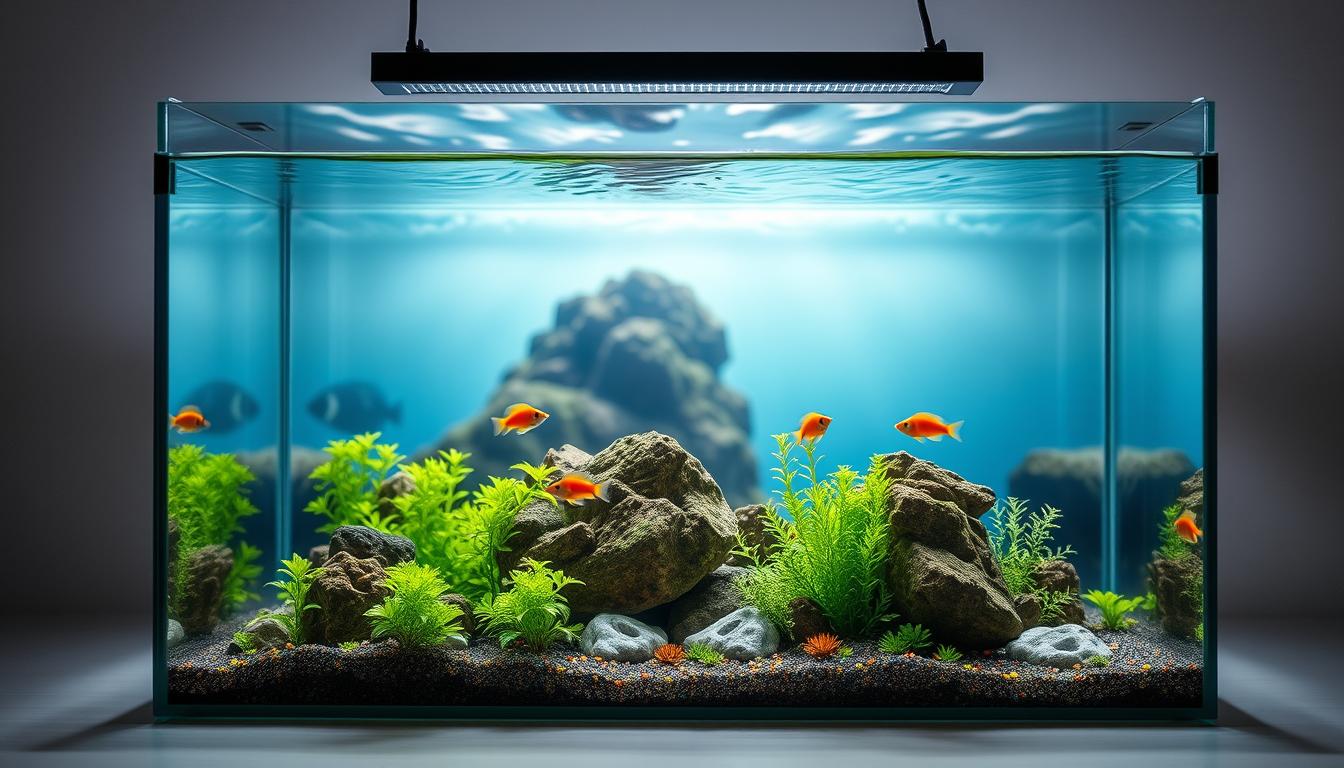
Choosing the right background is a simple way to make a small tank look bigger. The right backdrop cuts down on visual clutter. It also hides equipment like filters and heaters, making the tank feel more open.
Good backgrounds also help reduce stress in fish. This is true for both planted and planted-nano setups. While backgrounds are not required, they are highly recommended for both looks and health.
Remember, the background you choose will affect how light, hardscape, plants, and substrate look. Also, think about where you’ll place the tank. Avoid direct sunlight and vents. Make sure the stand can handle the water’s weight.
This article will cover realistic and creative backgrounds. We’ll also look at DIY and commercial options. You’ll learn how to add depth and an underwater theme to your small tank, making it feel spacious.
Understanding the Role of Aquarium Backgrounds
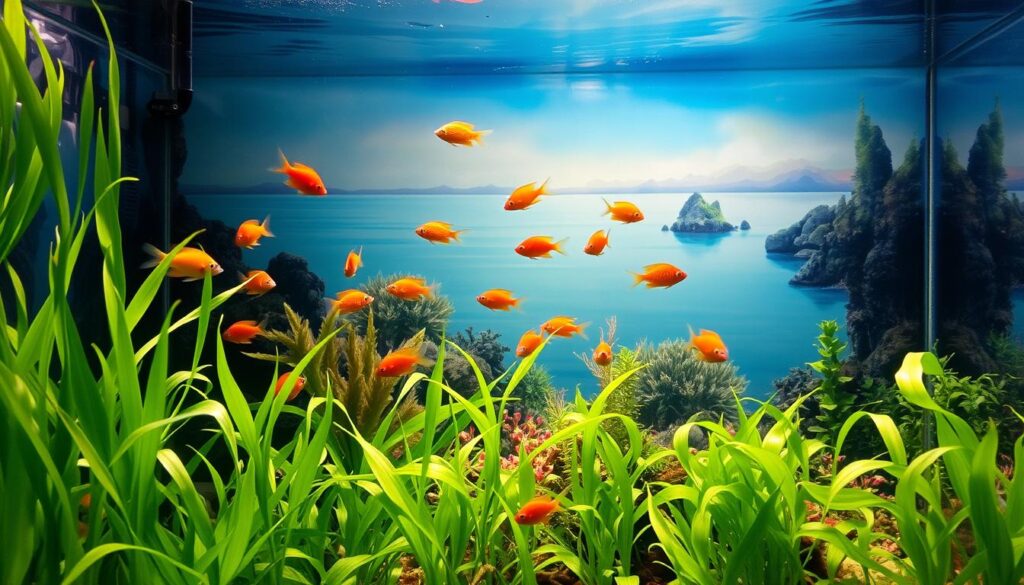
Your tank background does more than look good. It hides heaters, filters, and tubing. This lets you keep open swimming areas and place taller plants at the rear without revealing equipment. When you tuck gear out of sight, the scene reads as a single, composed aquascape.
Backgrounds also calm fish by blocking sudden motion outside the tank. This reduced stress helps shy species show natural behavior. It can also improve health over time. You can use a dark or textured backdrop to make colors pop and give plants and fish stronger visual contrast.
Optical tricks in aquarium background painting can add perceived depth. A soft gradient, subtle rockwork, or layered imagery frames the layout. This makes a small tank feel larger. You can position midground and foreground elements to play off that painted depth for a cohesive effect.
Materials matter for safety and upkeep. Choose aquarium-safe, non-toxic options whether you pick a vinyl backdrop, glued foam, or a printed panel. Three-dimensional backgrounds create texture and hiding places, but you should check durability. Expect extra algae buildup in crevices.
Think about workflow when you plan planting and aquascaping. Place taller stems and background plants behind the visual plane the backdrop creates. Use the background to mask filter and heater placement. This lets more of the tank stay open for active swimmers and community interaction.
Match background style to the tank type and your stocking choices. Natural aquarium decor suits planted tanks and biotope setups. Bold underwater aquarium themes work for cichlid rockscapes or theme tanks that highlight species-specific behavior. Make the background a supporting player that complements fish, plants, and hardscape.
Types of Aquarium Backgrounds
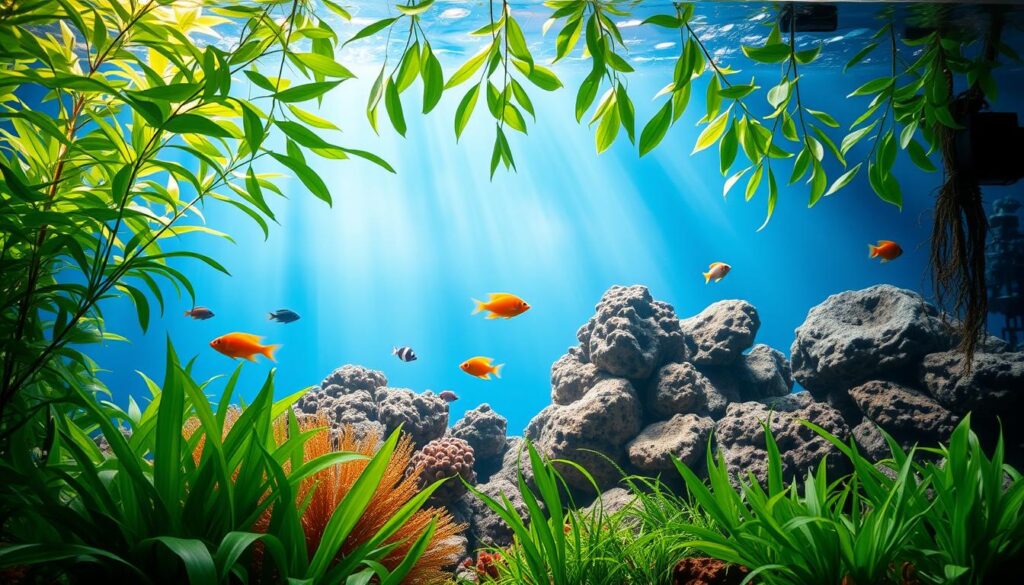
Choosing a background for your tank can be fun. You can pick from flat printed vinyl or photographic backdrops for an easy install. These backgrounds offer instant scenes, from underwater reefs to sunken ships. They’re perfect for beginners or small tanks needing a quick visual update.
Painted backgrounds offer more control over color and gradients. Use acrylic paint or Plasti Dip rubber coating for durability. A deep black can make plants stand out and hide algae. Soft blues can create an open-water feel. Painted panels are great for a custom look or blending with plants.
Three-dimensional backgrounds add texture and depth. Materials like resin, foam, or rock can mimic caves and ledges. These backgrounds change how you see space and provide hiding spots for shy fish. Make sure they’re safe for aquariums and check for algae or wear often.
Natural backdrops use real driftwood, rock slabs, or dense plants for a living wall. Live plants improve water quality and create a natural feel. A planted green wall adds depth and natural light play.
For a temporary setup, consider posterboard, adhesive vinyl, or tape-on backgrounds. These options are great for renters or short-term displays. Posterboard is cheap and easy to change, while adhesive vinyl can mimic more expensive options for a test.
- Flat printed vinyl: quick install, instant scenery.
- Painted panels: full color control, gradient options.
- 3D molded pieces: texture, hiding spots, real depth.
- Natural elements: driftwood, rock, live plant walls.
- Temporary options: posterboard and adhesive vinyl for testing.
For a unique setup, think about custom aquarium backgrounds. Mix a photographic backdrop with a 3D panel or blend live plants with molded rock. Creative backgrounds let you create a signature look while keeping function in mind.
Choosing the Right Color for Your Background
Choosing the right color can make your tank look bigger. Dark backgrounds like matte black make fish and plants stand out. They also hide algae growth. Use black or deep charcoal for a strong contrast and a gallery-style look.
Cool tones make your tank feel more open. Deep blues and aquamarine suggest calm and depth. They’re great for creating a sense of expansive underwater scenes. Try a single cool hue for a clean look.
Gradients add depth and guide the eye. A fade from darker edges to a lighter center creates a vanishing point. This draws the eye inward. You can paint this effect or buy a pre-printed gradient poster.
In small tanks, keep patterns simple. Busy designs can make the space feel cramped. Opt for soft textures, gentle scenes, or minimalist prints. These pair well with natural decor like driftwood and live plants.
- Use cool colors (deep blues, aquamarine) to suggest distance and open water.
- Place darker tones at the perimeters and lighter hues at the center for a vanishing-point effect.
- Avoid busy prints in small tanks; favor simple textures or soft photographic scenes.
For durable results, consider rubberized coatings like Plasti Dip. Test them for aquarium safety first. Spray a base coat, let it cure, and add layers for texture. Always let coatings off-gas and cure before filling the tank with water.
Buy pre-made backgrounds for speed and consistency, or paint your own. Match your color to your planting scheme. Small changes in hue can make a small tank look amazing.
Using Vertical Lines to Add Height
Vertical lines make a small tank look taller. Use tall plants, vertical rock formations, or printed patterns to achieve this. These elements work well with themes that highlight height and movement.
Place taller plants at the back and mid-height plants in the middle. This creates clear layers. Choose plants like Vallisneria, Amazon swords, and tall stems for a good look.
Use hardscape techniques to add to the vertical look. Stack rocks, anchor driftwood, or use slate slabs on edge. Add backgrounds with columns or streaked patterns to enhance the height.
Choose the right fish for your vertical setup. Angelfish and tall-bodied fish look great in height-focused tanks. For species that like to hide, tall stems are perfect. But, avoid crowding tanks meant for active swimmers like tetras or danios.
Combine natural decor like driftwood and stone stacks for a cohesive look. Natural textures make vertical elements seem real. With careful placement, a small tank can feel much bigger and more vertical.
Utilizing Depth Illusions
To make a small tank look bigger, arrange elements in layers. Start with a foreground of big, detailed pieces near the glass. Then, add a midground with open swimming space.
Place smaller hardscape and plants toward the back. This helps the eye see distance. Use photographic or painted backdrops with vanishing points or soft, blurred shapes in the distance. These cues help create a natural depth effect.
Lighting can also make a tank seem larger. Use directional LED strips across the front and dimmer lights in the back. This suggests depth. Add a timer to LEDs to keep the lighting consistent and prevent algae.
Planting strategy is key for both depth and water quality. Dense, tall plants in the rear frame the scene. A midground with “negative space” lets fish swim freely. Live plants also reduce nitrates, making the tank look healthier and more expansive.
- Layer layout: foreground, midground, background.
- Backdrop choice: photographs or painted scenes with perspective.
- Lighting tips: directional LEDs and timers for contrast and control.
- Plant plan: thick rear planting, open midground for swimming.
To create an immersive experience, mix these techniques with underwater themes that match your fish and decor. You can also use unique backgrounds like 3D rock panels or printed scenes to enhance realism and depth.
Incorporating Natural Elements
Use live plants as a living backdrop to craft beautiful underwater scenes in your small tank. A live planted aquarium background acts as a green wall, adds depth, and helps absorb nitrates while limiting algae growth.
Start with beginner-friendly species like Java fern, Anubias, and Cryptocoryne. Plant denser clusters at the rear and midground to create the illusion of distance. Vary height and leaf shape to keep planted tank backgrounds from looking flat.
Choose safe driftwood and aquascaping rocks to add texture and shelter. Arrange pieces to form caves and ledges that hide filters, heaters, and cords. Hardscape placement should help your plants thrive while providing hiding spots for fish.
Follow simple steps for setup to avoid common problems. Rinse hardscape and substrate thoroughly with tap water only; do not use soap. Lay out your intended layout on the stand or a table before adding water to minimize disturbance.
- Plant with tweezers to avoid uprooting nearby stems.
- Use root tabs for heavy root feeders like Amazon swords.
- Position taller species at the back and compact ones near the front.
Match natural aquarium decor to the species you keep. If you favor biotope setups, research the fish’s native habitat and recreate that look with appropriate plants and rocks. This keeps fish stress low and promotes natural behavior.
When planned well, natural elements create planted tank backgrounds that both look stunning and improve water quality. Your careful choices will produce a cohesive live planted aquarium background that highlights the tank’s inhabitants and produces truly beautiful underwater scenes.
DIY Aquarium Background Ideas
Try simple projects for a big visual impact without spending a lot. Use Plasti Dip or aquarium-safe acrylics for a quick change. Paint soft gradients or reef textures to make a small tank look bigger.
Temporary options are great for testing layouts. Use posterboard or photographic prints taped to the tank for easy swaps. These options are cheap and let you try different colors and patterns before committing.
Build light 3D layers for depth. Use cardboard or foam panels at staggered distances. Cover edges with aquarium-safe paint or adhesive rock to hide seams. These backgrounds add depth without heavy construction.
- Make a living moss wall by attaching sheet moss to a plastic backing and securing it behind the tank.
- Create textured rock using aquarium-safe foam, carved to shape, then sealed with silicone and coated in aquarium-safe grout or resin.
- Use vinyl decals or photographic vinyl for realistic landscapes that resist moisture and are easy to clean.
When crafting a 3D foam background, follow safety steps. Choose materials labeled aquarium-safe. Seal foam fully with silicone, then coat with an approved grout or resin. Let everything cure for the time the manufacturer specifies before exposing it to water.
Adopt careful placement and setup practices. Rinse all materials to remove dust and residues. Position heaters, filters, and cords before finalizing the background so you leave access for adjustments. To add water without disturbing decor, pour slowly over a plastic bag or colander to disperse flow.
- Rinse materials and let dry.
- Test-fit pieces outside the tank, then inside without adhesives.
- Seal joins with aquarium-safe silicone and let cure fully.
- Fill slowly and monitor placement during the first hour.
Plan for upkeep from the start. DIY backgrounds can trap detritus or encourage algae growth. Leave gaps or removable panels for cleaning. Use materials that tolerate gentle brushing and mild scrubbing so you can maintain a healthy display without harming plants or fish.
Think of custom aquarium backgrounds as ongoing projects. You can refine color, texture, and depth in stages. Keep safety, access, and maintenance in mind while you test creative fish tank backgrounds that enhance scale and style in a small tank.
Commercial vs. Homemade Backgrounds
Commercial aquarium backgrounds are quick and reliable. Brands like Fluval and Marina offer professional finishes. They have realistic designs that look like rock, coral, or plants. These backgrounds are safe for aquariums and won’t fade or get damaged by water.
They are easy to install, saving you time and avoiding mistakes.
Homemade aquarium backgrounds let you control every detail. You can use posterboard, foam, or acrylic to create custom designs. This way, you can match your room’s color or theme. DIY backgrounds are budget-friendly and perfect for renters who need something easy to remove.
Let’s compare the two options.
- Commercial aquarium backgrounds: consistent quality, pre-sealed materials, lifelike textures, easier setup.
- Homemade aquarium backgrounds: flexible sizing, lower cost, full personalization, and easy removal for renters.
Each option has its downsides. Commercial 3D units might take up space and limit rearranging your tank. Some flat printed backgrounds can look artificial under bright lights.
DIY projects can be risky if you use the wrong materials. Non-aquarium-safe glues or paints can harm your tank. Both types of backgrounds need regular cleaning and occasional touch-ups.
Choose based on what matters most for your tank.
- Tank size: small tanks do well with subtle, flat, or painted backgrounds to avoid clutter.
- Fish behavior: some fish need 3D shapes for hiding spots.
- Maintenance: pick surfaces that are easy to clean without damaging them.
- Budget and style: for a unique look, DIY or custom backgrounds can match your exact color and theme.
Match your choice to your tank’s size, your fish’s needs, and how easy it is to maintain. This way, you can pick the right background that enhances your tank’s look without hassle.
Maintaining Your Background
To keep your tank looking great, follow a simple cleaning routine. Check the background every week for algae and loose edges. Use a soft brush or algae scrubber to clean it. Avoid soaps and harsh chemicals that can harm your fish and plants.
Control the lighting to prevent algae. Start with short light periods and use an LED timer. For planted tanks, use a little fertilizer at first. This helps control algae and balances nutrients.
Good filtration and aeration are key for maintaining your background. A reliable filter and air stone improve water quality. They also reduce organic waste and algae-friendly conditions. Always check the filter media and flow weekly.
- For 3D resin or foam backgrounds: scrub gently, rinse with dechlorinated water, and inspect for wear.
- For painted backgrounds: touch up areas as needed with aquarium-safe paint that is fully cured before use.
- For plant-based backdrops: prune and replant regularly, using tweezers and pruning scissors for fine work.
When designing or installing the backdrop, plan for easy access. Leave removable panels or create space for rinsing or lifting the background. If you need to remove it, rinse with tank water. Avoid sudden temperature changes.
- Weekly: visual check, light timer review, and spot-scrub visible algae.
- Biweekly: rinse skimmer pads, test flow, and trim plant growth.
- Monthly: inspect background materials, perform gentle deep clean if needed, and touch up paints or sealants.
Regular maintenance keeps your background colors bright and controls algae. Small, consistent steps make upkeep easier. This way, your clean background will continue to make your small tank look bigger.
Final Thoughts on Maximizing Small Tank Aesthetics
To make a small tank feel bigger, start with the right background. Choose colors and themes that match your fish and tank. Pick a background type that fits your care routine and fish behavior.
Use vertical lines and layered decor to add height. This makes the tank look deeper without making it crowded. Place plants and hardscape carefully to enhance this effect.
Lighting and where you place equipment are key. Hide filters and heaters behind decor or a textured background. Use LED lights with timers to control brightness and growth.
Rinse all materials before putting them in the tank. Start with easy plants like Java fern and Anubias. Control fertilizer and light to prevent algae. Always place the tank on a level, sturdy surface.
Try out temporary solutions before making a big change. Use tape-on prints or posterboard to test backgrounds. Once you find the perfect look, consider upgrading to a painted or 3D backdrop.
Thoughtful decor and realistic scenes improve looks and reduce fish stress. They turn your tank into a living piece of art. Use these ideas to create unique backgrounds and scenes that make your tank look bigger and healthier.
Experiment with different looks, adjust lighting and plant placement. Enjoy making your small tank a stunning, natural display.
Leave a Reply