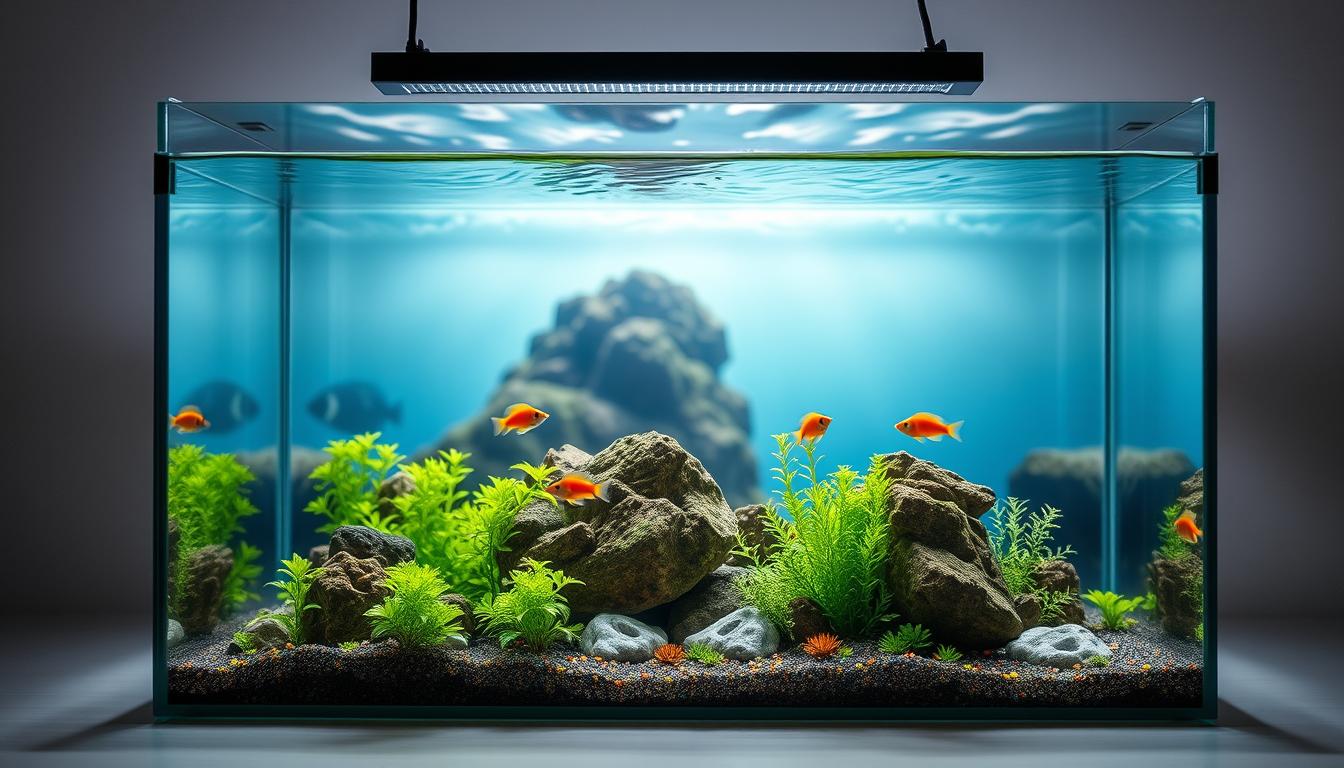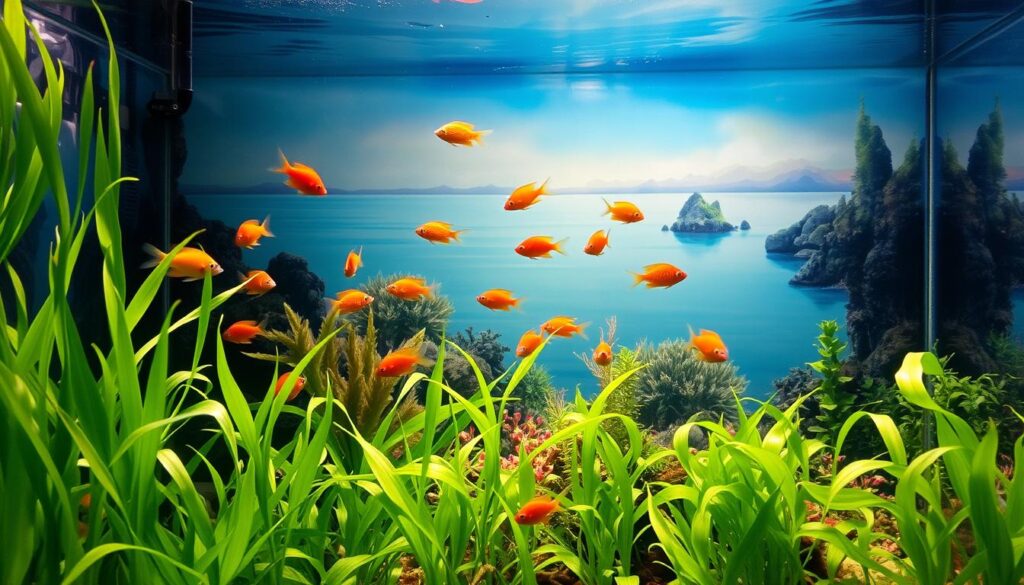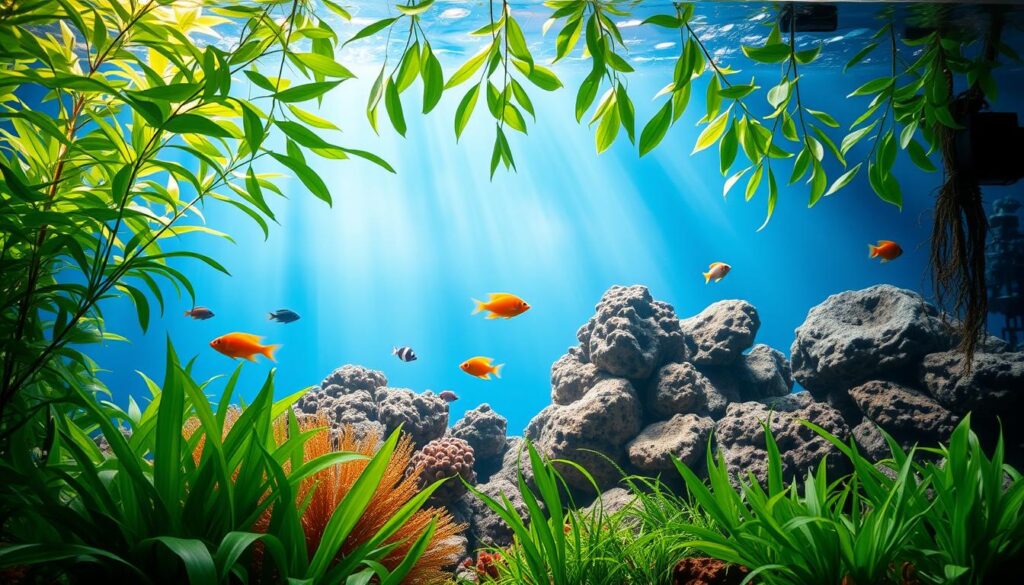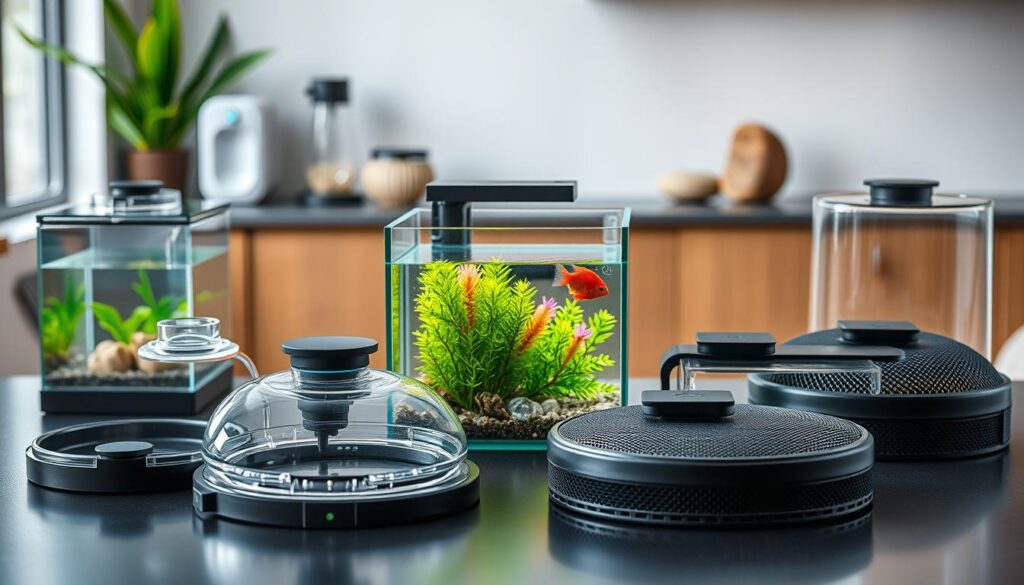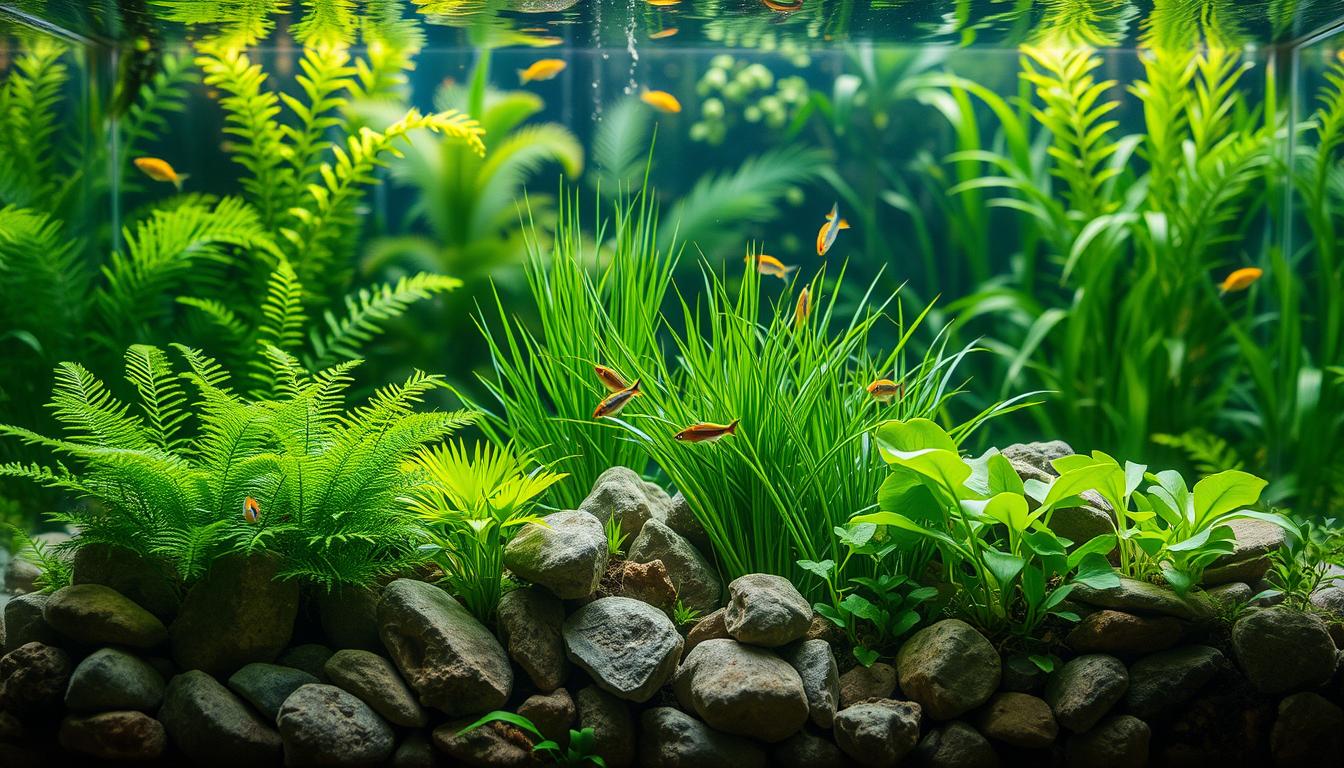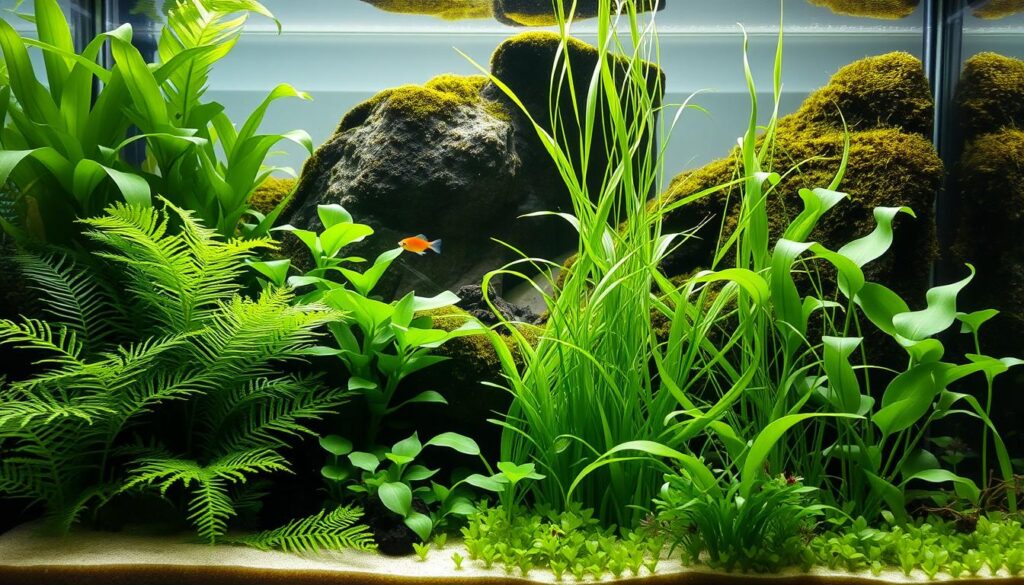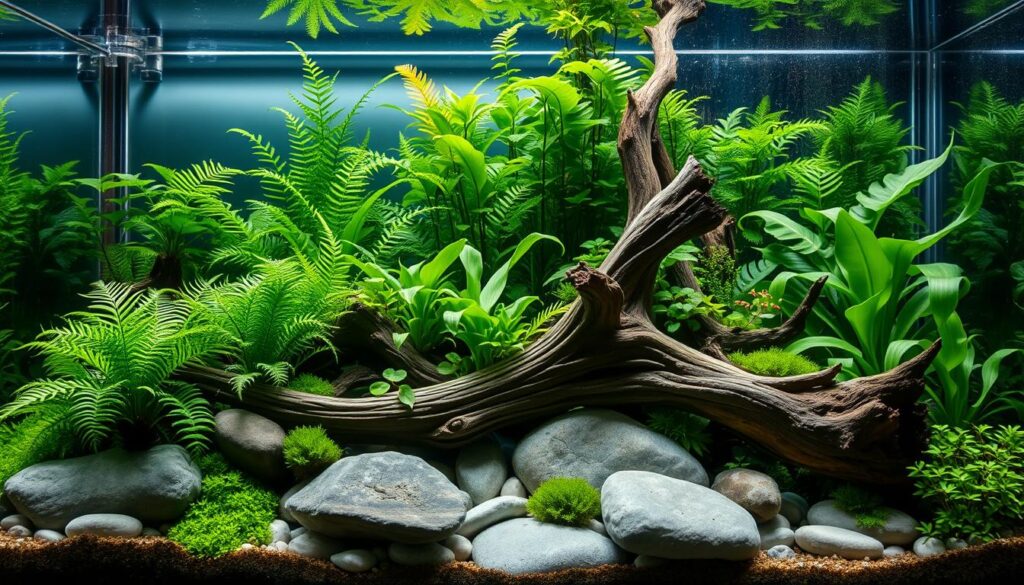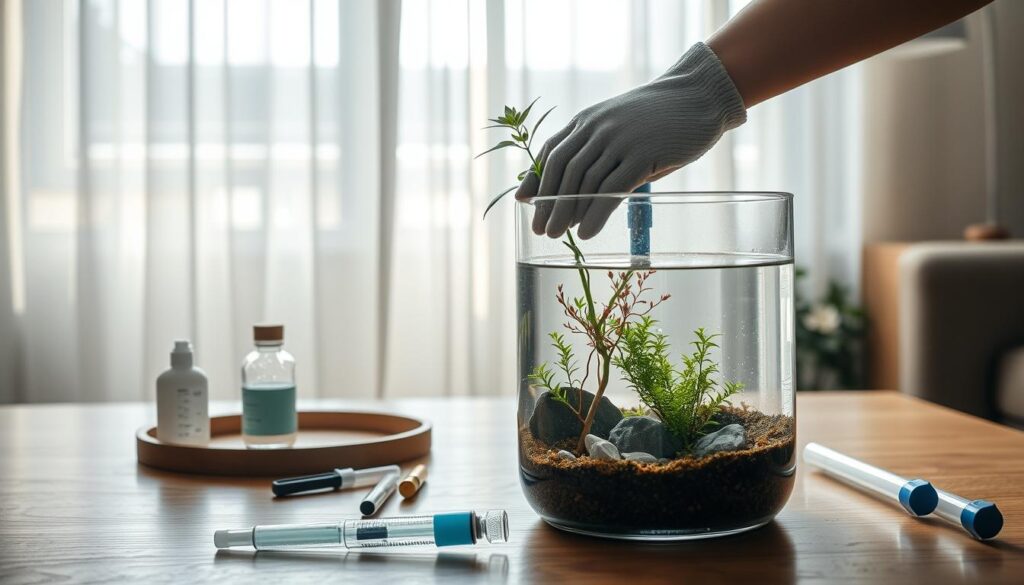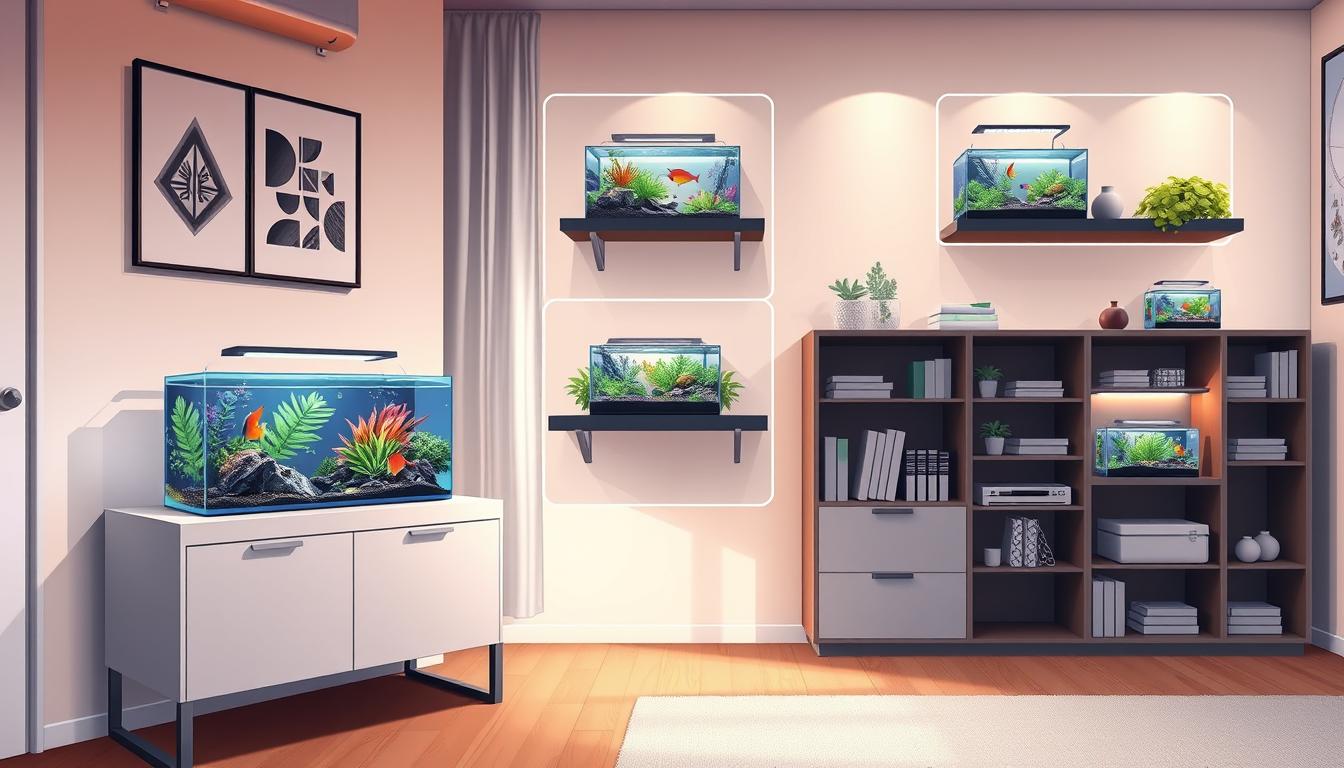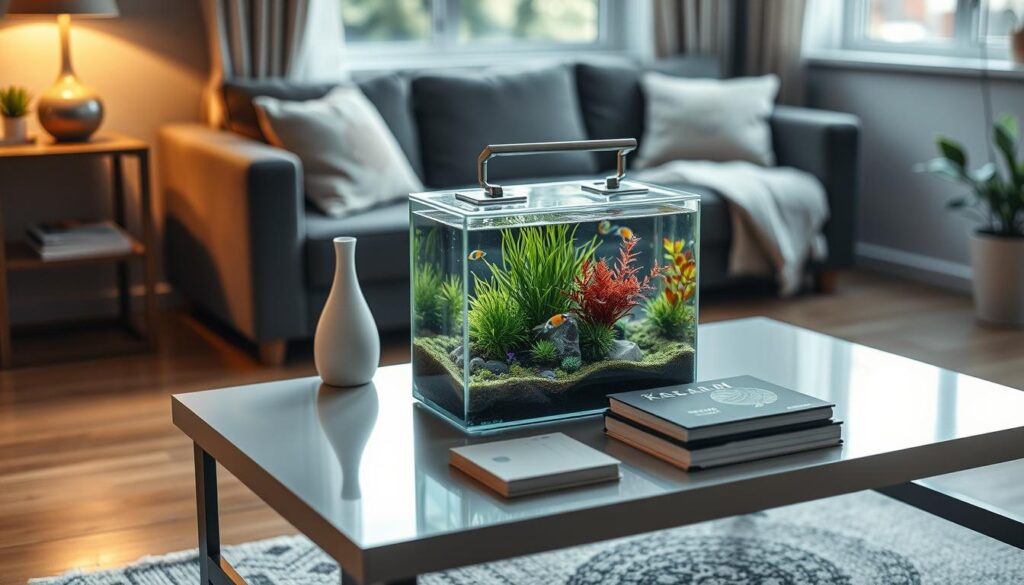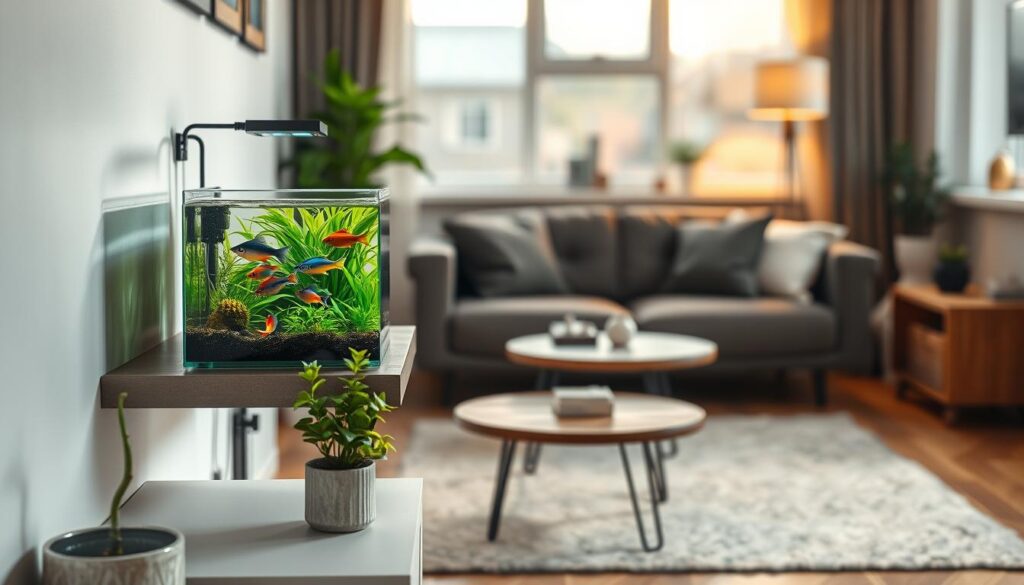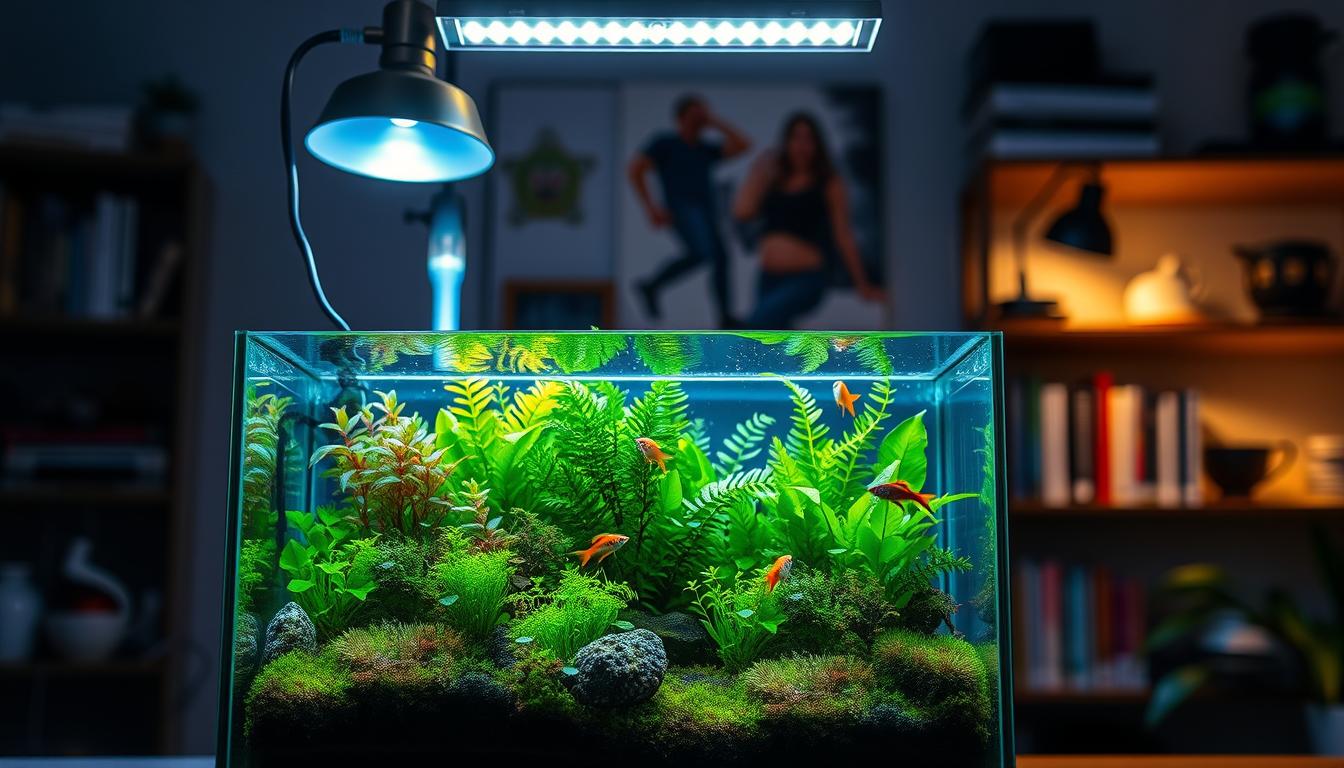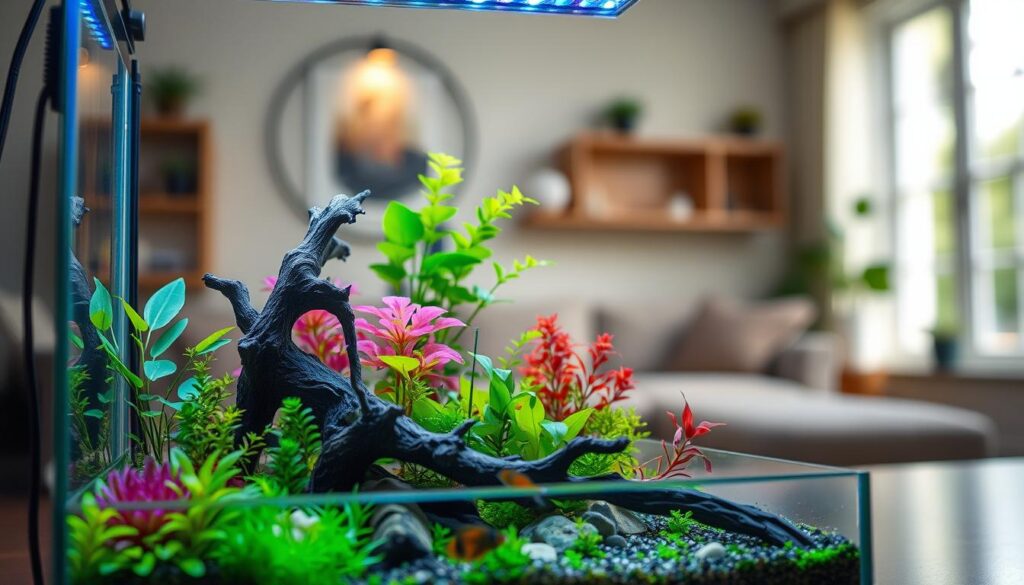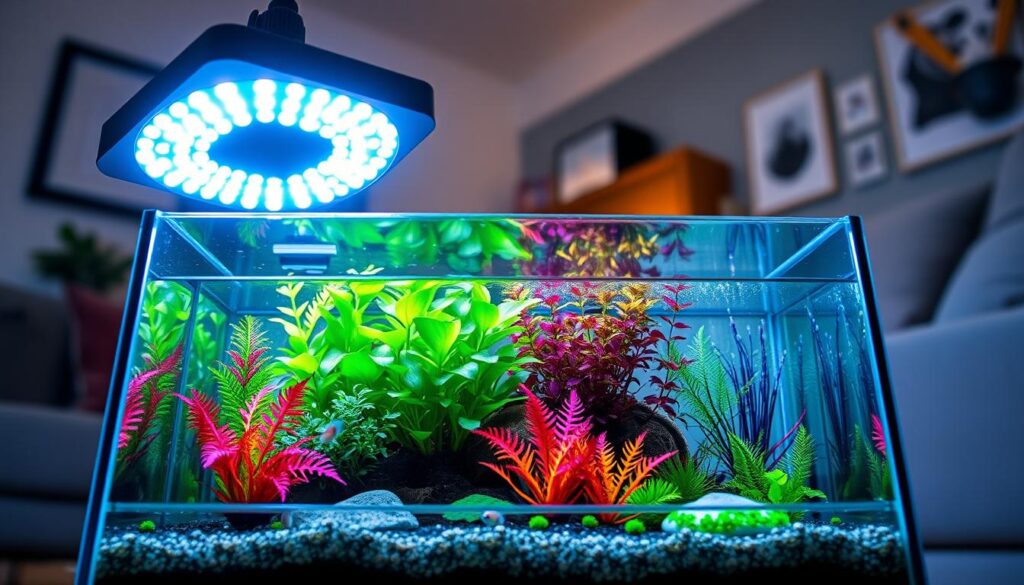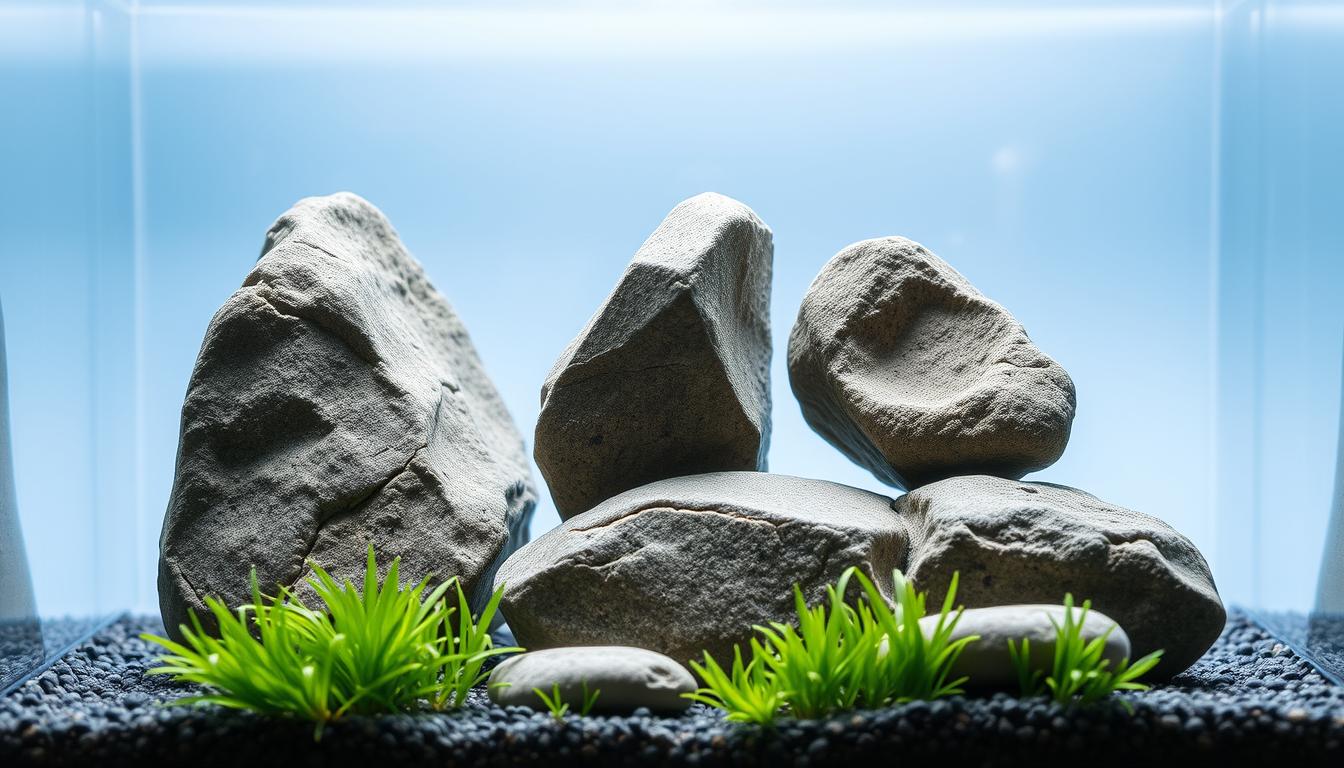
The Iwagumi style is rooted in Japanese aquarium design. It focuses on a few key stones to mimic natural scenes. These stones, arranged in a hierarchy, guide the viewer’s eye.
In this style, plants are few and low to the ground. This use of negative space, or Ma, adds depth and calm. It creates a peaceful, landscape-like scene in your room.
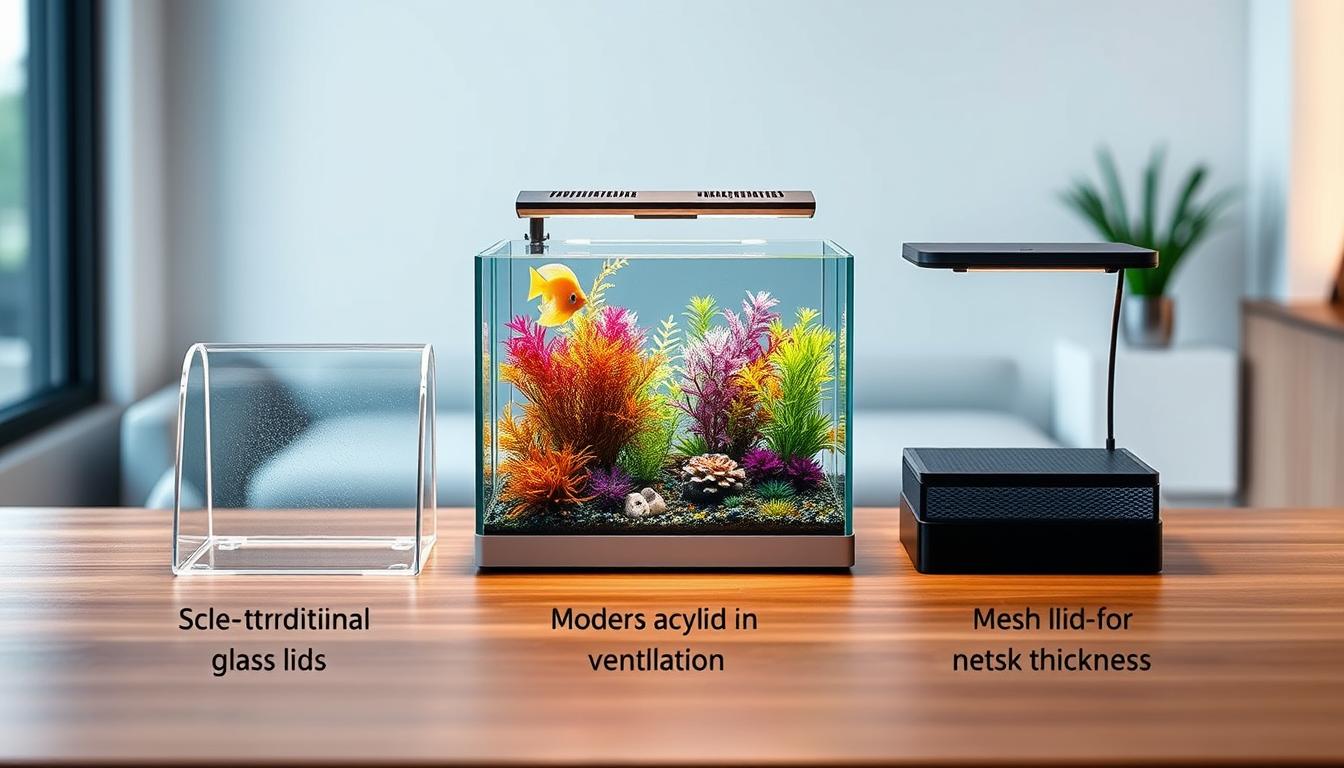
Nano aquascaping takes these principles to small tanks. Here, every detail matters more. You need to carefully choose and place rocks and plants, and plan the layout to avoid mistakes.
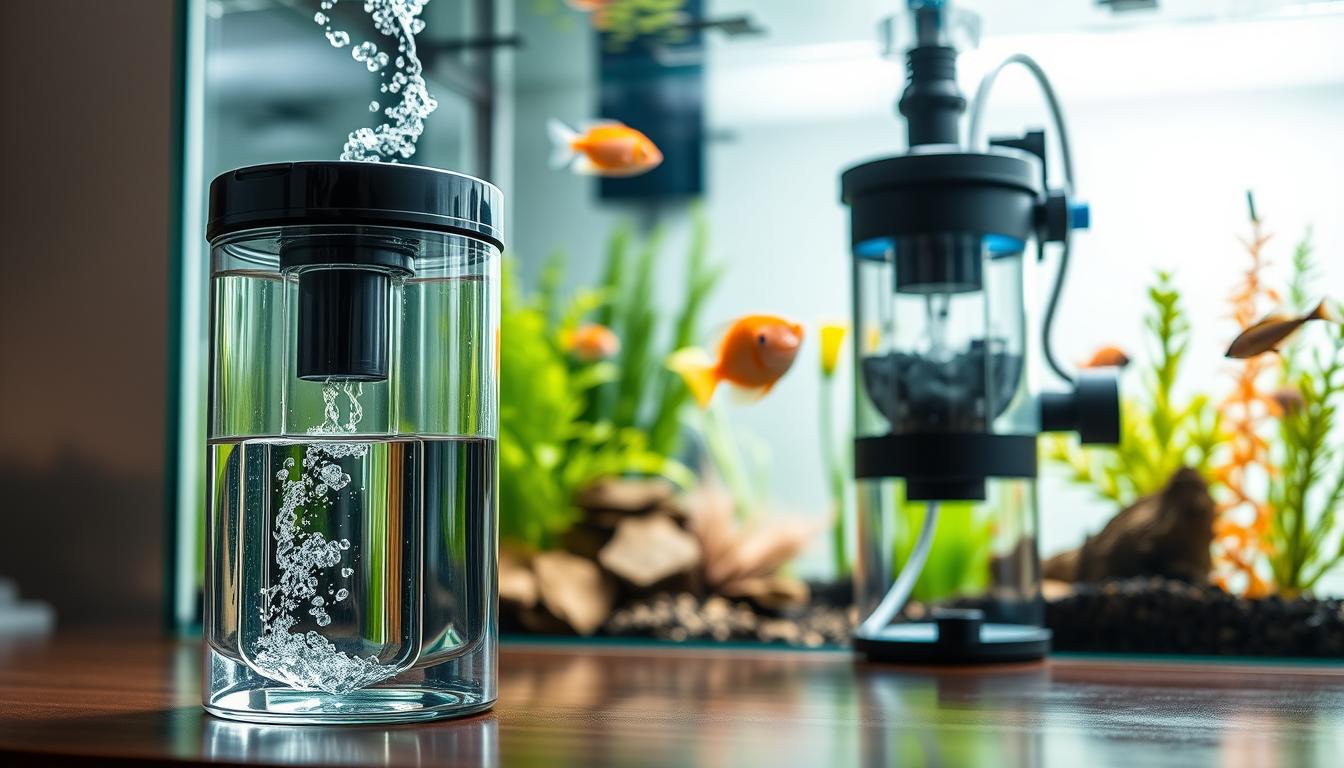
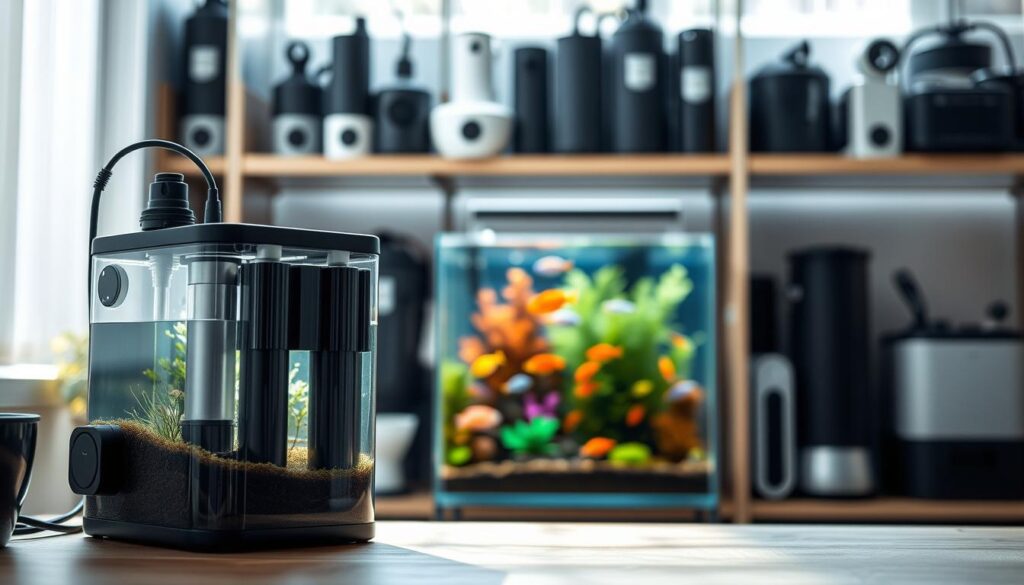
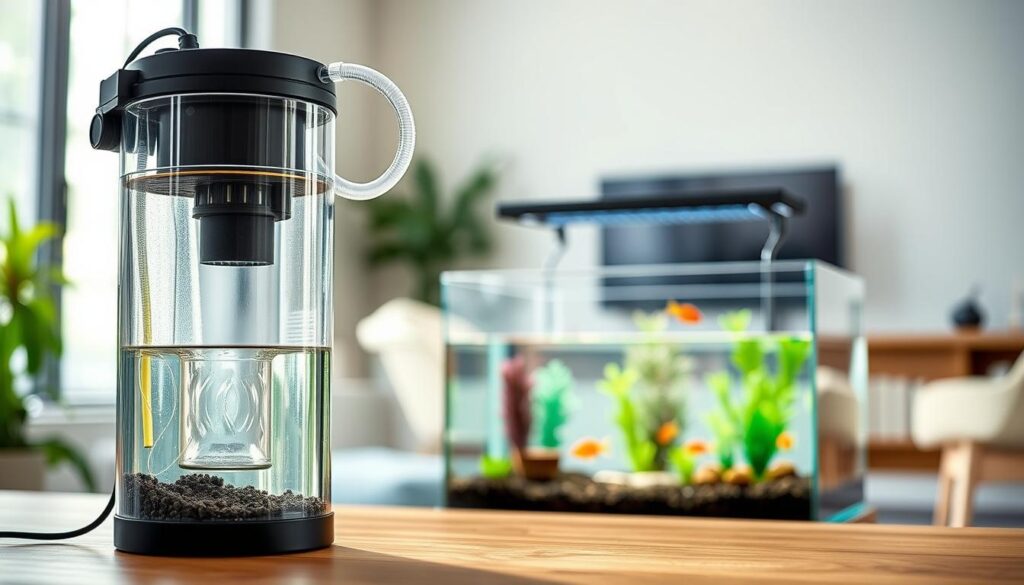
To achieve this, you’ll need stable lighting, CO2 management, and nutrient-rich soil. A reliable filter is also key to keep the tank clean and the design simple.
An Iwagumi tank offers quiet beauty and shows the beauty of restraint and patience. It showcases the essence of Japanese aquarium style.
Understanding Iwagumi Style Aquascaping
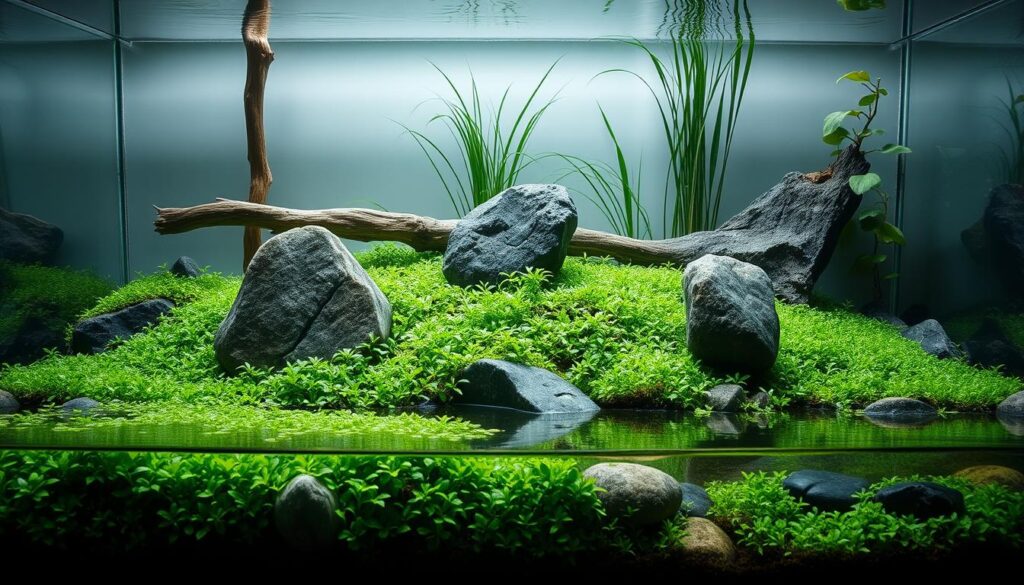
Iwagumi, meaning “rock formation,” focuses on stones in your design. This Japanese style emphasizes the hardscape over plants or driftwood. It shapes the visual flow.
Begin with a main rock, the Oyaishi, placed off-center. This follows the rule of thirds or golden ratio. Surround it with smaller stones in odd numbers to avoid symmetry.
This method creates a natural rhythm and focus. It guides the eye through the layout.
Consider the flow lines and rock angles. Matched angles suggest natural currents. Negative space adds calm and scale. Plants take a backseat to the hardscape.
Patterns like Sanzon Iwagumi, with three stones, teach about hierarchy and proportion. Larger tanks can use five or seven stones, maintaining the same balance.
- Stone selection: choose texture, color, and weight that pair well.
- Placement: test off-center positions and align flow lines.
- Substrate shaping: slope and terraces support perspective.
- Plant restraint: use low carpets to maintain emphasis on rock.
Iwagumi demands precision. Plan stone grouping, substrate, and plant placement carefully. Use photos and sketches to spot imbalances before finalizing.
Core Principles of Iwagumi Design
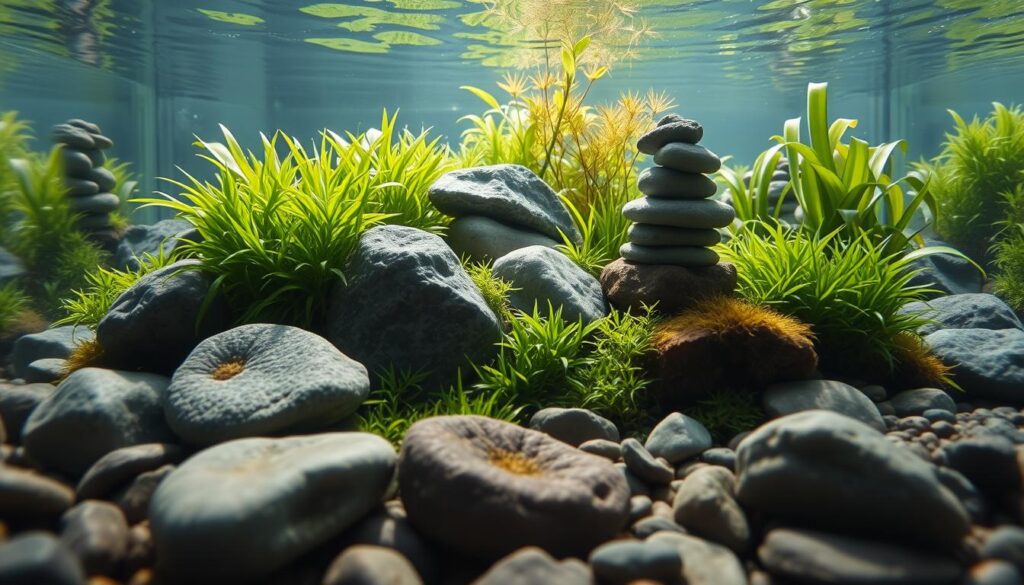
Your Iwagumi starts with a few key rules. Use an odd number of stones and place the Oyaishi off-center. Match stone flow lines and choose one to three plant species. These rules help keep your design balanced and clear.
Use visual flow techniques to guide the eye. Tilt stones in the same direction and create invisible paths. This repetition with variation adds rhythm, making small changes feel intentional.
- Odd stone counts keep the composition dynamic.
- Oyaishi placed off-center becomes a true focal point.
- Aligned flow lines make stone groups read as a single unit.
Position focal points using the rule of thirds or golden ratio. Take photos from the viewing angle to spot any symmetry or clutter. This helps refine balance and make focal stones stand out.
Negative space, or Ma, is key. Leave open areas to increase scale and calm. Empty spaces make the scene feel larger, even in small tanks.
- Plan sightlines: valleys and diagonals create movement.
- Control density: limit plant species to maintain clarity.
- Test composition by photographing and adjusting until rhythm feels natural.
When you combine these elements, each choice supports the next. Achieving balance in iwagumi layout is a series of small, controlled decisions. You use proven techniques to guide placement and negative space to enhance scale. The result is calm, intentional, and three-dimensional, making creating depth in aquascape easy and repeatable.
Essential Elements in Creating an Iwagumi Tank
Start by picking a few stones that look alike and have clear features. Choose rocks with texture and colors that are not too bright. Don’t mix different rock types that don’t match. This helps keep your layout looking good.
Use a special soil for planted tanks, like ADA Aqua Soil Amazonia or Tropica Aquarium Soil. Add a thin layer on top for carpeting plants. Make a gentle slope from front to back, about 1:3, for depth. The right soil supports plant roots and looks good.
Choose the right lighting for your plants. LED lights in the 6000–8000K range are good for carpets and midground plants. Make sure you have enough lumens and PAR for your plants. Use a timer for 6–8 hours of light a day.
Think about using pressurized CO2 for dense carpets or fast-growing plants. A diffuser and drop checker help you keep CO2 levels right. Good filtration is key: a canister for bigger tanks, or a hang-on-back for smaller ones. These choices help your plants stay healthy.
- Tweezers and long scissors for precise planting.
- Algae scrapers and soft brushes for regular upkeep.
- Water test kits for pH, GH, NO3, and PO4 to track conditions.
- Root tabs for heavy feeders and liquid fertilizers for micro and macro nutrients.
- Small stones, gel glue, or substrate packs to stabilize larger rocks.
Follow simple tips for beginners: secure hardscape first, plant in small groups, and start fertilizing slowly. Regular care keeps your Iwagumi tank looking great. Use the right tools and supplies to make setup and care easier.
With a good hardscape, nutrient-rich soil, proper lighting, and regular care, your Iwagumi layout will be clear and simple. These key elements let the stones and plants create a beautiful scene. As you get better at aquascaping, your tank will look even more amazing.
Choosing the Right Rocks for Your Iwagumi
Start by learning the rock hierarchy that defines Iwagumi style basics. The Oyaishi is the main stone and sets the scene. Fukuishi are supporting stones that echo the Oyaishi’s angle. Soeishi are minor accents that guide the eye. Suteishi are sacrificial or hidden stones that add natural imperfection.
When selecting stones, think of each role. Pick an Oyaishi that feels dominant but fits your tank’s scale. For a nano ≤20L, plan one main stone plus one or two supports. For a medium 60–90cm tank, choose one main with three to five supports. For large setups 100cm+, use one strong Oyaishi with five or more supporting stones.
Choose stone types that match your visual goal. Seiryu Stone gives blue-gray contrast with white veins. Ohko, also called Dragon Stone, is tan-brown and porous, great for moss attachment. Sado-Akadama brings warm reddish-brown tones. Ryuoh offers jagged dark faces for drama. Manten gives vertical striations that mimic mountains.
Follow selection rules to keep coherence. Pick stones from the same visual family so color and texture stay consistent. Scale the stone count to tank volume. Make sure the Oyaishi’s height and shape remain proportional to your aquarium.
Test rock placement in aquarium before finalizing. Arrange pieces on a table, photograph them from the intended viewing angle, and compare compositions. Move stones until the balance you want is clear.
Consider water chemistry effects when choosing materials. Some stones, like limestone, can raise pH or hardness. Test a single stone in a jar of water for a few days, then measure pH and general hardness to avoid surprises.
Use rock placement in aquarium to tell a simple story. Angle supporting stones toward the Oyaishi to create flow. Keep negative space around the main cluster so planted carpets and foreground species can breathe.
Practice makes better results. Try different combinations, photograph each layout, and refine based on the images. This hands-on approach helps you master choosing rocks for iwagumi and apply Iwagumi style basics with confidence.
Designing Your Aquascape Layout
Before you start, make a detailed plan. Sketch your layout from above and from the front. This helps you see if everything looks balanced and flows well. A quick sketch also shows you where to place negative space.
Begin with a substrate slope that’s higher in the back than the front. Aim for a 1:3 ratio. This slope is key for depth and better views. Use finer substrate at the back to make the area seem farther away.
- Choose an off-center Oyaishi using the rule of thirds for a natural focal point.
- Add Fukuishi and Soeishi that echo the Oyaishi’s tilt and texture to maintain directionality.
- Leave breathing room around stone groups to create negative space and a clear line of sight.
Place larger stones in the front and smaller ones in the back. This trick makes the space seem deeper. Choose plants that match the slope’s texture: coarse ones in the front, finer ones in the back.
Work on your hardscape step by step. Start with the biggest stones, then add smaller ones. Use substrate or aquarium-safe glue to keep them stable. Make sure they’re secure before adding water.
- Form substrate slope and compact it.
- Place the Oyaishi off-center; view from front and top.
- Arrange Fukuishi and Soeishi to echo tilt and guide the eye.
- Adjust negative space; create a valley or diagonal path.
- Stabilize stones and photograph to spot awkward symmetry.
Make sure all stones flow together for a cohesive look. Use lighting and plants to enhance depth and texture. Avoid straight lines and mirror placements to keep the scene interesting.
Take photos from above and the front before you’re done. Check if everything looks right in scale and if there’s too much clutter. These tips will help you avoid mistakes and make your aquascape look great.
Planting Strategies for Iwagumi Layouts
Choose plants wisely to follow Iwagumi style basics. Pick one to three species to keep stones in focus. Use plants like Hemianthu callitrichoides (HC), Glossostigma elatinoides, and Eleocharis parvula for a fine carpet.
Plant with care using long tweezers. Place plants close together, about 1–2 cm apart. This helps them spread evenly and quickly, keeping the look simple.
Put taller plants behind or beside the main stones. This adds depth without blocking the stones. It helps keep the layout balanced by guiding the eye and preserving space.
- Plant 1–3 species to maintain harmony.
- Space carpet plants 1–2 cm for even growth.
- Place vertical accents behind stones for depth.
Try the Dry Start Method (DSM) for strong roots and less algae. Plant in a nutrient-rich substrate, mist daily, and cover the tank. Keep it humid for four to six weeks. Then, slowly add water to start growing plants.
Watch light and humidity during DSM. Good light helps carpets grow but too much can cause algae. DSM helps you control early growth and follow beginner tips for steady progress.
Keep carpets trimmed every two to three weeks. Trim to keep them low and even. Remove trimmings quickly to stop rot and prevent algae.
- Trim every 2–3 weeks to preserve the minimalist aesthetic.
- Remove clippings to prevent rot and nutrient imbalances.
- Use CO2 and consistent lighting to support dense carpets.
Balance CO2, light, and fertilization to avoid algae. Proper CO2 and light help carpets grow dense and healthy. Follow tips for gradual changes to help plants adjust without stress.
Plant with care and restraint to achieve a refined layout. Use precision techniques, DSM, and regular care to improve your success. This will help you keep your design simple and true to its roots.
Water Parameters for a Healthy Iwagumi
To keep your Iwagumi looking great, you need to check the water chemistry often. Test pH, GH, KH, NO3, and PO4 regularly. This helps prevent algae and keeps shrimp like Amano and cherry shrimp healthy.
CO2 is key for lush plants and greenery. Use a pressurized CO2 system for the best results. A diffuser, solenoid, timer, and drop checker help keep CO2 levels right.
Lighting is important for a good carpet. Choose LED lights with adjustable spectrum in the 6000–8000K range. Aim for 6–8 hours of light a day. Use a lighting calculator to find the right PAR or lumen for your tank.
Keep your tank clean and well-maintained. Trim stems weekly to prevent shading. Check for algae, CO2 diffuser clogs, and equipment issues regularly.
- Water changes: plan 20–50% routine changes. Many hobbyists do a 30% monthly swap while increasing frequency if nutrient or stocking levels rise.
- Parameter logging: record test results and photos to spot trends before they become problems.
- Equipment checks: confirm the solenoid, diffuser, and regulator operate smoothly each week.
Your aquascaping techniques should aim for balance between light, CO2, and nutrients. Too much light without CO2 invites algae. Too much CO2 without proper aeration stresses shrimp and fish. Match fertilization to plant demand and monitor NO3 and PO4 to keep growth healthy.
When you dial in water parameters for iwagumi, expect a trial period. Small adjustments work better than big swings. Log data, adjust one variable at a time, and use photos to evaluate progress after each change.
Benefits of Nano Iwagumi Aquascaping
A nano Iwagumi gives you a big visual punch from a small space. It focuses on the placement of rocks and empty space. This creates a peaceful, gallery-like spot in your room.
There are practical benefits too. Nano tanks use less substrate, plants, and equipment than big tanks. This makes nano Iwagumi a great choice if you want to learn without spending a lot.
It also teaches patience. Planning and pruning in a small space teach you discipline and attention to detail. Watching a well-balanced nano scene can be calming and therapeutic.
- It’s easier to start and keep up with a nano tank because it needs less.
- Small tanks help you learn faster about planting, trimming, and design.
- The design focuses on the textures and shapes of rocks and plants you choose.
But, there are technical challenges. You need to be precise with rock sizes and control CO2, light, and water quality. Small tanks can show changes quickly, so algae can spread fast if you don’t keep up with care.
- Start with the basics of Iwagumi: single or three-stone setups and a clean foreground.
- Choose small fish to keep the bioload low and maintenance easy.
- Do frequent, short maintenance sessions to keep everything stable and algae-free.
By balancing beauty with careful care, nano Iwagumi aquascaping is both a creative hobby and a practical way to enjoy a minimalist aquarium in your home.
Common Mistakes to Avoid
Start simple when building an Iwagumi tank. Too many rocks can ruin the style’s negative space. Try out stone arrangements on a tray or carpet before placing them in the tank.
Choosing the wrong rocks is a big mistake. Mixing stones with different colors or textures can mess up the look. Also, avoid rocks that change the water’s pH or add minerals.
Managing algae is a challenge. Too much CO2, light, or nutrients can lead to algae. Keep CO2 levels steady, light for 6–8 hours, and fertilize carefully.
Handling carpet plants wrong can be a problem. Planting too close, not trimming, or flooding too soon can cause issues. Use the dry start method, plant evenly, and trim every 2–3 weeks.
Choosing the right fish is important. Big, digging, or aggressive fish can harm your setup. Opt for small schooling fish like ember tetras or harlequin rasboras. Add Amano shrimp, cherry shrimp, and nerite snails for cleaning.
Follow beginner tips to avoid mistakes. Test layouts, keep hardscape simple, and maintain consistent CO2 and light. Plan your stocking with small, peaceful species in mind. These habits help protect your design.
- Test rock arrangements on a tray before planting.
- Pick uniform stone types and check for pH effects.
- Keep lighting to 6–8 hours and stabilize CO2.
- Use DSM for carpets and trim every 2–3 weeks.
- Choose small, peaceful fish and useful invertebrates.
Tools and Supplies for Iwagumi Aquascaping
To create a serene iwagumi layout, you need the right tools. Start with precision tools: fine tweezers, curved scissors for carpet plants, and a roll-up tool kit. These tools make planting and pruning easier.
Maintenance is key. Use algae scrapers, a siphon for water changes, and a tray for small parts. Keeping these supplies ready saves time and reduces stress during tank maintenance.
- Filtration options: choose Eheim canister filters for quieter performance or a hang-on-back unit for small tanks.
- CO2 systems: pressurized setups with diffusers, solenoids, and a drop checker help you control levels precisely.
- Lighting: pick an LED fixture with adjustable spectrum and a timer to match plant needs.
Substrate and fertilization are vital for plant health. ADA Aqua Soil Amazonia and Tropica Aquarium Soil are good choices. Add root tabs for heavy feeders and liquid fertilizers for nutrients. Use iron supplements for red-toned species.
Stabilizing hardscape needs small tricks. Aquarium-safe glue gel secures stones. Use small pebbles or substrate packs to pin rocks while filling. Filter media bags or lava rock under the substrate reduce soil needed and help shape slopes.
Monitor water chemistry. Keep test kits for pH, GH, KH, NO3, and PO4 ready. An aquarium lighting calculator helps estimate PAR and lumen needs for your plants.
Assemble these tools for iwagumi aquascaping and choose reliable aquarium supplies from brands like Aqua Design Amano, Fluval, Eheim, or JBL. Good gear gives you more control over plant growth, rock stability, and long-term maintenance.
Community and Resources for Iwagumi Enthuisiasts
Studying Takashi Amano’s work and visiting galleries can help you learn. Photo journals and guides explain important concepts like rock hierarchy and planting techniques. They also cover maintenance in simple terms.
For beginner tips, check out hobbyist sites and forums. Reddit, Facebook groups, and local aquarium clubs in the U.S. offer valuable feedback and help. They can critique your photos and solve problems.
- Follow aquascaping contests and public aquarium showcases for inspiration.
- Use online tools for planning lighting and CO2. Explore smart tank automation like timers and smart LED systems.
- Try AI tools for diagnosing algae and measuring PAR for better results.
Buy supplies from trusted retailers and local fish stores. Look for stones, ADA-style soils, CO2 kits, and LED fixtures from reliable sources. Research shipping and quarantine for invertebrates like Amano shrimp and nerite snails.
For structured lessons, follow online guides on layout, planting, and care. Practice and get feedback from the community. This will help you improve and learn more about the Japanese aquarium style.
Using community resources for iwagumi can speed up your learning. It connects you with others who share tips, product reviews, and contest entries. Regularly interacting helps refine your skills and keeps you updated with new trends and methods.
Conclusion: Embracing the Art of Iwagumi
The Iwagumi style is all about simplicity. It focuses on choosing the right stones and using simple plants. It also follows strict rules, like using odd-numbered stones and placing them off-center.
In a small tank, these rules are even more important. The size and detail of the tank create the scene. Keep the plants few and focus on their flow to achieve balance.
To start, draw out your ideas and take photos of your stone setups. Choose stones from the same family and create a gentle slope in the substrate. Consider using a dry start for carpeting plants.
Make sure to stabilize CO2 and lighting early. Also, stick to a regular routine for trimming and water changes. These steps are key for beginners.
While Iwagumi requires patience and technical skill, the results are worth it. You’ll get a peaceful and beautiful underwater scene that enhances your home. Begin with small projects, join clubs or forums for advice, and grow your skills over time.
FAQ
What is Iwagumi and why is it popular for nano aquascaping?
Iwagumi means “rock formation” in Japanese. It’s a minimalist approach to aquascaping, focusing on rocks and plants. Nano tanks make it harder because you have less room for mistakes.
What are the core design rules I must follow in an Iwagumi layout?
Key rules include using odd numbers of stones and placing the main stone off-center. You should match stone lines and use negative space. This keeps the design simple and balanced.
How does stone hierarchy work and what are the roles of each stone?
Each stone has a role: Oyaishi is the main stone, Fukuishi support, Soeishi add rhythm, and Suteishi are hidden. They help with balance and story.
Which stones are recommended and how do their looks affect the scape?
Choose stones like Seiryu, Ohko, Sado-Akadama, Ryuoh, and Manten. They should look similar to keep the design unified.
How should I scale and count rocks for different tank sizes?
Scale stones to fit the tank size. Nano tanks use 1 main stone and 1–2 supports. Larger tanks can have more stones. Always check the layout from the viewing angle.
What substrate and slope should I use to create depth?
Use nutrient-rich soil and a fine top layer for plants. Create a slope from front to back for depth. A higher back and lower front help with perspective.
What plants work best in Iwagumi, and for carpets?
Use 1–3 plant species for a minimalist look. Popular carpet plants include HC, Glossostigma, and Eleocharis. Use vertical accents sparingly to add depth.
Should I use the Dry Start Method (DSM) for carpets?
Yes, DSM is best for carpets. Plant directly into nutrient substrate, mist, and cover for 4–6 weeks. Then, flood the tank.
How important is CO2 and lighting for a successful Iwagumi?
CO2 and lighting are key. Use a diffuser and solenoid for CO2 control. LED lights in the 6000–8000K range are common. Run lights 6–8 hours a day for consistency.
What filtration and equipment are best for nano Iwagumi tanks?
A reliable HOB filter works well for small tanks. Use quality LED lighting and consider CO2. Keep tools like tweezers and water test kits handy.
How do I place rocks step-by-step to build an Iwagumi hardscape?
Start with a sloped substrate. Place the Oyaishi off-center. Add Fukuishi and Soeishi to echo the main stone. Leave space to draw the eye. Stabilize stones with substrate or glue if needed.
How can I create depth and forced perspective in a small aquarium?
Use a slope and smaller plants and rocks in the back. Layer textures for depth. Tilt stones and create space to guide the viewer’s eye.
What are common mistakes that ruin an Iwagumi scape?
Avoid overcrowding and mixing stone types. Poor scaling and inconsistent CO2 or lighting can also ruin it. Choose the right fish to avoid disturbing the layout.
How do I prevent and manage algae in an open Iwagumi layout?
Keep CO2 steady, lighting consistent, and fertilization balanced. Use reliable filtration and perform regular water changes. Scrape algae and maintain a clean routine.
What livestock is suitable for an Iwagumi tank?
Choose small, non-digging species like Amano shrimp and ember tetras. Avoid large cichlids and bottom-dwellers that dig.
What maintenance routine should I follow to keep the minimalist look?
Trim plants every 2–3 weeks. Remove trimmings to avoid decay. Check CO2 equipment and filters, and perform regular water changes. Use root tabs and liquid fertilizers as needed.
Which brands and tools do experienced aquascapers recommend?
Many use ADA soils and products for predictable results. Accessible alternatives include Fluval, Eheim, and JBL. Use reliable LED lights, CO2 kits, and water test kits.
How can I learn and get feedback while building my Iwagumi skills?
Study Takashi Amano’s work and contest entries. Join online communities and local clubs to share photos and get critique. Read guides and start with small projects.
Is Iwagumi suitable for beginners, and where should I start?
Iwagumi teaches design discipline but can be challenging. Start small to practice stone selection and layout. Follow the dry start method and keep plant palettes simple.