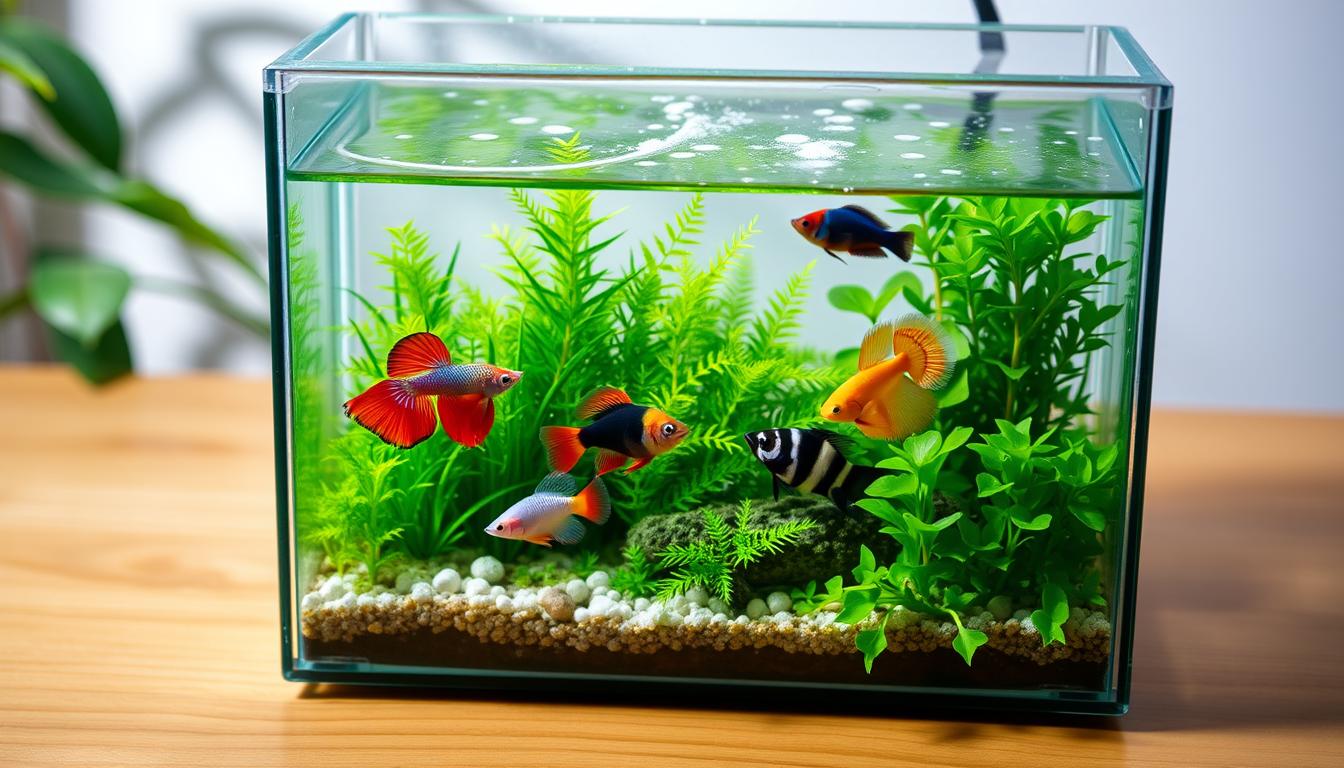
Get ready to discover the best fish for 5-gallon tanks. We’ll explore small species that do well in tiny aquariums. This guide is perfect for beginners in the United States and those with limited space.
Nano tanks are loved for their bright colors and lively fish. But, they can be tricky to stock. We’ve picked fish that are small, have a low bioload, and fit well in small spaces.
Many fish are good for nano tanks, like celestial pearl danio and chili rasbora. But, we’ve narrowed it down to the top 5 small fish for 5-gallon tanks.
Remember, many nano fish are schooling and need friends. Decorate your tank with plants and decorations for their safety. Feed them tiny foods like micro pellets and baby brine shrimp. Always quarantine new fish and watch for diseases like fin rot and ich.
Understanding the Benefits of a 5-Gallon Aquarium
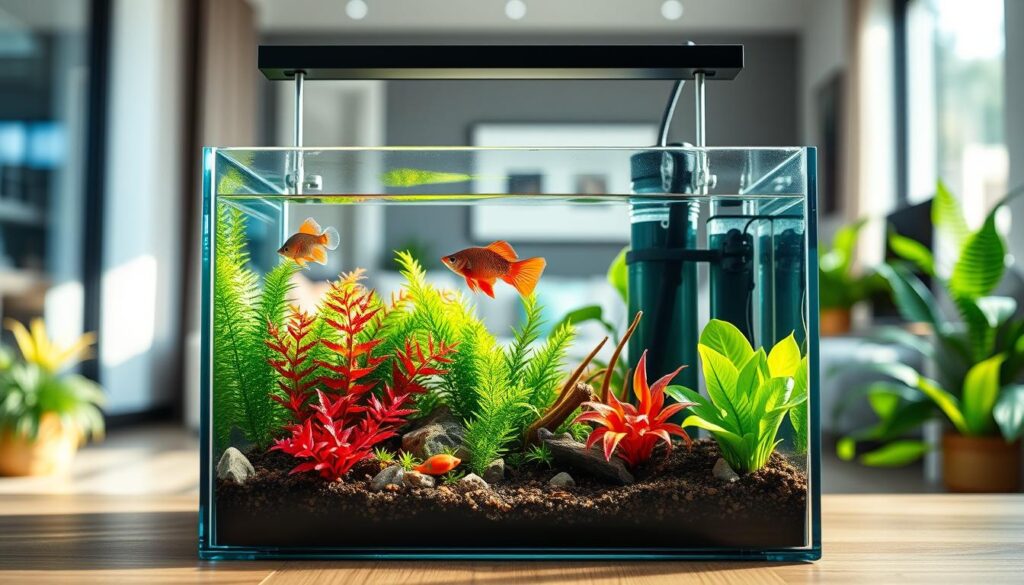
A 5-gallon tank is perfect for beginners. It’s small, making it easy to fit in tight spaces. This size is great for those new to fish tanks or with little room.
Opt for a wide, low tank. A tank like an 18x10x10″ footprint offers more room for fish to swim. The shape also helps in hiding spots for small fish.
These tanks are great for saving space. They can sit on desks, shelves, or small stands. They’re also cheaper to set up and decorate, making them ideal for small spaces like apartments or offices.
But, there are some downsides. Smaller tanks can’t handle big changes in water quality or temperature. You also have to be careful with how many fish you keep. Tall tanks limit your choices of fish.
- Pick a tank shape that favors horizontal space for better stocking options.
- Use a secure lid to protect jumpers like some killifish and gouramis.
- Provide heavy plant cover to lower stress and boost fry survival for livebearers.
Quarantine new fish before adding them to your tank. This is important to avoid diseases like fin rot or ich. Regular water tests and changes help keep the water clean.
Plan your fish stocking carefully. Choose small fish and keep their numbers low. This helps keep the water clean and reduces the need for frequent tank cleaning. With the right setup, a 5-gallon tank offers a low-cost, visually appealing hobby.
Key Considerations for Fish Selection
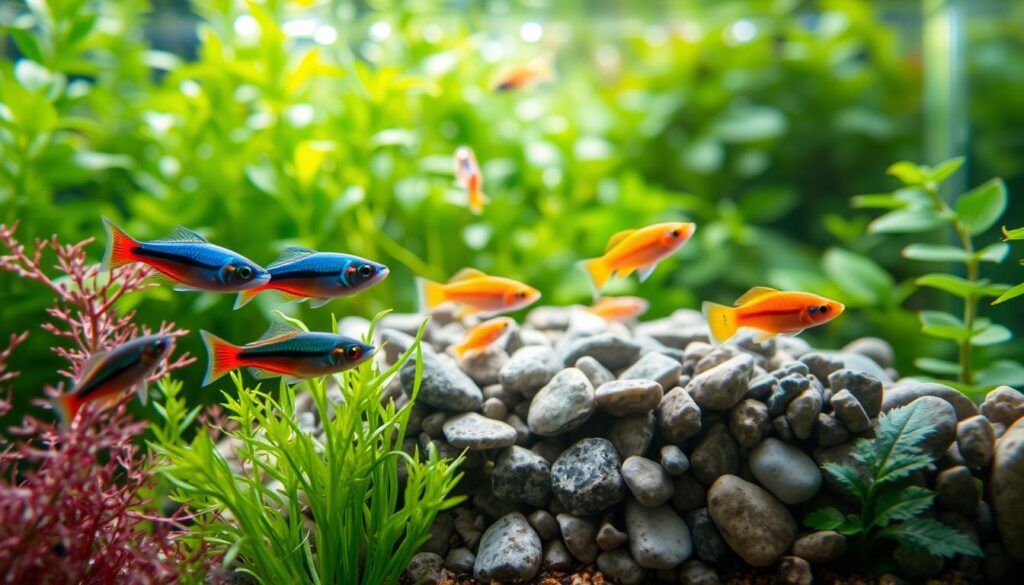
Choosing the right fish involves several key factors. Consider their adult size, how much waste they produce, their temperament, and where they like to swim. Also, think about if they prefer to be in groups and what they eat. These considerations help ensure your 5 gallon tank is safe and healthy for your fish.
Here’s a checklist to help plan your nano aquarium.
- Adult size: pick species that stay small as adults so you avoid overcrowding later.
- Bioload: low waste producers suit tiny filters better when stocking a 5 gallon tank.
- Temperament: avoid mixing territorial males with peaceful schooling fish.
- Swim level: combine top, mid and bottom dwellers carefully to reduce stress.
- Shoaling needs: many micro species need groups to thrive; plan tank mates and numbers according.
Water chemistry is important. Some nano species like soft, acidic water, like green neon tetra and clown killifish. Others can handle neutral to alkaline, harder water. For example, emerald dwarf danio likes pH 7–8 and hardness 12–20°H. Betta albimarginata prefers soft acidic water around pH 4–6.5. Endler’s livebearers and guppies can handle wider ranges, roughly pH 7–8.5. Make sure the water conditions you can maintain match the needs of your fish.
Temperament also plays a role. Male bettas are aggressive and often need to live alone. Livebearers like guppies and Endler’s breed fast and can overpopulate a small tank. Rasboras, danios, and tetras often shoal; recommended group sizes vary. Celestial pearl danios do well in groups of six or more. Chili rasboras need ten or more. Pygmy corydoras favor groups of six to twelve.
Consider your tank’s physical features. Many jumpers require a tight-fitting lid; killifish, Pseudomugil rainbowfish, and some minnows are known jumpers. Bottom-dwellers need suitable substrate. Fine sand protects barbels for kuhli loaches and pygmy corys and reduces injury when they forage.
Feeding compatibility is key to keeping stress low. Tiny species need microfoods like baby brine shrimp, microworms, micro pellets, and crushed flakes. Sinking wafers work well for catfish. Match food size and type to the species you plan to house so every fish can feed without competition.
If you want low maintenance fish for small tank setups, choose species with modest bioloads, wide water tolerance, and simple diets. This way, you can enjoy the hobby without daily troubleshooting while stocking a 5 gallon tank responsibly.
Best Small Fish for 5 Gallons: Betta Fish
Bettas are a top choice for a 5-gallon tank. A single male Betta splendens does well in a tank with hiding spots and gentle water flow. They prefer warm water between 72–82°F. You’ll enjoy their bright colors, fun behavior, and easy setup.
Wild Betta species are also great options. Betta albimarginata is small, near 1.2″ (3 cm), and can live with a mate in soft, acidic water. Betta imbellis grows to about 2″ (6 cm) and can handle a wider pH range. These species are peaceful for a small aquarium.
Keeping bettas simple. Keep the water temperature steady and match it to the species’ needs. Add floating plants for cover. Feed them a mix of high-quality pellets and frozen or live foods for the best nutrition. These habits make bettas easy to care for in small tanks.
Choosing tankmates carefully is key. Male bettas can be aggressive, so avoid fin-nippers and loud species. Small, peaceful fish or female-only groups might work if they fit the tank’s size and calmness. For some wild bettas, calm pairs can thrive if you match their water and behavior needs.
- Equipment tip: use a tight-fitting lid to stop jumping.
- Filtration: choose a low-flow sponge filter to protect delicate fins.
- Monitoring: watch for breeding behaviors; some males may fast while mouthbrooding.
With a little effort, a Betta in a 5-gallon tank can be very rewarding. It’s a great choice for beginners and fits well in small spaces.
Exploring Guppies for Your Nano Aquarium
Guppies and Endler’s livebearer are great for small tanks. They add color and life without overloading the tank.
Endler’s livebearer males are small, about an inch. They don’t make much waste, making them perfect for 5-gallon tanks.
Panda guppies are bred to be small. Males are about an inch, and females are almost two inches. This size helps you plan your tank without overcrowding.
Breeding is important. Livebearers breed easily, so you’ll have fry if you have males and females together. To control fry numbers, keep only males or use a ratio of two to three females per male. Floating plants help fry hide and survive.
Water chemistry is simple. Guppies like a pH of 7 to 8.5 and moderately hard water. If your water is soft, use supplements like Seachem Equilibrium or Wonder Shells.
Feeding is easy. Guppies eat flakes, pellets, frozen brine shrimp, and live foods. They eat at all levels, so you don’t need a bottom cleaner. A small Corydoras or nerite snail can help with algae.
- Stocking tip: a single male or a small same-sex group works best for an ideal fish for 5 gallon tank.
- Choice note: Endler’s livebearer is often listed among beginner fish tank ideas because of low bioload and hardy nature.
- Breed plan: if you want fry, add floating plants and accept occasional population jumps.
These tips help you choose between fancy guppies and Endler’s livebearer for a colorful nano tank. They fit well with beginner fish tank ideas and offer long-term enjoyment.
The Charm of Neon Tetras in Small Tanks
Neon tetras are a top pick for small aquariums. The classic neon tetra and the green neon tetra are small, colorful, and calm. They show off lively schooling behavior, adding motion and contrast to a small tank.
For a small tank, the green neon tetra is a great choice. They are smaller, usually 1–1.25 inches, with females sometimes under an inch. This size is perfect for creating a shoal in a compact 5-gallon space.
Water chemistry is key in small tanks. Green neons prefer very soft, acidic water. It’s important to quarantine new arrivals to protect your main tank from diseases like fin rot and ich.
Shoaling is vital for neon tetras. Keep at least six to eight for natural schooling and reduced stress. In a 5-gallon tank, space is limited, so consider other small fish like chili rasboras or celestial pearl danios.
Feed them small amounts of micro pellets, crushed flakes, and live or frozen baby brine shrimp. These foods fit their small mouths and support their bright colors and active behavior without polluting the water.
Design the tank to mimic Amazon conditions. Use heavy planting, leaf litter, and driftwood for hiding places and soft lighting. Neon tetras love this. Stable water parameters are also critical, as a 5-gallon tank can change temperature and chemistry quickly.
With careful stocking, paired filtration, and regular, small water changes, neon tetras can thrive in a 5-gallon tank. Your tank will enjoy the slim profiles and peaceful schooling of these fish, making them a favorite among small fish species for small tanks.
Endler’s Livebearer: A Great Choice
Endler’s livebearer is perfect for small tanks. They fit well in 5-gallon or 12x12x12″ tanks. Males are tiny, about 1–2.5 cm, while females grow to 4.5 cm. Their bright colors and lively nature make them a great choice for small setups.
These fish are very adaptable. They can handle different water conditions, preferring a pH of 7–8.5 and hardness of 10–35°H. This makes them a top pick for beginners and small tanks.
It’s best to keep small groups or same-sex males to prevent overbreeding. If you mix sexes, add floating plants to help the fry survive. This gives them places to hide.
Endler’s livebearer eats a variety of foods. They enjoy flakes, micro pellets, and frozen or live foods. An omnivorous diet helps them stay healthy in small tanks. Regular, small feedings keep their colors bright and activity high.
- Tank size: suitable for 5-gallon or standard 12x12x12″ nano tanks when numbers are limited.
- Behavior: peaceful, active, and generally good with other small peaceful species.
- Care level: considered a low maintenance fish for small tank because of hardiness and flexible diet.
Choose species-only groups or carefully selected tankmates to avoid stress. Pure Endler’s can be harder to find; many retail fish are hybrids with guppies. If you want true Endler genetics, ask reputable breeders or specialized aquatic shops.
For hobbyists seeking small fish for small tanks, Endler’s livebearer offers color, activity, and resilience. With simple care and smart stocking, these fish can brighten a compact aquarium without demanding complex maintenance.
The Peaceful Nature of Corydoras Catfish
Pygmy corydoras are tiny, peaceful catfish. They add gentle activity to the bottom of a nano tank. You’ll see them moving low in the water, sifting sand with quick, friendly motions.
These small bottom dwellers for nano aquarium setups grow to about 1–1.2″ (2.5–3 cm). Keeping them in groups shows natural shoaling behavior. Care guides suggest groups of six to twelve for comfort and reduced stress.
Pygmy corydoras are low maintenance for small tank owners. They produce a modest bioload compared to larger catfish. They help clean uneaten food and add interest without demanding heavy filtration.
Tank setup is key for your pygmy corydoras. Use fine sand or smooth substrate to protect their barbels. Add dense planting and hiding spots so they can spread out and feel secure.
- Water: slightly soft to neutral, pH around 6.0–7.4, hardness 2–8°H.
- Temperature: keep water near 71–77°F (22–25°C).
- Diet: sinking wafers, Repashy gel foods, cyclops, baby brine shrimp, and small dried foods.
In an ideal fish for a 5-gallon tank, balance shoaling needs with space. A full shoal may feel cramped in a standard 5-gallon layout. Consider modest groups or larger nano dimensions like 18x10x10″ to let them thrive.
If your tank is tight, choose fewer individuals and increase planting to create visual depth. Pick species alternatives if you cannot meet shoaling or substrate needs. Thoughtful planning keeps these catfish healthy and active in small aquaria.
Alternatives: Small Shrimp and Snails
If your 5-gallon tank feels too small for fish, think about adding small shrimp or snails. Freshwater shrimp like Neocaridina and Caridina are colorful and active. They also produce less waste than most fish.
Choosing the right shrimp or snail is key. Neocaridina shrimp do well in 5-gallon tanks and even smaller ones. Nerite snails are great for tiny tanks to control algae. But, avoid big snails like mystery or rabbit snails unless you have at least 5 gallons for each.
Before adding invertebrates, check if they get along with your fish. Some fish, like chili rasboras, live well with shrimp. But, some fish, like gouramis and bettas, might eat them. Pick tankmates that won’t harm your shrimp.
Invertebrates have many benefits. Nerite snails and shrimp eat algae and leftover food. They also add movement and interest to your tank. Just make sure to keep the water clean and stable to help them thrive.
Feeding and caring for them is easy. Shrimp need extra food and calcium for molting. Snails eat algae and veggies, and they don’t need complicated diets. Regular water changes and gentle filters help keep them healthy without the stress of caring for fish.
- Best fish for 5 gallons alternatives: Neocaridina shrimp and nerite snails for compact, active displays.
- Low maintenance tankmates: shrimp and nerites reduce waste load compared with many fish.
- Care tip: quarantine new invertebrates and provide stable water to prevent disease and hitchhikers.
Specialized Care for Your Fish
Keep water quality steady by testing often. Small tanks can quickly change in ammonia, nitrite, nitrate, pH, GH, and KH. Use a reliable test kit and log your results. Plan water changes based on how many fish you have and the test results.
Match the temperature to the fish you keep. A good heater with a thermostat helps tropical species. Keeping water stable makes caring for nano tanks easier over time.
- Quarantine new arrivals for at least two weeks.
- Watch for fin rot, ich, or unusual behavior.
- Treat or re-home affected fish before adding them to your display.
Quarantine helps prevent outbreaks and protects your fish. Some wild-caught neon tetras and green neon tetras carry parasites. Screening is key to caring for 5 gallon fish.
Choose filtration with gentle flow. Sponge filters are good for shrimp, small fry, and bottom-dwellers. They provide biological filtration without harsh current. Adjust the flow for bettas, killifish, and gouramis that prefer calm water.
Feed tiny species the right foods. Offer microworms, baby brine shrimp, micro pellets, crushed flakes, and frozen daphnia when needed. Bottom-feeders like sinking wafers and gel foods. Rotate diets to keep fish healthy and colorful.
- Small live or frozen items improve condition.
- Avoid overfeeding to protect water quality.
Design habitat with enrichment in mind. Use dense plants, hiding spots, leaf litter, and driftwood for blackwater species. Floating plants help fry and labyrinth fish. Use fine substrate for barbels and loaches. Secure lids to prevent jumps.
Apply product recommendations where they help. Use Seachem Equilibrium or Wonder Shells for guppies in soft-water areas. Provide floating plants and spawning mops for surface spawners. Watch mouthbrooding bettas closely; some may stop eating during incubation.
Balance care with species choice. If you want an easier route, pick a low maintenance fish for small tank that matches your routine. For hands-on enthusiasts, following best fish for 5 gallons care guidelines pays off in long-term health and fewer surprises.
Common Mistakes to Avoid in a 5-Gallon Tank
Overcrowding is a big mistake. Pet stores show too many fish, but forget about adult sizes and shoaling needs. Small fish need space to swim together. Pick fewer fish and check their adult sizes before buying.
Mixing the wrong fish can stress them out. Don’t pair big or aggressive fish with tiny ones. Some fish might eat smaller ones. Male betta fish fight with each other and with fin-nippers. Also, be careful with shrimp because some fish might eat them.
Ignoring water chemistry is another mistake. Different fish need different water conditions. For example, emerald dwarf danios like harder, alkaline water. But tetras and some killifish prefer softer, acidic water. Don’t assume all fish need the same water.
Skipping quarantine can spread disease fast. New fish can bring ich, fin rot, or parasites. Quarantine new fish for at least two weeks before adding them to your tank.
Not keeping up with maintenance is a trap. Small tanks can quickly get dirty. Make a schedule for water changes and filter checks. Stick to it. Small tanks need more care than big ones.
Choosing the wrong substrate and décor can harm your fish. Coarse gravel can hurt barbels on Corydoras and kuhli loaches. Without hiding spots, timid fish get stressed. Use fine sand and add caves or plants for safety.
Plan your stocking carefully. Look at reliable species profiles and start with a few hardy fish. This helps you learn care before trying harder combinations.
Keep a checklist for stocking your tank. It should include adult sizes, water needs, quarantine, maintenance, and safe décor. This helps avoid common mistakes and keeps your fish healthy.
Learn from others about the best fish for small tanks. Read warnings about small fish and choose wisely. Pick fish that fit your skill level and tank setup.
Conclusion: Creating Your Ideal 5-Gallon Aquarium
Start by picking fish that are right for a 5-gallon tank. Options include bettas, Endler’s livebearers, pygmy corydoras, small tetras, and rasboras. You can also consider shrimp or snails. Make sure their water needs and personalities match.
Before adding fish, check a few things. Make sure your tank is the right size and has a secure lid. Test the water and stabilize it. Also, complete a nitrogen cycle and choose fish that fit the tank’s size and needs.
Prepare your tank with substrate and live plants. Use a sponge filter for gentle filtration. Set up a quarantine area to prevent diseases.
For your next step, you can have a single-species tank or a small community. If you prefer something easy, start with an Endler’s or a betta. Look for fish at local stores, breeder groups, or online. Some fish, like Betta albimarginata, can be hard to find and cost more.
Being a responsible fish keeper means making smart choices and keeping up with maintenance. With the right planning, your 5-gallon tank can be a vibrant and thriving space. It will meet your beginner fish tank ideas and hobby goals.
Leave a Reply