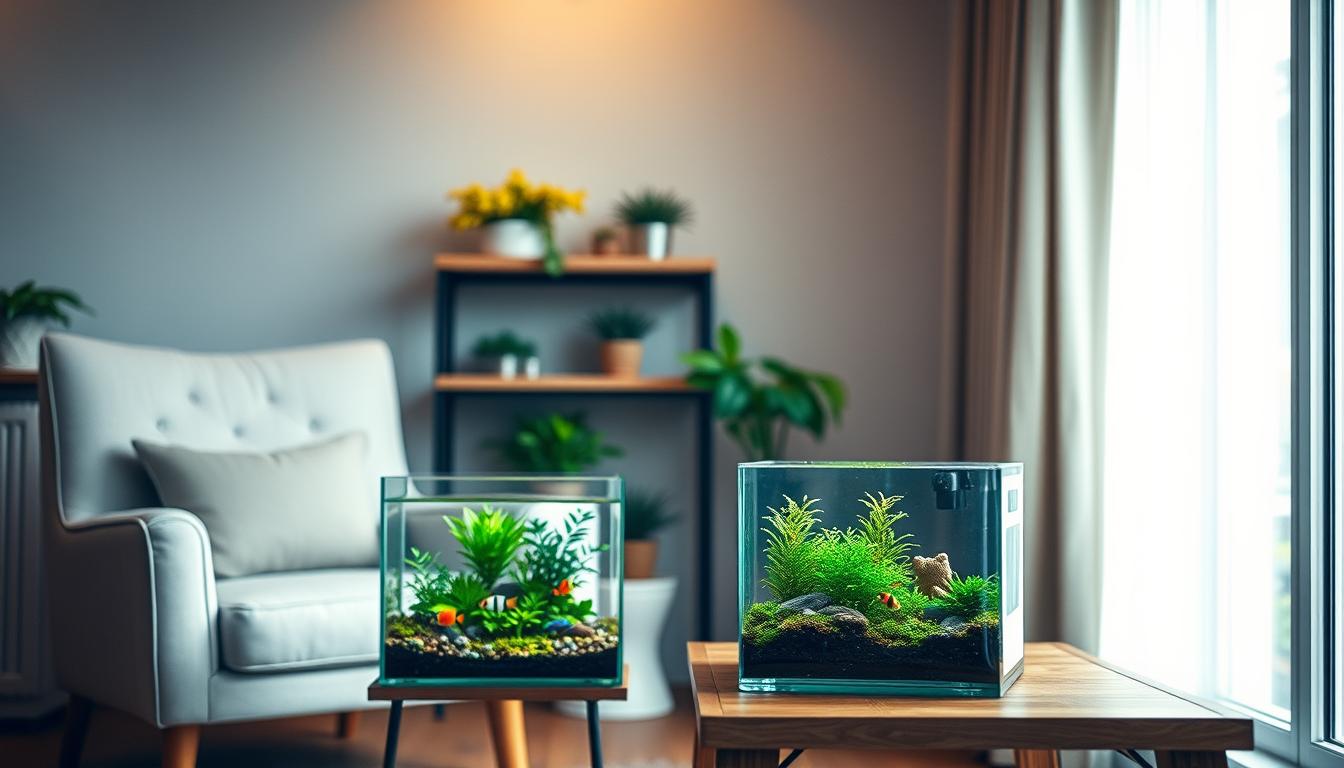
Start by measuring the space for your nano tank. Think about its purpose: will it be a decoration, a desk display, or a nightstand tank? Choose a tank size that fits the room like furniture or art. A small cube might look lost on a big console, and a long tank might not fit on an open shelf.
Choose a strong stand for your tank. Freshwater is heavy, about 8.34 pounds per gallon. Your stand must hold the tank’s weight and keep it stable.
Think about the fish you want before picking a tank. Some fish, like goldfish, grow big and need lots of space. Cherry barbs stay small but some fish are territorial or need to be in groups. Plan for their adult size and needs when picking a tank.
Choose a tank that’s longer and wider. This gives fish more room and better gas exchange. Larger tanks are easier to keep clean because they dilute pollutants.
Keep in mind the challenges of nano tanks. Tanks under 10 gallons are often called nano. They change temperature and chemistry fast, so they need careful care and frequent water changes. For beginners, a 20-gallon tank is safer. If you have to choose a smaller tank, plan carefully.
Decide what kind of tank you want: a planted freshwater tank, a community tank, a goldfish tank, a marine reef, or an African cichlid tank. Research the needs and compatibility of your chosen species. This will help you create a healthy and lasting aquarium.
Understanding Nano Tanks and Their Benefits
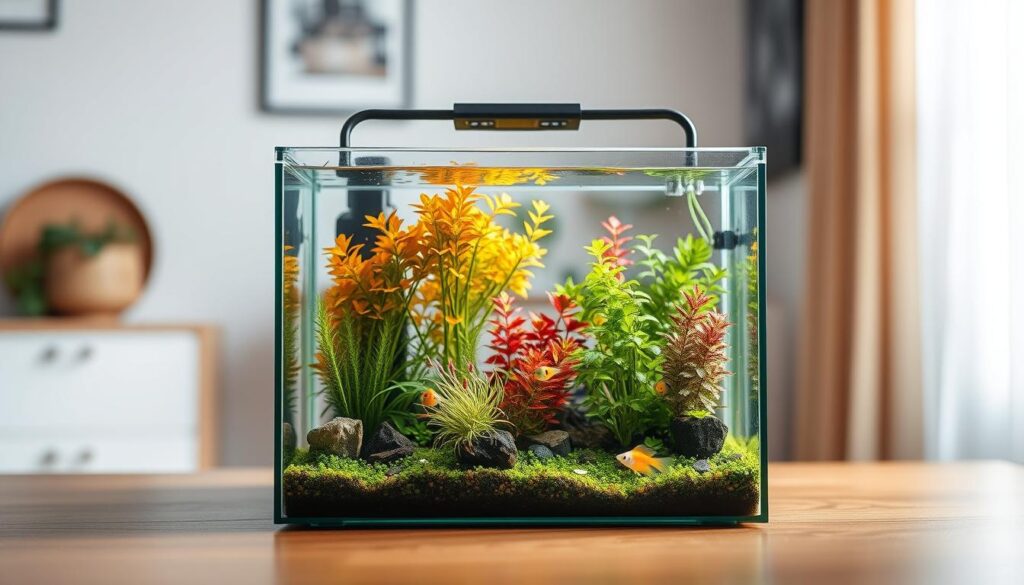
When you read a nano aquarium guide, you learn that there is no strict definition for these tanks. Many hobbyists call aquariums under 10 gallons (about 40 L) nano. These tanks are perfect for desks, apartments, or small rooms.
One big reason people choose a nano tank is space efficiency. Smaller footprint means you can place a tank where a larger aquarium would not fit. This makes it easier to keep a living display in your office, bedroom, or living room.
The nano tank benefits include lower upfront cost for glass or acrylic units and simpler placement near outlets and water sources. A tank placed where you spend time becomes an attractive accent piece and makes daily care more likely.
- Desktop use: great for offices and children’s rooms to teach responsibility.
- Living spaces: adds visual interest without dominating a room.
- Nano reef displays: an option for experienced marine hobbyists who want a small saltwater scene.
Small size brings trade-offs you should not ignore. Reduced water volume magnifies the effects of overfeeding, temperature swings, and pollutants. You will need to watch water parameters closely and react quickly when things change.
Success often comes down to research and realistic planning. Use reputable sources to match livestock needs to tank volume and footprint, not to the small size of juveniles you see in the store. Larger tanks generally improve your margin for error and lead to higher success rates.
If you are choosing a nano tank, compare common models for build quality and filtration options. Reading a solid nano aquarium guide helps you spot the best nano tanks for your space and skill level.
Factors to Consider When Selecting a Nano Tank
First, choose a spot where you can see and reach the tank easily. This way, you’ll enjoy it more and remember to care for it. Avoid places like basements or hidden rooms where tanks often get forgotten.
Think about a space for maintenance. Make sure there’s room behind for filters and at the top for lights and water changes. If you plan to put the tank in a cabinet, remember to add ventilation to prevent humidity and heat buildup.
Check if you have easy access to electricity and water. Having outlets nearby cuts down on messy cords. A sink or hose nearby makes water changes easier and cleaner.
Be careful about the environment around your tank. Keep it away from heating and cooling vents, exterior doors, and direct sunlight. This helps avoid temperature changes and algae growth.
Make sure the floor can support the tank’s weight. Aquariums get heavy fast (gallons × 8.34 lb plus stand and decor). For big tanks, check the floor’s strength to avoid damage. If unsure, get a professional’s opinion.
Choose between glass or acrylic for your tank. Glass is often cheaper and resists scratches. Acrylic is lighter, stronger, and can be shaped into unique designs. It can also be buffed if scratched. Pick what fits your home, budget, and plans.
Match the tank size to the size of your fish or corals. Choose a tank that fits the adult size of your fish or corals, their territorial needs, and schooling behavior. Many fish grow a lot, so plan for their adult size.
Plan your budget and think about future upgrades. Small tanks might be cheaper at first but may need upgrades later. Reef hobbyists often save money and time by starting with a larger tank. Think about the long term when picking a nano tank.
- Location and visibility: pick a daily-view spot for better care.
- Maintenance access: allow rear and top clearance for service.
- Power and water: outlets within ~3 feet are ideal.
- Environment: avoid direct sun and HVAC drafts.
- Support: calculate weight and check floor strength.
- Material: glass for scratch resistance, acrylic for lightness and resilience.
- Livestock size: choose for adult dimensions and behavior.
- Budget: consider upgrade likelihood when choosing the right nano tank.
Remember these tips when choosing a nano tank. Good planning on these factors helps your tank thrive and avoids surprises.
Types of Nano Tanks on the Market
When picking a tank, consider your space and what you want to achieve. Desktop and small-cube tanks fit well on desks and counters. Cube tanks have the same depth and height, making them great for compact spaces.
Breeder-style and shallow footprint nano tanks use more horizontal space. These tanks are wider and lower, perfect for plants and fish to thrive. The size of the tank’s footprint is more important than its height for these setups.
Specialized nano reef and AIO units come with built-in filters and LED lights. These all-in-one systems are great for saltwater tanks but need careful water management. Protein skimmers and quality pumps are key for a successful reef tank.
Acrylic novelty shapes and lamp-aquarium combos are for those who love design. Acrylic is lighter and easier to move than glass, making it ideal for unique shapes. These tanks look great in living rooms and offices.
Marine and freshwater nano tanks have different needs. Reef tanks need strong filters and lights for corals. Freshwater tanks focus on good substrate and CO2 for plants. Knowing your tank type helps choose the right accessories.
Kits and ready-to-run units come with everything you need to start. They’re perfect for beginners. Make sure the included equipment fits your fish and plants.
- Consider reputable brands and local fish stores for model advice.
- Consult retailers like LiveAquaria or Bulk Reef Supply for marine gear details.
- Compare included components and spare parts availability before buying.
Use this guide to find the right tank for your needs. Think about maintenance, space, and accessories to keep your tank healthy and fun.
Sizing Guidelines for Nano Tanks
When picking a nano tank, think about its width and length more than its height. Fish move side to side, so wider tanks offer more swimming room. A bigger surface area also boosts gas exchange and oxygen, keeping the water stable.
Practical minimums are key. Freshwater planted nanos can start at 5–10 gallons, but they’re tight. Saltwater and reef setups usually need 20+ gallons for better management and cost control.
Many experts say start with at least 20 gallons for your first tank. Reef beginners might do better with 40 gallons. Choosing a true nano means accepting higher upkeep and careful stocking.
- Estimate filled weight by multiplying gallons × ~10 lb to include water, substrate, rock, and equipment.
- Use footprint square footage to calculate pounds per square foot (psf) for floor safety.
- Example: a 55-gallon tank weighs roughly 550 lb. Spread over 4 sq. ft., that is about 137.5 psf.
Balance success with cost when picking a nano tank. Bigger tanks can handle mistakes like overfeeding and overdosing. If you can afford it, choose the largest tank that fits your space to avoid future upgrades.
Think about common reef shapes and sizes when picking a tank. Shapes like the 40 breeder, 60 cube, 93 square, 120, and 180 gallons show how footprint affects design, lighting, and upkeep. Apply the same principle to nano tanks on a smaller scale.
Use these nano tank tips for planning and care. Measure your floor space, calculate weight, and match equipment to the tank’s footprint. Making smart choices upfront makes daily care easier and your tank more durable.
Essential Equipment for Nano Tanks
Start with the right filtration for your nano tank. You can choose from hang-on-back (HOB) units, small canister filters, or internal filters. For reef nanos, consider a tiny sump or refugium. If space allows, add a protein skimmer for saltwater systems.
Heating and temperature control are key. Pick a reliable heater with the right wattage for your tank’s size. Use a compact digital controller or thermostat to keep temperatures stable. Keep your tank away from vents and drafty doors to protect your fish.
Lighting depends on the life you want to keep. LED fixtures are great because they’re bright and don’t get hot. For planted freshwater nanos, choose lights that match your tank’s depth. For corals, select reef-capable LED units with suitable PAR. Good lighting is essential for the best nano tanks.
Water circulation is vital for keeping oxygen levels up and removing dead spots. Small pumps or micro powerheads work well. For cubes and low-footprint tanks, you might need fewer flow sources. Aim for enough surface agitation for gas exchange without stressing your fish.
- Substrate, rock, and decor: set depth for plants or reef sand and add rockwork for territory and aquascaping.
- Test kits and monitoring: keep freshwater and marine kits for ammonia, nitrite, nitrate, pH, GH/KH, and salinity. Use a refractometer for saltwater checks.
- Maintenance tools: siphons, buckets, algae scrapers, nets, and spare filter media make water changes easier.
Keep backup items on hand to avoid emergencies. Use power strips with surge protection and consider a small battery air pump. Store spare bulbs, an extra heater, and basic replacement parts. Covers or hoods help cut evaporation and control humidity for indoor setups.
When choosing nano tank accessories, research brands and read reviews. Trusted sellers include BRS and LiveAquaria for product details. Local fish stores can offer hands-on advice tailored to your planned livestock and tank type.
Remember to balance your gear selection. A well-thought-out setup of essential equipment for nano tanks keeps your tank healthy, lowers maintenance time, and lets you enjoy your best nano tank.
Choosing the Right Location for Your Nano Tank
Put your aquarium where you spend time. This way, you’ll enjoy it more and keep up with maintenance. Good placement makes daily care easier, like feeding and water changes.
Make a service zone for easy access to the tank. You’ll need room for filters, heaters, and lights. If it’s in a cabinet, add ventilation to control heat and humidity.
- Keep outlets within about three feet to reduce cord hazards.
- Position near a sink or water source to ease water changes and limit spills.
- Avoid placing the tank under HVAC vents, near exterior doors, or in direct sunlight to prevent temperature swings and algae growth.
Check the floor support and level before moving the tank. For big tanks, calculate pounds per square foot and get a contractor if needed. Use shims for small fixes and ensure the stand is on a flat surface.
Match the tank size to the furniture and walls. This makes the aquarium look intentional. Think about sight lines to make it a welcome focal point without overwhelming the room.
- Prioritize areas you visit daily for better care and attention.
- Plan clearance for maintenance around the back and top of the tank.
- Ensure reliable electrical access and a nearby water source.
- Avoid drafts and direct sun to keep water stable.
- Verify floor strength and level to prevent stress on glass and seams.
Follow these tips for the best nano tank placement. A well-placed and set up nano tank is easier to care for and more fun to own.
Setting Up Your Nano Tank: The Basics
Begin by planning and researching before you buy equipment. Choose your fish and plants first, based on their adult size. Use trusted sources like LiveAquaria for care guides.
Place the tank on a strong, level stand. It should hold water, decor, and equipment. Make sure the floor is sturdy and avoid direct sunlight near windows. A wider tank makes it easier to arrange decorations and gives fish more room to swim.
- Substrate: match depth and type to plants or reef sand needs.
- Rockwork: arrange to create territories and open swimming areas.
- Filtration: install the chosen filter and set flow for proper surface agitation.
Next, set up the heater and LED lighting. Program a stable photoperiod to mimic natural cycles. For marine tanks, include a protein skimmer to reduce organics and keep salinity stable.
Cycle your tank before adding fish. Use fishless cycling, seeded media, or media from an established tank. Nanos change quickly, so monitor closely; larger tanks usually cycle with more stability.
Test water regularly for ammonia, nitrite, nitrate, pH, and salinity for marine setups. Only add fish when parameters are stable and safe. Stock slowly: introduce a few compatible specimens at a time to let biological filtration adjust.
- Establish a water-change schedule and maintenance checklist.
- Record test kit results and observations to spot trends early.
- Avoid overstocking; small volumes have limited buffering capacity.
Use these nano tank tips to keep changes gradual and predictable. Good documentation and steady routines reduce stress on inhabitants and improve long-term success with your nano tank setup.
Water Parameters to Monitor
Keeping an eye on key water values is essential. Make sure ammonia and nitrite levels are zero. Nitrate should stay below 20–40 ppm for most setups.
Find out the ideal pH for your fish or shrimp. Also, match the General Hardness (GH) and Carbonate Hardness (KH) to their needs.
Saltwater tanks require extra attention. Use a refractometer to check salinity, aiming for 1.023–1.026 specific gravity. Keep nitrate low and phosphates minimal for coral health.
Calcium should be around 400 ppm, alkalinity 8–12 dKH, and magnesium 1250–1350 ppm.
Temperature stability is critical in small tanks. Nanos heat and cool faster than bigger tanks. Use a reliable heater and keep the tank away from vents and direct sun.
Testing frequency is important for nano tank care. Test ammonia and nitrite often during cycling and after issues. For stable tanks, check nitrate, pH, and hardness weekly.
Reef setups need regular checks of alkalinity, calcium, and salinity.
Choose quality tools for testing. Liquid test kits and digital meters provide accurate readings. For saltwater, a refractometer is better than a hydrometer for precision.
Nano tanks are sensitive to changes. Act quickly with water changes, dosing corrections, or equipment adjustments. Fast action prevents stress and loss in your small system.
Follow this nano aquarium guide and these nano tank tips for a consistent testing routine. Regular checks make nano tank maintenance easier. They help keep water parameters stable for healthy fish, shrimp, and corals.
Fish Compatibility in Nano Tanks
When picking fish for a small tank, think about their adult size, how they act, and if they like to school. Many fish seem small in stores but grow a lot bigger. For example, common goldfish can grow over a foot and are not good for small tanks. Remember this to avoid having to move them later.
Choose small, calm fish that do well in small spaces. Good choices include cherry barbs, small tetras, dwarf rasboras, and some bottom-dwelling fish. You can also add shrimp or snails for a tiny community, but you must keep the water clean. In saltwater tanks, small gobies, certain blennies, or goby-shrimp pairs are good choices.
It’s important to think about schooling behavior. Many tetras and rasboras get stressed if they’re alone. Make sure to keep enough schooling fish in your tank so they can act naturally. This is key in picking the right tank and stocking it correctly.
Also, think about territorial behavior. Some fish get aggressive when they grow up. Use plants, caves, or driftwood to create territories or choose fish that don’t fight. A well-thought-out layout helps keep your fish peaceful and healthy.
- Check adult size, not juvenile size when buying.
- Pick peaceful, small species for the best nano tanks.
- Keep proper group sizes for schooling species to reduce stress.
- Add bottom-dwellers or invertebrates for natural cleanup crews when compatible.
Follow careful stocking rules. Small tanks can’t handle waste as well as big ones. Add fish slowly and watch the water closely after each addition. If you see problems, reduce the number of fish. This careful approach helps your fish live longer and keeps the tank healthy.
Use reliable resources when picking a nano tank. LiveAquaria and local fish store staff can help with adult sizes and behaviors. Doing your homework leads to a happier and healthier hobby.
Maintenance Tips for Your Nano Tank
Do water changes often and keep them the same. Nano tanks need water changed weekly or every two weeks. This keeps waste down and keeps your tank’s chemistry stable.
Keep a log of your tank’s health. Note down pH, ammonia, nitrite, nitrate, and temperature. Also, write down any odd behaviors. This helps spot problems early on.
- Clean mechanical filter media by rinsing in removed tank water during a change.
- Preserve bio-media; avoid full replacements that remove beneficial bacteria.
- Replace chemical media like carbon on the manufacturer’s schedule.
Feed your fish just enough to avoid waste. Overfeeding is a big problem in nano tanks. Give them small amounts and remove any food they don’t eat.
Manage algae by controlling light and using algae-eating fish. Limit the time your tank gets light. Also, add small algae grazers like Nerite snails or Amano shrimp.
- Check heater, pump, lights, and seals weekly.
- Keep a spare small heater and pump available for quick replacement.
- Inspect tubing and connections for kinks or leaks.
For saltwater tanks, add freshwater to replace water lost to evaporation. Check the salinity often and keep a record in your guide.
Make maintenance easy by organizing your supplies. Store siphons, buckets, and water containers near your tank. A clean setup helps you stay on top of maintenance.
By following these tips, you’ll reduce stress on your fish and avoid emergencies. Regular care keeps your tank healthy and fun for years.
Troubleshooting Common Issues
Act quickly if you see ammonia or nitrite spikes. Start by doing a 25–50% water change. Also, cut back on feeding and add established biological media if you have it. These steps help reduce toxins and support your tank’s biological filtration.
Temperature swings can be tough on small tanks. Move your tank away from vents and sunlit windows. Use a reliable heater with a thermostat. Consider a small heater controller or an insulated cabinet for consistent warmth.
Algae outbreaks often mean too much light or excess nutrients. Shorten the photoperiod and do targeted water changes to lower nitrates. Also, scrape the glass during maintenance. Introduce algae grazers that fit your setup if needed.
Stress and aggression can come from crowding, territory, or poor water quality. Check your stocking levels and water parameters. Rearrange decor to break established territories and add hiding spots to calm stressed fish.
Overfeeding leads to waste buildup and cloudy water. Feed only the smallest amount that fish will eat in a minute. Siphon out uneaten food. Vacuum the substrate during water changes to remove detritus that fuels spikes.
Equipment failure can be disastrous in a nano. Keep spare pumps, heaters, and a power strip with surge protection. A small battery backup for air can help during outages.
Marine nano setups need steady salinity. Top off evaporated water with freshwater only. Use a refractometer to check levels. Regular partial water changes prevent salinity drift and protect sensitive livestock.
Adopt a preventive approach because nanos have low buffering capacity. Respond quickly to parameter deviations. Keep a consistent schedule for nano tank maintenance. Routine checks and simple fixes prevent many common problems.
- Quick actions for spikes: water change, reduce feeding, add bio-media.
- Temperature control: reliable heater, thermostat, move from drafts.
- Algae control: cut light, water changes, compatible grazers.
- Behavior issues: check stocking, rearrange decor, add hides.
- Equipment backup: spare parts, surge protectors, battery air backup.
For long-term success, combine these troubleshooting steps with smart planning. Choose the right nano tank and follow practical tips. This mix keeps your aquarium stable and easier to manage.
Community Resources and Support
There are many online resources to help you with your nano tank. LiveAquaria has articles on species and care. Bulk Reef Supply and BRS TV offer advice on reef equipment and tank size.
Manufacturer websites and review sites are great for researching filters and lights. They help you find the right gear for your tank.
Local stores are also key. They can give you hands-on advice and help pick healthy fish. They might also help with tank cycling.
Local aquarium clubs and meetings are great for learning and swapping tips. You can find mentors and get help with your tank.
Forums, Facebook groups, and subreddits are great for troubleshooting. Join groups for reef and freshwater nano tanks to share and learn. They’re perfect for getting tips and advice.
Don’t stop learning. Start with a good nano aquarium guide, then use online chats for practical tips. Always keep up with new maintenance techniques. Clubs and forums are there to help when you need it.
Leave a Reply