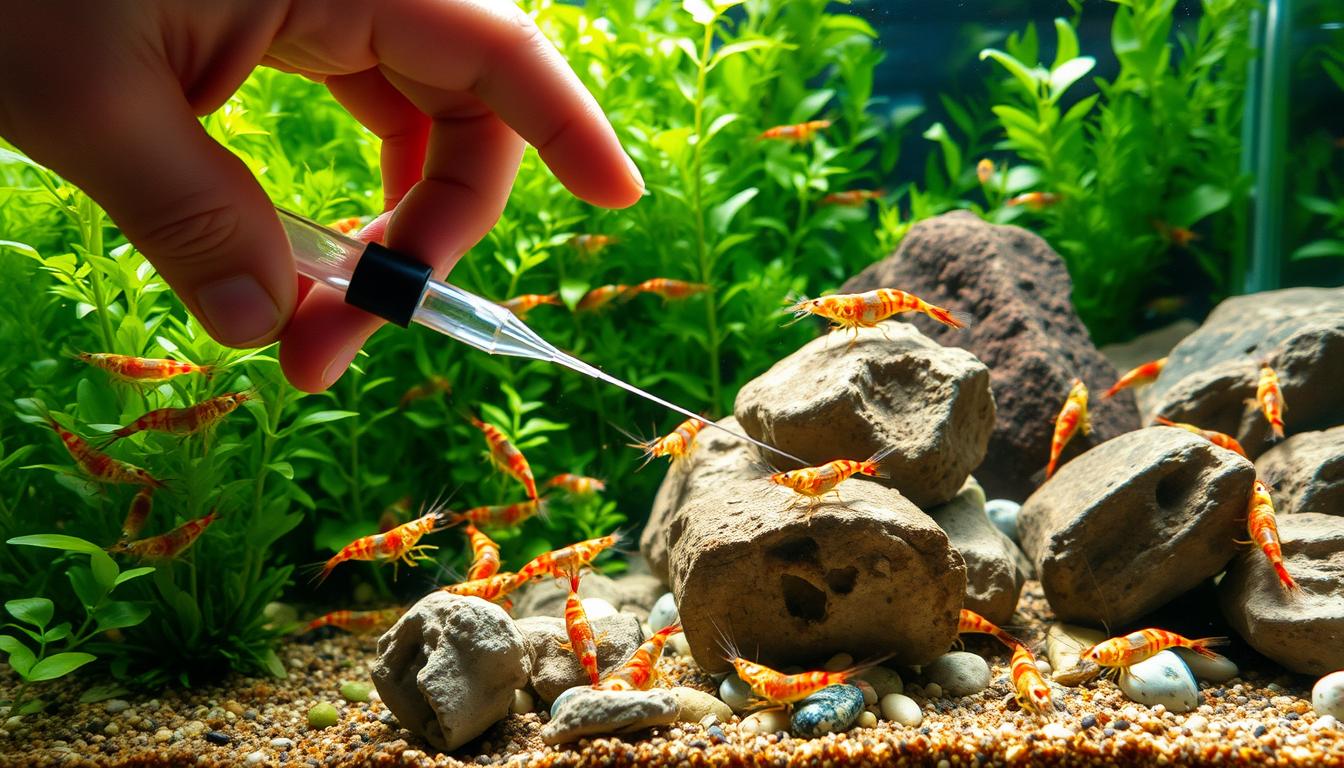
Keeping a planted shrimp tank adds calm and color to your home. But, when pests like planaria and hydra show up, they disrupt this peace. This guide offers a safe way to remove these pests without harming your shrimp and snails.
The method involves adding aquarium salt and using Fenbendazole (Panacur-C) carefully. Start by adding 2–3 grams of salt per liter slowly over eight hours. This helps avoid shocking your fish. For U.S. tanks, use an online calculator to convert grams per liter to grams per gallon.
Accuracy is key. The team used a digital scale to measure 225 mg of Fenbendazole per dose. They mixed it with water conditioner, a special blend, and a vitamin/amino acid supplement. This mixture took about 15 minutes to dissolve and was then applied to the tank.
The treatment plan was straightforward: one full dose followed by another 24 hours later. This was done over 48 hours. All pests were seen to die and detach from the glass. Thankfully, no shrimp or snail died, though nerite snails were removed as a precaution.
This case shows a successful way to handle pests. But, always be careful with medication and salt. Make sure to measure accurately, mix well, and watch closely. Different shrimp and invertebrates may react differently. So, think about your tank’s inhabitants before starting. If unsure, seek advice from pest control services or an aquatic vet.
Understanding Planaria and Hydra: The Pests in Your Tank
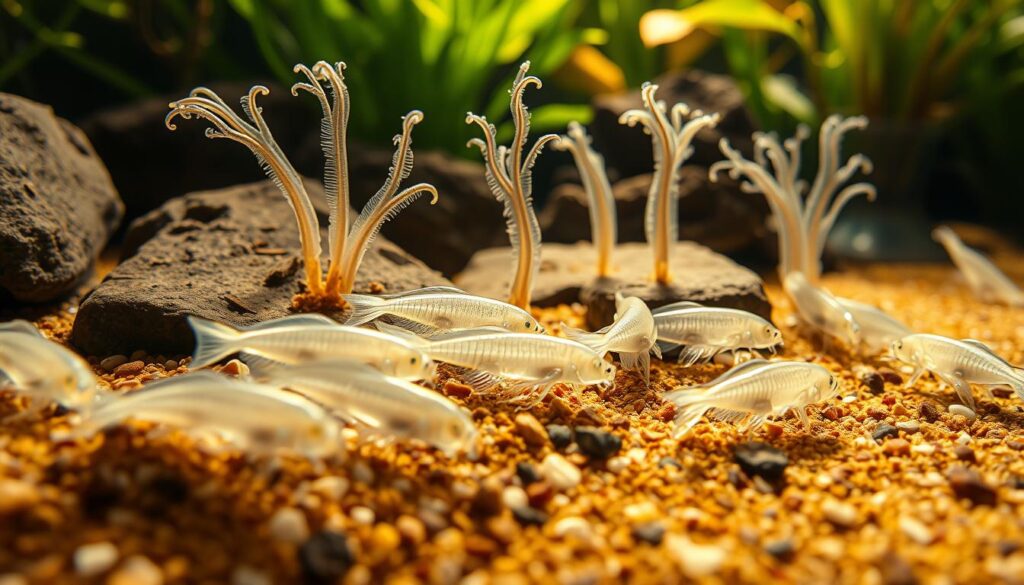
You might see tiny, soft creatures on plants, glass, or the bottom of your tank. Planaria are flatworms, often from the genus Dugesia, that move smoothly across surfaces. Hydra, on the other hand, are small cnidarians with a long body and stinging tentacles. Both are common in planted tanks and might seem harmless at first.
Understanding planaria biology helps you see why they spread quickly. They reproduce by splitting themselves and can grow back from pieces. This makes it hard to control them if you ignore early signs. Hydra biology shows another risk: they make clones and can catch small shrimp or fry with their tentacles.
These pests act like common pests in your tank. A big problem is they stress shrimp, compete for food, and lower the survival rate of baby shrimp. Hydra can hurt or eat shrimp larvae, while planaria show there’s too much organic matter that feeds more pests.
Both pests do well in tanks with too much waste, too much food, or poor care. They can come in on live plants, substrate, or decorations. Spotting them early is key when dealing with pests, so you can stop their spread and damage.
- Observe behavior: hydra attach to surfaces and extend tentacles to feed.
- Watch movement: planaria glide smoothly and flatten when touched.
- Check tank history: recent plant additions or used decor raise the risk.
Knowing what pest you have is important for effective management. The urgency and method differ between planaria and hydra. Take time to confirm which pest you face before you choose treatments or make changes to your maintenance routine.
Assessing the Infestation Level in Your Aquarium
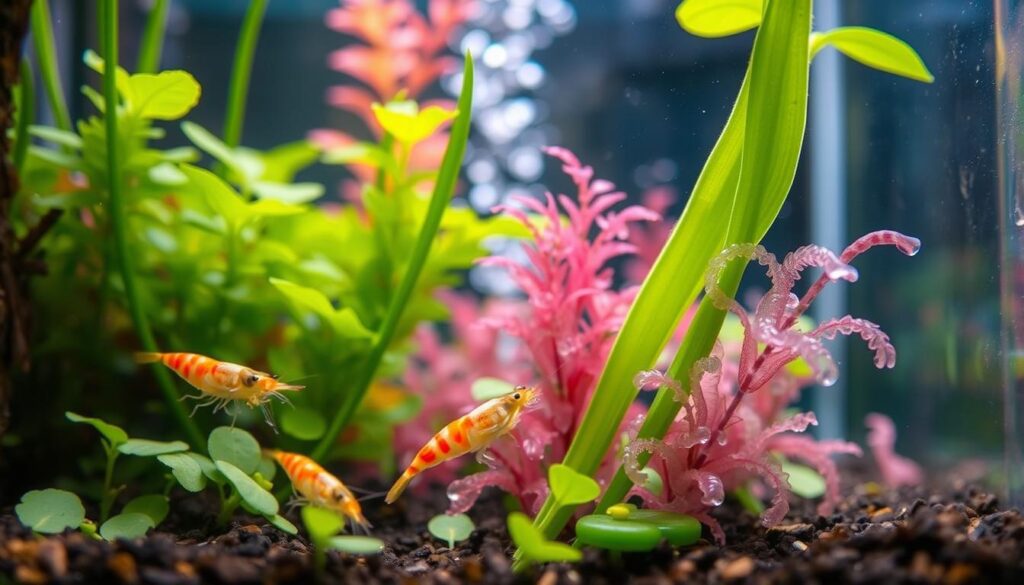
Begin by slowly looking over your tank. Check the glass, plants, substrate, filter intake, and decorations for pests. Look for planaria, which move like flat worms, and hydra, which look like small stalks with tentacles or detached forms. Mark any signs of pests you find.
Count how many pests you see and where they are. If pests are all in one spot, you might be able to remove them by hand. But if they’re everywhere, you’ll need more serious methods to get rid of them.
Keep a close eye on your shrimp and shrimp fry. Look for any missing or injured shrimp, less feeding, or sudden changes in behavior. These signs can tell you if hydra are eating your shrimp.
Check the water quality and organic load in your tank. Test the ammonia, nitrite, and nitrate levels. Also, lift the substrate to see if there’s a lot of detritus. A high organic load often means more pests, helping you decide how to tackle the problem.
- Think about any new additions to your tank, like plants or fish. These can bring pests with them.
- Check the filter and intake areas for debris. These spots can hide a lot of pests.
- Keep track of when and how often you see pests. This can help you understand their habits.
Use what you’ve learned to pick the best way to deal with pests. For small problems, you might just need to remove them by hand or use DIY methods. But for bigger issues, you might need to use chemicals like fenbendazole, as explained later in the article.
Preparing Your Tank for Pest Removal
First, move sensitive animals to a safe place. Remove delicate snails and other weak invertebrates. Many keepers take out nerite snails to lower risk during treatments.
Calculate your tank’s volume carefully. Convert gallons to liters to plan the right amount of salt and Fenbendazole. This avoids overdosing and ensures safe pest removal.
Use precise tools for measuring. A digital scale with 0.01 g accuracy is best for weighing Fenbendazole. Don’t guess from a packet without knowing the active ingredient percentage.
Get your carrier solution and mixing tools ready before adding medication. Use a water conditioner like Seachem Prime and a commercial blend like Microbe-Lift Special Blend. Adding a vitamin or amino acid supplement can help dissolve Fenbendazole; it usually takes about 15 minutes.
Introduce salt slowly to avoid osmotic shock. Plan to raise salinity gradually over eight hours or more. This slow approach reduces stress on shrimp and surviving snails while you deal with pests.
Check how sensitive your species are to salt and Fenbendazole. Look up the tolerance for your shrimp strain and other invertebrates. Be prepared to remove certain species if risks are too high to keep the treatment safe.
Have monitoring tools ready and set a schedule. Keep test kits for ammonia, nitrite, nitrate, and pH on hand. Watch shrimp behavior and signs of pest die-off closely during treatment. This way, you can act quickly if conditions change.
- Quarantine plan for sensitive livestock
- Volume calculations and dosing conversions
- Accurate weighing equipment
- Carrier solution and dissolving supplies
- Gradual salt introduction via trickle
- Species sensitivity checklist
- Monitoring schedule and test kits
By following these steps, you can effectively prevent pests and work with professionals if needed. This ensures a safe and healthy environment for your tank’s inhabitants.
Natural Removal Methods for Planaria and Hydra
You can fight planaria and hydra without harming your shrimp. Start with gentle methods that target their food and home. Reduce feeding, clean up leftover pellets, and vacuum the substrate to remove organic matter.
Introduce predators for biological control if your tank can handle them. Assassin snails and certain small loaches eat flatworms. Make sure they are safe for your shrimp before adding them.
- Use DIY pest prevention traps with inverted cups baited with shrimp pellets or liver to catch planaria overnight.
- Manually remove hydra by siphoning or gently scraping them from plants and décor during routine maintenance.
- Reduce light slightly to limit algal growth that feeds pests, but avoid extreme temperature or light shifts that could stress shrimp.
Quarantine and dip new plants to stop pests from entering the main tank. This is a key part of integrated pest management to prevent infestations.
Treat mild problems with natural pest repellents first. If the problem gets worse, you might need to use chemicals. But always keep your shrimp safe. Using a mix of natural and chemical methods is the best way to control pests in your shrimp tank.
Chemical Treatments: Options and Precautions
When natural methods don’t work, chemical treatments can be effective. Experienced hobbyists use Fenbendazole, sold as Panacur-C, for planaria and hydra in shrimp tanks. It’s important to weigh the risks and follow strict protocols before using it.
Getting the dosage right is key. Panacur-C packets have different active percentages. You need to calculate the Fenbendazole active ingredient accurately. Use a digital scale that’s accurate to 0.01 g. Don’t just rely on the packet weight.
A documented protocol used 225 mg of Fenbendazole active ingredient per dose. The powder was mixed with Prime, Microbe-Lift Special Blend, and a vitamin/amino acid solution. It took about 15 minutes to dissolve fully before adding it to the tank.
Adding a second dose 24 hours after the first helps. This ensures a 48-hour coverage window. It’s useful when dealing with pests that reproduce quickly.
Using salt as a co-treatment also helped. Aquarium salt was added slowly over eight hours or more. This increased osmotic stress on pests. Add salt gradually to avoid stressing shrimp or snails.
Keep a close eye on your livestock during treatment. Some shrimp species and sensitive invertebrates may react differently. Be ready to remove or quarantine fragile inhabitants if unsure about their tolerance.
Remember, Fenbendazole is an off-label veterinary drug for aquarium use. Check local regulations before using it. Follow safe drug-handling practices. Research species-specific sensitivity and consult an aquatic veterinarian or experienced aquarists when in doubt.
If you’re unsure about medicating your tank or the infestation persists, consider professional pest removal. Aquarium maintenance services that use integrated pest management techniques can help. They can assist with dosing, monitoring, and long-term management.
Chemicals should be part of a broader plan. Include regular observation, cleanup, and habitat control. Careful application, precise dosing, and planning will improve your chances of dealing with pests in a shrimp aquarium.
Manual Removal Techniques
Begin by carefully siphoning hydra and planaria from the substrate. Use a small siphon or turkey baster to remove visible pests from gravel and glass. Do this in short sessions to avoid stressing shrimp or plants.
Scrape fragile hydra gently off plants and decorations. Hold the item steady and use the siphon tip to draw the pest away. For heavy spots, remove the decoration temporarily for cleaning or quarantine.
- Place baited planaria traps on the substrate overnight. An inverted cup with a small amount of liver or shrimp pellets will attract and concentrate planaria for easy pickup.
- Check traps at first light and dispose of captured pests outside the tank.
- Repeat traps nightly until counts drop noticeably.
When plants or ornaments show heavy infestation, take them out and rinse in a separate container. Inspect leaves and crevices, then reintroduce items only after a short quarantine. This step reduces hitchhiking pests without chemicals.
Keep frequent partial cleanings to lower organic load and break pest life cycles. Small water changes and targeted gravel siphoning remove eggs, segments, and food that sustain populations. Combine this habit with reduced feeding for best effect.
- Perform a light siphon of substrate twice weekly while you monitor shrimp behavior.
- Use baited planaria traps two to five nights in a row depending on infestation level.
- Quarantine or clean infested decor until no pests appear for several days.
Pair manual pest removal with natural controls and aquarium maintenance routines. Reducing excess food, quarantining new plants, and regular tank checks keep reinfestation risk low. This hands-on approach works well when you’re dealing with pests early and want to avoid chemicals.
Preventing Future Infestations
Quarantine new plants, substrate, and décor before adding them to your tank. Use a separate tank or a quick plant dip to stop pests like planaria and hydra. This step helps avoid bigger problems later.
Keep the tank clean by not overfeeding and doing regular water changes. Vacuum the substrate during these changes to remove food and waste. A clean tank makes it less likely for pests to come back.
Check the glass, plants, and filter inlets weekly for pests. Early detection means you can use gentler treatments. Keep a record of what you find and when you treat it to spot patterns.
- Use biological controls with care. Make sure they’re safe for your shrimp. The wrong choice can cause more problems.
- Try natural pest repellents like plant dips or safe extracts for regular care. These methods are safe for shrimp when used right.
- Adopt integrated pest management practices. Mix monitoring, habitat control, biological options, and targeted treatments as needed. This way, you use fewer chemicals.
Keep your tank clean by cleaning filters, removing dead plants, and keeping water stable. Healthy shrimp are more able to fight off pests, reducing the need for frequent treatments.
If pests come back, look for recent changes like new plants or different feeding. Use your records to find the cause quickly and adjust your prevention plan.
Long-term Strategies for a Healthy Shrimp Tank
Keep a mindset of integrated pest management for your shrimp tank. Use cultural controls like careful feeding and regular maintenance. Also, add mechanical methods like manual removal and traps.
Include biological options, such as compatible predators. Use chemicals only when necessary.
Make a schedule for water testing and adjustments. Stable water parameters help reduce stress on shrimp. This makes the tank less welcoming to pests.
Monitor ammonia, nitrite, nitrate, pH, and temperature regularly. This prevents sudden population booms.
Create a routine maintenance plan and stick to it. Include weekly water changes, monthly filter checks, and plant trimming. These actions keep your tank clean and predictable.
Have an emergency plan ready for recurring outbreaks. Keep supplies like a siphon, aquarium salt, and a digital scale on hand. A step-by-step checklist is helpful during pest emergencies.
- Use mechanical removal first when practical.
- Introduce compatible biological controls with caution.
- Reserve chemical treatment for targeted interventions only.
Educate yourself and use community resources. Ask at local fish stores like Petco or Aquatic Arts. Consult aquarium forums and consider professional pest removal firms for tough cases. Expert help can save time and protect your shrimp.
Track your results and adjust your plan. Document dates of interventions, water readings, and shrimp behavior. Over time, this record will improve your pest management plan.
Conclusion: A Thriving Shrimp Environment
You can take back control of your tank by following safe steps to deal with pests. For removing planaria and hydra, a mix of salt and fenbendazole worked well. Start by adding 2–3 g/L of salt slowly over eight hours. Then, use 225 mg of fenbendazole in a water mix with supplements, repeating the dose after 24 hours.
Begin with mild infestations by removing pests manually and using natural methods. Use chemicals only for bigger problems or when you’re sure of the dosing. Keep sensitive invertebrates safe by quarantining them during treatment and watching water and fish closely.
To keep pests away, use a mix of methods. Quarantine new items, feed less, and stick to a regular cleaning schedule. Always have a plan and supplies ready for emergencies. Being proactive and watching your tank closely is key to a healthy shrimp home.
Next, figure out how bad the problem is and decide on a plan. If you’re unsure, ask experts or professionals for help. This way, you can make sure your tank and its creatures stay safe and happy.
Leave a Reply