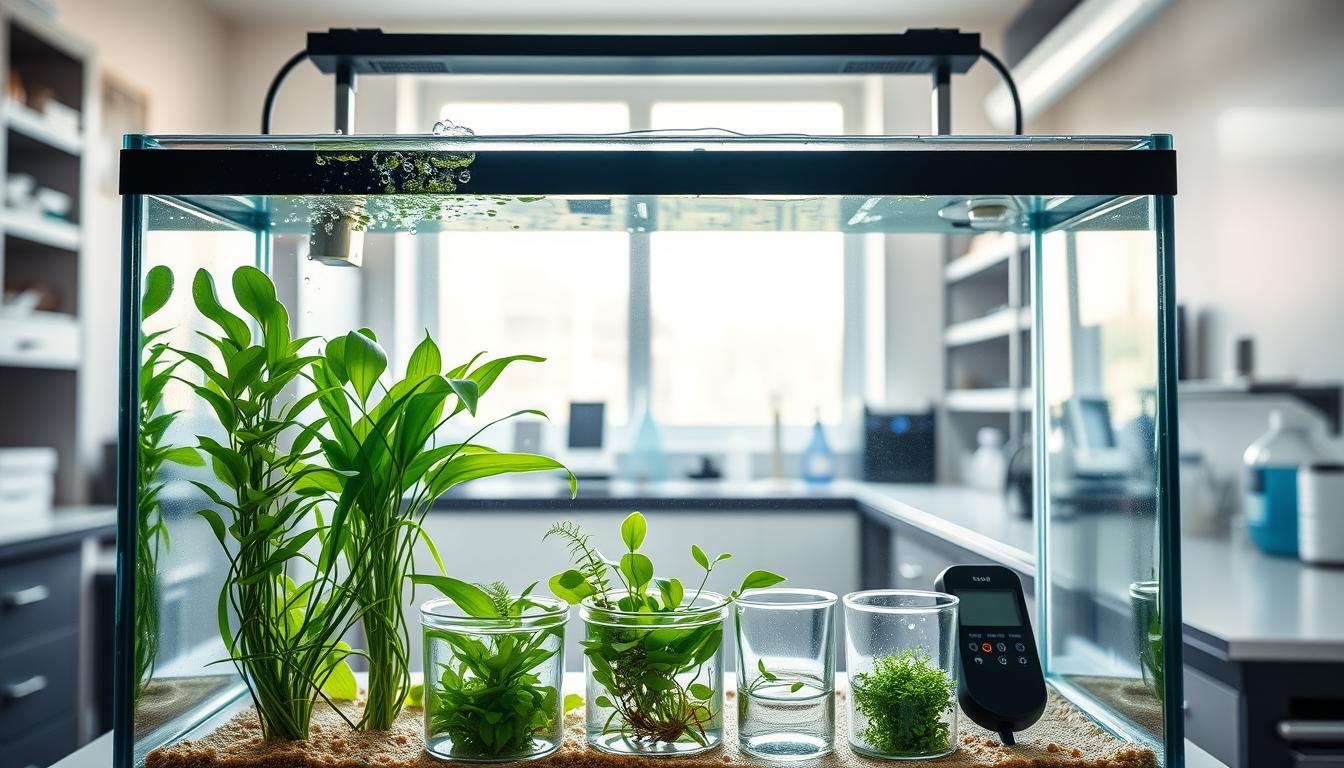
When you bring a new plant into your tank, it might look fine but could have hidden pests. A quarantine helps keep out algae, snails, snail eggs, hydra, planaria, and cyanobacteria. These can quickly take over a small tank because of its limited size and weak defenses.
Quarantine uses a separate tank to watch and treat new additions before they join your main tank. This protects your plants, shrimp, and fish from outbreaks. It also serves as a treatment tank for future sick fish, keeping your main tank safe.
Sticking to a routine makes your nano tank safer and less stressful for all living things. Quarantining new additions regularly keeps your tank’s ecosystem balanced. This saves you from the hassle of cleaning up big messes later.
The Importance of Quarantine in Nano Tanks
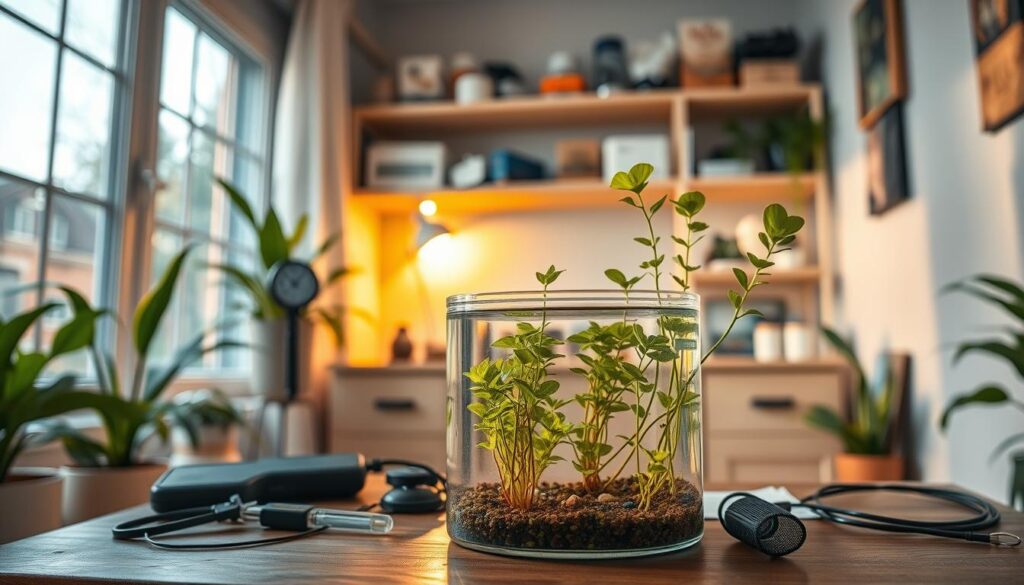
Your tiny aquarium is a delicate balance. A single pest, algae spore, or pathogen can spread quickly. This makes a nano tank quarantine essential when adding new plants, fish, or invertebrates.
Quarantine keeps your established animals and water chemistry safe. You should isolate any new additions before they join your main tank. Exceptions include new tissue culture plants from trusted brands like Tropica and livestock in a freshly cycled tank with no existing animals.
Transport stress and new water can trigger hidden illnesses. A mini tank quarantine gives you time to spot these issues before they spread. This way, you can treat problems early on.
Using a small tank quarantine also helps avoid harsh treatments in your main tank. Such treatments can harm sensitive shrimp and plants. A calm quarantine allows for controlled treatments, protecting your long-term success.
- Observe new arrivals for at least two weeks in a dedicated quarantine setup.
- Keep quarantine conditions similar to your main tank to avoid stress during transfer.
- Document behavior, appetite, and any surface growths to catch issues early.
Following a clear mini tank quarantine protocol boosts nano aquarium safety. It lowers risk, protects existing animals, and keeps your display healthy and stable.
Understanding Pests and Diseases
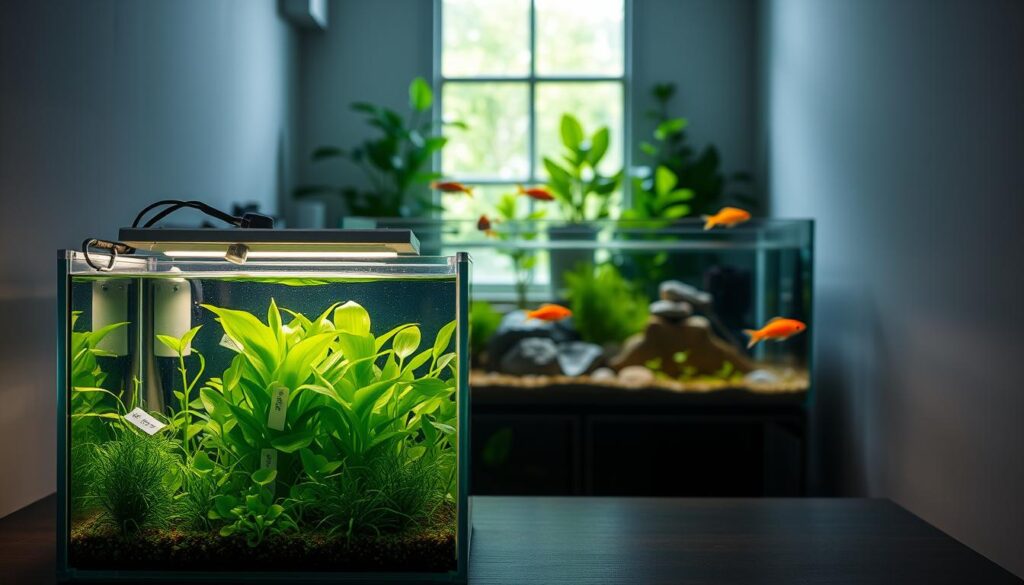
When you bring new plants home, you’ll see algae and hitchhikers first. Black beard, hair algae, and staghorn algae can block leaves. Cyanobacteria, or blue-green algae, harms water quality by coating surfaces.
Snails or snail eggs might hide in crevices and grow fast. Microfauna like hydra and planaria can also come with plants. They multiply quickly and need specific treatments.
Plants with pests can harm your fish and shrimp. Parasites and contaminants stress them, making them sick. Common illnesses like ich and columnaris can then attack.
Shrimp have their own dangers from fungi and bacteria. Look for dull color, inactivity, or weight loss. Green fungus and similar infections can get worse after exposure to contaminated plants.
- Inspect new plants for visible algae and snail eggs.
- Use a mini tank quarantine protocol to spot microfauna early.
- Isolate suspect plants in an isolation tank for small aquarium until clear.
- Treat hydra, planaria, and fungal issues before transfer to the display.
Soak, inspect, and monitor new plants. Simple quarantine steps protect your fish and shrimp. Keeping your tank stable is key.
Quarantine Procedures for Nano Tanks
You need a separate quarantine container that can also be a hospital tank. The size depends on what you add. A 10-gallon (38 L) tank is often a good choice for many small fish and plants. Make sure the tank is not so small that it stresses your fish during quarantine.
Set up the tank with a gentle filter, a heater, and minimal décor. Sponge filters are great because they protect beneficial bacteria and catch debris without strong currents. Try to avoid using substrate to make cleaning easier during quarantine.
Use hardy or silk plants for hiding spots. Choose live plants that can handle common treatments. Anubias and Java fern are good choices. Always check new plants for pests like snails, hydra, planaria, and algae before adding them to the quarantine tank.
- Keep a spare sponge filter and small air pump handy if you don’t have space for a permanent quarantine tank. You can quickly set up a quarantine by moving stored media and equipment into the tank when needed.
- Keep the quarantine tank at a steady temperature and with gentle aeration. This helps reduce stress on both plants and animals.
Keep the quarantine period at least two weeks for most additions. If new symptoms or pests appear, extend the quarantine by one week. For plants, watch closely for snails, eggs, and tiny pests throughout the quarantine period.
During quarantine, do regular checks and easy maintenance. Change some water, siphon out detritus, and remove pests by hand. Treat only when necessary, and choose methods that won’t harm plants or beneficial bacteria.
- Inspect and rinse new plants before adding them to the quarantine tank.
- Run a sponge filter and heater; skip substrate to ease cleaning.
- Watch daily for pests, algae, or stress; keep a log for at least two weeks.
- Extend quarantine by one week after the last issue clears before introducing to your nano tank.
Follow these quarantine procedures for nano tanks to protect your display tank and keep your aquatic community healthy. A well-done small tank quarantine saves time and prevents outbreaks that are harder to fix later.
Monitoring New Plants During Quarantine
Check new plants daily during quarantine. Look for black beard algae, hair algae, staghorn, and slimy mats. Also, search for small snails, snail eggs, hydra, and planaria in crevices.
Use a magnifier, macro lens, or your phone camera to spot tiny pests and eggs. This is key to a good mini tank quarantine protocol. It helps catch hitchhikers before they reach your display tank.
Watch for signs of plant health issues like discoloration, rot, or sliminess. These can be due to poor water quality or pathogens. Treat problems early and keep notes on what you observe.
- Note the date each plant entered quarantine.
- Record any treatments you apply and the dosage used.
- Log when symptoms appear and when they stop.
For livestock in the quarantine tank, monitor shrimp activity and look for fungal patches. For fish, check appetite, color, eye clarity, and activity levels. Watch for signs of ich or columnaris and act at the first sign of trouble.
Keep quarantine records simple and consistent. Extend the nano tank quarantine at least one week beyond the last visible symptom. This strengthens nano aquarium safety and makes your quarantine procedures for nano tank more reliable.
Introducing Quarantined Plants to Your Nano Tank
Wait at least two weeks before moving plants. Make sure they show no signs of pests, algae, or other issues for seven days. This step keeps your tank safe and healthy.
Before adding plants, rinse them in clean water. Remove any eggs, snails, or loose algae by hand. Trim damaged leaves and prune dense areas to prevent pests.
- Use a clean net or dedicated tongs reserved for the mini tank quarantine protocol.
- Never share tools between quarantine and display tanks without disinfecting first.
Choose a quiet time to add the plant. Avoid feeding and big changes in the filter. This helps your fish stay calm and makes spotting problems easier.
Keep a close eye on your tank for two weeks after adding the plant. Watch for new snails, unusual spots, or algae. If you see any issues, remove the plant and quarantine it again for treatment.
- Confirm two-week quarantine and one week symptom-free.
- Rinse and prune in dechlorinated water.
- Use dedicated transfer tools to avoid cross-contamination.
- Introduce during calm tank conditions.
- Monitor the main tank for 14 days after introduction.
By following a strict quarantine plan, you keep your tank water clean and safe. This careful approach protects your plants and the rest of your aquarium.
The Role of Water Quality
Water quality is key to success in any small tank quarantine. You need to keep ammonia, nitrite, nitrate, pH, and temperature stable. This way, problems will show up quickly without stressing plants or animals.
Start with a reliable filter and a heater that fits the tank size. A steady filter reduces swings, and a heater prevents cold shocks. These steps are vital for nano tank quarantine.
Using no-substrate quarantine reduces detritus and makes water changes easier. Regular partial water changes cut waste and lower the risk of bacterial blooms. This makes it easier to spot issues when the water stays clear.
If you need a faster biological start, add a sponge filter seeded with media from an established tank. This helps beneficial bacteria process ammonia and nitrite. It reduces spikes that can mask symptoms. Such seeding supports nano tank quarantine while protecting the main display.
- Test frequently for ammonia and nitrite during quarantine.
- Track pH and temperature daily to avoid sudden shifts.
- Perform small, regular water changes to control nitrate and waste.
Watch water quality after moving plants to the main tank. Unstable chemistry can hide or worsen pests and disease. Following quarantine procedures for nano tank care keeps plants and livestock healthy.
Choosing the Right Quarantine Container
Choose a container that fits the task. A 10-gallon tank is good for a few plants or small shrimp. For small fish groups or rotating livestock, a 54L tank is better.
Think about future needs. If you plan to add more, pick a tank that grows with you. This way, your quarantine space stays effective without feeling cramped.
Set up gentle filtration and steady heat. A sponge filter and small air pump provide safe flow. Use an adjustable heater to keep temperatures stable.
Keep it simple. No substrate makes cleaning easy and reduces pest hiding spots. Add hardy plants like Anubias for stress relief during quarantine.
Control escape and contamination. A tight-fitting lid prevents jumpers and reduces airborne risks. A small lid light helps plants grow without opening the tank often.
- Essentials: sponge filter, heater, lid, thermometer.
- Optional: a small sponge or bio-media to seed beneficial bacteria.
- Storage tip: keep a compact sponge filter and pump ready for quick setup when new fish arrive.
Make it portable for ease. A mobile quarantine container makes treatment and observation simpler. Having spare gear in a box helps keep quarantine procedures consistent.
Size is key to success. Too-small containers can stress fish, undermining treatment. For multiple specimens, size up and follow best practices to protect your main tank.
The Chemistry of Quarantine
Think of quarantine as a series of quick chemical reactions. In a nano tank, the water is small. This means ammonia and nitrite levels can rise fast if the filter isn’t strong.
Check ammonia, nitrite, nitrate, and temperature daily. Treat tap water to remove chlorine and chloramine before adding it. A dechlorinator from API or Seachem helps keep microbes and animals safe during water changes.
Be careful with chemical treatments. Many can harm shrimp, snails, and plants. Make sure the medication is safe for the species you’re keeping. If it’s not safe, use a separate tank for those animals.
Don’t treat the water without a reason. Most people prefer to watch and wait in quarantine. Treat only when you see pests, parasites, or odd behavior. Always follow the safe dosage and the manufacturer’s instructions.
Starting a sponge filter with seeded media helps a nano tank quarantine. This brings good bacteria and reduces ammonia spikes. It means you can change the water less often and safely use chemicals.
- Keep test kits on hand and log results daily.
- Avoid copper if you plan to keep Neocaridina or Caridina shrimp.
- Use targeted treatments for visible pests, not blanket cures.
- Rinse hands and gear between quarantine and display to protect nano aquarium safety.
Balance stability with careful watching. Good water chemistry in quarantine keeps your display tank safe. Following strict quarantine procedures for nano tanks ensures safety and health for your aquarium.
Common Mistakes in Quarantine Practices
Not quarantining new additions is a big mistake. Plants can bring snails, algae, and pests that spread fast. These can harm your main tank.
Choosing a small quarantine space can stress your fish and hide illness. Make sure your quarantine has enough room for your fish to swim. It should also have enough surface area for oxygen.
Keeping substrate in the quarantine can hide eggs and pests. Using no substrate makes it easier to clean and check for problems.
Using strong medications without checking if they’re safe can harm your fish and plants. Always read labels and research before treating your tank.
Sharing nets, siphons, or tools between tanks can spread disease. Use dedicated equipment or clean it well after each use.
- Not watching your fish every day makes it hard to catch diseases early.
- Mixing too many species in a small space can stress them out and hide symptoms.
- Not changing the water often can lead to waste buildup and weaken your fish’s immune system.
Follow a clear quarantine plan to avoid these mistakes. This way, your main tank stays healthy. Being careful and consistent is key to a successful quarantine.
Benefits of a Proper Quarantine Process
A good nano tank quarantine lets you spot pests, algae, and diseases early. This way, you can act fast before they spread to your main tank. It keeps your plants and animals safe and reduces stress on sensitive species like shrimp and small fish.
It also saves you time and money. By stopping problems early in a small tank, you avoid expensive treatments and buying new fish. This makes your hobby more enjoyable and less wasteful.
Having a quarantine or hospital tank is handy. It’s a place to treat sick fish and acclimate new ones. This way, you don’t mess up the balance of your main tank while you watch and learn.
Sticking to a quarantine routine builds consistency in your care. A strict two-week quarantine, or longer after issues, boosts your confidence. It leads to healthier, more stable aquariums. This routine supports safety and makes adding new fish easier.
- Early detection and targeted treatment for pests and disease.
- Lower risk of major outbreaks in small systems.
- Dedicated treatment space that protects your display.
- Standardized care that improves long-term stability.
Let these benefits guide your setup and habits. A careful quarantine practice and following best practices will keep your nano aquarium safe and thriving.
Resources for Nano Tank Enhusiasts
Local fish stores like April’s Aquarium and online forums are great resources. They offer health guarantees and expert advice. Before buying, ask about their quarantine process.
Make a list of must-haves for a quarantine tank. A small sponge filter and air pump are key for quick setup. Also, include a heater, basic meds, and test kits for water quality.
For tank planning, check out community threads and product reviews. Forums discuss quarantine sizes and filter options. Reviews help pick reliable quarantine tanks and best practices.
- Talk to local hobbyists about successful mini tank quarantine protocol they follow.
- Search product reviews for compact sponge filters and quarantine tanks before you buy.
- Keep a list of medications and test strips that match common issues in nano setups.
Buy tissue-cultured plants from trusted suppliers like Tropica for low pest risk. These plants are often sterile and don’t need quarantine, saving time.
Use store staff, forums, and reviews to improve your quarantine routine. Combining advice with a clear protocol makes quarantine easier and more effective.
Conclusion: Prioritizing Quarantine for Success
Keeping a nano tank means you must have a strict quarantine routine. New additions often bring algae, snails, or diseases that can upset your tank. A simple quarantine setup with a sponge filter and heater helps keep your main tank safe.
Have a small quarantine kit ready with a spare sponge filter and air pump. This way, you can quickly respond to any issues. Also, reach out to local fish stores for advice on treatments. These steps are key to keeping your nano tank safe and healthy.
Following quarantine protocols saves you time, money, and stress. It helps you avoid problems with sensitive fish and keeps your tank’s water chemistry balanced. Make quarantine a regular part of your routine. Your nano tank will thank you with a stable and healthy environment.
Leave a Reply