This article will teach you how to dose liquid fertilizers for nano tanks. Your plants will thrive without algae spikes. Nano tanks, under 10 gallons, react quickly to nutrient changes. So, precise dosing is key.
You’ll learn how to fertilize nano plants effectively. This includes choosing the best fertilizers and balancing nutrients with light, CO2, and maintenance. Follow these steps for healthier plants, fewer nutrient deficiencies, and less algae.
Remember, liquid fertilizers are just part of nano plant nutrition. Light, CO2, and regular water changes also matter. This guide focuses on methods and products for effective fertilizing without algae spikes.
Understanding Nano Tanks and Their Needs
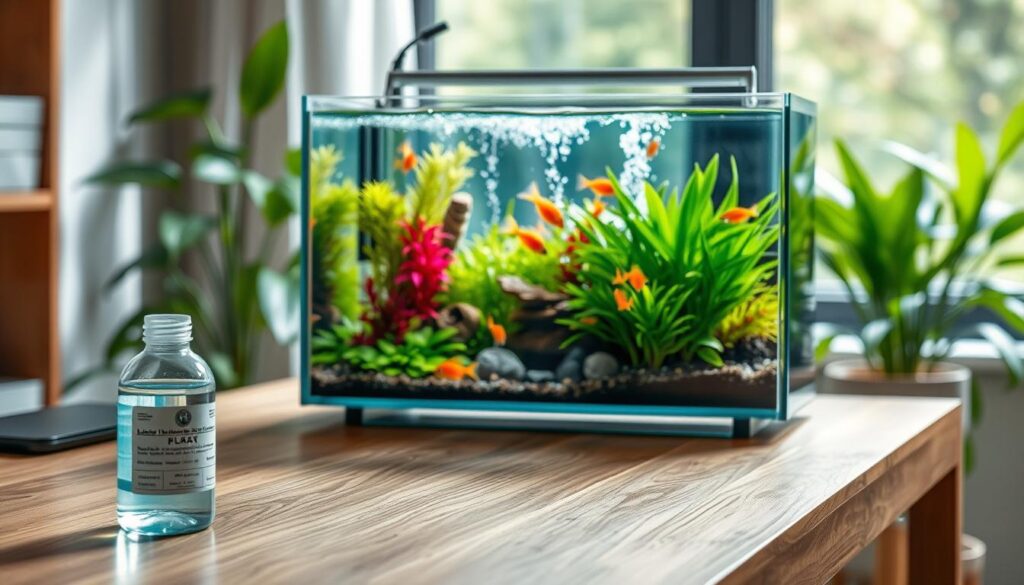
Nano tanks are small, usually ten gallons or less. They react quickly to water changes. This means pH, ammonia, and nutrient levels can shift fast.
Plants in nano tanks need stable water and balanced nutrients. They also require the right amount of light. Make sure to provide enough CO2 for your plants. This helps keep them healthy and prevents algae.
New nano setups often face challenges. It takes time for beneficial bacteria and plant roots to grow. During this time, you might see changes in ammonia or nitrate levels that algae can exploit.
Early maintenance is key. Regular water changes help control ammonia and algae. Many experts suggest doing partial water changes to keep the tank balanced while your biofilter and plants get established.
Plant a lot at the start. Fast-growing plants quickly use up nutrients. This competition with algae for nitrates and phosphates helps control algae growth.
Keep the temperature right for your plants, between 72°F and 78°F. Good circulation and a clean filter help move nutrients and oxygen. This supports plant health and makes it harder for algae to grow.
By focusing on stability in nano tank care, you set up your plants for success. Use nano plant care tips to make smart choices early on. Only add nano plant health supplements and fertilizers when your tank’s parameters are steady.
The Role of Liquid Fertilizers in Aquatic Ecosystems
Liquid fertilizers add nutrients directly to the water. This helps plants grow fast without needing roots. It’s great for small spaces or places where roots can’t reach.
In nano tanks, plants need nutrients quickly. Liquid fertilizers provide these nutrients fast. This helps new plants grow quickly.
Using liquid fertilizers regularly keeps plants healthy. They grow strong and look good. This makes plants better at competing with algae.
Adjust the amount of fertilizer based on your tank’s light and CO2. Too much can feed algae instead of plants. It’s all about balance.
There are many types of liquid fertilizers. You can choose from complete blends or specific products. Brands like Seachem Flourish and API Leaf Zone are good options.
For extra care, use special growth enhancers. They help plants grow faster and look better. This leads to healthier plants and a better tank.
- Fast-acting delivery of nano plant nutrients to the water column
- Useful when substrate root-feeds are limited or inert
- Helps prevent macronutrient and micronutrient deficiencies
- Supports plant growth that can outcompete algae
Know how liquid fertilizers work in your tank. Choose the right products and dose them right. This will make your plants thrive and keep your tank healthy.
Key Nutrients for Healthy Nano Plants
Your nano plants do well with the right mix of nutrients. Start with the big three: Nitrogen (N) for leaf growth, Phosphorus (P) for energy, and Potassium (K) for overall health.
Don’t forget Calcium (Ca) for strong cell walls and Magnesium (Mg) for photosynthesis. Sulfur (S) is key for proteins. These nutrients are the foundation of good nano plant care.
- Nitrogen (N): lush leaves and fast growth.
- Phosphorus (P): strong roots and energy flow.
- Potassium (K): stress tolerance and enzyme support.
- Calcium (Ca) & Magnesium (Mg): structure and photosynthesis.
- Sulfur (S): amino acids and proteins.
Trace elements are important too. Iron (Fe) helps with new growth and chlorophyll. Boron (B) is for cell walls. Manganese (Mn) aids photosynthesis.
- Iron (Fe): prevents yellowing and supports shoots.
- Boron (B): aids tissue strength and growth.
- Manganese (Mn): assists photosynthesis.
- Zinc (Zn), Copper (Cu), Molybdenum (Mo): trace metabolic roles.
Look out for signs of nutrient lack in your tank. Iron deficiency shows as yellow leaves. Lack of N, P, or K means slow growth and pale leaves. Spotting these early stops decay and algae growth.
For most setups, a regular fertilizer schedule is best. Use low doses often to keep nutrients balanced. This avoids algae growth caused by sudden nutrient spikes.
Choose fertilizers made for nano plants. Follow the recommended doses for your tank size and plant number. Small, steady doses keep water clear and plants healthy without sudden changes.
Choosing the Right Liquid Fertilizer for Your Nano Tank
Choose a liquid fertilizer with all the nutrients your plants need. Look for clear N-P-K values and chelated iron to keep colors bright. The best fertilizers for nano plants are balanced to avoid nutrient gaps.
Decide between a concentrate or a daily formula based on your testing schedule. Concentrates are good for infrequent use if you dilute them right. Daily formulas are better for steady feeding and easier measurements.
For an easy start, try all-in-one mixes like Seachem Flourish or Tropica Plant Growth Nutrient. They’re favorites among hobbyists because they’re easy to use. For specific needs, add a targeted supplement instead of increasing a general mix.
Organic nano fertilizers are great if you prefer natural products. But, be aware that they release nutrients at different rates. Make sure they’re safe for your shrimp and snails.
Use small dosing tools for your tank. Droppers, small syringes, or tablets are perfect for nano tanks. Avoid big dosing pumps unless you have a special micro-doser.
- Check phosphate levels before buying; avoid products high in phosphorus if your tank is phosphate-sensitive.
- Never add full-strength doses intended for larger tanks; diluted or fractional doses reduce risk of sudden parameter swings.
- Always confirm compatibility with shrimp, snails, or delicate invertebrates listed on the product label.
If you’re unsure, start with half or a quarter of the recommended dose. Slowly increase it while testing the water and watching your plants. This careful approach helps you use fertilizers without stressing your mini ecosystem.
Proper Dosage Guidelines for Nano Tanks
When adding nutrients to nano tanks, precision is key. Use a small syringe or glass dropper to measure accurately. This method prevents algae growth while keeping plants healthy.
It’s better to dose in small amounts often. Daily or every-other-day doses keep nutrients steady. Large doses can cause algae to grow. This approach helps plants grow better and reduces stress.
Begin with a small amount, about 25–50% of what’s recommended for bigger tanks. Watch your plants for a week or two. If they look healthy, you can slowly increase the dose.
- Log every dose, water change, and plant response.
- Note any algae appearance, changes in water clarity, or pH shifts.
- In new setups, keep doses low and prioritize regular water changes to control ammonia and leached nutrients.
If you use CO2 and bright lights, your plants will need more nutrients. Stick to a balanced plan that includes NPK and trace elements. For low-tech, low-light tanks, dose more carefully to avoid excess nutrients.
Choose fertilizers that are easy to dose. Brands like Seachem, API, and Easy Green offer clear instructions. This makes fertilizing your nano tank safer and easier.
Keep a simple log of your dosing. Write down the date, amount, and any plant changes. This log will help you adjust your fertilizing routine for better plant health.
Strategies to Prevent Algae Growth
Algae outbreaks happen when we forget to maintain our tanks or when plants don’t grow well. Too many nutrients, ammonia spikes, and too much light are common causes. To avoid these, keep nutrients balanced and encourage healthy plant growth.
Begin by changing the water regularly. During the early stages, change it daily for the first week. Then, gradually reduce the frequency over four weeks. This helps manage nutrients and prevent ammonia spikes, which are good for preventing algae.
- Plant densely. Use fast-growing helper plants and floating species to consume excess nutrients and shade algae-prone surfaces.
- Set a proper light schedule. Aim for 6–8 hours with a timer. Lower intensity suits low-tech setups; bright light needs more CO2 and fertilizer control.
- Keep temperature moderate, around 72°F–78°F, and maintain filter cleanliness to avoid stagnant zones that favor algae.
Include a small cleanup crew such as Amano shrimp or nerite snails. These animals remove surface algae with minimal waste. Avoid large algae-eating fish in nano tanks because their waste can worsen problems.
When using fertilizers, follow nano plant care tips. The benefits of nano plant fertilization include faster plant growth and improved nutrient uptake, which leave fewer resources for algae.
If algae appear, act quickly. Remove visible mats and trim affected leaves. For spot treatment use 3% hydrogen peroxide at about 3 ml per 1 gallon when treating localized patches.
- For stubborn BGA try a 72-hour blackout to starve the bloom.
- As a last resort, perform full-tank treatments after removing livestock and preserving filter media: a 10% bleach dip or full peroxide regimen can clear severe outbreaks.
Consistent habits and informed dosing keep algae prevention nano tanks practical and doable. Follow nano plant care tips, use the benefits of nano plant fertilization, and maintain stable conditions to protect your tank.
Timing Your Fertilizing Schedule
Match your fertilizing schedule to the light period for best results. Dose when plants start their active growth phase, like just before or after lights-on. This way, nutrients are ready when plants need them most.
For consistent growth, choose small, frequent doses over big weekly ones. Daily or every-other-day micro-doses keep nutrient levels steady. This also reduces the risk of algae growth from nutrient spikes.
Start slow with a new tank. Wait until plants are well-rooted and the water chemistry stabilizes after many water changes. This avoids feeding algae during the tank’s initial cycle.
If you use CO2, dose fertilizers with CO2 injection and light schedule. A daily routine helps plants absorb nutrients quickly. It also makes growth enhancers more effective and lowers algae risk.
- Time pruning and major water changes just before you resume regular dosing.
- Remove visible algae first, then perform larger water changes to avoid reintroducing nutrient spikes.
- Use consistent micro-doses to maintain balanced nano plant nutrition between maintenance tasks.
Follow these tips to fine-tune your timing: track plant growth, keep a simple log, and adjust frequency as needed. Small, measured changes lead to steady growth without upsetting the system.
Adjusting Fertilizer Doses Based on Plant Type
Match fertilizer strength to your nano plant types’ needs. Fast-growing stems like Hygrophila and Rotala need more nutrients. Carpet plants such as Hemianthys and Staurogyne require steady, low-dose feeding and CO2.
Follow this guide to safely adjust fertilizer doses in nano tanks.
- Fast growers (stem plants): increase dosing within safe nano limits. Focus on nitrogen and potassium. Keep trace elements ready to avoid quick depletion.
- Carpet and high-demand foreground species: favor steady micro-dosing. Balance potassium and iron for vibrant colors. Consider CO2 supplementation for better nutrient use.
- Low-demand plants (Anubias, Java Fern, Bucephalandra): minimal dosing is often enough. These plants absorb nutrients through leaves and tolerate lower fertilizer rates.
Monitor your tank after any changes. Yellowing or slowed growth indicate a need for more nutrients. If algae blooms, reduce feeding and check light and CO2 levels before increasing nutrients again.
Address clear deficiencies by targeting the missing element. For example, use iron chelates for chlorosis instead of boosting all nutrients. This can fuel algae growth.
Keep notes on your fertilizers and results over time. Small, measured adjustments help fine-tune nano plant nutrition. This way, you can find the best fertilizers for nano plants for each setup.
Monitoring Plant Health and Fertilizer Effectiveness
Start a simple routine to check on your nano plants. Look at the color of the leaves, how fast they grow, and for any damage. Also, watch for algae and the health of stems and leaves.
Use basic tools for this task. A weekly check, a growth log with photos, and notes on water and fertilizer are key. Test kits for PO4 and NO3 help spot nutrient issues that might not be obvious.
- Record dosing amounts and timing.
- Take close-up photos of problem leaves to compare over days and weeks.
- Keep a short log of light hours and CO2 method if used.
Check how well your fertilizer works by watching plant responses. Look for new growth, deeper colors, and less damage to older leaves.
Be careful of unexpected problems. If algae grows fast after you increase dosing, it might mean you have too much light or CO2. Change one thing at a time to find the problem.
Think about more than just single doses of fertilizer. A balanced mix of nutrients helps plants grow steadily and reduces stress damage.
Keep your tank clean by changing filter media and removing rotting leaves. These can cause algae and confuse your plant health checks.
If you use supplements, track them separately from regular fertilizer. This helps you see which one boosts plant health and which might cause too much nutrient.
Every week, follow a checklist: inspect plants, update photos, record dosing, and do basic tests. This keeps your checks on fertilizer effectiveness reliable and consistent.
Troubleshooting Fertilizing Issues
If algae flare up after you dose, cut the next dose in half and raise water-change frequency. Add fast-growing stem plants like Hygrophila or Limnophila to outcompete algae. Check light hours and intensity, plus CO2 levels, to find imbalances that trigger blooms.
When plants show deficiency signs despite dosing, review both product makeup and schedule. Ensure your liquid mix supplies macronutrients and micronutrients. Test pH and hardness, as these affect nano plant nutrition and nutrient uptake.
Small tanks are prone to rapid swings. Use smaller, more frequent doses and dilute concentrated supplements before adding. Keep a simple log of every addition so you can link any parameter change to a specific dose and solve nano fertilizers problems faster.
- For persistent cyanobacteria or BGA, vacuum the substrate and perform a 72-hour blackout. Check nitrate levels; low nitrogen can favor BGA. Consider targeted peroxide treatments as a next step.
- Manual removal and spot H2O2 can curb local outbreaks before they spread. Remove affected leaves to reduce the source of re-infestation.
In emergencies with severe algae, you may need aggressive measures such as a controlled bleach or hydrogen peroxide treatment. Remove all livestock first and preserve filter media in cycled tank water to keep beneficial bacteria alive during the process.
Prevention beats crisis. Research products like Seachem Flourish or API Leaf Zone to match your plants. Plant densely early, follow steady maintenance, and use nano plant care tips to keep your system stable. That routine cuts the chance of nano fertilizers problems and supports balanced nano plant nutrition.
Conclusion: Building a Balanced Nano Tank
Start by focusing on the basics when setting up a nano tank. Use liquid fertilizers for balanced nutrients. Begin with a small dose, about 25–50% of what you would use in a bigger tank. Then, slowly increase it based on how your plants react.
Follow some key care tips for your nano plants. Make sure to dose nutrients when you turn on the lights and CO2. Keep your plants close together and choose fast-growing ones to fight algae. Dose a little at a time and change the water regularly, watching your plants closely.
If you notice any problems, tackle them one step at a time. Keep a record of what you do and how it affects your tank. If algae shows up, cut back on light or nutrients. Also, check your tank’s circulation and temperature.
With the right fertilizers and careful dosing, your nano tank can thrive. Stick to these care tips and enjoy healthy plants without algae troubles.
Leave a Reply