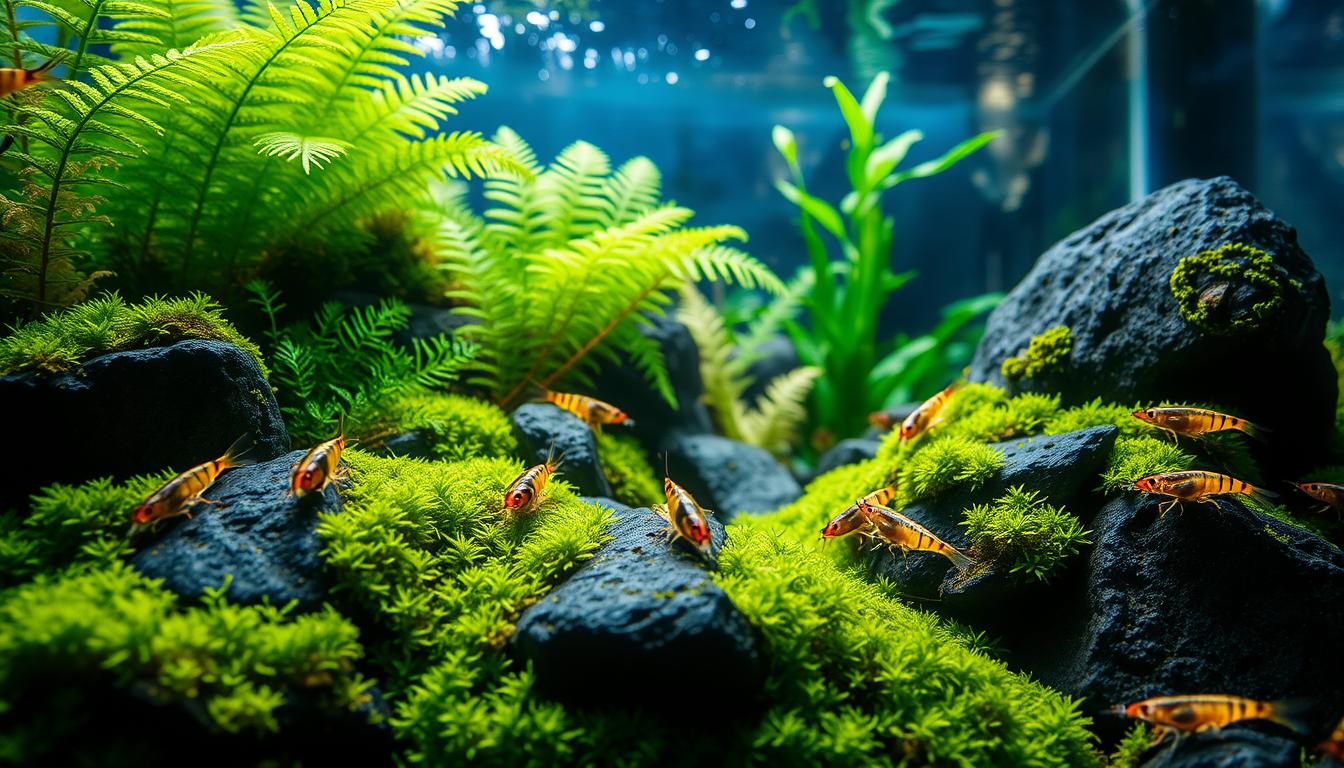
You dream of a planted tank that’s healthy and easy to care for. The right algae eaters can make this dream come true. Nano algae eaters are small fish and invertebrates that help control algae without taking up too much space.
Experts like Joshua Wiegert say these animals make life easier but don’t replace good care. They’re tools for removing algae naturally, not a magic solution. Many popular algae eaters grow too big or need more room, so choose ones that stay small and handle tight spaces well.
Good choices include Otocinclus catfish, Amano shrimp, and Nerite snails. Jessica McComb points out they eat diatoms and soft green algae and fit well in small tanks. Team Buce Plant and aquarists like Tammy (@aquarist_tl) also suggest pairing species and keeping up with manual tasks like scraping and trimming plants.
This section sets the stage for the article. You’ll discover the best nano algae eaters, how they help with algae control, and why they’re essential for regular care. This way, your planted aquarium will stay balanced and beautiful.
Understanding Algae Eating Species and Their Importance
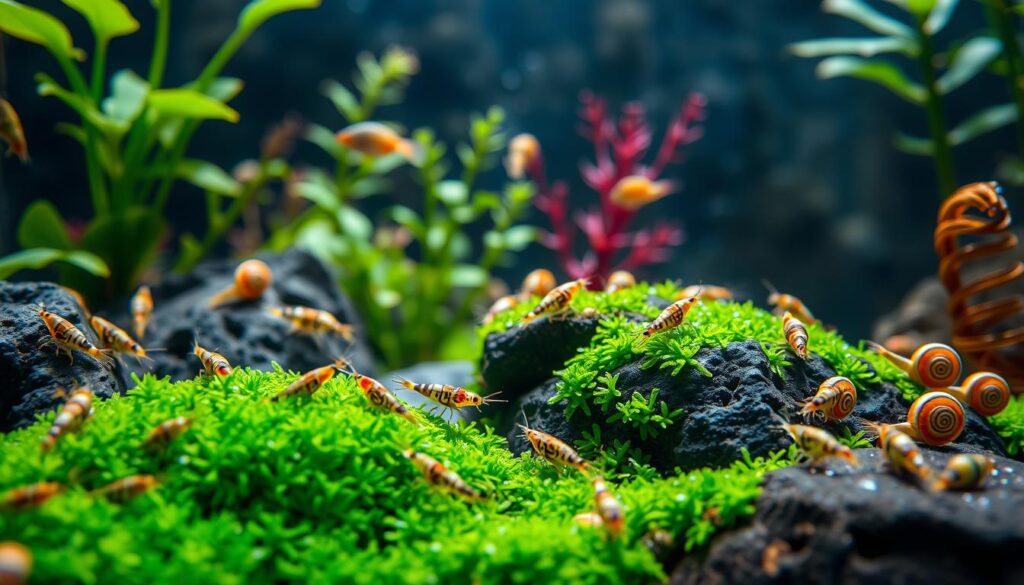
Algae eating species can help cut down on daily chores. But, they don’t replace the need for basic tank care. Many of these grazers need extra food and can’t live on tank algae alone.
Before adding beneficial algae eaters, make sure your tank is stable and cycled. The size of your tank, how well your fish get along, and if there’s enough food are key. These factors help decide which algae eaters will do well in your tank.
Algae eaters help keep your tank clean. They make your plants and decorations look better by allowing more light to reach them. They’re part of a plan to keep your tank clean, not a complete solution.
- Choose algae eaters based on the type of algae you have. Some are better at eating hair algae, while others prefer film, diatom, or green spot algae.
- Introduce algae grazers slowly and watch for signs of stress, aggression, and if they need extra food.
- Remember, controlling algae in ponds and tanks works the same way. You need to balance light, nutrients, and grazing pressure.
Pairing the right algae eating species with good care creates a balanced tank. This balance helps prevent algae outbreaks and keeps your plants healthy. It also makes caring for your tank easier for you.
Popular Nano-Sized Algae Eaters for Your Tank
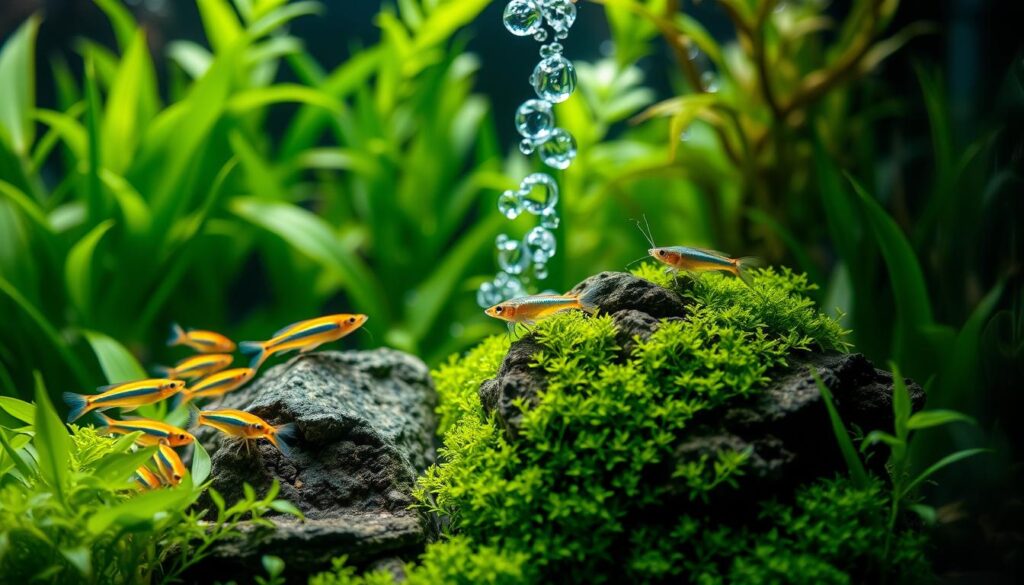
You want to control algae without making your tank too crowded. Otocinclus, tiny catfish, are great at eating film algae and diatoms. They are gentle on plants but need stable water and regular food.
Amano shrimp are a favorite among aquarists. Named after Takashi Amano, they eat hair and soft green algae well. They grow to 2–2.5 inches and do best in groups.
Nerite snails are steady and easy to care for. They won’t breed in freshwater, so you don’t have to worry about too many snails. They clean glass and leaves and come in beautiful shell patterns.
Bristlenose pleco is good for larger nano tanks and planted setups. This pleco grows to 5–6 inches and eats tough algae. It’s hardy and easy to find, making it a reliable choice.
Siamese algae eater and freshwater gobies are good for bigger nano and small community tanks. Siamese algae eater grows bigger and prefers 30+ gallon tanks. Some gobies, like Stiphodon, eat well and can tackle cyanobacteria.
- Amano shrimp — great for soft algae and hair algae control.
- Otocinclus — ideal for diatoms and film algae in 10+ gallon tanks.
- Nerite snails — durable grazers, decorative, no freshwater reproduction.
- Bristlenose pleco — compact pleco for tougher algae in 20+ gallon tanks.
- Siamese algae eater/gobies — better for larger nano or community setups.
Think about tank size and oxygen needs when picking algae eaters for your indoor tank. Some pond algae eaters do well in planted tanks, but many need more flow or space. Choose species that fit your tank, add hiding spots, and give them extra food to keep them healthy and active.
Comparing Different Algae Eaters
When comparing algae eaters, consider diet, size, behavior, and tank needs. Otocinclus are great for soft film algae and are gentle on plants. They like to be in groups and need regular algae food.
Bristlenose and rubberlip plecos have different grazing powers. Rubberlips are stronger but sensitive to oxygen. Bushynose plecos are hardier but can damage wood and produce more waste. Both prefer caves and moderate flow.
Siamese algae eater eats tough algae like black beard algae. But it grows large and can harass smaller tankmates. Make sure you know what you’re getting to avoid aggressive species.
Gobies can control cyanobacteria and add color. But finding the right species and knowing them can be tricky. Rosy barbs and some livebearers will graze algae but might not fit in nano setups.
Shrimp and snails are good algae eating fish alternatives. Amano shrimp are always eating and need extra food. Cherry shrimp do well in groups. Nerite snails are reliable but won’t reproduce in freshwater and lay eggs that some find unsightly.
Apple (mystery) snails may eat plants and sometimes carry pests or disease. Ramshorn and trumpet snails help with detritus but can multiply if tank management is poor. Snail health depends on hardness and water chemistry.
- Tank size — small tanks rule out large grazers like mature Siamese algae eaters.
- Flow and oxygen — rubberlip plecos and many plecos need well-oxygenated water.
- Hiding places — Otocinclus and shrimp benefit from plants and gentle cover.
- Feeding — most aquatic algae grazers need supplemental food to stay healthy.
Use this outline to match algae control goals with species traits. Think about long-term care, your planted setup, and how each algae eating fish or invertebrate fits the tank you keep.
Setting Up a Planted Tank with Algae Eaters
Begin by finishing your tank cycling before introducing algae eaters. This step ensures stable water chemistry and beneficial bacteria. These conditions are vital for sensitive species like Otocinclus.
A well-cycled tank provides a steady food source for grazers. It also offers predictable conditions for their health.
Choose the right tank size and stocking for each grazer. Otos do well in small groups of three to six. Bristlenose plecos need tanks of 20 gallons or more, while Siamese algae eaters prefer 30-gallon setups.
Add animals slowly to avoid sudden changes in bio-load. This helps maintain a healthy environment.
Create diverse microhabitats with plants, driftwood, and smooth rocks. Driftwood is perfect for bristlenose plecos to graze on. Dense plants and caves provide safe spots for Amano shrimp to molt.
Small shrimp need covered filter intakes to stay safe. This prevents them from getting sucked in.
Use hard water or add calcium for nerite snails to keep their shells healthy. Nerites lay eggs on glass and décor that won’t hatch in freshwater. This prevents overpopulation. Amano shrimp do not breed in freshwater, making them a low-overpopulation choice.
Feed supplemental algae wafers or blanched vegetables when algae is scarce. This helps fragile grazers. Balance feeding to avoid water quality issues. Regular, moderate maintenance is key to effective algae control.
- Cycle the tank fully before adding grazers.
- Add algae eaters gradually and in compatible groups.
- Provide hiding spots, driftwood, and varied flow for species comfort.
- Cover filter intakes and monitor calcium for shelled grazers.
This approach supports algae grazers while protecting water quality and animal health. Thoughtful planning during tank cycling and stocking reduces stress. It also improves algae management results in the long run.
Bio-load Considerations with Nano-Sized Algae Eaters
Adding algae eaters increases your tank’s bio-load. Fish like bristlenose plecos and Siamese algae eaters produce a lot of waste. On the other hand, small invertebrates such as Amano and cherry shrimp produce much less.
Think about the bio-load when planning how many fish to keep. The size of your tank matters too. Otocinclus and shrimp do well in tanks of 10+ gallons. But, bristlenose plecos and SAE need 20–30+ gallons for a stable environment.
Don’t overcrowd your tank. This helps keep oxygen levels stable, which is important for fish like rubberlip plecos.
Too many snails can mean your tank is not being maintained well. Ramshorn and trumpet snails can multiply quickly if there’s leftover food. Regular water changes and careful feeding can help prevent this.
Feeding your algae eaters the right food is key to controlling algae. Give them algae wafers, blanched vegetables, or specialized shrimp food. But, don’t overfeed. This can increase the bio-load and make it harder to control algae.
- Match species to tank volume to limit waste buildup.
- Monitor snail counts and reduce feeding if populations spike.
- Maintain consistent water changes and filter maintenance.
- Provide supplemental food without creating nutrient surges.
By balancing stocking, feeding, and maintenance, you can keep your algae eaters effective. Thoughtful bio-load considerations help control algae better. This supports long-term algae reduction in your planted tank.
Selecting the Right Algae Eater for Your Needs
Start by matching the size and behavior of algae eaters to your tank. Nano tanks need small species that fit well and eat algae. Otocinclus are great for many planted setups. Shrimp and nerite snails are good for mixed tanks.
Choose algae eaters based on the type of algae and tank conditions. Otocinclus and nerite snails are good for diatoms and soft algae. Amano shrimp are better for hair and string algae. Siamese algae eaters are good for black beard algae, but only in large tanks.
Think about compatibility and long-term needs. Avoid fish that grow too big for nano tanks, like common plecos. Flying fox and Chinese algae eaters can be aggressive and not control algae well. Learn to tell similar species apart before buying.
- Tank size: choose species that stay small and school if needed, like Otocinclus.
- Algae type: match eater to algae—Amano shrimp for hair algae, nerites for soft layers.
- Water parameters: nerite snails prefer harder water, Otos like stable, oxygenated conditions.
Consider lifestyle factors too. Pond algae eaters might be good for outdoor systems, but many grow too big for aquariums. If you have a backyard pond, pick pond algae eaters made for larger volumes and flow.
Lastly, think about health and maintenance. Schooling species need friends, grazers need extra food when algae is low, and some need specific flow or oxygen. Choose algae eaters that fit your routine and tank’s needs for good algae control in ponds and aquariums.
Common Algae Types and Their Impact on Your Tank
In a planted tank, you’ll find many algae types. Film algae is a thin green layer on leaves and glass. Diatoms create a brown coating on substrate and driftwood.
Hair or filament algae grows as strings that tangle plants and equipment. Cyanobacteria appears as slimy mats with a foul odor.
Different algae need different control methods. Otocinclus and bristlenose plecos are great at eating film algae and diatoms. Amano shrimp are excellent at eating hair and string algae.
Nerite snails are good for green spot algae that soft grazers can’t handle. Black Beard Algae (BBA) is very stubborn. In big tanks, Siamese algae eaters like Crossocheilus oblongus can tackle BBA.
Using only grazers won’t solve all problems. Manual removal is key. Scraping glass, plucking hair algae with tweezers, and brushing décor removes bulk growth fast.
Use algae reduction solutions like targeted grazing and maintenance to slow regrowth. This way, you keep your tank clean and healthy.
- Identify the algae type before choosing a grazer.
- Match aquarium lighting and nutrient balance to prevent recurrence.
- Combine aquatic algae grazers with manual cleaning for steady algae control.
Health and Care for Algae Eaters
Many algae eaters come to your tank hungry. You should give them extra food, like algae-based foods or blanched veggies. Plecos and Amano shrimp also need wafers, pellets, and veggies to stay healthy.
Keeping the water stable is key. Cycle the tank before adding algae eaters. This helps prevent stress. Otos and nerite snails don’t like sudden changes in pH or ammonia.
Make sure they have the right homes and places to hide. Bristlenose plecos need driftwood for digestion and hiding spots. Amano shrimp need places to hide during molts. Shrimp also need filter intake guards for safety.
Feed omnivores and herbivores the right mix. Plecos need both protein and plant matter. True herbivores eat algae and veggies. If there’s not enough algae, give them algae wafers, spirulina, and blanched zucchini.
Watch for signs of disease and stress. Lethargy, loss of appetite, or damaged shells in nerite snails are warning signs. Quarantine new arrivals to lower disease risk. Quick treatment and better tank conditions help them recover faster.
Know about their social and territorial needs. Some plecos become territorial as adults. Provide plenty of hiding spots or separate tanks. Amano shrimp and nerite snails usually get along with community fish, making them great for planted tanks.
Sustainable Practices in Maintaining Algae Eaters
Choosing captive-bred algae eaters helps protect wild populations. Some species, like rubberlip plecos, are better off in captivity. They are more likely to survive and thrive.
Be careful with species that could harm the environment. Mystery snails, for example, can become invasive. Always keep your aquarium or pond secure to prevent animals from escaping.
Choose algae eaters that don’t breed too much. Nerite snails, for instance, don’t reproduce in freshwater. This makes them a reliable choice for controlling algae.
Get your algae eaters from trusted sources and quarantine them. This reduces the risk of disease. It also keeps your existing algae eaters healthy.
- Buy captive-bred where possible to reduce pressure on wild stocks.
- Avoid species known to be invasive in your region.
- Quarantine new arrivals to prevent disease transmission.
- Secure outdoor ponds to prevent escape of pond algae eaters.
Keep your algae eaters healthy with simple care. Good water quality and a balanced diet are key. Healthy algae eaters control algae better and need less chemical treatment.
Supporting ethical breeders helps the environment. Your choices can make a big difference. Sustainable algae eaters lead to healthier tanks and ecosystems.
Troubleshooting Algae Problems in Your Tank
If algae keeps coming back, start with the basics. Remove visible algae, do regular water changes, and clean the substrate. Algae eaters help but don’t replace manual cleaning.
Look at how much you’re feeding and what nutrients are in the water. Too much food can lead to algae. Reduce food, remove uneaten bits, and test the water for imbalances.
Next, check your lighting. Too much light can cause algae to grow. Shorten the light time and move lights away from plants. Watch for changes each week.
Choose algae grazers wisely and only add them when your tank is stable. A mix of Otocinclus, Amano shrimp, and Nerite snails can tackle different algae types. Using several species helps control algae while you manually remove it.
- Use grazers to complement, not replace, husbandry.
- Avoid relying on cleaners as your primary strategy.
- Watch for starving cleaners if algae disappears suddenly.
If algae is severe, consider targeted treatments. Use products like Twinstar Nano Algae Inhibitor with caution. Always pair treatments with better maintenance for lasting results.
Misidentifying algae species can worsen problems. For example, confusing a flying fox with a Siamese algae eater can lead to disappointment. Buy from trusted sources and confirm species before adding them.
Pest snail outbreaks often come from too much food and nutrients. Cut back on feeding, clean up detritus, and do extra water changes. This helps lower snail numbers without harming plants or grazers.
If algae persists, list any recent changes. Check for new fertilizers, bulbs, or fish that might upset the tank’s balance. Change one thing at a time to see what works.
Keep a log of water tests, maintenance, and tank changes. A consistent routine helps you spot trends and apply the right solutions. Regular care gives algae grazers the best chance to control algae long-term.
Integration of Algae Eaters in Community Tanks
Adding algae eating fish and invertebrates can help control algae in community tanks. First, pair peaceful species like otocinclus, nerite snails, and Amano shrimp with calm tankmates. These algae eaters do best in low-aggression environments with little competition for food.
Match the activity patterns of your fish and invertebrates to reduce conflict. Nocturnal grazers like bristlenose plecos feed at night and won’t bother day-active fish. Otos are shy and prefer to be in small groups. This keeps them safe and helps them avoid being outcompeted by faster feeders.
Protect small inverts from predators and filter intakes. Use sponge pre-filters, gentle flow areas, and plenty of hiding spots. This lets algae grazers feed without stress. Spread out feeding stations and use algae wafers in corners to ensure even food distribution.
- Choose complementary cleaners to cover varied algae types: snails handle tough diatoms, shrimps pick soft film, and small plecos tackle green spot algae.
- Avoid mixing assertive chasers like mature Siamese algae eaters with tiny, easily stressed species.
- Monitor bio-load and plant health to prevent overstocking while keeping beneficial algae eaters effective.
Provide visual boundaries with plants, rocks, and driftwood to minimize territorial disputes. This reduces stress and lets algae eating fish establish safe foraging routes. When you balance activity levels, protection, and food access, community tanks algae control becomes manageable and reliable.
Enhancing Your Aquarium’s Aesthetic with Algae Eaters
Choose algae eating species to keep your aquarium clean between maintenance. Otocinclus catfish and Amano shrimp are gentle grazers. They remove film and hair algae without harming plants.
Nerite snails add patterned shells and steady grazing. They give your display extra texture while helping with algae removal.
Combine Otocinclus, nerite snails, and Amano shrimp for movement and balance. Each species targets different algae types. Together, they offer broad algae control in ponds and aquariums.
Select sizes and behaviors that complement your plants and hardscape. This keeps your aquarium aesthetic cohesive and lively.
Even with a hardworking algae crew, manual tools like scrapers and tweezers are essential for final polishing. Proper husbandry and sustainable sourcing keep your cleaners healthy. This reduces maintenance time and ensures your planted tank looks great for a long time.
When you plan carefully, algae eaters become both functional team members and subtle design elements. They enhance your aquarium’s visual appeal.
Leave a Reply