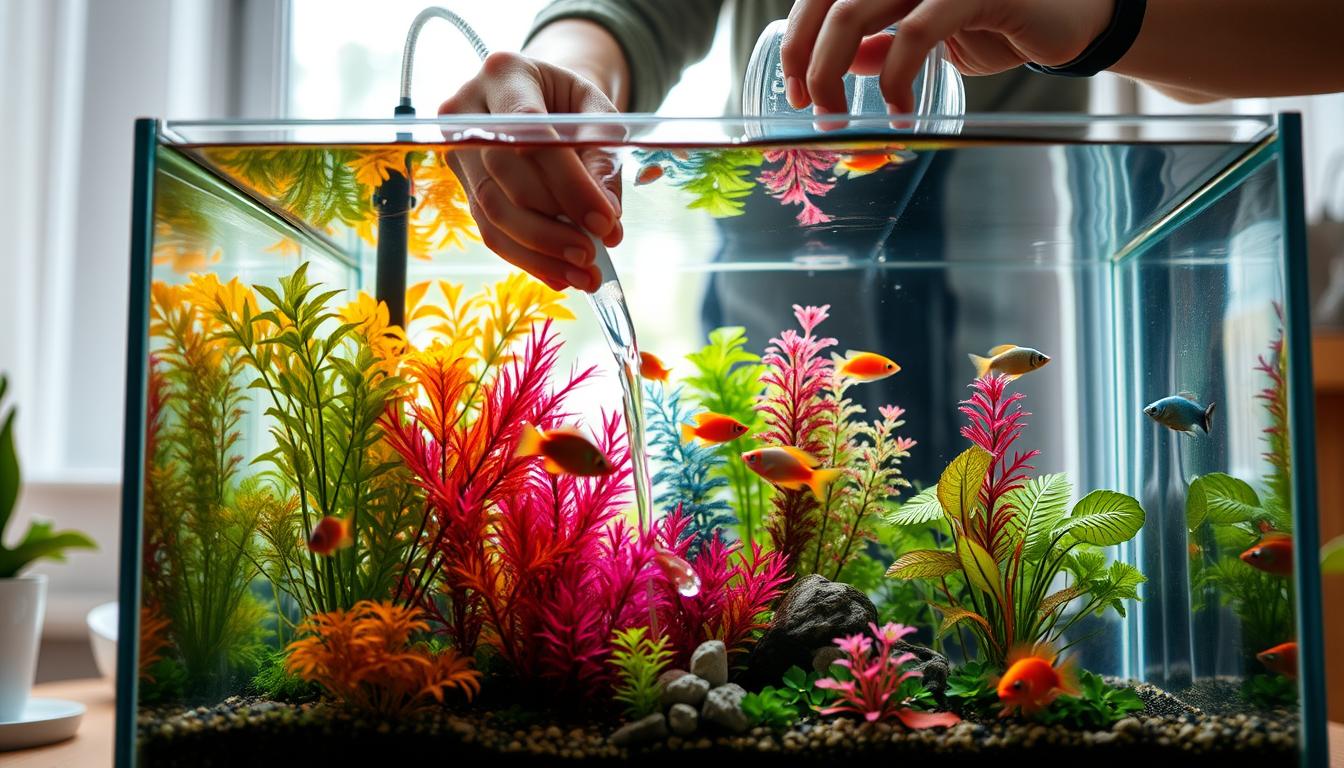
Keeping a nano aquarium (10 gallons or less) means making key decisions. One of the most important is your water change schedule. Regular water changes are vital for clear water, stable conditions, and healthy fish and corals.
For reef nano tanks, many hobbyists prefer small, frequent water changes. A 10%–15% weekly change helps maintain steady chemistry without harming delicate corals. In freshwater nano setups, the recommended amount can range from 15% to 50%. This depends on how many fish and corals you have and your tank’s filtration.
Water changes help remove nitrates and phosphates. They also reduce residue from soaps and cleaners. Plus, they can add back trace elements. But, you’ll need to keep an eye on calcium, magnesium, and alkalinity levels. You might need to add these to keep your reef system balanced.
In small tanks, changes in water parameters can happen fast. A consistent water change routine is better than infrequent big changes. This approach keeps your tank’s chemistry stable and safe for your fish and corals.
Understanding the Importance of Water Changes
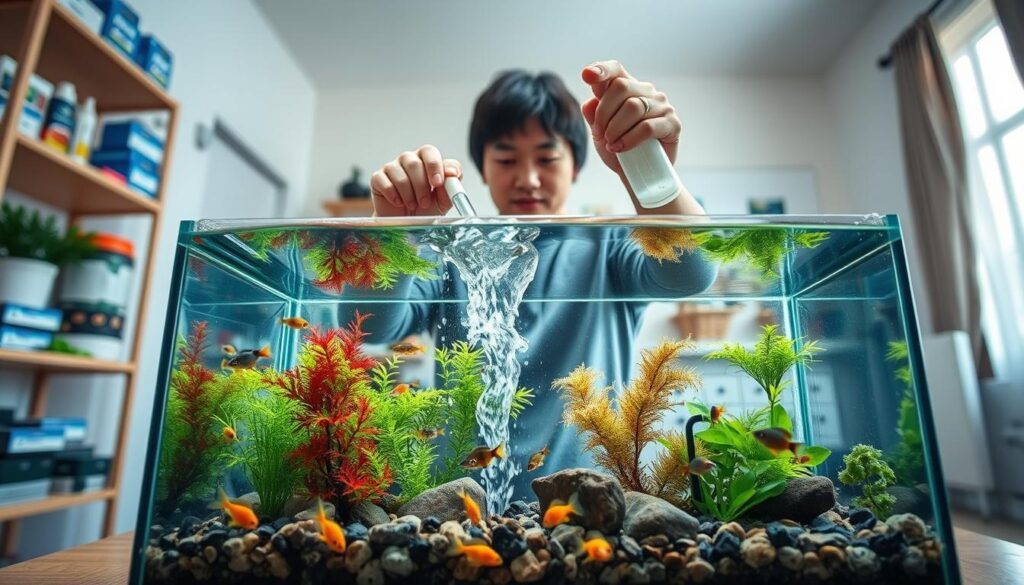
Your nano tank is small, so changes in water chemistry happen quickly. This means you need to do regular maintenance to keep the water stable and healthy for your fish.
Water changes help remove harmful substances like nitrates and phosphates. These can cause algae to grow too much and slow down coral growth. By changing some of the water, you also get rid of household chemicals that can harm your tank.
When you do water changes, your tank will look clearer and your fish will be less stressed. This is because you’re keeping the water clean and balanced.
For those who keep reefs, water changes are key to maintaining the water’s quality. They help keep the levels of salt, alkalinity, and trace elements stable. Even though live rock and substrate help filter the water, some waste stays in the water and needs to be removed.
Think of water changes as a way to remove dissolved and suspended waste. It’s better to do small changes often than big ones less often. If the replacement water is not the right temperature or has the wrong levels, it can harm your fish and upset the tank’s balance.
- Benefits: lowers nitrates and phosphates, clears dissolved organics, dilutes household contaminants.
- Role in routine care: central to any fish tank maintenance plan and informs your aquarium water change schedule.
- Practical note: freshwater tank water change frequency should reflect tank size, stocking, and feeding levels.
Plan your water changes carefully. Match them to your tank’s size, how many fish you have, and the results of your water tests. This will help keep your nano tank stable and prevent surprises in the water chemistry.
Determining the Frequency of Water Changes
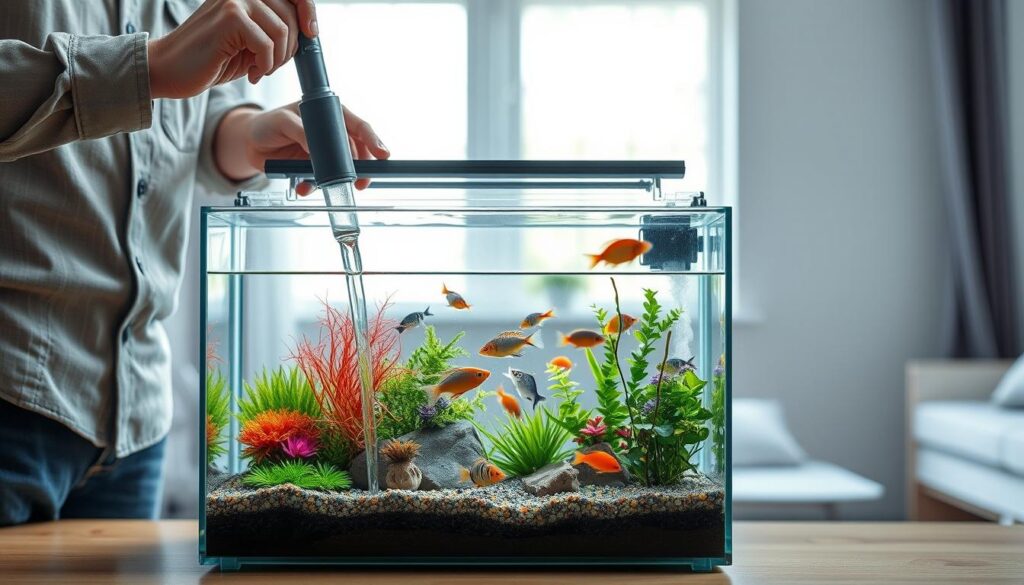
Decide on a water change schedule based on your tank’s type, bio-load, and filtration. For reef nano tanks, many hobbyists do 10%–15% weekly changes. This helps keep nitrate and phosphate levels low.
If you have a heavily planted freshwater tank with strong filtration, a 25% weekly swap is good. Smaller, more frequent changes help avoid spikes in ammonia and nitrite. They also reduce changes in water parameters.
A single 30% change every two weeks is okay, but it’s not as stable as weekly 15% changes. Heavily stocked or less-filtered nano tanks often need bigger weekly changes. Some setups might need up to 50% weekly water replacement to keep fish and invertebrates safe.
For delicate coral or shrimp systems, it’s better to do more frequent, smaller swaps. This keeps the environment stable.
- Reef nano: 10%–15% weekly
- Planted freshwater with strong filtration: ~25% weekly
- Heavily stocked/poor filtration: up to 50% weekly
Test your water weekly to make sure your routine is working. Check ammonia, nitrite, nitrate, phosphate, salinity for marine tanks, temperature, and pH. Use these results to adjust how often you change the water and find the best frequency.
Adjust your frequency based on how sensitive your fish are and if you have live plants. Live plants help reduce nutrients and might let you space out changes. But, fragile corals, shrimp, or high bio-load systems need tighter schedules and quick responses to changes.
Keep a simple log of test results and water change dates. A clear record helps you spot trends. It lets you choose a water change schedule that keeps your aquarium healthy and parameters steady.
Calculating the Amount of Water to Change
First, turn percentages into gallons. Just multiply your tank’s volume by the percent you want to change. For instance, 10% of a 5-gallon tank is 0.5 gallons. This method helps plan your water change schedule.
Here are some general guidelines:
- Reef nano tanks: 10%–15% weekly.
- Freshwater planted nano tanks with strong filtration: 15%–25% weekly.
- Heavily stocked or poorly filtered nano tanks: up to 50% weekly.
Choosing a water change strategy has its effects. Smaller, more frequent changes keep waste levels low and water stable. But, bigger changes can stress fish if the water chemistry is different.
Several things affect how much water you should change:
- Stocking density — more fish means more water changes.
- Feeding frequency — eating a lot increases waste.
- Filter type and media capacity — better filters need less water change.
- Live plants — they help lower nitrates and allow for smaller changes.
- Measured nutrient levels — test results guide your changes.
Keep a log of test results and water change amounts. Watch how nitrate, phosphate, pH, and ammonia change over time. This will show you if you need to adjust your water change frequency.
Change your schedule based on trends, not single readings. Small, regular changes are better for your fish and make maintenance easier.
Signs Your Tank Needs a Water Change
Test your water weekly to catch problems early. High nitrate or phosphate levels mean your tank needs help. The safe levels vary by the fish you have, but too much means you need to change more water.
Seeing ammonia or nitrite means you must act fast. Do a water change and check your filter and food right away.
- Cloudy or discolored water that doesn’t clear after filtration
- Persistent nuisance algae outbreaks across glass, plants, or decor
- Stressed, gasping, or lethargic fish with faded colors
- Corals showing poor growth, bleaching, or tissue recession
- Excessive detritus building up on the substrate despite vacuuming
Watch for signs from your equipment and environment too. If your filter gets clogged or a heater or pump breaks, your water quality can drop quickly in small tanks. After fixing these issues, do a water change to get things back to normal.
- Test and record parameters weekly to identify trends.
- Compare records to see if spikes are short-lived or part of a gradual decline.
- Adjust your aquarium water change schedule when tests show persistent imbalance.
Use your records to fine-tune the best water change practices for your tank. Making small, regular changes helps keep your fish healthy and reduces stress from big changes.
Preparing for a Water Change
Before you start, gather your supplies. You’ll need a siphon or gravel vacuum, buckets for aquarium use, and a hose or auto-siphon. For freshwater tanks, get a dechlorinator or water conditioner. Saltwater systems require a marine salt mix and a refractometer or hydrometer.
Don’t forget a thermometer to check temperatures. You might also need a cooler or aquarium heater to match the replacement water’s temperature. Make sure all buckets and hoses are only for aquarium use to avoid contamination.
For saltwater tanks, mix marine water to the right salinity. Use Instant Ocean or Red Sea, and let the salt dissolve fully. Wait until the new water is at the same temperature as the tank. Use a refractometer to check specific gravity and adjust it to match the tank’s.
Use clean tap water treated with a dechlorinator or reverse-osmosis/deionized (RO/DI) water. Many reef keepers prefer RO/DI water to avoid chloramines and trace contaminants.
Measure the exact volume of replacement water needed. Prepare that amount in buckets to follow your water change schedule accurately.
Test the replacement water’s parameters before adding it to the tank. Check temperature, pH, and salinity, and record the readings. Matching these parameters closely reduces shock and keeps the water change routine smooth.
Keep a log of dates and volumes for your water change schedule. This helps you track how often to change fish tank water for your setup. Consistent records help you spot trends and refine your routine safely.
Performing a Water Change Safely
First, test the water for ammonia, nitrite, nitrate, pH, and temperature. Write down each reading. This helps you see how the change affects your tank.
Next, turn off any equipment you don’t need. Some setups use filters and heaters during a change. Check your equipment’s manual for guidance from brands like Fluval or Eheim.
- Plan the volume you will remove.
- Siphon out the planned amount while vacuuming the substrate to remove detritus.
- Avoid scrubbing rock or filter media to preserve beneficial bacteria.
Don’t remove all the water. Big changes can harm your tank’s balance. Most good bacteria live in live rock and filter media, not in the water.
When adding new water, do it slowly. Use a plate or hose to avoid disturbing the substrate. Make sure the temperature and, for marine tanks, salinity match.
It’s better to do small, frequent water changes. Big changes can upset the balance in your tank. Regular, small changes help keep your tank stable and healthy.
- Re-check heater and filter function after the change.
- Test key parameters a few hours later to ensure stability.
- Adjust the routine if readings drift outside safe ranges.
By following these steps, you can keep your tank safe and healthy. Regular care makes maintenance easier and more effective.
Best Practices for Water Replacement
Choose the right water source for your tank. For reef tanks, RO/DI water is best to avoid harming corals. Freshwater tanks can use treated tap water with a dechlorinator. But, never use untreated natural seawater without a clean source to avoid pests and parasites.
When mixing marine water, pick a trusted salt brand. Always follow the instructions and let the salts dissolve fully before adding water. Use a refractometer to check salinity each time to get it just right.
Water changes refresh major elements but don’t cover all trace elements. Use test kits to check calcium, magnesium, and alkalinity levels. Only add supplements when needed to avoid overdoing it.
Stick to a regular water change schedule. This keeps chemical levels stable and supports healthy biological filtration. A steady routine helps your fish and plants stay healthy.
Keep your water preparation area clean. Use separate buckets and tubing for aquarium work. Wash your hands before starting and wear gloves when handling chemicals to prevent contamination.
- Plan volume and frequency based on stock and testing.
- Match temperature and salinity before adding water.
- Use a siphon or gravel vacuum to remove debris during changes.
- Record each change so your freshwater tank water change frequency stays consistent.
Follow the best water change practices and adjust as needed based on water tests. Keeping a log and following a routine makes it easier to adjust the water change frequency for your tank.
Monitoring Water Quality Post-Change
After a partial change, check the temperature and pH. Make sure the replacement water matches your tank’s. For marine setups, test salinity right away. These quick checks help prevent shock to fish and invertebrates.
Within 24–48 hours, test ammonia, nitrite, and nitrate. A spike in ammonia or nitrite means a problem with biological filtration. Most beneficial bacteria live in rock and filter media, not the water column. So, a proper partial change rarely destabilizes the system. Testing reassures you that the change did not cause harm.
Keep a simple weekly testing routine. Record results for key parameters: ammonia, nitrite, nitrate, phosphate, and pH. If you run a reef tank, add alkalinity, calcium, and magnesium to the list. Tracking trends over time validates your water change schedule and helps you spot slow deterioration before fish show stress.
- Test right after the change: temperature, pH, salinity (if marine).
- Test within 24–48 hours: ammonia, nitrite, nitrate.
- Maintain weekly logs for trends and adjustments.
If nitrate or phosphate slowly rises, act on the data. Increase the volume or frequency of changes. Upgrade mechanical or biological filtration. Lower your bio-load, or add live plants or an algae scrubber. These steps tie into effective fish tank maintenance and keep your system stable.
Use your records to refine the aquarium water change routine. Small, evidence-based adjustments protect your livestock and make fish tank maintenance easier over time. The habit of testing and logging turns guesswork into reliable care.
Common Mistakes with Water Changes
Spotting common water change mistakes early can prevent many problems. Using contaminated buckets or garden hoses can introduce harmful chemicals like soaps, chlorine, or pesticides. These chemicals can quickly harm fish and corals.
Mixing water with the wrong temperature or salinity can shock your tank’s inhabitants. Never pour cold or salty water into a warm tank. Always match the temperature and specific gravity of the replacement water before adding it.
Some people think doing large, infrequent water changes is best. But big changes can upset the pH, alkalinity, and trace elements in your tank. A consistent aquarium water change schedule helps keep these parameters stable over time.
Skipping water tests is a common mistake. If you don’t regularly check for ammonia, nitrite, nitrate, and salinity, you won’t know when to take action. Using test kits from API or Salifert can help you track these levels.
Removing too much filter media or live rock during cleaning can harm your tank. This can strip away beneficial bacteria. Be gentle when cleaning filters and stagger media cleaning to preserve biological filtration.
- Believing water changes are unnecessary: water changes are not a sales tactic. Decades of reefkeeping research and hobbyist experience show planned exchanges support system stability.
- Sourcing natural seawater without screening: natural seawater can carry pests, parasites, or contaminants. Many reefers prefer branded salt mixes like Instant Ocean or Red Sea for safety and consistency.
If you make a mistake, act calmly. Correct salinity or temperature slowly to avoid stress. Small, staged adjustments work better than abrupt fixes.
For sudden ammonia or nitrite spikes, perform emergency partial changes and increase monitoring. Repeat tests and watch your livestock closely until readings return to safe ranges.
When refining your routine, ask how often to change fish tank water for your setup. Use that answer to build an aquarium water change schedule that fits stocking, feeding, and filtration.
Keep a log of water tests and changes. That record helps you spot patterns and prevent repeat common water change mistakes in the future.
Tailoring Water Change Schedules for Different Species
Adjust your freshwater tank water change frequency based on the needs of your pets and plants. Delicate corals, dwarf shrimp, and nano fish are sensitive to changes. Small, steady weekly changes help keep their environment stable and reduce stress.
Hardy community freshwater species can handle bigger changes. You can change the water less often but with slightly larger amounts. Just be careful not to let water chemistry or stocking levels get out of hand.
Reef nano tanks need careful monitoring of elements. Aim for 10%–15% weekly changes while keeping an eye on calcium, alkalinity, and magnesium. This supports stable trace elements without shocking corals.
Planted freshwater nano tanks with strong filtration and many live plants often manage on about 25% weekly changes. The plants absorb nutrients and reduce waste, making your water change schedule gentler than in bare tanks.
Heavily stocked nano freshwater tanks may need up to 50% weekly changes. High bio-load means more ammonia and nitrate. A stricter water change frequency keeps levels safe for fish.
- Research livestock before adding them. Choose species with compatible bio-load and tolerance for small-volume systems.
- Add inhabitants slowly after cycling to avoid ammonia spikes and to let your aquarium water change routine adapt.
- Monitor ammonia, nitrite, nitrate, and pH after changes so you can adjust your water change schedule.
Live plants lower nutrient load and can reduce required change volume. If algae blooms appear, increase frequency and focus on phosphate control to regain balance.
Use test kits from brands like API or Salifert to track trends. This data lets you fine-tune your water change frequency and maintain a stable, healthy nano setup over time.
Incorporating Technology into Your Water Change Routine
Using precise tools can make your aquarium water change routine better. A refractometer or hydrometer helps keep the salt level right in marine nano tanks. Freshwater test kits from API or Salifert let you check ammonia, nitrite, nitrate, and phosphate levels early.
Digital thermometers and controllers help you watch temperature changes that affect your tank’s chemistry. Automatic top-off systems (ATO) manage water loss and cut down on the need to add water manually. Dosing pumps give a steady flow of supplements like calcium or trace elements for planted and reef systems.
Automated water change systems and solenoid-controlled reservoirs can make things easier. They need an RO/DI feed, secure plumbing, and safety features to avoid mistakes. Set alarms and float switches to stop overflows, and test the setup on an empty reservoir before connecting to your tank.
- Keep spare parts: an extra heater, filter cartridge, and powerhead prevent rapid crashes in nano tanks.
- Use reliable brands such as Eheim, Fluval, or Tunze for pumps and controllers when possible.
- Label reservoirs and keep replacement tubing on hand to speed repairs.
Log test results and water changes in an app or spreadsheet to spot trends. Note temperature, salinity, and parameter readings after each change. This helps you find the best water change frequency for your setup.
Automated systems are great for busy hobbyists, but you must check them regularly. Periodic manual checks and backups reduce risk. With the right tools and records, your aquarium water change routine becomes more consistent, safer, and easier to maintain.
Conclusion: Optimizing Your Water Change Schedule
To keep your nano tank healthy, focus on smaller, more frequent water changes. Start with a 10%–15% weekly change for reef nano tanks. For planted freshwater, aim for 15%–25% weekly. If your tank is very busy or has weak filtration, increase to a 50% weekly change.
Follow the best practices for water changes. Prepare replacement water carefully. Use RO/DI or treated tap water, match its temperature and salinity, and use dedicated equipment to avoid contamination. Test water weekly and log important values. Avoid big changes that stress your fish.
Stay proactive with maintenance. Check pumps, heaters, and filters regularly. Choose the right filtration and stocking levels for your tank. Only add calcium, magnesium, and alkalinity when tests show you need to.
Having a consistent water change schedule is key to success with nano tanks. Use the right frequency based on your tank’s needs. Test, log, and adjust as needed.
Leave a Reply