The nitrogen cycle is key to keeping your aquarium clean. It turns harmful waste into safer compounds. Knowing this cycle is vital for your fish’s health and water quality.
This guide is for beginners. It covers the basics and sets clear goals. You’ll learn how long it takes—usually 4–6 weeks—and what levels to aim for: 0 ppm ammonia and 0 ppm nitrite. Testing shows when the cycle is complete.
By understanding the nitrogen cycle, you can create a safe space for your fish. You’ll know how to cycle and maintain your tank. This knowledge is essential for a healthy aquarium.
What is the Nitrogen Cycle?
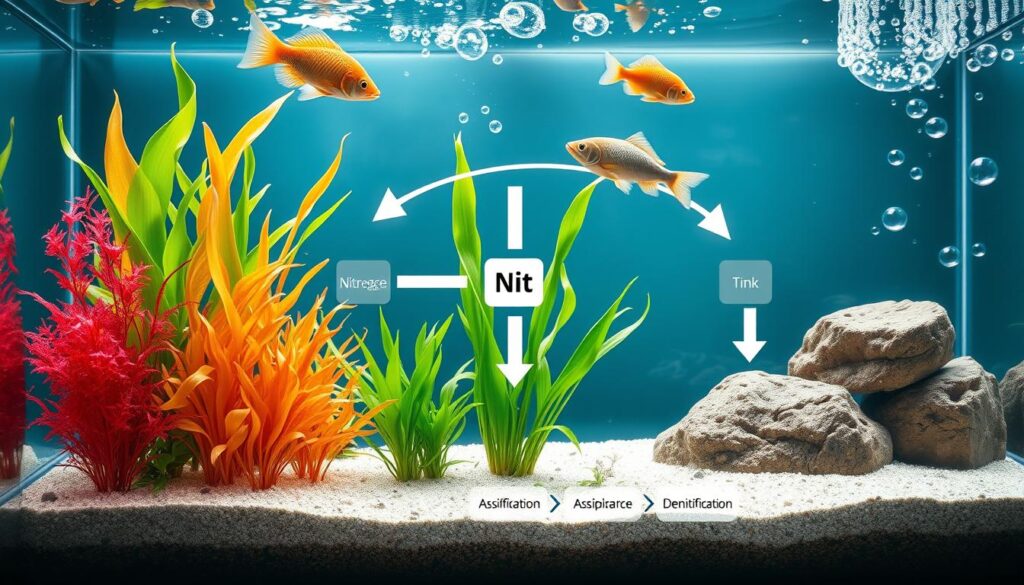
The nitrogen cycle is easy to understand when you break it down. It’s the process that changes harmful ammonia from fish waste and decaying plants into nitrite, then nitrate. This keeps your aquarium water safe for fish and invertebrates.
Knowing the nitrogen cycle is key because ammonia builds up quickly in a closed tank. Without it, ammonia and nitrite levels would rise, harming your fish. Starting the cycle before adding many fish protects them.
Beneficial bacteria are the heart of the cycle and live on many tank surfaces. Places like filter media, gravel, sand, driftwood, and glass are perfect for them. Filters also provide oxygen, helping the bacteria work faster.
People call this process different things, like biological filtration or just “cycling.” You can start it by adding ammonia or using hardy fish, then check with test kits. When the levels are right, your tank is ready for more fish.
Stages of the Nitrogen Cycle
Setting up your tank starts the nitrogen cycle steps. First, ammonia is produced from fish waste and decaying matter. Ammonia is very harmful to fish, affecting their gills and immune systems.
Next, ammonia-oxidizing bacteria like Nitrosomonas start to work. They turn ammonia into nitrite. Nitrite is also harmful but less so than ammonia.
The final stage is when nitrite is turned into nitrate by Nitrobacter and Nitrospira. Nitrate is much less toxic and can be managed with water changes or plant absorption.
Expect to see spikes in ammonia, then nitrite, and lastly nitrates. You might also see a temporary cloudiness from bacterial blooms. Watching test results over time helps you understand the nitrogen cycle.
It’s easy to keep your tank safe. Aim for 0 ppm ammonia and nitrite. Keep nitrates under 20–40 ppm, depending on plant density. Regular testing and water changes help maintain these levels.
- Stage 1: Ammonia production from waste and decay.
- Stage 2: Ammonia to nitrite by ammonia-oxidizing bacteria.
- Stage 3: Nitrite to nitrate by nitrite-oxidizing bacteria.
Understanding the nitrogen cycle helps you interpret test results and act quickly. With proper monitoring, you can guide your tank through each phase, keeping your fish healthy.
The Role of Beneficial Bacteria
Beneficial bacteria in your aquarium are key to keeping ammonia and nitrite levels low. They convert harmful waste into safer compounds. This is vital for a stable tank environment.
Nitrifying bacteria are split into two main groups. Nitrosomonas, for example, turns ammonia into nitrite. Then, Nitrobacter and Nitrospira take over, converting nitrite into nitrate.
These microbes stick to surfaces in your tank. Filter media like sponges and ceramic rings are perfect for them. They also grow on substrate, rock, and glass.
They need simple things to grow. Oxygen, steady water, and a food source like ammonia or nitrite are essential. Warm water and good aeration help them thrive.
Keeping your tank clean is important. Make sure water flows well and don’t over-clean your filters. Rinse them gently in old tank water. If using tap water, dechlorinate it first.
Using starter cultures can speed up the cycling process. Products like Seachem Stability and API Quickstart introduce live bacteria. But, success depends on proper use and patience.
- Ensure steady ammonia source during initial cycling.
- Maintain oxygen-rich flow in filters and over media.
- Limit deep cleaning to preserve established colonies.
Knowing how Nitrosomonas, Nitrobacter, and Nitrospira work helps you care for your tank better. Your efforts will lead to clearer water and healthier fish.
Signs of an Unfinished Nitrogen Cycle
Testing the water is key to spotting an unfinished nitrogen cycle. Look for ammonia or nitrite levels above 0 ppm. These are clear signs that your tank is not yet cycled.
Watch your fish closely for signs of stress. If they’re gasping at the surface, seem lethargic, have clamped fins, or aren’t eating well, it could mean trouble. These are signs of ammonia or nitrite spikes harming your fish.
Visual signs in the tank are also important. Cloudy water from bacterial blooms is common at the start. If the cycle is uneven, you might see persistent algae due to rising nitrates.
The time it takes for the cycle to finish varies. New tanks usually take four to six weeks. But, using seeded media, starter cultures, warm water, and good filtration can speed up the process.
- Test the water often during startup to catch ammonia or nitrite spikes early.
- If ammonia or nitrite levels go over 0.25–0.5 ppm, do partial water changes and increase aeration to protect your fish.
- Keep track of your readings to see trends and confirm when the tank reaches stable zero levels for both ammonia and nitrite.
The Impact of Fish Stocking on the Cycle
Adding fish to your tank changes the balance. Each fish increases waste and ammonia. This can overwhelm the bacteria, causing ammonia and nitrite spikes.
Plan your fish additions carefully. Add a few fish at a time and wait a week or two. This lets bacteria grow and handle the new waste.
You can choose between fishless or fish-based cycling. Fishless cycling uses ammonia or food to feed bacteria, keeping fish safe. Cycling with fish works if you test daily and act quickly.
Using seeded media helps new tanks adjust faster. Move filter media from an established tank to introduce mature bacteria. This reduces stress on new fish.
Don’t rush to stock heavily just because you have bottled bacteria. Always check that ammonia and nitrite levels are 0 before adding more fish. A safe approach combines gradual additions, seeded media, and regular testing.
- Start small: add a few fish, wait 7–14 days.
- Test water daily during increases in stock.
- Use seeded filter media when possible.
- Prefer fishless cycling for humane, controlled results.
Common Nitrogen Cycle Mistakes
Learning about bacteria, fish, and care can help you avoid mistakes. One big error is overcleaning filter media. Washing sponges in tap water or changing all media at once can kill bacteria and ruin your cycle.
Adding too many fish at once is another mistake. This creates a big ammonia spike. It can overwhelm beneficial bacteria and harm or kill your fish.
Feeding too much can also cause problems. Only feed what your fish can eat in one to two minutes. This simple rule helps avoid common mistakes for beginners.
Constantly adjusting water chemistry can stress your fish. Instead, focus on regular maintenance and measured water changes. This approach keeps your tank stable.
Some medications and tap water treatments can harm good bacteria. Always check labels before treating your tank. Use activated carbon or a bottled bacterial supplement to help recover if needed.
Bottled starter cultures can help, but they’re not a magic solution. They need the right conditions to work. Regularly test your water and use supplements as part of a complete plan.
- Rinse filter media in old tank water, not tap water.
- Stock slowly: add a few fish over weeks, not all at once.
- Feed sparingly and remove uneaten food promptly.
- Stabilize parameters with routine maintenance, not constant chemicals.
- Check medication warnings and support recovery when needed.
- Pair starter cultures with testing and stable conditions.
Be aware of these common mistakes and fix them early. By avoiding these errors, you can create a strong, lasting nitrogen cycle. This will keep your fish healthy and thriving.
How to Cycle Your Tank Effectively
Choose a method that fits your lifestyle and values. For precise control, use fishless cycling with pure unscented ammonia or decomposing shrimp. Aim for 3–5 ppm ammonia and test every 2–3 days. This method usually takes 2–6 weeks.
If you want to cycle with fish, start with hardy species like zebra danios or white cloud mountain minnows. Test daily and do frequent water changes to keep ammonia and nitrite levels safe. Cycling with fish is slower and riskier, so watch closely.
Seeded filter media can greatly shorten the cycle time. Move a sponge or bio-media from an established filter to your tank. This can shorten the cycle to days or weeks, depending on the health of the colonies.
- Use reputable bottled bacteria like Seachem Stability, API Quickstart, or JBL Denitrol as directed to aid in colonization.
- Boost oxygen and flow; nitrifying bacteria need good aeration and consistent filter circulation.
- Keep temperatures steady in a species-safe range. Warmer water, around 75–82°F, speeds bacterial growth.
Regularly test ammonia, nitrite, and nitrate and log the results. For fishless cycling, test every 2–3 days. If cycling with fish, test daily. Look for trends in your readings to know when the cycle is complete.
- Decide on a method: fishless, with fish, or seeded media.
- Set up your target ammonia level or add seeded media.
- Test and log ammonia, nitrite, nitrate until both read 0 ppm.
- Add fish slowly; avoid overstocking right after cycling.
To cycle your tank quickly, combine seeded media with a quality bacteria product and strong aeration. If levels spike, do partial water changes and pause stocking. Confirm 0 ppm ammonia and nitrite before adding your main fish stock.
By following these steps, you can master the nitrogen cycle. Keeping clear records and maintaining steady conditions is key to a healthy aquarium. Good habits now prevent bigger problems later.
Maintaining a Healthy Nitrogen Cycle
Keeping your aquarium in top shape is key to your fish’s health. Regular water changes of 10–25% each week help control nitrate levels. Always use a dechlorinator to protect beneficial bacteria from tap water’s chlorine or chloramine.
Filter care is important for your tank’s health. Rinse mechanical media in old tank water and change filter pads only when necessary. Avoid replacing all biological media at once to maintain stability in the nitrogen cycle.
- Vacuum gravel to remove detritus and reduce anaerobic pockets that produce harmful compounds like hydrogen sulfide.
- Add fish slowly and feed sparingly so ammonia spikes stay low and your system can adapt.
If you need to use medications or face contamination, activated carbon can help clear residues. Consider using a reputable bottled bacteria product to aid in recovery after a severe disruption.
Regular testing is vital for a healthy nitrogen cycle. Test for ammonia, nitrite, nitrate, and pH on a schedule and after major changes or new additions. Watch your fish for signs of stress.
- Keep nitrates under recommended limits (often 20–40 ppm depending on tank type) through water changes and live plants.
- Focus on stable parameters, not perfect numbers; consistency is more important than perfection.
- Balance stocking and feeding to reduce long-term strain on your biological filter.
By following these steps, you boost your chances of maintaining a healthy nitrogen cycle. Proper aquarium care ensures your aquatic pets stay stress-free.
Benefits of a Stable Nitrogen Cycle
When your tank has no ammonia and nitrite, your fish live longer and are less stressed. A balanced nitrogen cycle means less gill damage and stronger immune systems. This reduces sudden deaths and chronic illnesses.
A stable biological filter means fewer emergency water changes. This leads to less frantic tinkering. These benefits give you more time to enjoy your tank without stress.
Predictable water chemistry makes adding new fish easier. With reliable bacteria, your tank stays stable for plants and fish. This keeps everything healthy and balanced.
Proper nitrate control helps plants grow while keeping algae away. A well-managed nitrogen cycle means steady nitrate levels. This supports plant growth without causing algae blooms that harm your tank’s look and health.
- Health and longevity through low ammonia and nitrite.
- Fewer maintenance emergencies and sudden corrections.
- Predictable water chemistry for gradual stocking.
- Balanced nitrates that favor plants over algae.
- Greater peace of mind with simple, consistent care.
In summary, a stable nitrogen cycle benefits you and your aquarium. It reduces stress, lowers maintenance, and makes fishkeeping more enjoyable.
Troubleshooting Nitrogen Cycle Issues
See ammonia or nitrite and act quickly. Do a 25–50% water change, eat less, and boost air and water flow. Also, check your filter for clogs or failing media.
If the cycle stalled, check oxygen and tank temperature. A bit of warmth helps bacteria grow. Add seeded filter media or use products like Seachem Stability or API Quick Start. Follow the label for a good ammonia spike fix.
For a nitrite spike, do regular water changes and eat less. Increase aeration and add salt if needed. Live plants can also help by absorbing nitrogen.
After using medication, you might see a crash. Use activated carbon to remove residues and add bacterial supplements. Don’t clean filters too much until bacteria recover.
- Keep a test log to spot trends and preempt problems.
- Inspect filters and airflow; undersized or clogged units cause low oxygen and can leave your cycle stalled.
- Quarantine new fish to prevent introducing pathogens that disrupt beneficial bacteria.
If you keep having problems, reach out to a local fish store or the aquarium community. Bring your test results and photos. They can help find the exact problem and suggest a solution.
Resources for Further Learning
To learn about the nitrogen cycle, start with detailed guides and targeted searches. Look for articles like “How to Cycle an Aquarium” and “Nitrogen Cycle Phases Explained.” These guides explain fishless cycling, phase timelines, and product pros and cons in simple terms. They help you create a step-by-step plan to follow and test as you go.
For practical advice, check out Ripple Effect Aquatics’ sections on cycling, maintenance, and boosting methods. Also, read the instructions for Seachem Stability, API Quickstart, JBL Denitrol, API Stress-Zyme, and Oase BioKick before using them. These resources guide you in choosing supplements for a gentle boost, avoiding harsh chemical fixes.
Testing tools are essential: use reliable liquid test kits for ammonia, nitrite, and nitrate. Keep a simple test log to track progress and note water changes and media additions. For hands-on support, visit local aquarium shops for seeded media or advice. Join forums and Facebook groups to share experiences and get tips from others.
As you explore resources on the nitrogen cycle, be patient and test often. Focus on steady maintenance over quick fixes. Use guides to reinforce best practices. To master the nitrogen cycle, combine reading, product knowledge, testing, and community help. This way, you can create a healthy, low-stress aquarium.
FAQ
What is the nitrogen cycle and why is it essential for your aquarium?
The nitrogen cycle is a process that keeps your aquarium healthy. It turns harmful ammonia from fish waste into safe nitrate. This is done by beneficial bacteria. Knowing how to manage this cycle is key to keeping your water and fish healthy.
What are the stages of the nitrogen cycle I should watch for?
The cycle has three main stages. First, ammonia appears from waste. Then, ammonia-oxidizing bacteria turn it into nitrite. Lastly, nitrite-oxidizing bacteria convert nitrite into nitrate. Expect to see ammonia first, then nitrite, and then nitrate.
Where do the beneficial bacteria live in my tank?
Beneficial bacteria live on oxygenated surfaces. This includes filter media, substrate, decorations, and even tank glass. Filters are their main home because they provide the oxygen and flow they need.
How long does it take to cycle a new aquarium?
Cycling a new tank usually takes 4–6 weeks. But, it can vary. Factors like seeded media, bottled bacteria, and filter performance can speed up or slow down the process. Cycling with fish is generally slower and riskier.
How do I know when the tank is fully cycled?
A fully cycled tank shows no ammonia and no nitrite. Nitrates should be present and rising. Use a reliable test kit to check every 2–3 days during fishless cycling or daily with fish. Keep a test log to track progress before adding more fish.
What safe parameter goals should I aim for?
Always aim for 0 ppm ammonia and 0 ppm nitrite. Keep nitrates below 20–40 ppm, depending on plant levels. If ammonia or nitrite levels get too high, do partial water changes and increase aeration to protect your fish.
What are the main causes of cycling problems or stalls?
Common causes include low oxygen, cool temperatures, and lack of ammonia. Over-cleaning media in chlorinated water and sudden removal of seeded media also cause problems. Address these by improving aeration, keeping media moist, and using dechlorinated water.
Are bottled bacteria products worth using to speed up cycling?
Yes, products like Seachem Stability can help seed bacteria and speed up cycling. But, they’re not a magic fix. You need proper oxygenation, stable conditions, and regular testing. Never overstock immediately; confirm 0 ppm ammonia and nitrite first.
What is fishless cycling and how does it work?
Fishless cycling uses ammonia or decomposing food to feed bacteria. You dose ammonia to a target level, then track the conversion until ammonia and nitrite are 0. This method is humane and can take 2–6 weeks, depending on conditions.
How should I add fish to a newly cycled tank?
Add fish slowly, a few at a time, with a week or two between additions. Each fish increases ammonia production, forcing bacteria to grow. Slow stocking prevents overwhelming the colony and avoids spikes that can harm fish.
How often should I test water during cycling and after?
Test water every 2–3 days during fishless cycling. If cycling with fish, test daily and do partial water changes when levels get unsafe. After the tank is stable, test weekly or biweekly and immediately after adding fish or major maintenance.
What safe parameter goals should I aim for?
Always aim for 0 ppm ammonia and 0 ppm nitrite. Keep nitrates under 20–40 ppm, depending on plant levels. If ammonia or nitrite levels get too high, do partial water changes and increase aeration to protect your fish.
What are the main causes of cycling problems or stalls?
Common causes include low oxygen, cool temperatures, and lack of ammonia. Over-cleaning media in chlorinated water and sudden removal of seeded media also cause problems. Address these by improving aeration, keeping media moist, and using dechlorinated water.
Are bottled bacteria products worth using to speed up cycling?
Yes, products like Seachem Stability can help seed bacteria and speed up cycling. But, they’re not a magic fix. You need proper oxygenation, stable conditions, and regular testing. Never overstock immediately; confirm 0 ppm ammonia and nitrite first.
What is fishless cycling and how does it work?
Fishless cycling uses ammonia or decomposing food to feed bacteria. You dose ammonia to a target level, then track the conversion until ammonia and nitrite are 0. This method is humane and can take 2–6 weeks, depending on conditions.
How should I add fish to a newly cycled tank?
Add fish slowly, a few at a time, with a week or two between additions. Each fish increases ammonia production, forcing bacteria to grow. Slow stocking prevents overwhelming the colony and avoids spikes that can harm fish.
How often should I test water during cycling and after?
Test water every 2–3 days during fishless cycling. If cycling with fish, test daily and do partial water changes when levels get unsafe. After the tank is stable, test weekly or biweekly and immediately after adding fish or major maintenance.
What safe parameter goals should I aim for?
Always aim for 0 ppm ammonia and 0 ppm nitrite. Keep nitrates under 20–40 ppm, depending on plant levels. If ammonia or nitrite levels get too high, do partial water changes and increase aeration to protect your fish.
What are the main causes of cycling problems or stalls?
Common causes include low oxygen, cool temperatures, and lack of ammonia. Over-cleaning media in chlorinated water and sudden removal of seeded media also cause problems. Address these by improving aeration, keeping media moist, and using dechlorinated water.
Are bottled bacteria products worth using to speed up cycling?
Yes, products like Seachem Stability can help seed bacteria and speed up cycling. But, they’re not a magic fix. You need proper oxygenation, stable conditions, and regular testing. Never overstock immediately; confirm 0 ppm ammonia and nitrite first.
What is fishless cycling and how does it work?
Fishless cycling uses ammonia or decomposing food to feed bacteria. You dose ammonia to a target level, then track the conversion until ammonia and nitrite are 0. This method is humane and can take 2–6 weeks, depending on conditions.
How should I add fish to a newly cycled tank?
Add fish slowly, a few at a time, with a week or two between additions. Each fish increases ammonia production, forcing bacteria to grow. Slow stocking prevents overwhelming the colony and avoids spikes that can harm fish.
How often should I test water during cycling and after?
Test water every 2–3 days during fishless cycling. If cycling with fish, test daily and do partial water changes when levels get unsafe. After the tank is stable, test weekly or biweekly and immediately after adding fish or major maintenance.
What safe parameter goals should I aim for?
Always aim for 0 ppm ammonia and 0 ppm nitrite. Keep nitrates under 20–40 ppm, depending on plant levels. If ammonia or nitrite levels get too high, do partial water changes and increase aeration to protect your fish.
What are the main causes of cycling problems or stalls?
Common causes include low oxygen, cool temperatures, and lack of ammonia. Over-cleaning media in chlorinated water and sudden removal of seeded media also cause problems. Address these by improving aeration, keeping media moist, and using dechlorinated water.
Are bottled bacteria products worth using to speed up cycling?
Yes, products like Seachem Stability can help seed bacteria and speed up cycling. But, they’re not a magic fix. You need proper oxygenation, stable conditions, and regular testing. Never overstock immediately; confirm 0 ppm ammonia and nitrite first.
What is fishless cycling and how does it work?
Fishless cycling uses ammonia or decomposing food to feed bacteria. You dose ammonia to a target level, then track the conversion until ammonia and nitrite are 0. This method is humane and can take 2–6 weeks, depending on conditions.
How should I add fish to a newly cycled tank?
Add fish slowly, a few at a time, with a week or two between additions. Each fish increases ammonia production, forcing bacteria to grow. Slow stocking prevents overwhelming the colony and avoids spikes that can harm fish.
How often should I test water during cycling and after?
Test water every 2–3 days during fishless cycling. If cycling with fish, test daily and do partial water changes when levels get unsafe. After the tank is stable, test weekly or biweekly and immediately after adding fish or major maintenance.
What safe parameter goals should I aim for?
Always aim for 0 ppm ammonia and 0 ppm nitrite. Keep nitrates under 20–40 ppm, depending on plant levels. If ammonia or nitrite levels get too high, do partial water changes and increase aeration to protect your fish.
What are the main causes of cycling problems or stalls?
Common causes include low oxygen, cool temperatures, and lack of ammonia. Over-cleaning media in chlorinated water and sudden removal of seeded media also cause problems. Address these by improving aeration, keeping media moist, and using dechlorinated water.
Are bottled bacteria products worth using to speed up cycling?
Yes, products like Seachem Stability can help seed bacteria and speed up cycling. But, they’re not a magic fix. You need proper oxygenation, stable conditions, and regular testing. Never overstock immediately; confirm 0 ppm ammonia and nitrite first.
What is fishless cycling and how does it work?
Fishless cycling uses ammonia or decomposing food to feed bacteria. You dose ammonia to a target level, then track the conversion until ammonia and nitrite are 0. This method is humane and can take 2–6 weeks, depending on conditions.
How should I add fish to a newly cycled tank?
Add fish slowly, a few at a time, with a week or two between additions. Each fish increases ammonia production, forcing bacteria to grow. Slow stocking prevents overwhelming the colony and avoids spikes that can harm fish.
How often should I test water during cycling and after?
Test water every 2–3 days during fishless cycling. If cycling with fish, test daily and do partial water changes when levels get unsafe. After the tank is stable, test weekly or biweekly and immediately after adding fish or major maintenance.
What safe parameter goals should I aim for?
Always aim for 0 ppm ammonia and 0 ppm nitrite. Keep nitrates under 20–40 ppm, depending on plant levels. If ammonia or nitrite levels get too high, do partial water changes and increase aeration to protect your fish.
What are the main causes of cycling problems or stalls?
Common causes include low oxygen, cool temperatures, and lack of ammonia. Over-cleaning media in chlorinated water and sudden removal of seeded media also cause problems. Address these by improving aeration, keeping media moist, and using dechlorinated water.
Are bottled bacteria products worth using to speed up cycling?
Yes, products like Seachem Stability can help seed bacteria and speed up cycling. But, they’re not a magic fix. You need proper oxygenation, stable conditions, and regular testing. Never overstock immediately; confirm 0 ppm ammonia and nitrite first.
What is fishless cycling and how does it work?
Fishless cycling uses ammonia or decomposing food to feed bacteria. You dose ammonia to a target level, then track the conversion until ammonia and nitrite are 0. This method is humane and can take 2–6 weeks, depending on conditions.
How should I add fish to a newly cycled tank?
Add fish slowly, a few at a time, with a week or two between additions. Each fish increases ammonia production, forcing bacteria to grow. Slow stocking prevents overwhelming the colony and avoids spikes that can harm fish.
How often should I test water during cycling and after?
Test water every 2–3 days during fishless cycling. If cycling with fish, test daily and do partial water changes when levels get unsafe. After the tank is stable, test weekly or biweekly and immediately after adding fish or major maintenance.
What safe parameter goals should I aim for?
Always aim for 0 ppm ammonia and 0 ppm nitrite. Keep nitrates under 20–40 ppm, depending on plant levels. If ammonia or nitrite levels get too high, do partial water changes and increase aeration to protect your fish.
What are the main causes of cycling problems or stalls?
Common causes include low oxygen, cool temperatures, and lack of ammonia. Over-cleaning media in chlorinated water and sudden removal of seeded media also cause problems. Address these by improving aeration, keeping media moist, and using dechlorinated water.
Are bottled bacteria products worth using to speed up cycling?
Yes, products like Seachem Stability can help seed bacteria and speed up cycling. But, they’re not a magic fix. You need proper oxygenation, stable conditions, and regular testing. Never overstock immediately; confirm 0 ppm ammonia and nitrite first.
What is fishless cycling and how does it work?
Fishless cycling uses ammonia or decomposing food to feed bacteria. You dose ammonia to a target level, then track the conversion until ammonia and nitrite are 0. This method is humane and can take 2–6 weeks, depending on conditions.
How should I add fish to a newly cycled tank?
Add fish slowly, a few at a time, with a week or two between additions. Each fish increases ammonia production, forcing bacteria to grow. Slow stocking prevents overwhelming the colony and avoids spikes that can harm fish.
How often should I test water during cycling and after?
Test water every 2–3 days during fishless cycling. If cycling with fish, test daily and do partial water changes when levels get unsafe. After the tank is stable, test weekly or biweekly and immediately after adding fish or major maintenance.
What safe parameter goals should I aim for?
Always aim for 0 ppm ammonia and 0 ppm nitrite. Keep nitrates under 20–40 ppm, depending on plant levels. If ammonia or nitrite levels get too high, do partial water changes and increase aeration to protect your fish.
What are the main causes of cycling problems or stalls?
Common causes include low oxygen, cool temperatures, and lack of ammonia. Over-cleaning media in chlorinated water and sudden removal of seeded media also cause problems. Address these by improving aeration, keeping media moist, and using dechlorinated water.
Are bottled bacteria products worth using to speed up cycling?
Yes, products like Seachem Stability can help seed bacteria and speed up cycling. But, they’re not a magic fix. You need proper oxygenation, stable conditions, and regular testing. Never overstock immediately; confirm 0 ppm ammonia and nitrite first.
What is fishless cycling and how does it work?
Fishless cycling uses ammonia or decomposing food to feed bacteria. You dose ammonia to a target level, then track the conversion until ammonia and nitrite are 0. This method is humane and can take 2–6 weeks, depending on conditions.
How should I add fish to a newly cycled tank?
Add fish slowly, a few at a time, with a week or two between additions. Each fish increases ammonia production, forcing bacteria to grow. Slow stocking prevents overwhelming the colony and avoids spikes that can harm fish.
How often should I test water during cycling and after?
Test water every 2–3 days during fishless cycling. If cycling with fish, test daily and do partial water changes when levels get unsafe. After the tank is stable, test weekly or biweekly and immediately after adding fish or major maintenance.
What safe parameter goals should I aim for?
Always aim for 0 ppm ammonia and 0 ppm nitrite. Keep nitrates under 20–40 ppm, depending on plant levels. If ammonia or nitrite levels get too high, do partial water changes and increase aeration to protect your fish.
What are the main causes of cycling problems or stalls?
Common causes include low oxygen, cool temperatures, and lack of ammonia. Over-cleaning media in chlorinated water and sudden removal of seeded media also cause problems. Address these by improving aeration, keeping media moist, and using dechlorinated water.
Are bottled bacteria products worth using to speed up cycling?
Yes, products like Seachem Stability can help seed bacteria and speed up cycling. But, they’re not a magic fix. You need proper oxygenation, stable conditions, and regular testing. Never overstock immediately; confirm 0 ppm ammonia and nitrite first.
What is fishless cycling and how does it work?
Fishless cycling uses ammonia or decomposing food to feed bacteria. You dose ammonia to a target level, then track the conversion until ammonia and nitrite are 0. This method is humane and can take 2–6 weeks, depending on conditions.
How should I add fish to a newly cycled tank?
Add fish slowly, a few at a time, with a week or two between additions. Each fish increases ammonia production, forcing bacteria to grow. Slow stocking prevents overwhelming the colony and avoids spikes that can harm fish.
How often should I test water during cycling and after?
Test water every 2–3 days during fishless cycling. If cycling with fish, test daily and do partial water changes when levels get unsafe. After the tank is stable, test weekly or biweekly and immediately after adding fish or major maintenance.
What safe parameter goals should I aim for?
Always aim for 0 ppm ammonia and 0 ppm nitrite. Keep nitrates under 20–40 ppm, depending on plant levels. If ammonia or nitrite levels get too high, do partial water changes and increase aeration to protect your fish.
What are the main causes of cycling problems or stalls?
Common causes include low oxygen, cool temperatures, and lack of ammonia. Over-cleaning media in chlorinated water and sudden removal of seeded media also cause problems. Address these by improving aeration, keeping media moist, and using dechlorinated water.
Are bottled bacteria products worth using to speed up cycling?
Yes, products like Seachem Stability can help seed bacteria and speed up cycling. But, they’re not a magic fix. You need proper oxygenation, stable conditions, and regular testing. Never overstock immediately; confirm 0 ppm ammonia and nitrite first.
What is fishless cycling and how does it work?
Fishless cycling uses ammonia or decomposing food to feed bacteria. You dose ammonia to a target level, then track the conversion until ammonia and nitrite are 0. This method is humane and can take 2–6 weeks, depending on conditions.
How should I add fish to a newly cycled tank?
Add fish slowly, a few at a time, with a week or two between additions. Each fish increases ammonia production, forcing bacteria to grow. Slow stocking prevents overwhelming the colony and avoids spikes that can harm fish.
How often should I test water during cycling and after?
Test water every 2–3 days during fishless cycling. If cycling with fish, test daily and do partial water changes when levels get unsafe. After the tank is stable, test weekly or biweekly and immediately after adding fish or major maintenance.
What safe parameter goals should I aim for?
Always aim for 0 ppm ammonia and 0 ppm nitrite. Keep nitrates under 20–40 ppm, depending on plant levels. If ammonia or nitrite levels get too high, do partial water changes and increase aeration to protect your fish.
What are the main causes of cycling problems or stalls?
Common causes include low oxygen, cool temperatures, and lack of ammonia. Over-cleaning media in chlorinated water and sudden removal of seeded media also cause problems. Address these by improving aeration, keeping media moist, and using dechlorinated water.
Are bottled bacteria products worth using to speed up cycling?
Yes, products like Seachem Stability can help seed bacteria and speed up cycling. But, they’re not a magic fix. You need proper oxygenation, stable conditions, and regular testing. Never overstock immediately; confirm 0 ppm ammonia and nitrite first.
What is fishless cycling and how does it work?
Fishless cycling uses ammonia or decomposing food to feed bacteria. You dose ammonia to a target level, then track the conversion until ammonia and nitrite are 0. This method is humane and can take 2–6 weeks, depending on conditions.
How should I add fish to a newly cycled tank?
Add fish slowly, a few at a time, with a week or two between additions. Each fish increases ammonia production, forcing bacteria to grow. Slow stocking prevents overwhelming the colony and avoids spikes that can harm fish.
How often should I test water during cycling and after?
Test water every 2–3 days during fishless cycling. If cycling with fish, test daily and do partial water changes when levels get unsafe. After the tank is stable, test weekly or biweekly and immediately after adding fish or major maintenance.
What safe parameter goals should I aim for?
Always aim for 0 ppm ammonia and 0 ppm nitrite. Keep nitrates under 20–40 ppm, depending on plant levels. If ammonia or nitrite levels get too high, do partial water changes and increase aeration to protect your fish.
What are the main causes of cycling problems or stalls?
Common causes include low oxygen, cool temperatures, and lack of ammonia. Over-cleaning media in chlorinated water and sudden removal of seeded media also cause problems. Address these by improving aeration, keeping media moist, and using dechlorinated water.
Are bottled bacteria products worth using to speed up cycling?
Yes, products like Seachem Stability can help seed bacteria and speed up cycling. But, they’re not a magic fix. You need proper oxygenation, stable conditions, and regular testing. Never overstock immediately; confirm 0 ppm ammonia and nitrite first.
What is fishless cycling and how does it work?
Fishless cycling uses ammonia or decomposing food to feed bacteria. You dose ammonia to a target level, then track the conversion until ammonia and nitrite are 0. This method is humane and can take 2–6 weeks, depending on conditions.
How should I add fish to a newly cycled tank?
Add fish slowly, a few at a time, with a week or two between additions. Each fish increases ammonia production, forcing bacteria to grow. Slow stocking prevents overwhelming the colony and avoids spikes that can harm fish.
How often should I test water during cycling and after?
Test water every 2–3 days during fishless cycling. If cycling with fish, test daily and do partial water changes when levels get unsafe. After the tank is stable, test weekly or biweekly and immediately after adding fish or major maintenance.
What safe parameter goals should I aim for?
Always aim for 0 ppm ammonia and 0 ppm nitrite. Keep nitrates under 20–40 ppm, depending on plant levels. If ammonia or nitrite levels get too high, do partial water changes and increase aeration to protect your fish.
What are the main causes of cycling problems or stalls?
Common causes include low oxygen, cool temperatures, and lack of ammonia. Over-cleaning media in chlorinated water and sudden removal of seeded media also cause problems. Address these by improving aeration, keeping media moist, and using dechlorinated water.
Are bottled bacteria products worth using to speed up cycling?
Yes, products like Seachem Stability can help seed bacteria and speed up cycling. But, they’re not a magic fix. You need proper oxygenation, stable conditions, and regular testing. Never overstock immediately; confirm 0 ppm ammonia and nitrite first.
What is fishless cycling and how does it work?
Fishless cycling uses ammonia or decomposing food to feed bacteria. You dose ammonia to a target level, then track the conversion until ammonia and nitrite are 0. This method is humane and can take 2–6 weeks, depending on conditions.
How should I add fish to a newly cycled tank?
Add fish slowly, a few at a time, with a week or two between additions. Each fish increases ammonia production, forcing bacteria to grow. Slow stocking prevents overwhelming the colony and avoids spikes that can harm fish.
How often should I test water during cycling and after?
Test water every 2–3 days during fishless cycling. If cycling with fish, test daily and do partial water changes when levels get unsafe. After the tank is stable, test weekly or biweekly and immediately after adding fish or major maintenance.
What safe parameter goals should I aim for?
Always aim for 0 ppm ammonia and 0 ppm nitrite. Keep nitrates under 20–40 ppm, depending on plant levels. If ammonia or nitrite levels get too high, do partial water changes and increase aeration to protect your fish.
What are the main causes of cycling problems or stalls?
Common causes include low oxygen, cool temperatures, and lack of ammonia. Over-cleaning media in chlorinated water and sudden removal of seeded media also cause problems. Address these by improving aeration, keeping media moist, and using dechlorinated water.
Are bottled bacteria products worth using to speed up cycling?
Yes, products like Seachem Stability can help seed bacteria and speed up cycling. But, they’re not a magic fix. You need proper oxygenation, stable conditions, and regular testing. Never overstock immediately; confirm 0 ppm ammonia and nitrite first.
What is fishless cycling and how does it work?
Fishless cycling uses ammonia or decomposing food to feed bacteria. You dose ammonia to a target level, then track the conversion until ammonia and nitrite are 0. This method is humane and can take 2–6 weeks, depending on conditions.
How should I add fish to a newly cycled tank?
Add fish slowly, a few at a time, with a week or two between additions. Each fish increases ammonia production, forcing bacteria to grow. Slow stocking prevents overwhelming the colony and avoids spikes that can harm fish.
How often should I test water during cycling and after?
Test water every 2–3 days during fishless cycling. If cycling with fish, test daily and do partial water changes when levels get unsafe. After the tank is stable, test weekly or biweekly and immediately after adding fish or major maintenance.
What safe parameter goals should I aim for?
Always aim for 0 ppm ammonia and 0 ppm nitrite. Keep nitrates under 20–40 ppm, depending on plant levels. If ammonia or nitrite levels get too high, do partial water changes and increase aeration to protect your fish.
What are the main causes of cycling problems or stalls?
Common causes include low oxygen, cool temperatures, and lack of ammonia. Over-cleaning media in chlorinated water and sudden removal of seeded media also cause problems. Address these by improving aeration, keeping media moist, and using dechlorinated water.
Are bottled bacteria products worth using to speed up cycling?
Yes, products like Seachem Stability can help seed bacteria and speed up cycling. But, they’re not a magic fix. You need proper oxygenation, stable conditions, and regular testing. Never overstock immediately; confirm 0 ppm ammonia and nitrite first.
What is fishless cycling and how does it work?
Fishless cycling uses ammonia or decomposing food to feed bacteria. You dose ammonia to a target level, then track the conversion until ammonia and nitrite are 0. This method is humane and can take 2–6 weeks, depending on conditions.
How should I add fish to a newly cycled tank?
Add fish slowly, a few at a time, with a week or two between additions. Each fish increases ammonia production, forcing bacteria to grow. Slow stocking prevents overwhelming the colony and avoids spikes that can harm fish.
How often should I test water during cycling and after?
Test water every 2–3 days during fishless cycling. If cycling with fish, test daily and do partial water changes when levels get unsafe. After the tank is stable, test weekly or biweekly and immediately after adding fish or major maintenance.
What safe parameter goals should I aim for?
Always aim for 0 ppm ammonia and 0 ppm nitrite. Keep nitrates under 20–40 ppm, depending on plant levels. If ammonia or nitrite levels get too high, do partial water changes and increase aeration to protect your fish.
What are the main causes of cycling problems or stalls?
Common causes include low oxygen, cool temperatures, and lack of ammonia. Over-cleaning media in chlorinated water and sudden removal of seeded media also cause problems. Address these by improving aeration, keeping media moist, and using dechlorinated water.
Are bottled bacteria products worth using to speed up cycling?
Yes, products like Seachem Stability can help seed bacteria and speed up cycling. But, they’re not a magic fix. You need proper oxygenation, stable conditions, and regular testing. Never overstock immediately; confirm 0 ppm ammonia and nitrite first.
What is fishless cycling and how does it work?
Fishless cycling uses ammonia or decomposing food to feed bacteria. You dose ammonia to a target level, then track the conversion until ammonia and nitrite are 0. This method is humane and can take 2–6 weeks, depending on conditions.
How should I add fish to a newly cycled tank?
Add fish slowly, a few at a time, with a week or two between additions. Each fish increases ammonia production, forcing bacteria to grow. Slow stocking prevents overwhelming the colony and avoids spikes that can harm fish.
How often should I test water during cycling and after?
Test water every 2–3 days during fishless cycling. If cycling with fish, test daily and do partial water changes when levels get unsafe. After the tank is stable, test weekly or biweekly and immediately after adding fish or major maintenance.
What safe parameter goals should I aim for?
Always aim for 0 ppm ammonia and 0 ppm nitrite. Keep nitrates under 20–40 ppm, depending on plant levels. If ammonia or nitrite levels get too high, do partial water changes and increase aeration to protect your fish.
What are the main causes of cycling problems or stalls?
Common causes include low oxygen, cool temperatures, and lack of ammonia. Over-cleaning media in chlorinated water and sudden removal of seeded media also cause problems. Address these by improving aeration, keeping media moist, and using dechlorinated water.
Are bottled bacteria products worth using to speed up cycling?
Yes, products like Seachem Stability can help seed bacteria and speed up cycling. But, they’re not a magic fix. You need proper oxygenation, stable conditions, and regular testing. Never overstock immediately; confirm 0 ppm ammonia and nitrite first.
What is fishless cycling and how does it work?
Fishless cycling uses ammonia or decomposing food to feed bacteria. You dose ammonia to a target level, then track the conversion until ammonia and nitrite are 0. This method is
Leave a Reply