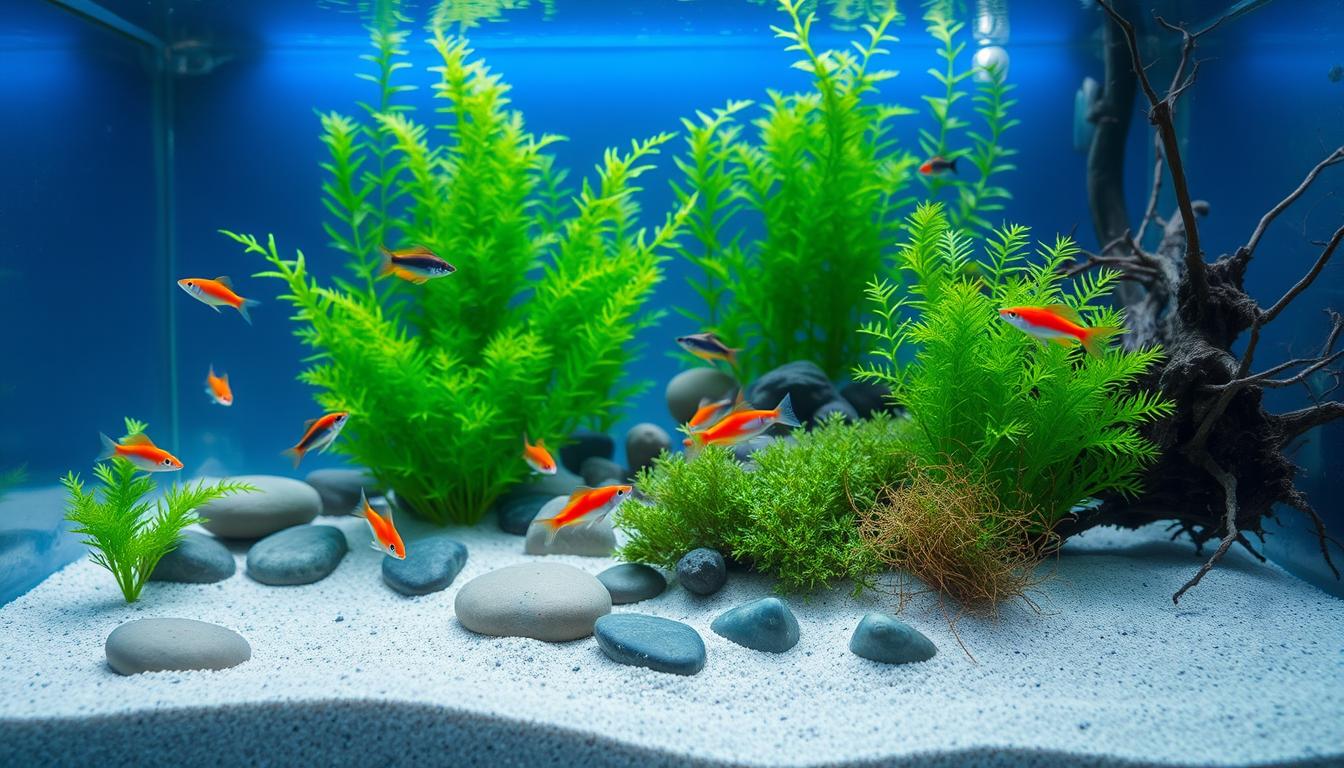
Before you pick fish, test your tap water. Use multi-test strips or a digital meter to read pH, GH (general hardness), and KH (carbonate hardness). If GH is at or below 4 degrees (~75 ppm), your water is naturally soft. This is perfect for many soft-water species without needing heavy treatment.
Soft water and low pH mimic South American and Southeast Asian blackwater habitats. These conditions shape which species will thrive in a soft water nano fish tank. Stable parameters matter more than chasing exact numbers — low KH can allow pH swings, so consistency is key.
When your tap water is already soft, it’s simpler to keep soft-water-adapted fish. This choice affects stocking, maintenance, and long-term success with nano fish for low pH water.
Species that often do well in acidic, soft nano setups include dwarf cichlids like rams and Apistogramma. Small characins and rasboras such as chili rasbora and the green neon are also good. Pygmy Corydoras, wild bettas like Betta macrostoma, dwarf rainbowfish, and Caridina shrimp such as Taiwan bee shrimp are also great choices.
Remember tank size and social needs when choosing stock. Schools, pairs, or colonies change space and filtration demands. Confirm breeder or store parameters for captive-bred specimens before you buy. This ensures the best match for your nano fish for soft water and the Best nano fish for soft water in your setup.
Understanding Nano Aquariums and Soft Water Parameters
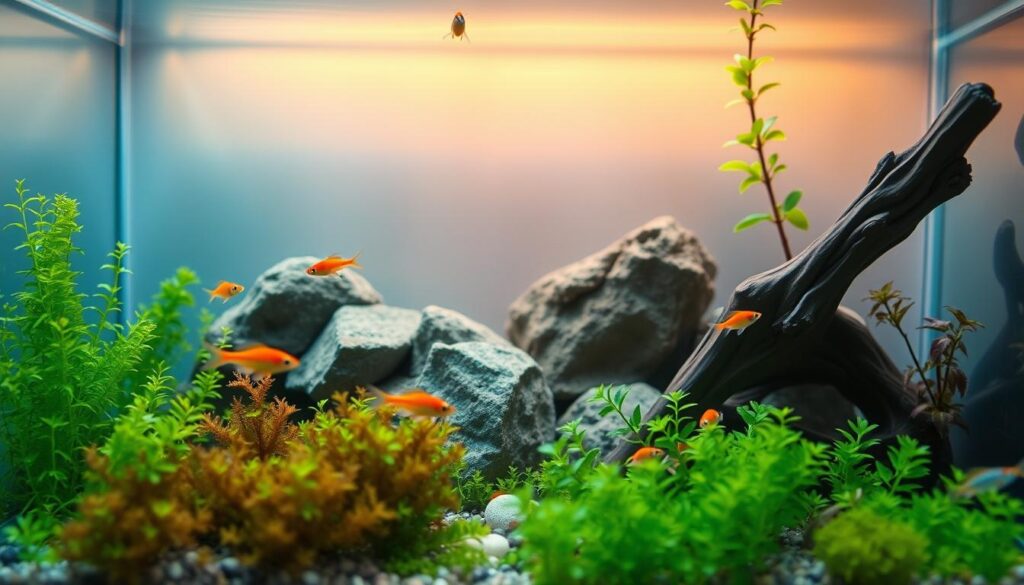
A nano aquarium is any tank under about 20 gallons. In such small volumes, temperature, ammonia, and pH can swing fast. You need tighter routines and careful observation when keeping small fish for soft water aquarium setups.
Soft water means low dissolved minerals, mainly calcium and magnesium. General hardness (GH) measures those minerals. GH ≤ 4° (roughly 75 ppm) is commonly classed as soft. Carbonate hardness (KH) shows buffering capacity. Low KH means the water resists pH change poorly, so pH can drop or spike quickly.
pH shows acidity or alkalinity of water. KH acts as a buffer for pH. GH indicates total mineral content. In soft water fish species tanks, low KH makes pH stability critical. Stable pH protects gills and eggs of sensitive species.
- Measure with multi-test strips for a quick check.
- Use liquid test kits for accurate GH and KH readings.
- Employ an electronic pH meter for frequent monitoring.
- Test weekly in nano tanks; test more often after changes.
To create soft water safely, many keepers use RODI (reverse osmosis deionized) water. You can re-mineralize slightly for shrimp or livebearers to meet species needs. Botanical methods such as Indian almond leaves, driftwood, or peat lower pH and add tannins. Some active buffering substrates suit shrimp setups by keeping pH gently acidic.
Altering hard tap water down to true soft water is harder than adding minerals to soft water. If your municipal water is very hard, pick species matched to your tap. This saves stress for you and your fish.
Keep records of GH, KH, and pH trends. That habit helps you spot drift early and keeps Nano fish for soft water flourishing. Small fish for soft water aquarium systems reward steady care and reliable testing routines.
Why Choose Soft Water for Nano Fish
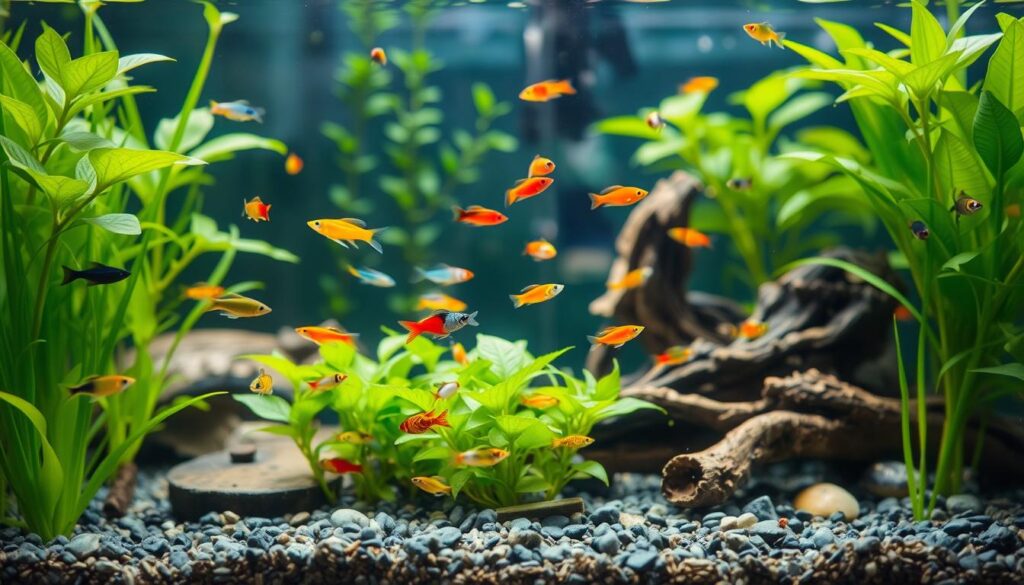
Choosing soft water is best for nano fish. It mimics their natural habitats. Fish from places like the Amazon and Borneo live in soft, acidic waters. This helps them stay healthy and behave naturally.
Keeping their water chemistry right is key for breeding. Fish like Apistogramma and Betta macrostoma breed better in soft water. Their colors also look more vibrant.
Soft water tanks support a rich ecosystem. Plants like Java fern and Anubias thrive. They also help create a home for tiny animals and shrimp.
Starting with soft water makes things easier. It’s simpler to add minerals than to remove them. Many use RODI water and add minerals to get the right balance.
But, soft water needs careful watching. It can’t handle big changes in pH. Regularly check the water and keep it stable. This is important for the health of your fish.
Key points to remember:
- Most nano species evolved in soft, acidic waters and thrive under similar conditions.
- Proper soft water chemistry improves health, breeding, and coloration.
- Suitable plants and botanicals support a balanced micro-ecosystem.
- Use RODI plus mineral dosing for precise control when needed.
- Watch KH and GH to avoid dangerous pH crashes and maintain stability.
Key Characteristics of Nano Fish
When setting up a small tank, size is important. Choose fish that are about 1 to 1.5 inches long. This keeps your tank balanced and lets you keep a lively group in a 5–10 gallon space.
Each fish species has its own social needs. Many soft water fish like to be in groups for safety and to show off. For example, rasboras and chili rasboras do well in schools of 6–12. Green neon rasboras prefer groups of 6–15.
It’s also important to consider how sensitive each fish is to water. Look for species that are adapted to soft water. Wild-type species and Caridina shrimp need very specific water conditions to stay healthy.
Temperature is another key factor. Some fish, like discus and certain rams, prefer warmer water around 84–86°F. Others, like celestial pearl danios and many rasboras, do best at 72–76°F. Make sure the temperature of your tank matches the needs of your fish.
Feeding your nano fish is usually simple. Most accept small pellets, flakes, and live foods like baby brine shrimp and daphnia. Shrimp need special supplements to grow and molt well.
Think about the temperament and how well different fish get along. Peaceful species are best for small tanks. Some fish, like cichlids, can be territorial, and others, like rams, might dig and move plants and substrate.
- Size and space: choose fish under 1.5 inches for true nano compatibility.
- Social behavior: prioritize schooling species for natural activity and reduced stress.
- Water sensitivity: select soft water fish species or captive-bred lines adapted to low GH and low pH.
- Temperature: match tank heat to species needs, from 72°F to the mid-80s for tropical varieties.
- Feeding: provide micro foods and occasional live or frozen treats for variety and health.
- Compatibility: favor peaceful community fish and avoid known territorial breeders in small tanks.
To pick the best nano fish for soft water, consider size, social needs, and water chemistry. This way, you can create a healthy and lively small fish for soft water aquarium.
Popular Nano Fish for Soft Water Environments
Choosing the right fish for a soft water tank is key. Here are some small species that do well in soft, acidic water. They make great additions to your soft water fish tank.
-
Chili Rasbora (Boraras brigittae) — Tank size: 5–10 gallons. Keep in schools of 8–12. Temperature: 74–82°F. pH: 5.5–7.0. Feed micro pellets and live daphnia for the best color. Plant cover and low flow bring out vivid red hues.
-
Celestial Pearl Danio (Danio margaritatus) — Tank size: 10 gallons. School of 8–15 recommended. Temperature: 72–76°F. pH: 6.0–7.0. Offer varied frozen and flake foods. Stable conditions and gentle filtration keep this species happy.
-
Green Neon Rasbora (Microdevario kubotai) — Tank size: 10 gallons. Best in groups of 10+. Temperature: 74–80°F. pH: 6.0–7.5. Feed small live or frozen foods and maintain a planted layout for security.
-
Pygmy Corydoras (Corydoras pygmaeus) — Tank size: 10–20 gallons. School 6–12. Temperature: 72–78°F. pH: 6.4–7.5. These bottom-dwellers eat nano sinking foods, Repashy, and baby brine shrimp. Provide fine sand and gentle flow.
-
Toothpick Fish (Indostomus paradoxus) — Tank size: 10 gallons. Keep in groups of 6. Temperature: 72–78°F. pH: 5.5–7.0. Low flow, dense plants, and sponge filtration suit their shy nature. Feed small live foods and micro pellets.
-
Taiwan Bee / Caridina Shrimp (Crystal and Bee shrimp) — Tank size: 5–10 gallons for species-only setups. Require very stable, low pH and low KH with GH about 4–7° (70–130 ppm) for many strains. Use RODI water with shrimp minerals and active substrates for breeding. Offer biofilm, algae wafers, and specialized shrimp foods.
-
Ram Cichlid (Mikrogeophagus ramirezi) — Tank size: 20+ gallons for pairs. Temperature: 78–86°F, softer water preferred. pH: 5.5–7.0. Provide hiding spots and visual breaks to reduce aggression. Feed varied diet including frozen bloodworms and high-quality pellets.
-
Discus (Symphysodon spp.) — Tank size: 50+ gallons. Not for true nano tanks but listed for soft-water setups in larger tanks. Temperature: 82–86°F. pH: slightly acidic. Require very stable water, small sinking or slow-moving foods like Vibra Bites and brine shrimp, and a mature system.
-
Betta macrostoma (Brunei beauty) — Tank size: 10–20 gallons. Can be kept in pairs. Temperature: 75–82°F. Wild habitat is very soft, tannin-stained water; captive-bred will tolerate pH 6–7. Provide dim light, floating plants, and catappa leaves. Offer live and frozen protein-rich foods.
-
Dwarf Rainbowfish (Pseudomugil spp., e.g., gertrudae, luminatus) — Tank size: 10–20 gallons. Keep in groups of 6+. Temperature: 72–78°F. pH: 6.0–7.5. Upper-level swimmers that prefer pristine, planted tanks and a varied diet to boost color.
Match the tank size, group numbers, and feeding to the species’ needs. These picks are some of the Best nano fish for soft water. They help you create a harmonious soft water fish tank.
When pairing species, choose ones with similar temperature and pH ranges. Use mature aquaria for delicate shrimp and keep mineral dosing steady for breeding success. With proper care, you’ll enjoy vibrant color and active behavior from your nano fish for soft water setups.
Acclimating Fish to Soft Water
When you bring home delicate species, acclimation is key. Many soft-water shrimp and wild-caught nano fish are sensitive to sudden changes. Try to match the water parameters from the store or breeder to reduce stress.
For very sensitive fish, use the float-and-drip method. Float the sealed bag to equalize temperature for 10–20 minutes. Then, set up airline tubing and start a slow drip from the tank into the bag. Aim for 60–120 minutes or longer for shrimp and wild specimens. This method allows for controlled mixing and adjustment.
For hardy, captive-bred species, a stepwise mixing routine works. Add measured amounts of tank water to the transport water every 10–15 minutes for 30–60 minutes until volumes match. This approach is faster and prevents shock.
If your tank uses RODI water, recreate the breeder’s mineral profile before moving fish. Use trusted brands like Brightwell, SaltyShrimp, or Seachem trace mixes to adjust GH and KH. Caridina shrimp need shrimp-specific mineral dosing to reach the desired GH/KH for long-term health in a nano fish for soft water tank.
Quarantine new arrivals when you can. A short quarantine in a small hospital tank helps you observe behavior, treat parasites, and avoid introducing pathogens. If space is tight, use a temporary bottled or partitioned quarantine that lets you monitor feeding, breathing, and color.
After acclimation, keep changes gradual. Avoid sudden pH, temperature, or hardness swings in the first week. Feed lightly for a few days and watch for stress signs such as gasping, clamped fins, or hiding. Careful early handling pays off in better survival and health under soft water nano fish care routines.
Essential Water Parameters for Nano Fish
Keeping soft water fish in a nano tank means aiming for gentle water ranges. The general hardness (GH) for many soft-water species is around 0–4° (0–70 ppm). Some shrimp and breeding setups might need GH 4–7° (70–130 ppm). Always check the breeder’s notes for specific needs.
Water hardness (KH) is often low in blackwater-style tanks. Very soft setups usually have 0–2° KH. It’s important to watch the pH closely when KH is low to avoid sudden drops. A small buffer can help prevent pH crashes while keeping the water soft.
The pH for most soft water nano fish care is acidic to neutral. It usually ranges from 5.0–7.0, depending on the species. Wild Betta macrostoma like very acidic water, while rams and discus prefer slightly acidic to neutral conditions in captivity.
Temperature varies based on the species you keep. Tropical cichlids like discus and some Bolivian rams do best at 84–86°F (29–30°C). Small community fish such as pygmy corydoras, celestial pearl danios, and many rasboras thrive at 72–78°F (22–26°C). Taiwan bee shrimp prefer 68–75°F (20–27°C).
Regular water testing is key. Test for ammonia, nitrite, nitrate, pH, GH, and KH at least weekly. In the first weeks after setting up a nano tank, test more often because changes happen faster in small volumes.
Stability is more important than hitting a perfect number. Rapid changes stress fish and shrimp more than a steady, modest value. Use a consistent water source, perform small frequent water changes, and keep heaters steady to avoid shock.
Prepare and treat water with purpose. Use RODI water for precise control of GH and KH. For softening or tannin tint, add peat, driftwood, or Indian almond (catappa) leaves. Add trace minerals when shrimp or breeding requires higher GH.
Keep a short checklist for daily and weekly care:
- Daily: observe behavior, check heater and filter flow.
- Weekly: test ammonia, nitrite, nitrate, pH, GH, and KH.
- Monthly: inspect substrate for buildup and top off RODI or conditioned water.
By balancing these parameters, you can keep healthy nano fish in soft water setups. Follow species-specific guidance when available, and adjust slowly to protect sensitive inhabitants.
Suitable Tank Mates for Nano Fish
When picking tank mates, look for matches in temperament, size, and water needs. Peaceful fish go well together. Make sure their water parameters and temperature match.
Consider their swimming level to keep the tank balanced. Mid and upper swimmers like chili rasbora and green neon rasbora fill the open water. Bottom dwellers, such as pygmy Corydoras, stay near the substrate.
Keep schooling numbers in mind to reduce stress. Aim for groups like 8–12 chili rasboras. This helps lower aggression and keeps your fish safe.
- Best nano fish for soft water: chili rasbora, celestial pearl danios, green neon rasbora, Pseudomugil dwarf rainbowfish.
- Small fish for soft water aquarium bottom dwellers: pygmy Corydoras, Otocinclus where parameters allow.
- Shrimp and microfauna: Caridina shrimp can work but often need species-only or extremely peaceful communities.
Be careful with shrimp. Many small fish will eat baby shrimp. Caridina shrimp need their own tanks or very peaceful neighbors.
Think twice about semi-territorial fish for small tanks. Wild bettas and Apistogramma can work in larger tanks (20+ gallons). They need hiding spots to avoid fights.
Don’t overstock your tank. Nano tanks are sensitive to waste. Fewer, well-chosen fish are better than many that don’t match.
Use plants and decorations to create hiding spots. Mid-level plants are good for schooling fish. Leaf litter and caves are great for bottom dwellers. Dense planting is best for shrimp. A well-thought-out setup lets each fish behave naturally.
Maintaining a Healthy Nano Aquarium
To keep soft water fish safe in a small tank, stick to a routine. Test the water’s pH, GH, KH, ammonia, nitrite, and nitrate every week. Change the water a little at a time, 10–25%, to keep the tank stable.
Choose a gentle filter that helps the tank cycle. Sponge filters and low-flow hang-on-back filters are good for shrimp and delicate fish. They provide steady, safe filtration.
Active substrates and botanicals help shape the water’s chemistry. Driftwood and Indian almond leaves can lower the pH a bit. Leaf litter supports microfauna and natural grazing for fish and shrimp.
Plants are key to keeping the water stable and providing hiding spots. Java fern, Anubias, Cryptocoryne, Amazon sword, Vallisneria, and hornwort do well in soft water. If you use CO2, watch the pH closely in low-KH systems.
- Feed sparingly: offer what your fish eat in 1–2 minutes.
- Use micro-pellets, baby brine shrimp, and specialty diets for small mouths.
- Remove uneaten food promptly to prevent ammonia spikes.
Quarantine new fish to prevent disease. Avoid sudden changes in the tank’s parameters. Keep the substrate and filter media clean. Watch your fish daily for signs of stress or illness.
Shrimp need extra care for minerals. Give them calcium or trace mineral supplements for healthy molts. Aim for steady GH and KH values that match your species’ needs.
- Weekly: water tests, 10–25% water change, check filter media.
- Monthly: deep-clean sponge filters, prune plants, remove leaf litter buildup.
- As needed: quarantine and treat new livestock before adding to the display.
By following these steps, you can reduce stress and disease risk. This will help your soft water fish and Nano fish thrive in their tank.
Common Mistakes When Keeping Nano Fish
One big mistake is ignoring the chemistry of your tap water. Always test the pH, GH, and KH before adding fish. If your tap water is hard or alkaline, you might need to treat it or pick fish that fit your water type. This helps prevent stress and health issues in your nano fish.
Making sudden changes to your water’s chemistry can be very harmful. Quick changes in pH, GH, or temperature can stress and make your fish sick. Try to avoid big water changes and use slow adjustments to keep your tank stable.
Too many fish or too much food can quickly raise ammonia and nitrite levels. Keep your fish list small and feed them just enough. This is very important for nano fish, as they live in small spaces with weak buffering capacity.
Ignoring the need for buffering can lead to pH crashes. If your water’s KH is low, it’s more likely to swing wildly. Keep an eye on your carbonate hardness and use peat or other methods to stabilize your soft water tank.
Choosing the wrong tank mates can be disastrous. Avoid putting aggressive or territorial fish with your small tank’s residents. Make sure the size and temperament of your fish and shrimp match to keep them all happy in your soft water tank.
Shrimp are very sensitive and need the right conditions. They require specific GH and pH levels and do best in mature tanks. New hobbyists often lose shrimp due to unstable conditions. Make sure your tank is stable before introducing these delicate creatures.
Not quarantining new fish and plants can spread disease quickly. Always quarantine new additions to prevent pathogens from entering your tank. One infected fish can quickly spread disease in a small tank.
- Test your tap water before stocking.
- Make slow, measured water changes.
- Stock conservatively and feed less.
- Monitor KH and stabilize with natural methods if needed.
- Choose compatible tank mates and respect shrimp needs.
- Quarantine new additions to protect your tank.
By following these steps, you can avoid common mistakes. This will help you care for your nano fish better, keep them healthy, and enjoy a thriving tank.
Feeding Guidelines for Nano Fish
Feeding small fish in soft water aquariums requires tiny, nutrient-rich portions. Opt for micro-pellets, crushed flakes, baby brine shrimp, daphnia, micro-worms, or finely crushed frozen foods. These fit their small mouths and help keep the water quality good in your nano fish tank.
Each species has its own feeding needs. Discus and German blue rams do well on a mix of Vibrance or Tetra products, frozen meals, live brine shrimp, and small pellets. Pygmy corydoras like sinking nano pellets, Repashy gel food, baby brine shrimp, and sometimes tubifex.
Rasboras and small danios prefer crushed flakes and micro-pellets, with live foods for better color. Caridina shrimp need shrimp foods with calcium and trace minerals, plus blanched veggies and biofilm. Wild-type bettas and dwarf cichlids enjoy meaty micro foods like daphnia, brine shrimp, and high-quality sinking pellets.
Feeding amounts are key in nano systems. Feed small amounts once or twice a day, making sure they’re all eaten in one to two minutes. Overfeeding can quickly raise ammonia and nitrate, stressing the fish and undoing the care for soft water nano fish.
- Use target feeding for shy species with a pipette or feeding ring.
- Offer live foods periodically to encourage breeding and vivid coloration.
- Remove uneaten food promptly to prevent spikes in ammonia.
Think about adding extra steps to your care routine. A scheduled fasting day can help balance the community. Watch the water chemistry after feeding, adjusting portions if nitrate levels rise. These easy steps will keep your nano fish healthy for a long time.
Resources for Nano Fish Enthuasiasts
Begin with good testing and gear to care for your soft water nano fish. Use RODI systems from APEC or iSpring for low-mineral water. Replace filters as needed and check pH with Milwaukee or Apera meters.
Get reliable test kits from API or Seachem to check water quality. Add a sponge filter for small tanks. These tools help match water to your fish’s needs.
- RODI systems: APEC, iSpring
- Test kits: API, Seachem
- pH meters: Milwaukee, Apera
- Filtration: sponge filters for nano tanks
Trust care guides for specific fish advice. Read about discus, German and Bolivian rams, Caridina shrimp, and pygmy corydoras. These guides offer water parameters for your plan.
Buy fish from good local stores, online retailers, or breeders. Ask about the water conditions before buying. This helps your fish adjust better to their new home.
Choose plants and substrates for soft water. Look for active buffering substrates and shrimp-specific mixes. Vendors like ADA and catappa leaves help create stable habitats.
- Find plant and substrate vendors that list buffering properties.
- Buy catappa leaves and botanicals for natural tannins.
- Match substrate choice to the species you plan to keep.
Join groups and clubs for local tips. Online forums and Facebook groups offer quick help. Vendor support emails can answer specific questions.
If unsure, ask for advice. Experienced hobbyists and breeders can help with your setup. Use their knowledge to improve your care routine.
Final Thoughts on Soft Water Nano Aquariums
First, test your tap water to learn about pH, GH, and KH levels. Pick fish that fit your water’s natural chemistry. This way, you avoid extreme water changes.
Stability is key, not perfect numbers. Keeping water conditions steady helps prevent stress and disease in your tank.
Next, regularly check pH, GH, and KH levels. Decide if you’ll use RODI water, peat, or botanicals to soften the water. Or choose fish that already thrive in soft water.
Think carefully about your tank’s size and how many fish you’ll put in. Avoid overcrowding by planning your stocking carefully.
For beginners, consider chili rasboras, pygmy corydoras, and celestial pearl danios. Green neon rasboras and Caridina shrimp are also good choices. Dwarf cichlids like German rams are great if your tank’s temperature is right.
These fish are known for doing well in soft water. With the right care, they can make your tank beautiful and healthy.
Keep the KH level stable to prevent pH drops. Acclimate new fish slowly and quarantine them first. Regular testing and small water changes are also important.
Keep learning from experts and local aquarium stores. They can share tips on keeping your fish healthy and breeding them successfully.
Leave a Reply