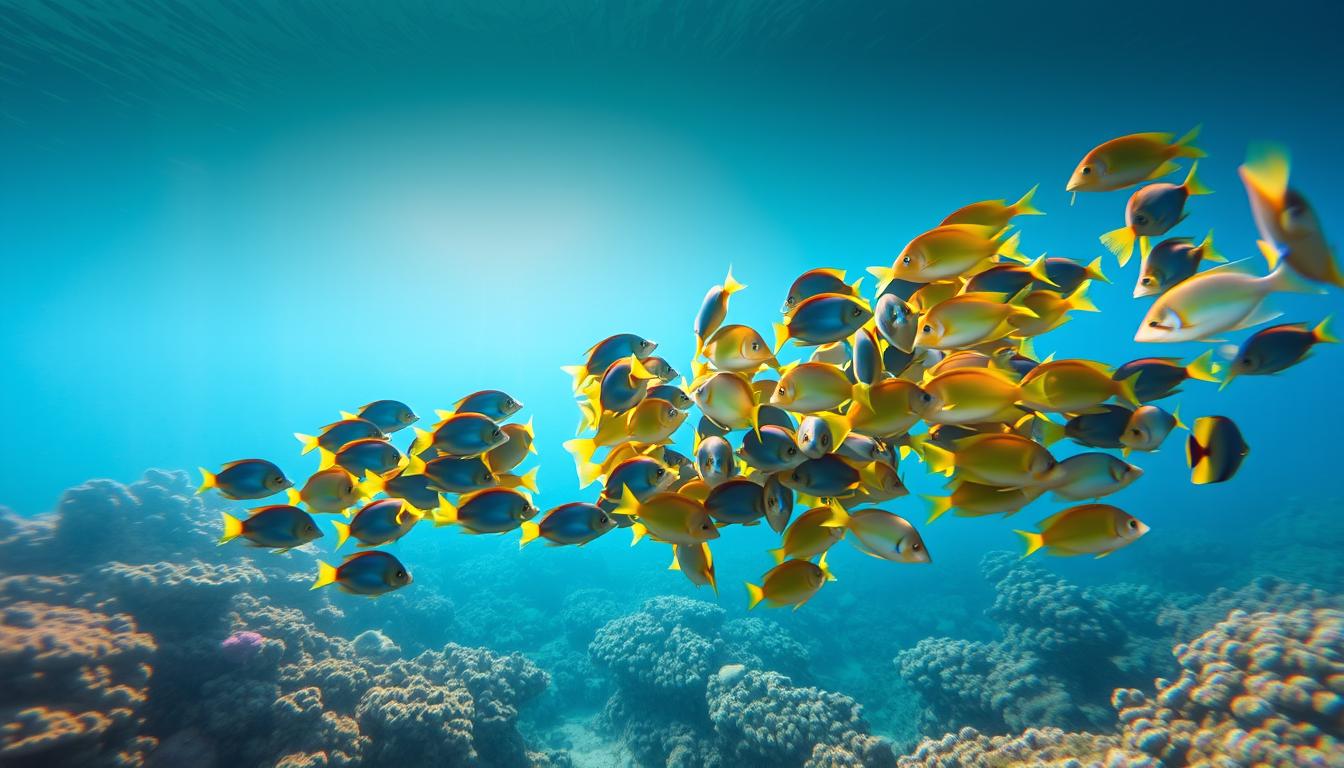
You want your nano tank to look great and your fish to be happy. Encouraging natural schooling behavior in nano aquariums helps a lot. It reduces stress, improves foraging, and makes social bonds clearer.
When fish move in their natural way, your tank becomes lively and organized. This makes it stand out in any room.
Think of small groups of fish like small-group learning. A structured, predictable environment is key. In classrooms, clear schedules and repeated activities build trust and cooperation.
The same is true for nano fish behavior. Consistent feeding times, steady lighting, and reliable water flow help fish school together.
Small changes can make a big difference. You’ll learn about biology, habitat design, species selection, and more. Resources like National Geographic and Monterey Bay Aquarium live cams can inspire your setup.
In the next sections, you’ll get detailed advice on environment design, species choice, and more. This will help you create a healthy schooling environment in your nano community.
Understanding Schooling Behavior in Nano-Environments
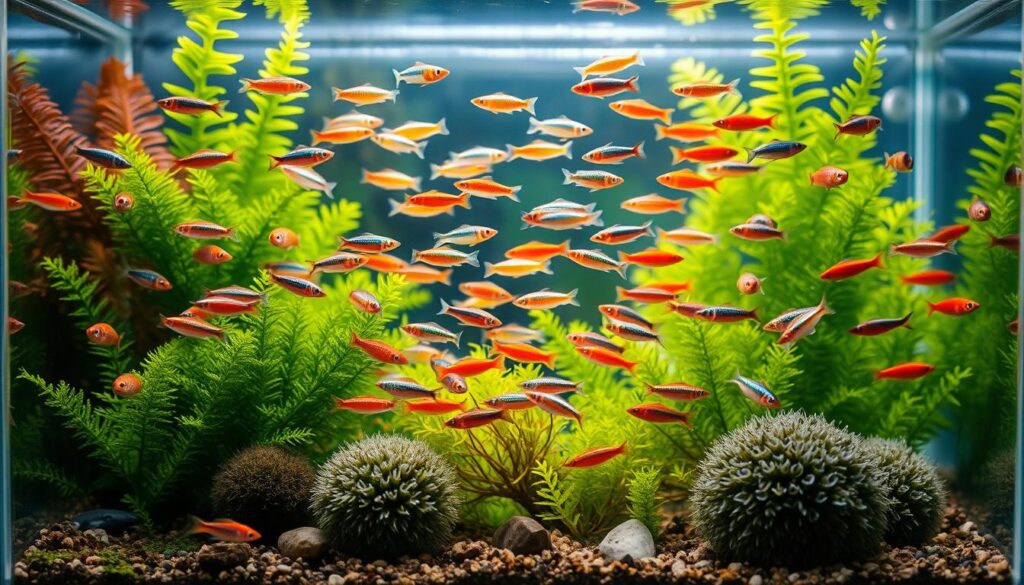
Schooling and shoaling are different. Schooling means swimming together in a tight group. Shoaling is more relaxed, with no exact coordination. In nano tanks, you aim for a cohesive shoaling that looks like schooling.
Many things influence nano fish social behavior. Being in a group helps them avoid predators. It also makes finding food easier. Mating and swimming together are other benefits. Learning from each other is also important.
Size is key in small tanks. Limited space changes how fish swim and react. Choose small fish that don’t fight over space to keep the group together.
Use simple rules to make your tank better. A clear setup reduces stress and helps fish work together. Keep things the same with lighting and food. Avoid sudden changes to keep things calm and natural.
- Watch how fish school in real life, like in public aquariums and nature streams.
- Join aquarium clubs for tips and hands-on advice for nano tanks.
Creating the Right Environment for Small Aquariums
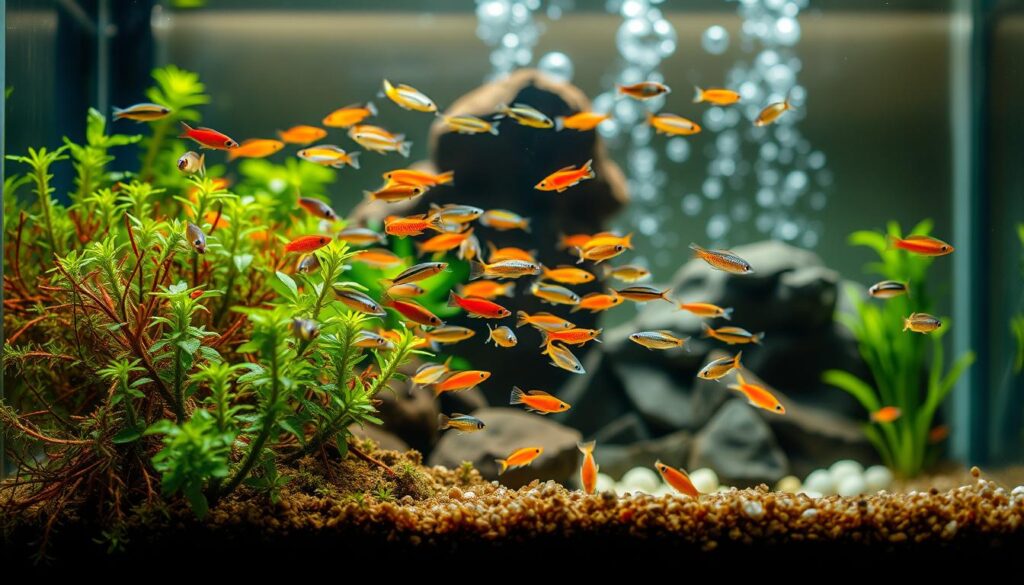
How you design your tank affects your fish’s movement. Use low-profile decorations and open spaces for them to swim together. Arrange flat rocks or shelves to guide their paths and keep them moving horizontally.
Plants like Java fern and Anubias help create landmarks and gentle barriers. For easy care, consider silk plants. Add hardscape to direct movement and reduce chaos, just like airport layouts.
Lighting and schedules influence your fish’s daily life. Use programmable LED lights for a consistent day-night cycle. This helps your fish swim together at the same times, promoting natural behavior.
Choose the right filtration and flow for your fish. Gentle currents are best for many species. Use sponge filters and adjustable powerheads for soft flow. Avoid strong currents that disrupt schooling.
How many fish you have affects their behavior and water quality. Stock your tank with enough fish to form a school. Too many fish can lead to poor water quality and disrupt schooling.
Make sure your tank is safe for your fish. Use smooth decorations and avoid sharp edges. Provide plenty of hiding spots and feeding areas to reduce stress and promote social harmony.
- Sponge filters for gentle filtration
- Adjustable nano-powerheads to tune flow
- Programmable LED lights for gradual photoperiods
- Hardscape and low shelves to define lanes
- Plants like Java fern and Anubias for low-flow cover
Small changes can make a big difference in your tank. With the right layout, lighting, and flow, your fish will swim together more naturally.
Selecting the Right Species for Your School
Choose species that are small as adults and don’t produce much waste. Look for fish that like to be in groups. They should show clear behavior patterns and prefer living together.
Use these selection criteria:
- Small adult size to fit limited swim space.
- Non‑territorial temperament to reduce conflict.
- Compatible water‑parameter needs so all members thrive.
- Low waste production to protect water quality.
Examples of reliable nano schooling species include ember tetras (Hyphessobrycon amandae), Celestial pearl danios (Danio margaritatus) for true micro setups, and Endler’s livebearers for shoaling tendencies in very small tanks.
Where space allows, neon tetras (Paracheirodon innesi) and Harlequin rasboras (Trigonostigma heteromorpha) work well in slightly larger nanos. These choices reflect common nano fish behavior patterns and support cohesive nano fish grouping when numbers are right.
Group size matters. Many tetras and rasboras prefer at least 6–10 individuals for reliable schooling. Smaller species such as Celestial pearl danios form tight groups with 6–8 fish. Follow species‑specific recommendations to encourage natural grouping and reduce stress.
Match schooling species with peaceful tankmates. Avoid larger or aggressive fish that break schools and stress smaller species. Juveniles often form bonds more readily, so rearing young fish together can strengthen social cohesion similar to small‑group formation in cooperative learning settings.
Research species needs using reputable sources such as the American Fisheries Society publications, local aquarium clubs, and established aquarium retailers. Good research keeps your nano schooling fish healthy and preserves authentic nano fish behavior patterns within your nano fish grouping.
Feeding Practices that Promote Schooling
Set a steady feeding schedule for your fish. This helps them know when to eat. It also reduces stress and makes them forage together better.
Feed food across the water column to keep fish together. For midwater species, scatter small portions. This method helps fish feed as a unit.
- Use multiple feeding points to cut competition.
- Consider an automatic feeder when you are away.
- Target-feed shy individuals with a pipette or turkey baster.
Choose micro foods that match species needs. High-quality micro pellets, finely crushed flakes, and frozen baby brine shrimp are good. They meet nutrition needs and reduce fighting.
Avoid overfeeding. Leftover food harms water quality and causes fish to fight. Offer measured portions and watch clearing times. If food sits after 30–60 seconds, cut back the next feeding.
Use enrichment feeds sparingly to stimulate natural chase and group cohesion. Occasional live or frozen treats can trigger collective pursuit. Introduce these items gradually to prevent ammonia spikes in small tanks.
- Observe how the group responds and adjust portion size.
- Rotate food types to cover protein and plant needs.
- Keep feeding areas clear of debris to avoid hidden leftovers.
Duplicate resources to lower aggression and keep the school intact. Multiple feeding sites and varied food presentations help maintain balanced nano fish behavior and support lasting nano tank schooling.
Social Interaction and Stimuli
Visual cues are key in nano community behavior. Make sure fish have clear views and simple landmarks. This helps them see and mirror each other.
Plants trimmed to allow open swim lanes help fish align and follow with less confusion.
Enrichment shapes nano fish social behavior. Use a gentle current and varied water-column structure. Also, cluster plants to create predictable routes for movement.
These features encourage grouping and synchronized swimming. They help avoid isolated hiding spots.
Social learning is vital in nano fish school behavior. Young or bold individuals often lead the way. Others follow their lead.
Introduce juveniles together or place newcomers near an established group. This lets them learn paths, feeding spots, and safe zones through observation.
Minimize disturbance to protect nano community behavior. Keep handling brief and avoid sudden lighting changes. Choose quiet equipment.
A steady maintenance routine helps fish settle into regular social rhythms. This reduces breakups in the school.
Try low-risk behavioral enrichment to spark interest without stress. Brief mirror exposure and floating leaf litter for microhabitats can promote exploration. Schedule these changes so the group can navigate and reestablish coordination over time.
- Provide unobstructed sightlines and simple landmarks.
- Create gentle currents and layered water-column structure.
- Introduce groups of juveniles together when possible.
- Use predictable maintenance and quiet gear.
- Offer brief mirror tests and controlled exploration days.
Understanding Stress Factors in Small Groups
Stress in a nano setup shows up fast. Poor water quality from ammonia, nitrite, or sudden nitrate spikes will change nano fish behavior patterns. You may notice erratic schooling or single fish breaking off from the group.
Overcrowding and incompatible tankmates push stress higher. Strong turbulent currents and sudden shifts in temperature or lighting can fragment nano fish grouping. Lack of hiding spots makes fish more skittish and prone to clamped fins.
- Common stressors: ammonia, nitrite, nitrate spikes, overcrowding, incompatible tankmates.
- Physical triggers: abrupt light or temperature changes, strong currents, too few shelters.
Watch for behavioral signs that signal trouble. Isolated individuals, increased hiding, loss of color, rapid gill movement, decreased appetite, and heightened aggression all point to stress. Fragmented or erratic schooling is a clear sign your nano aquarium behavior has been disrupted.
Design your tank with clear zones and predictable routines to reduce stress. Think like an architect: crowded hallways and unclear cues make people anxious in airports or classrooms. In tanks, defined open areas, planted borders, and duplicate hiding sites help stabilize nano fish grouping.
- Prevention: test water regularly, avoid overstocking, provide duplicate hiding spots, and choose compatible species.
- Ease transitions: change temperature and lighting gradually over hours, not minutes.
If you detect dangerous parameters, act fast. Do an immediate water test and perform partial water changes. Isolate injured or heavily distressed fish in a quarantine tank until they recover. Check filters, heaters, and pumps to confirm equipment is functioning.
Consistent monitoring and small, steady adjustments keep nano fish behavior patterns healthy. Stable conditions help schooling remain cohesive and reduce the chance of sudden breakdowns in nano aquarium behavior.
Introducing New Fish to Your Group
Quarantine new fish for at least two weeks in a separate tank. Use API test kits to check water chemistry and watch for illness signs. Treat any issues before moving them to protect your nano tank schooling.
Gradually acclimate new fish to prevent shock. Float sealed bags to match temperatures or use drip acclimation for an hour. Introduce them during quiet times to reduce stress and help them adjust.
Introduce several new fish together instead of one. This helps them bond and reduces isolation. Young fish added together often form strong groups as they grow.
Use visual barriers or change the layout to break sight lines. Partitions and plants give newcomers places to hide and explore. This reduces aggression and helps them integrate.
- Stage introductions: let newcomers settle in a planted refuge before moving to open areas.
- Watch behavior closely for the first few days: look for chasing, hiding, or exclusion.
- Be ready to tweak décor to reset territories if dominance escalates.
Watch schooling patterns over days and weeks. Look for signs of stress or exclusion and act fast. Proper care helps keep your nano fish social and stable.
Monitoring Schooling Dynamics Over Time
Set a routine you can stick to. Do brief daily checks at the same times and a deeper weekly review. Predictable observation helps you spot subtle shifts in nano fish school behavior.
Keep a simple log. Note the date, temperature, pH, ammonia, nitrite, nitrate, feeding times, group size, and any unusual signs. Recording interventions gives you a timeline for changes in nano fish social behavior.
Watch specific cues. Track group cohesion, which individuals lead, feeding synchrony, signs of dominance or bullying, and physical health like color and fin condition. These markers reveal trends in nano community behavior.
Use video for comparison. Short clips let you replay moments and compare behavior across weeks. Share anonymized footage with local aquarium clubs for input when you need a second opinion on nano fish school behavior.
- Daily: quick visual check for cohesion and appetite.
- Weekly: measure water parameters and log photos or clips.
- Monthly: review trends and note recurring issues.
Set clear intervention criteria. Persistent fragmentation, escalating aggression, repeated disease, or unstable water values call for action. Consider partial water changes, temporary rehoming, splitting groups, or consulting a veterinarian.
Plan long-term adjustments. Based on logs, you may change stocking density, rearrange décor, or shift feeding routines to support healthy nano fish social behavior. Small, measured changes help preserve stable nano community behavior over time.
Maintaining Water Quality for Healthy Schools
Water quality is key to peace in small tanks. Ammonia and nitrite can harm fish even at low levels. Nitrate build-up stresses fish and disrupts their social groups.
Plan your filtration before adding fish. Choose sponge filters, small hang-on-back units, or low-output canisters. Make sure there’s biological filtration for natural fish behavior.
Use trusted kits from API or Seachem to test water. Check ammonia, nitrite, nitrate, pH, and temperature weekly. Test again after any changes or new fish to see how they affect the tank.
- Partial water changes: 10–20% weekly, adjusted by bioload.
- Sponge filter care: rinse in tank water to preserve bacteria.
- Gravel vacuuming: focus around décor to remove trapped detritus.
- Replace mechanical media on a schedule to avoid clogging.
Manage feeding and bioload to reduce waste. Feed small amounts and less often if food is left. Don’t overstock your tank. Provide hiding spots and feeding areas to spread out activity and waste.
If you find ammonia or nitrite, act quickly. Do a partial water change, clean filters, and quarantine sick fish. Fast action keeps the group healthy and social.
Learn from experts like the American Aquarium Society and nano keepers on YouTube. Their tips will help you keep your tank’s water stable and your fish happy.
Enhancing Your Knowledge Continuously
Keep learning about schooling behavior in nano by using structured resources. Read articles from National Geographic and Monterey Bay Aquarium. Also, observe live cams on Explore.org to see real-time nano fish behavior patterns.
Professional publications from the American Aquarium Society and local aquarium clubs offer detailed studies. You can apply these to your tank.
Join a community to deepen practical skills and share observations. Local clubs, FishLore, and Reddit’s r/Aquariums let you compare notes. Find species-specific advice and arrange small-group tank visits.
These community exchanges mirror the benefits of homeschool co-ops. You get shared expertise, hands-on practice, and social learning.
Practice structured observation with a behavioral journal and short video clips. Note changes across seasons, feeding times, and after decor or flow adjustments. This helps track schooling behavior in nano.
Use those records to inform quarantine routines, feeding schedules, and habitat tweaks. This supports predictable group dynamics.
Take workshops and online courses on fish behavior and nano techniques. Then, form a local nano-keeper group to swap ideas and troubleshoot together. For immediate action, choose schooling species wisely, set stable flow and lighting, and keep consistent maintenance routines.
Quarantine new arrivals, monitor behavior, and join a community. This way, you can keep improving your approach.
Leave a Reply