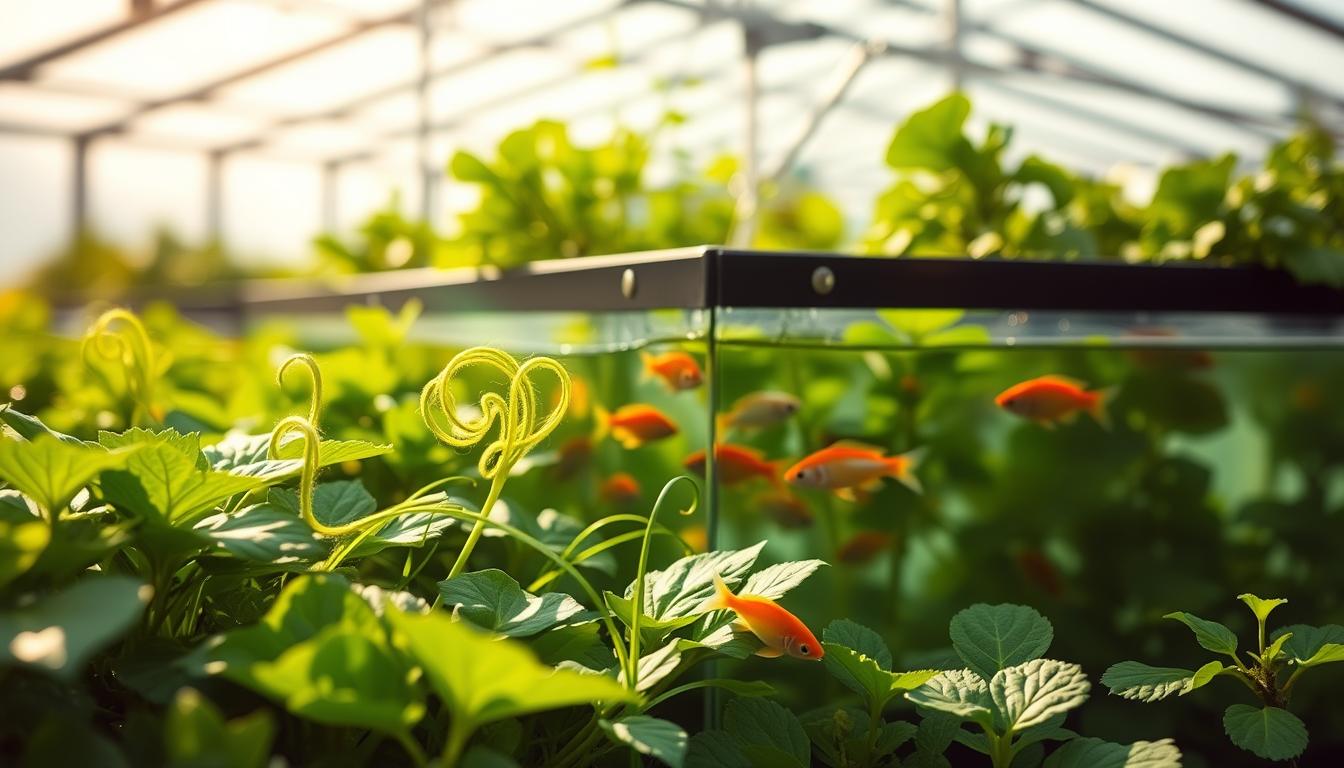
Adjusting light duration helps plants grow better than algae. This is done by balancing light, nutrients, and CO2 in planted aquariums. This guide will show you how to set light duration for healthy plants and less algae.
Begin with small changes and wait about two weeks to see results. A new tank looks clean at first but algae can grow when resources are not balanced.
Lighting is key for photosynthesis and the tank’s look. Finding the right photoperiod balance is important. It depends on the plants and CO2 levels. Most find 6–10 hours of light works well.
In this article, you’ll learn about setting light duration. You’ll also discover how to use timers and smart LEDs. We’ll guide you to slowly improve plant growth over algae.
Understanding Photoperiodism in Plants
Photoperiodism is how plants use day length to control photosynthesis, growth, and respiration. They need a mix of light and dark each day. This lets them grow by day and rest by night.
Plants breathe at night, using oxygen and sugars. Running lights all day stops this rest and can lead to algae growth. It’s important to avoid constant light to keep a balanced ecosystem.
Regular daily light helps plants follow a routine. Adjusting lighting time reduces stress in plants and animals. This makes them more stable.
Changing light duration affects plant growth. Too little light makes stems and leaves weak. Adjusting light helps plants grow strong and healthy.
Biological clocks in plants respond to light changes. Simulated sunrise and sunset help plants adjust smoothly. These changes support steady growth and health.
Key takeaway: create a stable day/night cycle for your plants. Give them a true dark period to support growth and prevent algae. This helps plants thrive.
The Role of Light Duration in Plant Health
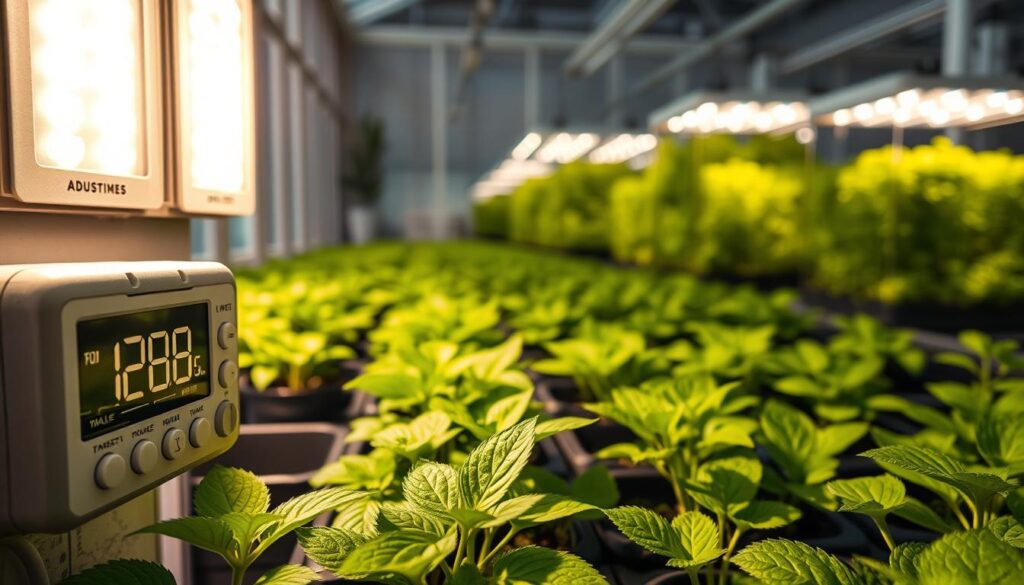
Light duration is key to how much light your plants get each day. Photosynthesis needs a mix of light, so the total light matters more than just one bright moment. Think of light duration, intensity, and spectrum as a team that gives energy to plants.
In planted freshwater tanks, a moderate PAR of 50–150 µmol/m²/s is common. This intensity means plants usually need 8–10 hours of light to grow well and prevent algae. When setting light duration, aim for consistent cycles, not sudden changes.
New setups should start with 6–8 hours of light. Then, slowly increase it as plants grow and spread. For more mature systems, 8–12 hours might be needed, depending on the plants and light. If algae grows too much, first try reducing the light hours before changing the light’s power or fertilizers.
Changing light duration means balancing hours with light power. Strong lights need less time to avoid too much light. Weaker lights can have a bit longer day to give the same energy. Watch your plants’ leaves, growth, and algae to find the best light time.
- Begin with conservative light duration settings for new plants.
- Match duration to intensity: stronger lights need fewer hours.
- Use 8–10 hours as a general target, tweak per species needs.
- If algae rises, reduce duration before making major changes.
Factors Influencing Light Adjustment
Before you adjust the lighting in your planted tank, consider a few things. The location is key because natural light changes with the weather and seasons. Try to avoid direct sunlight to keep the light consistent and prevent surprises.
The quality of your lighting fixtures is also important. Choose lights designed for planted tanks, like those from Fluval or Kessil. They provide the right brightness, spread, and spectrum. A good timer ensures the lights turn on and off at the same time every day.
- Plant type and maturity — classify species as low, moderate, or high light so you match hours and intensity to their needs.
- CO2 and nutrient levels — higher light typically needs stable CO2 and nutrients to prevent deficiencies and algae blooms.
- Water depth — PAR drops with depth, so deeper tanks may need stronger fixtures or longer runs for the same effect.
- Seasonal daylight changes — lengthening or shortening natural days affects how you approach setting light duration.
The spectrum and PAR penetration are key when choosing light adjustment techniques. Blue wavelengths reach deep water, red supports photosynthesis in freshwater plants, and full-spectrum white mimics natural daylight. Make sure the spectrum of your fixtures matches your plants and measure PAR at plant height when possible.
To apply this checklist, start by assessing your plants and your CO2 and nutrient plan. Test your hardware limits. Use this information to set the light duration. This way, your photoperiod supports growth without encouraging algae.
Methods for Adjusting Light Duration
Start by using a basic electrical outlet timer to make a steady schedule. Timers are more reliable than manual switches. They give you a repeatable baseline for light adjustment techniques.
Begin new tanks with a short photoperiod, such as 6–8 hours. Increase duration slowly over days or weeks. This lets plants acclimate. When you change only one variable at a time, you can judge results clearly.
- Use split photoperiods to reduce stress. An “afternoon siesta” breaks the day into morning and evening sessions. This limits continuous exposure.
- Try ramping sunrise and sunset instead of abrupt on/off. Smooth transitions ease plants into new intensities. This reduces shock.
- When you need finer control, adopt smart LED fixtures and manufacturer apps like AI Blade or GHL. These apps offer precise channel control and scheduling.
If your fixture lacks true dimming, you can raise the light or partially cover LEDs. This lowers effective intensity. It’s a workaround for adjusting light interval or testing lower levels without buying new equipment.
- Set a clear, consistent timer. Consistency beats constant tinkering.
- Implement one change at a time. Wait several days before the next adjustment.
- Use smart controls for complex routines: ramp-up, channel mixes, and acclimation modes. These make light duration customization precise.
- Monitor plant response and algae trends to decide whether to shorten or split the photoperiod.
Practical steps for daily use: program the timer, choose ramping if available, and keep notes on each change. These habits will help you refine adjusting light interval and master light duration customization for healthier plants.
Best Light Durations for Common Plants
Choose the right light hours for your tank’s plants. Low-light plants like Java Fern, Anubias, and Cryptocoryne need 6–8 hours a day. Start with less light to help them grow.
For plants that need more light, like Amazon Sword and Vallisneria, go for 8–10 hours. Use a light intensity of 50–150 µmol/m²/s. This helps them grow well without too much stress.
High-light plants, such as red varieties and carpeting species, also need 8–10 hours. But they require stronger lights and careful nutrient balance to avoid algae. If the light is too strong, cut back on hours to prevent algae.
- Newly planted tanks: begin with 6–8 hours and increase as plants mature.
- If algae appears: reduce the photoperiod and reassess nutrient dosing.
- Measure PAR where plants grow and adjust both intensity and setting light duration accordingl
Know your plants’ needs and start with the right light hours. Then, adjust based on how they grow and if algae shows up. Aim for the best light hours for healthy growth and less algae.
Balancing Light Duration to Control Algae Growth
Algae love too much light and an imbalance of resources. When your tank or greenhouse gets too much or poorly timed light, algae blooms quickly. Plants and algae fight for the same nutrients and CO2, so you need to balance both.
Start by controlling the photoperiod. Shortening the daily light time is a simple fix for algae spikes. This gives plants a dark time to breathe and stops algae from getting too much light.
Customize light duration to set clear on/off times. Use timers and smart controllers to avoid long, random light periods that algae love. Consistent light cycles help plants beat algae by keeping photosynthesis and respiration steady.
Adjusting light duration is most effective with other steps like nutrient management and maintenance. Lower light intensity, increase water changes, and fix nutrient imbalances. Adding algae-eating species like Nerite snails or Otocinclus catfish can also help, but it’s not the only solution.
- When you see algae, quickly switch to a shorter photoperiod.
- Reduce light intensity gradually, not all at once.
- Make sure timers work well to prevent sudden long light periods.
- Combine adjusting light time with checking nutrients and CO2 levels.
Many aquarists aim for moderate PAR and a conservative photoperiod, often 6–8 hours for planted tanks. This range supports plants while limiting algae’s chance to grow. Smart scheduling avoids long midday or late-night stretches that algae prefer.
Remember, light duration customization is just one part of a bigger plan. Use it with trimming, substrate care, and regular testing. By adjusting light duration, you limit algae’s advantage and give plants a better chance to thrive.
Seasonal Changes and Light Adjustments
When seasons change, daylight hours and weather affect your indoor plants’ light. Even indirect sunlight from a north window can vary. This means you need to adjust lighting time regularly.
Start by measuring the total light from sun and fixtures. Track the sunniest months and cloudier periods. Use this data to adjust light duration and keep a stable daily light budget for your tank.
Smart LED fixtures from brands like Fluval and Kessil offer scheduling and intensity control. These features make adjusting light easy. You can gradually change photoperiods to match seasonal changes.
If summer brings more daylight, shorten your artificial light time to avoid too much light. In winter, extend artificial lighting to make up for less sun. A consistent daily schedule helps plants and prevents algae blooms.
- Monitor combined light every week.
- Reduce artificial time during bright months.
- Use ramping schedules to change photoperiod slowly.
- Keep timing consistent to prevent algae surges.
Measuring Light Exposure Effectively
Begin by using a PAR meter to measure Photosynthetically Active Radiation in µmol/m²/s. This tells you how much light is good for photosynthesis. Measure at plant height and across multiple points to see how light is spread.
It’s also important to check the light spectrum along with its intensity. Blue light (450–470 nm) and red light (620–660 nm) help plants grow in different ways. Using full-spectrum white LEDs can help plants grow well if you adjust the output right.
- Use manufacturer PAR maps from brands like AI Prime, Fluval, or Kessil when available.
- Compare those maps with your PAR meter readings to validate real-world output.
- Clean fixtures and glass often; dust and film reduce effective light.
When measuring light exposure, remember LED intensity percentages can be misleading. Start with 20–40% brightness. Slowly increase the output while watching your plants and algae. Keep a journal or spreadsheet to track changes.
- Borrow or buy a PAR meter for precise readings.
- Take multiple measurements across the tank or canopy.
- Log timer settings, intensity, and PAR values together.
For planted freshwater tanks, aim for moderate PAR, about 50–150 µmol/m²/s. Reef systems need even more PAR and strict spectrum control. Match readings to what your plants or corals need before changing light settings.
Keep notes on how plants respond to light changes. Track growth rates, leaf color, and algae. Use this record to fine-tune future changes and to justify adjusting light interval in small increments.
Make measuring light exposure a regular part of your maintenance routine. Regular checks help you spot any changes in output, prevent algae, and keep conditions stable for healthy growth.
Tips for Fine-Tuning Light Duration
Start small and change one thing at a time. This makes it easier to see the effects. Wait about two weeks after each change to see how plants and algae respond. Keep a simple log of dates, settings, and observations so you can repeat what works.
Use a checklist to guide your light duration customization. Begin new planted tanks at 6–8 hours of light. Keep LED intensity low at first, near 20–40% on many fixtures. If growth is slow and algae are absent, raise duration toward 8–12 hours or increase intensity slowly.
Take advantage of modern light adjustment techniques in smart fixtures. Use acclimation modes and ramping to reduce shock when you increase intensity or duration. Program gentle sunrise and sunset curves to mimic natural transitions and cut stress on plants.
Maintain equipment for consistent results. Clean fixtures and lenses regularly, cover the full tank length to avoid hotspots, and match the spectrum to plant needs. These routine steps support stable light duration customization and keep algae in check.
- Set timers for reliable schedules and avoid daily guesswork.
- Schedule smart fixture ramps instead of abrupt changes.
- Prune and fertilize as plant biomass increases to balance demand.
- Record each adjustment so you can reproduce effective runs.
Follow an incremental plan for adjusting light duration. Make modest increases in either time or intensity across several sessions. Monitor plants and algae closely and revert if issues appear. Use your log to spot patterns over weeks, then refine your light adjustment techniques based on real results.
Common Mistakes in Light Duration Management
Many think more light means healthier plants. But leaving lights on all day is a big mistake. It causes algae to grow and stops plants from breathing at night.
Changing too many things at once makes it hard to see what works. If you change the light hours, fertilizer, and water flow all at once, you won’t know what helped. Make one change at a time and wait a week or two before checking the results.
- Using the wrong light fixture is common. Many default kits don’t have enough light or the right color. Brands like Fluval and Current USA make lights that are good for plants.
- Just looking at hours of light without checking the quality is a mistake. Plants can look weak or leggy if the light is not right. Use a PAR meter or check the light’s specs to see if it’s good.
- Not paying attention to natural light can mess up your schedule. The position of your windows and the sun’s movement can change your light plan.
To fix these issues, start by using timers or smart plugs to keep your light schedule steady. When you need to change the light time, do it in small steps of 15–30 minutes.
If your current lights aren’t strong enough, it’s time for a change. Look for lights made for planted tanks. Check the PAR and spectrum, keep track of your changes, and note how your plants react.
- Find out what’s wrong: algae, weak stems, slow growth.
- Change one thing: light hours, fixture, or nutrients.
- Write down the date and what happens in a simple log.
- Make small changes to get the light just right for your plants.
By avoiding these mistakes and adjusting your light carefully, you can keep your plants healthy and prevent algae.
Case Studies of Light Duration Adjustments
Here are three real-life examples of how changing light duration and interval can help your planted tank. Each example gives you clear steps to follow. You can use these tips with smart fixtures and keep track of your progress.
- New planted tank startup. Start with 6–8 hours of low light (20–40%) and use a timer. Keep a journal of your daily settings and notes. Once plants grow, slowly increase light time to 8–12 hours if needed. If algae shows up, reduce light and intensity while checking nutrients and flow.
- Adding moderate to high-light species. When adding plants that need more light, increase intensity slowly. Keep light time at 8–10 hours. Make sure CO2 and nutrients are enough. Use smart LEDs to gradually adjust plants to new light. Record these settings for future use.
- Responding to an algae outbreak. Cut back on light and increase water changes right away. Check if nutrients and CO2 are balanced. Log the changes and wait for algae to go away. Then, go back to settings that helped plants grow well.
Optimizing light means balancing timing, intensity, CO2, and nutrients. Keep a log to compare changes in light duration versus interval. This record helps you repeat success and avoid mistakes.
Smart fixtures make adjusting settings easier. Set the fixture to match your logged settings and watch plant response for a week. If needed, make small changes one at a time to see what helps.
Conclusion: Achieving the Perfect Balance
When setting up light for a planted tank, start with a regular schedule. Use timers and smart controls for this. Begin with 6–8 hours of light for new setups.
Change the light gradually when needed. Wait two weeks to see how plants and algae react. This helps you adjust light settings better.
Match the light schedule to your plants’ needs. Measure PAR and spectrum to make better choices. Light is just one part of the equation.
Balance light with nutrients and CO2. This helps plants grow better than algae. Keep your tank clean and log your settings for consistent results.
Choose a good LED fixture for your tank. It should have dimming and scheduling options. Pair it with smart controls for precise light settings.
Use case studies as a guide. Experiment carefully, monitor often, and make small changes. With patience and practice, you can get your light settings just right.
Leave a Reply