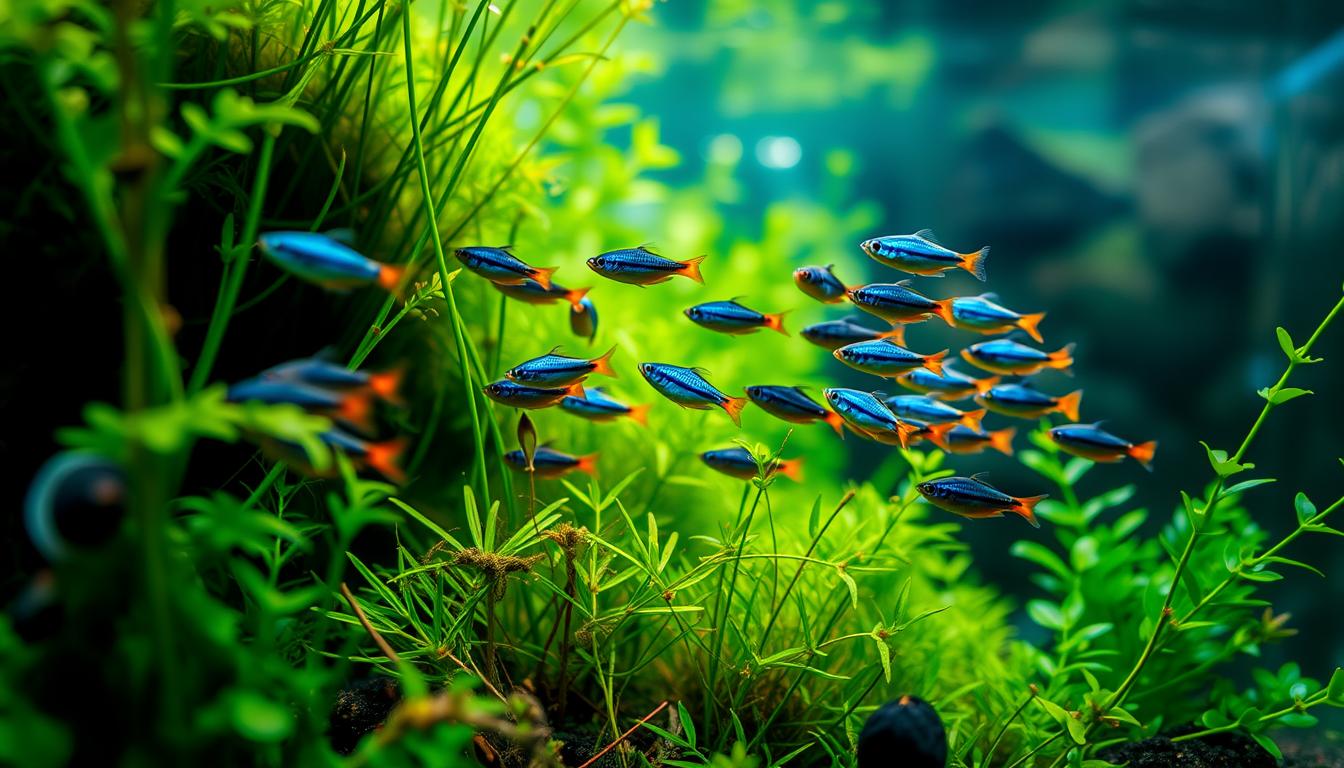
Micro rasboras are perfect for a vibrant, calm nano community in your freshwater tank. They belong to the Cyprinidae family, like barbs and goldfish. These small fish add color and movement to your tank without growing too big.
Popular rasboras like harlequin and scissortail stay under 2 inches. They thrive in tanks starting at 10 gallons. Dwarf emeralds and Boraras, like the chili rasbora, are under 1 inch. They’re great for nano tanks of 3–10 gallons.
Chili rasboras turn deep red once settled. Microdevario kubotai shines with shimmering greens and yellows. Both species look best in groups. Buy at least seven and aim for more to reduce stress and enhance color.
This Micro rasbora guide will help you care for your nano tank. You’ll learn how to set it up, maintain it, and enjoy it with confidence.
Overview of Micro Rasboras
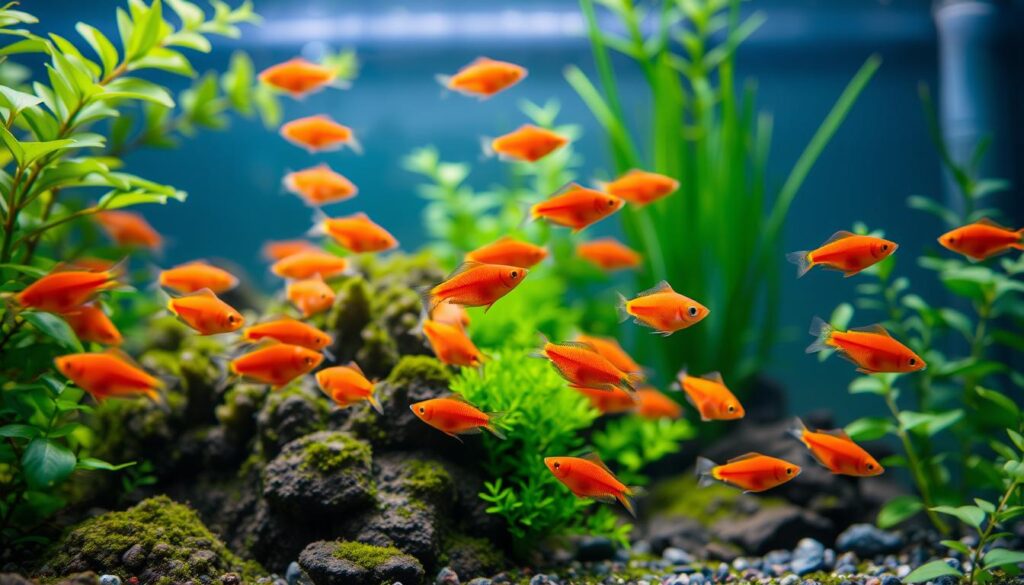
Micro rasboras live in south and southeast Asia, from Borneo to Thailand and Myanmar. They love shallow, plant-rich streams and floodplain pools. Their natural habitats often have tannin-stained, acidic water and dim light.
Chili rasboras come from Indonesian and Bornean rainforests. Here, leaf litter colors the water and soft acidity is common. Kubotai rasboras live in calmer streams with clear water, driftwood, and dense vegetation. In captivity, you can create similar conditions for healthier fish.
Most micro rasboras are under 1–2 inches tall. Genera like Boraras and Microdevario often stay under 1 inch. Their small size makes them perfect for nano setups, but remember their schooling needs.
These fish are social and need to be kept in groups. This makes them feel secure and shows their natural behaviors. The recommended school size varies by species, but usually, 7–12 fish are suggested, with some doing best in 10 or more.
Following basic nano fish care principles helps micro rasboras thrive. Stable water, gentle flow, and plenty of hiding spots are key. This approach reduces stress and brings out their best colors and activity.
Ideal Tank Conditions for Micro Rasboras
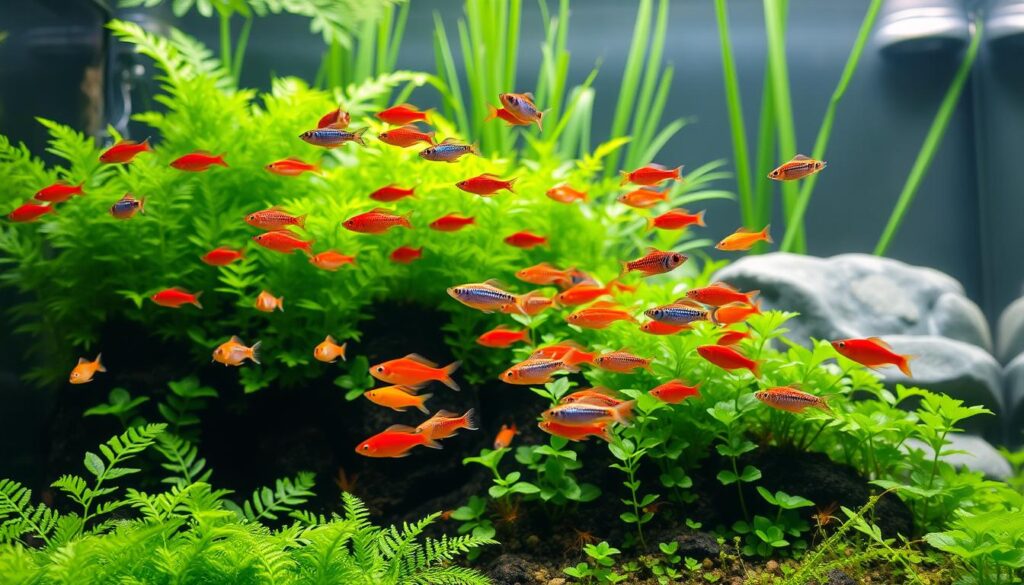
To keep a stable fish tank, match the water chemistry to your fish. For most aquarium-bred rasboras, aim for pH 6.8–7.8. Alkalinity should be around 3°–8° dkH (50–140 ppm), and the temperature should be near 75–80°F. Wild-caught rasboras prefer softer, slightly acidic water. Target pH 5.0–7.0 with KH of 1°–3° (20–50 ppm).
Chili rasboras and Boraras species can handle a wider pH range, about 6.0–8.0. They like temperatures from 72–82°F (22–28°C). These tiny fish do best with dim lighting and lots of low-light plants. A gentle flow is also important.
Kubotai need clean, stable water. Keep pH between 6.0–7.5 and temperature 72–82°F. Monitor Total Dissolved Solids near 50–150. Only add fish to a fully cycled aquarium. Use liquid test kits and perform weekly water changes to keep the water quality high.
- Filtration and flow: provide a gentle current to mimic slow streams; choose sponge filters or low-flow canister outputs.
- Water changes: plan 10% weekly or 25% twice monthly, depending on stocking and plant load.
- Conditioning: use a water conditioner like Aqueon Water Conditioner when adding tap water and a reliable heater such as the Aqueon Aquarium Heater in cooler rooms.
Size your tank for the school. A 10-gallon long works well for modest groups. Active species like kubotai benefit from 15 gallons. Boraras and chili rasboras can thrive in planted nano setups of 3–10 gallons, but larger groups need more volume for stable parameters.
Secure lids to prevent jumping. Keep monitoring and adjust slowly when changing parameters so your freshwater aquarium fish adapt without stress. Following these guidelines will make Nano fish care simpler and help you keep a healthy, vibrant community as part of your Micro rasbora guide.
Choosing Compatible Tank Mates
When setting up a community tank, choose calm, small fish that won’t see micro rasboras as food. Good picks include small tetras, celestial danios, guppies, platies, and some dwarf gouramis. These fish help keep the tank peaceful and the water balanced.
Dwarf rasboras, like Boraras, do best in their own tanks. They’re small and can’t handle big fish. Dwarf rasboras and shrimp can live together, but big shrimp might get eaten by adult rasboras. Chili rasboras and ember tetras, rosy loaches, neon green rasboras, and dwarf cory catfish are good for a planted tank.
Adding bottom dwellers like otocinclus, kuhli loaches, and small Corydoras species is a great idea. They stay near the bottom and don’t fight for food in the middle. They also help keep the tank clean by eating algae and waste.
Keep micro rasboras in schools of at least ten to keep them calm. Stay away from loud or aggressive fish like big barbs and cichlids. Pentazona barbs can work if you watch them closely to stop fin nipping.
- Choose tank mates that match water chemistry and temperature ranges.
- Avoid species that outcompete for food or nip fins.
- Consider single-species or densely planted community layouts to provide cover.
Use this Micro rasbora guide to compare fish and plan your tank. Picking the right fish increases their chances of survival and makes your tank lively and fun.
Nutrition and Feeding Requirements
Your Micro rasbora guide begins with understanding their natural diet. Rasboras are small predators that eat tiny insects, zooplankton, worms, and small crustaceans. In your tank, give them a mix of high-quality flakes, tropical granules, and shrimp pellets. For the smallest fish, crush dried foods or use powdered fry formulas to match their mouth size.
Feed a variety of foods to ensure they get all the nutrients they need. Use frozen and live foods like bloodworms, brine shrimp, Daphnia, micro worms, and rotifers as treats or to encourage breeding. Brands like Repashy gel and Easy Fry are great for soft, nutrient-rich foods for fry and small adults.
Adjust the diet based on the species. Chili rasboras like fine foods that drift in the midwater column. Kubotai rasboras prefer meaty foods and do well with micro pellets and frozen brine shrimp. Rotate the foods daily to ensure each small fish species gets what it needs.
Follow good feeding practices to keep your tank water clean. Feed only what your fish can eat in 2–3 minutes. Most micro rasboras need to be fed once or twice a day. Overfeeding can lead to waste and harm your Nano fish care and all freshwater aquarium fish.
- Match food size to mouth gape; crush flakes or use powdered formulas for tiny species.
- Offer multiple feeding spots and fine sinking or slow-drifting foods for timid eaters.
- Condition adults with live/frozen foods to encourage breeding behavior.
- Use infusoria, Golden Pearls, or powdered fry mixes for newly hatched fry, then move to baby brine shrimp as they grow.
When planning your fish tank setup, remember to consider their diet. Small fish species produce less waste, but they live in small tanks that change chemistry quickly. Regular moderation in feeding helps keep the water stable and supports healthy Nano fish care for your community of freshwater aquarium fish.
Breeding Micro Rasboras
Most micro rasbora species lay eggs and don’t care for them. They scatter eggs among plants. Some, like harlequin and lambchop rasboras, stick eggs to leaves.
To get them to spawn, add lots of plants and Java moss. Also, use Indian almond leaves for hiding spots. This setup helps eggs and fry survive. Soft, slightly acidic water is best for hatching.
Feed the adults well with live or frozen foods. Give them baby brine shrimp, daphnia, or cyclops a few days before spawning. Keep at least six fish together for courtship. Remove the adults after eggs are laid or use a mesh to keep them out.
- Set up a separate breeding container with water from the main tank when needed. Add Java moss or spawning mops to collect eggs.
- Look for females that appear rounded with eggs and males that display; introduce these conditioned fish together for best results.
- Expect eggs to hatch in about three days for many species. Fry start free swimming around day four and need tiny foods at first.
Feed fry infusoria, vinegar eels, or powdered fry foods until they can eat live foods. Start with tiny amounts and feed often. This helps them grow fast.
Breeding micro rasboras is tough, but rewarding. Keep your tank’s water stable and lighting soft. Change the water often but in small amounts. Keep eggs and fry safe from other fish and adults.
With the right care and patience, you can breed micro rasboras. This will add more beauty to your aquarium. Follow these tips and enjoy the journey of raising these small fish.
Common Health Issues in Micro Rasboras
Following a Micro rasbora guide can help avoid common issues. These fish are tough but need consistent water conditions. Sudden changes in temperature, pH, or hardness can stress them out.
Look for signs like color loss, lethargy, or odd swimming. Small fish often show early signs of illness. Catching it early makes treatment simpler.
Poor water quality can lead to ich, infections, and parasites. Kubotai rasboras and others can’t handle bad water. Use a liquid test kit and change water weekly to catch problems early.
- Quarantine new arrivals to stop disease spread.
- Maintain stable parameters for the species you keep.
- Avoid overcrowding; nano fish care depends on proper stocking.
- Use gentle filtration to reduce stress on small fish species.
- Feed a varied, high-quality diet to support immunity.
If your fish get sick, act fast. For water-related issues, focus on water changes and adjusting parameters. Use treatments as needed and follow the instructions.
Regular checks and simple care routines help your fish. Keeping up with maintenance and quick action can prevent many problems. This way, your small fish species will stay healthy and happy.
Aquascaping Tips for Micro Rasbora Tanks
Setting up a tank for micro rasboras means creating a planted, dim space. Think of it like a stream or forest pool. Use a dark substrate and plants in the background to make colors pop. Dense plants in the middle and back give hiding spots and break lines of sight.
Choose plants that don’t need much light, like Java fern, Anubias, and Cryptocoryne. Floating plants like water sprite or Salvinia diffuse light and create shaded areas. Mosses and leaf litter help foster microfauna, which is good for Nano fish care and provides food for fry.
Add natural elements like smooth river rocks, driftwood, and dried Indian almond leaves. These elements tint the water and encourage biofilm growth. Position them to create sheltered spots and narrow swim lanes that micro rasboras enjoy.
Match the water movement to the fish you keep. Gentle currents from sponge filters or low-flow canisters mimic natural flow without stressing the fish. Moderate surface cover keeps light soft and helps maintain stable water conditions.
- Use long aquariums when possible to give micro rasboras room to school.
- Secure lids tightly; small rasboras may jump when startled.
- Create a dark background to make shimmering colors stand out.
Balance hardscape and plants to leave open swimming areas while providing dense refuges. This setup improves behavior, reduces aggression, and supports breeding. Follow these tips to enhance both the look and wellbeing of your tiny community.
Regular Maintenance and Water Changes
Keep your tank’s filtration system strong but gentle. Use sponge filters in nano tanks. Also, use prefilter sponges on hang-on-back or canister intakes to protect small fish. Rinse filter media in tank water during changes to keep beneficial bacteria alive.
Follow a simple schedule for water changes. Change 10% of the water weekly or 25% twice a month. For very small tanks, do smaller changes but stay consistent. Only add fish to a fully cycled tank.
- Use an Aqueon Aquarium Water Changer or a good siphon vacuum gravel cleaner to remove debris.
- Treat tap water with Aqueon Water Conditioner or a similar product before refilling.
- Keep a secure lid to prevent jumping from nervy micro rasboras.
Test water often with a liquid test kit. Check ammonia, nitrite, nitrate, pH, and KH regularly. Micro rasbora species like kubotai are sensitive to poor water, so catch problems early.
Monitor temperature with a reliable heater and thermometer. Choose an appropriately sized heater from trusted brands. Keep the temperature between 72–82°F based on the species in your tank. Stable heat lowers stress and disease risk.
- Test parameters weekly with a liquid kit.
- Do scheduled partial water changes.
- Vacuum substrate and remove uneaten food.
- Prune plants and clean glass as needed.
For nano fish care, use gentler equipment and smaller, more frequent maintenance steps when possible. Nano systems need attention because a small mistake can change water quality quickly.
Use a quality liquid test kit and trusted brands like Aqueon for water changers and conditioners. This will make your fish tank setup easier to manage. It will also keep your freshwater aquarium fish healthy over the long term.
Understanding Behavior and Social Interactions
Rasboras are true schooling fish. This guide teaches that keeping them in groups lowers stress and boosts color. It’s important to plan for groups, not singles, when keeping small fish species.
Chili rasboras are curious and bold. They may approach the glass and feed in the mid-water column after acclimation. Keeping them in small numbers makes them timid. Aim for a school of 8–12 to encourage confident behavior.
Kubotai rasboras show sparkling shoaling behavior. Males are often more colorful and smaller, while gravid females are rounder. Without a large enough school, they become skittish. A group of 10 or more keeps their natural shoaling patterns intact.
Watch for stress signs like fading color, hiding, poor appetite, and erratic swimming. Common causes include low water quality, wrong tankmates, too few companions, lack of cover, and sudden parameter shifts. You can ease stress by increasing school size, adding dense plants, and stabilizing water conditions.
- Keep groups to mimic wild shoals.
- Provide dark substrate and planted hiding spots.
- Choose peaceful tankmates that match size and temperament.
- Feed mid-water drifting foods to suit natural habits.
Reading social cues helps you manage tank dynamics. When you spot confident schooling and active feeding, your fish are likely comfortable. If behavior changes, check water chemistry and community balance first.
This Micro rasbora guide section helps you interpret interactions and build a stable environment for these small fish species. Understanding behavior makes keeping them rewarding and keeps your tank lively.
Frequently Asked Questions About Micro Rasboras
Are micro rasboras good for beginners? Yes, many species are easy to care for. They are active and do well in stable conditions. A calm, planted environment is best.
Dwarf species like chili rasbora need finer food. They also need careful tankmate choices. But, with some research, they fit well into a beginner’s routine.
How many should you keep? Schooling species like micro rasboras need at least 7–12 individuals. Some, like kubotai, do best in groups of 10 or more. In nano tanks, scale the school size to space, favoring larger groups for natural behavior.
Can you keep shrimp with micro rasboras and what do they eat? Many micro rasboras go well with Neocaridina and other dwarf shrimp in planted tanks. Adult shrimp are usually safe, but shrimp fry might be eaten. Adults eat micro pellets, crushed flakes, frozen Daphnia, or brine shrimp, and live micro foods.
For fry, start with infusoria, vinegar eels, or powdered fry feeds. Then, move to baby brine shrimp as they grow.
What if problems appear after transfer or in a small tank? If fish look pale after a move, give them one to two weeks to adjust. In nano setups, watch water quality closely. Perform smaller, more frequent water changes to keep stability.
Use Aquascaping tips to provide cover and reduce stress. Choose compatible Tank mates for micro rasboras to keep a peaceful community.
Leave a Reply