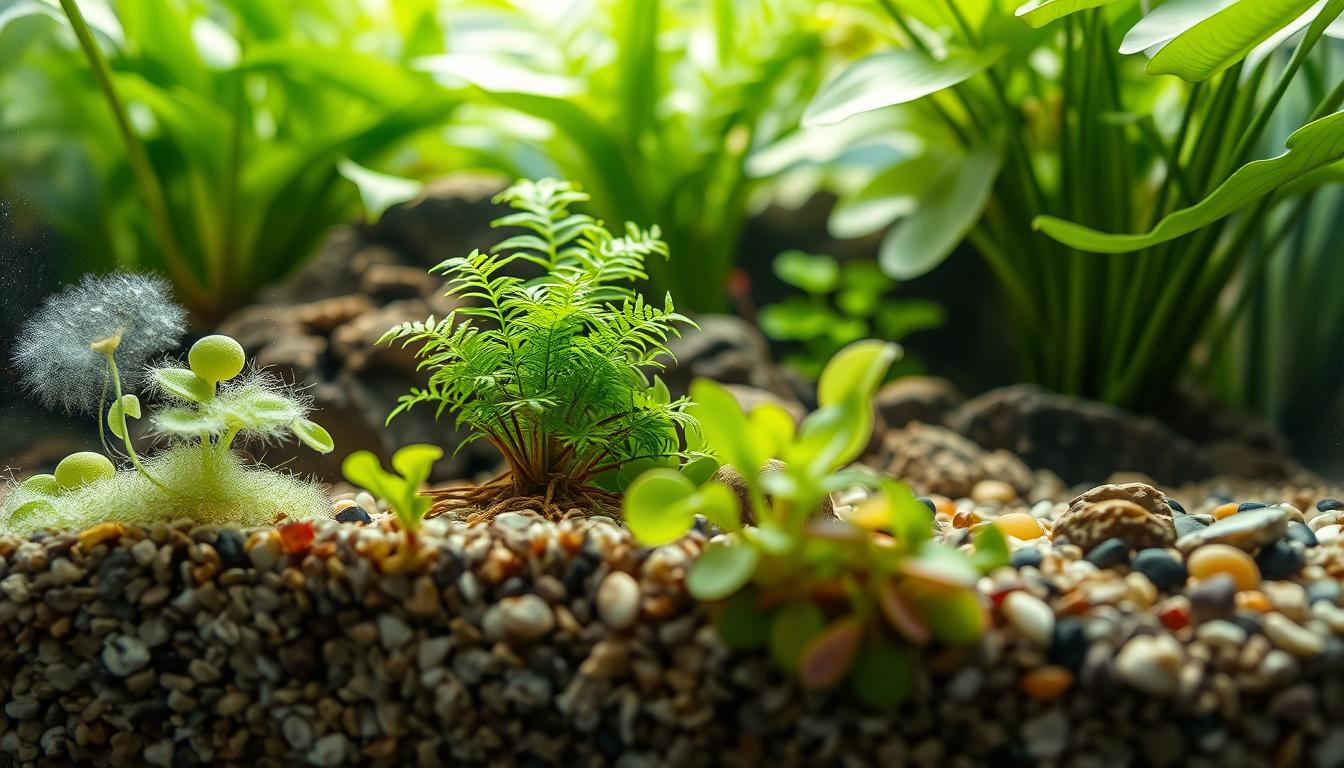
Algae are simple organisms that grow using light and nutrients from fish waste. They make oxygen during the day and use it at night. Because they are simpler than plants, they can use more light and nutrients.
You can’t have a tank without some algae. Many fish and invertebrates eat algae. It also helps with filtration and looks natural in your tank. The goal is to keep algae out of sight.
Imbalances in light, nutrients, CO2, and circulation cause algae. To stop algae, aim for balance. Use healthy plants and an algae-eating crew.
Use physical, chemical, and biological methods for algae control. Fast-growing plants like hornwort or water sprite soak up excess nutrients. This helps keep water quality stable, making algae control eco-friendly and lasting.
Timers, regular care, and smart stocking help prevent algae in small tanks. Balanced lighting, nutrients, and a clean-up crew keep your tank healthy and beautiful.
Understanding Algae: What You Need to Know
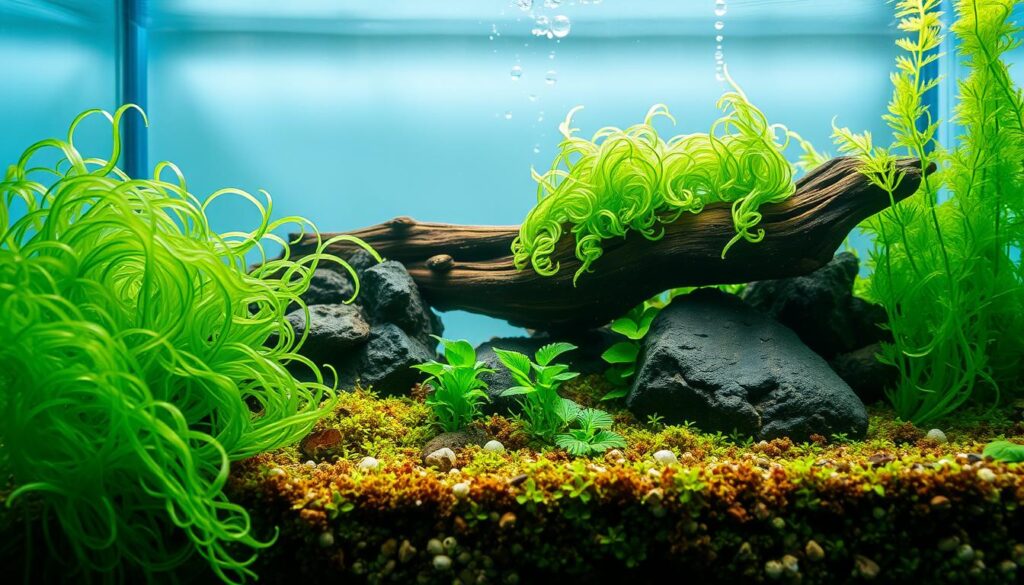
Ever wondered about algae in your planted tank? Algae are like plants but are actually tiny organisms. They use sunlight to make food and can eat organic matter too. They make oxygen in the day but use it at night, which can change your tank’s oxygen levels.
Algae grow faster than plants because they grab light and nutrients better. Their simple design lets them live in tough conditions. This makes them both rivals and food for your tank’s creatures.
Some algae are good because they feed fish and help clean the water. But getting rid of all algae is hard. Instead, aim to control it so plants and algae can coexist.
Plants clean the water by removing bad stuff. They also compete with algae for resources. By picking the right plants and managing nutrients, you can keep algae under control without harsh chemicals.
Start by making plants strong, adjust light and food, and watch the water. These steps help you manage algae and keep your tank healthy.
Identifying Algae in Your Small Planted Tank
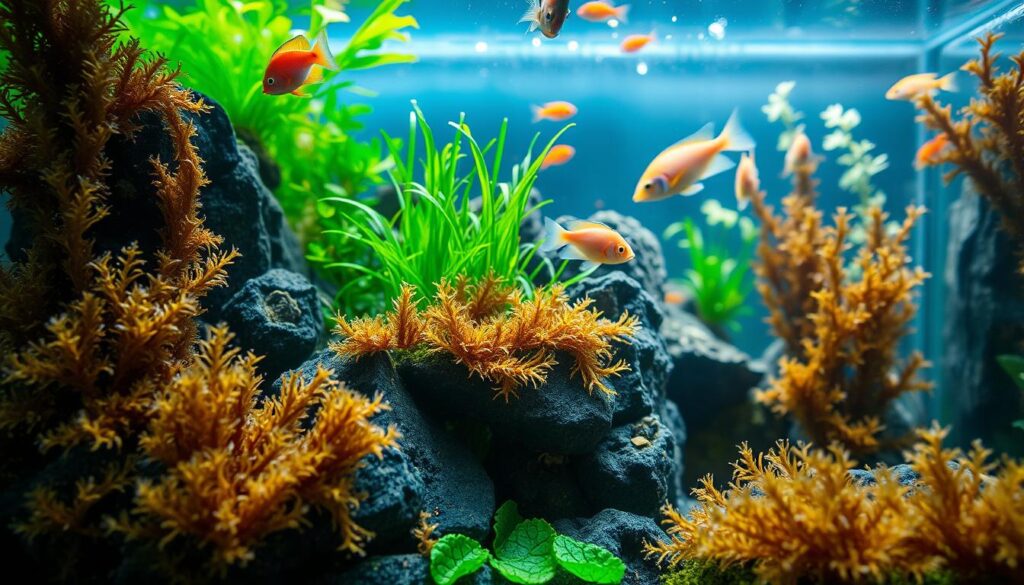
To keep your planted tank healthy, you need a clear algae identification guide. Start by observing where growth appears and how it looks. Note texture, color, and location on plants, glass, decor, or substrate. These clues help you identify aquarium algae and pick effective algae control methods.
Use this quick checklist to sort common issues:
- Brown, dusty film on glass and decor: likely brown diatom algae. It rubs off and is common in new setups. High phosphates and silicates often cause it.
- Black, bushy clumps on driftwood or stems: often Black Beard Algae. It resists simple removal and needs persistent treatment over months.
- Long, stringy growth that looks like hair: hair algae. Fast growers appear when light and nutrients are out of balance.
- Small, hard green dots on glass and slow plants: green spot algae. It resists soft scraping and may need a razor or snails that eat spots.
- Slimy mats with a foul smell: blue-green algae or cyanobacteria. It forms blankets, avoids grazers, and calls for circulation fixes and targeted treatment.
- Cloudy, pea-soup water: green water from free-floating phytoplankton. A UV sterilizer or a blackout can clear this quickly.
Grouping algae into filamentous, planktonic, microalgae, and cyanobacteria makes diagnosis easier. Filamentous forms include thread-like mats and some BBA. Planktonic algae create green water. Microalgae include brown diatoms that settle on the bottom. Cyanobacteria form slimy blankets.
Match visual signs to remedies in your algae identification guide. For example, brown diatom algae often fades with stable water chemistry and a cleanup crew. Black Beard Algae may need herbivorous fish like Siamese algae eaters or targeted topical treatments on removed items. Green spot algae often yields to manual scraping and phosphate control.
Dense plant growth changes how algae appear. Healthy stem plants and fast growers compete for nutrients and light, shifting which types of algae dominate. Monitor plant health as part of your plan to identify aquarium algae and use effective algae control methods that fit the species you find.
Factors Contributing to Algae Growth
Algae grow when light, nutrients, and water movement are out of balance. Too much light or too many nutrients can cause algae. New tanks often see brown algae because of high phosphates and silicates.
Lighting is key. Use timers to avoid too much light. Direct sunlight and bright LEDs can lead to algae. CO2 levels and water movement also play a role.
Don’t overdo fertilizers. Too much can cause algae to bloom quickly. Feeding fish too much and not cycling the tank properly adds to the problem. Uneaten food and messy substrates increase the risk.
- Water flow: slow or stagnant areas favor growth.
- Temperature: warmer, shallow tanks tend to bloom faster.
- Plant density: sparse planting leaves nutrients available for algae.
Fast-growing plants help by taking up nutrients. Choose plants like Vallisneria, Hygrophila, or Ludwigia. Healthy plants also eat ammonia and nitrite, preventing algae.
To prevent algae, monitor light, fertilize carefully, and keep CO2 levels steady. Regular pruning and adding fast-growing plants are good practices. Good filtration and gentle water flow are also important.
By tracking algae growth factors and caring for your tank, you can prevent algae. Making small, consistent changes is better than big fixes.
Algae Control Strategies: Preventive Measures
First, balance light and nutrients. Use a reliable light timer for steady day lengths. Slowly adjust fertilizer dosing and wait two to three weeks for plant response. This steady approach is key to controlling algae.
Keep your tank cycled and do regular water changes. Test water often and avoid too much fertilizer. Proper cycling and fertilization prevent sudden nutrient spikes that algae love.
Build an algae-eating team. Amano shrimp, otocinclus, nerite snails, and Siamese algae eaters tackle different algae types. Use these helpers with other measures to avoid relying on one solution.
Grow more plants, like Egeria densa and Java moss, to soak up nutrients. These plants compete with algae for space and nutrients. This is a top strategy for preventing algae.
Ensure good water flow and aeration. Avoid direct sunlight and overstocking. Feed less and remove uneaten food to prevent excess nutrients. These steps are common among algae control strategies.
Regularly prune and propagate plants to keep nutrient uptake high. Choose fast-growing plants like Bacopa caroliniana to fill gaps. Trimming reduces detritus and supports algae management.
Keep beneficial bacteria stable through consistent routines. Use consistent maintenance and avoid sudden water changes. Add fast-growing floating plants to absorb excess nutrients. These steps create a strong defense against algae.
Monitor results and adjust one thing at a time. Making measured changes keeps your system stable and teaches you what works. Over time, adopting new strategies helps you grow healthy plants instead of fighting algae.
Natural Solutions for Algae Control
You can fight algae without chemicals by mixing biology and plants. Start with algae-eating shrimp and snails that fit your tank size. Amano shrimp and otocinclus catfish tackle diatoms and some hair algae. Nerite snails are great at green spot algae but leave white eggs on hard surfaces.
Siamese algae eaters help with hair algae and occasional black beard algae. Mollies and Florida flagfish offer extra grazing power. Pick species carefully to avoid plant nibblers. Some herbivores will eat tender stems.
Monitor behavior after adding fauna. If a species targets your plants, reduce numbers or choose alternatives.
Add dense plantings to outcompete algae. Fast-growing plants for algae control include Egeria densa, Hygrophila difformis, and hornwort. Floating plants like Salvinia natans and Red Root Floaters shade the water column.
Stem and carpeting plants like Rotala and Java moss absorb nutrients quickly. This cuts nitrate and phosphate that feed algae.
Use eco-friendly algae control solutions by combining fauna and flora. Dense vegetation stabilizes CO2 and reduces nutrient spikes. This lowers algal pressure while improving water quality and offers shelter for fry.
Follow simple routines to support biological methods. Keep substrate clean, avoid overfeeding, and add beneficial bacterial supplements if needed. Emerging microbial cleaners show promise but lack full consensus. Focus on proven steps first and use microbial aids as a complement to natural algae removal techniques.
- Introduce algae-eating shrimp and snails that fit your tank.
- Plant fast growers to soak up excess nutrients.
- Match livestock to plant choices to prevent herbivory.
- Maintain light and feeding to limit algal blooms.
These natural algae removal techniques create a balanced ecosystem. You gain clearer water, healthier plants, and fewer manual cleanings. This is when you use eco-friendly algae control solutions and the right mix of algae-eating shrimp and snails with fast-growing plants for algae control.
Chemical Treatments: When and How to Use Them
Chemical treatments for algae should be seen as tools, not quick fixes. First, identify the algae type and reduce light and excess nutrients. Use chemicals only after manual removal and correcting water chemistry.
Follow safe algaecide use guidelines. Read product labels and safety data sheets. Make sure the product is safe for fish and plants before using it. Some algaecides work better at certain pH and alkalinity levels. Be careful with dosage and repeat intervals to avoid stressing your fish.
For tough cyanobacteria and bacterial mats, use copper-based products and antibiotics like erythromycin (Maracyn). A common method for cyanobacteria is one packet of Maracyn per 10 gallons. Repeat after a week if needed, after manual removal and vacuuming the substrate.
Hydrogen peroxide is good for spot treatments. Apply 3% hydrogen peroxide to infested decor or plants outside the tank. Let it sit for about five minutes, then rinse. Treated algae often turn red or clear, making it easier for your animals to remove remaining debris.
- Consider copper sulfate, chelated copper, endothall, sodium carbonate peroxyhydrate, flumioxazin, and hydrogen peroxide as chemical options.
- Use diluted bleach only for pond use or for treating items outside an aquarium; bleach can harm fish and plants if used improperly.
- Never mix algaecides. Combining products can increase toxicity and harm beneficial bacteria.
Be aware that chemicals can cause oxygen depletion as algae die and decompose. Boost aeration and monitor dissolved oxygen during and after treatment. Copper and antibiotics can disrupt nitrifying bacteria, so watch ammonia and nitrite closely.
Legal and disposal issues matter for pond-scale products. Follow EPA or USDA guidance when applicable and dispose of unused chemicals per label instructions to protect the environment.
Chemical treatments should fit into broader algae control strategies. Use them with corrective steps like trimming, substrate cleaning, balanced fertilization, and planting fast-growing species. Favor eco-friendly algae control solutions when possible for long-term stability.
When you need a last-resort measure, plan a careful course: identify the algae, choose a labeled product, follow safe algaecide use, increase aeration, and combine treatment with maintenance. This approach keeps your tank healthy while addressing persistent outbreaks.
Manual Removal Techniques
Manual removal can make a big difference before using chemicals. Start by scrubbing the aquarium glass with an algae scrubber sponge. Use a razor blade on glass tanks and a stiff gift card on acrylic to remove stubborn algae.
Keep a toothbrush handy for cleaning hair algae from plant leaves and tight spots on decor. If decor is heavily covered, remove it, treat it with 3% hydrogen peroxide outside the tank, and then rinse well before putting it back.
- Siphons and gravel vacuums help vacuum substrate during water changes to remove BGA and detritus.
- Scrapers and sponges tackle walls. Skimming the surface removes floating mats and debris.
- For ponds or larger tanks, dredging and raking can extract compacted waste that feeds algae.
Try the blackout method for planktonic blooms: limit light exposure for several days to a week by turning off lights and blocking external light. Combine this with skimming and siphoning to speed up recovery.
Regular pruning of fast-growing plants prevents sudden shading changes and reduces nutrient hotspots. Use trimmings to propagate more plants or remove them to keep nutrient levels stable.
- Perform targeted scrubbing on affected areas first.
- Vacuum the substrate during water changes.
- Treat or discard heavily infested decor outside the aquarium.
- Prune and replant to increase healthy plant biomass.
Use manual removal alongside other aquarium cleaning techniques to maintain clarity and balance. Pair these hands-on steps with effective algae control methods like UV sterilization for green water and careful light management for long-term results.
Bag and dispose of removed algae instead of rinsing it down the drain to avoid pipe clogs and unwanted spread. Following best practices for algae management keeps your small planted tank healthy and reduces repeat outbreaks.
Monitoring and Maintenance for Long-Term Success
Make a routine you can stick to. Use a light timer and change water weekly. Also, keep track of light time and strength.
Start with small changes in fertilizers. Use an all-in-one product. Wait two to three weeks to see results.
Keep a log of water changes, CO2 levels, and chemical doses. Note the brand, amount, and when you use treatments. This helps you understand what affects algae and supports long-term control.
Get algae-eating fish to help control growth. The right number of fish and how much you feed them matters. Too much food can lead to algae growth, so feed carefully.
Focus on plant health to fight algae. Add fast-growing plants, trim them often, and move cuttings. This keeps nutrients in check. Use floating plants, carpeting species, and background plants to control light and reduce algae spots.
Ensure good water movement and aeration. Watch temperature and flow, near filters and hardscape. Boost aeration when there’s decomposition to avoid low oxygen.
- Track: lighting duration, fertilizer changes, CO2 levels, and water parameters.
- Adjust: make one change at a time and give it two to three weeks to stabilize.
- Document: chemical brand, dose, and timing for safe, repeatable use.
Choose sustainable algae control like plant-focused nutrient uptake and regular care. This approach is safer and more effective in the long run.
Don’t expect to get rid of algae completely. Aim to keep it under control with regular monitoring and care. This approach makes managing algae less stressful for you and your tank.
Conclusion: Achieving a Healthy Balance in Your Aquarium
Getting algae under control in a small planted tank is all about finding the right balance. Make sure the light matches what your plants need. Keep nutrients steady and remember, a little algae is okay.
Use algae-eating snails or Amano shrimp to help clean up. They make it easier to avoid scraping algae off by hand. This helps keep your tank’s ecosystem stable.
Combining physical, chemical, and biological methods is key. Focus on cycling, regular water changes, and good water flow. Also, fertilize wisely. Use chemicals only when algae gets really bad and follow the instructions carefully.
This approach protects your plants and fish while reducing risks. It’s a smart way to manage algae.
Plant fast-growing stem plants to beat algae and improve water quality. Start by setting a timer for your lights. Increase plant numbers by trimming and adding more. Introduce algae-eaters and stick to a regular maintenance routine.
Be patient, as changes take time—weeks, even. With effort, you’ll find effective ways to prevent algae. Your tank will stay healthy and look great.
Leave a Reply