You love your nano tank for its size, beauty, and challenge. But its small size means it can’t handle big pH changes well. Even small changes in CO2, oxygen, temperature, or dosing can cause big pH swings. So, focus on keeping pH stable, not just aiming for a specific number.
For marine-style nano tanks, aim for stable conditions. Keep the temperature between 77–79°F (up to 79–81°F is okay). The salinity should be near 1.026 specific gravity (35 ppt), checked with a refractometer. Alkalinity should be about 8–11 dKH, calcium 375–425 ppm, and magnesium around 1380–1400 ppm.
This guide will help you understand causes, monitoring, and how to stabilize pH. You’ll learn about substrate choice, live plants, dosing timing, routine maintenance, and troubleshooting. You’ll know how to watch your fish, read pH trends, and act fast to keep pH stable without over-dosing buffers.
Understanding pH Levels and Their Importance
pH measures the hydrogen ion concentration in your tank water. It shows if the water is acidic or alkaline. In aquariums, pH affects many activities like breathing and photosynthesis.
Small nano tanks are very sensitive. They have low water volume and can’t buffer changes well. A small change in CO2 or O2 can cause a big pH swing. So, keeping pH stable is very important.
Daily cycles cause predictable pH swings. During the day, plants and algae use CO2, raising pH. At night, pH falls as CO2 increases. You might see a peak in pH about five to six hours after lights on, then a drop.
To control these swings, aim for steady pH levels. This keeps your fish and plants healthy. Regular monitoring helps you adjust without shocking the system.
Practical steps include measuring alkalinity and stabilizing carbonate hardness. Plan your light and feeding times to avoid sudden CO2 changes. These steps help keep your nano tank’s pH balanced.
Common Causes of pH Fluctuations
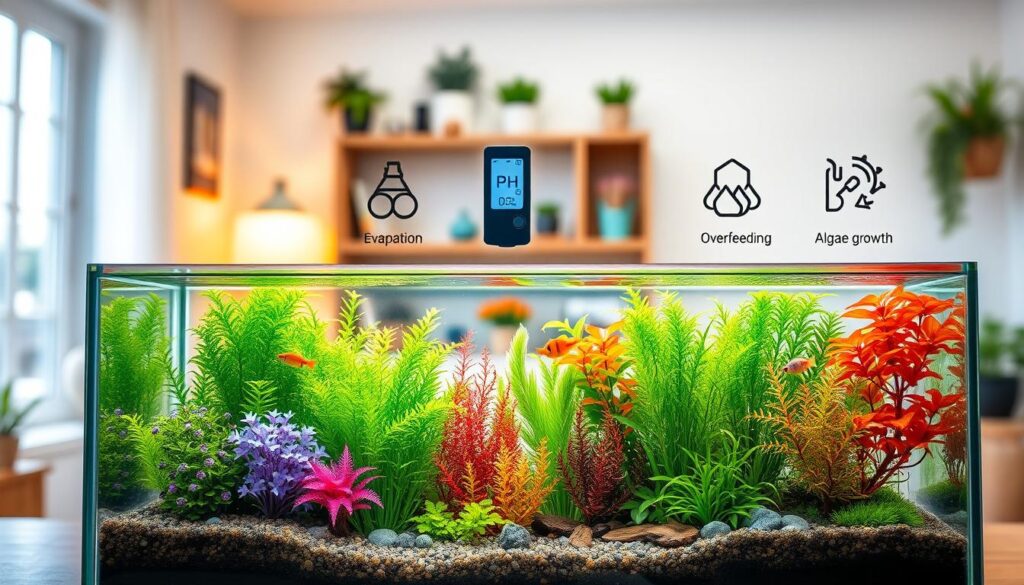
Small, low-buffered nano tanks are very sensitive. They can swing a lot when basic processes change. The main reasons for pH swings include changes in gas exchange, photosynthesis, temperature, and human mistakes.
CO2 and oxygen cause many short-term changes. During the day, photosynthesis uses CO2 and raises pH. At night, respiration lowers pH as CO2 builds up. Knowing this helps manage pH in small tanks.
Temperature affects oxygen levels. When water gets too warm, oxygen levels drop. This can make pH drop. Keep an eye on your heater and room temperature to avoid sudden pH drops.
Alkalinity is key for long-term stability. Without enough alkalinity, tanks are hard to keep stable. Avoid over-dosing buffers. Focus on slow, steady adjustments to pH.
Human mistakes cause many pH swings. Quick water changes, adding chemicals too fast, and poor mixing can cause spikes. Always dose chemicals slowly and mix well.
Measurement errors can hide real trends. Bad probes, old test strips, and expired kits give wrong readings. Make sure probes are calibrated and store test strips sealed and fresh.
- CO2 buildup from respiration and poor gas exchange
- Photosynthesis cycles that raise pH by day and lower it at night
- Temperature increases that reduce dissolved oxygen
- Low alkalinity reducing buffer capacity
- Dosing mistakes and poor chemical mixing
- Inaccurate measurement from uncalibrated or degraded tools
To manage pH well, you must tackle both biological and human factors. Keep track of light cycles, control temperature, adjust alkalinity correctly, and maintain your testing tools. This approach helps keep pH stable and predictable.
The Role of Water Source in pH Stability
Your source water is key to pH stability in a nano tank. Tap, well, and RO/DI water have different levels of alkalinity and hardness. These factors affect how well your water can resist pH changes.
Soft water, with low carbonate hardness, has weak buffering. This makes pH swings more likely. On the other hand, harder water resists changes better, helping with pH stabilization.
When CO2 levels change, the pH drop is similar across different hardness levels. A good rule is to design your system to handle about a 1.0 pH drop. This target works well across various water sources, helping to stabilize pH levels daily.
Many hobbyists choose reverse osmosis/deionized water for better control over minerals and particles. RO/DI water gives you a clean slate for pH regulation. For marine systems, you must remineralize to add back alkalinity, calcium, and magnesium. Poor remineralization can remove buffering, making pH stabilization harder.
- Test your source water for alkalinity and general hardness before mixing saltwater or topping off.
- Adjust your mixing protocol so newly prepared water reaches the target alkalinity before you add it to the tank.
- Measure the pH of mixed saltwater with a calibrated meter to verify pH level regulation is within range.
By following a steady prep routine and matching remineralization to your livestock needs, you can have better control over pH levels. This leads to long-term stability in your water source.
Selecting the Right Substrate for Stability
Your choice of substrate is key to the long-term chemistry of your nano tank. Calcareous substrates like aragonite and crushed coral slowly release minerals. They add carbonate hardness and calcium, helping to keep the pH stable.
Inert options, such as silica sand or bare glass, don’t buffer. If you use these, you must manage water chemistry yourself. This means you’ll need to remineralize or dose regularly to keep the pH right.
Live rock and dry rock change alkalinity levels over time. Porous live rock can create areas where CO2 builds up at night. This can cause small pH swings. Yet, live rock generally helps stabilize chemistry by supporting biological processes that keep alkaline levels steady.
- Choose calcareous substrate for low-maintenance buffering and steady pH stability.
- Pick inert substrate if you plan to use RO/DI water and precise dosing for pH stabilization.
- Use live rock to support biological buffering while watching for nighttime CO2 pockets that can affect alkaline levels.
Match your substrate to your system’s goals. For a simple setup, go with aragonite or crushed coral. If you want full control with RO/DI and dosing, inert substrates are good but need careful monitoring and steps to maintain optimal pH.
Using Live Plants to Balance pH
Photosynthetic plants and macroalgae take in CO2 and release oxygen when it’s light. This action increases the pH and aids in balancing it in small, low-buffered nano tanks.
At night, plants switch to respiration and release CO2 back into the water. This can lower the pH. So, it’s important to plan light cycles to prevent sudden drops.
Setting up a refugium on a reverse light cycle is a smart move. Run macroalgae lights from 11 p.m. to 8 a.m. This way, the refugium produces oxygen when the display tank lights are off.
A small planted refugium or a heavily planted display can buffer daily swings. It cuts CO2 accumulation overnight. This helps stabilize pH levels and supports better water chemistry.
Live plants also eat nutrients like nitrate and phosphate. This nutrient uptake improves water quality and helps manage pH.
- Stagger photoperiods so peak photosynthesis in the refugium occurs when the display is dark.
- Choose quick-growing macroalgae like Chaetomorpha for refugia to maximize oxygen output.
- Monitor plant health and trim regularly to keep nutrient uptake steady.
By managing light timing and using plants wisely, balancing pH with plants becomes a key part of nano tank care.
Chemical Solutions for pH Stabilization
There are several chemical options for pH stabilization in small nano tanks. You can use alkalinity buffers like soda ash, two-part dosing systems, or kalkwasser. Commercial pH buffers are also available.
Focus on alkalinity dosing to a target dKH, not just pH. Aim for a stable range of 8–11 dKH. Raising alkalinity often raises pH too. Dose when pH is lowest, usually between 4 and 8 a.m.
Use slow, controlled methods for pH control. Peristaltic dosers and timed drip systems are good for adding chemicals gradually. This method avoids sudden pH jumps that stress fish.
- Dose Part A (alkalinity) and Part B (calcium) in different locations or at different times. For example, add alkalinity in the morning and calcium roughly 12 hours later to cut down on precipitation.
- When using kalkwasser, run it at night to use the aquarium’s natural respiration cycle and limit rapid pH rises during the day.
Be careful not to over-dose. Many aquarists chase a pH number and end up raising alkalinity too high. Measure alkalinity and calcium regularly. Avoid sudden changes with powdered buffers, as they can harm invertebrates and corals.
Magnesium is also important for balance. You can dose magnesium at any time. It rises slowly if depleted and remains stable once you reach about 1380–1400 ppm. Keeping magnesium steady helps with stabilizing pH levels long term.
Keep chemical test kits calibrated and stored properly for accurate readings. Commercial pH buffers can mask underlying problems if used just to force a number. Use them sparingly while you address the root causes of swings.
Monitoring Your Nano Tank’s pH Levels
It’s important to keep an eye on your tank’s pH levels all the time. Spot checks can miss the daily changes in small tanks. By regularly checking pH levels, you can catch any slow changes before they harm your fish.
Choose reliable tools for accurate pH readings. Handheld pH meters are great for quick checks. For ongoing monitoring, consider using probes from brands like Neptune Apex. But, avoid pH test strips as they can be less accurate.
Proper care of your probes is key for good pH control. Make sure to calibrate them often with the right solutions. Always follow the manufacturer’s instructions. If a reading seems off, check it with a handheld meter and recalibrate if needed.
Keep a record of your pH readings to spot patterns. Whether it’s through a controller graph or a simple log, tracking your data helps. This way, you can plan when to add new water or adjust lighting and circulation.
- Check new mixed saltwater before adding it to the tank.
- Measure pH in bags when buying livestock to avoid surprises.
- Verify unexpected changes by cross-checking instruments.
Having consistent data helps you move from quick fixes to planned pH control. This approach makes it easier to keep your tank’s pH stable. It also helps prevent sudden changes that can harm your corals and invertebrates.
Natural Methods to Prevent pH Swings
Simple steps can help reduce CO2 buildup. Try increasing surface agitation or adjusting the protein skimmer air intake. This improves gas exchange, letting CO2 escape and boosting oxygen levels.
Ensure steady circulation to mix oxygen-rich water with areas where alkalinity is added. This even distribution helps regulate acidity and prevent pH swings. For nano systems, use small powerheads to create soft currents.
Setting up a refugium with macroalgae on a reverse light cycle is beneficial. It produces oxygen when your display is dark, reducing CO2 spikes and supporting pH balance. Adding live plants in the main tank extends oxygen production into off-hours.
If pH drops follow high respiration or heavy feeding, consider reducing stocking and feeding. Gradual stocking and conservative feeding reduce stress and make pH prevention easier. Monitor your fish’s behavior to confirm stability after changes.
- Use a modest skimmer or air-driven surface agitator for constant gas exchange.
- Add macroalgae in a refugium on a reverse photoperiod to lower nighttime CO2.
- Maintain steady circulation so dosing and oxygen distribute evenly.
- Reduce feedings and add livestock slowly to manage respiration-related pH shifts.
Many tanks can handle small daily pH swings, like 7.7–7.9 in reef setups, as long as other parameters are stable. If corals and fish grow well and behave normally, avoid using chemicals. Trust the signs of a healthy tank while keeping an eye on pH balance.
Adjusting Tank Conditions Gradually
When changing tank conditions, do it slowly. This protects delicate life and helps manage pH. Big changes can cause sudden pH swings or lead to carbonate buildup.
Use a timed dosing plan for stable pH. Add alkalinity when pH is low, best in the early morning. Wait 12 hours before adding calcium to avoid precipitation. If you have a peristaltic doser, use it to spread chemical input evenly.
Match water parameters before adding it to the tank. Mix replacement seawater and test its alkalinity and salinity. Bring the temperature to match the tank’s and check pH or CO2 levels if possible. Gradual water changes help keep pH stable.
- Adjust alkalinity in small steps; test after each change.
- Add calcium slowly and on a staggered schedule to aid pH stabilization.
- Use peristaltic dosers or dosing pumps for steady, low-volume delivery.
Keep temperature changes small to protect pH. Aim for changes of 1–2°F. Avoid letting the tank get too hot, as high temperatures can lower dissolved oxygen and cause pH to drop.
- Plan dosing times: alkalinity early morning, calcium about 12 hours later.
- Mix and test replacement water before use; match temperature and salinity.
- Use low-rate dosing and place outputs in high-flow zones.
By making slow adjustments and checking each parameter, you reduce stress on your fish. Small, consistent changes are better than big, rare ones for keeping pH stable in a low-buffered nano tank.
Regular Maintenance Practices for Stable pH
Keep a simple, repeatable routine for pH control and aquarium health. Test alkalinity, calcium, and magnesium weekly. This helps you catch trends early.
Log your results and adjust small amounts when needed. This keeps your aquarium balanced.
Calibrate probes and test kits as the manufacturer suggests. Use fresh pH probes for accurate readings. Also, check and calibrate your refractometer often to keep salinity right.
Stick to a water change plan. Use RO/DI water for freshwater tanks or saltwater for marine ones. Regular changes help keep pH stable.
Keep your equipment in good shape. Clean protein skimmers, impellers, and pump housings. This ensures proper flow and gas exchange.
Service powerheads and return pumps regularly. This prevents low-oxygen zones that can upset pH.
Take care of refugia and filter media. Replace carbon or phosphate media as needed. Refresh bio-media only when necessary to keep beneficial bacteria healthy.
Watch your fish and corals for signs of pH balance. Healthy corals and steady fish behavior mean your chemistry is good. Use these signs to guide your decisions and avoid sudden changes.
Follow a weekly checklist:
- Test alkalinity, calcium, magnesium.
- Calibrate pH probe and refractometer as needed.
- Perform scheduled water change with remineralized or mixed water.
- Clean pumps, skimmer, and check refugium health.
- Note livestock condition and tank appearance.
Regular maintenance makes pH management easier. Small, consistent steps lead to the best pH control in low-buffered nano tanks.
Troubleshooting Persistent pH Problems
Start by checking your measurement tools. Make sure your probe is calibrated right and use a good handheld meter for checks. Get rid of bad test strips and take many readings over a day to find patterns. Having accurate data is key for managing pH levels.
Then, check if your water meets the right standards. Look at temperature (77–79°F), salinity (1.026 sg), alkalinity (8–11 dKH), calcium (375–425 ppm), and magnesium (~1380 ppm). Make small changes to avoid sudden shifts. This helps keep pH stable and improves overall water management.
Look at how water moves and gas is exchanged. Boost surface activity, adjust skimmer air, and increase flow to remove CO2 pockets. Also, stop chasing pH swings and dose alkalinity to fix dKH levels. Slow or staggered dosing helps with long-term pH control.
Lastly, check biological and source water impacts. Cut back on feeding or bioload if CO2 is high. Consider adding a reverse-lit refugium or more plants. Test source water hardness and ensure mixed saltwater has the right alkalinity before water changes. If you’re using inert substrate or rock, increase remineralization or dosing. If problems persist, get help from local aquarium experts or online forums with your data.
Leave a Reply