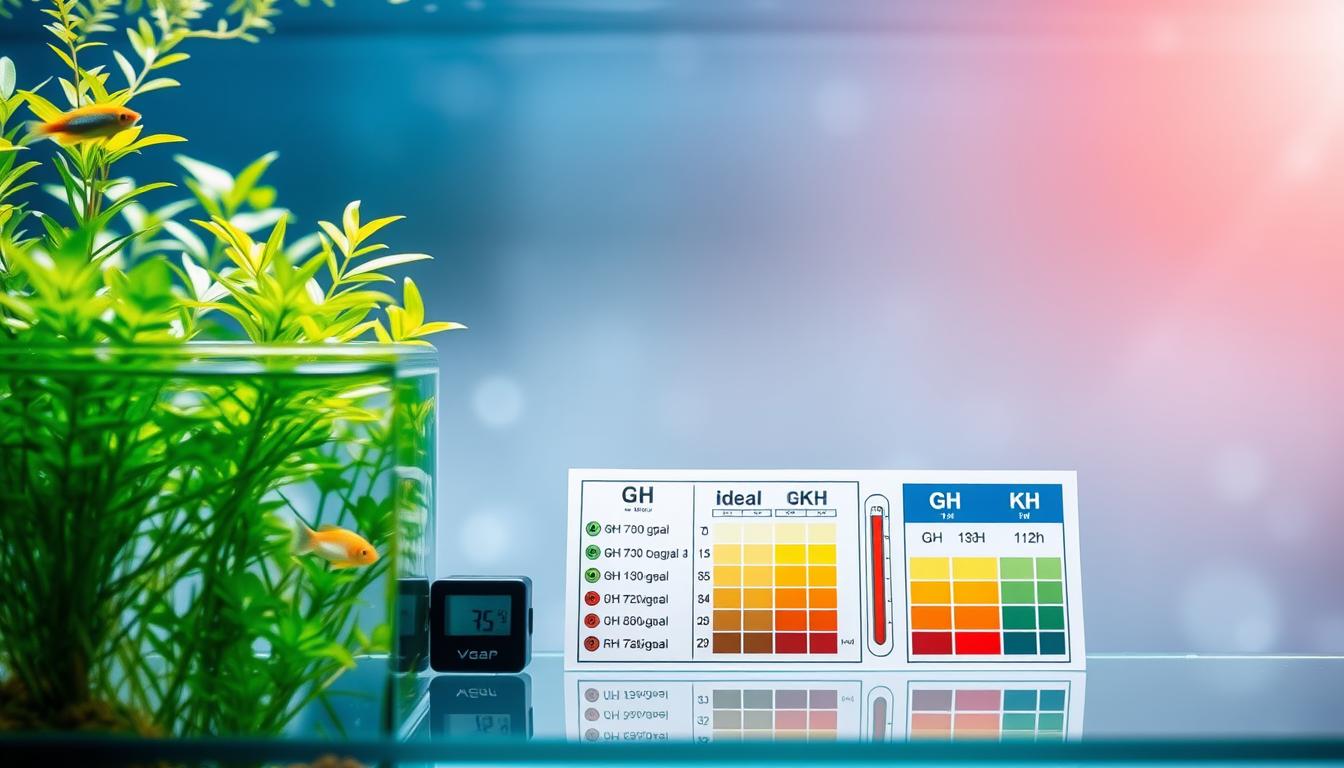
In small aquariums like nano tanks, water chemistry can change fast. You need GH and KH stability to keep fish and plants healthy. Adding minerals and using the right supplements helps avoid stress from sudden changes.
Electrolytes like calcium and magnesium help with balance and function. They boost the immune system and lower infection risks, like Columnaris. Without enough minerals, fish and plants can become weak and die quickly.
KH, made of carbonate and bicarbonate ions, acts as a buffer. It prevents pH drops. In planted setups, it helps CO2 and pH work together for plants and animals to thrive. Not all pH changes are the same, and small spaces make big changes worse.
This article will help you monitor GH and KH, add minerals safely, and choose the right supplements. It also teaches how to avoid overdoing it and protect sensitive life in small aquariums. Follow these steps for better mineral health in your water systems.
Understanding GH and KH: Definitions and Importance
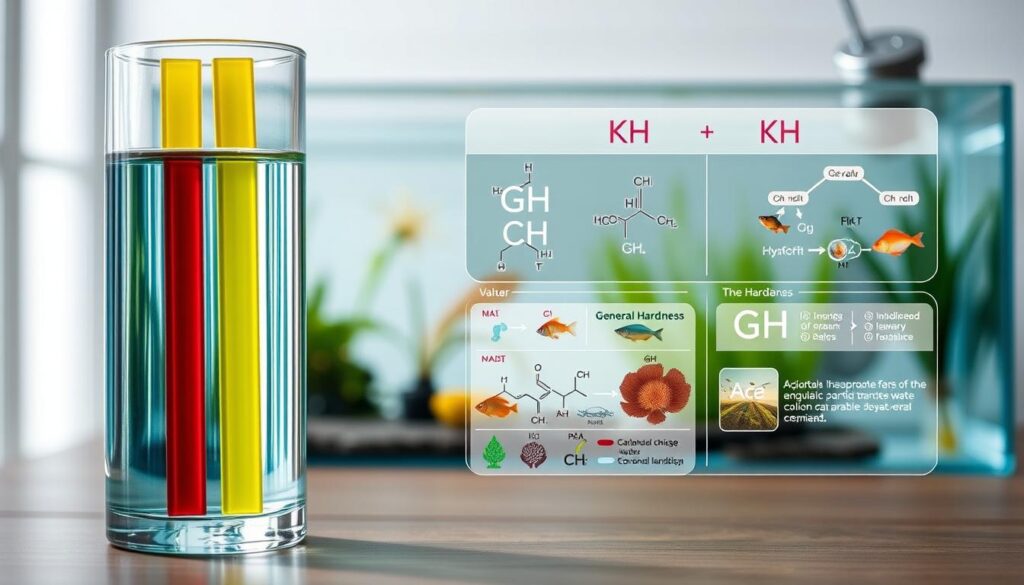
GH stands for general hardness. It measures the calcium and magnesium in your water. These minerals are vital for your fish and plants to function well.
KH, or carbonate hardness, is about keeping pH stable. It’s like a buffer that prevents sudden changes in water pH. This is important for your fish’s health.
When you need to convert degrees German hardness, remember: 1 dH is about 17.9 ppm. This is useful for adjusting your water’s mineral levels. Always check the labels on test kits and supplements.
GH helps fish and plants maintain balance. It’s essential for their health and growth. Without enough GH, plants may not grow well.
KH keeps the pH in your tank stable. It protects your fish from sudden changes in water pH. This is important for their well-being.
KH test kits measure how well your water can handle pH changes. They don’t always give a precise count. Always look at your GH levels and your tank’s overall health.
When using mineral supplements, aim for balance. Balanced GH and KH levels are key for your fish and plants. They help in maintaining a healthy aquarium environment.
The Role of Mineral Replenishment in Aquariums
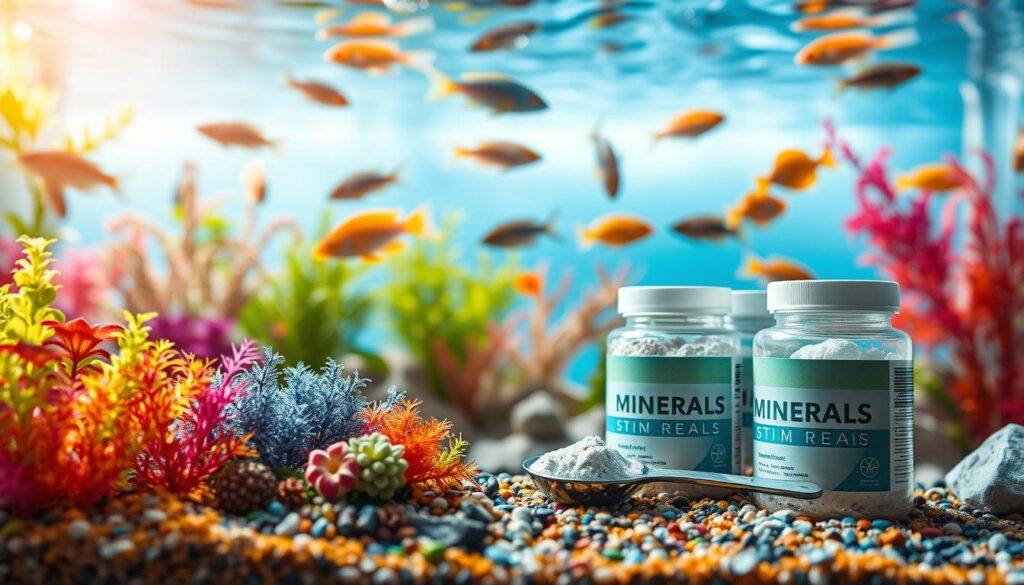
In closed aquarium systems, you lose positive mineral ions all the time. Fish, plants, and bacteria take in calcium, magnesium, and carbonate. Regular water changes and substrate interactions pull more ions from the water. Replenishing minerals helps keep GH and KH within your target ranges so livestock and plants stay stable.
Using RO/DI-treated water without remineralization can leave your aquarium nearly electrolyte-free. Reverse osmosis removes dissolved salts and carbonate hardness, while water softeners trade calcium and magnesium for sodium. That water cannot hold essential mineral ions long term. All RO water should be remineralized and buffered before it goes into your tank to prevent KH collapse and swings.
Minerals deficiency lowers redox and weakens fish defenses. Low levels of calcium and magnesium upset osmotic balance, which stresses the gills and skin. Stressed animals become more susceptible to disease. Maintaining proper mineral cations supports osmotic equilibrium and long-term health for both fish and invertebrates.
Practical forms of replenishment include mineral supplements and specific salts you can add directly to the water. Popular products used by hobbyists include Seachem Equilibrium for general hardness and SeaChem Reef Builder for marine systems. Wonder Shells, Cichlid Salt, calcium chloride, and magnesium salts are common tools for targeted dosing. Choose products that match the needs of your biotope and check dosing instructions carefully.
For planted tanks, KH and mineral balance affect CO2 efficiency and nutrient uptake. If minerals are lacking, plants take up fewer nutrients and growth slows. That leads to poor plant health and less stable water chemistry for your livestock. Regular dosing and occasional tests help you keep both plants and animals thriving.
Feeding mineral rich foods can help top up some elements. High-quality prepared diets and live foods supply trace elements that benefit fish. You should not rely on feeding alone, as in small or RO-based systems. Water column supplementation with mineral supplements remains necessary to maintain steady GH and KH in those setups.
Use a simple plan: test GH and KH regularly, choose a remineralizing product suited to your water, and combine water additions with balanced feeding. That approach reduces the risk of minerals deficiency and stabilizes redox and osmotic conditions for healthier aquarium inhabitants.
Key Factors Affecting Mineral Content in Small Water Volumes
Changing water chemistry in your small aquarium can happen fast. Water changes with low-mineral water, like RO/DI, remove calcium and magnesium. This increases the risk of minerals deficiency for fish and plants.
Plants and animals need minerals to grow. Substrate and some filter media can hold onto these minerals, making them less available. Biological processes like nitrification and organic acid production can slowly lower pH over time.
- Nitrification makes nitric acid, which can lower pH if KH is low. It can cause sudden pH drops after big water changes or changes in bio-load.
- Organic acids from tannins, humic acids, and decaying matter reduce alkalinity. They can shift GH and tint the water.
- CO2 injection and photosynthesis cycles drive daytime pH rises and nighttime falls. This creates wide swings when buffer capacity is small.
Small tanks have less buffering capacity. The same amount of acid or base causes bigger pH shifts than in a large tank. Low KH means poor resistance to those swings. Watch for pH crashes after a heavy feed, die-off, or large water change.
Some additives have strong acids that shock livestock. Tannic acids from driftwood or leaves change pH gently without harming tissues. Water softeners and aggressive pH Down products can remove essential ions and harm sensitive species.
Natural mineral sources offer gentler options for balanced minerals intake. Crushed coral, aragonite, or mineral-rich substrates like CaribSea Eco-Complete and Seachem Onyx Sand provide steady calcium and magnesium. Driftwood or peat can be used for controlled softening when you want lower GH and KH, but expect some color in the water.
Plan water changes, substrate choices, and filtration with your livestock and plants in mind. Balancing source water and natural minerals inputs helps prevent minerals deficiency. It keeps GH and KH within safe ranges for your system.
How to Monitor GH and KH Levels Effectively
You can use liquid test kits or digital meters to check GH and KH levels. Liquid kits are easy to use and give accurate readings. Digital meters are quicker but need regular calibration.
Remember, 1 dKH is about 17.9 ppm. This helps you compare results from different kits. It also helps when adding mineral supplements.
Test KH often to keep pH stable. GH shows the level of important electrolytes. For small tanks or those with CO2 systems, test weekly.
Always test before and after water changes and CO2 injection. Check KH right before and after CO2 to avoid pH crashes. Look out for signs like fish gasping or plant melting.
- Keep a simple log of GH, KH, pH, and temperature for trend spotting.
- Test immediately after any major change: new substrate, new additives, or large water swaps.
- When using RO water, test the starting GH and KH so you can adjust remineralization accurately with mineral supplements.
Be careful when reading KH kit results. Other anions can affect buffering capacity. Use these results as a guide, not a rule. Compare with GH to understand mineral balance.
- Choose a reliable liquid kit such as those from API for routine checks.
- Use a calibrated digital meter for precision during breeding or sensitive setups.
- Adjust dosing based on trends, not single readings, to avoid overcorrection and minerals deficiency or excess.
Practical habits reduce risk. Test regularly, log results, and match mineral supplements to needs. This keeps minerals absorption steady and prevents harm to fish and plants.
Best Practices for Replenishing GH and KH
When adding minerals to small water volumes, do it slowly. This avoids shocking fish and plants. Try to change GH or KH by 1–2 dKH each day. This method keeps the water stable and helps minerals absorb better.
Always test your water before adding anything. Mix additives well before adding them to the water. Use a slow drip method when mixing RO water. This helps keep the minerals balanced.
Opt for products that buffer slowly instead of raw soda ash. Brands like Seachem have products like Alkaline Buffer and Equilibrium. These raise KH and GH in small steps. Use bicarbonates or balanced buffers to increase KH, not strong acid pH Down products.
For calcium and magnesium, add them in small amounts. Use products like Seachem Equilibrium or Wonder Shells for easy dosing. This helps keep the minerals balanced. Use careful dosing to avoid sudden pH changes in CO2 tanks.
If you have a CO2 system, aim for KH levels that keep pH stable. CO2 tanks usually do well at 3–6 dKH. Low-tech systems often have KH levels between 3–8 dKH. Keeping KH above 3 dKH helps prevent pH crashes during photosynthesis.
- Test before and after dosing to track changes.
- Raise KH with bicarbonates or balanced buffers, not concentrated alkali salts.
- Raise GH with calcium chloride, magnesium supplements, or multielement remineralizers.
Follow a simple dosing plan: measure, mix, dose slowly, and watch. When mixing RO water, use slow drip mixing and check parameters daily. This method ensures safe mineral replenishment.
Don’t forget to feed your fish mineral-rich foods. Offer foods like frozen mysis, brine shrimp, and high-quality pellets. Good nutrition helps with mineral absorption for fish and invertebrates.
Keep a record of your dosing and test results. Regular tracking helps refine your schedules. It keeps the water chemistry stable and your fish healthy.
The Impact of pH on GH and KH Relationships
pH levels can change for many reasons. For example, dissolved CO2 can turn into carbonic acid and lower the pH. When you add CO2 for plants, it can quickly change the pH unless the water’s kH buffers it. Try to keep the kH between 3–6 dKH in CO2-injected tanks to avoid big swings.
KH, or carbonate and bicarbonate, helps by neutralizing acids. It does this by binding H+ ions. This action prevents sudden pH drops that can stress fish. Keeping alkalinity above about 50 ppm helps protect nitrifying bacteria and keeps the biological filtration stable.
GH, which is mostly calcium and magnesium, doesn’t directly change the pH. But it does support ionic balance and affects redox. Stable GH helps steady minerals absorption at the gill and root surfaces for both livestock and plants.
Not all pH changes are bad. For example, weak organic acids, like tannins from driftwood, lower pH slowly without harming fish. But be careful of pH products that use strong acids or bases. They can change the pH too much and harm tissue.
For many freshwater setups, it’s better to focus on pH stability than a single target number. Match your KH and GH adjustments to the species you keep and your CO2 routine. Stable alkalinity and balanced hardness lead to better mineral health benefits for fish and plants.
- Test CO2 and kH regularly if you inject CO2.
- Use natural minerals sources, such as crushed coral or commercial reef sand blends, to raise kH slowly when needed.
- Supplement calcium and magnesium carefully to support minerals absorption without causing sudden ionic shifts.
Choosing the Right Products for Mineral Replenishment
When picking products for your aquarium, make sure they match your water and fish. Tap water needs different treatment than RO water. Soft-water fish like discus need gentle remineralizers. But, African cichlids and marine tanks need more calcium and alkalinity.
Think about these categories for a balanced plan:
- Remineralizers like Seachem Equilibrium and TMC Bio-Calcium add many ions for marine setups.
- KH and alkaline buffers, such as SeaChem Alkaline Buffer, keep pH stable and prevent swings.
- Calcium sources, like calcium chloride, quickly boost calcium for coral or shell-building fish.
- Magnesium supplements keep the Ca:Mg ratio right and prevent unwanted precipitation.
- Mineral blocks, like Wonder Shells, slowly release Ca, Mg, and trace minerals.
- Mineral-rich substrates, like aragonite, passively support hardness in tanks that need it.
- RO remineralization blends offer precise control when starting with stripped water.
Choose balanced mineral supplements instead of single ingredients. Single ingredients like soda ash can cause pH problems. SeaChem’s Marine Buffer and Alkaline Buffer are designed to avoid these issues.
Use mineral blocks like Wonder Shells wisely. They can increase calcium, magnesium, and electrolytes. But, they’re not a quick fix. Follow the instructions and replace them when needed.
Be careful with pH Up, pH Down, and neutral regulators. Some can cause calcium and magnesium to precipitate or add phosphates. Relying too much on these can upset the balance in your tank.
Make your choices based on these factors:
- Your source water: tap, well, or RO.
- The needs of your fish and invertebrates.
- If you use CO2 for plants.
- The reputation of the brand and clear instructions.
Test often and follow the dosing instructions. Regular testing helps keep mineral levels stable. Add mineral-rich foods and natural sources to support your tank’s health over time.
The Effects of Over-Replenishment of Minerals
Pushing GH and KH too high can stress fish that like soft water. This can make it hard to lower pH for acid-loving fish and plants. Sudden big changes are worse than small, steady ones.
Look for signs of trouble. Fish might act stressed or lose their appetite. Shrimp could have trouble molting. Plants might look unhealthy or grow slowly.
Using the wrong products can cause problems. Using too much alkalizer or the wrong neutralizers can remove calcium and magnesium. This harms the balance of minerals in the water.
When there are lots of precipitates, plants and invertebrates can’t absorb minerals well. This makes it seem like there’s not enough minerals, even if the test strip says there is.
- Symptoms to monitor: reduced growth, pale leaves, molting problems, lethargy.
- Visible signs: white crusts, cloudy water, sudden hardness spikes on test kits.
Fixing problems should be done carefully and slowly. Use water changes with the right minerals to adjust the water. Don’t add strong acids or bases suddenly.
If you see precipitates, use sequestrants or dilute the water. Test often as you slowly lower the ionic content. Consider using products like SeaChem Reef Builder to avoid problems.
Keep track of your changes and test results. Making small, steady adjustments helps everyone in the tank adjust better. This way, you avoid mineral deficiencies from too much dosing.
Common Myths About Hardness in Aquariums
Some people think GH changes are not important. But, calcium and magnesium do more than just strengthen shells. They help with osmotic functions, enzyme work, and keeping redox balance. Even if fish seem fine, GH is key to their health.
Many believe pH is the only thing that matters. But pH and buffering are different. KH tests show buffering, not just carbonate levels. This can confuse hobbyists who only look at one test result.
Some think GH salts work like table salt. But, calcium and magnesium are not the same. They support cell membranes, gill function, and ion transporters, which are vital for osmoregulation.
There’s a myth that you must match wild water conditions exactly. But, wild waters vary and may lack important ions. Trying to replicate extreme conditions without adding these ions can harm your fish.
Bicarbonates play a big role in acid-base balance and buffering. But, weak organic acids from driftwood or CO2 lower pH differently than strong acids. This confusion leads to poor management choices.
- Use tested mineral supplements designed for aquaria instead of guessing with household salts.
- Depend on accurate test kits and cross-check results to avoid misinterpreting KH and GH readings.
- Adjust parameters slowly to let fish and beneficial bacteria adapt without shock.
Stick to evidence-based practices when choosing mineral supplements and monitoring kits. This helps keep your water chemistry stable for the long term and fights common myths about hardness.
How Fish and Plants Interact with GH and KH Levels
Keeping GH and KH levels balanced is key for a healthy aquarium. GH provides calcium and magnesium, which are vital for fish. They help with bone health, scale strength, and enzyme function. Without enough GH, fish can get sick and have trouble reproducing.
KH helps keep the water’s pH stable. This is important for fish gills and mucous membranes. It also helps fight off diseases by keeping electrolyte and calcium levels right.
Look out for signs that your fish or plants might not be doing well. Fish acting strangely, not growing, or having trouble molting can mean GH/KH issues. You might also see dull scales or slow healing in fish.
Plants react differently to GH and KH levels. High KH can block iron and phosphorus, causing plants to turn yellow or grow poorly. But, stable KH helps plants use CO2 better, which is good for photosynthesis.
Each species has its own water chemistry preferences. For example, discus and German Rams like soft water. But, livebearers and African cichlids prefer harder water. Shrimp needs vary too, with Caridina needing very soft water and Neocaridina tolerating a wider range.
- Check plants interaction GH KH when you see melting, spotty growth, or nutrient deficiency symptoms.
- Consider mineral rich foods and water conditioners to boost minerals absorption for fish with high demands.
- Use regular testing and small adjustments to avoid abrupt shifts that stress gills and roots.
Keeping GH and KH levels balanced is essential for a healthy aquarium. Simple actions like feeding mineral-rich foods and adding electrolytes can help. This supports the health of both fish and plants.
Addressing Mineral Replenishment in Breeding Environments
Your breeding setups and fry tubs are small. A small mistake can greatly affect the water’s hardness or alkalinity. This can stress or even kill eggs and fry. So, you need to treat these systems differently than larger tanks.
KH helps keep the pH stable and protects the bacteria that clean the water. GH is important for bone growth, controlling body fluids, and healthy development in young fish. Not providing enough minerals in the early stages can lead to deformities and low survival rates.
When filling fry tanks, use pre-mixed, remineralized water. Avoid using strong pH-down chemicals. Instead, use weak organic buffers like peat or Indian almond leaves. They help change the pH slowly and are gentler on sensitive fry.
Add mineral supplements slowly and test often. Small amounts help you reach the right mineral levels without going too high. Use products like Seachem Equilibrium or low doses of calcium chloride and magnesium sulfate for precise adjustments.
- Mix RO with tap water for species needing soft conditions. This lets you hit a target GH/KH before remineralizing.
- Keep KH high enough to prevent a pH crash, but keep both GH and KH within the species’ recommended range.
- Consider low-dose Wonder Shells for shrimp or breeders that need trace elements during molting or spawning.
Watch for signs of minerals deficiency like poor growth, curled fins, or molting problems. Test GH and KH, monitor pH, and observe behavior to catch issues early. Remember, KH test limits can be tricky, so verify results with multiple parameters.
When choosing products for breeding mineral replenishment, go for gentle, ionic-balanced options made for small volumes. Dose carefully, keep a log of changes, and ensure a balanced minerals intake. This will give eggs and fry the stable chemistry they need.
Conclusion: The Path to Stable Water Conditions
You want stable water conditions, not just a number. GH and KH are key for minerals and pH balance. They can change fast, so it’s all about small, steady steps.
Start with a simple plan: test your water, choose the right products, and make small changes. Use products like SeaChem buffers for better balance. For gentle changes, try peat or driftwood instead of strong acids.
Don’t forget about Redox balance and how minerals help fight diseases and feed plants. Be careful with pH changes, as some acids are safer than others. Keep a detailed log of your tests and changes.
Take it one step at a time: pick the right products, track your results, and adjust slowly. Focus on balanced minerals and steady replenishment. This will create a strong, healthy environment for your aquarium’s inhabitants.
Leave a Reply