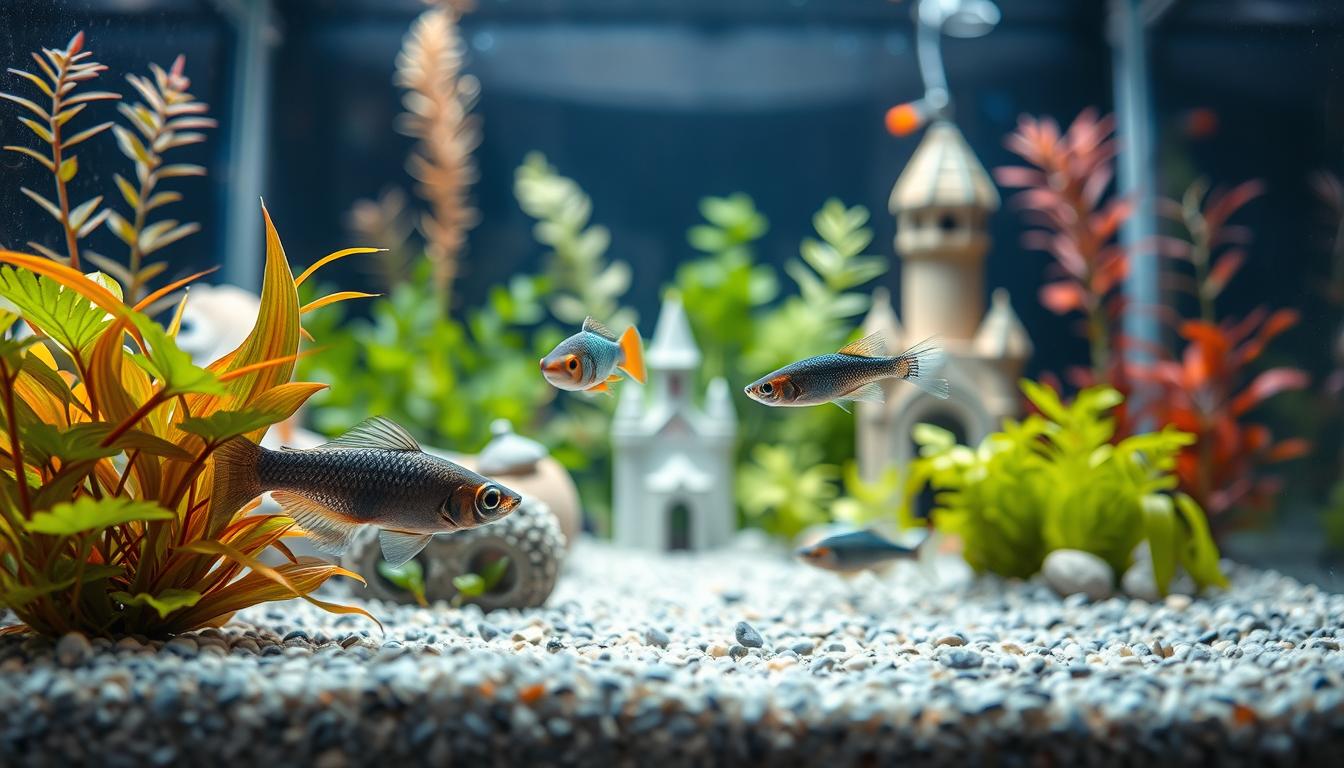
Nano aquariums are vibrant and compact. But, small tanks can change quickly. This section helps you spot early signs of fish stress.
Learn the basics of fish behavior. Healthy fish swim well, show bright colors, and eat regularly. Look out for signs like rapid gill movement, clamped fins, wounds, white spots, or refusal to eat.
Many issues start in the first 30 days. This includes wrong cycling, bad stocking, or wrong temperature. Power outages and filter failures are also big problems. Keep new fish in quarantine and use smart automation to lower stress.
Follow a simple diagnostic flow. First, check for immediate health red flags. Then, look at recent changes in the tank. Next, see if the fish’s behavior is odd or regular. Note any courtship signs. After that, choose the right action—stabilize water, reduce aggression, keep routine, or treat disease.
In this article, you’ll learn species-specific signs, testing priorities, and ways to fight stress. Catching stress early and acting fast helps your fish recover.
Understanding Fish Stress: What You Need to Know
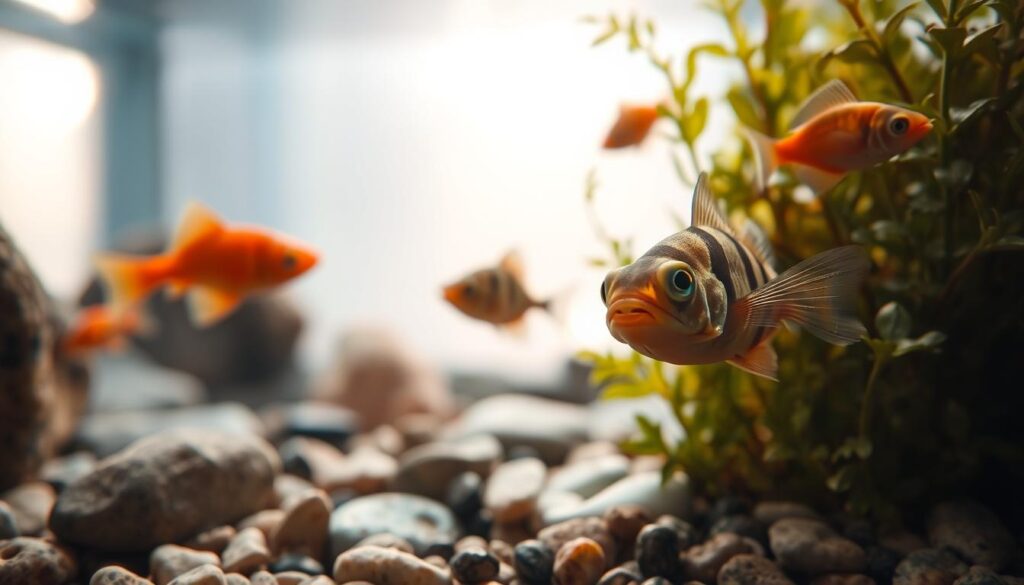
Stress in nano fish shows up in physical and behavioral changes. It weakens the slime coat and lowers immune function. This makes fish more open to infections.
Regular checks help spot problems early. This prevents diseases from taking hold.
It’s key to know the difference between acute and chronic stress. Acute stress comes from sudden events like transport or big water changes. It shows as darting and frantic breathing.
Acute stress usually clears up in a few days with the right care.
Chronic stress builds up over time due to poor water quality or tank overcrowding. Signs include faded colors, weight loss, and sickness. Catching stress early helps avoid long-term damage.
Hobby mistakes often lead to stress. Common errors include poor cycling, myths about overstocking, and bad temperature control. Sudden changes in lighting or CO2 can also upset fish.
Using smart devices can help keep conditions stable. This reduces mistakes.
- Recognizing fish stress starts with daily checks and a log of behavior and feeding.
- Detecting stress benefits from routine water tests and quarantine for new fish.
- Fish stress assessment includes tank conditions, recent events, and fish interactions.
Stress makes fish more prone to infections like fin rot and fungal growths. Preventive steps like regular testing and quarantine are better than treating illness.
Watch for subtle signs of stress and act fast. Early action helps keep fish colors, appetite, and immune system strong. With regular observation and care, your nano fish can stay healthy.
Signs of Stress in Your Nano Fish
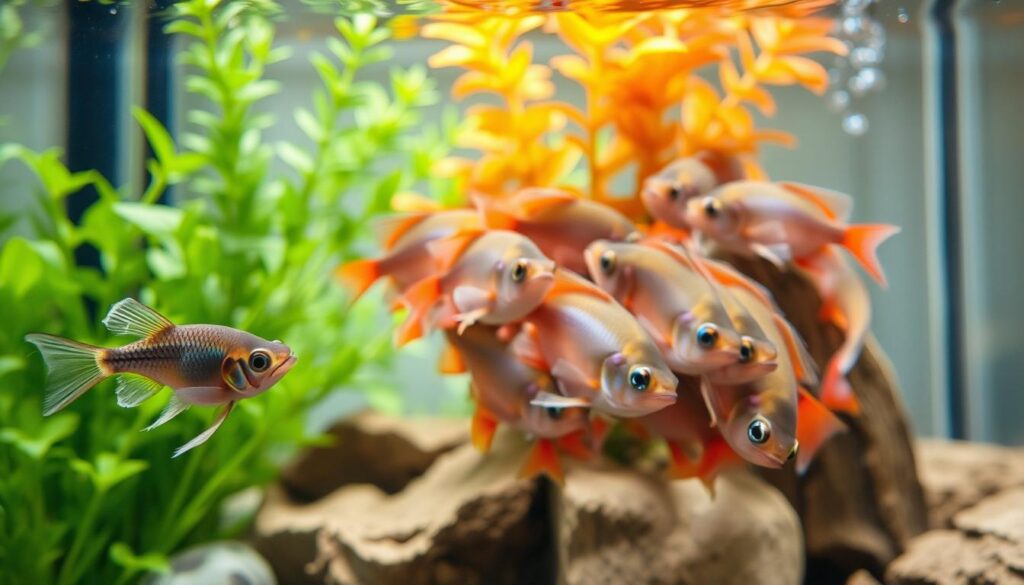
Every day, watch your fish for signs of stress. Look for changes like not eating or breathing fast. These are early signs that need quick action.
Check for damaged fins and dull colors. If your fish swim erratically or hide, they’re stressed. Also, look for them floating or sinking.
Sores, spots, or fuzzy growths on the body are bad signs. White spots mean ich, while yellow dust is velvet. Fuzzy mouths and bloated fish are signs of Columnaris and dropsy, respectively. These illnesses start with small stress signs, so spotting them early is key.
It’s important to tell courtship from stress behavior. Courtship is rhythmic and colors brighten. Stress, on the other hand, is erratic and appetite drops. Knowing the difference helps you spot stressed fish.
Technology can help you notice stress signs faster. AI apps and smart systems alert you to disease or odd behavior. They help you treat problems before they get worse.
- Loss of appetite or skipping meals
- Rapid or labored breathing; gasping at the surface
- Clamped or tattered fins; faded or blotchy color
- Abnormal swimming: darting, circling, hitting glass
- Hiding, lying on the bottom, buoyancy issues
- Sores, spots, white grain-of-salt (ich)
- Yellow/rust dusting (velvet/oodinium)
- Fin tattering and fuzzy mouth patches (Columnaris)
- Bloating and protruding scales (dropsy)
Keep watching your fish closely and note any changes. Spotting stress early lets you fix problems and seek help if needed.
Water Quality: The Key to Fish Health
Your first step in fish stress assessment is to treat water chemistry and stability as the top priority. Temperature, ammonia, nitrite, nitrate, pH, hardness, and dissolved oxygen must be appropriate for your species and remain steady. Small swings in these aquarium water parameters can trigger rapid behavior changes and weaken immunity.
When detecting fish stress, check recent environmental events before assuming illness. Review recent water changes, temperature shifts, filter cleaning, or equipment failures. These routine actions often explain sudden stress signs more than pathogens.
Test priorities help you act fast. Measure ammonia and nitrite first, then nitrate and temperature. Aim for 0 ppm ammonia and 0 ppm nitrite. Keep nitrates low—under 20–40 ppm depending on species—and hold temperature within the range recommended in aquarium temperature guides.
- Use fishless cycling to establish a stable nitrogen cycle when starting a tank. This reduces early stress and avoids exposing fish to toxic spikes.
- Perform regular partial water changes to maintain balance and dilute waste that stresses fish.
- Consider modern planted tanks, smart lighting, and budget CO2 automation to stabilize conditions in planted setups.
Poor water conditions promote specific illnesses. Chronic bad water and ongoing stress increase the risk of ich outbreaks, fungal infections, and repeated bacterial problems. Fixing aquarium water parameters often stops symptoms and reduces recurrence.
- Monitor ammonia and nitrite daily if stress is suspected.
- Correct abrupt changes immediately using partial water changes or temperature adjustments.
- Install emergency power and leak detection for critical systems to prevent catastrophic parameter shifts.
Keep records of readings and actions. Regular monitoring improves your ability to detect fish stress early and to link symptoms to water quality and fish stress factors. Stable water chemistry is the simplest, most effective tool you have to protect your nano fish.
Social Dynamics: Relationships Among nano Fish
Social interactions are key to understanding fish well-being. Aggression, uneven sex ratios, and territorial behavior can cause stress. You might see signs of stress before any visible injuries.
Start by observing fish behavior to tell normal courtship from harmful actions. For example, livebearers like guppies often have brief male chases. But, persistent chasing that exhausts females is a sign of stress.
Species like tetras and barbs may chase each other during spawning. Short chases are okay. But, if the chasing is constant, fins are torn, or wounds are visible, it’s a sign of stress.
Cichlids may seem aggressive with their digging and lip-locking. But, these actions can be normal. Be worried if one fish is always chased, cornered, or shows signs of injury. These are signs of imbalance.
Choosing the right fish for your tank is important. Don’t overcrowd and ensure compatibility. Providing enough space and hiding spots can reduce aggression and stress.
- Watch for repeated attacks or wounds.
- Isolate injured fish to prevent opportunistic infections.
- Consider re-homing aggressive individuals if aggression persists.
Injuries from fights can lead to infections like fin rot. When you see stressed fish, focus on treating wounds and quarantine. This protects the injured fish and the rest of the tank.
Keeping a log of fish interactions helps you understand their behavior over time. Note who starts chases and who gets targeted. This way, you can spot problems early and act before they get worse.
Environmental Factors Affecting Nano Fish
Your nano tank’s design impacts fish behavior and health. Tank size is key because nano tanks react fast to changes. Small tanks mean stressors appear quicker than in bigger ones.
Think about if the tank is too small for active fish or too full of decor. This can cause stress.
Lighting and the day-night cycle affect fish and plants. Bright lights or sudden schedule changes can stress fish. They might hide, lose appetite, or swim frantically.
Low light hurts plant growth and lets pests like velvet spread. Slowly increase CO2 levels in planted tanks. Quick changes stress plants and fish.
Substrate, driftwood, and rocks provide comfort and territory. Blackwater biotopes with tannins from driftwood calm many fish. They soften water and lower pH.
Dense planting or natural hiding spots reduce stress. They give fish safe places and stable environments.
- First, check for recent changes: tank moves, decor changes, or water chemistry shifts can stress fish.
- Look for sudden reactions: frantic swimming, gasping, or clamped fins often follow quick changes.
- Ensure good oxygenation: poor surface agitation or power outages quickly drop oxygen in nano tanks, causing gasping.
Plant health is linked to fish well-being. CO2 boosts plant growth but can lower oxygen at night if too much is used. Prune and adjust CO2 slowly to monitor fish stress.
Lighting extremes can lead to algae and disease. Too much light encourages algae and worsens velvet. Too little light weakens plants and harms water quality. Find a balance for species needs and watch for stress signs.
When checking for fish stress, use a checklist: tank size, recent changes, oxygen levels, lighting, and decor shifts. Quick checks of temperature and surface agitation can prevent emergencies. Small, steady changes reduce stress and illness risk.
Feeding Practices: A Vital Component
Your fish’s diet and health are closely connected. Bad nutrition can weaken their immune system. This might show as dull colors and slow movements. These signs can also mean your fish is stressed.
Feed the right amount. Many people give too much food. This can make the water unhealthy and stress out your fish.
Watch how much your fish eats. If they eat less or won’t eat, it could be a sign of stress or illness. During courtship, they might eat more, hiding any health issues. So, keep an eye on their eating habits over time.
- Choose high-quality commercial foods for balanced nutrition.
- Offer live or frozen options like brine shrimp or daphnia to add variety.
- Limit feeding frequency to small, twice-daily portions, or follow species-specific guides.
Automatic feeders are great when you’re away. They keep feeding regular, which helps your fish stay calm and healthy.
Pay attention to how your fish eats. If they ignore food or fight over it, you need to adjust. This helps keep the water clean and healthy, which is key to avoiding stress in your fish.
Keep a simple log of when and how much you feed. This helps you notice any changes in your fish’s eating habits. It can also help you see if diet or environment changes are causing stress.
Monitoring Your Fish: Best Practices
Start a simple daily routine to spot problems early. Do a quick visual check each day during feeding. Look for changes in appetite, breathing rate, location in the tank, and unusual motion patterns. This first step helps with detecting fish stress before tests are needed.
Use a weekly checklist for water quality. Test ammonia, nitrite, nitrate, pH, and temperature on a set day. Record results in a log or app. Regular water tests support accurate fish stress assessment and guide partial water changes.
Maintain short records and video clips. A one-minute clip during feeding or at night can reveal repeated behaviors you might miss live. Video and notes make monitoring fish behavior more reliable when evaluating fish stress over weeks.
- Create a simple log: date, water readings, feeding notes, and abnormal signs.
- Note social interactions: chasing, hiding, or isolation often signal trouble.
- Mark any sudden color shifts or erratic swims for follow-up testing.
Leverage smart tech to reduce guesswork. AI vision apps and camera systems can flag odd movement or color change. Smart leak detectors, automated top-offs, and programmed heaters keep conditions stable. Simple automation for lights and CO2 prevents abrupt shifts that stress fish.
Follow a behavior-first routine before jumping to medications. Observe feeding response, breathing, position, and repeated motions. Use those observations to decide which tests or treatments to run. This approach improves the accuracy of fish stress assessment.
Adopt routine maintenance tasks on a schedule. Do partial water changes, clean or check filters, and inspect equipment weekly. Quarantine new arrivals and perform routine dips when needed. Early prevention reduces the chance you’ll be evaluating fish stress under emergency conditions.
Match treatments to symptoms when intervention is required. Reliable test kits help identify water issues. Commercial products such as Maracyn or Ich-X can be useful when paired with the right diagnosis. Keep treatment notes in your log so you can track outcomes and refine your monitoring plan.
Solutions for Reducing Fish Stress
If you see signs of stress, act quickly. Start by changing some of the water to stabilize it. Check the temperature and oxygen levels. Adjust heaters or add an air stone, and dim the lights to reduce sudden changes.
Next, reduce handling and noise near the tank. Move aggressive fish to a separate tank to stop bullying. Isolate any visibly injured fish to help them recover without more stress.
When identifying stressed fish, follow a clear plan. If they’re showing courtship behavior, leave them alone unless it’s severe. If you see physical symptoms or illness, treat the specific condition after confirming the diagnosis.
Use targeted treatments for common illnesses linked to stress. For ich, slowly raise the temperature and consider treatments like Ich-X or aquarium salt. For velvet, increase the temperature, reduce bright lights, and apply an anti-velvet medication.
Bacterial infections need antibiotics if necessary. Products like Maracyn can work for some gram-negative infections. Recognize dropsy early, but treatment is often not successful, and a vet should be consulted.
Prevent stress with routine measures. Fishless cycle the tank, avoid overstocking, and quarantine new fish. Use timed feeders, reliable heaters, and CO2 controllers to automate tasks and reduce stress.
Be ready for power outages and emergencies with battery backups or generators. These help keep water chemistry stable and reduce stress during unexpected events.
Adopt calming strategies as part of your routine. Create hiding spots with plants and decor, keep a consistent feeding schedule, and watch for stressed fish. These solutions help keep your aquarium calm and healthy over time.
The Role of Routine and Stability
Keeping a routine and steady water conditions can help reduce stress in nano fish. A consistent routine helps you spot stress signs early. This also lowers the risk of diseases.
Smart planted tanks and automated systems for lighting, CO2, and feeding add consistency. Timers, a low-cost CO2 regulator, and automatic feeders keep things steady. This means you spend less time dealing with changes.
Regular water changes and scheduled maintenance prevent water quality issues. These issues can lead to poor health in fish.
Fishless cycling before adding fish avoids early losses. It gives young fish a stable start. Knowing the baseline values for ammonia, nitrite, and nitrate makes monitoring easier.
Many fish breeding cycles and courtship behaviors follow predictable patterns. Learning these patterns helps you understand when behavior is normal or a sign of distress. This makes it easier to spot stress signals.
- Quarantine new additions to stop pathogens from entering your display.
- Test water regularly to catch parameter drift early.
- Avoid overfeeding to keep tank chemistry stable.
Use the checklist above as a practical routine to prevent fish stress. It’s also part of ongoing fish stress assessment. Prioritizing stability in aquarium care leads to healthier fish. They will show more consistent color, appetite, and activity.
When to Seek Professional Help
Seek help if signs don’t get better or get worse with home care. Look for clear signs like breathing trouble, sores, weight loss, or long-term tiredness. These could mean your fish needs a vet.
Some issues, like dropsy or bacterial infections, need a vet right away. These problems need special treatments that you can’t buy yourself. If you think your fish has one of these, call a vet fast.
Not sure if your fish is stressed or just being active? Get help from a pro. They can tell you for sure and help avoid making things worse.
- When to call a vet: severe respiratory distress, open sores, swollen abdomen, or progressive decline despite correct water parameters.
- What to prepare: short video of the behavior, recent water test results, species and tank details, and a timeline of symptoms.
- Where to seek help: experienced aquatic veterinarians or reputable local fish stores with proven credentials and reviews.
Send videos and water test results to get quick advice. Vets can do tests, suggest treatments, and guide care. If you’re unsure or treatments aren’t working, ask for help.
Act quickly for contagious or serious issues. Early help can save your fish and prevent sickness in others. Keep a record of what you’ve tried so the vet can build on your efforts.
Tips for Building a Stress-Free Habitat
Before buying, pick species that fit a 10-gallon nano tank. Small tanks need careful planning. One or two small schooling fish or a single centerpiece species is best.
Plan your aquascape to reduce territorial conflict. Use driftwood, caves, and dense plant clusters for barriers. Low-light plants like Anubias and Java Fern provide cover and are easy to keep.
- Avoid overstocking; follow recommended adult sizes.
- Provide multiple hiding places so shy fish can escape harassers.
- Keep open swimming space for active species.
Match community compatibility and sex ratios to prevent bullying. For livebearers, manage male-to-female ratios to avoid constant chasing. Give females extra refuges during breeding times.
Use filtration that delivers gentle flow. Strong currents tire small fish and lift plants. Choose a filter rated for your tank volume and add sponge pre-filters if you keep fry or shrimp. Routine maintenance keeps water stable and aids reducing fish stress.
Consider blackwater setups for tannin-loving species. Driftwood releases tannins that soften water and calm many fish. These conditions suit species that prefer subdued light and can be central to building stress-free aquarium environments.
Quarantine new fish and plants before adding them to the main tank. Test water before and after changes to avoid sudden swings. A simple quarantine routine is one of the best steps for fish stress prevention.
- Introduce a cleanup crew, such as Nerite snails, where appropriate to help control algae.
- Install smart leak detection and a small UPS for air pumps or filters to protect your habitat during outages.
- Feed measured portions of high-quality food and remove uneaten pellets to keep parameters steady.
Learn species-specific normal behaviors so you do not mistake routine actions for trouble. Observing your fish daily helps spot early signs and speeds up reducing fish stress when problems arise.
Stick to a consistent schedule for light, feeding, and maintenance. Predictability gives fish security and supports long-term success with a stress-free nano tank.
Conclusion: Prioritizing Your Nano Fish’s Well-being
To keep your nano fish happy, check on them every day. Look at their appetite, breathing, color, and behavior. This helps you spot stress early and act fast.
Preventive steps are key. Cycle your tank without fish, quarantine new fish, and use timers for lights and feeders. Having an emergency kit ready also helps. Keep notes or videos of your fish’s behavior to spot stress quickly.
Acting fast when you see stress is important. Many diseases start with stress. Test your water often and get help if you need it. By staying alert and consistent, you can keep your nano fish safe and healthy.
Leave a Reply