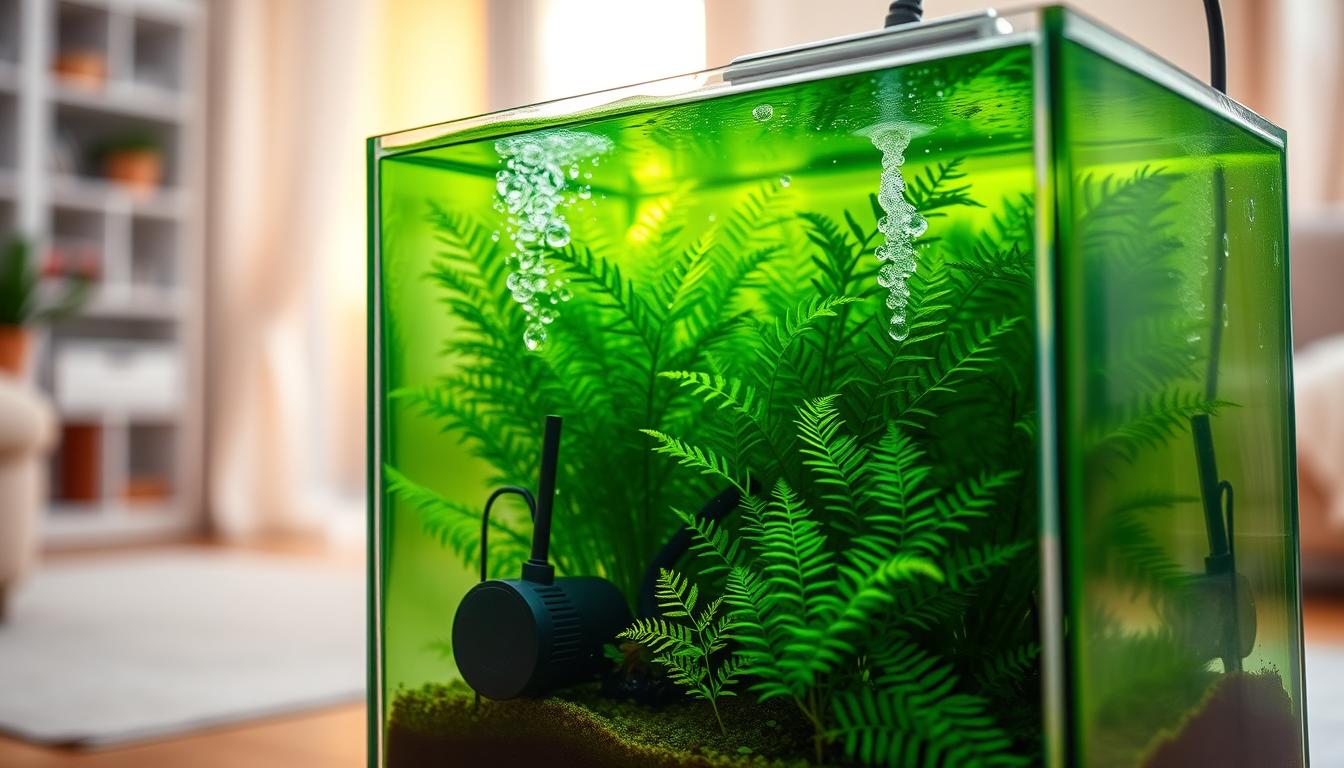
When you approach your tank, you see water that looks like pea soup. Green water is a fast growth of tiny plants that makes it hard to see and stresses fish. This article will guide you on what to do and why it’s urgent for small tanks in the U.S.
It offers clear steps to find the problem, treat the green water, and fix it for good. Quick fixes include a blackout, UV sterilizer, polishing pad, and water changes. But, these might not stop it from happening again.
To really solve the problem, you need to address the main causes. These are too much light, too many nutrients, overfeeding, and not keeping up with tank care. The guide also shows how to control algae by testing regularly and stocking wisely. This keeps your tank clear and healthy.
In this article, you’ll learn how to treat algae blooms safely. Follow these steps to get clear water and prevent future green water problems.
Understanding Algae Blooms in Your Aquarium
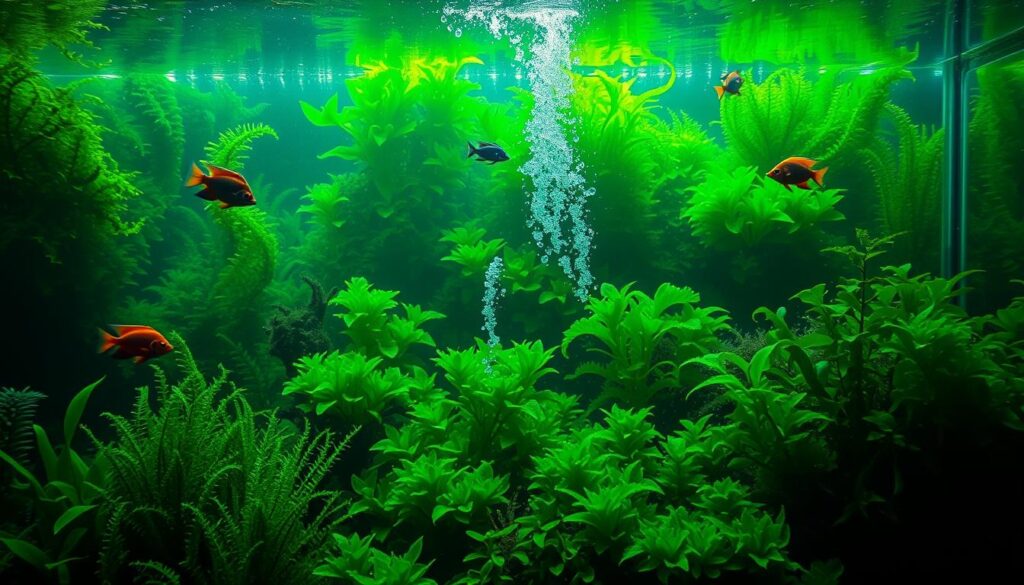
Green water in a small aquarium is usually a rapid bloom of single-celled phytoplankton that float in suspension. This is different from surface films or algae attached to glass and rock. Knowing what causes algae blooms helps you target the right fix.
Not all algae look the same. Brown diatoms are common in new tanks and tie to silicates and phosphates. Black beard algae grows bushy and tough. Hair or staghorn algae appears stringy when nutrients or light are out of balance. Green spot algae forms hard spots on glass linked to low phosphate or uneven light. Blue-green algae, actually cyanobacteria, makes a slimy mat and a distinct odor.
Algae persist because they use broader light wavelengths and different nutrient compounds than your plants. They cope with poor conditions that plants find stressful. Total eradication is unrealistic. Your goal should be balance so algae stay minimal and unnoticeable.
Some microalgae are helpful. Infusoria and phytoplankton cultures feed fry and support reef corals. During daylight they release oxygen and can act as biological filtration by consuming nitrates. Recognizing these benefits makes your approach less about elimination and more about control.
The core drivers are light and nutrients acting together. Excess light or surplus nitrate, phosphate, or ammonia creates ideal conditions. If plants cannot use the available nutrients, algae will. Those pressures explain both sudden green water outbreaks and slow, stubborn patches.
When you focus on overcoming algae blooms, you look at light scheduling, nutrient inputs, and plant health. Practical ways to manage algal blooms include reducing direct light, trimming excess feed, and improving plant uptake. Long-term algae bloom prevention comes from steady maintenance and balancing your tank’s ecology.
Signs of Algae Overgrowth
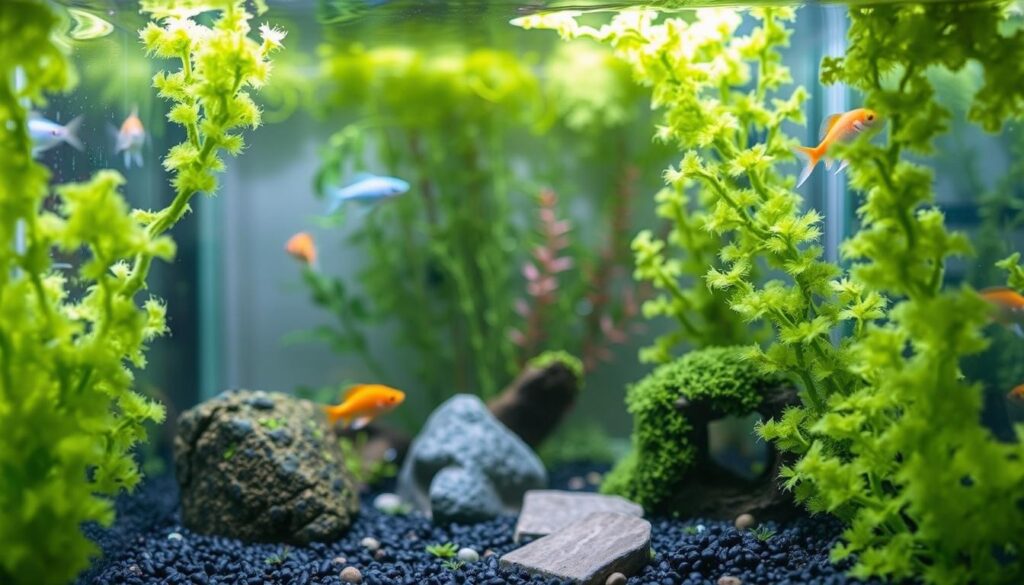
Look for a uniform pea-soup green tint that makes your tank look cloudy. This green water cuts light to bottom plants. It’s an early sign you need to take action.
Check surfaces for other algae types. A dusty brown film on glass or rock points to diatoms. Black or gray bushy clumps on driftwood or stems suggest black beard algae.
Fine, hair-like strands growing from decor or leaves are typical hair algae. Hard green dots on glass and slow-growing leaves usually mean green spot algae. Slimy mats that smell foul may be blue-green algae, also called cyanobacteria.
Notice fish behavior and plant performance. Stressed or gasping fish at night can indicate oxygen dips tied to heavy algal loads. Plants that melt or show nutrient deficiency symptoms while receiving fertilizer may be suffering from light blockage by algae.
If algae return quickly after you scrub or do a water change, that pattern hints at ongoing nutrient or lighting issues.
- Frequent blooms after tap water changes can point to high nitrate or phosphate in your source water.
- Blooms that follow overfeeding or a pet-sitter visit often trace back to feeding-induced nutrient spikes.
- Tanks near sunny windows or bright room lights can develop algae from too much natural light.
Identifying these signs of algae overgrowth helps you target fixes. Use the clues from appearance, behavior, and recurrence. Decide whether to cut light, adjust feeding, test source water, or step up maintenance.
Testing Your Water Parameters
First, test for ammonia, nitrite, nitrate, phosphate (PO4), and general hardness. Use trusted freshwater kits from API or Seachem for accurate readings.
Check your tap water before adding it to the tank. High nitrate or phosphate can make it hard to fight algae and treat blooms.
Any ammonia or nitrite means your tank is cycling badly, you’re feeding too much, or it’s too crowded. These issues cause green water in new tanks and after fish die-offs.
- Target nitrate: many planted setups prefer under 20 ppm. High nitrate means more water changes and less nutrients.
- Target phosphate: keep it as low as possible. Small phosphate levels can feed algae, so avoid fertilizers that raise it without plant use.
Check results weekly to see how changes affect your tank. This helps you know which treatments work best.
If levels stay high, look at feeding, stocking, and supplements. Use RO/DI water if tap levels are always high.
Testing your water gives you the data to fight algae. Use these numbers to set goals and choose the right treatments to reduce algae.
Prevention Strategies for Algae Blooms
Keep light under control to limit algae growth. Avoid placing your tank in direct sun or next to bright windows. Use a timer for aquarium lighting and set non-planted tanks for 6–8 hours daily; planted tanks need 8–12 hours depending on species and CO2.
Feed conservatively to reduce excess nutrients. Offer only what fish eat within two minutes, once or twice a day. Many hobbyists skip feeding one day per week to cut nitrates and help with preventing algae overgrowth.
Follow a steady maintenance routine to stay ahead of issues. Aim for at least 10% weekly water changes or 20% when possible. Siphon uneaten food and vacuum substrate lightly unless you have a newly cycled or heavily planted system.
- Choose fast-growing stem and floating plants like hornwort, water sprite, or Salvinia to outcompete algae for nutrients.
- Well-planted tanks often resist severe outbreaks and reduce the need for chemical fixes.
Service filters and check flow to avoid dead spots that favor cyanobacteria. Replace hang-on cartridges monthly, clean mechanical media, and refresh activated carbon every 4–6 weeks. Good circulation helps with algae bloom prevention.
Test tap water for nitrates and phosphates. If levels run high, use RO/DI water and reconstitute with trusted products such as Seachem Equilibrium or Aqueon Water Renewal. That step supports long-term strategies for combating algae blooms.
Dose fertilizers with care. Tanks without injected CO2 require lighter dosing. Measure net water volume accurately when dosing to prevent nutrient spikes that encourage algae.
For overall success, combine these best practices for algae control into a routine you can follow every week. Small, consistent steps will reduce nutrient buildup and make preventing algae overgrowth much easier.
Physical Removal Techniques
Quickly reduce algae in water with hands-on methods. Start with the blackout method for free-floating phytoplankton or some cyanobacteria. Turn off lights and cover the tank with opaque material for up to seven days. Keep pumps and aeration running. Uncover briefly to feed if needed.
Watch live plants closely because stress or die-off may raise ammonia. This might require follow-up water changes.
Manual removal is effective for attached algae like hair algae, black beard algae, and green spot. Use algae scrapers, old toothbrushes, razor blades on glass, or plastic cards for acrylic tanks. Pull out heavily infested plants and decorations and treat them separately.
A short hydrogen peroxide soak can help remove stubborn black beard algae from hardscape and plant leaves.
Add fine mechanical filtration to support reducing algae in water. Filter floss, polishing pads, or filter socks placed downstream of your main filter will trap suspended particles. Replace or rinse these pads often so they do not become nutrient sources themselves.
During routine water changes, vacuum the substrate to remove detritus and decomposing matter that feed blooms. Regular gravel cleaning lowers nutrient levels and is one of the simplest ways to manage algal blooms in small aquariums.
For very clear results, consider a diatom filter when you need extra polishing. Diatomaceous-earth filters remove microscopic particles, including suspended algae, and can produce crystal-clear water. These units cost more, but they are a useful tool among the practical ways to manage algal blooms in setups that tolerate periodic external filtration.
- Blackout method: block light up to 7 days; keep pumps on.
- Manual scraping: scrapers, toothbrushes, razor blades or plastic cards.
- Pre-treat items: remove and soak decorations or plants if infested.
- Mechanical polishing: filter floss, polishing pads, filter socks.
- Substrate care: vacuum during water changes to cut nutrient input.
- Diatom filtration: for microscopic particle removal and clear water.
Chemical Solutions for Algae Control
When green water or spotty growth shows up, chemical options can help quickly. UV sterilizers like the Aqueon QuietFlow UV for tanks up to 40 gallons or Coralife Turbo-Twist for larger tanks are good for algae. Place the unit inline or in your sump and match the flow rate to the UV rating for best results.
Over-the-counter algaecides like Aqueon Algae Remover can cut down visible growth. But, use these products only as a last resort. Chemical solutions don’t fix nutrient or lighting issues. Remove activated carbon and other chemical media before dosing and follow the manufacturer’s directions for your tank size.
For tough patches like black beard algae, a 3% hydrogen peroxide spot treatment can work. Treat items out of water for about five minutes, rinse well, then return them to the tank. Avoid broad application near live plants and invertebrates to limit harm.
Severe cyanobacteria outbreaks may respond to erythromycin-based products like Maracyn when used carefully. Follow package dosing—often one packet per ten gallons—and repeat as directed. Understand that antibiotic use can disrupt beneficial bacteria and may promote resistance, so reserve this option for extreme cases.
- Monitor parameters closely after any chemical dosing.
- Prepare for oxygen drops and ammonia spikes by increasing aeration and planning timely water changes.
- Keep chemical use targeted and short-term to protect your tank’s biological balance.
Adopt best practices for algae control by pairing treatments with source fixes. Cut excess feeding, reduce light duration, and improve filtration. Chemical treatments can remove visible algae, but the most durable results come from correcting the root causes that allow blooms to return.
Introducing Natural Algae Eaters
You can cut down on algae by adding natural eaters that fit your tank’s algae. Nerite snails are great for green spot algae. Amano shrimp and Siamese algae eaters are good for hair and filamentous algae. Otocinclus catfish eat soft algae and diatoms.
Choose the right species for your algae and water conditions. Florida flagfish and some Siamese algae eaters can handle black beard algae in certain setups. Remember, no single cleaner can solve all problems.
Use these helpers along with controlling nutrients and light to manage algae. Algae eaters clean the surface, not green water. So, pair them with biological control, water changes, and less light.
When adding new animals, follow best practices for algae control. Make sure they’re compatible with your fish, tank size, and temperature. Give them hiding spots and extra food to stay healthy if algae levels go down.
- Amano shrimp — effective on hair and filamentous algae.
- Nerite snails — eat green spot algae; they won’t breed in freshwater.
- Siamese algae eaters — target tough filamentous types, including some BBA.
- Otocinclus catfish — gentle grazers for soft algae and diatoms.
- Florida flagfish — useful for some stubborn patches in compatible tanks.
Stock your tank carefully and watch your cleanup crew. Don’t rely only on animals for algae control. By combining these helpers with good algae management, you’ll keep your aquarium balanced in the long run.
Enhancing Lighting Conditions
Control light duration to keep your tank stable. For non-planted aquariums, limit artificial light to six hours or less each day. For planted tanks, set a schedule between eight and twelve hours based on plant needs and whether you use CO2.
Use timers to maintain consistent photoperiods and prevent accidental extended lighting that can lead to algae spikes. Gradual changes work best; alter photoperiod or intensity over days and monitor plants and fish for two to three weeks.
Avoid direct sunlight on the aquarium. Move the tank away from bright windows or install blinds. If the room is bright, consider keeping the aquarium light off during daytime or reducing its intensity to help with reducing algae in water.
Choose LED fixtures with dimming or spectrum control so you can fine-tune output. Plants need specific wavelengths while algae thrive on broader spectrums. Dialing back intensity and favoring plant-friendly spectra can aid in preventing algae overgrowth.
Balance light with nutrient management. Over-lighting combined with limited nutrient uptake by plants often favors algae. Excess nutrients paired with low light can do the same. Adjust dosing and feeding when you change lighting to support plant growth and reduce algae in water.
- Set timers for consistent on/off cycles.
- Reduce peak intensity if algae persist.
- Make changes slowly and watch plant response.
Follow these steps and you will strengthen tank stability, making lighting adjustments a practical tool for preventing algae overgrowth while supporting healthy plants and livestock.
Monitoring and Maintenance Practices
Keep a simple testing schedule to track ammonia, nitrite, nitrate, and phosphate. Write down results and note any actions like water changes, dosing, or feeding adjustments. This record helps you spot trends and shows how your monitoring and maintenance practices affect algae levels.
Set a weekly routine: a 20% water change, siphon the substrate, remove visible debris, and check filter flow. Rinse mechanical media when it clogs. These tasks follow best practices for algae control and cut nutrient sources that feed green water outbreaks.
Adopt monthly chores: replace filter cartridges, service canister filters, and swap activated carbon or chemical media every four to six weeks. Clean impellers and check tubing for blockages so circulation stays strong and you reduce stagnant spots where algae thrive.
Manage flow and filtration to avoid dead zones. Add a small powerhead or air stone if water movement is weak. Proper flow supports biological filtration and makes it easier to control how to control algae growth in hidden corners.
Feed sparingly and measure fertilizer doses. If you do not run CO2 or your plant cover is thin, cut back on nutrients. Dose liquid fertilizers based on actual water volume after subtracting substrate and decorations to prevent excess that encourages algae.
Change one variable at a time and wait two to three weeks to judge results. Plant health and algae response take time to show. Patient recordkeeping and steady application of the best practices for algae control deliver the clearest path to long-term stability.
Seeking Professional Help
If green water or algae keeps coming back, it’s time to get help. Look for a local aquarium store with experts. They can also be an aquatic consultant or a trusted online service for in-person checks.
These professionals use top-notch test kits like API or Seachem. They can do detailed water chemistry tests that you might not catch at home.
Experts can give you specific plans to fight algae in your tank. They might suggest RO/DI water, filter upgrades, or the safe use of algaecides. They’ll also guide you on stocking, feeding, and choosing algae eaters to prevent future problems.
Be ready for some costs, but think about the damage of not fixing it. A pro can fix severe cases and create a plan to keep your tank healthy. If you see fish dying or water chemistry issues, get help fast to save your tank and its life.
Leave a Reply