
You want your tank to be clear, healthy, and beautiful. This guide will help you find and fix low circulation spots. This way, your freshwater or saltwater tank will flourish.
Good flow is key. It moves waste to filters, spreads nutrients, and boosts oxygen. It also keeps the water surface clean.
Every hobbyist needs to tackle dead zones. Some fish, like rainbow shiners, need strong currents. Others, like bettas, prefer gentle flow. Knowing what your fish need helps you choose the right equipment and avoid health issues.
This article will guide you through the process. You’ll learn how to spot dead zones, troubleshoot, and fix them. We’ll cover using filters, powerheads, and air stones. You’ll also get tips on placement, maintenance, and when to ask for help.
By improving circulation, you’ll create a thriving tank. Follow these steps to see real improvements for your fish and plants.
Understanding Dead Zones in Aquariums
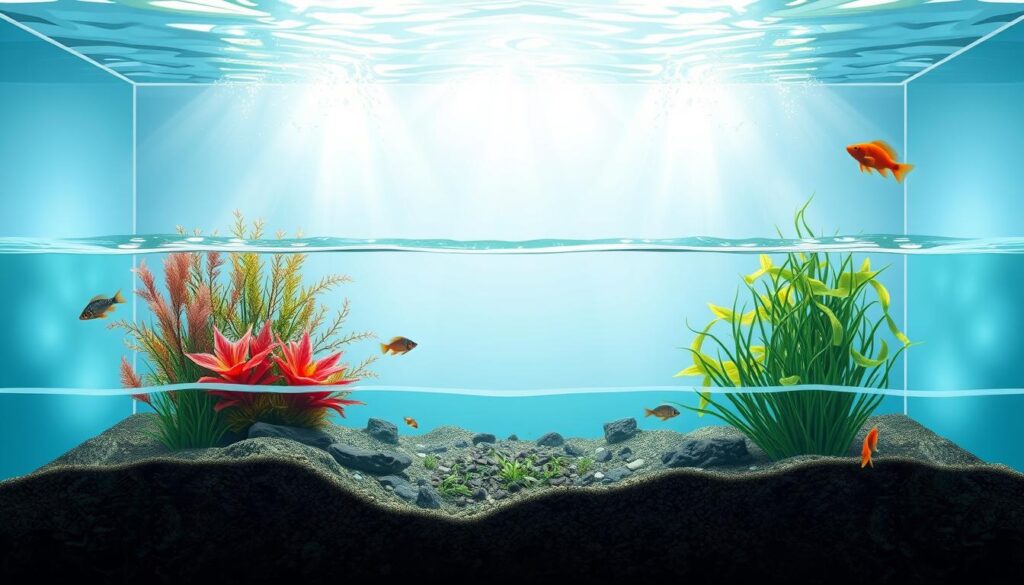
A dead zone is where water barely moves. You’ll find these spots behind big decorations, under rocks, in caves, and in corners. These areas lack oxygen, heat, and nutrients for plants, corals, and fish.
Several things can cause dead zones. Big rock stacks or dense plants block water flow. Tank shape, like outlets at the top, also plays a role. Plus, small or clogged filters and powerheads reduce circulation. Too many fish in the tank can make things worse.
The effects are serious. Debris and waste build up, causing ammonia spikes. Without oxygen, anaerobic bacteria produce harmful gases. Plants and corals struggle, and fish may get stressed or die.
Knowing why dead zones form is the first step. After finding the problem spots, you can fix them. This might mean moving equipment, getting better pumps, or changing the layout. This way, you can prevent dead zones from happening.
Signs of Low Circulation
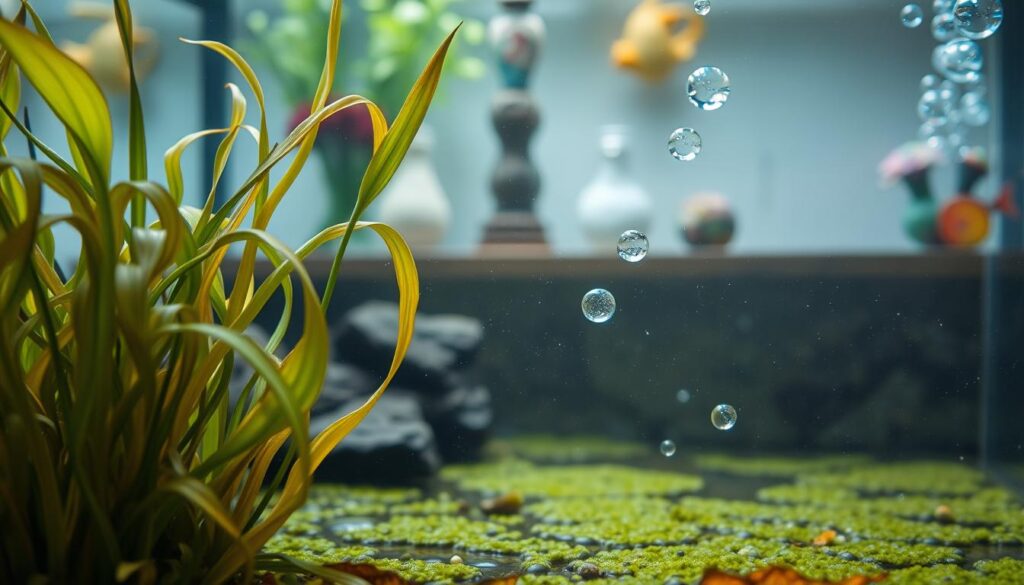
Spotting signs of low circulation early keeps your tank healthy and cuts down on dead zone troubleshooting later. Look for visible piles of detritus or settled waste in the same corners or behind decorations. These patches tell you water is not sweeping the substrate evenly.
Algae often reveals flow problems. Patches of blue-green algae or black beard algae concentrated in one area point to poor water movement. If plants in a specific spot grow slowly, turn pale, or stretch toward light while the rest of the tank thrives, that area may lack proper flow and nutrient exchange.
- Fish behavior: fish avoiding corners or hiding from currents may be reacting to low oxygen or local pollutant buildup.
- Invertebrates and bottom-dwellers: snails, shrimp, or catfish that constantly congregate and stir substrate can indicate a slow pocket where food and waste collect.
- Equipment hints: filters or powerheads with reduced output, or heater/gadget “low flow” alerts that cycle often, suggest clogging, wear, or misplacement causing poor dead zone coverage.
Use simple tests to reveal subtle flow issues. Drop a flake of food, a small piece of paper, or a floating test particle and watch where it drifts and settles. A gentle dye plume or tannin spot can act like a smoke-test analog to show recirculation paths and slow pockets.
When you connect these observations to dead zone troubleshooting, you gain a clear action plan. Early detection makes fixes quick: reposition equipment, clean intake screens, or add a circulation pump to improve dead zone coverage and protect fish and plants from stress or localized ammonia spikes.
Identifying Dead Zones in Your Tank
Start by slowly looking around your tank. Look for where debris gathers, algae blooms, and plants seem weak. Also, notice where fish don’t want to go. These signs help you find dead zones and fix them.
Try simple tests to see how water moves. Drop food flakes or dye near the filter return to track its path. Use a cup to create a stream towards corners and see if water reaches.
Then, check how well your equipment works. Look at the filter return’s direction and strength. Feel the power of pumps and powerheads; less flow means clogs or too small sizes. Tanks with one return side often have less flow to the far ends.
- Move decorations briefly to test hidden pockets behind rocks and driftwood.
- Leave a 5–10 cm gap behind hardscape and observe any change in water movement.
- Probe bottom corners with a soft tool to find slow zones where detritus builds.
Keep a checklist of what you find: debris spots, algae, areas fish avoid, and weak equipment. Use this list to fix dead zones and improve water flow.
Tools for Enhancing Water Flow
Choose filters that match your tank’s needs. Sponge filters are great for fry and bettas because they have gentle flow. Canister and hang-on-back (HOB) filters offer stronger flow and help break surface biofilm.
Powerheads are submersible pumps that create directed jets to move water. They’re good for larger tanks or to raise turnover. For example, an Aquarium Co-Op powerhead can push roughly 211 GPH (800 LPH) at 10 W. Pairing a powerhead with a sponge filter speeds up mechanical filtration and offers dead zone remedies.
Wave makers produce alternating currents that mimic natural waves. They spread circulation more broadly than a single jet. This alternating motion reduces repetitive flow patterns that create stagnant corners and acts like improving signal strength for water movement.
Air stones and air pumps are a low-cost fix to stir stagnant corners. They add surface agitation without stressing slow-moving species. Use them where gentle movement is needed, not strong jets.
- Spray bars: disperse output along a line to diffuse force and cover more area.
- Discharge against walls: bounce flow off glass to spread circulation and avoid direct blasts.
- Attach powerheads to sponge uplift tubes: increase filtration speed but expect more frequent foam maintenance.
Follow basic sizing guidance to avoid underpowered setups. Aim to circulate the tank volume at least 4× per hour. Some systems or livestock need 5–10× per hour. For instance, a 100-gallon tank would need roughly 400 GPH; a 250-liter tank may require 1,250–2,500 LPH.
When mixing tools, think of combinations as layered dead zone solutions. A HOB filter plus a wave maker or a powerhead with an air stone will enhance wireless connectivity of currents across the tank. Small adjustments in placement often yield big improvements.
Use these tips to target problem areas without stressing fish. Test different setups, monitor flow patterns, and keep maintenance simple to maintain effective dead zone remedies over time.
Strategically Placing Equipment
When placing equipment, aim devices at stagnant spots. Put powerheads near where debris or algae often come back. Angle returns slightly down to clean the substrate and move water to lower areas.
Use pumps and powerheads at the top for surface agitation. This breaks oil slicks and biofilm and aids gas exchange. It’s like optimizing network coverage, where a few key nodes cover more ground.
- Keep powerheads away from the substrate if they stir up sand or gravel.
- Direct flow toward walls or use spray bars to diffuse force and avoid creating cloudy pockets.
- Position powerheads by heaters that show low-flow signs so warm water spreads evenly and hot or cold pockets are minimized.
For better dead zone coverage, use opposing or offset flow sources. Place a powerhead at each end or use wave makers for cross-currents. This setup is like a mesh of nodes, optimizing coverage inside the tank.
Hide equipment without losing function. Tuck pumps behind tall plants or decorations, or match them to a dark background. This keeps the tank tidy and circulation effective.
Adjusting Tank Layout
Small changes to your hardscape can improve flow quickly. Leave a 5–10 cm gap behind large rocks so water moves through instead of stagnating. Elevate driftwood or carve channels under rock piles to let currents pass.
Plant placement matters for dead zone prevention. Spread dense plants into clusters spaced across the tank instead of packing them into corners. Move slow-growing or delicate species from likely low-flow pockets to areas with steady circulation.
- Trim and remove unhealthy leaves in persistent low-flow beds.
- Boost fertilization and CO2 where plants lag after improving flow.
- Watch plant recovery for two weeks after layout changes.
Adjust outlet orientation and add secondary returns or powerheads when one end of the tank stays calm. In long tanks, position flow devices opposite each other to avoid one-sided coverage. Changing angles often fixes far-end stagnation without extra filtration.
Use biological helpers as part of dead zone remedies. Corydoras catfish sift substrate, Amano shrimp pick at detritus, and Nassarius snails keep sand moving. These additions work with layout changes to reduce buildup in low-flow areas.
- Inspect problem spots with a sheet of paper or flow tester to locate dead zones.
- Make incremental hardscape shifts and recheck flow.
- Add plants or animals to help clean remaining pockets.
Adjusting tank layout is a practical, low-cost dead zone prevention strategy. Often, a few thoughtful moves give the best long-term results for clearer water and healthier plants and fish.
Routine Maintenance to Prevent Dead Zones
Start a simple maintenance routine to keep water flowing well. Clean or replace filter wool pads and hose filters to avoid clogs. A clogged filter can slow down water flow, leading to dead zones.
Follow the manufacturer’s guide to take apart powerheads and pumps. Clean out impellers and intake screens to improve flow. Often, a quick clean can fix flow issues instead of needing a new part.
- Vacuum substrate during water changes to remove detritus.
- Check corners and behind decorations for trapped waste.
- Move décor seasonally to prevent hidden buildup.
Check flow devices weekly for any performance drops. Clean them monthly or as the product suggests. Be careful with foam filters when adding high-flow attachments, as they can clog faster.
Regularly trim plants to prevent shading and decay. Keep the right number of fish to avoid waste overload. These steps help prevent dead zones for a long time.
If you notice low-flow areas, start troubleshooting. Isolate the area, test nearby equipment, and clean or adjust parts until flow is restored. Regular maintenance makes fixing problems easier and keeps your tank healthy.
Monitoring Water Flow Regularly
Start a simple routine to check your tank’s water flow. Use food flakes, a drop of dye, or small floating tracers to observe the current. These visual checks help spot new detritus and areas needing dead zone troubleshooting.
Measure the flow rates of each pump and powerhead. Record the gallons per hour (GPH) or liters per hour (LPH). Compare these numbers to the recommended turnover for your tank. Aim for at least 4x per hour for general tanks and up to 5–10x per hour for species needing stronger circulation.
Keep a log of your equipment maintenance. Note the dates for cleaning, changes in output, and any repositioning. A brief entry after each visit helps spot trends before they become big problems.
Think about using simple tech like inline flow meters or smart plugs. They track power draw and can warn of issues before they’re visible. These tools help with dead zone troubleshooting and alert you to failing parts.
After moving a pump or rearranging decorations, watch your tank for at least two weeks. Look at plant health and substrate for signs of recovery. This time tells you if your changes worked and if you need to improve signal strength between devices or control systems.
- Daily: quick visual check with a tracer
- Weekly: note GPH/LPH and clean intake strainers
- Monthly: review log, test inline meters, inspect fittings
Benefits of Improved Water Circulation
Good flow spreads oxygen, heat, nutrients, and CO2. This keeps your fish, plants, and corals healthy. It also cuts down on ammonia spikes and stops anaerobic bacteria from growing.
Clearer water comes when filters get a steady supply of stirred waste. You’ll see fewer algae patches and stronger, evenly colored plants. This is a big win for any aquascape.
Even heat distribution prevents hot and cold pockets that stress your fish. Pumps and mechanical filters run better with balanced water delivery. This means less need for repairs over time.
Routine care gets easier with fewer algae outbreaks and less buildup. You’ll save on maintenance by needing fewer deep cleans and simpler weekly tasks. Small efforts now can lead to big savings later.
When flow is right, tank behavior changes. Fish stop avoiding corners, bottom-dwellers forage more confidently, and detritus no longer piles up. Improved circulation is like a wireless network for your ecosystem, making sure everything communicates well.
- Biological balance: better oxygen and nutrient spread
- Visual benefits: clearer water and uniform plant growth
- System stability: consistent temperature and filter performance
- Lower upkeep: fewer deep cleanings and algae events
- Behavioral perks: more even use of the tank by livestock
Common Mistakes to Avoid
Too much flow can hurt plants and stress fish. If water is too strong, it can damage leaves or harm small fish. To fix this, slow down the pump or add a spray bar to spread out the current. This keeps the water moving well without harming your plants or fish.
Using only one return outlet is a big mistake. This setup often leaves corners with very little water flow. To solve this, use two return outlets or a small powerhead. This balances the water movement and helps avoid dead spots.
Not keeping up with maintenance can also cause problems. Filters and pumps can get clogged or dirty over time. Regular cleaning keeps them working well and prevents dead zones from forming.
- Don’t push rocks or decorations too close to the glass. Leave some space for water to flow behind them.
- Don’t pack decorations too tightly. This lets water move freely and prevents dirt buildup.
- Make sure your pump is the right size for your tank. A pump that’s too small can cause low water flow, which is bad for your tank.
Ignoring what your fish need can also cause problems. Too much turbulence can hurt delicate fish like fry or bettas. For these fish, use sponge filters or gentle air circulation.
When fixing dead zones, test each change one at a time. Try swapping a pump and watch how it affects your tank for a few days. Keep track of how each change impacts your tank’s flow and your fish’s behavior. This helps you find the best solution for your tank.
Seeking Professional Help
If you’re dealing with ongoing algae, dead plants or corals, or constant ammonia and nitrate spikes, it’s time to get help. Big tanks and reef setups often have hidden flow issues that DIY fixes can’t solve.
Start by documenting what you see. Note the symptoms, recent changes, and equipment specs. Also, keep track of stocking levels and maintenance history. Clear records help the professional diagnose and fix the problem faster.
- Local aquarium store specialists can test water and suggest targeted gear upgrades.
- Experienced aquascapers will evaluate layout and recommend aesthetic, flow-friendly changes.
- Certified aquatic veterinarians help when livestock show stress or disease linked to poor circulation.
- Professional aquarium maintenance services handle plumbing, pump sizing, and ongoing upkeep.
Professional work starts with a full circulation audit. Expect flow rate measurements, plumbing and pump inspections, and a detailed plan. They might suggest or install powerheads, wave makers, extra returns, or a sump for better circulation.
Costs depend on the scope of work. A diagnostic visit includes a visual check, basic tests, and a written plan. Major changes like adding pumps or reworking plumbing cost more but solve problems for good.
- Prepare: gather records and photos to show exact trouble spots.
- Ask for measured flow numbers and a written maintenance schedule.
- Request options with costs for immediate fixes and longer-term dead zone solutions.
Getting professional help gives you a clear plan for fixing dead zones. It turns guesswork into effective solutions, keeping your tank healthy and stable.
Conclusion: Keeping Your Tank Healthy
Keeping your aquarium stable requires constant care. Watch how fish act and use dye tests to find dead spots. Choose the right tools like sponge filters and powerheads to improve water flow.
Here’s a quick plan: check filter returns, run a dye test, clean or replace clogged gear, add a powerhead or wave maker, and give plants time to adjust. These steps help fix dead zones and prevent them from coming back.
Think about the future too. Mix the right equipment, plan your tank’s layout, and maintain it regularly. Always check the flow and how living things in the tank react. If dead zones keep coming back, get help from a pro to keep your tank healthy.
Leave a Reply