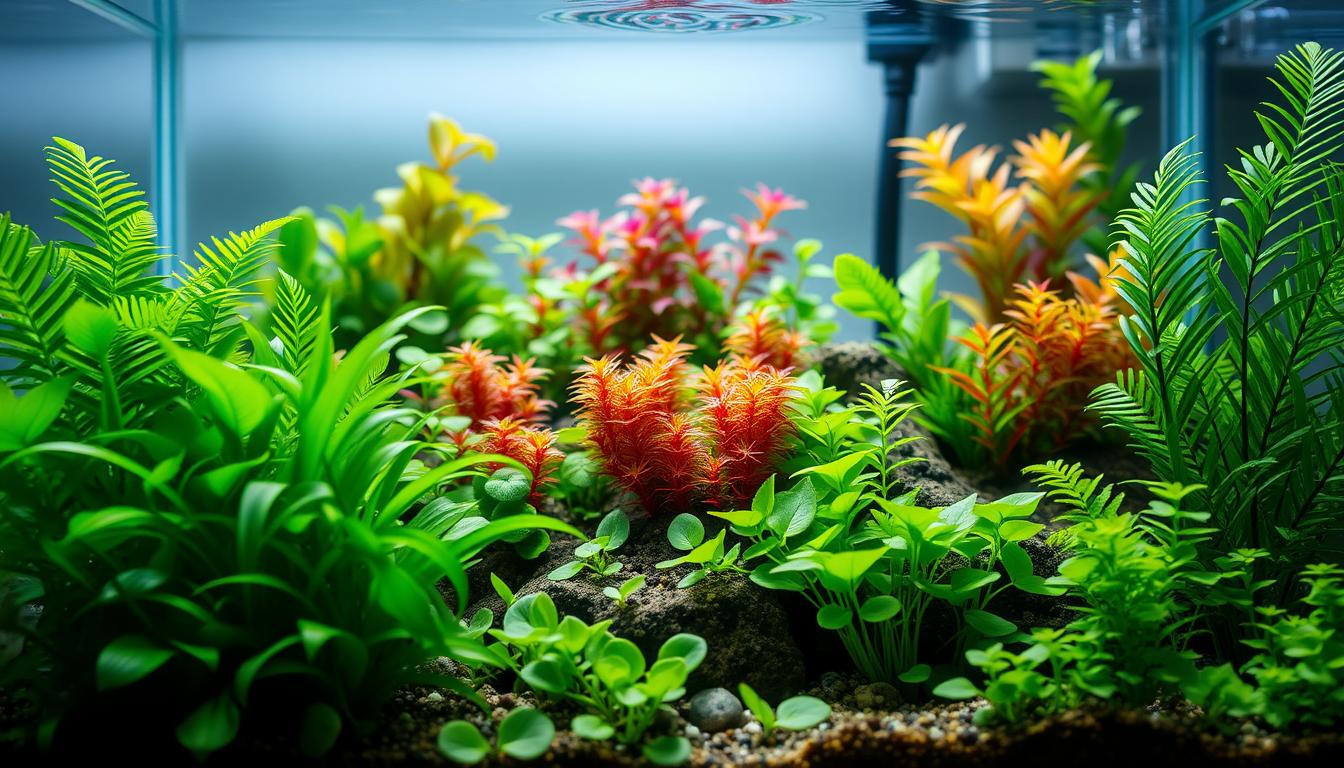
Choosing the right aquatic plants for your nano aquarium is key. It affects your tank’s look, water chemistry, and the happiness of your fish and shrimp. This guide will help you pick hardy, small plants that do well in tight spaces with little light and care.
In small tanks, space is a big deal. The light and nutrients change fast. Knowing how fast a plant grows, its size, and how it gets food is important. This helps avoid overcrowding and nutrient problems.
Live plants are more than just decorations. They make water oxygen, clean it, and fight algae. They also provide shelter for fish and help keep the tank balanced.
Beginners often pick plants that look good but don’t fit their tank. Plants can “melt” when moved, and it’s easy to underfeed them. This guide will help you avoid these mistakes.
This guide will be your guide to picking the best plants. You’ll find a list of easy plants, tips on planting and care, and how to fix common problems. It’s based on experience and trusted advice.
Understanding the Benefits of Live Plants in Nano Aquariums
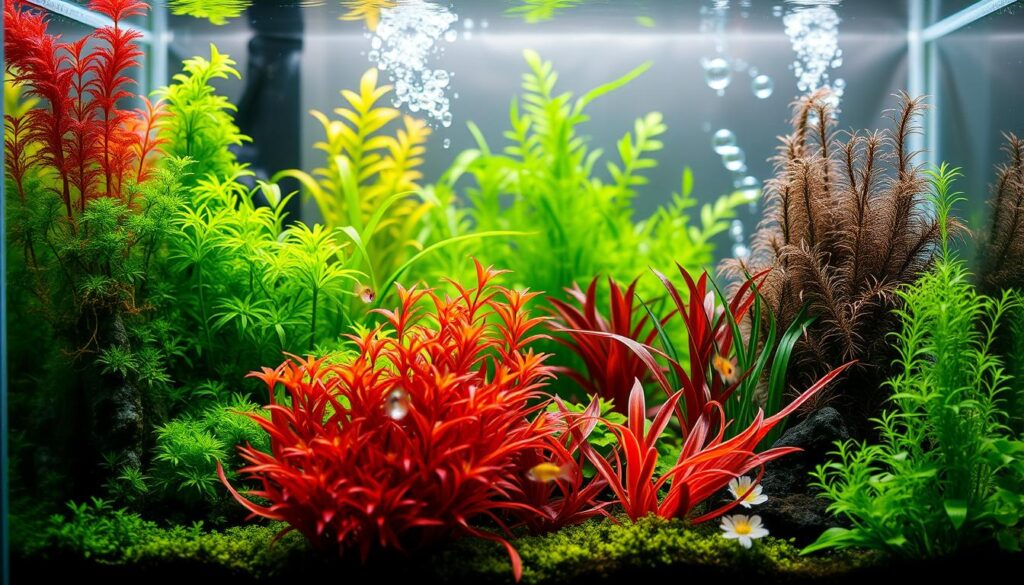
Live plants make your nano aquarium better in many ways. They produce oxygen and remove harmful substances from the water. This helps keep the water clean and healthy for your fish.
Plants also help control algae growth. This is important because algae can harm your fish. By choosing the right plants, you can keep your aquarium looking great and your fish happy.
Adding plants to your aquarium can also help your fish feel safer. They provide hiding spots for small fish and shrimp. This can help them feel less stressed and even encourage them to breed.
When picking plants, remember that they need space too. Too many plants can make it hard for water to circulate. This can lead to problems with oxygen levels at night.
By choosing the right plants and placing them carefully, you can create a beautiful and healthy aquarium. This not only looks good but also helps keep your fish and other aquatic animals healthy.
Factors to Consider When Choosing Aquatic Plants
Start with light. Plants are classified as low-, medium-, or high-light. Low-tech species like Java fern and Anubias do well under basic LED lights. High-light plants or those needing CO2 are not good for beginners.
Plan your nutrient strategy. Root feeders like Amazon sword and crypts need root tabs in the substrate. Water column feeders and rhizome plants like Java fern take nutrients from liquid fertilizers. These tips help match fertilizer to plant needs.
Think about growth habit and rate. Slow growers like Anubias and Java fern are great for beginners. Fast growers like Anacharis need more frequent trimming. This helps choose plants that fit your routine.
Measure mature size and spread. Vallisneria and Amazon sword can grow big. Dwarf sagittaria and Anubias nana are better for small spaces. Knowing size helps avoid overcrowding.
Consider propagation and upkeep. Choose plants that are easy to propagate. For example, stem cuttings for Anacharis and runners for dwarf sagittaria. Easy propagation saves money and makes care simple.
Match plants to your livestock and equipment. Fish like goldfish need tough plants. Floating plants need calm surfaces. These checks help avoid plant loss.
Mind your substrate and planting method. Use inert gravel or sand for root feeders. Never bury the rhizome of Java fern or Anubias. Follow these steps for proper planting.
Set expectations for acclimation. Many plants have emergent leaves that melt. This is normal. Let affected plants recover and regrow submerged foliage. Knowing this helps make better choices.
- Light class: low, medium, high
- Nutrient match: root tabs vs. liquid fertilizer
- Growth rate: slow for low maintenance, fast for nutrient export
- Size at maturity: avoid future crowding
- Propagation: easy types reduce effort and cost
- Compatibility: consider fish behavior and equipment
- Substrate rules: rhizomes versus root feeders
- Acclimation: expect initial melting and recovery
Top 10 Easy Live Plants for Low-Maintenance Nano Aquariums
Here’s a quick guide for setting up a small tank. Each plant is easy to care for. They’re perfect for beginners and fit well in small spaces.
-
Marimo Moss Ball (Cladophora) — Growth: very slow. Placement: foreground or free-floating. Propagation: split balls into smaller pieces. Fertilizer: not required, occasional water changes suffice. These are one of the Top 10 easy live plants thanks to their low care need.
-
Christmas Moss (Vesicularia montagnei) — Growth: slow. Placement: attach to driftwood or rock in midground. Propagation: tie fragments to hardscape until rooted. Fertilizer: light liquid fertilizer and microelements help color and density. This moss is great for shrimp cover in guides to the best aquatic plants for beginners.
-
Anacharis / Elodea canadensis — Growth: fast. Placement: background or midground; can be trimmed as nursery. Propagation: cut stems and replant tips. Fertilizer: liquid fertilizers for water column feeding. Anacharis appears often on lists of top freshwater plants for aquarium use.
-
Hornwort (Ceratophyllum demersum) — Growth: very fast. Placement: floating or planted in background. Propagation: natural fragmentation. Fertilizer: minimal; it consumes excess nitrates. Watch floaters as they can block light if left unchecked.
-
Anubias nana ‘Petite’ — Growth: slow. Placement: attach to wood or rock in foreground or midground. Propagation: divide rhizome or rhizome cuttings. Fertilizer: liquid dosing works; rhizome must stay above substrate. Anubias ranks high among the best aquatic plants for beginners because it tolerates low light.
-
Java Fern (Microsorum pteropus) — Growth: slow to moderate. Placement: midground attached to hardscape. Propagation: rhizome propagation or plantlets on leaves. Fertilizer: liquid column dosing recommended; do not bury rhizome. It belongs on many aquatic plants buying guide lists for nano tanks.
-
Cryptocoryne wendtii / Cryptocoryne lutea — Growth: slow. Placement: foreground to midground. Propagation: rhizome division. Fertilizer: root tabs and iron boost color and vigor. Crypts may melt after planting but usually rebound, making them common entries in top freshwater plants for aquarium beginners.
-
Dwarf Sagittaria (Sagittaria subulata) — Growth: moderate. Placement: foreground to carpeting areas. Propagation: runners. Fertilizer: root tabs plus occasional liquid fertilizer for faster spread. This hardy carpet is a staple in lists of Top 10 easy live plants for small aquaria.
-
Amazon Sword (Echinodorus spp.) — smaller varieties — Growth: moderate. Placement: background. Propagation: runners or plantlets. Fertilizer: heavy root feeder that benefits from root tabs. Note that larger swords can outgrow a nano tank, so choose dwarf species and prune regularly.
-
Bacopa caroliniana / Ludwigia repens — Growth: moderate to fast. Placement: midground to background. Propagation: stem cuttings. Fertilizer: liquid CO2 alternatives and trace elements encourage color; root tabs help if stems develop stronger roots. These stem plants are practical entries in any aquatic plants buying guide for beginners.
Quick warnings: floating plants can block light and should be thinned regularly. Fast growers like hornwort and anacharis need trimming to prevent overcrowding. Heavy root feeders such as swords can outgrow a small tank if you skip pruning and root tabs.
This compact lineup blends ease, visual variety, and practical care notes so you can pick the top freshwater plants for aquarium success. Use it as a Top 10 easy live plants checklist and an entry-level aquatic plants buying guide to help you build a low-maintenance nano aquascape.
Planting and Arranging Your Aquatic Greens
Begin by placing tall plants like Vallisneria and Amazon sword at the back. Midground plants, such as Java fern and Ludwigia, go in the middle. Use small plants like Dwarf Sagittaria for the front.
When planting, gently push roots into the substrate. Make sure they’re below the surface. Use root tabs for plants like swords and Crypts if your substrate is inert.
For rhizome plants, don’t bury the rhizome. Attach Anubias and Java fern to wood or rock. Use fishing line or aquarium-safe gel to hold them until roots grow.
Propagate plants to thicken beds. Trim and replant stems to expand midground areas. Let dwarf Sagittaria runners spread to create a carpet.
Consider flow and fish space when arranging plants. Leave swim lanes open and avoid blocking filters. Use hardscape and plants to create depth.
In fish tank breeding or shrimp tanks, use dense mosses and fast-growing plants. This provides hiding spots and grazing areas for young fish and shrimp.
When choosing plants, match size, light needs, and growth rate to your tank. Aim for contrast in leaf shape and color to create focal points.
- Background: Vallisneria, Amazon sword, Anacharis
- Midground: Java fern, Bacopa, Ludwigia, Cryptocoryne
- Foreground: Dwarf Sagittaria, Anubias nana petite, marimo/moss clumps
Follow this guide to plant and arrange your aquatic plants. Your nano aquarium will be balanced, healthy, and ready for life.
Maintenance Tips for Your Live Plants
Start a simple weekly routine to keep your plants healthy. Change 20–30% of the water each week. This helps keep nutrient levels balanced. Also, roll or reshape marimo balls to prevent debris buildup.
For plants that need a lot of nutrients, replace root tabs monthly. This keeps the substrate rich with nutrients.
Choose the right fertilizer for your plants. Use root tabs for Amazon sword, crypts, and dwarf sagittaria. Liquid fertilizers are best for water-column feeders like Java fern and Anubias. Add iron for vibrant red colors in crypts and Bacopa.
- Prune stem plants like Bacopa, Ludwigia, and Anacharis. Snip the tops and replant cuttings to promote bushy growth.
- Control the spread of dwarf sagittaria and Vallisneria. Remove excess runners to keep space for fish.
Control algae by using fast-growing plants that outcompete it. Add algae eaters like Amano shrimp for moss and algae control. Trim and remove dying leaves to prevent nutrient spikes.
Be gentle with rhizome plants. Don’t bury the rhizomes of Java fern or Anubias. Secure them to driftwood or rock to promote healthy root growth.
Some plants may melt or go dormant after introduction. Leave them planted. They usually recover once they adjust to your tank’s water.
- Keep a consistent photoperiod. Use a timer for reliable light cycles and avoid sudden changes.
- Limit excessive light to prevent algae blooms. Manage floating plants so they don’t block light to lower growth.
- Review tips for choosing aquatic plants and aquatic plants selection tips when you add new species to ensure they fit your tank’s needs.
When picking plants for your fish tank, think about lighting, substrate, and feeding. Use aquatic plants selection tips to choose species that match your maintenance level. Follow these tips to keep your plants healthy and your aquascape stable.
Dealing with Common Issues in Aqua Plant Care
Don’t worry if your plant’s leaves start melting after you plant them. Leaves from emersed plants often die as they adjust to life underwater. Just leave the plant in the soil, add fertilizers as needed, and wait for new leaves to grow.
Signs of nutrient deficiencies are easy to spot. Yellow leaves mean you need more iron or micronutrients. Use an iron supplement or a complete liquid fertilizer. For plants like Cryptocoryne and swords, add root tabs every three months to help them grow.
- Algae outbreaks happen when there’s too much light, nutrients, or not enough plant competition.
- Stop algae by removing it, trimming leaves, and reducing light hours.
- Plant fast-growing species like Anacharis or Hornwort to fight algae.
- Introduce algae-eating shrimp or snails if they fit with your tank’s life.
Nano tanks often face overcrowding and shading. Fast-growing plants can take over, leaving little light for others. Trim often and choose plants wisely to keep a balance. Make sure floating plants don’t block light to lower leaves.
Some fish like to dig or nibble on plants. Use anchors or attach plants to driftwood and rocks to protect them. Pick hardy plants like Anubias and Java fern for these tanks. Avoid plants that goldfish or cichlids like to eat unless your tank is set up for them.
Bulb plants like Aponogeton might go dormant. Don’t pull out the bulbs when growth stops. Keep them in place, cut back on food, and wait for new growth. Adjust your fertilizing instead of replanting during this time.
Use these tips to solve common problems when choosing aquarium plants. Follow these steps to avoid issues and keep your underwater garden thriving.
Integrating Plants with Your Nano Aquascape
Begin by planning your layout with the golden triangle rule. Place a tall stem group at one corner. Add a midground mass of Anubias or Java fern on driftwood to draw the eye. This method is key for a compact tank.
Balance textures for contrast. Use broad-leaf plants like Amazon swords against fine mats of Christmas moss or Java moss. This contrast keeps the scene lively and makes your plants stand out without cluttering the tank.
Consider function in your design. Place nutrient-hungry species where you can add root tabs easily. Position mosses and marimo where shrimp and snails can graze. These practical moves help you choose the right plants for both looks and tank health.
Use hardscape to anchor growth. Tie Java fern and Anubias to rocks or driftwood for midground focal points. Wrap marimo balls around a small rock to mimic a miniature tree. These techniques blend hardscape and plants into a cohesive scene.
Match plant density to your stocking levels. Fast growers like stem plants help control nutrients in heavily stocked tanks. Leave open water for bettas and small schooling species so they have room to swim and display natural behavior.
Manage surface cover with routine thinning. Use a feeder ring or barrier for hang-on-back filters when floaters gather near the intake. Thinning floaters prevents light loss for lower plants and keeps oxygen exchange healthy in the water column.
Use simple aesthetic anchors in the foreground. Anubias nana and dwarf crypts work well as low focal points. Place swords or Vallisneria in background corners. Stagger heights and groupings to simulate natural plant islands and make your aquascape feel deliberate.
Consult an aquatic plants buying guide before you shop. Check growth rates, light needs, and compatibility with your chosen fish. This checklist helps you pick the right plants for aquarium success.
- Plan focal points using the golden triangle.
- Contrast textures: broad leaves vs. fine mosses.
- Place nutrient feeders and grazing spots strategically.
- Tie epiphytes to hardscape for durable midground interest.
- Match plant density to bioload and swimming needs.
Resources for Learning More About Aquatic Plants
Begin with long-running planted aquarium forums and care guides from specialist retailers. Read about Amazon sword, crypts, and Java fern to understand their needs. Learn about light, fertilizer, and size requirements.
Use a focused aquatic plants buying guide for planning. Look for sections on nutrient deficiency, propagation, and common pests. This helps avoid early losses.
- Watch video tutorials for tasks like attaching rhizome plants and trimming stems. Also, learn about tying moss and planting bulbs.
- Seek species-specific care sheets. Compare growth rate, preferred substrate, and CO2 tolerance.
- Consider beginner kits from specialist sellers. They offer curated selections for low-tech setups.
Join community hubs to learn faster. Aquarium clubs, Facebook groups, and subreddits are great for plant ID, trades, and troubleshooting.
When picking plants, check multiple sources. Confirm light needs and adult size to avoid overcrowding and mismatched expectations.
- Find trusted sellers or local fish stores to reduce pests and snails.
- Keep copies of guides on propagation and nutrient deficiency for quick reference.
- Join video channels and forums for step-by-step demonstrations.
For beginners, focus on hardy plants that need low light and nutrients. This makes learning easier and boosts success.
Combine published guides, community advice, and video demos. This mix will help you build a reliable set of resources for your aquarium hobby.
Conclusion: Embracing the Beauty of Live Plants in Your Aquarium
When picking aquatic plants, choose ones that fit your tank’s light, substrate, and fish. For small tanks, pick hardy plants that don’t need much light or space. Good choices for beginners include Marimo, Anubias, Java fern, and Cryptocoryne.
These plants are easy to care for and help you succeed. Other good options are Anacharis, Hornwort, Dwarf Sagittaria, and Amazon Sword plants. Christmas moss is also a great choice.
For selecting plants, start by picking 3–5 species from the top list. Make sure they fit your tank size. Plan where each plant will go in your tank.
Decide how you’ll feed your plants early on. Use root tabs for plants that need a lot of nutrients. For plants that get nutrients from the water, use a liquid fertilizer. This helps keep your plants growing well without any surprises.
Here’s a quick plan to get started: pick your plants, sketch out where they’ll go, buy the right fertilizers, and set up a weekly care routine. Remember, plants might shed leaves or die back sometimes. But with patience and small changes, they’ll get better.
Start with these tips and see your aquarium improve over time. For more help, check out the resources section for care guides and how to grow more plants. With the right care and tips, your small aquarium will become a beautiful, living space.
Leave a Reply