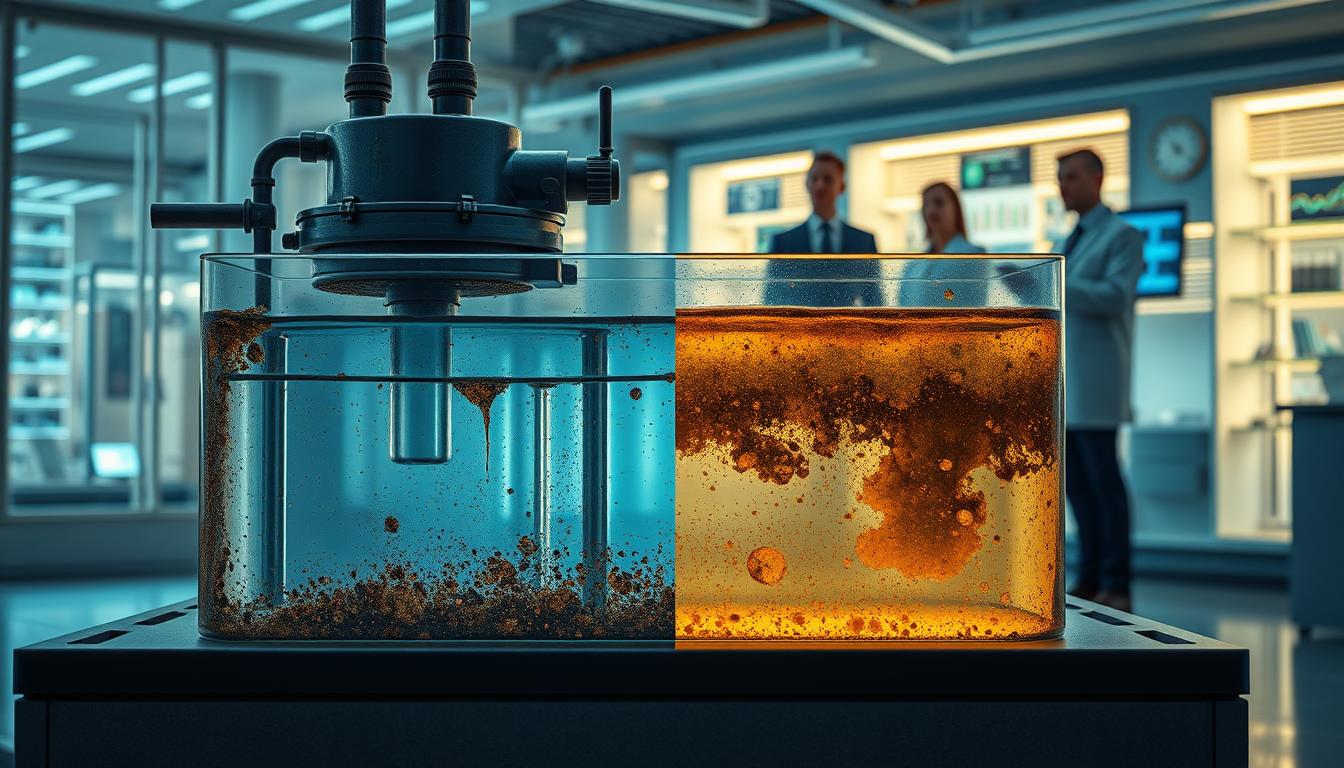
Old Tank Syndrome (OTS) is a slow decline in water quality. You might not notice it until sensitive fish start to die. Waste, uneaten food, and decaying plant matter can build up in established aquariums, leading to problems.
This buildup causes rising nitrates and phosphates, falling KH and GH, and sudden pH swings. These changes stress the fish.
To prevent OTS, follow simple aquarium maintenance tips. Regular water changes and gravel vacuuming help stop hidden waste. Checking filter media is also important.
Even with automation and smart gear, basic care is the most reliable way to avoid OTS in nano aquariums.
Testing water with Tetra test strips or using products like FritzZyme or Stress Zyme helps. Keep an eye on stocking levels and feed sparingly. Regular checks keep your fish tank care proactive.
Understanding Old Tank Syndrome

Many think a long-running aquarium is safe after the cycle is done. Hobbyists often relax after a few months, skipping routine checks. But, preventing old tank syndrome requires ongoing care, not just a one-time setup.
Old tank syndrome often hides until a tank crash or when fragile fish arrive. Filters convert ammonia to nitrite and then nitrate. Yet, nitrate levels build up over time. You must regularly check the aquarium’s water chemistry.
An aquarium is a closed system, unlike rivers and lakes. Without regular water changes and substrate cleaning, dissolved solids and nitrates increase. This slow buildup is the main problem in preventing old tank syndrome.
Many hobbyists rely too much on equipment like canister filters, heaters, and automation. While these tools are helpful, they can’t replace basic maintenance tips. These include weekly testing, partial water changes, and gravel vacuuming.
Follow a simple routine to keep your aquarium’s water chemistry balanced. Regularly test nitrate, ammonia, and nitrite levels. Do scheduled water changes, clean filter media gently, and stir the substrate when needed. These tips help protect your tank’s balance and the health of its inhabitants.
- Test water parameters weekly.
- Do partial water changes on a set schedule.
- Maintain filters and clean substrate as needed.
The Science Behind Old Tank Syndrome
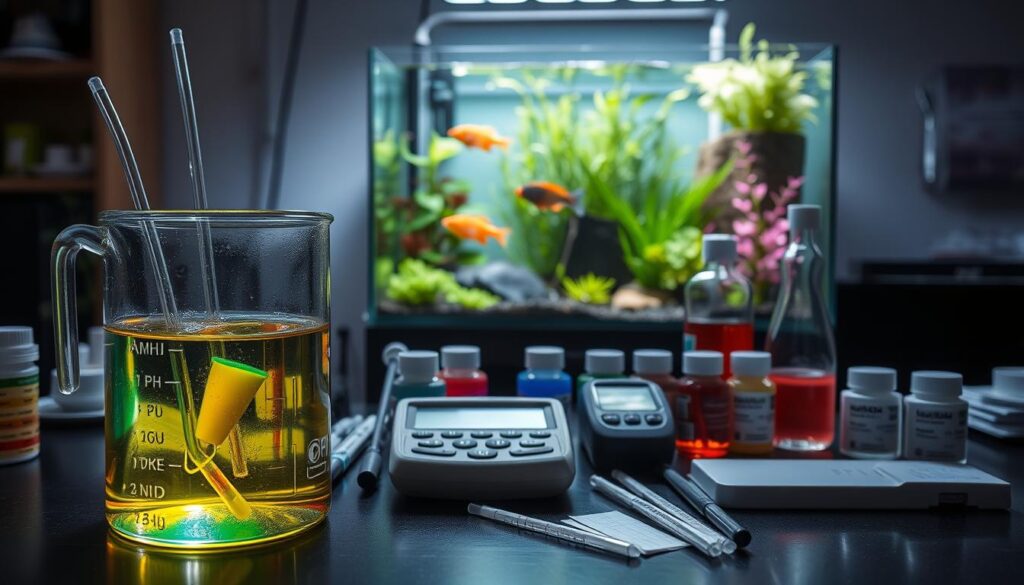
It’s important to know what’s happening in your tank’s filter and substrate. Nitrifying bacteria in filters change ammonia to nitrite and then to nitrate. This process lowers the pH over time.
Carbonate hardness, or KH, helps keep the pH stable. When KH is used up, pH can drop or swing wildly. If pH goes below 6.0, bacteria slow down, making water quality worse.
Nitrate is less harmful than ammonia or nitrite in the short term. But, it causes long-term stress, weakens fish immunity, and shortens their lives. High nitrate levels are a key sign of failing filtration and low buffering.
Phosphate builds up because fish and bacteria don’t use all of it. High phosphate levels lead to algae growth. Heavy organic matter and decaying matter also lower buffering, making pH crashes more likely.
It’s vital to regularly check the General Hardness (GH) and KH levels. If KH drops several degrees from your source water, it’s a warning sign. Tanks with low KH need fish adapted to soft water to avoid problems.
- Routine water changes add carbonate ions and dilute nitrates and phosphates, improving water quality.
- Nitrate reduction often requires water changes or nitrate-specific media and biological denitrification to lower chronic stress on fish.
- Products that seed bacteria or remove nitrate can speed recovery, but they do not replace steady maintenance and monitoring.
Monitoring KH, GH, nitrate, ammonia, and phosphate closely helps you catch problems early. Understanding these chemical links makes preventing old tank syndrome a manageable task.
Recognizing the Signs in Your Nano System
You might not see old tank syndrome at first. Look for signs like dull fish colors, slow movement, or plants stretching for light. These signs often show before water problems appear.
Watch for more diseases. If you see Whitespot (Ich) or fin rot after adding new fish, it’s a sign of imbalance. For example, a two-year-old nano tank might seem fine until you add tetras and then Ich breaks out. This is because your tank has more stressors than the fish from the store.
- Check for sudden mortality when adding new fish.
- Note frequent illness among tank inhabitants.
- Observe whether plants become sparse or leggy.
Use test kits to confirm your observations. Tetra EasyStrips and reliable liquid kits give quick readings for nitrate, phosphate, GH, and KH. If nitrate goes over 50 ppm, it’s a warning sign. Try to keep it as low as possible.
Compare your tank’s readings to your source water. If your KH or GH is lower than the source, your minerals are running low. A pH difference of more than 0.5 units can stress fish and plants. Phosphate levels over 0.5 ppm above the source are concerning; levels of 5 ppm or higher need immediate action.
Regularly check your equipment and substrate. Buildup in the substrate, old filter media, and poor filtration all point to bad tank care. These signs often come before chemical warnings.
- Perform routine visual checks during feeding and maintenance.
- Test water weekly with a trusted kit for nitrate, KH, GH, pH, and phosphate.
- Combine regular fish tank cleaning with targeted testing for best results.
Small, steady observations save tanks. Pair aquarium maintenance tips with consistent testing to catch problems early. This way, Preventing old tank syndrome becomes a key part of your hobby.
Prevention Strategies for Nano Tanks
Start by checking your tank regularly. Test the water weekly or every two weeks. Look for ammonia, nitrite, nitrate, GH, and KH levels. These tests help you stay on top of your tank’s health.
Make a plan for water changes and cleaning the substrate. Change the water regularly and clean the gravel. Remove any dead plant matter right away. If your tank starts to decline, do small water changes to fix it without stressing your fish.
Act fast if nitrates get too high. Do small water changes, up to 25% a day, to bring levels down. Use products like Stress Zyme to help your tank’s bacteria.
Don’t forget to keep your filter and media clean. Rinse sponge filters and replace old resins. Use special media to cut down on nitrates and phosphates. For ammonia, try API Ammo-Lock. For very soft water, use Tropic Marin Remineral Tropic.
Stay proactive with your tank care. Trim dead plants, watch your fish’s food intake, and don’t overstock. Use smart dosing systems to help, but remember, hands-on care is key.
If your tank is really struggling, you might need to take bigger steps. In severe cases, change 50–75% of the water and use special products to fix the chemistry. Take it slow and steady to avoid making things worse.
By following these tips, you can prevent old tank syndrome. Regular testing, small repairs, and proactive care will keep your nano tank healthy and thriving.
The Role of Water Quality
Testing key parameters often is key to protecting your nano system. Check nitrate, pH, GH, KH, and phosphate levels. Compare these to your source water.
A tank pH that’s more than 0.5 different from source water is a warning sign. Nitrate levels should be close to source water, within about 40 ppm. Phosphate should be less than 0.5 ppm above source levels.
KH depletion is an early sign of trouble. Low KH means weak buffering and a higher risk of sudden pH swings. Regular checks help catch KH drift early.
Water changes are the best way to restore buffering capacity and lower nitrate. Plan changes based on test results, not just a schedule. Use reliable test kits like liquid kits or strips to avoid missing checks.
Know your source water well. Tap water and reverse osmosis blends act differently. If using RO water, remineralize it to match target GH and KH for your fish and corals. Products like Tropic Marin Remineral Tropic help set proper levels.
- Use quick-check strips such as Tetra EasyStrips for routine monitoring.
- Support bacterial populations with products like FritzZyme or Stress Zyme when needed.
- Consider chemical nitrate removers or biological denitrification media as supplements to tank water changes.
Good water quality management involves testing, knowing your source water, and targeted water changes. This routine reduces stress on inhabitants and helps prevent old tank syndrome.
Follow simple steps: test regularly, compare to source water, correct KH and GH, and perform targeted water changes. These habits give you control over aquarium water chemistry and help avoid sudden declines in tank health.
Importance of Bacterial Cultures
Beneficial bacterial cultures are key to a healthy aquarium. In your filter, they turn ammonia into nitrite and then nitrite into nitrate. This process keeps fish safe but doesn’t remove nitrate.
Biological activity changes pH by producing hydrogen ions and consumes carbonate hardness. It’s important to keep KH and GH steady for bacteria to work well. If filter media gets clogged or worn out, waste can leak back into the water, stressing the system.
Using bacterial additives like Seachem Stability, FritzZyme, or Stress Zyme can help after filter changes or water exchanges. These products speed up the recovery of biological filtration. But, they don’t replace regular mechanical cleaning and water changes.
Balance is essential when using bacterial cultures. Pair biological support with regular vacuuming of substrate and rinsing of filter foam. This approach reduces detritus and keeps the bacterial colony healthy.
- Keep KH and GH stable for steady bacterial action.
- Use reputable bacterial products to boost nitrifying colonies after maintenance.
- Clean mechanically; do not skip water changes even when using additives.
If nitrate levels rise despite strong nitrification, consider denitrifying media or nitrate-reducing resins. These solutions need careful setup and monitoring. They work best as part of a plan to Prevent old tank syndrome and maintain long-term water quality.
Stocking Your Nano Tank Wisely
Start with fewer fish. Too many can make your tank dirty and harm the environment. This can lead to problems and make it harder to keep your tank healthy.
Choose fish that get along well. Some fish can be mean or too big for small tanks. Pick peaceful ones like rasboras or Endler’s livebearers. Use a stocking calculator to find the right number of fish for your tank.
Quarantine new fish for two weeks before adding them to your tank. This helps them adjust and lowers the risk of getting sick. It also helps prevent problems in your tank.
- Favor low-waste species suited to planted tanks.
- Add live plants to uptake nitrates, but remove decaying leaves promptly.
- Consider snails and shrimp for detritus control while monitoring bioload.
Use plants, algae-eating shrimp, and occasional cleaning to keep your tank balanced. Watch for signs of trouble and adjust your fish numbers if needed. This helps keep your tank healthy.
Be careful when adding or replacing fish. Removing some can reveal hidden issues. Plan carefully, using quarantine and acclimation, to keep your tank in good shape.
Emergency Measures for Mitigating Old Tank Syndrome
If your nano system shows signs of a rapid decline, start by testing water. Look for high nitrates, low KH or GH, and pH drift. Quick diagnostics guide your response and reduce guesswork during a fish tank emergency.
Begin a program of small, frequent tank water changes to stabilize conditions. Change about 25% daily or every other day until you see improvement. In extreme crashes, cautiously apply larger changes of 50–75% while monitoring fish for stress.
- Use remineralizers such as Tropic Marin Remineral Tropic to restore KH and GH after fresh water additions.
- Treat ammonia spikes with API Ammo Lock if tests show ammonia or nitrite elevations.
- Add bacterial additives like Stress Zyme to support biological filtration while you perform water exchanges.
Target nitrates carefully. If levels exceed 60 ppm, continue a series of small changes (no more than 25% per day) until readings fall toward 50 ppm or lower. Avoid one-time, drastic swaps that can cause further shock to fish and plants.
Speed reductions in nitrate and phosphate loads by using specialized resin media in the filter. Nitrate- and phosphate-removing resins accelerate chemical cleanup and pair well with mechanical work.
- Vacuum gravel to remove hidden waste and accumulated detritus.
- Clean or replace exhausted mechanical media, avoiding full sterilization of all biological media at once.
- Remove decaying plant matter and any dead livestock to stop ongoing pollution.
For stubborn problems, consider denitrifying biological media or chemical resins designed for sustained removal. Automated monitoring and smart alerts help you detect early shifts in aquarium water chemistry and reduce the chance of future fish tank emergency events.
Acting fast with measured tank water changes, targeted media, and remineralizers gives the best chance of stabilizing the system. Preventing old tank syndrome becomes part of your routine maintenance plan.
Conclusion and Best Practices
To keep your aquarium healthy, focus on regular maintenance. Test water for nitrate, pH, and other important levels weekly or every two weeks. Doing small water changes and cleaning the gravel helps keep the tank balanced.
Remember, filters help remove waste but can’t handle nitrates. Use water changes, plants, or special products to control nitrate levels. Keep nitrate below 50 ppm. If your tank gets out of balance, use bacterial additives and nitrate resins. Make small water changes daily if needed.
Use modern tools like good test kits and bacterial products. Keep your tank’s fish population low. Change filter media and resins when needed. Set a regular maintenance schedule to avoid problems.
Follow this checklist to keep your tank in top shape: test water, do water changes, clean the gravel, and maintain filters. Remineralize RO water and quarantine new fish. Act fast if nitrate, KH, or pH levels get too high. These tips will help you keep your aquarium healthy for years.
Leave a Reply