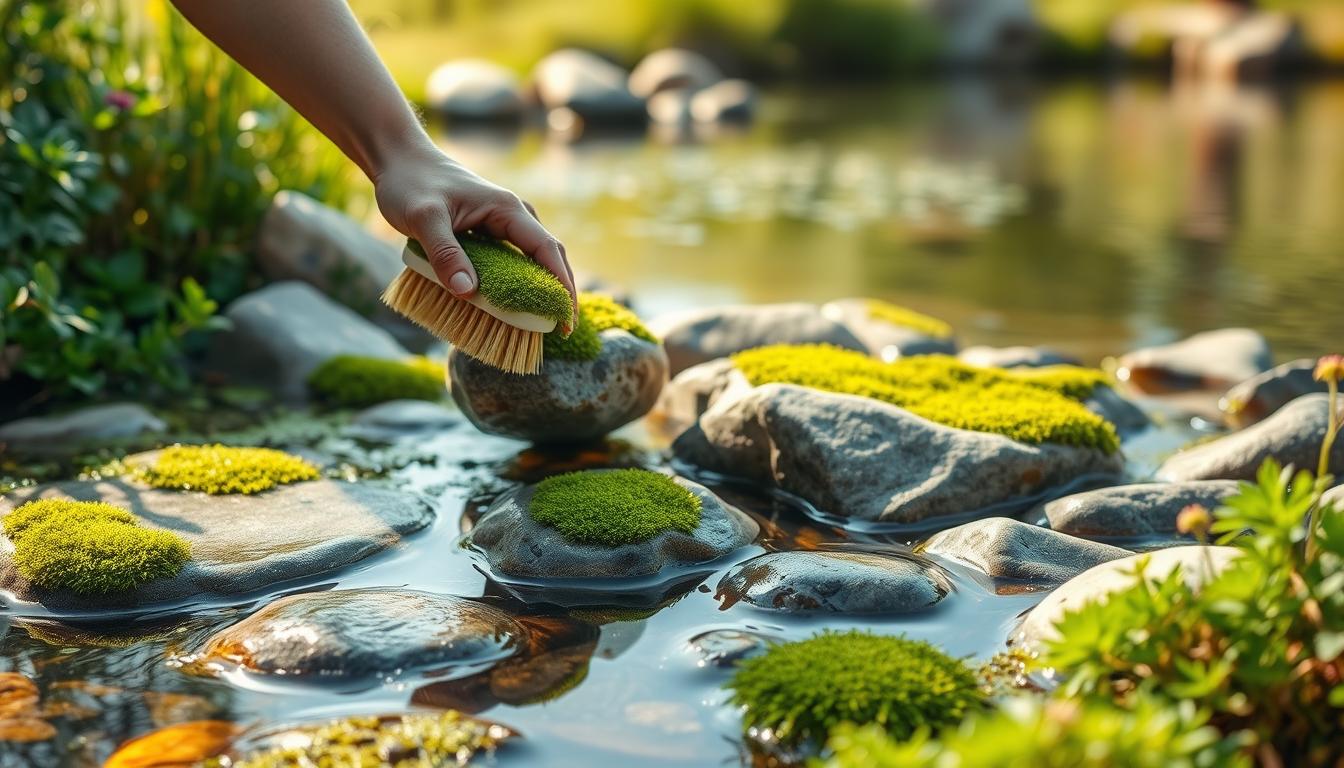
Rocks and wood ornaments bring character to your aquarium, garden, or patio. But, algae, lichens, and moss can make them look bad and slippery. This guide shows how to safely remove algae from rocks and wood decor. You’ll learn how to restore their look without harming them or nearby plants and pets.
Choosing the right method is key. For example, aquarium-safe plastics can be cleaned with hot water and a toothbrush. Or, you can use Plastic Plant Cleaner tablets. Natural stone and wood, on the other hand, need gentle cleaning or a high-pressure rinse. The wrong cleaner can stain wood or damage stone.
This guide aims to help you deep clean ornaments safely. It will cover step-by-step techniques, tools, and eco-friendly options. You’ll also get safety tips to keep your ornaments looking great.
Understanding Algae Growth on Home Decor
Algae grows on home decor when moisture, shade, and organic material meet. In aquariums, algae and detritus form thin films on plastic plants and ornaments. Even aquarium-safe paints and plastics resist leaching yet allow microscopic spores to settle and colonize.
Outdoors, algae on rocks and wood often appears as green films or powdery patches. Lichens and moss may join the mix, producing crusts or cushion-like carpets in damp shade. Nostoc and other types can create jelly-like clumps on compacted gravel after wet winters.
Different algae types need different responses. Pond algae thrives on excess nitrates and phosphates, while surface algae on stone and decking responds to poor drainage and low sunlight. This difference shapes how you address algae on rocks and wood and how you clean delicate ornaments without harming their finish.
Your choice of cleaning method should hinge on material and environment. Plastic, natural stone, and wood react differently to scrubbing, cleaners, and soaking. Knowing the causes of algae on ornaments helps you pick gentle techniques that preserve paint, grain, and delicate details.
- Check location: shade, humidity, and airflow affect growth.
- Identify material: plastic vs. natural stone vs. wood needs different care.
- Match treatment: select approaches for algae growth on home decor and learn how to clean delicate ornaments safely.
The Importance of Deep Cleaning Ornaments
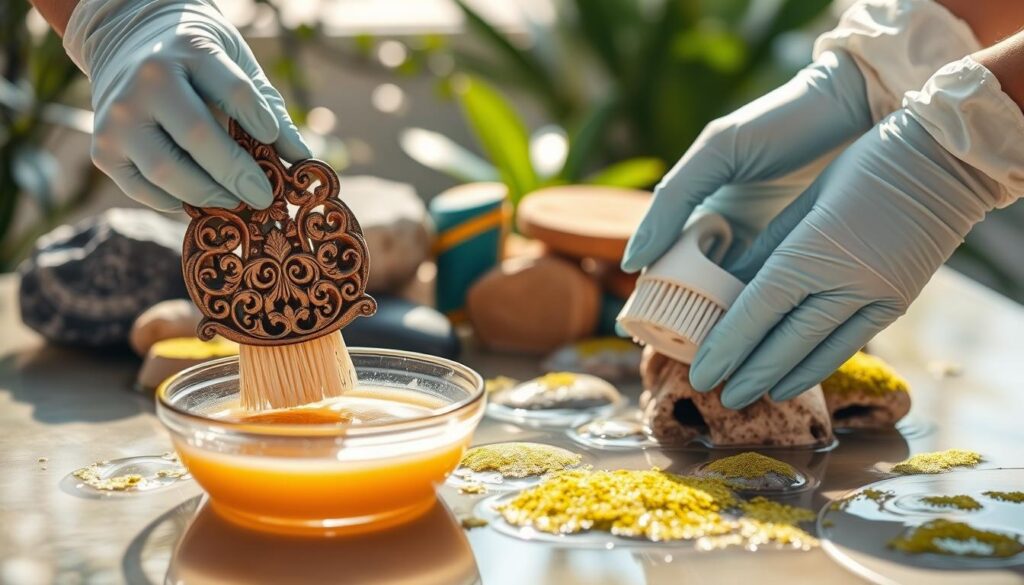
You might use aquarium helpers like bristlenose catfish or nerite snails to fight algae. But, even they can’t stop algae buildup on plastic, stone, or wood. Regular deep cleaning of ornaments brings back their look and makes them safe to touch.
For plastic ornaments, a special cleaner or a soft brush can revive their color. Natural stone and wood might need a brush or pressure washer to remove algae without harm.
Think about safety on paths and decks. Algae, lichens, and moss might look nice but can be slippery. Learning why deep cleaning ornaments is important helps avoid falls and slow down surface damage.
Deep cleaning stops nutrient imbalances in ponds and containers that lead to more algae. Start with soap, baking soda, or a stiff brush. Use harsher treatments only for tough problems, and pick safe products for pets and wildlife.
Follow the best cleaning practices to make decorations last longer and keep places clean. You can clean most ornaments yourself. But, if they’re delicate, valuable, or hard to reach, consider professional cleaning services.
- Inspect pieces regularly to catch buildup early.
- Use gentle tools and nonabrasive cleaners first.
- Test any chemical on a small area before full application.
- Hire professional ornament cleaning services for fragile antiques or large installations.
Tools and Supplies Needed for Cleaning
First, match your tools to the material. For aquarium plastic ornaments, use hot water and old toothbrushes for gentle scrubbing. Use separate brushes for aquaria items to avoid harming fish health.
For natural stone and wood, skip chemical cleaners meant for plastic. Use stiff brooms or wire brushes for stone. Test a small wood patch before using tougher tools. A pressure washer works well on outdoor rock decor, but wear goggles.
- Stiff bristle brushes for patios, pots, and decking.
- Narrow brushes and pointed tools for joints and cracks.
- Pruners, rakes, and forks to improve drainage and airflow around decor.
Home remedies are great for many surfaces. Mix dish soap, baking soda, and water for scrubbing patios and pots. For ponds and garden features, use barley straw bales or pond clearing treatments safe for wildlife, pets, and children.
When dealing with delicate pieces, use soft brushes and gentle cleaners. Carry soft cloths and the right supplies to avoid scratching painted or glass surfaces.
For deep cleaning aquarium plastic ornaments, use a two-step soak routine. Soak in 10 liters of water with a tablet for eight hours or more. Then, rinse and soak in 10 liters of fresh water with neutraliser for about 15 minutes.
As you gather supplies for deep cleaning, include protective gear: gloves, goggles, and masks. Choose the best supplies for each job to avoid damage and save time.
Keep maintenance simple to prevent regrowth. Brush regularly and use garden tools to improve airflow. Choose commercial products labeled safe for your setting. These steps help your cleaning tools and supplies last longer and work better.
Step-by-Step Guide to Cleaning Rocks
First, figure out what your ornament or garden stone is made of. Natural stone and plastic need different care. Knowing this helps you choose the right tools and avoid harming your rocks when cleaning.
For plastic rocks, warm water and a toothbrush work well. You can also soak them in 10 liters of warm water with a cleaning tablet for eight hours. After, rinse and soak again in fresh water with a neutralizer for 15 minutes before putting them back outside.
Natural stone needs a dry brush first. Use a stiff broom or wire brush to remove loose dirt and growth. Then, mix dish soap, water, and baking soda to make a paste. Scrub with a stiff brush to remove algae from patios, pots, and large rocks.
- Identify material: natural stone versus plastic ornament pieces.
- Plastic pieces: hot water + toothbrush, or soak in 10 L water + cleaning tablet for 8+ hours; rinse and neutralize.
- Natural stone: dry brush to remove loose growth, then wet scrub with soap and baking soda.
- If needed, use a pressure washer carefully on durable stone; avoid using it where drainage or mortar might be damaged.
- Let stones dry in direct sun to discourage regrowth and allow natural weathering to help cleanse surfaces.
For hard surfaces, a wire brush can remove tough growths between paving stones. Use a weeding tool to pull weeds between joints to stop algae from settling. Regular brushing and spot cleaning prevent thick regrowth and reduce the need for harsh treatments.
If DIY cleaning doesn’t work, try commercial cleaners labeled safe for stone. Avoid bleach on porous stone as it can damage the material and harm nearby plants. This guide helps keep your decorations safe while removing algae from rocks.
Step-by-Step Guide to Cleaning Wood Decor
First, figure out what kind of wood you have. Softwoods and older woods need gentle care. Knowing the finish helps you clean without damaging paint or patina.
Always test a cleaning solution on a hidden area first. Use mild dish soap, water, and a bit of baking soda for everyday cleaning. For tough spots, a low-pressure rinse might work, but avoid power washers to prevent damage.
Follow a simple five-step cleaning routine. 1) Sweep away loose dirt with a stiff broom or soft brush. 2) Apply your tested soap mix and let it sit for a bit. 3) Gently scrub with a soft brush on detailed areas. 4) Rinse well and let it dry in the sun. 5) Apply a wood sealant to protect against moisture and algae.
For slippery surfaces, like benches or decking, use a wire brush on worn spots. Prune plants to improve airflow and light. Use tack-down materials or chicken wire for traction on walkways.
When cleaning delicate ornaments, use soft brushes and gentle soap. Test first to avoid scratches. Choose cleaners that are safe for pets and plants if the ornaments are near ponds or landscaping.
After cleaning, dry the wood completely. Sun and good airflow help reduce moisture and algae. Apply a quality exterior sealant to keep your wood looking great.
Additional Tips for Maintaining Clean Decor
Start a light cleaning routine to avoid heavy buildup on rocks, wood, and ornaments. Do quick checks often to catch algae and debris early. Small steps can make a big difference in keeping your decor clean.
For monthly cleaning, use a soft brush during damp seasons. Rinse ornaments after storms and sweep surfaces to stop dirt from getting stuck in crevices. These easy steps are DIY cleaning tips that don’t need special tools.
- Brush porous surfaces regularly to block algae, lichens, and moss from taking hold.
- Improve drainage by loosening compacted soil and adding a slight slope to paved areas.
- Keep drains clear of leaves and debris to reduce standing water that fuels growth.
Follow ornament maintenance tips for seasonal displays. Store delicate pieces indoors in dry, ventilated containers between uses. This helps keep finishes in good shape and cuts down on deep cleaning needs.
Use gentle home remedies like dish soap with baking soda for patios and pots when needed. Balance pond plants and fish, avoid overfeeding, and skim debris often to limit algae blooms. These are cost-effective ways to clean ornaments and outdoor decor.
Plan a deeper clean before special displays or high-use periods. Rotate routine brushing, rinsing, and targeted cleaning to complement biological cleaners and aquarium janitors. A consistent schedule keeps your decor ready and reduces intensive work later.
Eco-Friendly Alternatives for Cleaning Algae
You can fight algae on rocks, wood, and ornaments with gentle methods. Begin with brushing, pruning, drying, and adding sunlight. These steps are often the most effective and safe for pets, fish, and plants.
For plastic aquarium ornaments, follow the manufacturer’s advice. Many brands suggest using a Plastic Plant Cleaner to remove residues. This way, items can safely go back into the tank. Hot-water scrubbing is also a good eco-friendly choice for both plastic and natural decor.
To clean patios, pots, and decking, mix dish soap, water, and baking soda. Use a stiff brush and rinse thoroughly. These DIY tips are effective on many surfaces without using harsh chemicals.
If you manage ponds, try biological controls like barley straw bales. Also, balance plants and fish in your pond. Use commercial treatments only when needed and choose ones safe for wildlife, pets, and children. Garden centers can help find legal, suitable options for you.
When using a product, pick biodegradable, wildlife-safe formulas for outdoor use. Avoid chlorine, bleach, or strong patio chemicals near water, soil, or pet areas. Safe cleaning alternatives reduce risks while keeping your decor looking good.
- Prioritize brushing, drying, and improved drainage.
- Use mild soap and baking soda solutions for most surfaces.
- Choose wildlife-safe commercial products only if cultural controls fail.
Safety Precautions When Cleaning
Before you start, find out what each ornament is made of. Some need special care, like natural stone and wood. Use aquarium cleaners like Seachem or API for safety. But, don’t use them on plastic or wood.
Always follow basic safety rules. Check the labels and test any mix on a small area first. Wear gloves, goggles, and a mask with chemicals or power tools. Clean in a well-ventilated area to keep pets and kids safe.
Be careful with pressure washers. Wear goggles and move the nozzle to avoid damage. They use a lot of water and can harm drainage if not used right. For soft surfaces, avoid harsh chemicals like bleach.
- Identify material before treatment.
- Read and follow label instructions.
- Use gloves, goggles, and a mask.
- Work outside or ventilate indoor areas.
- Keep pets and children away during treatment.
Choose manual scrubbing when you can to avoid chemicals. Brushing and manual removal are safe with the right gear. If you must use products, make sure they’re safe for all living things.
- Test cleaners in a hidden spot to check for damage.
- Neutralize and flush aquarium ornaments thoroughly before reuse.
- Avoid runoff into storm drains or garden beds.
- Store cleaners out of reach of children and pets.
Have a simple safety checklist for deep cleaning. It should remind you to identify materials, wear protection, ventilate, and prevent spills. These steps keep you safe and your decor in good shape.
Dealing with Stubborn Algae Buildup
Start with a gentle approach and move up to stronger methods for stubborn algae. Wash ornaments with mild soap and a baking soda scrub. Rinse and let items dry in sunlight to weaken remaining growth.
When gentle scrubbing fails, use mechanical options for hard surfaces. A wire brush or a pressure washer will remove entrenched growth on stone and concrete. Test a small area first to avoid damage to softer materials like painted plastic or driftwood.
For very fouled aquarium plastics, try a specialized plastic plant cleaner tablet. Soak one ornament in 10 liters of water with the tablet for at least eight hours, then neutralize by rinsing in fresh water for 15 minutes. This method can restore plastics that resist ordinary cleaning.
Natural stone and wood may respond better to repeated manual scraping and prolonged sun exposure. Power washing can strip tough algae but may harm delicate surfaces. Balance pressure and distance to protect texture and finish.
Garden and pond algae often need ecological fixes. Consider barley straw or pond-safe treatments to rebalance growth. Maintain good drainage, add sunlight where possible, and manage plant and fish populations to reduce recurrence.
- Escalate from soap and baking soda to wire brushing and pressure washing.
- Use pond-specific products only if they are safe for wildlife and pets.
- Always test treatments on a hidden spot before full application.
If DIY steps and commercial products do not remove tough algae, seek professional ornament cleaning services. Specialists experienced with conservation can use deep cleaning techniques for ornaments without risking fragile pieces.
Protect surrounding soil and water from runoff during any treatment. Repeated mechanical removal and cultural changes such as improved drainage and added sunlight help prevent future problems and cut long-term cleanup needs.
How to Prevent Future Algae Growth
Combining small daily habits with seasonal work can limit algae. Use a monthly inspection schedule during damp months to spot early patches. Light brushing after storms stops spores from settling and helps prevent algae on ornaments.
Keep areas drier and brighter. Prune overhanging plants to increase sunlight and airflow. Improve drainage by sloping surfaces slightly and keeping drains clear. These steps reduce standing moisture and make it harder for algae to gain a foothold.
For water features, add biological helpers like bristlenose catfish, nerite snails, otocinclus, and freshwater shrimp to control algae naturally. Pair these with good pond care: avoid overfeeding fish, add oxygenating plants, and remove debris to maintain balance.
Protect wood and porous stone with appropriate sealants before wet seasons. Store delicate ornaments indoors when heavy rain is expected. These actions reduce water uptake and help prevent algae on ornaments without harsh chemicals.
Adopt best practices for cleaning ornaments to prevent regrowth. Schedule a seasonal deep clean, use gentle scrubbing to remove early film, and rinse thoroughly. When needed, follow DIY ornament cleaning tips prevention like using diluted vinegar or a mild bleach soak for non-porous pieces.
- Monthly inspections in damp months
- Brush after storms to remove spores
- Prune and improve airflow around decor
- Use biological janitors in ponds and aquariums
- Seal wood and store sensitive items during wet seasons
Keep a short log of corrective actions: pruning dates, drainage fixes, and deep-clean sessions. This habit helps you spot trends and refine your routine to better prevent algae growth over time.
Conclusion: Keeping Your Decor Pristine
To keep your decor looking great, choose the right cleaning method for each material. Plastic ornaments do well with hot water and a soft brush or special cleaner. Natural stone and wood need a gentle scrub or a careful rinse with power.
For items from aquariums, always use safe practices to avoid harming the water when putting them back. Algae and similar growths are common but usually safe. They can make surfaces slippery and affect looks.
Try non-chemical ways to manage algae, like brushing, improving drainage, and adding sunlight. Eco-friendly cleaners like dish soap and baking soda work well on many surfaces. But, ponds and living systems need safe, balanced products.
If you’re dealing with tough or delicate items, think about getting professional help to avoid damage. Always follow safety tips and choose methods that are good for the environment. A simple cleaning routine will keep your decor looking good for a long time.
Leave a Reply