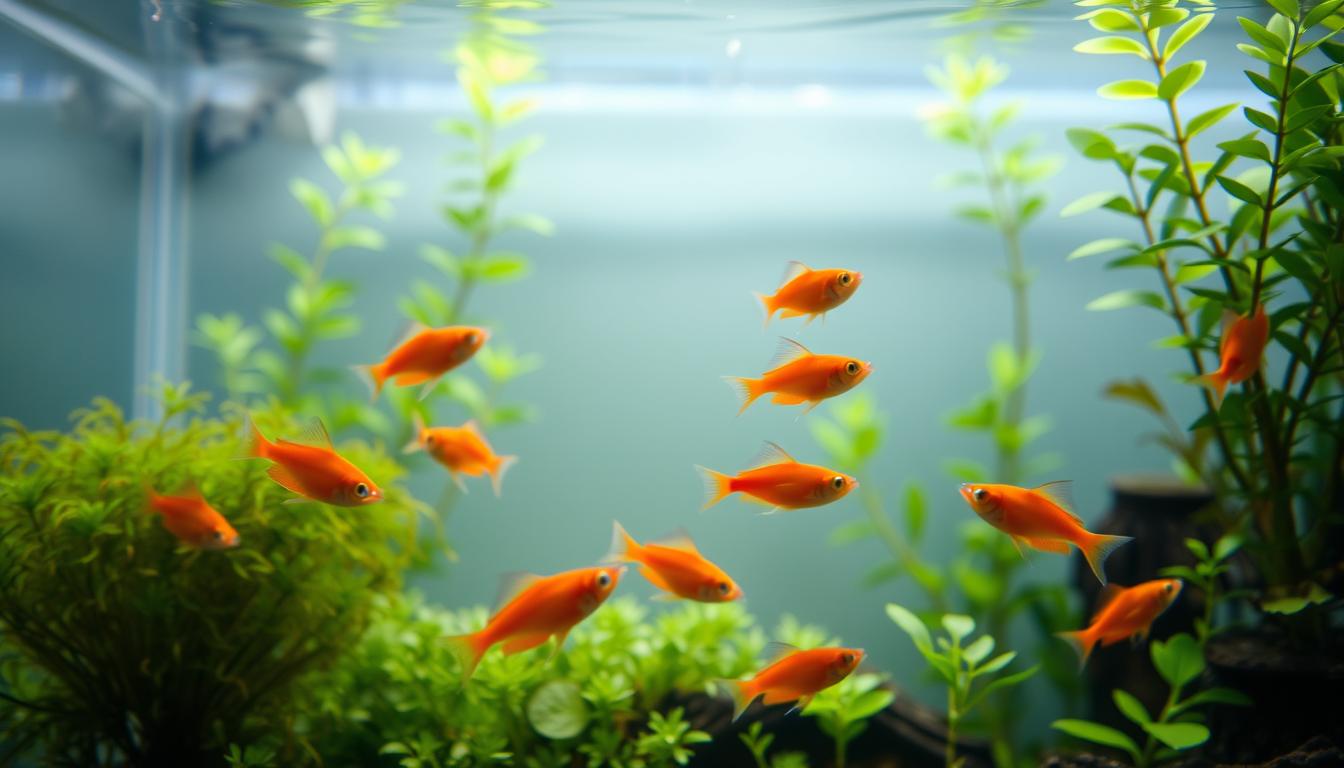
You’re about to get practical tips on breeding nano rasboras in a 10-gallon tank. These small, schooling fish are loved for their beauty in small aquariums. Breeding them well needs a well-set tank, stable water, good food, and watching them closely.
Before you add fish, make sure the tank is fully cycled. Fishless cycling is best to avoid stress and loss. Regular water changes, like once a week, keep the water clean and help the fry grow.
A 10-gallon tank is great because it’s small and easy to manage. You can have a colony just for breeding or a peaceful community. Use good heaters and filters, and affordable gadgets for lights and CO2 to help plants grow.
Remember, breeding nano rasboras in a 10-gallon is possible but needs careful planning. Focus on the details, choose the right fish, and provide plenty of plants or a special spawning area. This guide will help you learn how to breed nano rasboras with confidence.
Understanding Nano Rasboras and Their Habitat
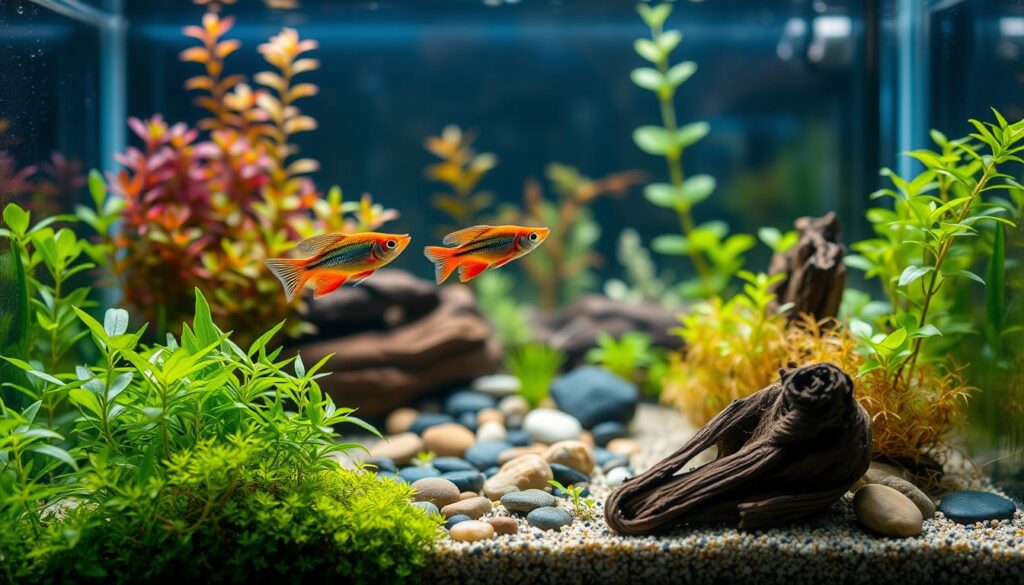
Nano rasboras like the Chili Rasbora, Microrasbora kubotai, and the exclamation point rasbora grow up to one inch. They love to school together and are very calm. This makes them perfect for small, peaceful tanks with lots of plants.
In the wild, nano rasboras live in shallow, slow-moving waters. Their homes are filled with soft, acidic water, leaf litter, and lots of plants. Creating a similar environment in your tank can help them feel at home and encourage them to breed.
When breeding nano rasboras, it’s important to get their water right. They prefer soft water with low mineral levels. The pH should be between 5.0 and 7.0, and the temperature should be between 72–80°F. Make sure to match these conditions to the specific species you’re breeding.
Watching nano rasboras breed is fascinating. They lay their eggs on plants or special spawning mops. But, adults might eat the eggs or fry if they’re left together. So, it’s best to move the eggs to a separate tank for them to grow safely.
Choosing the right tankmates is also important. Nano rasboras are small and peaceful, so they do well with calm fish. Keeping them with aggressive fish can stress them out. It’s best to keep them in a species-only tank for breeding.
- Typical species: Boraras brigittae, Microrasbora kubotai, exclamation point rasbora
- Natural habitat: blackwater streams, leaf litter, driftwood, dense plants
- Water: soft, low GH/KH, pH 5.0–7.0, 72–80°F
- Breeding: egg scatterers, use fine-leaved plants or spawning mops
- Tankmates: peaceful or species-only for best breeding techniques for nano rasboras
The Basics of Breeding Nano Rasboras
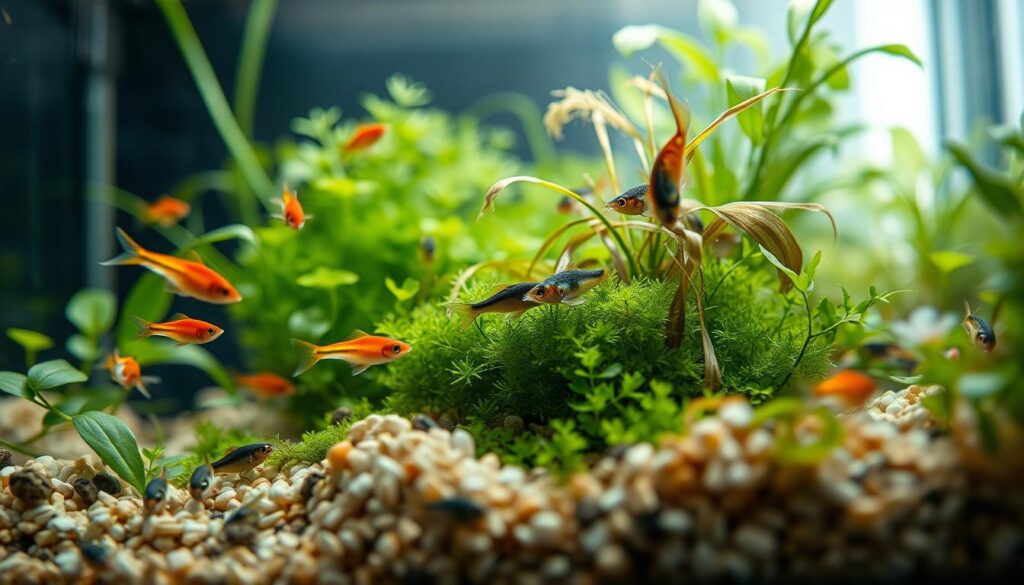
Most nano rasboras show clear differences between males and females. Males are brighter and more active, trying to attract females. They either scatter eggs or lay them on plants like Java moss.
Eggs hatch in 24–72 hours, depending on the water temperature. After hatching, the fry need tiny food like infusoria or liquid fry foods. This is because they grow fast.
Feeding them right is key. Start with very small foods, then move to tiny brine shrimp and crushed foods. Feed them often but in small amounts to keep the water clean.
To breed nano rasboras well, manage their numbers and sex ratio. Keep small groups with more females than males. This helps reduce aggression and encourages more spawns.
- Provide dense fine-leaved plants or Java moss for egg deposition.
- Offer spawning mops or peat for extra hiding places for eggs.
- Consider a dedicated breeding tank to boost survival rates.
To trigger spawning, make small changes to the water. Softer, slightly acidic water and a small temperature change can help. Also, increase live or frozen foods before spawning.
Protecting eggs is important. You can leave dense plants in place for hiding. Or, remove adults to a separate tank after spawning.
By following these basics, you can see better results. Good conditions, the right cover, balanced sex ratios, and tiny first foods are essential. They help you breed nano rasboras successfully and repeatedly.
Setting Up Your 10-Gallon Tank for Breeding
Begin with reliable, adjustable equipment. A small heater is key for a stable temperature. Choose a gentle sponge filter or a low-flow hang-on-back unit. These options protect fry and provide biological filtration and mild circulation.
Opt for dimmable LED lighting to support plants without stressing fish. An aquarium lid helps reduce evaporation and drafts. Soft, steady light promotes plant growth and natural behavior in breeding nano rasboras.
- Substrate options: fine-grain sand or bare bottom work well. Many breeders prefer a dark substrate to boost color.
- Hardscape: use driftwood to lower pH with tannins and to create hiding spots.
- Plants: include Java moss, Christmas moss, Java fern (Windelov), guppy grass, and floating Amazon frogbit for cover and spawning sites.
Choose dense, fine-leaved plants and mosses for egg attachment. Spawning mops or a layer of peat and leaf litter mimic natural conditions. This meets the needs of nano rasbora breeding setups.
Keep the flow low to moderate. A sponge filter provides oxygen and gentle current, keeping fry safe. Test oxygen levels and ensure currents don’t sweep eggs away.
Cycle the tank fully before adding breeders. Use a fishless cycle and test pH, GH, KH, ammonia, nitrite, and nitrate. If your tap water is hard, mix reverse osmosis water with tap water or use peat-filtered water. This will help achieve softer, slightly acidic conditions that suit most nano rasbora breeding tank requirements.
Stock the tank conservatively in a 10-gallon. For small species, plan 8–12 fish for a colony, or keep a pair or trio for focused breeding. Follow 10-gallon stocking guides and choose between community or species-only setups. This depends on aggression and fry survival when breeding nano rasboras.
Creating the Perfect Environment for Spawning
To meet nano rasbora breeding tank requirements, start with stable water chemistry. Use RO water or peat filtration to soften water and lower GH and KH. Aim for a pH in the 5.5–6.8 range for many species. Keep temperature steady near 74–78°F unless your species needs a different range. Test often so ammonia and nitrite stay at 0 ppm and nitrates remain low with routine partial changes.
Tannins help trigger spawning. Add Indian almond leaves or driftwood to tint the water and mimic blackwater habitats. These additions lower pH slightly and reduce stress, which encourages natural breeding behavior. Light tannin levels also make eggs and fry less visible to predators.
Light should be moderate and consistent. Use plant-friendly fixtures and keep a daily photoperiod of about 8–10 hours to promote growth and calm behavior. Avoid intense lighting that drives shy spawners into hiding. Floating plants such as Amazon frogbit diffuse light and create shaded zones for timid fish.
Select plants that offer fine cover for eggs and fry. Java moss, Christmas moss, guppy grass, and pearl weed supply adhesive surfaces and protection. Dense mats and spawning mops give parents places to deposit eggs. If adults are known to eat eggs, plan to remove adults or collect the eggs promptly.
Conditioning and small temperature shifts can prompt spawning. Raise the tank temperature by 1–2°F for a short period or perform a slightly cooler water change depending on natural cues for your species. Feed frequent, protein-rich meals like daphnia, brine shrimp, or microworms for one to two weeks before breeding.
Lay out a clear nano rasbora breeding setup with hiding places and gentle flow. Use fine-leaved plants and cavities to protect eggs. If you prefer to collect eggs, include a spawning mop or a slatted separator to keep eggs safe from adults. Thoughtful layout reduces egg predation and improves fry survival.
Review breeding techniques for nano rasboras by observing behavior and adjusting variables incrementally. Keep records of water parameters, feed types, and any temperature changes. Careful notes help you refine your approach and repeat successful cycles in the future.
Introducing Breeding Pairs
Start by picking healthy fish for breeding nano rasboras. Look for active fish with bright colors. Females should have rounded bellies. Males often show more vivid colors.
Avoid thin or pale fish to reduce disease risk. Buy from a reputable local fish store or a trusted breeder. They should document their captive-bred lines.
Quarantine new arrivals for at least two weeks in a separate tank. Watch for parasites and signs of illness. Treat problems with targeted medications only when safe for future fry.
Acclimate slowly to your tank’s water. Use drip acclimation or gradual mixing of water to prevent shock. This is vital if your water is soft and tannin-rich.
Think about group dynamics and sex ratios when planning. Introduce a small group of six to twelve fish. A ratio of one male to two or three females reduces male harassment.
Condition your chosen fish for spawning over several weeks. Feed a varied diet of micro pellets, frozen daphnia, mosquito larvae, and live or frozen brine shrimp. Keep up regular water quality maintenance during conditioning to support health.
Place breeders in the prepared 10-gallon only after the tank is fully cycled and well planted. Provide ample cover with plants and fine-leaved moss so fish feel secure. Observe interactions closely for signs of chronic stress or aggression.
If you see excessive chasing or hiding, adjust stocking levels or add more cover. Small tweaks at this stage follow nano rasbora breeding tips that increase the chance of successful spawning. Careful observation during introduction helps you learn how to breed nano rasboras with steady results.
Monitoring the Breeding Process
Watch how males and females interact. Males will show off their bright colors and chase the females. They might also bump into plants. By recording these moments, you can guess when they’ll spawn.
Look for eggs stuck to leaves or hidden in moss. Spawning can happen in batches over a few days. Keep the water clean to prevent egg loss. Small water changes help keep the environment stable.
- If adults eat eggs, move adults to another tank or use a breeder net.
- Some keepers remove moss or spawning mops into a dedicated fry tank for safer incubation.
- Remove cloudy or fungus-infected eggs promptly to protect healthy ones.
Check the eggs after 24–48 hours. Healthy eggs are clear and show a tiny embryo. Cloudy eggs might have fungus. In a separate tank, use methylene blue to treat fungus, but do it carefully.
Keep the environment stable. Avoid big changes in temperature and water movement. These can harm the eggs and fry. A stable environment helps them grow and survive.
- Log water parameters daily: pH, temperature, ammonia, nitrite, and nitrate.
- Record feeding routines and any spawning triggers you used.
- Note fry counts and survival to refine future attempts.
Use your notes to improve your breeding techniques. Try small changes in temperature or add tannins. Keeping detailed records will help you find the best way to breed nano rasboras in your tank.
Feeding and Care for Fry
Start with infusoria or commercial fry foods for the first few days. These foods are the right size for fry and keep them active. This is a key step in a nano rasbora care guide for early survival.
After three to seven days, introduce brine shrimp or microworms. Feed small amounts several times a day. Use micro pellets or finely crushed flake food as a supplement when fry grow bigger.
Follow a gradual feeding schedule. Offer tiny portions often and increase amounts as fry get bigger. This helps fry grow without fouling the water.
Keep the water pristine. Use a gentle sponge filter and do frequent small water changes of 10–20%. Rinse sponge filters in tank water to preserve beneficial bacteria.
- Provide dense moss and plants for grazing and hiding.
- Include floating plants to diffuse light and reduce stress.
- Maintain low flow so fry can feed without being swept away.
Expect fry to grow noticeably over weeks with good water quality and diet. Monitor growth and look for stunted individuals. If overcrowding occurs, move juveniles to a larger tank for healthy development.
When fry accept larger foods, start weaning onto frozen daphnia and finely crushed pellets. Gradually transition to a varied adult diet while tracking growth rates. Good husbandry during this stage completes any solid nano rasbora care guide and secures long-term success for your school.
Common Challenges in Breeding Nano Rasboras
Egg and fry predation is a big challenge in breeding nano rasboras. Adults and bigger fish eat eggs and fry fast. Use a special breeding tank or move eggs to a separate incubator.
Heavy moss, spawning mops, or dense plants help hide eggs and increase survival chances.
Water quality issues are another big problem. Ammonia, nitrite spikes, high nitrates, and pH or hardness changes can kill eggs and fry. Keep the tank cycled, test water often, and do partial water changes. A sponge filter helps protect fry and filters the water.
Diseases and fungus can quickly ruin a spawn. Fungal growth on eggs and parasites on adults need quick action. Quarantine new fish and treat sick adults before breeding. Remove fungus from eggs and use methylene blue in an incubation tank if needed.
Algae and plant care also play a role. Too much algae can harm eggs or weaken plants. Control light and nutrients. Use nerite snails or small Amano shrimp for algae control if they fit your tank. Regular maintenance keeps plants healthy and reduces stress.
- Stress and aggression can lower spawning rates. Overcrowding, poor sex ratios, or little cover increase tension among fish.
- Adjust the number of fish and add plants for shelter and breeding sites.
- Stable temperature and chemistry help keep fish calm and predictable.
Equipment failures and outages are high-risk in small tanks. Power loss or heater failure can be deadly. Have a plan: use battery-powered air pumps, aquarium-safe backup heaters, or a neighbor for help. Modern hobbyists often use smart leak detectors and uninterruptible power supplies for peace of mind.
Practical breeding techniques for nano rasboras can solve many problems. Use separate breeding vessels, keep low light and tannin-rich water for some species, and use slow, gentle filtration. These methods improve egg retention and fry health.
Keep nano rasbora breeding tips handy and adapt as you learn each species’ quirks. Track water reports, note behavior changes, and refine your tank setup. Persistent observation and small, steady adjustments will increase your success rate over time.
Ensuring Long-Term Success in Breeding
Keep detailed records of your breeding efforts. Note down parentage, water conditions, feeding, spawn dates, hatch rates, and fry survival. These logs will show you the best breeding methods for your nano rasbora setup. Short, regular notes are more helpful than long, sporadic ones.
Focus on breeding healthy, vigorous fish. Aim for natural colors and strong fry. Avoid close inbreeding by introducing new, unrelated fish. This keeps your breeding program diverse and successful.
Plan carefully for the future of your fry. Rehome them through local stores, aquarium societies, or hobbyist groups. Never release fish into the wild. Regularly clean your setup, rotate plants, and check filters. Take breaks between breeding cycles to prevent disease.
Stay updated with the latest in breeding. Use tools like water test kits, smart timers, and automation. Choose sustainable or captive-bred fish. Use eco-friendly equipment to care for your aquarium responsibly.
Leave a Reply