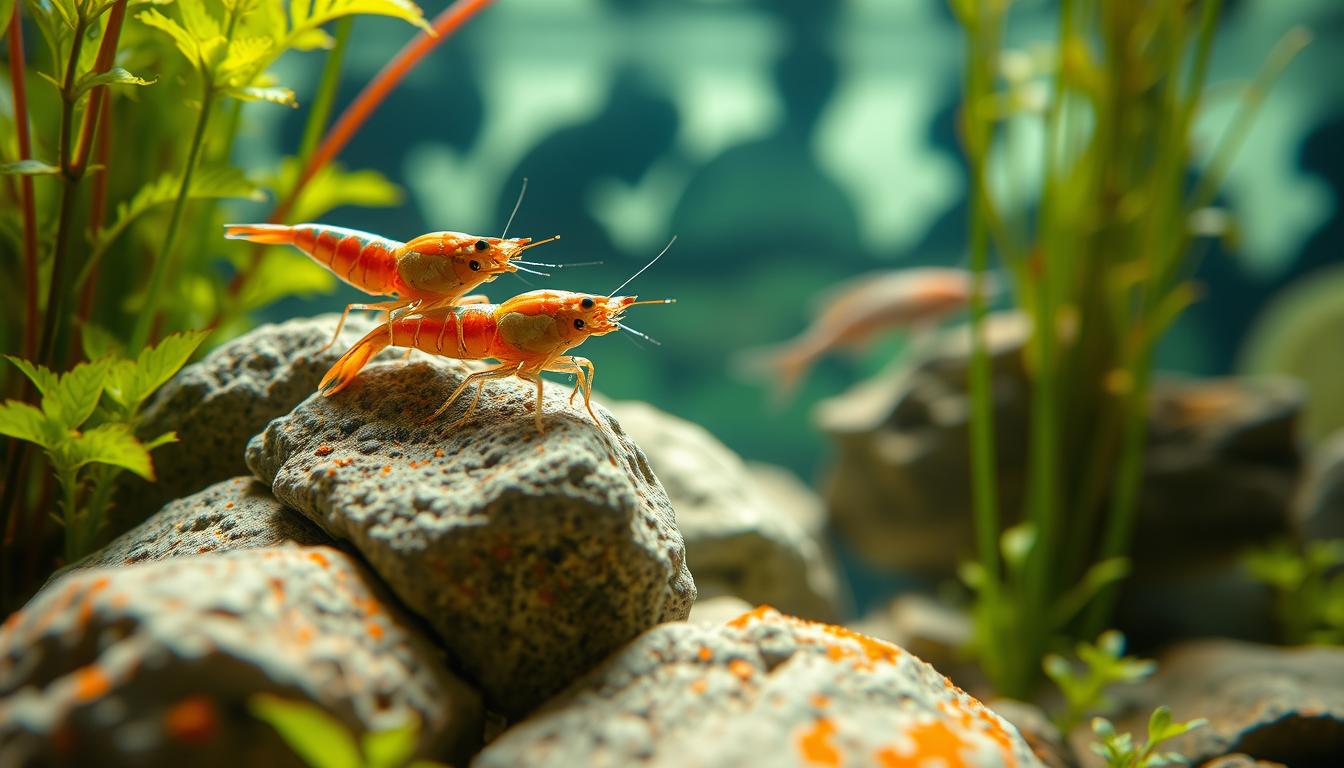
Healthy water is key for shrimp to thrive, whether in aquariums or wild habitats. Shrimp play a big role in recycling organic matter and supporting other life forms. They are also a good source of protein and omega-3s for humans.
Copper can be good in small amounts but harmful in excess. It’s important to know how copper affects shrimp. Even a little extra copper can harm shrimp and change the balance of their environment.
Research in Michigan shows why copper levels matter. Copper from old mines has contaminated beaches and harmed shrimp and other sea creatures. This damage is clear in areas with high levels of copper.
Rules help us understand these findings. There’s a safe level of copper in sediments, above which harm is likely. In Michigan, areas with high copper levels saw a decline in sea life.
This article will cover how copper gets into water, its effects on shrimp and other sea creatures, and how to test for it. We’ll also talk about ways to reduce copper in aquariums and seafood, safe levels for aquatic life, and alternatives to copper treatments. Plus, we’ll look at new regulations and monitoring efforts.
The Importance of Shrimp in Aquatic Environments
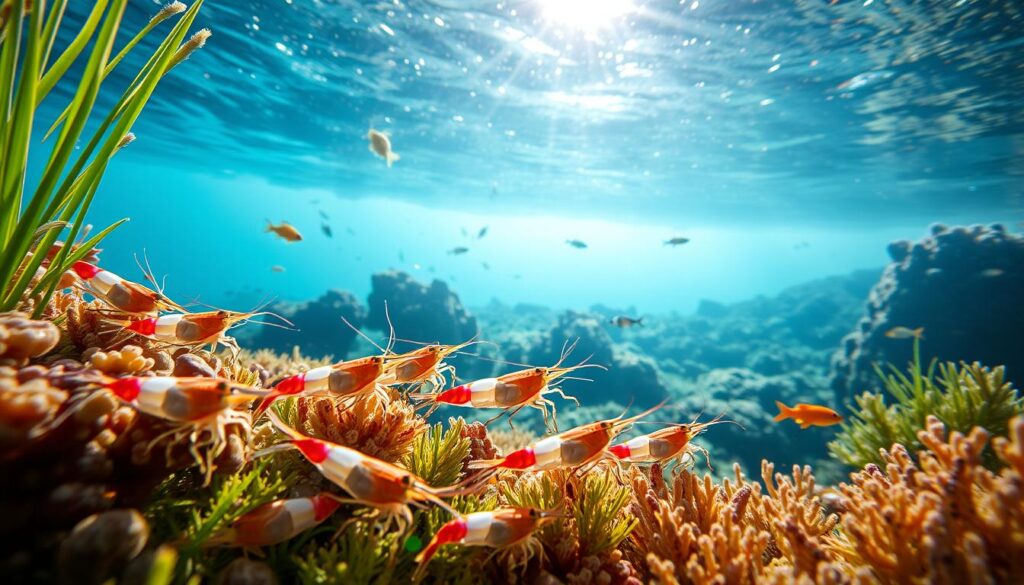
Shrimp play a vital role in many water ecosystems. They act as both benthic and pelagic invertebrates. They break down organic matter while feeding.
As detritivores, they recycle nutrients. This keeps sediments healthy for other life forms.
Shrimp are a major food source for fish and birds at critical times. Many larval and juvenile fishes rely on them for growth and survival. A decrease in shrimp can weaken fish recruitment and reduce fishery productivity.
Field sampling in Lake Superior shows the fragility of these communities. Beaches with high stamp sands have fewer benthic taxa and lower zooplankton counts. At high stamp sand sites, zooplankton abundance is roughly two orders of magnitude lower.
This highlights the vulnerability of shrimp and other small invertebrates to metal contamination.
Your access to shrimp health benefits depends on maintaining healthy populations. Shrimp provide lean protein, minerals, and omega-3s for your diet. They support fisheries and aquaculture jobs that are important to coastal economies across the United States.
Protecting these benefits means managing shrimp and copper safety in both wild and farmed systems. Copper contamination can alter invertebrate communities and shift food webs. This affects seafood availability and prompts stricter shrimp consumption guidelines when contamination is detected.
Not all invertebrates respond the same to copper. Sensitivity varies by taxon. So, habitat protection and monitoring must account for species-specific vulnerability. This approach helps keep shrimp ecological role intact while supporting safe, reliable seafood for your table.
Understanding Copper’s Toxicity to Invertebrates
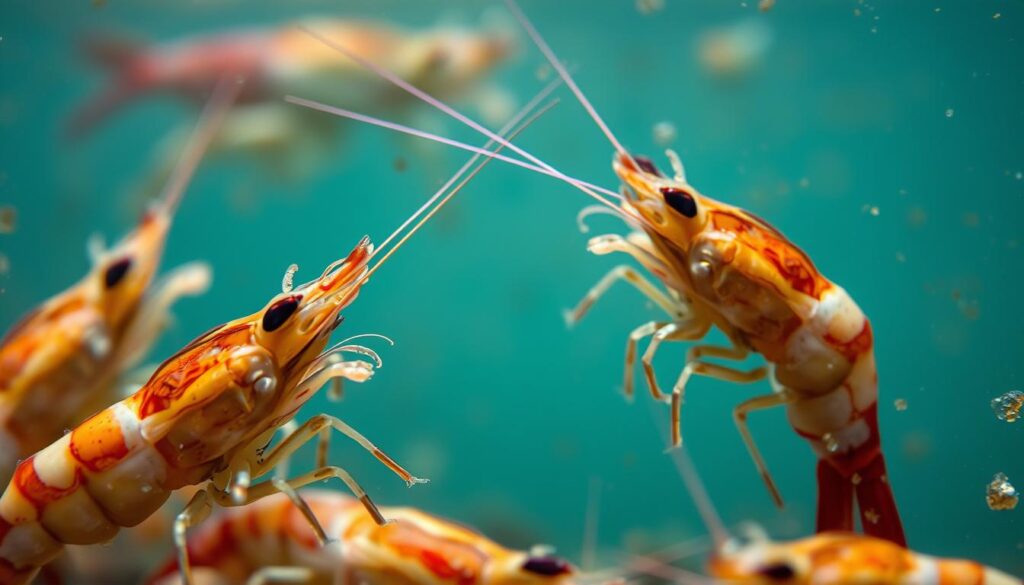
Copper is vital for life, but its free form (Cu2+) is harmful to small animals. In water, copper can combine with salts and organic matter. This makes it less available to harm, but the free Cu2+ is most toxic to gills, exoskeletons, and nerves.
In seawater, copper levels are usually around 3 µg/L naturally. In aquariums, copper can stick to rocks, sand, and biofilms. This reduces immediate harm but can release copper later, causing problems for shrimp and other invertebrates.
How much copper is toxic varies by species and water conditions. Hobbyists and lab studies show that levels over 20 µg/L can harm corals and many invertebrates. Signs include coral bleaching, stressed behavior, and sudden deaths of mollusks and shrimps.
Sediment-bound copper is also important. Studies in the Great Lakes show it can lead to fewer benthic invertebrates and lower diversity. Different species react differently to copper, making it hard to predict risks.
Interactions with other elements and organic content affect copper’s toxicity. Ratios with zinc, vanadium, nickel, and molybdenum change how harmful it is. Dissolved organic carbon and biofilms can also reduce free Cu2+ levels. This means you need to consider the balance of elements when assessing copper’s impact on reefs and tanks.
Even below lethal levels, copper can have effects. It can alter feeding and mating behavior and reduce reproductive success. It can also build up in tissues, posing long-term risks to predators and people who eat seafood. Monitoring for copper toxicity in shrimp and contamination is key for animal welfare and food safety.
Sources of Copper Contamination
It’s important to know how copper gets into water to protect shrimp and ensure safety. Copper can come from human activities and natural processes.
Primary sources of copper pollution include:
- Old and current mining, like stamp mill tailings and sands that erode into coastal areas.
- Industrial waste from metal processing and manufacturing plants.
- Urban runoff with brake dust, roofing particles, and other copper-bearing debris.
- Municipal wastewater that adds dissolved copper and particles.
- Antifouling paints on boats that release copper into marinas and harbors.
- Corroded plumbing and piping in older buildings that release copper into tap water.
- Certain pesticides and fertilizers that contain trace metals.
The Lake Superior case shows the lasting impact of copper pollution. Historic copper mining near Gay, Michigan left behind stamp sands on beaches. These sands, carried by waves, contaminated nursery and spawning reefs, harming invertebrates.
In aquaculture and home systems, copper can come from unexpected sources. Tap water, trace element solutions, some fish and coral feeds, and coloration products can introduce copper. Brands like Fauna Marin warn that trace element solutions and feeds may contain copper, making careful sourcing and monitoring essential.
Sediments act as long-term copper reservoirs. They can release copper during storms, dredging, or changes in oxygen levels. The relationship between stamp sand and copper concentration is complex, making simple predictions unreliable.
Legacy contamination can last for decades. Old mining tailings and disturbed sediments can continue to erode and transport copper into coastal habitats. This poses ongoing risks to shrimp and copper safety even after mining stops.
To better understand copper pollution, combining site history with targeted testing is key. This approach helps pinpoint the main sources of copper in water. It guides focused monitoring in aquaculture and coastal management.
Testing Water for Copper Levels
There are many ways to test copper levels in your tank or pond. Home test kits can measure dissolved copper in micrograms per liter (µg/L). Labs can also test total recoverable copper in water and sediment, showing it in mg/kg dry weight for sediments.
Choose reliable test kits that show µg/L if you have shrimp or other invertebrates. Fauna Marin suggests about 2–5 µg/L in seawater is normal. Values up to roughly 10 µg/L might be okay if most copper is not harmful. But, readings above about 20 µg/L can harm invertebrates, so test often if you think there’s exposure.
Field and sediment sampling follow strict protocols. Petite Ponar grabs are used to collect benthic sediment for invertebrate counts and metal analysis. Labs then measure total recoverable Cu in sediment (mg/kg DW) and compare it to PEC thresholds and probabilistic indices like PEQs.
- Interpret sediment numbers: Cu >149 mg/kg DW or a ΣPEQs >1 flags likely adverse effects to benthic life.
- Interpret water results in context: raw µg/L values depend on complexation, organic content, salinity and other trace elements.
- When possible, request dissolved versus total copper and consider speciation tests to assess bioavailability.
For copper monitoring in aquaculture, pair chemical data with biological surveys. Measure benthic taxa and zooplankton density alongside laboratory metal analysis. This approach mirrors long-term environmental studies and gives a clearer picture than chemistry alone.
Set monitoring frequency to match risk. Test after suspected contamination events or product additions. In sensitive hobby systems, check monthly. In commercial aquaculture and environmental programs, perform periodic water and sediment sampling with lab analyses plus biological checks.
Consider limits of detection and bioassays. Use biotic indicators such as shrimp or mollusks to complement chemical data when practical. This layered strategy improves confidence in shrimp and copper safety and helps you track copper levels in seafood pathways over time.
Safe Copper Levels for Aquatic Life
It’s important to keep copper levels low to protect sensitive aquatic life. Seawater naturally has up to 3 µg/L of copper. Many aquarium experts suggest keeping levels between 2–5 µg/L.
Be cautious if copper levels go above 10 µg/L. Copper can bind with organic matter, making it harder to measure. Levels over 20 µg/L can harm corals and kill mollusks and shrimps, so act fast.
- Use sensitive test kits or labs to verify levels when you manage reefs or shrimp culture.
- Target the lower end of recommended ranges when you keep highly vulnerable taxa like benthic copepods or ornamental shrimp.
Sediment is also a concern because copper can accumulate there. The common Probable Effects Concentration (PEC) for Cu in sediment is about 149 mg/kg dry weight. Risk assessments show harm likely when values exceed 1.
Field studies, like those on Lake Superior beaches, show copper in sediment can harm benthic life. This is why it’s important to keep copper levels low, even more so in systems with sensitive species.
How copper affects different species varies. Benthic invertebrates and small crustaceans are very sensitive. So, it’s best to keep copper levels low in systems with these creatures.
Bioavailability also plays a role in safe copper levels. Factors like organic matter, pH, and other metals can change how toxic copper is. Keeping a balanced mix of trace elements can help reduce risks.
When buying or harvesting shrimp, remember that copper levels in seafood are regulated. Commercial producers follow guidelines to keep copper within safe limits. If you suspect contamination, follow public health advice and have products tested.
Reducing Copper Levels in Your Aquarium
If you find high copper levels, act quickly. Start by changing some water with low-copper water or RO/DI water. Stop using any copper-based meds or supplements until copper levels are safe for shrimp.
Take out any items that might be adding copper, like decorations or liquid additives. Clean decorations and gently stir the substrate to release trapped copper. This might take some time, but it’s worth it.
- Use activated carbon to adsorb dissolved organics and some metals.
- Add zeolite to capture certain ions and reduce acute copper exposure.
- Consider specialized metal adsorbers and iron- or aluminum-based media for targeted aquarium copper removal.
Brands like Seachem and Eheim make good filtration media. Fauna Marin and other reef suppliers suggest using both mechanical filtration and metal adsorbers for the best results in reef or shrimp tanks.
Use reverse osmosis water for water changes and top-offs to avoid adding copper. Test supplements, pellet foods, and live feeds before adding them to your tank to avoid contamination.
After fixing the copper issue, keep testing water often. Adjust how much you add to the tank and avoid adding too many trace elements. In reef systems, keep the element ratios balanced to avoid copper spikes that harm invertebrates.
If copper keeps showing up without a clear source, send water and sediment samples to a lab for analysis. They can tell you about dissolved versus particulate copper and help you find a long-term solution.
If you plan to eat shrimp from your tank, make sure to handle them safely to avoid copper contamination. Proper rinsing and knowing where your shrimp come from helps cook them safely while keeping your tank healthy.
Choosing Copper-Free Alternatives
To protect shrimp, choose copper-free options for medicines, food, and tools. Always check labels and safety sheets for copper. Look for products from brands like Fauna Marin that have low copper or are labeled copper-free.
For treating diseases, pick treatments that are safe for shrimp. Options include hydrogen peroxide dips and certain formalin-based treatments. Always test any new treatment to make sure it’s safe for fish and shrimp.
- Inspect feed and supplement labels for copper content.
- Choose formulations labeled copper-free or with documented low Cu content.
- Use reputable brands that publish ingredient analyses.
Replace copper plumbing and fittings with non-copper ones to stop copper from leaking into your system. Use RO/DI filtration to remove copper from tap water before it reaches your tanks and ponds. These steps help keep shrimp safe in both hobby setups and small farms.
In aquaculture and wild-harvest operations, use practices that lower exposure to contaminated areas. Monitor copper levels in intake water and check feed quality regularly. This protects both the stock and buyers.
When switching to copper-free treatments or products, watch water and organism health closely. Regular testing and slow changes help avoid introducing other harmful substances. This keeps shrimp safe and your systems stable.
Best Practices for Shrimp Care
Start with stable water quality. Keep the temperature, salinity, and pH steady. Use RO/DI water or tested low-copper municipal water for changes and top-offs.
Test your water regularly for copper in µg/L and other key parameters. Watch shrimp for early signs of stress like changes in behavior or reduced feeding. Regular observation helps you act fast.
Feed a varied, natural diet and choose feeds with clear elemental profiles. Avoid over-supplementing trace elements. Proper nutrition boosts shrimp health and reduces vulnerability to toxins.
Manage substrate and décor to limit metal reservoirs. If you suspect sediment-bound copper, clean or replace the substrate. Use inert substrates and rinse decorations thoroughly before adding them.
Quarantine new arrivals and use shrimp-safe treatment methods. Never treat a tank with copper-based medications when invertebrates are present. Following quarantine protocols protects the entire system.
- Use sensitive invertebrates and benthic checks as biological indicators.
- Monitor benthic taxa and zooplankton where applicable to detect contamination impacts.
- Keep records of test results and observations to spot trends early.
If you raise shrimp for eating, follow seafood safety rules and testing protocols. Adhere to shrimp consumption guidelines and confirm copper and other metals stay within allowable limits before harvest or sale.
The Future of Copper Regulations
Expect stricter rules and better monitoring as regulators focus on both seafood safety and protecting the environment. They use sediment PEC/PEQ frameworks and water quality guidelines to check risks. These tools help set limits on harvesting and test metals in seafood, but there’s more to it.
Science is moving toward a more complete approach. It combines chemical tests with biological surveys. For example, studies in Lake Superior link sediment copper levels to impacts on benthic invertebrates and zooplankton. This method helps spot copper problems in shrimp and other invertebrates early, allowing for timely action.
There will be a push for better predictive models. These models should show how reducing stamp sands or source inputs helps the environment. Current models are not always reliable, so scientists and regulators need better tools to predict outcomes and set priorities for cleanup.
On the industry side, expect more use of copper-free products and source-water treatment. Routine copper monitoring in aquaculture will also become more common. These steps help meet seafood safety standards and protect fish from copper contamination. As a consumer or caretaker, look for transparent producers, follow advisories, and use best practices to lower metal exposure in your tanks and coastal areas.
Leave a Reply