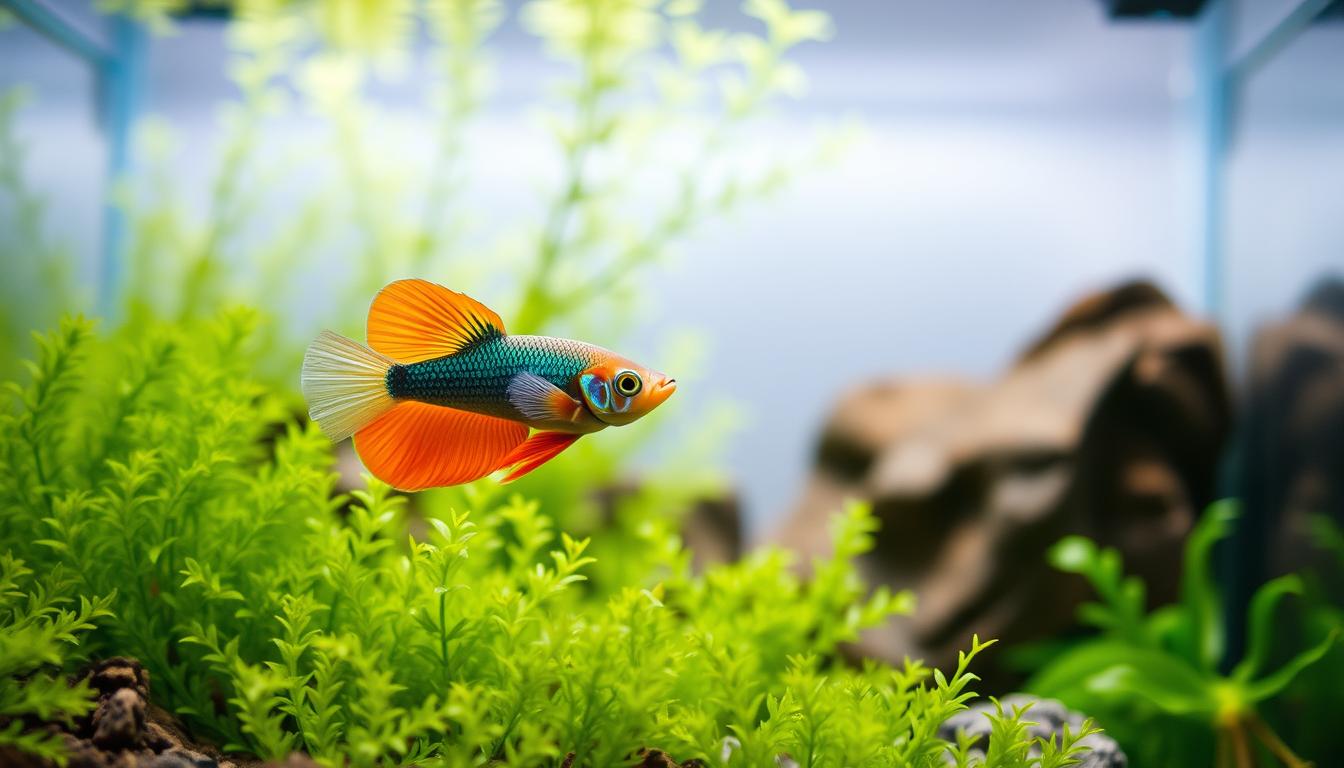
Choosing a centerpiece fish for your nano aquascape is key. You want one fish that catches the eye and fits your tank well. This guide helps you pick a fish that looks great, behaves well, and is easy to care for.
Nano tanks are special because they show every little change. The small water volume means temperature, chemistry, and waste can change fast. A big or messy fish can stress others, harm the water, and upset the whole tank.
You don’t have to choose a fish for a centerpiece. Invertebrates like brittle stars or small starfish can also be the main attraction. For example, some starfish like the double star Iconaster longimanus and the sand-sifting Astropecten polycanthus are small and might fit in a nano reef tank. Brittle and serpent stars can also work in small tanks if fed weekly. But, bigger species like Linckia, Fromia, and Chocolate Chip starfish need bigger tanks or special diets.
Always choose captive-bred fish and invertebrates if you can. They usually adapt better, eat prepared foods easily, and are calmer. These traits are important when picking a standout centerpiece fish.
This article will guide you on why a centerpiece is important, what to consider, popular choices, and how to pick the right one for your nano tank. Use this guide to make a smart choice for your nano aquascape.
Importance of Choosing a Centerpiece Fish
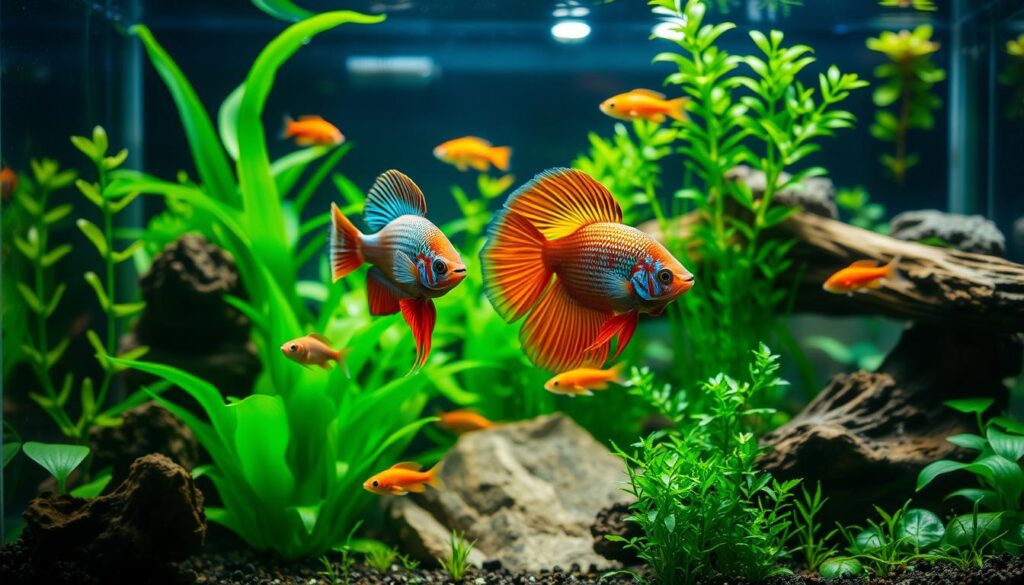
Your centerpiece fish is the heart of your nano aquascape. It’s the first thing people notice and shapes the tank’s look. Choosing the right fish means finding one that matches in color, movement, and size.
The centerpiece fish also affects how other fish behave. Active fish can change the tank’s dynamics. For example, some fish might start hiding more or eating at different times.
Choosing the right fish is key in small tanks. They help keep the tank clean by eating leftovers. Some fish even help move sand and clean the bottom of the tank.
But, small tanks can be tricky. If a fish dies, it can quickly make the water dirty. Some fish are also very sensitive to changes in their environment.
It’s important to pick fish that are easy to care for. This helps keep the tank healthy and looking good. Look at different fish options before making a decision.
Factors to Consider When Selecting a Fish
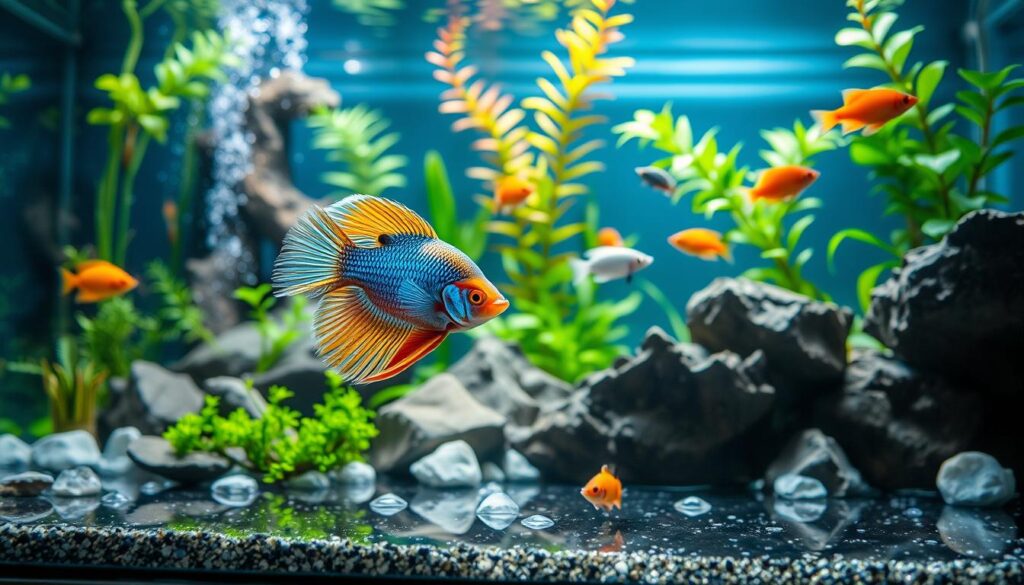
Start by checking the tank size. Many fish need a certain volume to thrive. For example, Ocellaris Clownfish need at least 10 gallons. Blue-Green Chromis and Yellow Coris Wrasse need more space due to their size and activity.
Next, look at the fish’s diet and how often it needs to eat. Some fish, like Blue-Green Chromis, need to eat often. Others, like Lawnmower and Starry Blennies, eat algae. Make sure you can feed them what they need.
- Temperament and tankmates: peaceful, semi-aggressive, or aggressive labels guide compatibility.
- Temperament and tankmates: peaceful, semi-aggressive, or aggressive labels guide compatibility.
- Maroon Clownfish can be aggressive and grow up to six inches, so plan for their size.
Consider any special needs the fish might have. Some need deep sand to burrow. Others need hiding places. Make sure your tank can provide what they need.
Think about how sensitive the fish is. Some, like echinoderms, are very sensitive. They need stable water and gentle care.
Choose captive-bred fish if you can. They usually adapt better to life in a tank. They also eat prepared foods more easily.
Think about how big the fish will get. Don’t buy fish that will outgrow your tank. Some fish, like starfish, get very big and need a lot of food.
- Follow retailer minimums and aim to exceed them when possible.
- Match feeding regimes to the fish’s natural diet and activity level.
- Ensure your tank supplies ecological resources—microfauna, algae films, detritus—if a species depends on them.
Use this guide to help you choose the right fish. Remember to consider how well different fish will get along. This will keep your tank balanced and healthy.
Popular Centerpiece Fish Options for Nano Aquariums
For a standout fish in a small tank, pick from small, peaceful species. These fish are perfect for tanks as small as 10 gallons. They add beauty without taking over the space.
- Clown Goby (Citron or regular) — Reaches about 2 inches, peaceful and reef-compatible. It perches on corals and rockwork, making it one of the top centerpiece fish options for pico and nano tanks.
- Sharknose Goby and Blue Neon Goby — Tiny cleaner gobies that stay under 2 inches and show natural cleaning behavior. Captive-bred specimens are available, making them reliable choices among the best centerpiece fish for aquarium setups.
- Court Jester / Rainford’s Goby — About 3 inches at most, omnivorous and sand-sifting. It grazes rocks and helps keep substrates active, so it ranks high among top centerpiece fish options for small reef or mixed nano systems.
- Ocellaris Clownfish — Iconic, hardy and often captive-bred. They adapt to 10-gallon homes and act as striking focal fish in planted and reef-style nanos, qualifying as one of the best centerpiece fish for aquarium hobbyists.
- Chalk Bass / Basslet — Vivid color with a compact form. Many basslets do best in larger nano cabinets and a minimum 30 gallons is recommended for some species, but small basslets can serve as dramatic focal points when conditions allow.
Pair small basslets or a clown goby with lush plants or coral frags for contrast. These combos highlight the fish without overcrowding.
Think about invertebrates as centerpiece alternatives. Brittle and serpent stars clean up and thrive in 10–15 gallon systems with weekly feeding. You can find them in tiger, leopard, and red colors.
- Double star (Iconaster longimanus) and small sand-sifting stars (Astropecten polycanthus) — Smaller, hardy starfish that can function in well-established nano reefs with proper algae and sand-bed conditions.
Be careful with starfish choices. Avoid fragile or large species like Linckia, which need 75–100+ gallon tanks and are sensitive to transport stress. Sand-sifting stars commonly demand deep sand beds and very mature systems; they often fail in smaller setups.
Avoid feather stars and sea lilies for hobby tanks. They need constant plankton feeding and don’t adapt well to closed aquaria. Choosing a vetted, practical option ensures the success of your aquarium project.
Assessing Your Aquarium Environment
First, check your tank’s size and water stability. Make sure your nano aquarium is big enough for the fish you want. A bigger tank helps keep water stable, avoiding sudden changes in ammonia or nitrate.
Next, look at the substrate depth and type. Sand-sifters and gobies need 2 to 6 inches of live sand. Many starfish need deep, biodiverse beds and well-cycled systems.
Then, evaluate your live rock and refugia. Fish that eat bacterial films or tiny invertebrates need established live rock and a refugium. Running a refugium or growing copepods is key for these feeders.
Match your lighting and flow to your fish’s needs. Shy fish like dimmer caves and gentle flow. Feather stars need constant plankton and steady flow, but hobby lighting and flow might not be enough.
Check your clean-up crew and population. Think if your snails and gobies will work with your main fish. Nassarius and Cerith snails are good alternatives to starfish for cleaning the sand.
Plan for water quality. Regular testing and care are vital. A good maintenance plan is key for a small tank’s success.
Take steps before buying a fish. Make sure your sand depth and organic load match the fish’s needs. Choose species that don’t need constant plankton if you can’t keep a refugium. Use the checklist to help choose the right centerpiece fish for your tank.
Evaluating Your Personal Preferences
First, think about what you want in a centerpiece fish. Consider their color, how they behave, and how active they are. For example, a Royal Gramma or neon goby can add bright colors. A clownfish can make your tank lively with its antics.
Think about how you want to interact with your fish. Do you like watching them swim, or do you prefer fish that interact with you? Maybe you want a fish that’s active during the day or one that’s more active at night.
Also, think about how much time you have to care for your fish. Some fish need to be fed often and require a lot of attention. For example, Chromis need to be fed regularly and need space to swim together. Clownfish, on the other hand, are easy to care for and can thrive in a variety of conditions.
Consider how comfortable you are with caring for fish with special needs. Some fish, like Linckia or sand-sifting stars, need very specific conditions to thrive. If you prefer less stress, choose fish that are easy to care for and can adapt well to their new home.
- Blue-Green Chromis: striking schooling behavior, need larger tanks and frequent feedings.
- Clownfish: hardy, small, often captive-bred; good balance of looks and care.
- Brittle stars: interesting nocturnal behavior and clean-up benefits if you can target-feed them.
Think about the environment you can provide for your fish. Some fish need deep sand beds, a special area for them to hide, or specific feeding times. If you don’t want to change your tank setup often, choose fish that do well in standard conditions.
Use these tips to help you choose the right centerpiece fish. Consider how your choice will fit your tank, your schedule, and your comfort level with caring for fish. This way, you can pick a fish that will be the star of your tank and fit your lifestyle.
Recommended Centerpiece Fish for Beginners
Start with species that fit a small setup and your skill level. The list below focuses on hardy, small fish that are easy to find in pet stores. These fish are great for nano or pico setups.
-
Ocellaris Clownfish — Minimum 10 gallons. Omnivore and widely captive-bred, this fish is hardy and iconic. It makes a strong, colorful focal point and often does well as a pair, which gives your tank a lively center without complex needs.
-
Clown Goby — Tiny, maxing near 2 inches, and suitable for 10-gallon tanks. Peaceful and reef-compatible, the clown goby perches on rocks and becomes a charming perching centerpiece in pico and nano aquascapes.
-
Sharknose / Blue Neon Goby — Minimum 10 gallons. These small cleaner gobies stand out as a single showpiece. Captive-bred options reduce acclimation stress and make them among the best centerpiece fish for aquarium setups with limited space.
-
Watchman Goby + Pistol Shrimp — Often recommended for a pair focal point. Many guides suggest 30 gallons, yet some small setups with proper sand depth can host smaller goby species. This duo offers unique symbiotic behavior that becomes a living centerpiece.
-
Brittle Stars (appropriate species) — Can be kept in 10–15+ gallon tanks when target-fed weekly and when you choose hardy species. They provide a subtle, nocturnal focal point that appeals to hobbyists who prefer low-visibility centerpieces.
These choices match common beginner needs: captive-bred supply, small adult size, straightforward feeding, and lower sensitivity to shipping and acclimation. When choosing a centerpiece fish, always verify the species’ exact minimum tank size and create the proper microhabitat.
Plan your aquascape so the centerpiece has hiding spots, perches, or substrate depth it requires. That setup reduces stress and keeps the fish active and visible. Use these recommended centerpiece fish for beginners to narrow your options and build confidence as you learn aquarium care.
Advanced Tips for Choosing Your Star Fish
When picking a centerpiece fish, look beyond how it looks. Make sure you know what species it is and where it came from. Ask the seller to show you the underside of the Linckia and check if the limbs are firm and move well.
Shipping and getting the fish to acclimate to your tank is key. Linckia stars often get stressed during shipping. Try to buy in person and do a slow drip acclimation for 2–3 hours to help them adjust.
Know how your fish will eat in the long run. Linckia stars might eat bacteria, algae, sponges, and leftover food. But, feather stars need to eat plankton all the time. They’re better suited for big public aquariums or research places, not home tanks.
Be careful with sand-sifting stars in small tanks. They can clean out the sand too fast, leaving no food for them. For smaller tanks, consider using Nassarius snails, Cerith snails, gobies, or Fighting Conchs instead.
If you have a nano tank with brittle or serpent stars, you’ll need to feed them often. Watch out for aggressive green brittle stars. They can grow big and might hurt your other fish.
- Source captive-bred specimens when available.
- Inspect animals in person for sluggish limbs or discoloration.
- Plan feeding strategies and acclimation before introduction.
Keep a close eye on your tank after adding a star. Some stars need a tank that’s been around for a while and has lots of life. Others prefer a clean, captive-bred environment.
Protect your investment by following tested advice. Make sure you know the species, where it came from, and what care it needs. This will help your star fish thrive.
Common Mistakes to Avoid
Knowing common mistakes can help you choose the right centerpiece fish for your nano aquascape.
One mistake is picking species that grow too big or are too sensitive. Some Linckia and sand-sifters need more space, special food, and stable water. In a small tank, they might starve slowly or die suddenly, causing ammonia spikes.
- Ignoring the needs of sand beds and microfauna can lead to slow starvation for sand sifters. They need deep, biodiverse sand beds and larger systems to thrive.
- Not checking the fish before buying is risky. Look for color uniformity, limb stiffness, and watch for activity. Linckia may hide in bright light or seem inactive when stressed.
- Buying shipping-sensitive species online increases the risk of early failure. Shipping shock is a common cause of death for delicate animals.
- Not planning for feeding frequency and diet needs can lead to failure. Some fish and invertebrates need to be fed multiple times a day or constantly. Typical hobby feeding may not be enough.
- Not planning for removing dead animals is dangerous in a nano tank. A single dead animal can pollute the water quickly. Be ready with emergency water changes and testing gear.
Use these tips to avoid common mistakes when choosing a centerpiece fish. Ask about diet, tank history, and captive-bred alternatives at your local fish store. Inspect the fish before buying and choose species that fit your tank size and maintenance routine.
When picking a centerpiece fish, prepare for targeted feeding or refugium support if needed. Verify species suitability, confirm long-term care needs, and have a plan for quick removal and recovery if mortality occurs.
By following practical steps and asking informed questions, you can reduce risks and improve your success with a main star in a nano aquascape.
Finalizing Your Choice
When picking the perfect centerpiece fish, make a checklist to confirm your choice. First, check if your tank’s size and conditions match the fish’s needs. Make sure there’s extra space for waste.
Next, match the fish’s eating habits to your schedule. Some fish eat often, while others eat less but more frequently. Also, consider the fish’s habitat needs, like substrate and live rock.
Prefer fish that were bred in captivity. If you buy invertebrates, check them for health and color. Plan how to slowly introduce them to your tank.
Have a plan for emergencies. Keep water-change supplies ready and know how to quickly remove a dead fish. Start with easy-to-care-for fish like Ocellaris Clownfish or Blue Neon Goby.
Balance your desire for a beautiful tank with what you can handle. Choose a centerpiece that fits your tank and your care level. Avoid risky choices like certain starfish or sand-sifting fish for small tanks.
Keep learning about your fish’s needs. Ask experts at local fish stores or experienced hobbyists for advice. This will help you pick the best centerpiece fish.
Leave a Reply