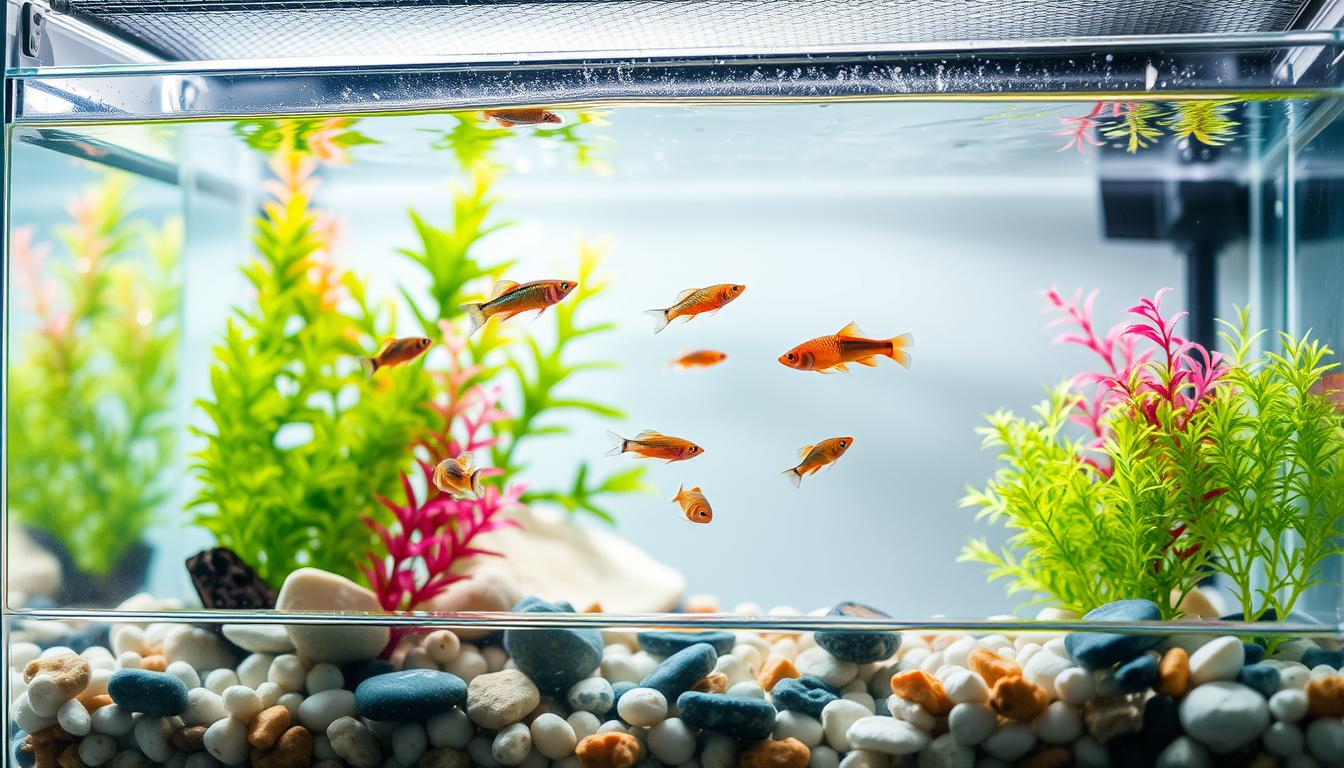
Small tanks need extra care. In nano systems (10–30 gallons or less), some fish can jump out and not survive. So, keeping your tank safe is very important.
Marine hobbyists say Firefish, many gobies, and some blennies are big jumpers in reef and nano-marine tanks. In freshwater, guppies and Endler’s livebearers also jump a lot. Experts suggest using secure lids for these fish.
This article will guide you on how to spot jumping fish, check your tank, and keep your fish safe. You’ll learn about lids, surface covers, and other ways to prevent escapes. Plus, you’ll get tips on monitoring and safety practices to protect your fish.
Keep reading to find out which fish might jump, how to fix your tank, and simple ways to keep your fish safe. These tips will help you prevent jumping fish and keep your tank secure.
Understanding the Behavior of Jumping Fish
Learning why fish jump can help you avoid surprises. Many fish jump when they’re startled by sudden noises or movements. Firefish and dartfish, for example, have a natural flight response. They might jump out of their tank when they’re scared.
Small fish like guppies and Endlers often swim near the surface. Changes in their water or sudden movements can stress them out. This stress makes them more likely to jump out of the water.
Nano tanks have less space, which can lead to more jumping. With less room, fish may jump more often. This is because they have nowhere to hide and are more likely to be startled.
The behavior of fish also depends on their temperament and social needs. Some fish are more territorial or stressed, which makes them more likely to jump. Choosing the right fish for your tank and keeping it peaceful can help prevent jumping.
To prevent fish from jumping, focus on prevention. Reduce noise and vibrations around your tank. Make sure your fish have places to hide and avoid sudden changes in their environment. Small, consistent actions can help keep your tank peaceful and prevent fish from jumping out.
Popular Nano Fish That Are Known Jumpers
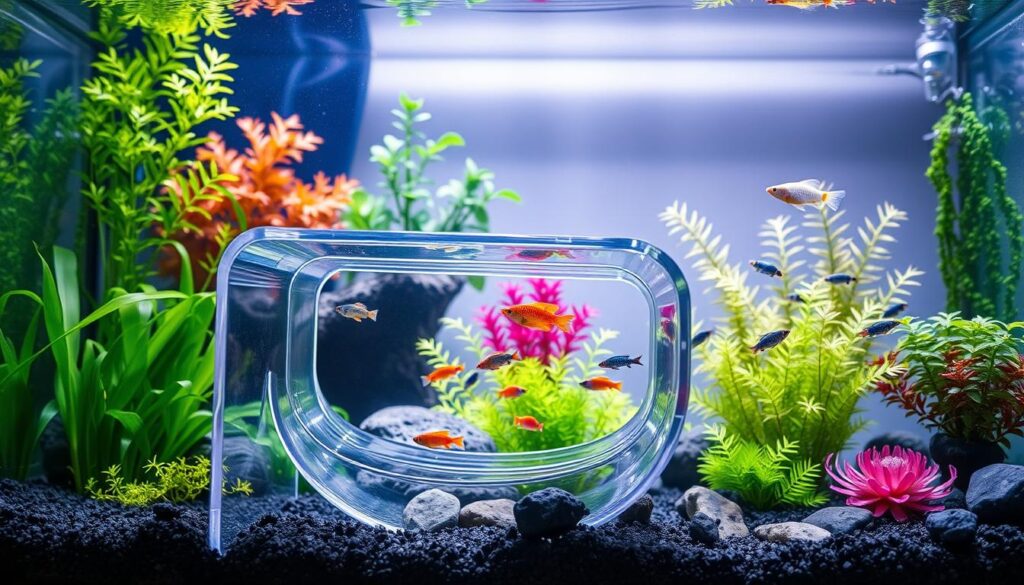
Several nano species are known to jump a lot. Firefish (Nemateleotris magnifica) is a favorite among marine hobbyists. They dart quickly and might jump if scared. A tight-fitting lid and rockwork with hideouts can help prevent this.
Clown gobies (Gobiodon spp.) and other small gobies often sit near the surface. Some jump when startled. Choosing species that stay low and adding cover can help in a nano reef.
The tailspot blenny (Ecsenius stigmatura) is active among rocks. It grazes and hops while eating. Without algae or grazing food, it might jump. Matching diet and habitat can reduce this.
Ocellaris clownfish (Amphiprion ocellaris) is hardy but territorial. In small tanks, stress and aggression can lead to jumping. Choosing the right tankmates and avoiding overstocking can help.
In freshwater, guppies (Poecilia reticulata), Endlers (Poecilia wingei), and longfin white cloud minnows are known jumpers. They are active and need secure lids. Simple covers and floating plants can help.
- Think about how invertebrates and larger fish affect small species. Stress from tankmates can trigger jumps.
- Check out Flip Aquatics and nano reef guides for info on beginner-friendly jumpers like Endlers, guppies, firefish, and gobies.
- Research adult size and temperament before buying. Species under ~3 inches are good for nano tanks, but small size doesn’t mean no jumping.
When picking fish, consider their temperament and jump tendency. The right species, secure lids, and a good habitat are key to stopping fish from jumping in your tank.
How to Identify a Jumping Nano Fish
Watch for frequent visits to the surface. If a fish spends more time at the top, it may be testing the air or searching for gaps. These visits often precede actual jumps and help you start controlling fish jumps before an escape occurs.
Look for sudden bursts toward the glass or surface. Quick darts, such as during feeding or when lights change, signal skittishness. Such bursts often match the early stages of attempts to leap, so they are key to timely fish jumping prevention methods.
Note persistent stress signs. Rapid gill movement, clamped fins, faded color, or loss of appetite all point to poor conditions. Stress raises the chance a fish will try to flee, making it essential to act fast to prevent fish leaping out of water.
Check how fish react to routine disturbances. If they bolt at minimal noise or a hand near the tank, you face a higher risk of escape. Skittish species like guppies and Endlers often show this behavior and need closer monitoring.
Inspect tank structure and stocking choices. Overcrowding, aggressive tankmates, and fish that will outgrow your nano tank increase jumping attempts. Vet adult size and social needs before purchase to reduce risks and improve controlling fish jumps.
- High activity near the surface raises warning levels.
- Absence of hiding spots makes bolting more likely.
- Ammonia or nitrite spikes push fish toward the surface.
Run quick diagnostic checks when you spot warning signs. Observe behavior at feeding time, after lights switch on or off, and during maintenance. Test pH, temperature, ammonia, nitrite, and nitrate, and compare values to species-specific ranges such as those listed by Flip Aquatics for guppies and white clouds.
Use clear action thresholds. If you see repeated surface-breathing, frequent thrashing, or clear attempts to leap, cover the tank temporarily and test water chemistry. These steps combine observation with practical fish jumping prevention methods to keep your stock safe.
Apply small upgrades to reduce risk. Add floating plants, provide crevices, and correct stocking mistakes. Simple changes help in controlling fish jumps and serve as frontline measures to prevent fish leaping out of water.
Tank Setup: A Barrier Against Jumping
Begin with a secure top. A glass or acrylic lid with special cutouts for filters is a good start. It keeps fish in and air out. Make sure it fits tightly to prevent fish from jumping out.
Mesh and perforated covers are good for air flow. Use stainless steel or nylon mesh with small holes to stop small fish from jumping. These are great for keeping fish in while letting air circulate.
- Commercial aquarium hoods are easy to use for feeding and maintenance. Choose one that fits your tank.
- DIY covers can also work. Egg crate light diffusers cut to fit are a cheap and effective solution.
- For small tanks, choose lids with few openings to keep fish like Firefish safe.
Keep cords and tubing tight with sealed grommets or precision cuts. This stops fish from finding ways to escape. Heaters, filters, and powerheads should fit through these tight spots.
Plan your rockwork and aquascape to prevent fish from escaping. Avoid wide channels that lead to the surface. Use stable structures and avoid unstable ones that could cause fish to jump.
- Place low-profile decorations near the surface to block fish paths.
- Check lids and covers for movement. A wobbly lid can be an escape route.
- Regularly check seals and mesh tension as part of your tank care routine.
Choose the right setup for your fish. For guppies and Endlers, a lightweight hood with feeding access is good. For saltwater nano species that jump a lot, use rigid tops with small holes. These strategies help keep your tank safe and reduce stress for your fish.
Water Conditions and Their Role
Poor water quality can make fish restless and more likely to jump. Issues like ammonia or nitrite spikes, high nitrate, wrong pH, or sudden temperature changes stress them. This stress leads to more jumping, making water care essential for preventing this behavior.
Before adding fish, check the water conditions they need. For example, guppies and Endlers prefer 72–80°F with pH 6.5–7.8. White clouds like 70–74°F and a slightly different pH. Marine fish, like firefish, gobies, and blennies, need stable salinity and reef-appropriate temperatures. Knowing these needs helps prevent fish from jumping out of water.
Regularly test your tank for ammonia, nitrite, nitrate, pH, temperature, and specific gravity for marine setups. Cycle new tanks and do routine water changes. Avoid sudden changes in temperature or salinity, as they can cause fish to jump and harm them.
- Follow “less is more” stocking in nano tanks to control bioload.
- Avoid overfeeding; excess food raises ammonia and stresses fish.
- Add fish slowly so beneficial bacteria can establish and keep parameters stable.
If you see fish jumping due to stress, act fast. Test the water, do a partial water change, check filtration and aeration, and cover the tank to prevent escapes. These steps are practical ways to prevent fish jumping and help your fish stay healthy.
Aquascaping Strategies to Prevent Jumping
Design your layout so fish feel secure. Build stable rockwork with caves and crevices for species like firefish and gobies. Use ceramic caves or live rock in marine nano reefs to create safe spots.
In freshwater nano tanks, plant densely with hornwort and anacharis. Add driftwood for cover. Flip Aquatics suggests these plants for shelter and better water quality, aiding in long-term fish containment.
- Create distinct zones to reduce territorial clashes.
- Place mid-water décor to break sightlines that trigger flight responses.
- Use floating plants to calm surface-skimming species.
Avoid long, open surface corridors where fish can gain speed. Arrange rockwork and plants to interrupt straight paths from substrate to surface. This slows fish down, making jumping prevention more effective.
Provide proper grazing areas for tailspot blennies and algae grazers. Offer algal surfaces and refugia for mandarins and other specialists. This way, they find food without roaming, helping to stop fish from jumping.
Add visual barriers like background plants or mid-water obstructions. These barriers clarify territory lines and calm anxious fish. They strengthen overall fish containment strategies in your tank.
Using Equipment to Minimize Risks
Choose a filter that fits your tank’s size. A filter that’s too strong can stir up the water and scare your fish. Sponge filters are great for small tanks because they move water gently.
Get a heater with a thermostat to keep the water at a steady temperature. This helps prevent sudden changes that stress your fish. Keeping the water temperature stable is a simple way to keep your fish calm.
Make sure your tank has enough oxygen without strong currents. Adjustable pumps or wavemakers on low can help. This is a good way to keep your fish from jumping out.
- Use secure hoods with tight latches and dedicated feeding ports that do not leave wide openings.
- Consider egg crate covers or purpose-made mesh screen lids to block escape routes while allowing light and gas exchange.
- Install silicone grommets for cables and tubing to eliminate gaps where fish might slip through.
- Clip-on feeding ports with small flaps cut down on fallback openings compared with loose lids.
Have a backup plan for your tank. A spare air pump or a battery-powered aerator keeps oxygen flowing when you’re not around. Small surface skimmers also help with gas exchange without startling your fish.
Choose equipment that’s right for your tank. For marine tanks, use reef-safe gear. For freshwater tanks with lots of plants, pick low-flow filters and full-spectrum lighting.
Use a combination of smart equipment choices and regular checks to keep your tank safe. This approach offers multiple ways to prevent fish from jumping out and keeps your fish safe.
Monitoring Your Fish for Unusual Behavior
Keep an eye on your fish during feeding times and when the lights change. Also, watch them closely after you’ve done maintenance. These moments can show you if something is wrong and help you stop fish jumps.
Start a simple log to track your fish’s behavior. Write down any odd incidents, water tests, and changes in how they act. Even small notes can help you see patterns that mean you need to act fast.
Know the signs of trouble. Look for fish swimming near the surface, hiding, breathing fast, losing color, clamping their fins, or trying to get out. These signs mean they might jump more.
If you see these signs, act fast. Check the water right away and change it if it’s not right. Also, make sure the tank cover is secure to keep your fish safe while you figure out what’s wrong.
If one fish is being too aggressive, put it in a separate tank. This keeps the other fish safe and stops them from jumping out of the main tank.
Regularly check your tank’s equipment. Make sure the lid, filters, heaters, and cords are all in place. Also, seal any holes and make sure decorations are stable to avoid startling your fish into jumping.
Use online resources for tips on your fish’s behavior. Guides and other fish keepers can offer advice on how to prevent fish jumps and keep your fish safe.
Best Practices for Fish Safety
Follow this checklist to keep your nano tank safe and prevent fish escapes. Start with a small number of fish. Research the size and behavior of each species before buying. Add fish slowly to let the tank adjust.
Secure the top with a tight lid or mesh cover. Make sure there are no big gaps. This is a simple way to stop fish from jumping out.
- Keep the water quality stable by testing and changing it regularly.
- Avoid sudden changes in water conditions when adding new fish or chemicals.
- Use a basic test kit and test the water regularly.
Provide hiding spots and clear areas for fish to claim as their own. Use caves, dense plants, or rocks to reduce stress and fights. A well-organized tank helps prevent fish from jumping and keeps them healthy.
Feed your fish the right food for their needs. Offer a variety of foods, like mysis for mandarins or algae wafers for blennies. Proper feeding helps prevent hunger-driven escapes and keeps your fish healthy.
Have a plan for emergencies. Keep spare lids, a backup air pump, and a quarantine tank ready. Knowing how to do quick water changes can save your fish if they jump or if equipment fails.
- Stock your tank slowly to avoid stressing the biofilter.
- Watch your fish closely for any signs of stress.
- Deal with stressors quickly to prevent fish jumping.
Use advice from nano reef and freshwater hobbyists like Reef2Reef and Practical Fishkeeping. They offer tested methods for stocking, feeding, and setting up your tank. These tips will help you keep your fish safe and your tank healthy.
Final Thoughts on Keeping Your Fish Safe
You now have a clear checklist for keeping fish from jumping. Look out for species like firefish and certain gobies that tend to jump. Make sure your tank is covered well and think about adding decorations that provide hiding spots.
Stable water conditions and gentle flow are key. Also, having reliable heating and filtration systems is important. These steps help prevent fish from jumping out of their tanks.
Start by checking your tank’s lids and covers. Make sure the water parameters are stable and the fish are not overcrowded. Add more hiding spots to reduce stress on your fish.
Keep an emergency kit ready with a spare lid, test kits, and a quarantine tank. This way, you can quickly respond if a fish jumps or gets sick.
Stay updated with the latest from trusted sources on marine and freshwater nano care. Use their advice on water parameters and fish species. Regularly check on your fish and keep your tank clean. This way, you can prevent fish from jumping and keep your aquarium safe and healthy.
Leave a Reply