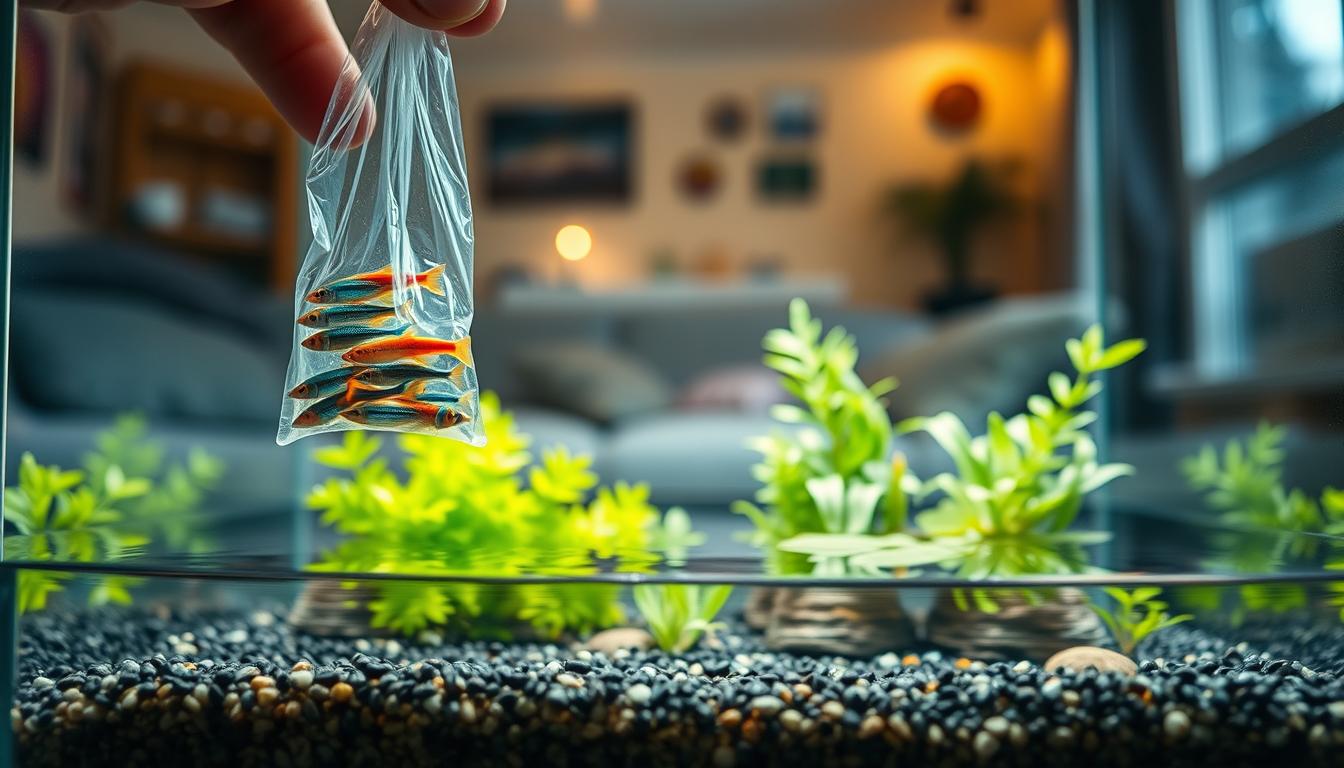
When you add new fish to your nano tank, it’s important to do it carefully. Fish and invertebrates come from bags with different water conditions than your tank. This can stress them out or even be deadly.
This guide will show you safe ways to introduce new fish. You’ll learn about the drip method and why it’s good to quarantine them first. Quarantine them in a separate tank for about two weeks. This lets you check for any health issues before adding them to your main tank.
Follow the steps used by big retailers and hobby experts. Slowly match the water temperature, and make sure the chemistry is the same. Don’t move the fish too fast. After moving them, turn off the tank lights for at least four hours. This helps them adjust and reduces stress.
Learning how to add new fish to your tank is worth it. By following these steps, you can keep your small tank community healthy and happy.
Understanding the Nano Tank Environment
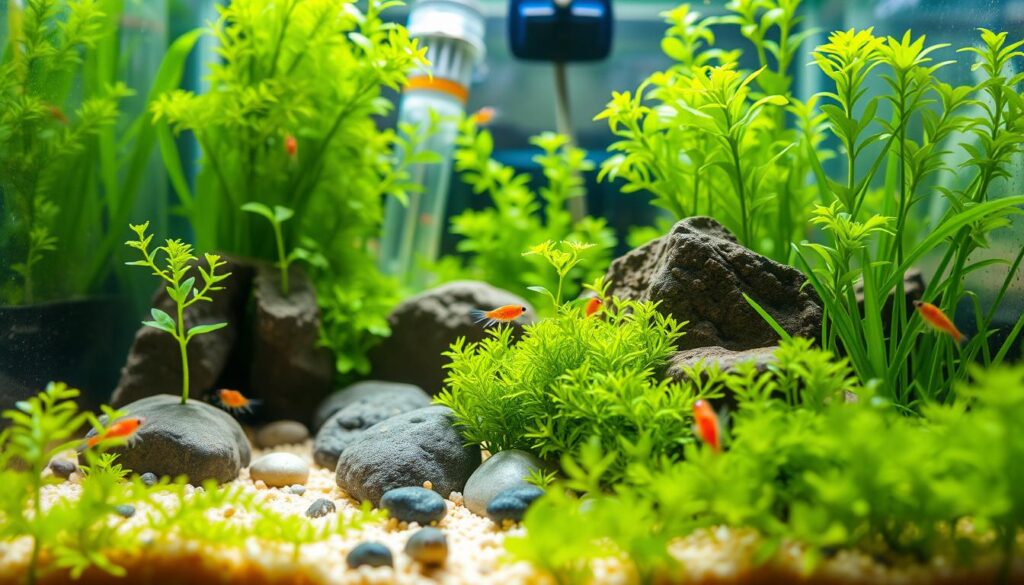
Your nano tank is different from big ones because it’s smaller. Small changes can make a big difference. Keeping the water’s temperature, pH, and chemistry stable is key when adding new fish.
Invertebrates and some fish are more sensitive to changes. Marine snails, shrimp, and plants need specific conditions. They can’t handle big changes like bigger tanks do.
Before adding new fish, test the water with a good kit. Check for ammonia, nitrite, nitrate, pH, and temperature. If you have saltwater, use a refractometer or hydrometer to check specific gravity.
Make sure your tank is fully cycled. A cycled tank has good bacteria that break down fish waste. Without it, adding new fish can stress them and harm the tank.
Choosing the right fish is important for your nano tank. Don’t overcrowd or add aggressive fish. Pick small, peaceful species and introduce them slowly.
- Keep parameter checks frequent during the first two weeks after introducing fish tank mates.
- Limit new additions to one or two small fish at a time to let biological filtration adjust.
- Monitor behavior and appetite as key signs that acclimation is proceeding well.
By following these tips, your nano tank will be a healthy home for your fish. Use careful testing, slow introductions, and the best care tips to keep your tank balanced.
The Drip Method Explained
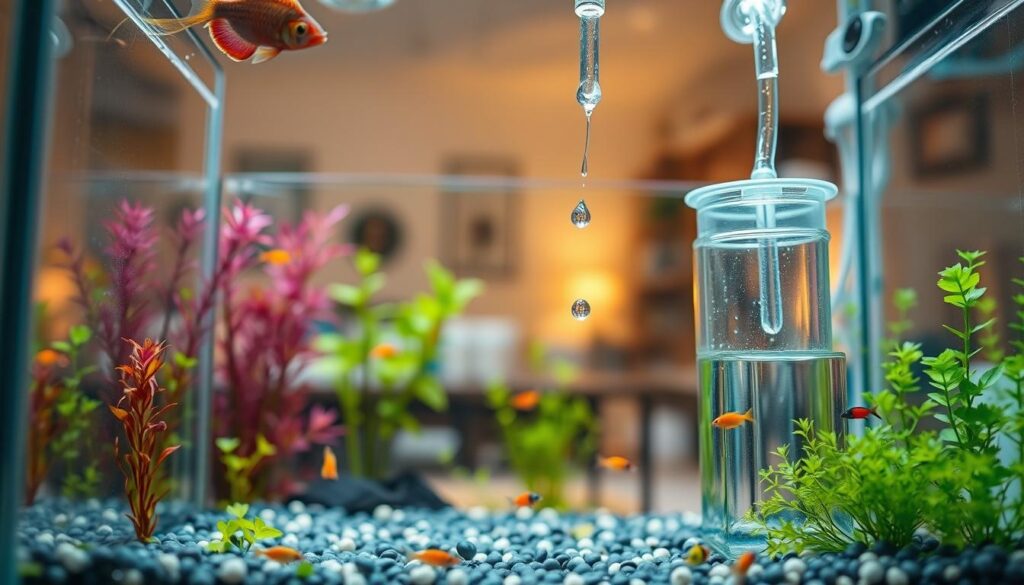
The drip method is a slow way to add water from your tank to a new container. It helps match the temperature, pH, and salt levels. This makes it easier for new fish or invertebrates to adjust.
Use this method for sensitive species like shrimp, corals, or certain fish. It’s key when the water from shipping is different from your tank’s. It helps avoid shocking them with sudden changes.
Before starting, get the right tools. You’ll need a clean 3–5 gallon bucket, airline tubing, and a way to control the flow. You might also want drip chambers or kits from places like Doctors Foster and Smith.
Set up the siphon to drip slowly into the container. Aim for a rate that doubles the bucket’s volume in one to two hours. Watch the flow and adjust as needed during the acclimation.
- Use one bucket only for aquarium work to avoid contamination.
- Have separate airline tubing for each bucket to prevent contamination.
- Keep acclimation kits ready for small or uncertain animals.
Watching the process is important. The drip method is more complex than quick dips. You need to keep an eye on the flow and how the animals react. Stop if you see signs of stress like gasping or color loss.
Experts and guides recommend this method for safe fish introduction. By following these steps, you can make adding new fish safer for your tank’s sensitive creatures.
Preparing Your Aquarium for New Fish
Begin by dimming or turning off the aquarium lights before bringing home new fish. Keep the lights off for at least four hours after adding them. This low light helps fish settle and prevents aggressive behavior that can harm new arrivals.
Next, check and stabilize your tank’s parameters. Make sure ammonia and nitrite levels are zero. Keep nitrates low. Also, confirm pH and temperature levels are steady and suitable for the fish you have or plan to add.
If you have room, set up a quarantine tank. This tank is for new fish for about two weeks. It helps you watch for disease and see if they eat. Quarantining also protects your existing fish and gives you time to treat any illnesses before adding them to the main tank.
Get your acclimation supplies ready. You’ll need clean buckets, airline tubing, and a control valve or other flow-control materials for a drip. Have a net or specimen bag ready. Also, keep dechlorinator on hand if you use tap water. Make sure your test kits are fresh and you know the current readings.
- Never add shipping water directly into your display tank.
- Discard shipping water after acclimation to prevent contamination.
- Avoid touching fleshy parts of corals or delicate invertebrates while handling.
Plan a simple handling protocol and share it with anyone helping. Use the drip or float-acclimation method that fits your setup. Label buckets and keep tools clean to avoid cross-contamination. Clear procedures help you follow best practices for introducing fish and reduce mistakes.
When you’re ready to add new fish, review the steps carefully. Move slowly, keep movements calm, and watch behavior closely in the first hours. Proper preparation and careful handling are key to a smooth transition for your new fish.
Selecting the Right Fish for Your Nano Tank
When picking fish for a nano tank, choose species that fit the tank’s size and filter power. Small tanks work best with fish under two inches. They should also handle modest water flow well. Stay away from big or very territorial fish that will outgrow the space.
Think about the fish’s temperament and how well they get along before adding tank mates. Pick peaceful fish to avoid chasing and stress. If you want to mix different species, learn about their behaviors first. This way, you can prevent fights.
Here are some good choices for nano tanks:
- Freshwater: small tetras like neon or ember, rasboras such as chili or harlequin, and one male betta when planned carefully.
- Dwarf options: small gobies, pygmy corydoras, and dwarf shrimp like Caridina and Neocaridina with the right snails.
- Marine nanos: cleaner shrimps, small gobies, and hardy blennies that fit the tank’s salt level and flow.
Make sure there are hiding spots and a buddy system for easier introductions. Add caves, plants, or live rock for fish to hide. These spots help reduce aggression and stress.
Be ready to separate aggressive fish quickly. Keep a floating basket or divider ready to separate bullies for a few hours. This helps when tensions rise.
Follow good care tips for new fish in the first days. Quarantine them when you can, acclimate them slowly, and check water often. Small, frequent checks help them adjust better.
Match tankmates based on diet, activity level, and water needs. Pair species with similar needs to avoid competition and bad matches. Choosing the right fish makes adding tank mates easier and keeps your tank healthy.
The Benefits of the Drip Method
The drip method slowly changes temperature, pH, and salinity. This slow change reduces shock when adding new fish or invertebrates to your tank.
By following this guide, your fish and invertebrates will live longer and healthier. They will get used to their new home faster. This means less sickness and quicker feeding.
This method is perfect for sensitive creatures like shrimp and corals. It’s a safe way to introduce them to your tank.
It’s a controlled way to mix water. You start with a bucket of tank water, then add more. This process takes about an hour. It helps avoid sudden changes when adding new fish.
Don’t add the water from shipping directly to your tank. The drip method helps mix it in slowly. This way, you can get rid of harmful chemicals from the shipping water.
- Gradual equalization protects sensitive animals.
- Lower stress leads to better feeding and immunity.
- Measured dilution reduces contaminants from shipping water.
- Recommended as a core practice in any fish introduction guide.
Use the drip method with consistent tubing and a slow drip rate. This careful pace is key to the drip method’s benefits for your nano tank.
Step-By-Step Guide to the Drip Method
Adding new fish to your tank should be calm and safe. First, get your supplies ready: a clean bucket, airline tubing, a control valve or plan for knots, a net, test kits, and dim the room lights. Turn off the aquarium light to reduce stress.
-
Temperature match: keep the sealed shipping bag afloat in your aquarium for about 15 minutes. Do not open the bag. Let temperatures equalize before proceeding.
-
Transfer to bucket: open the bag and gently pour its contents, water included, into the designated bucket. Keep animals submerged. Tilt the bucket if needed to keep specimens fully underwater.
-
Start siphon: attach airline tubing between the aquarium and bucket. Begin the siphon by pump or mouth. Adjust flow to roughly 2–4 drips per second using a control valve or knots. This is a core part of the drip acclimation steps.
-
Dilution routine: let the drip run until the bucket’s volume doubles. Discard half the bucket water. Restart the drip and let the volume double again. This staged dilution is central to the fish acclimation process and usually takes about one hour.
-
Transfer specimens: use a net or scoop to move fish into the aquarium. For sponges, clams, and gorgonias, never expose them to air. Submerge the shipping bag, remove the specimen underwater, then seal and discard the bag underwater.
-
Final checks: do not add shipping water to your tank. Monitor new arrivals closely and keep lights off for at least four hours. For marine invertebrates test specific gravity with a hydrometer or refractometer.
The full drip method timeline commonly runs about one hour, though shrimp may need longer time. Watch behavior during each stage so you can adjust pace. These practical steps protect animals and give you a steady, reliable acclimation routine.
Monitoring Fish Behavior After Introduction
Watch closely for signs of stress in new fish. Look for rapid breathing, erratic movements, loss of color, or gasping at the surface. These signs mean the fish are stressed or the water isn’t right.
If the resident fish start chasing the new one, use a floating basket or a perforated plastic grid. This reduces the tank’s width and gives the new fish space. It’s a key part of any fish introduction guide.
- Keep lights off for at least four hours to reduce stress, then bring lighting back slowly while you continue monitoring fish behavior.
- Offer food and note whether the new fish accepts it within a few days; refusal to eat can signal stress or illness.
- Check for disease signs—white spots, frayed fins, or lesions—during quarantine and the first week in the display tank.
Follow new fish care tips like short, frequent checks. Quick visual inspections cause less disruption. They help you spot subtle changes in activity or appetite.
- Observe breathing rate and responsiveness twice daily for the first week.
- Note any harassment and apply temporary barriers if chasing continues.
- Record feeding responses and physical signs to spot patterns early.
This period is key to your fish introduction guide. Careful monitoring and following new fish care tips help the newcomer settle. It also lowers the risk of problems in your nano tank.
Common Mistakes to Avoid
You want your new fish to thrive. Start by respecting the fish acclimation process. Rushing acclimation can stress and kill your fish. Take your time with the drip method and follow best practices for introducing fish.
Don’t add shipping water to your aquarium. Pouring bag water into the display can introduce contaminants and sudden changes. After acclimation, dispose of shipping water and only add the fish once they have adjusted.
Never add an airstone or oxygen source to the shipping bag. Oxygenation can raise pH and increase toxic ammonia exposure. Let the bag sit in the tank and equalize by slow drip instead of oxygenating the shipment.
Sensitive invertebrates need handling under water. Sponges, clams, and many corals can be damaged by brief air exposure. Keep them submerged during transfer and follow specific steps in the fish acclimation process for these species.
- Skip quarantine at your peril. Quarantine reduces the risk of introducing disease or parasites to your main tank.
- Test parameters before and after introduction. Ignoring salinity for marine invertebrates or failing to check ammonia and nitrite invites avoidable losses.
- Introduce a single species at a time when possible. Mixing many new arrivals raises stress and makes diagnosis harder if problems appear.
When you plan how to add new fish to aquarium, write a checklist. Include quarantine steps, target specific gravity (1.023–1.025 for many marine invertebrates), and monitor ammonia and nitrite for several days. Following these best practices for introducing fish will lower mortality and improve long-term health.
Use this outline of common mistakes to avoid as a quick reference. Slow acclimation, no shipping water, careful handling of invertebrates, quarantine, and thorough testing form the core of a safe fish acclimation process and a smoother way to add new fish to aquarium.
Long-Term Care for New Fish
After your fish get used to their new home, keep watching them for two weeks. This lets you catch any hidden sicknesses early. It also shows if they’re eating well before they meet other fish.
Make a regular feeding schedule with the right food for your fish. Pay attention if a fish doesn’t want to eat at first. These steps help your fish feel less stressed and grow strong.
Check the water often for ammonia, nitrite, nitrate, pH, temperature, and specific gravity in saltwater tanks. Do partial water changes to keep everything safe. Keeping the water stable is key for your fish’s long-term health.
Deal with any aggression or territory problems right away. Change the tank’s layout or add places for fish to hide. Use dividers or separate areas for fish that bully others.
- Avoid overstocking; match your tank’s biological load to filtration capacity and volume.
- Monitor invertebrates closely; many are more sensitive and need steady salinity and water quality.
- Record parameters and behavior; regular notes help you detect subtle shifts early.
When introducing new fish, do it slowly. This helps the filter and lowers the chance of disease.
Remember, caring for your fish is an ongoing process. Regular upkeep, watching your fish closely, and following these tips will keep your tank healthy and happy.
Creating a Community Tank
Start by planning the compatibility and stocking of your tank. Choose species that match in temperament, size, and water needs. This keeps your nano tank balanced.
Introduce fish mates in stages to protect your tank’s balance. Add one or two fish at a time. Wait a week or more before adding more. This lets nitrifying bacteria and territory charts settle.
Make sure your tank has hiding spots. Use plants, caves, and décor to provide cover. This reduces stress and gives shy or new fish a safe place to hide.
- Acclimate every new arrival using a drip method and quarantine each specimen for observation.
- Follow a fish introduction guide: slow acclimation, visual checks, and gradual mixing help prevent disease and shock.
- Keep tools on hand for brief separation, such as floating baskets or perforated dividers, in case aggression flares.
Manage aggression proactively. Watch feeding times and social interactions. Make sure no fish is bullied or starved. Be ready to rehome overly aggressive fish if issues persist.
Monitor tank dynamics after each addition. Record behavior, appetite, and water values for several days. This helps spot stress or illness quickly.
Use these best practices for introducing fish to build a resilient community. Slow, careful steps protect your inhabitants. This way, you can enjoy a thriving, peaceful nano tank.
Conclusion: A Happy, Healthy Nano Tank
The drip method is a safe way to introduce new fish and invertebrates to your tank. It helps them adjust to the tank’s conditions slowly. This method is all about gradual changes, not rushing.
To add new fish, start by preparing your equipment. Float the shipping bags to match the tank’s temperature. Then, move the fish to a clean bucket and set up a drip system. Aim for 2–4 drops per second.
Use the double-and-discard method for about an hour. Never mix shipping water with your tank’s water. Also, keep the tank lights off for at least four hours. These steps help reduce risks and make it easier for new fish to settle in.
Be patient and watch your fish closely. If possible, quarantine new fish. Look out for signs of stress or disease. Keeping the water stable is key for long-term success.
Keep learning from trusted sources. Use tools like refractometers and hydrometers. Aquarium retailers and hobbyist videos can also help improve your routine. By following these steps, you’ll see your fish thrive in a happy, healthy nano tank.
Leave a Reply