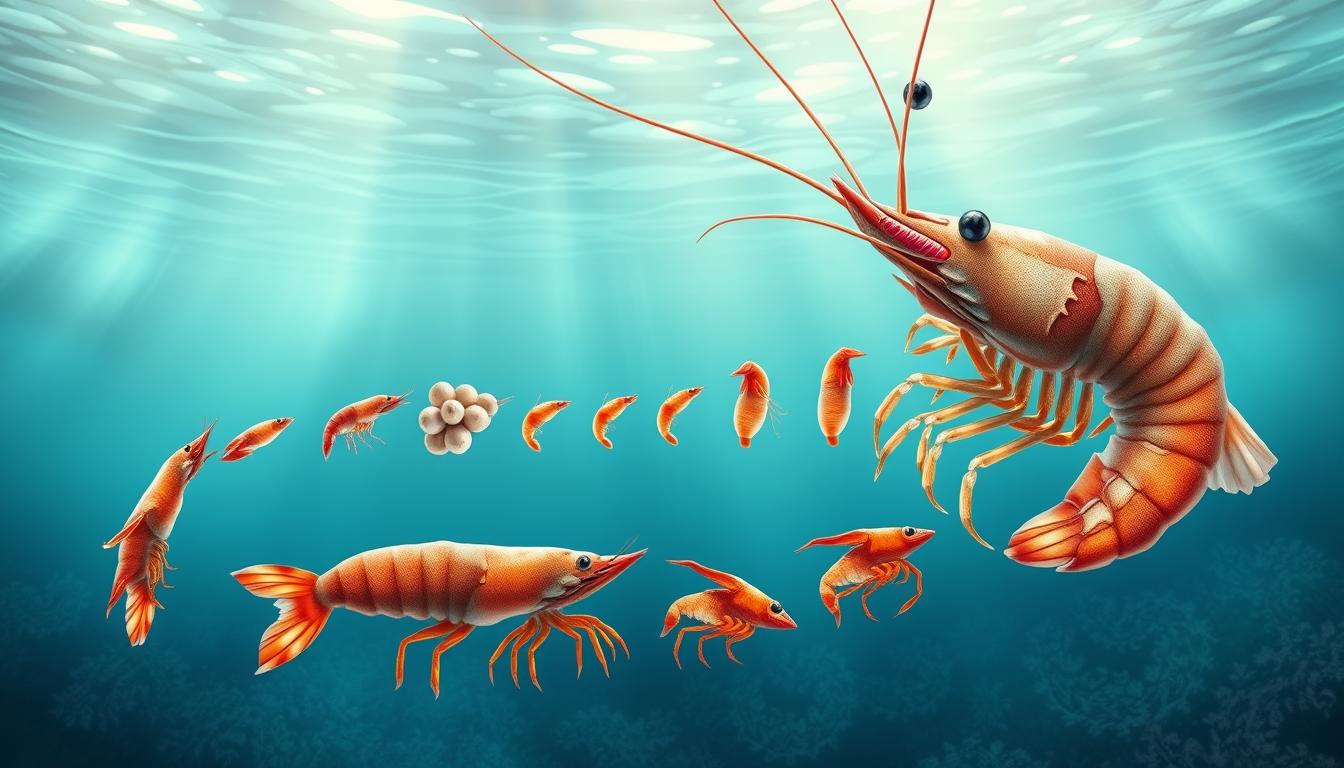
Let’s dive into the life cycle of shrimp. We’ll see how they go from berried females to free-swimming juveniles and adults. This guide makes it easy to understand the shrimp development process, helping your aquarium or conservation work.
Different shrimp species have unique paths. For example, Neocaridina, like cherry shrimp, hatch as tiny adults without a larval stage. On the other hand, Caridina species, such as Amano (Caridina multidentata), have larvae that need brackish or marine water before returning to freshwater. Knowing these differences helps in breeding and setting up tanks.
This article covers key shrimp lifecycle facts and growth stages. You’ll learn about mating, egg incubation, larval phases, the mysis stage, postlarval metamorphosis, juvenile growth, molting cycles, sexual maturity, and lifespan. Understanding these stages boosts breeding success, aids in aquaculture, and informs habitat protection.
As you read, remember how shrimp growth stages and development impact water chemistry, food needs, and tank design. This knowledge helps in raising healthy shrimp populations and supports conservation efforts in the United States and worldwide.
Introduction to the Shrimp Life Cycle
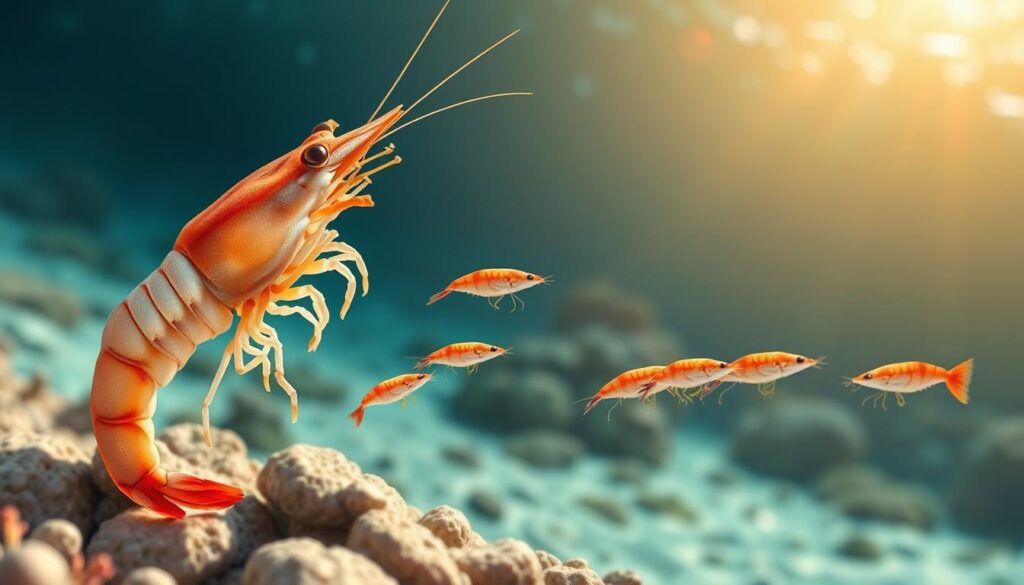
Learning about the shrimp life cycle is key for a home aquarium or small breeding setup. It starts when a female shrimp becomes berried. This means she carries eggs under her abdomen on pleopods, or swimmerets. Watching a berried shrimp helps you know when to care for them and feed them.
Two popular species in the U.S. are Neocaridina davidi, or cherry shrimp, and Caridina multidentata, or Amano shrimp. Understanding their differences is important.
Cherry shrimp are direct developers. Their hatchlings look like tiny, 2 mm versions of adults. They don’t go through a free-swimming larval phase. Instead, they grow into juveniles in freshwater without a big change.
Amano shrimp hatch as larvae that need brackish or slightly salty water. Their development includes several larval stages and a big change, taking about 1.5 months. You need to plan for salinity changes and offer the right food during this time.
Reproduction is linked to molting. A female molts, releases pheromones, and attracts males. Mating is quick, often under 10 seconds. Fertilization is internal as eggs pass beneath the tail and attach to the pleopods.
Environmental factors affect shrimp growth and survival. Stable temperature, balanced pH, and the right hardness (GH and KH) are important. Food like biofilm, diatoms, and algae supports growth. Also, provide hiding spots to reduce stress and improve survival at each stage of the shrimp breeding cycle.
Remember shrimp lifecycle facts when setting up your tank, doing water changes, and feeding. Knowing how shrimp develop helps support their healthy growth and survival at each stage.
The Reproductive Stage of Shrimp
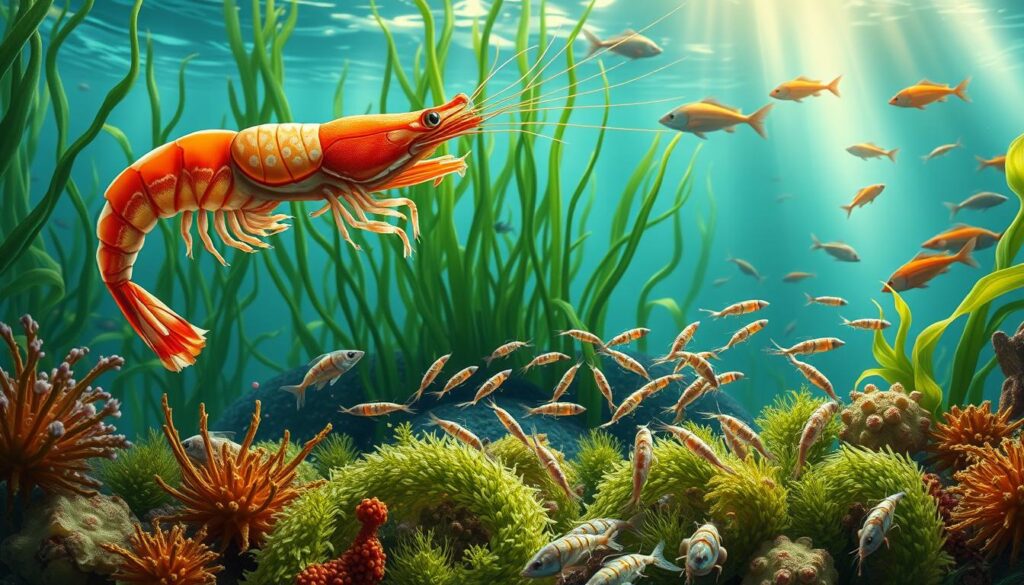
Sexes can be told by size and shape. Females are bigger and rounder. They have a pale “saddle” behind their head with undeveloped eggs. Males are smaller, more transparent, and have dots on their bodies.
Breeding times vary by species and conditions. Sexual maturity comes at different ages. For example, Caridina multidentata (Amano) reach it in four to five months. Neocaridina species like cherry shrimp take two-and-a-half to six months, depending on temperature.
Stable water, steady food, and proper minerals help the breeding cycle. They encourage natural behavior.
The mating sequence is predictable. After a female molts, her shell is soft and she’s ready. She hides and releases pheromones into the water. Males find the scent, swarm, and mate quickly.
Males deposit sperm as the eggs move from the ovaries to the outside. This fertilizes them.
When eggs are fertilized, the female becomes berried. She carries the eggs on her swimmerets and cares for them. You’ll see her fan and clean the clutch to keep oxygen flowing and prevent fungus.
- Keep mineral levels steady to support molting and egg formation.
- Do not cull too many males; a balanced ratio improves mating success.
- Provide hiding places so receptive females can spawn without stress.
Practical care in water chemistry and diet makes a big difference. By managing these, you boost the chances of healthy offspring. This keeps your colony productive.
Egg Development and Hatching
Egg incubation times vary by species and temperature. Cherry shrimp eggs hatch in 15–35 days, usually in 2–3 weeks with warm water. Amano shrimp eggs stay on the female for 3–5 weeks before hatching.
Eggs are very small, about 1 mm. Cherry shrimp eggs might look yellow or green. As hatching approaches, you’ll see black dots inside. These are the shrimp’s developing eyes.
The female shrimp plays a key role in incubation. She fans and cleans the eggs to ensure oxygen flow. You might see her nudging or “kicking” the eggs to help the hatchlings emerge.
- If you raise species with larval stages, set up a saltwater rearing jar for Amano larvae at 30–35 PPT (specific gravity 1.022–1.026). Provide gentle aeration and dim light to promote diatom and algae growth.
- Maintain stable water chemistry: pH 6.5–8.0, temperature 70–80°F, GH 5–15, KH 1–10 to improve survival during early stages.
- For direct-developing shrimp like cherry shrimp no separate larval tank is needed. Hatchlings emerge as miniature adults and remain in the freshwater tank to hide and graze biofilm.
Knowing these shrimp lifecycle facts helps you plan tank care and timing. Watching closely during egg development can reduce losses and support healthy shrimp growth.
The Zoa Stage: First Steps in Life
Zoea are the tiny, floating start of many marine and brackish shrimp. They drift in the water, eating microalgae and diatoms. They look different from the later stages and need special care.
At this stage, zoea can’t eat baby brine shrimp. Their diet mainly includes natural diatom and algae biofilms. If your tank lacks these, a little spirulina powder can help. But use it carefully to avoid dirtying the water.
Keeping the water clean is key. Make sure the salinity, temperature, and water flow are just right. Bad conditions can harm them, so watch the water closely and change it a little when needed.
To catch zoea, use a soft light to draw them to one spot. Then, gently suck up a small amount of water to collect them. This method helps keep them safe and healthy.
- Feed: diatoms, microalgae, occasional spirulina powder
- Environment: stable salinity and temperature, low water movement
- Collection: light attraction and gentle siphoning
This early stage is very fragile. Good care, like the right food and water, and watching them closely, helps them grow. With patience, they will move on to the next stages of shrimp development.
The Mysis Stage: Transitioning to Juveniles
The Mysis stage comes after the zoea phase in some shrimp species. At this time, larvae become tougher and start to act like young shrimp. You’ll see changes in how they swim, eat, and look, showing they’re growing.
In Amano shrimp rearing, the larval period lasts about 1.5 months. During this time, mysis larvae live in saltwater and eat algae. It’s important to keep the salt level between 30–35 PPT for their growth.
Water movement should be gentle. Use a sponge filter or airstone to keep oxygen levels right and prevent fungus. Strong currents can stress and harm the tiny larvae.
- Keep the water conditions steady; avoid sudden changes in salinity or temperature.
- Do small water changes of 10–20% using drip acclimation when replacing water.
- Feed small, frequent meals to avoid overfeeding and poor water quality.
Be careful when handling mysis larvae. They are fragile and can easily get hurt. If you need to move them, use a siphon and a flashlight to guide and collect them without stirring the tank too much.
Knowing about shrimp molting stages helps you meet their needs during metamorphosis. Watch for regular molts and steady growth to track their progress. Proper care during the Mysis stage helps them grow strong and healthy as they continue to develop.
From Mysis to Postlarvae
The shift from the pelagic mysis phase to benthic postlarvae is a big change in shrimp life. Larvae change shape and behavior as they move from open water to brackish and freshwater zones. This is true for species like Amano shrimp.
Postlarvae start to look like tiny adults. They swim forward and begin hiding and grazing. This stage is easier to observe, but catching them can be hard for hobbyists.
To safely transfer postlarvae, keep them in the right salinity until they fully change. Putting them in low-salinity water too soon can be deadly. The shrimp development process relies on careful acclimation at this time.
Use a syringe or airline tubing to collect postlarvae into a cup of their native saltwater. Then, drip-acclimate them into your target water over 24–36 hours. This slow method reduces shock and boosts survival in brackish or freshwater tanks.
- Maintain salinity with a hydrometer or refractometer.
- Provide gentle aeration using air pumps and sponge filters.
- Top off with RODI or RO water to keep parameters stable.
These steps help support healthy shrimp growth and protect a fragile phase. Your careful handling during the mysis-to-postlarvae transition greatly affects juvenile survival and long-term success.
Juvenile Shrimp Growth and Survival
Your juvenile shrimp start tiny, often around 2 mm for cherry hatchlings. They have limited swimming power early on. You will see them cling to leaves, driftwood, and rock crevices while grazing the tank surface. This hiding behavior boosts survival during the fragile shrimp development process.
Feed juveniles on natural biofilm, diatoms, and microalgae that form in the aquarium. You can supplement with powdered baby shrimp food or small pieces of blanched spinach and zucchini. Avoid heavy, fast-fouling feeds that lower water quality and stress young shrimp.
Survival hinges on several simple factors. Stable water parameters and good filtration keep ammonia and nitrite near zero. Plenty of hiding spaces cut predation risks. Peaceful tankmates such as Corydoras or small rasboras reduce aggressive encounters. Rich biofilm and gentle feeding raise juvenile numbers by providing steady nutrition.
- Provide moss, fine-leaved plants, and surfaces for grazing.
- Keep temperature steady; warmer tanks speed growth but demand more frequent water checks.
- Choose low-impact foods and remove uneaten portions quickly.
Growth timing varies by species. Cherry shrimp may reach sexual maturity in about 2.5–6 months, depending on temperature and diet. Amano shrimp typically mature near 4–5 months. These timelines reflect common shrimp lifecycle facts that help you plan care and tank management.
Female fecundity changes with size. Cherry females often carry roughly 21–51 eggs per brood. Larger females tend to produce more eggs, improving your chances of a healthy cohort if conditions stay stable during the shrimp development process.
Adult Shrimp Characteristics
When shrimp grow up, you’ll see big differences. Females are usually bigger than males. For example, cherry shrimp females are about 1″ (2.5 cm) long. Males are a bit smaller, at two-thirds to three-quarters of that size.
Amano shrimp are even bigger. Females can grow to 1.5–2″ long, while males are about 1–1.5″. You can tell if a female is getting ready to lay eggs by a visible saddle under her carapace. This saddle shows they’re getting ready to reproduce.
Adult shrimp focus on reproducing and keeping the tank clean. Females carry eggs in their ovaries and show a saddle when they’re ready to lay them. They eat a variety of foods, including algae and sinking pellets.
Adult shrimp also molt regularly and like to hide when they’re soft. Amano shrimp are known for eating algae well. They can even tackle tough algae like black beard algae if the conditions are right.
- Feeding: diatoms, algae, pellets, detritus.
- Reproductive sign: saddle under carapace, berried females.
- Molt care: provide hides and stable water parameters.
Choosing the right tank is key for adult shrimp. They need well-planted tanks with plenty of hiding spots. For small groups, a 5–10 gallon tank is best to keep them stress-free and healthy.
By focusing on their habitat, diet, and water quality, you can help adult shrimp thrive. Watching them grow will help you make better choices for your shrimp colony.
Molting Process in Shrimp
Watching your shrimp grow is exciting, but their growth is not steady. They grow by shedding their hard outer shell. This process, called molting, is key to their development and happens many times in their lives.
Young shrimp molt a lot. As they get older, they molt less often. Their growth stages show this: fast molts when they’re young, and slower, bigger molts as adults.
When a shrimp molts, you’ll see its empty, clear shell. Female shrimp are soft and vulnerable right after molting. They might hide for a day or two to stay safe. Mating usually happens right after a female molts, so timing is important for breeders.
What your shrimp eat affects their molting success. They need calcium and minerals to form a strong shell. If they don’t get the right nutrients, molting can fail, leading to injury or death. Keep the water chemistry stable and feed them mineral-rich foods to help them molt well.
- Look for empty shells as molt indicators.
- Provide balanced minerals for successful molts.
- Maintain a healthy male-to-female ratio for breeding after molts.
Keep a close eye on your tank during molts. You’ll notice changes in behavior, like surface hiding or less eating. These signs show how important this time is in their life cycle.
Lifespan and Growth Rates
Expect different lifespans and growth rates for different shrimp species. Cherry shrimp usually live 1–2 years in the best conditions. Amano shrimp can live longer, with females growing up to 1.5–2 inches and males a bit smaller.
Temperature is key in shrimp growth. Warmer water makes them grow faster. For example, cherry shrimp mature in about 2.5 months at 80°F. But cooler tanks slow them down and make them stay in the juvenile phase longer.
Size at maturity also varies. Female cherry shrimp grow to about 1 inch (2.3 cm). Amano females grow bigger and may mature slower but have longer reproductive lives with proper care.
- Monitor tank temperature to manage shrimp growth stages.
- Provide steady nutrition to support healthy development.
- Keep water quality stable to maximize lifespan and breeding success.
Reproductive longevity changes with age and size. Large, older females may breed less. If you want to breed, avoid buying very large shrimp that might be nearing the end of their reproductive life.
Use shrimp lifecycle facts to set realistic expectations. Track their growth and maintain consistent care. This will help improve their survival through each stage of their life cycle.
Human Impact on Shrimp Life Cycles
Your choices affect shrimp breeding in both home tanks and the wild. Hobbyists who know their species’ needs can help populations thrive. Neocaridina shrimp breed easily in freshwater. But Amano shrimp need saltwater for their larval phase and careful acclimation to survive.
Big aquaculture and wild fishing change local ecosystems. Farming can increase supply but stress shrimp genetics and alter their development. Overfishing wild stocks lowers breeding adults, reducing larval numbers and disrupting populations.
Pollution and habitat loss add to the pressure. Bad water quality, changes in salt levels, and loss of mangroves or seagrass beds block shrimp from reproducing. Larvae are very sensitive, so damage to their habitat can stop them from growing into adults.
Take steps to protect the shrimp life cycles you care about. Keep water stable, quarantine new shrimp, and learn about their breeding cycles. For Amano, plan for saltwater larval rearing. For Neocaridina, focus on consistent temperature and clean water.
- Choose captive-bred shrimp to reduce wild collection.
- Don’t release non-native shrimp into local waters.
- Support projects to restore mangroves and seagrass.
Knowing about shrimp development helps you choose tankmates and run breeding efforts better. This knowledge leads to conservation-conscious choices and reduces harm to wild populations.
The Importance of Shrimp in Ecosystems
Healthy waterways are key for food and fun. Shrimp are quiet heroes, eating biofilm, algae, and detritus. They help nutrients cycle, benefiting plants and microbes.
Shrimp go from tiny larvae to adult grazers. Each stage has a role. Larvae feed on algae, linking small producers to big predators. Adults clean surfaces, keeping water clear.
- Food-web support: shrimp feed fish, birds, and crabs, moving energy up.
- Nutrient recycling: their eating and waste return nutrients in useful forms.
- Habitat services: burrowing and grazing keep substrate and microbes healthy.
In aquariums, Amano shrimp fight algae, keeping tanks clean. Watching their life cycle teaches about habitat and food use.
Protecting where shrimp spawn and grow is vital. It keeps their life cycle and services for fisheries and coasts alive. Supporting habitat protection helps aquatic communities thrive.
Conclusion: The Journey of Shrimp Through Their Life Cycle
You now know the basics of shrimp life cycles. They start with berried females and egg incubation. Then, they go through zoea and mysis larval stages.
Some shrimp, like Amano, go through saltwater phases. Others, like Neocaridina, grow in freshwater. Knowing these stages helps you meet their needs at each stage.
Following practical steps is key. Start by knowing what your shrimp need before you breed. Keep the water chemistry stable and provide hiding spots and food for biofilm.
Use the right tools like a hydrometer or refractometer. Also, air pumps and RODI water are important for the early stages. Watch for molting and reproductive cycles to keep your shrimp healthy.
Getting shrimp from ethical sources and respecting their habitats helps your tank. Use these tips to improve your shrimp care. This supports conservation and makes your tank more vibrant and healthy.
Leave a Reply