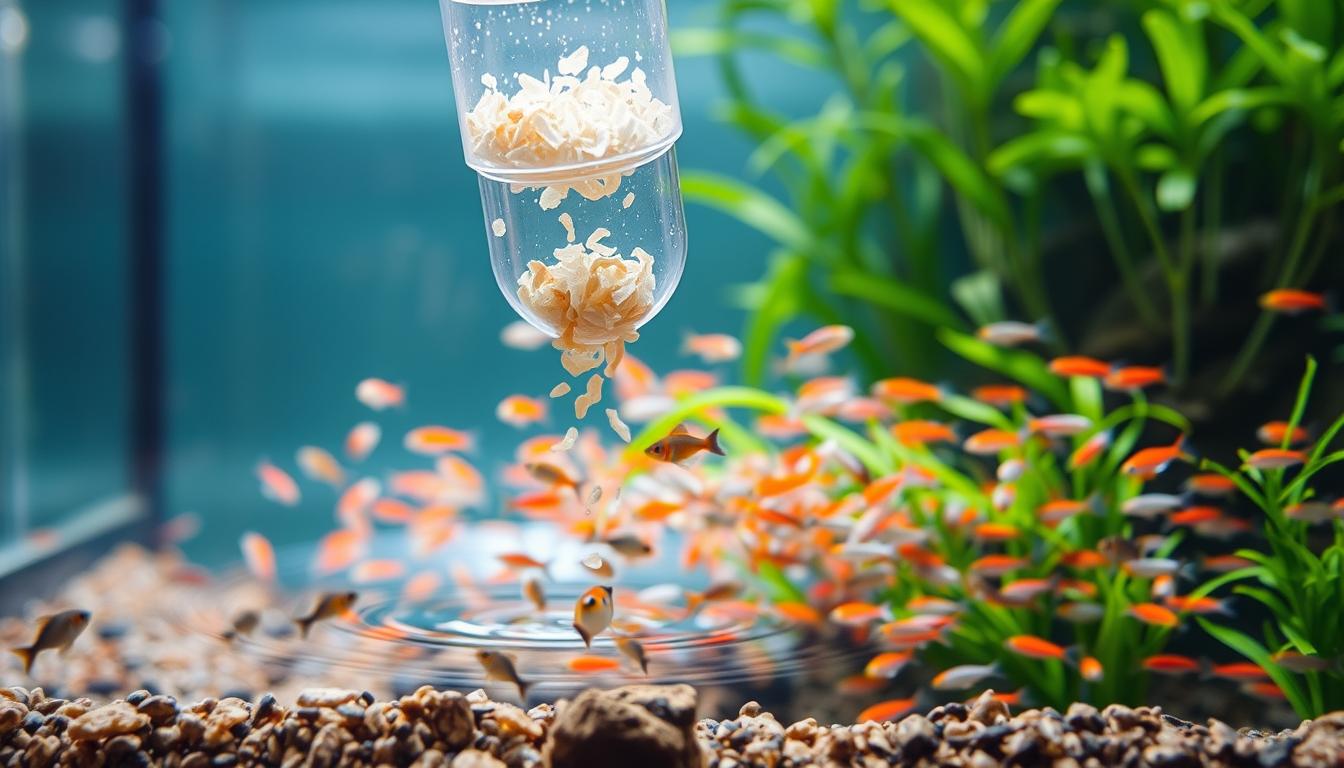
You’ll learn how to feed nano fish to keep them healthy and colorful. Nano fish are small and have tiny mouths. They can’t eat much, so feeding them right is key.
Feeding nano fish correctly is important for their growth and health. Many people feed them too much. Fish usually need food once or twice a day and should eat it all in 2–3 minutes. For nano fish, give them small amounts and quick meals to prevent bad water quality.
First, find out what your fish likes to eat. They might be herbivores, carnivores, or omnivores. Look for foods that match their mouth size and choose brands like New Life Spectrum or Hikari. This will help you pick the best food for your nano fish.
Remember, fry and breeding projects have special needs. Later, we’ll talk about feeding fry small amounts often. For now, start with small portions and watch how your fish eat. Adjust your feeding based on these tips and best practices.
Understanding Nano Fish Species
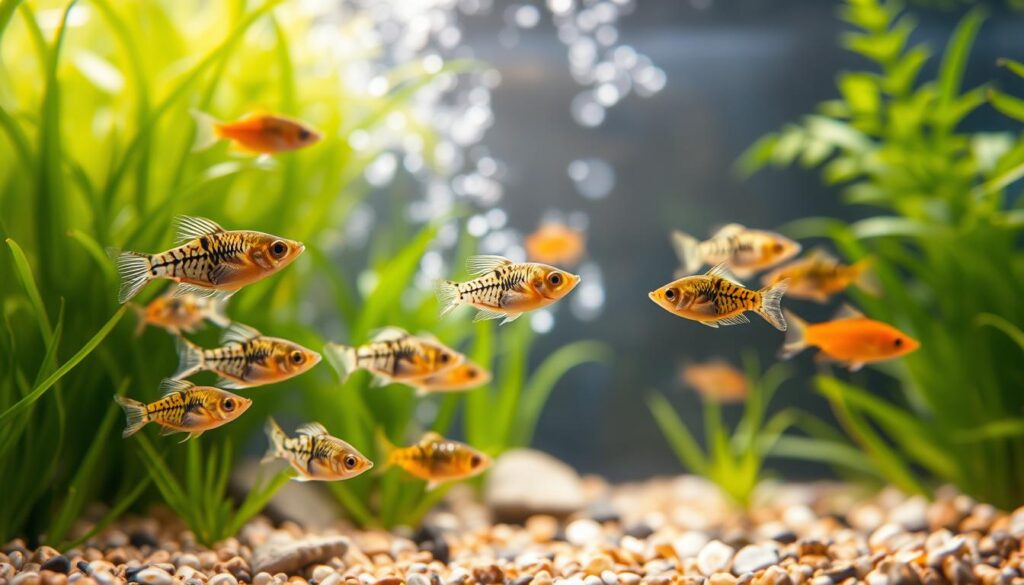
You care for species like neon tetras, ember tetras, and chili rasboras. Celestial pearl danios, pygmy gouramis, micro rasboras, and small rasboras are also part of your tank. These nano fish are small, peaceful, and love planted tanks. They have different diets, from plants to meat.
Herbivores eat plants and algae and have long intestines. Carnivores need meat and have short guts. Omnivores eat both plants and animals. Knowing this helps you feed them right.
Feeding zone is key. Surface feeders like floating flakes. Mid-water swimmers prefer small pellets or granules. Bottom dwellers eat sinking wafers or tablets. Choose food that matches their natural feeding zone to avoid waste and stress.
Protein needs vary a lot. Some nano fish need just 5 percent protein, while others need up to 70 percent. Check what your fish need before planning meals. Look at their mouth and how they forage to pick the best food.
Breeding changes feeding habits. Egg layers, mouthbrooders, and livebearers have different ways of spawning. Fry need finer, high-protein diets than adults. Prepare special foods for breeding or raising fry.
Watch your tank daily to learn feeding patterns. See where fish gather, note any competition, and track who eats biofilm. Grazing species will eat algae and biofilm but also need targeted feedings to meet their nutritional needs.
- Identify the species and their natural diet.
- Match food form to feeding zone: floating, midwater, sinking.
- Adjust protein levels for species and life stage.
- Watch behavior to refine nano fish feeding habits and portions.
Choosing the Right Fish Food
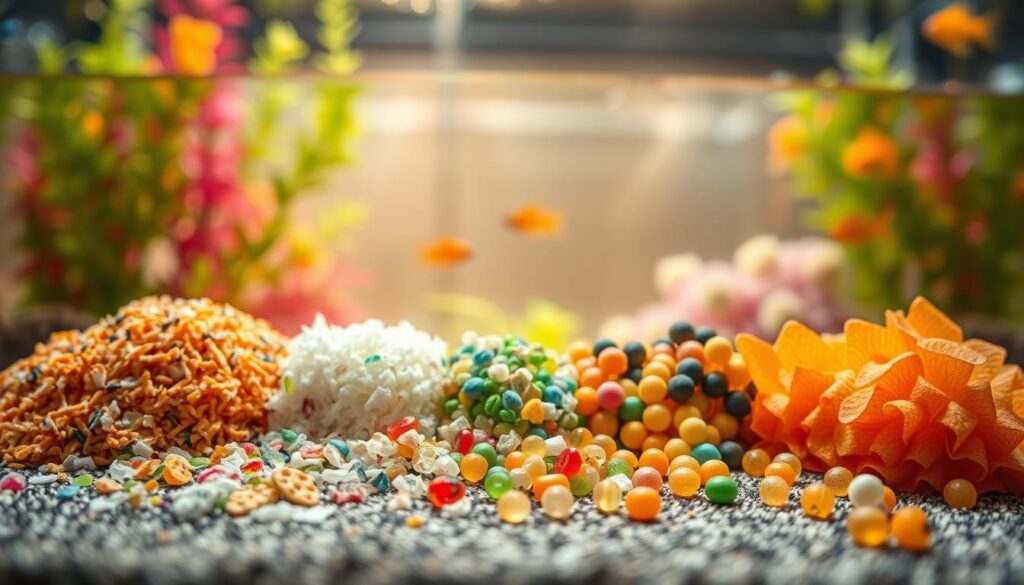
First, match the food type to where your fish eat. Flakes are good for fish that eat at the surface and mid-level. They float and then sink. Pellets, being denser, dissolve slower and make less waste, which is great for small tanks.
Choose the right size of food for your fish’s mouth. Crush big pellets or buy tiny micro-pellets for small fish. For fish that live on the bottom, sinking wafers or granules are best. These choices help create a balanced diet for nano fish and make feeding easier.
Change up the protein sources by using live, frozen, and freeze-dried foods. Live foods like daphnia and baby brine shrimp make fish hunt naturally. Frozen foods keep nutrients stable. Freeze-dried foods are good for storage but need to be soaked before feeding.
Think about the protein needs of your fish. Herbivores and many omnivores do well on foods with 5–40% protein. Carnivores need more, up to 70%. For community tanks, choose foods with about 30–40% protein.
- Use micro-pellets or crumbled flakes as default for mixed groups.
- Supplement with frozen or live foods one to three times weekly for enrichment.
- Choose reputable brands with positive hobbyist reviews to reduce risk.
For fry and grow-out stages, use special foods like infusoria and Repashy gel food. These help young fish grow fast and survive better.
Use smart feeding strategies to avoid overfeeding. Feed small amounts several times a day or one portion that they eat in a minute. Watch for waste and adjust feeding to keep water clear.
When shopping, remember to check for the right size, protein level, and trusted brand. Also, look for options for live or frozen foods. These tips will help you create a varied and healthy diet for your nano fish.
Frequency of Feeding Nano Fish
Set a clear feeding schedule for nano fish to keep your tank stable. Most adult nano species do well with one or two small feedings per day. Offer portions that your fish can finish within 2–3 minutes to avoid waste and maintain water quality.
You should watch nano fish feeding habits closely. Young or growing fish need more frequent meals, about three to five times daily. Fry and newly free-swimming young require tiny, frequent feedings and microscopic foods like infusoria or green water.
- Adult tropical nano fish: 1–2 feedings/day, portion consumed in 2–3 minutes.
- Juveniles and grow-outs: 3–5 small feedings/day to support rapid growth.
- Fry: multiple tiny meals; live baby brine shrimp encourage strong growth.
Adjust feeding based on temperature and activity. Warmer water raises metabolism, so increase feeding slightly when fish are more active. Cooler water lowers metabolism, so reduce or skip feedings when fish slow down.
Keep feeding nano fish in a planted tank gentle and measured. Plants help process light waste, but excess food can harm water quality. Feed tiny portions and remove uneaten food after a few minutes to protect plants and filter balance.
Plan for absences with care. Short trips of three to seven days often do not require feeding for healthy adults. For longer trips, use a reliable automatic feeder or pre-measured portions to prevent overfeeding while you are away.
Best Feeding Techniques
Portion control is key. Feed your nano fish only what they can eat in 2–3 minutes. Start with tiny amounts and see how fast they eat. It’s safer to underfeed than to overfeed and harm the water.
Soak hard pellets for 10 minutes before feeding. This stops them from getting too big in small fish bellies. It also helps prevent bloating in fish like bettas.
Spread food around the tank to avoid fights. Drop small amounts in different spots. This way, all fish get food, even the shy ones.
- Rotate food forms: use flakes and pellets as staples.
- Supplement 1–3 times weekly with frozen or live options such as brine shrimp or daphnia.
- Variety improves coloration and overall health.
Use tools and automation for consistent feeding. An automatic feeder is great when you’re away. But, test it first to ensure it gives the right amount. Always check manually to control the food.
Keep the tank clean by removing uneaten food quickly. Use a fine net or a turkey baster to remove debris. This keeps the water safe for your fish.
Choose the right food for your nano fish. For carnivores, pick high-protein foods. For omnivores, add veggies. Live or frozen treats are great for extra nutrition. Good food and careful feeding make feeding time good for your fish.
Preparing the Feeding Area
Make a clear spot for feeding to help your nano fish know where to eat. Choose a spot based on the fish type. Surface feeders like flakes or floating pellets near the top. Mid-water fish prefer small granules or sinking pellets a bit below the surface. Bottom dwellers need wafers or sinking pellets on the substrate.
In a planted tank, feed carefully. Live plants are great for shy fish but can trap food. Feed small amounts and watch how fast fish eat to avoid mess and algae.
Prepare food in advance. Measure out daily portions in small containers or a pillbox to avoid overfeeding. Soak larger pellets for ten minutes to make them soft and sink properly.
Use tools to control food distribution and waste. Feeding rings keep flakes in one spot for surface feeders. A turkey baster removes leftover food from plants. Use breeder nets for fry or fragile species to protect them during feeding.
- Arrange multiple feeding points for even coverage in the aquarium.
- Choose denser pellets when you want to minimize particulate waste.
- Remove uneaten food promptly and perform routine water changes as needed.
Follow these tips to keep your tank clean and your fish healthy. Consistent preparation reduces stress on fish and lowers maintenance needs when feeding nano fish in a planted tank.
Monitoring Your Nano Fish’s Health
Start a simple feeding log to track feeding times, amounts, and types of food. This log helps you see how feeding habits relate to water changes and fish health. Note any leftover food and cloudy water after feeding.
Every day, observe your fish’s bodies and behavior. Skinny, sunken-bellied, or pale fish might be underfed. On the other hand, bloated fish, heavy algae, or uneaten food after five minutes suggest overfeeding. Trailing feces or constipation signs mean you need to feed less and review your diet.
When changing diets or introducing fry, check water quality more often. Fry need strict water control, so use sponge filters and small, frequent water changes. If you’re changing water a lot, you might be feeding too much.
- Watch how fish eat: are timid fish bullied away from food? Adjust feeding times or distribution so all fish eat.
- Soak pellets before feeding to reduce expansion and lower constipation risk.
- Match portions to nano fish nutritional needs and life stage to avoid nutrient gaps or excess waste.
If digestive issues or disease signs last, get advice from local aquarium stores like Petco or vets with aquatic experience. Reputable forums like FishLore can offer community insights, but for serious issues, seek professional help.
- Daily: quick visual check of eating, color, and activity.
- Weekly: log review and compare feeding to water parameters.
- Monthly: adjust rations to reflect growth and evolving nano fish nutritional needs.
Regular nano fish health monitoring helps prevent problems and supports stable feeding habits. Small, consistent observations protect water quality and help fine-tune feeding for long-term health.
Adjusting Diets as Fish Matures
Match your feeding plan to your fish’s growth stages. Fry and juveniles need lots of protein to grow fast. Feed them small amounts 3–5 times a day with tiny foods like infusoria or vinegar eels.
When their mouths and guts grow, start with crushed flakes or Repashy gel foods. Slowly increase the size of the food as they get better at digesting it. This helps avoid digestive problems and stress.
- For juveniles: higher protein, frequent feedings, tiny particle sizes.
- For subadults: moderate protein, reduce feeding frequency, increase pellet or flake size.
- For adults: balanced commercial foods, 1–2 feedings per day for most species.
Adjust diets as fish matures, considering their species needs. Herbivores need more plants, while carnivores need more protein. Most nano fish do well with 30–40% protein, but carnivores need more.
Change your feeding schedule as your fish grows. Move from frequent feedings for fry to less for adults. Reduce food amounts as they grow to avoid obesity and water quality issues.
Watch your fish’s weight, color, and activity to see if they’re getting enough nutrients. If they seem bloated, faded, or less active, cut back on food and check the type. Regular checks help keep your fish healthy for a long time.
Dealing with Common Feeding Challenges
Overfeeding is a big problem with nano species. Make sure to measure food portions so it’s all eaten in 2–5 minutes. Use sinking pellets to reduce waste and keep the water clean.
If your water gets cloudy or algae grows, cut back on food. This simple change helps keep your fish healthy and your tank clear.
Picky eaters need different foods to stay interested. Try mixing flakes, pellets, frozen brine shrimp, bloodworms, or thawed daphnia. Live foods are best, but frozen options are safer.
In tanks with many fish, food zones and rates vary. Spread food around the tank and feed in several spots. Offer different foods or stagger feedings to ensure everyone gets a turn.
Pellets can cause bloating in small fish. Soak them for about 10 minutes before feeding. This helps prevent swelling and keeps your fish safe.
For trips away, pre-measure food for your sitter. An automatic feeder is good if you test it first. For short trips, try a slow-release block. Always underfeed to avoid overfeeding.
Avoid using raw tubifex or other risky live foods. Stick to frozen or cultured live foods from trusted brands. This reduces the risk of parasites and keeps your fish safe.
- Measure portions and remove uneaten food.
- Rotate food types to engage picky eaters.
- Feed multiple spots in mixed tanks.
- Soak pellets to prevent expansion.
- Prepare clear sitter instructions or test feeders before leaving.
Special Considerations for Breeding Nano Fish
When you start breeding nano fish, you need to protect the eggs and ensure safe hatching. Many species will eat their own eggs. So, provide spawning sites like java moss, ceramic tiles, or synthetic mops.
For egg-scatterers, place marbles or fine mesh on the tank bottom. This keeps the eggs out of reach.
Fungus can quickly ruin a clutch. Use egg tumblers or small aerated containers for sensitive eggs. A few drops of methylene blue or natural tannins can help prevent fungus. Remove any fungus-affected eggs with a turkey baster to keep the rest healthy.
- Use sponge filters to protect fry from strong suction.
- Perform frequent small water changes to keep water quality high.
- Provide dense cover like java moss or mesh traps so fry hide from adults.
Feeding nano fish fry requires special care. Newly hatched fry often need microscopic foods like infusoria or green water. As fry grow, introduce crushed flakes, Repashy gel foods, or Easy Fry products.
Live baby brine shrimp are the best for rapid growth and strong development.
Match feeding frequency to tiny stomachs and high metabolisms. Offer small meals multiple times per day. Many species do best with three to five feedings daily. Watch feeding responses and adjust portions to avoid overfeeding and ammonia spikes.
- Start with microscopic foods for the smallest fry.
- Progress to powdered or crushed foods as they grow.
- Introduce live nauplii for enhanced nutrition and natural hunting behavior.
Keep notes on nano fish feeding habits and adjust based on species needs. Proper diet, protected hatching areas, and gentle filtration will help your success when breeding nano fish.
Conclusion: Best Practices Recap
You now have a guide to feeding nano fish that’s based on real steps. Choose the right food types and sizes for your fish. Make sure to control portions, giving them only what they can eat in 2–3 minutes. Fry need more frequent, tiny meals.
Adult nano fish usually do well with 1–2 meals a day. Young ones and fry need 3–5 small meals, with special foods. Mix commercial foods with frozen or live foods like daphnia and brine shrimp for nutrition and fun.
Soak pellets to avoid expansion or bloating. Pick low-waste pellets for small or planted tanks. For breeding, protect eggs and feed fry often. Keep water quality high and provide hiding spots.
When you’re away, test automatic feeders or use pre-measured portions. In planted tanks, feed carefully to avoid debris and algae. Daily, check your fish’s needs, match food sizes, and measure portions. Monitor water quality and your fish’s health.
Adjust feeding based on temperature, growth, and life stage. Observe your fish daily and keep feeding records. This will help keep them healthy and vibrant for a long time.
Leave a Reply