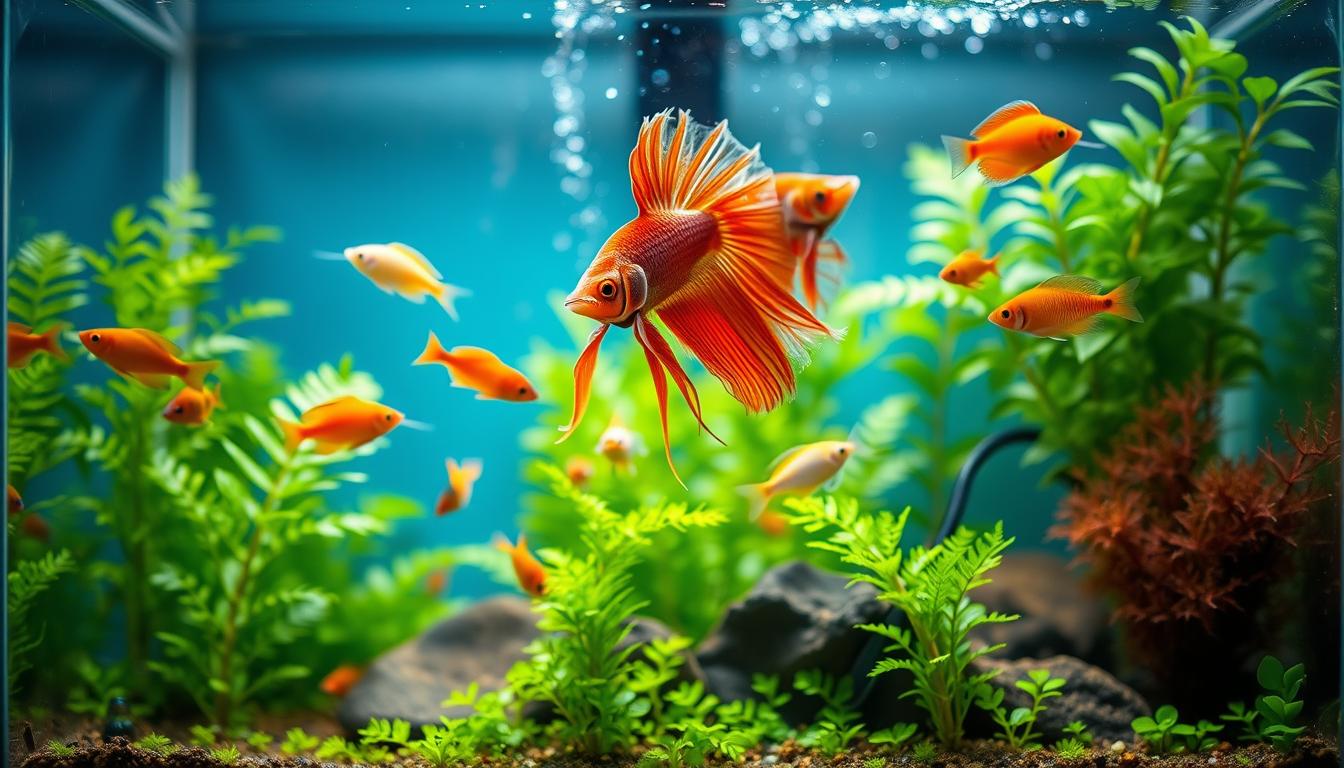
You love your male Betta for its vibrant colors and lively spirit. You also want a vibrant, safe community in a small tank. This guide will help you find the right tank mates for your betta. They should help reduce stress and let your betta enjoy the company of others.
Bettas have strong territorial instincts, inherited from their Siamese fighting fish ancestors. This limits your choices in a small tank. Focus on invertebrates like snails and small, schooling fish. Make sure your tank is big enough and has good hiding spots.
Design your tank to reduce stress. Use dense plants, lots of hiding spots, floating covers, and gentle water flow. Keeping the water stable and clean is also key to a peaceful tank.
Always be ready for emergencies. Have a quarantine tank ready for new additions. If needed, move your betta to a safe place instead of introducing new fish. With careful planning, you can create a harmonious home for your betta and its tank mates.
Understanding Your Male Betta’s Temperament
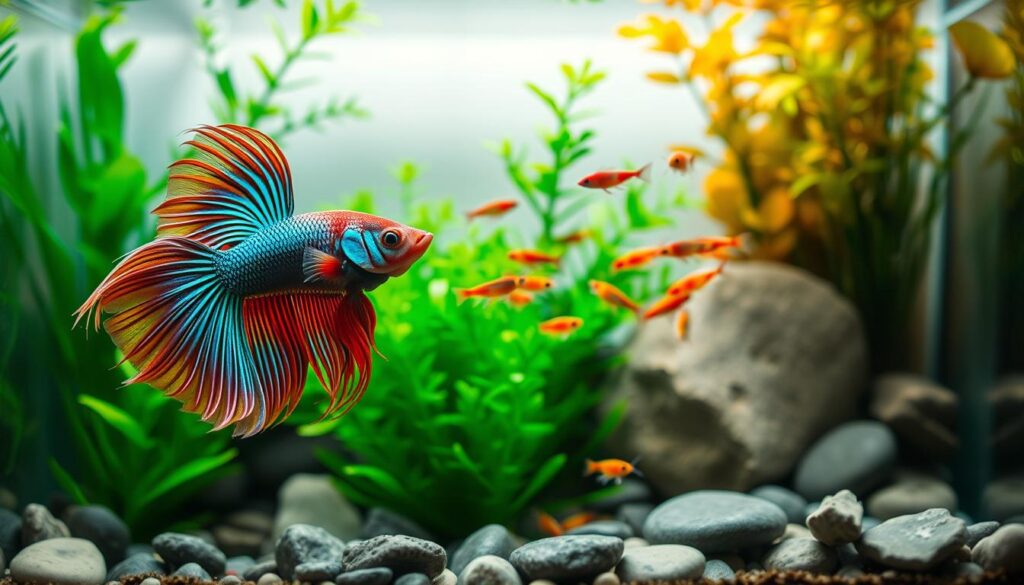
Start by watching how your male betta acts in a quiet tank. They show off by flaring and chasing rivals. Things like mirrors or bright lights can make them display.
Every betta is different. Some are calm and can live with other fish. But show-type bettas with long fins or bright colors might be more aggressive. Short-finned or less colorful bettas are usually calmer.
Watch out for things that might upset your betta. Fast swimmers, fancy guppies, and brightly colored fish can make them attack. Also, if they can see other fish or feel cramped, they might get stressed.
Keep the water in their tank stable to reduce fights. Aim for a temperature of 75–81°F (24–27°C) and gentle water flow. Also, keep the pH level close to 6.5–7.4. This helps when you try to add other fish to their tank.
Try a short test to see if your betta gets along with other fish. Watch how they react to reflections and other fish through a divider. This helps you pick the right fish for your betta’s tank.
Remember, some pairings are not safe. Male bettas should not be kept with other males, and male–female pairs need lots of space and experience. Plan carefully when adding new fish to your betta’s tank to keep everyone safe.
Ideal Tank Size for Betta Mates
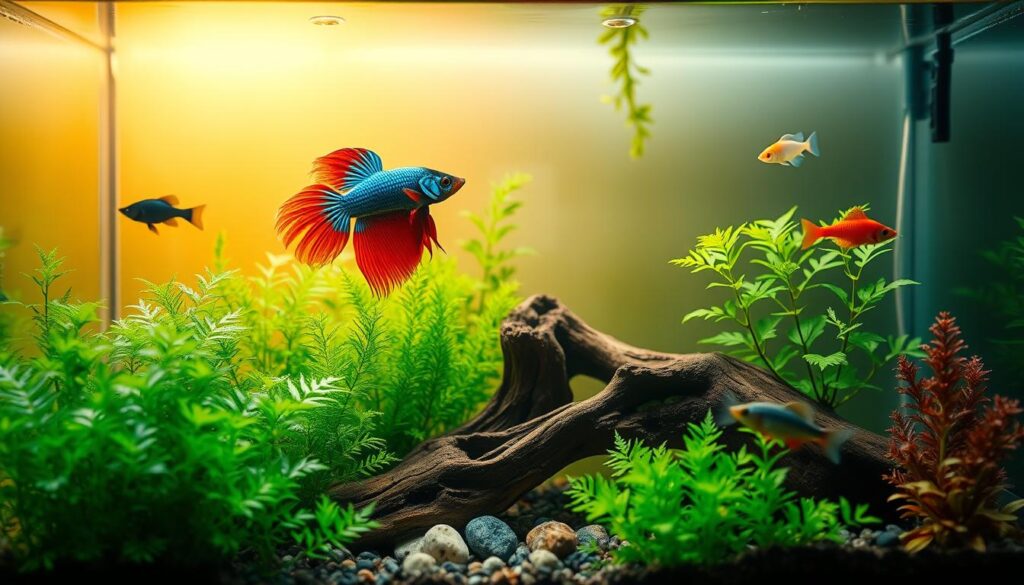
When planning a community with a male betta, tank size is key. A common rule is one gallon per inch of fish. But, more space means better water stability and less stress for all.
In nano tanks under 10 gallons, your choices are limited. The safest option is adding invertebrates like nerite snails, mystery snails, or cherry shrimp. They need little space and add interest without causing fights.
For small schooling fish, aim for 10 to 15 gallons. Species like ember tetras or small rasboras do best in groups of five to ten. With a betta, a 15+ gallon setup allows for shoaling and hiding spots.
Corydoras and similar bottom dwellers need space to forage. Plan for 10 gallons minimum for a small group of corys. For a multi-species community with tetras, rasboras, or larger bottom dwellers, choose 15 to 20 gallons or more.
- 5+ gallons: single betta with snails or shrimp.
- 10+ gallons: small groups of corydoras or a few peaceful livebearers.
- 15+ gallons: comfortable shoaling of neon/ember tetras or harlequin rasboras with a betta.
- 20+ gallons: mixed community with larger bottom dwellers and stable territories.
Filtration and water changes help when space is tight. But, they can’t replace enough tank volume. Overdoing maintenance can hide stressors that cause aggression.
Always have a quarantine or spare tank ready before mixing species. If a betta or any fish becomes aggressive, you must be ready to rehome or isolate it to protect others.
Key Factors in Selecting Tank Mates
First, think about where each fish likes to be in the tank. Betta fish like the top and middle. Choose fish that stay at the bottom, like corydoras or kuhli loaches, and midwater swimmers like rasboras and small tetras. This helps them live together peacefully.
It’s also important to pick fish that are calm and won’t bother your betta. Stay away from fish that are too active or aggressive. They might fight over space or food.
Some fish might look too much like another male betta. This can make your betta upset. Fancy guppies and some gouramis are examples of fish that might cause trouble.
- Water parameters: match temperature (75–81°F), pH (~6.5–7.4), and low to moderate flow needs.
- Shoaling safety: keep small schooling fish in groups of five to twelve so they feel secure and spread attention away from the betta.
- Physical protection: consider snails and small plecos that offer armor or shells, but verify size suitability for your nano tank.
Adding plants, caves, and floating cover helps. These create hiding spots and reduce stress. They also help lower aggression by blocking sight lines.
Quarantine new fish for four to six weeks. This stops diseases from spreading. It keeps your betta and other fish healthy.
When picking tank mates, consider everything. Think about where they like to be, their behavior, looks, water needs, and how they interact with others. This helps you choose the right fish for your betta tank.
Best Fish Species for Betta Fish Tanks
Choose species that reduce stress and match your betta’s space. Harlequin Rasbora (Trigonostigma heteromorpha) is a peaceful shoaler that swims calmly in midwater. Keep a group of 5–8 or more and plan for at least a 15+ gallon community setup when pairing with a male betta.
Ember Tetra (Hyphessobrycon amandae) works well in planted tanks. These tiny orange fish stay low to mid-level, do not nip fins, and should be kept in schools of 8–15 or more. A 15+ gallon tank gives room for natural schooling and reduces territorial displays.
Neon Tetra (Paracheirodon innesi) forms tight shoals and needs groups of six or more. In a 15+ gallon tank with hiding spots and plants, they maintain steady shoaling behavior that keeps both species calmer. You will find Neon Tetra a reliable pick among Betta fish tank mates.
Corydoras catfish such as Panda and Pygmy varieties are excellent bottom-dwellers. They are non-aggressive and should be kept in groups of five to six. Use a soft substrate and feed micro-pellets and frozen foods to protect their barbels. A 10+ gallon tank suits smaller cory groups.
Kuhli Loaches (Pangio) offer nocturnal activity and gentle bottom foraging. Keep them in groups of four to six and provide soft sand for burrowing. These loaches do best in 20+ gallon tanks where they have space to hide and forage without disturbing the betta.
Bristlenose or Clown Plecos (Ancistrus sp.) are useful algae eaters with thick skin that lowers conflict risk. Small plecos need space to grow, so plan a minimum 20 gallon tank. Their nocturnal habit helps them avoid daytime interactions with your betta.
Guppies can be an option if you take precautions. Use plain-finned guppies and keep a single gender to prevent breeding. Avoid long-finned or flashy males that might trigger fights. A 10+ gallon tank is the minimum, though larger setups are safer for mixed communities.
Practical cautions matter when you select compatible fish for betta tanks. Avoid large cichlids, tiger barbs, red tail sharks, puffers, and any species known for fin-nipping or high aggression. These choices lower the chance of stress, injury, and continual chasing.
Plan stocking by species, group size, and tank volume. Thoughtful selection of the best tank mates for betta fish and careful monitoring after introductions will help your community thrive.
Invertebrates: Alternative Companions
Invertebrates are great for betta tank mates because they don’t fight. Mystery snails are tough, eat algae, and have a hard shell. This shell helps them avoid being bothered by Bettas.
Nerite snails have beautiful shells and eat algae well. They don’t breed in regular freshwater tanks, keeping things clean. Both snail types need calcium and balanced KH/GH to keep their shells strong.
Amano shrimp are good at controlling algae. They’re big enough to avoid being eaten, but need a big tank. A 10+ gallon tank is best for them and a betta.
Smaller shrimp like cherry, ghost, and glass shrimp can be eaten by Bettas. But, dense plants and leaf litter help them survive. Start with shrimp first to help them build a home.
- Feed sinking foods at lights-out to reduce shrimp harassment.
- Add moss, leaf litter, and driftwood to create micro-habitats.
- Introduce shrimp in numbers and provide plenty of cover to lower predation risk.
Choosing the right tank mates for Bettas is important. Small shrimp might get eaten. Amano shrimp are safer for larger tanks. With the right setup, invertebrates can be great friends for Bettas.
Fish to Avoid in a Betta Tank
When you think about adding companions, choose carefully. Male bettas are territorial. Never house two male bettas together. Severe fighting often leads to injury or death.
Avoid aggressive or territorial species that will bully or chase your betta. Angelfish, tiger barbs, cichlids, red tail sharks, and puffers are common troublemakers. These fish can injure fins, outcompete your betta for food, and stress the tank community.
Steer clear of known fin-nippers and flashy swimmers. Fancy guppies, some barbs, and certain danios often nip fins. Long, flowing tails can provoke a male betta to attack, which harms both parties and ruins tank harmony.
Do not mix large cold-water species with tropical bettas. Goldfish need cooler water and different chemistry. Pairing them with bettas causes health problems for both types.
- Gouramis and similar-looking labyrinth fish — visual similarity can trigger fights and competition for surface air.
- Predatory species such as large puffers or moray-type predators — they may eat or harass small fish and invertebrates.
- Most reptiles and amphibians — turtles and many frogs need special care and space. Even African dwarf frogs require careful feeding strategies and at least a 10-gallon setup.
Think about the tank zones and behavior patterns when choosing compatible fish for betta tanks. Avoid combinations that cause scale, gill, or fin damage. Pick peaceful species that use different water levels and share similar temperature and chemistry needs.
When cohabitating with bettas, prioritize safety and balance. Your betta will be less stressed if tank mates are calm, small, and unobtrusive. Match temperament and habitat, not just appearance, for the best long-term results.
Environmental Enrichment for All Tank Mates
Adding structure to your nano tank can help. Dense plants, driftwood, and small caves create zones for each fish. This makes betta tank companions feel safe and reduces aggression.
Use a mix of floating and rooted plants. Floating plants like frogbit and salvinia offer shaded areas. Anubias, Java fern, and cryptocorynes provide mid-level cover. Java moss and moss walls are great for shrimp and microfauna.
Make sure there are many hiding spots. Small caves, driftwood tunnels, and stacked rocks create separate areas. This reduces competition for hiding spots among Betta fish tank mates.
Keep the lighting and water flow gentle. Bettas like calm water, so use sponge filters or spray bars. This helps keep plants healthy and benefits all tank mates.
Choose a soft substrate for bottom dwellers. Fine sand protects their barbels and allows digging. Adding leaf litter or peat creates tannin-rich areas that many species enjoy.
Keep the water temperature steady and clean. Aim for around 78°F (26°C) for comfort. Regular water changes and good filtration prevent water quality issues that stress fish.
Small tanks need regular care. Test the water often and clean out detritus from caves and plants. Healthy conditions support calm behavior in Betta fish tank mates.
Monitoring Compatibility and Behavior
Watching your betta fish closely is key. Sometimes, they may flare or chase each other as they establish their space. But, if you see constant chasing, damaged fins, or hiding, it’s a sign of stress.
Keep a close eye on your fish for 48 to 72 hours after introducing them. Take notes or photos of their behavior. This helps you see if they’re getting along.
- Normal behaviors: brief displays, settling after feeding, mild curiosity.
- Problem behaviors: repeated nipping, torn fins, constant hiding, refusal to eat.
- Emergency signs: open wounds, severe breathing trouble, sudden lethargy.
If you notice stress, try simple fixes first. Add more plants or cover to block their view. Also, reduce the light and change the layout to upset their territory plans.
Feed bottom-dwelling fish separately to help them feel safe. This way, they get enough food without competition from the betta.
If aggression doesn’t stop, it’s time to separate the fish. Use a breeder box or a spare tank to keep them safe. Also, quarantine new fish for 4 to 6 weeks before adding them to your tank.
Check the water quality often, but even more so in the first week after adding new fish. Test for ammonia, nitrite, and nitrate every day until the levels are stable. Clean water helps reduce stress and fights.
Make a plan to check on your fish regularly, like once a month. As they grow, their behavior can change. Be prepared to separate or rehome fish if aggression starts later. Regular checks keep your tank peaceful and your fish healthy.
Importance of Gradual Introductions
When you add new betta tank companions, start with quarantine. Keep new fish or invertebrates in a separate tank for 4–6 weeks. This helps you spot disease and lets them adjust to your water chemistry before they meet your established fish.
Use proper acclimation to reduce shock. Float the bag for 10–15 minutes to equalize temperature. Then drip or slowly mix small amounts of tank water over 15–60 minutes. This step protects both water chemistry and the health of your betta fish tank mates.
- Order of stocking matters. Add bottom dwellers and invertebrates first so they can find hiding spots and biofilms.
- Next, add small shoaling mid-water fish. Let them settle before introducing territorial species.
- Introduce the betta last to minimize immediate chasing and to let established animals hold territory.
If you are adding a betta to an already established community, watch closely. Initial curiosity from the betta can turn to aggression. Keep a spare tank or breeder box ready to separate any injured or highly stressed fish.
Try timing introductions to lower stress. Do new additions at lights-off or dusk and feed the tank first to distract your betta. Use a soft-start protocol by keeping newcomers in a breeder box or net pen inside the main tank for 24–72 hours as an observation buffer.
Plan B matters for calm transitions. Have a spare tank, breeder box, or gentle net handy. Quick separation prevents injuries and protects the long-term stability of your community.
Careful, stepwise introductions improve success with the best tank mates for betta fish. When you follow quarantine, acclimation, stocking order, and soft-start steps, your betta tank companions will have a better chance to thrive together.
Maintaining a Healthy Community Tank
To keep water quality good, stick to a strict maintenance plan. Change 25–30% of the water weekly. Also, vacuum the substrate when it gets dirty and check heaters and filters every month. In small tanks, you might need to change water more often to keep everything stable.
Feed your fish a variety of foods to help them thrive. Give your male betta high-quality pellets. For bottom dwellers, use sinking wafers or frozen foods. Plecos and snails like blanched vegetables or algae wafers.
Target-feed shy fish to make sure they eat. But don’t overfeed, as it can make the water dirty. Use gentle filters and manage oxygen levels carefully. This helps keep surface feeders happy and healthy.
- Stock conservatively to prevent crowding.
- Keep schooling fish in appropriate shoal sizes for health and comfort.
- Prevent unwanted breeding by maintaining single sexes if you do not want fry, such as with guppies.
Quarantine new fish for 4–6 weeks to lower disease risk. Treat illnesses quickly and keep sick fish separate. Overcrowding can spread diseases fast, so act fast if you see any signs.
As fish grow, their behavior might change. You might need to adjust the tank layout to keep peace. Changing things up now and then can help keep everyone calm.
- Keep an emergency spare tank or breeder box ready.
- Have transport containers and basic medications or water conditioners on hand.
- Plan rapid moves to isolate stressed or injured fish.
Regular routines, careful feeding, and quick action can make living with bettas easier. Follow these tips to keep your community tank healthy and balanced.
Resources for Further Research
For solid, science-backed guidance on compatible fish for betta tanks, check out Applied Animal Behaviour Science, Environmental Biology of Fishes, and Integrative and Comparative Biology. These journals cover betta aggression, stress responses, and color perception. This information helps you choose the right Betta fish tank mates.
Balance scientific papers with reputable hobby resources and DVM-reviewed care sheets from established aquatic communities. Use those guides to compare species needs. Also, refer to aquarium calculators and water test kits to confirm stocking limits and water chemistry before adding any new fish.
Join local aquarium clubs, Reddit aquarium communities, and specialized betta groups to learn from experienced keepers. They can share their knowledge on the best tank mates for betta fish in real setups. Start each new addition in a quarantine tank, stage introductions carefully, and provide dense planting and hiding places to reduce conflict while you monitor behavior.
Leave a Reply