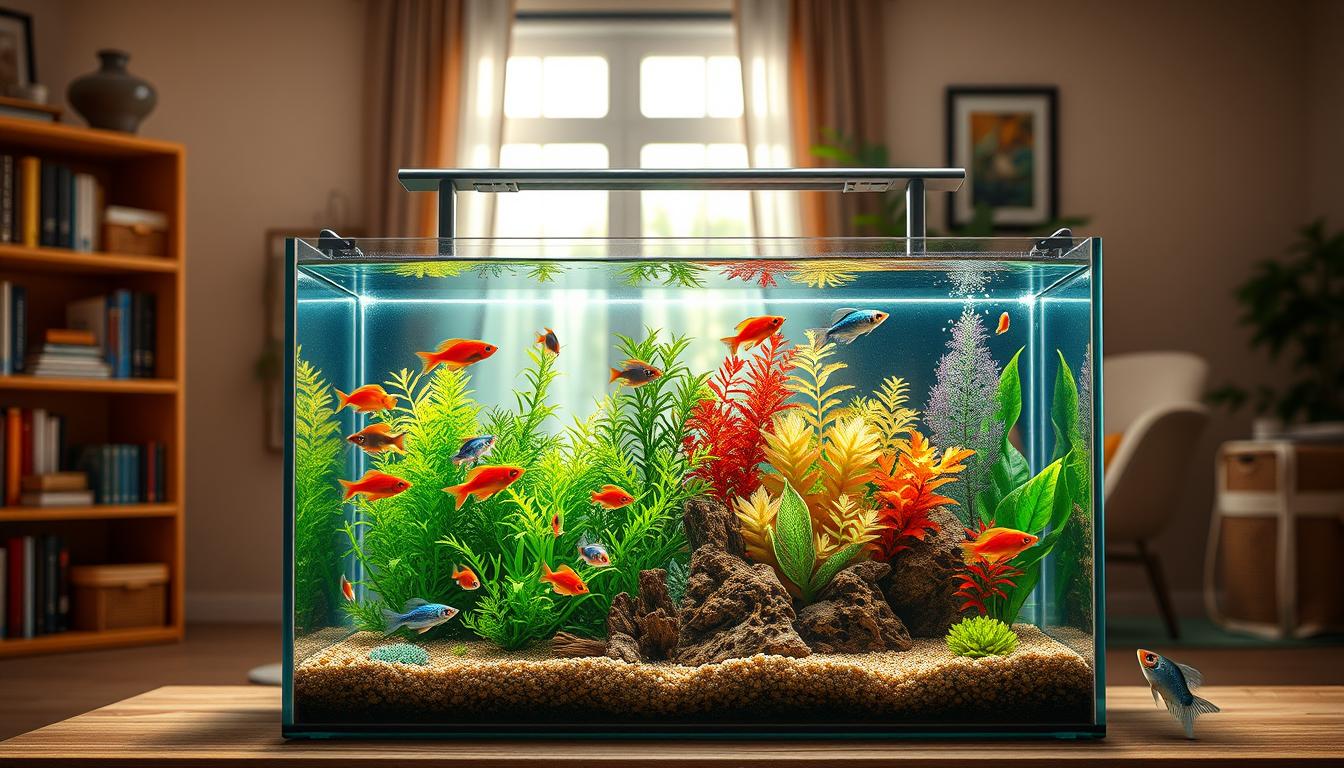
If you have a 10-gallon tank or are thinking of getting one, you might wonder how many fish you can keep. This article will guide you on stocking density rules. It will help your fish live happily and healthily.
A 10-gallon tank is great for beginners because it’s cheap and small. But, many people overstock it, thinking the old rule of one inch per gallon is right. You’ll learn why this rule doesn’t work and how things like fish size, behavior, and tank type matter.
We’ll look at stocking guidelines from experts like Neale Monks and The Spruce. You’ll see why some fish, like angelfish and plecos, grow too big for small tanks. Also, why fast swimmers like zebra danios need more space and why some fish, like dwarf puffers, are not good for ten gallons.
Expect tips on choosing between freshwater or saltwater tanks, figuring out net gallons, and how filters and plants affect space. By the end, you’ll know how to pick the right fish, set up your tank, and keep it healthy. You’ll also learn about common mistakes and U.S. laws for aquarium keeping.
Understanding Stocking Density Rules
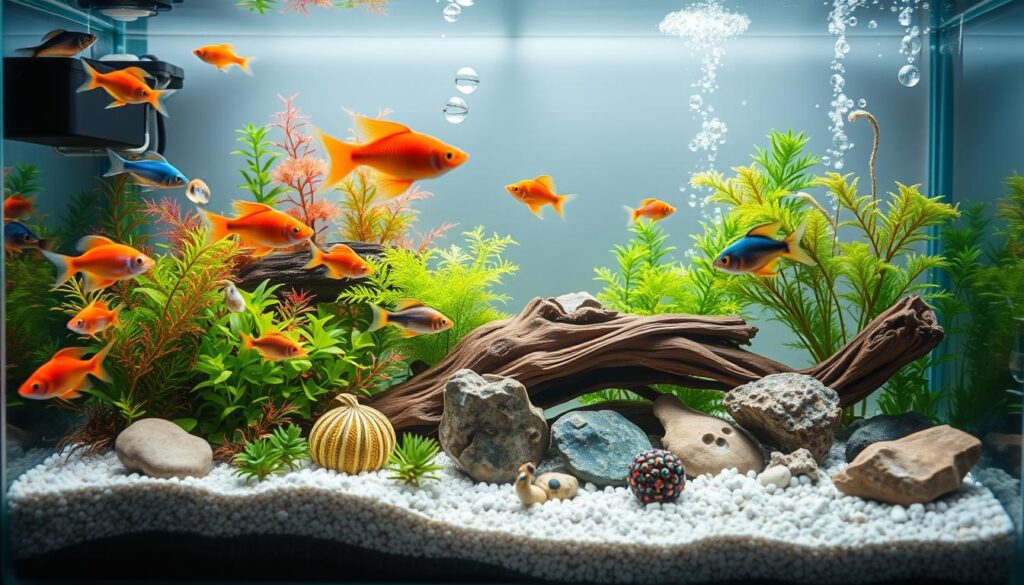
Planning for fish in your 10-gallon tank is easier with simple rules. The one-inch rule is well-known: one inch of fish per gallon. Another rule is the surface area rule: one inch of fish per 12 square inches of surface area. For wide-bodied fish, it’s one inch per 20 square inches.
These rules help set limits on how many fish you can have. But, they’re not perfect. The Spruce notes that the one-inch rule doesn’t consider filtration quality or fish shape. It also doesn’t account for tank design.
Use net gallons to measure water volume after adding gravel and decor. Stocking should be based on adult sizes, not juvenile lengths.
Tank shape is important for oxygen exchange. Tall, narrow tanks have less surface area than short, wide ones. This affects how strictly you follow stocking rate requirements.
For beginners, Neale Monks suggests starting with one small fish per gallon. Add fish in small groups every couple of weeks. With a mature tank and good care, you might keep two neon-tetra-size fish per gallon.
Schooling species need space for their social behavior. When planning for schooling fish, remember to factor in group size. Heavily bodied species like goldfish and many cichlids produce more waste. They need more conservative stocking rates.
It’s wise to start with fewer fish. Monitor water quality and invest in good filtration. Adjust your stocking plan as fish grow. This reduces stress and allows for adjustments over time.
Factors Influencing Stocking Density
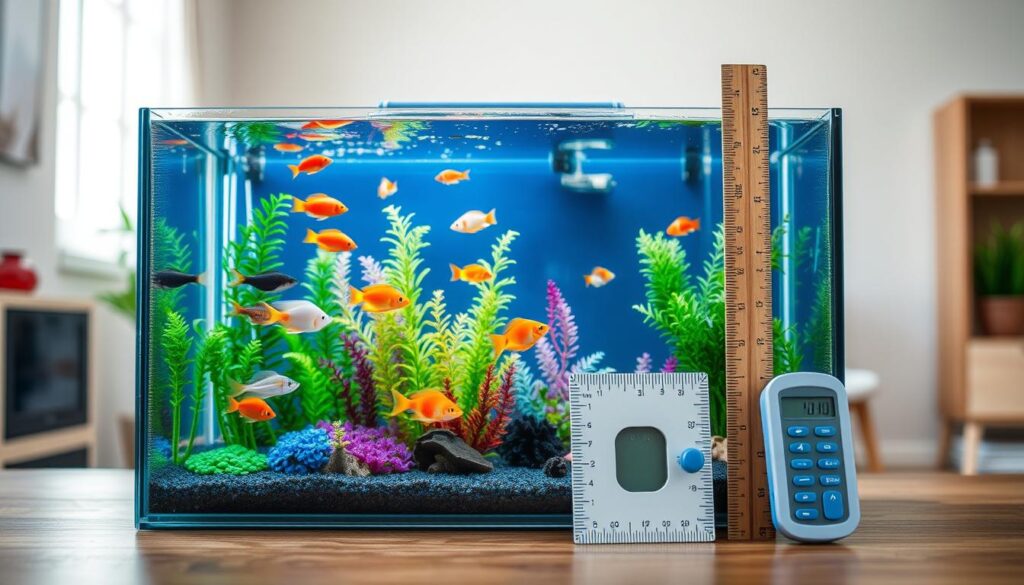
Choosing the right number of fish for a 10-gallon tank is key. Filtration turnover is a big deal. You should aim for a filter that can handle 40–60 gallons per hour or more. This meets the 4x turnover rule for a 10-gallon tank.
Surface area is important for oxygen exchange. A wider, shallower tank is better than a tall, skinny one. Use width × length to compare tanks and figure out how many fish you can have.
Body shape also matters. Slender fish like danios make less waste than deep-bodied fish like goldfish. Use surface-area guidance: about 12 square inches per slender fish and 20 square inches for deeper-bodied ones.
Behavior and social needs also play a role. Schooling fish need friends to be happy. Territorial or aggressive fish need space and hiding spots, which cuts down on swimming area.
Water chemistry and stability depend on biological support. Live plants, mature media, and settled bacteria help process ammonia and nitrite better. Remember, gravel and décor can lower water volume by 10–15%.
Introduce fish slowly to protect the nitrogen cycle. Add no more than 25% of your total fish plan at once. Slow introductions help nitrifying bacteria grow and prevent ammonia and nitrite spikes that stress fish.
- Check filter rating and aim for recommended filtration turnover.
- Measure surface area to estimate oxygen exchange and adjust stocking plans.
- Match species by body shape and waste output when calculating numbers.
- Factor in behavior, territory needs, and social grouping.
- Build biological stability with plants and mature media to boost livestock carrying capacity.
- Follow slow introduction rules to respect stocking intensity regulations and protect water quality.
Basic Guidelines for Stocking Density
When adding fish to your 10-gallon tank, start slow. Add small groups every 1–2 weeks. Keep each addition to about 25% of your total fish load. This helps beneficial bacteria adjust and meets local guidelines.
Plan based on adult size, not juvenile length. Ask PetSmart staff or a local fish store for adult size estimates. Check species profiles too. Using adult length gives more accurate stocking density.
Choose a filter that can handle at least four times your tank’s volume per hour. For a 10-gallon tank, that’s a minimum of 40 gph. If you have messy or high-bioload species, pick a higher turnover filter.
Consider net gallons, not just the tank’s volume. Subtract 10–15% for substrate, décor, and equipment. Use the net gallons to figure out the best stocking density for your tank.
- Prefer small, non-aggressive, low-activity species in a 10-gallon tank.
- Consider live plants to help with nutrient uptake and oxygen levels; plants do not replace good filtration.
- Test water for ammonia, nitrite, and nitrate weekly in new tanks. Do 50% weekly water changes early on, following experts like Neale Monks.
Keep records of your stocking choices and water tests as you refine your plan. Following these guidelines will help you achieve an optimal stocking density. It also ensures you stay within practical stocking rate requirements.
Recommended Fish for a 10-Gallon Aquarium
Choosing the right fish is key to a healthy tank and easy care. For a calm, planted 10-gallon, pick small schooling fish. They should fit the stocking density and animal density limits.
- Dwarf Corydoras (Corydoras habrosus, C. hastatus, C. pygmaeus): perfect for the bottom and mid-level. Keep six or more for natural behavior and the right stocking density.
- Neon tetra (Paracheirodon innesi), Cardinal tetra (P. axelrodi), and Glowlight tetra (Hemigrammus erythrozonus): small schooling fish. Make sure their temperature needs and plant cover match the stocking density.
- Sparkling gourami (Trichopsis pumila): tiny labyrinth fish that love planted tanks. You can keep four to five if the tankmates are calm and animal density limits are followed.
- Kuhli loaches (Pangio spp.): nocturnal, bottom-dwelling eel-like fish. Keep in groups of four or more and cover the tank top to prevent escape.
- Dwarf Lamprologus (Neolamprologus brevis): shell-dwelling cichlid. Suitable as a bonded pair in a 10-gallon with hard, alkaline water.
- Golden pencilfish (Nannostomus beckfordi): peaceful mid-level swimmers. Keep in groups of six or more for schooling behavior and to stay within optimal stocking density.
- Least killifish (Heterandria formosa): tiny livebearers that prefer hard, alkaline water and heavy planting. Their small size helps with stocking density recommendations.
- Celestial pearl danio (Celestichthys margaritatus): shy, colorful schooling fish under 1″. Use groups to reduce stress and honor animal density limits.
- Invertebrates: Cherry shrimp (Neocaridina/Caridina) and nerite snails (Clithon, Neritina, Vittina) are excellent cleaners and fit well with many small community setups.
For more options, consider small platies, cherry barbs, white cloud mountain minnows, dwarf gouramis, and select small danios or tetras for 10–20 gallon community tanks. Always prioritize compatible temperaments and water chemistry when applying stocking density recommendations.
Use the list above as a starting point. Plan your stocking to respect optimal stocking density and animal density limits so your fish thrive and your tank stays balanced.
Establishing a Healthy Aquarium Environment
Begin by cycling your tank before adding fish. Use fishless cycling with products or media from another tank to grow bacteria. API® QUICK START can quickly introduce these bacteria.
Choose a filter that can handle 40–60 gph for a 10-gallon tank. Use mechanical and biological media, and add chemical media if needed. Always replace media carefully to keep beneficial bacteria and maintain a stable environment.
Test your water weekly for ammonia, nitrite, and nitrate. Keep an eye on ammonia and nitrite levels until they are zero. Early on, do 50% water changes weekly to manage waste and follow stocking rules. Always have a reliable nitrite test kit ready.
Live plants like Java moss, Cryptocoryne, and Anubias are great for hiding spots and biological filtration. They help with nutrient uptake and provide shelter for shy fish. Thoughtful decor supports both looks and stocking guidelines.
Match your tank’s temperature and chemistry to the fish you plan to keep. Neon tetras like 68°–78°F, cardinals 74°–80°F, and many tropical fish do best at 75°–78°F. Some fish, like dwarf Lamprologus, need hard, alkaline water. Use heaters, thermometers, and conditioners like API STRESS COAT™ when needed.
Acclimate new fish to reduce stress. Float the sealed bag for 15–20 minutes, then add tank water slowly. Net the fish into the tank carefully, avoiding dumping bag water. Keep the lights off at first to help them settle.
Follow good stocking guidelines and respect your tank’s carrying capacity. Stick to stocking density rules to avoid overstocking, keep water quality good, and let each species thrive.
Monitoring Your Fish’s Well-Being
Watch your fish’s behavior every day. Look for signs like lethargy, gasping, loss of appetite, hiding, or sudden aggression. These can mean your tank is too crowded or has water quality issues.
Make a plan to test your tank’s water regularly. In new setups, check ammonia, nitrite, and nitrate weekly. For stable tanks, keep up with tests to catch problems early.
Follow simple steps to keep your tank healthy. Do weekly water changes of 25–50% as needed. Clean mechanical filters but don’t harm the good bacteria.
- Vacuum the substrate during water changes to remove waste and uneaten food.
- Make sure the filter runs 24/7 for good water flow.
- Check for clogs and ensure the filter’s flow rate is at least 40× tank volume per hour for a 10-gallon tank.
Follow rules on stocking density and local guidelines when adding fish. Quarantine new fish for at least two weeks to prevent disease.
If disease shows up, isolate sick fish and use targeted treatments. Don’t overmedicate. Use test kits and observation to guide your actions.
- Daily: brief check for behavior and breathing.
- Weekly: test ammonia, nitrite, nitrate, and do a partial water change.
- Monthly: inspect and service the filter, replace worn media as needed.
Good habits in monitoring your fish’s well-being protect your investment and your pets. They help you stay within stocking limits and prevent stress and disease through water quality checks.
Common Mistakes in Stocking a 10-Gallon Aquarium
Setting up a 10-gallon tank can be tricky. One big mistake is following the one-inch rule too closely. This rule doesn’t consider adult size, body shape, or filtration. It’s a starting point, not a rule to live by.
Buying fish based on their juvenile size can lead to overcrowding. Fish like common plecos and angelfish grow a lot. Make sure to check their adult size and behavior before buying.
- Adding too many fish at once is a mistake. It stresses the beneficial bacteria. Introduce new fish in small groups, about 25% of your tank’s capacity at a time.
- Not considering compatibility is another error. Mixing aggressive fish with shy ones can cause stress and injury. Choose fish that get along well.
Ignoring the net gallons of your tank is another mistake. Substrate, rocks, and decorations take up space. Measure the net water volume to avoid overstocking.
Not having enough filtration is a big problem. A small or dirty filter can’t handle waste. Make sure your filter is big enough and clean it regularly.
Not acclimating and quarantining new fish is risky. It can spread disease in your tank. Proper acclimation and a short quarantine period help keep your tank healthy.
- Research adult sizes and behavior before buying.
- Calculate net gallons after adding substrate and décor.
- Introduce fish slowly and monitor water quality.
- Choose compatible species and appropriate school sizes.
Avoid these common mistakes to keep your 10-gallon tank healthy. Use stocking density rules as a guide, not a shortcut. Respect animal density limits for long-term success.
Planning for Future Growth
Start by planning for adult sizes and behaviors when you plan for future growth. If you buy juveniles, think about when they will grow up and how that will change your space needs.
Before adding new species, check the stocking rate requirements. Small fish like neon tetras stay small, while cichlids can become territorial as adults. Research their typical adult behaviors to keep your community stable.
Think about the livestock carrying capacity for the long term. Moving to a 20- or 29-gallon tank gives you room for larger species or bigger schools. Larger tanks also help keep water chemistry stable and reduce stress on fish.
Keep a quarantine tank for new arrivals. This helps prevent disease from spreading to your main tank.
Plan how to control shrimp and snail populations. Cherry shrimp can breed quickly in good conditions. You might need a dedicated shrimp tank or a plan to manage their numbers.
- Upgrade timeline: decide when to move fish to a larger tank.
- Behavior checks: monitor juveniles as they mature.
- Quarantine routine: inspect new stock for illness for at least two weeks.
- Population controls: use refugia or selective removal for prolific species.
Be aware of stocking intensity regulations in your area if you keep many tanks or species. Local rules can affect how you manage numbers and species mixes over time.
Additional Resources for Aquarium Enthuisiasts
For trusted advice, check out books and species guides. Neale Monks shares his experience on adult fish sizes and care for small tanks.
Online resources offer practical stocking tips. The Spruce, with Ashley Nicole DeLeon’s articles, explains how to calculate stocking density for your tank.
Visit your local fish store to see fish up close. Ask about their temperament. Staff at a good LFS can give you tips on water issues and animal density limits.
- Community groups and clubs teach trading etiquette and hands-on tips from experienced hobbyists.
- Forums and species databases help you verify compatibility, adult size, and long-term care notes.
- Quality brands like API QUICK START and API STRESS COAT support acclimation and cycling for new setups.
Buy reliable test kits and filters for your tank size. Use products with clear instructions to ensure proper turnover and safe animal density.
Keep a list of stocking density recommendations and local contacts. These resources will help you make better choices and avoid common mistakes.
Legal Regulations on Aquarium Fish Keeping
Before you buy or move fish, learn the legal rules. In the U.S., most aquarium fish are not strictly regulated. But, there are rules for invasive species and protected animals. Check with your state’s wildlife agency for specific lists and rules.
Never release fish, plants, or invertebrates into local waters. Many states ban non-native species because they harm the ecosystem. Following rules on animal density can help prevent stress and the need to get rid of fish.
- Invasive species: Check if a species is banned in your state.
- Permits: Rare, endangered, or regulated marine species may need permits or federal protection.
- Local rules: Some places or homeowner associations have rules on visible tanks or equipment noise.
If you transport or sell aquatic animals, follow federal and state transport rules. You might need a license to breed for sale. Make sure you meet the requirements before advertising or shipping animals to avoid fines and quarantine issues.
Choose captive-bred stock when possible to protect wild populations. Captive-bred celestial pearl danios and many tetras are available from breeders and retailers like LiveAquaria and Petco. Buying responsibly supports conservation and helps you avoid collection or trade restrictions.
Be aware of stocking intensity regulations and animal density limits if your area has guidelines for display tanks. These rules might affect how many fish you can keep in one tank or on-site.
If you’re unsure, contact your state Department of Natural Resources or the U.S. Fish and Wildlife Service for advice. Staying informed keeps your hobby legal and helps protect native habitats for future generations.
Conclusion: Best Practices for Stocking Your 10-Gallon Aquarium
When planning your tank, follow clear stocking guidelines. Choose based on adult sizes and net gallons, not juvenile measurements. Start with about one small fish per gallon and add them slowly.
Introduce no more than roughly 25% of the expected bioload at a time. This lets your filter and cycles adjust.
Focus on optimal stocking density by prioritizing filtration and regular maintenance. A 10-gallon tank needs a filter rated roughly 40–60 gallons per hour. Also, do weekly water changes, substrate vacuuming, and routine water testing.
With a mature biofilter and careful monitoring, experienced keepers may reach about two neon-tetra-size fish per gallon. But do this cautiously.
Choose species suited to a 10-gallon setup, like dwarf corydoras, neon or cardinal tetras, celestial pearl danios, sparkling gouramis, kuhli loaches, cherry shrimp, and nerite snails. Use live plants and hiding places to reduce stress. Always acclimate and quarantine new arrivals.
Consider long-term growth and upgrade plans. This way, you won’t outgrow optimal stocking density rules as fish mature.
Err on the side of understocking to protect water quality and fish well-being. By following best practices for stocking, respecting stocking density rules, and selecting compatible species, your 10-gallon aquarium can be a healthy, rewarding habitat for small fish and invertebrates.
Leave a Reply