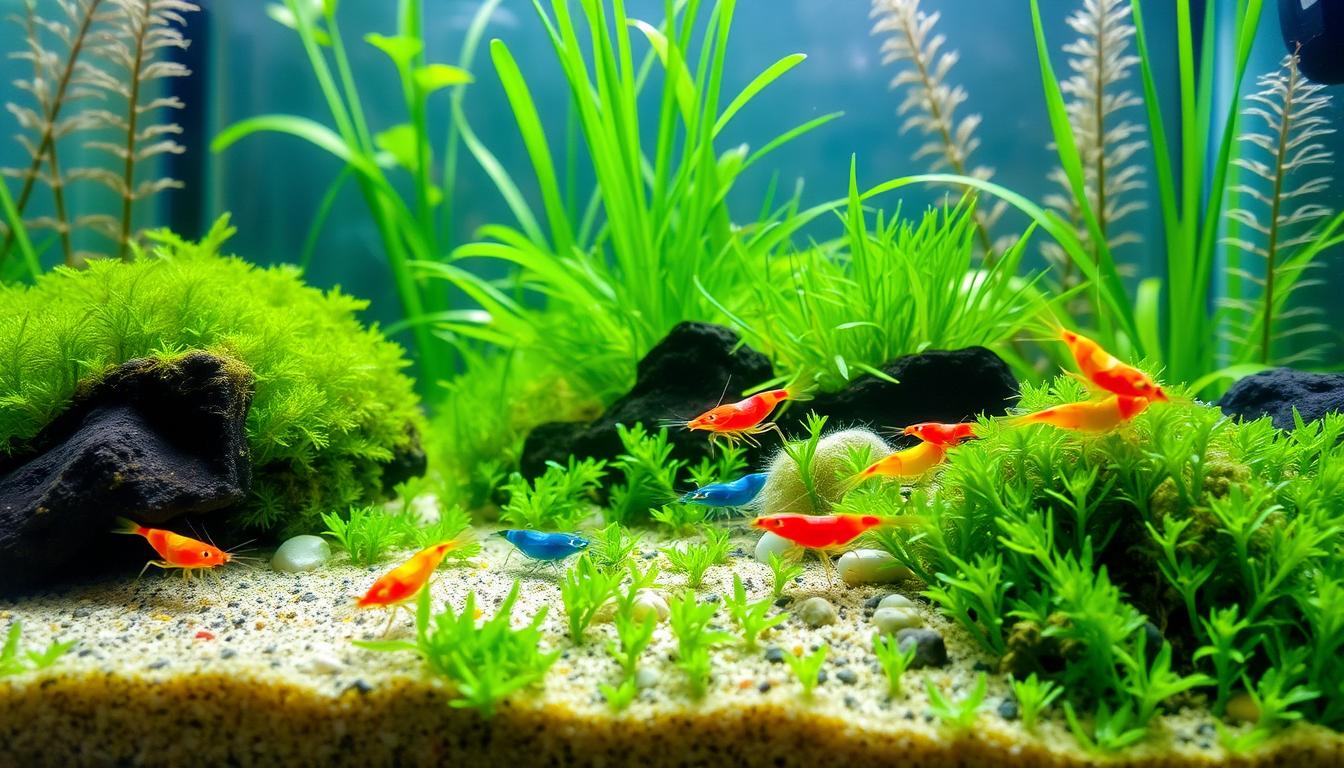
Neocaridina species are perfect for a lively, easy-to-care-for tank. Dwarf cherry shrimp, or Neocaridina davidi, are hardy and adaptable. They come in many colors like Red Cherry, Blue Dream, and Green Jade.
These shrimp are great at cleaning the tank by eating algae and detritus. They live about 1.5 to 2.5 years and grow 1–2 inches. Keeping them in groups shows their natural behavior.
Neocaridina shrimp need stable water conditions and avoid sudden changes. They are sensitive to copper and temperature changes. Keeping their environment steady is key.
Beginners should start with one color strain to keep colors vibrant. Use gentle care and feeding to help your shrimp thrive.
1. Understanding Neocaridina Shrimp Species
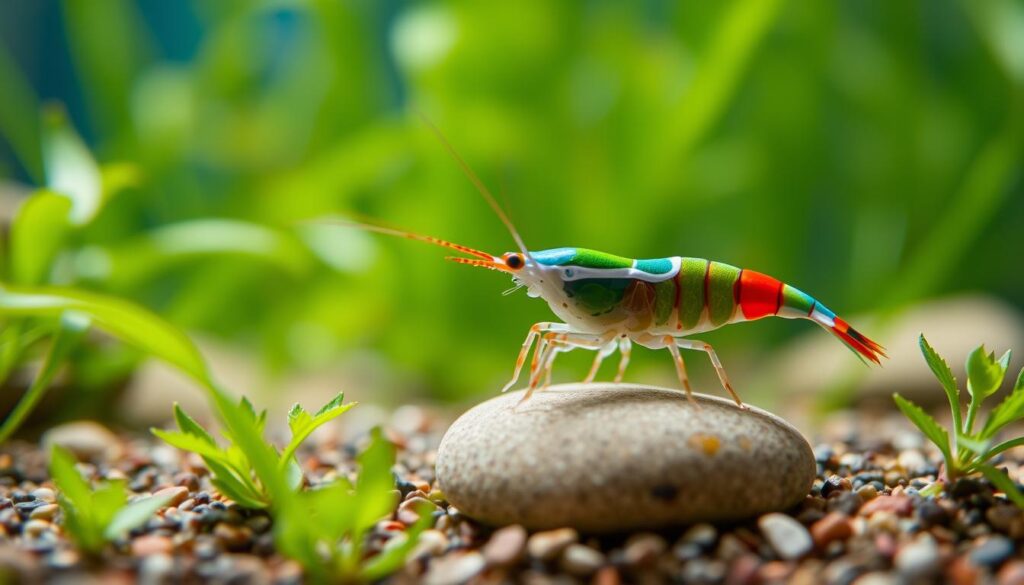
Neocaridina species are small shrimp known for their colors and easy care. You might see names like Cherry Shrimp, Blue Velvet, and Black Rose. These are all part of the Neocaridina davidi group.
Most colors come from selective breeding. If you mix different colors, they will breed randomly. After a few generations, you’ll see more brown or clear shrimp unless you breed for color.
These shrimp are easy to care for, even for beginners. They can thrive in various water conditions. They’re great for small tanks and planted aquariums.
They reach reproductive age in four to six months. Females show a “saddle” where eggs form. They carry eggs under their swimmerets, a sign of pregnancy. You’ll see them grazing, molting, and socializing as they grow.
In planted tanks, they help by eating biofilm and micro-organisms. Their colors also make plants look better. With the right care—stable water, gentle filtration, and hiding spots—they will breed naturally.
2. Ideal Aquarium Setup for Neocaridina
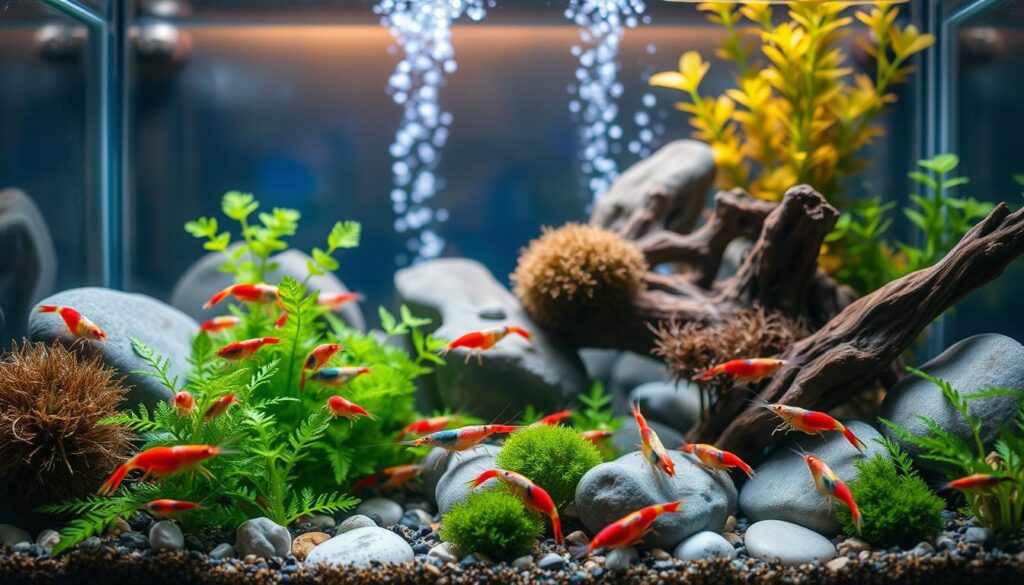
When setting up your shrimp tank, focus on stability. For display tanks, a 5-gallon tank is good if it’s well-planted. For easier care or breeding, a 10–20 gallon tank is better. Large colonies need 20+ gallons for steady water and better shrimp survival.
Be careful with how many shrimp you add. A rule of thumb is 5–10–15 shrimp per 5 gallons, depending on your tank size and goals. Experienced keepers might keep 75–150 shrimp in a 10-gallon tank, but bigger tanks are easier to maintain.
Choose a filter that’s safe for tiny shrimp and supports biofilm. Sponge filters are great because they’re safe for shrimplets and cheap. Hang-on-back or canister filters work too, if you add a pre-filter sponge or intake guard. Look for models like Qanvee sponge filters or a Mighty Aquarium HOB with intake sponge for good performance.
Choose the right substrate for shrimp to promote grazing and stable chemistry. Inert options like pool sand, gravel, black diamond blasting sand, or Seachem Flourite are good for Neocaridina. Avoid active, acidic soils meant for Caridina species. Add driftwood and smooth rocks to increase biofilm surfaces and provide hideouts.
Plant heavily to boost biofilm and provide shelter. Java Moss, Christmas Moss, Java Fern, Bucephalandra, and Hornwort are good for microbes and protecting shrimplets. Floating plants like Red Root Floaters shade the tank and improve water quality. Use tissue-cultured plants to avoid pests and chemicals in your nano aquarium tips.
Manage temperature and CO2 carefully. A heater is optional if room temperature is between 65–80°F. But, keeping it in the mid-70s is best for growth. CO2 helps plants grow, but monitor levels with a drop checker. Keep levels in the safe green range to avoid stress. Watch for rapid pH swings that can harm shrimp.
Cycle and age the tank before adding shrimp. Only introduce Neocaridina to a fully cycled and seasoned aquarium. Test pH, GH, KH, ammonia, nitrite, and nitrate to know the baseline. A mature tank provides biofilm and beneficial bacteria for long-term care.
3. Water Parameters for Healthy Shrimp
Stable water parameters are key for healthy Neocaridina shrimp. Keep the temperature between 70–76°F for their best activity and breeding. If needed, you can go from 65–84°F, but avoid sudden changes.
It’s important to manage GH KH levels for shrimp. Aim for 4–8 dGH for molts and color. Some hobbyists go up to 9–11 dGH for deeper colors, but do it slowly.
Keep an eye on KH to maintain pH stability. A KH range of 3–15 dKH is good, but low KH can cause pH drops. Use KH buffers or remineralizers with reverse osmosis water.
Track TDS for shrimp to monitor dissolved solids. Most Neocaridina thrive at 200–300 ppm. TDS below that can work with remineralization, but too high can stress them.
- Caridina shrimp need cooler, softer, more acidic water if you mix them with Neocaridina.
- Match new water to the tank’s parameters to avoid shocking the shrimp when topping off or changing water.
Shrimp are very sensitive to contaminants. Avoid copper-based medications and high metal traces. Use plant fertilizers with low iron and skip supplements with copper.
Be careful with your water source. Tap water might be okay if it’s treated right. Reverse osmosis/deionized water needs remineralization before use.
In planted tanks with CO2, watch pH closely. CO2 changes can harm shrimp. Use a drop checker and steady dosing to keep pH safe.
Do small, regular water changes instead of big ones. Replace 10–20% of water weekly and test parameters often. Stability is more important than perfect numbers.
4. Nutrition and Feeding Guidelines
Your Neocaridina shrimp will always be looking for food. They eat biofilm, algae, and decaying plants. They also eat detritus. In a planted tank, most of their food comes from these sources.
Supplemental shrimp food should just be a little extra. It’s not the only thing they eat.
Choose high-quality foods that help with shell health and trace minerals. SL-Aqua has good options like M.O.R.E White pellets and Shrimplet Feed powder for young ones. These foods also help with molting and stronger shells.
Make a feeding schedule that fits your tank. In a shrimp-only tank, feed them a few times a week. In a community tank, you might only need to feed them a little because there’s plenty of natural food.
- Feed tiny amounts and watch consumption.
- Remove uneaten food after about one hour to protect water quality.
- For shrimplets use powdered feed that disperses across the tank to increase survival.
Don’t overfeed. Too much food can harm the shrimp and the tank. Keep the portions small and adjust as needed.
Add natural foods to their diet. Leaf litter like alder cones or Indian almond leaves is good. It provides decaying matter and tannins. These help with biofilm growth and give Neocaridina a familiar, nutritious food.
For balanced care, mix natural foraging with commercial food and a good feeding schedule. This keeps the water stable and supports growth at all stages.
5. Introducing New Shrimp into Your Aquarium
When you bring new Neocaridina home, start with a calm plan. Check packaging for temperature and visible signs of stress. Match transport temperature to your tank when you can to reduce shock.
Use drip acclimation as your primary method. Set up an airline or needle valve to drip tank water into the transport bag. Aim for a slow, steady rate so water mixes gradually. This drip acclimation reduces sudden shifts in pH, GH, KH, and other nano tank water parameters that affect molting and behavior.
Before release, inspect each shrimp and any plants for hitchhikers or parasites. Quarantine new arrivals for several days when possible. Quarantine helps catch illnesses or pests that might harm your established colony. Even hardy Neocaridina benefit from this extra step.
Confirm your aquarium is fully cycled. Ammonia and nitrite should read zero. Stable pH, GH, KH, and nitrate levels keep shrimp healthy. Measure mineral content carefully as GH and KH support successful molts and long-term freshwater shrimp care.
- Introduce groups of at least 10 shrimp to encourage normal activity.
- Avoid adding only one or two to a large tank if you want visible, active shrimp.
- If you plan to preserve color strains, avoid mixing different morphs.
If you want to breed specific lines, use breeder boxes or separate tanks to control pairings. Mixed strains will hybridize and often produce less vibrant offspring. Controlled setups let you manage genetics while maintaining good freshwater shrimp care.
6. Breeding Neocaridina Shrimp
To grow a healthy shrimp colony, match simple breeding techniques with Neocaridina’s natural cycle. Females show a saddle before mating. After fertilization, they become berried shrimp, carrying 20–30 eggs for two to three weeks.
Start with a mature tank that has lots of hiding spots and biofilm. Java Moss, Christmas Moss, and Hornwort are great for shrimplets. They also provide microfood. For focused breeding or color work, use a dedicated tank of ten to twenty gallons or more.
Stable water and regular small water changes trigger breeding. Keep temperatures in the mid to upper 70s Fahrenheit. This encourages frequent molting and mating. Avoid big temperature changes that stress the shrimp.
- Provide powdered shrimplet feeds or micro-foods for even nutrition.
- Keep dense plants and mosses to protect shrimp from predators and support biofilm.
- Remove fish or other hunters that will eat young shrimp.
If you’re selective breeding, keep detailed records and breed shrimp in separate tanks. This helps control lineage. Remove pale or weak shrimp to improve color traits. Move them to a holding tank instead of throwing them away.
Watch how fast shrimp reproduce to avoid overcrowding. Neocaridina breed quickly. Plan for extra tanks, stronger filtration, or selling and trading shrimp to keep your colony balanced.
7. Common Health Issues and Solutions
To avoid many shrimp health problems, keep the water stable. Also, check any new additions carefully. Quarantine plants and animals for at least two weeks before adding them to your tank.
Watch out for copper toxicity in shrimp. Avoid using copper-based medications. Also, check the labels of trace mineral mixes, fertilizers, and commercial treatments for copper. Even a little copper can harm Neocaridina shrimp quickly.
Sudden die-offs can happen due to chemical contamination or oxygen drops. Test for ammonia, nitrite, and nitrate if you notice abnormal behavior. If shrimp are gasping at the surface or seem very tired, improve aeration and filtration.
Shrimp molting issues often stem from poor mineral balance or bad water chemistry. Offer foods rich in minerals, like crushed cuttlebone or a trusted GH booster. Keep calcium and general hardness within the recommended ranges to help with regular molts.
Water-change related stress can cause abnormal swimming and jumping. Follow these tips for gentle water changes: replace 10–20% of the water weekly, or do two 30% swaps per week. Make sure to match the temperature and key parameters before adding new water.
External parasites and fungal problems can occur if you skip quarantine or have unstable water. Use shrimp-safe treatments only and check the ingredient lists. Keep the gravel clean, maintain steady filtration, and have a planted environment to lower disease risk.
- For poor coloration and lethargy: improve diet with high-quality shrimp foods and more biofilm sources.
- For molting delays: add mineral supplements and keep water chemistry steady.
- For sudden deaths: inspect for pesticides on plants, test for metals, and increase oxygenation.
Regular observation can help catch early signs of trouble. Keep records of water tests and changes. This way, you can spot patterns when shrimp health problems arise.
8. Tank Mates for Neocaridina Shrimp
When picking tank mates for shrimp, remember one key rule. If it can swallow a shrimp, it might eat your shrimp. For their safety, consider a tank with only shrimp or lots of plants. This gives young shrimp places to hide.
Safe choices include nano fish like chili rasboras and small tetras. These fish have small mouths and are gentle. This makes them less likely to eat your shrimp.
Corydoras and Otocinclus are great for keeping the bottom clean. Bristlenose plecos are good in bigger tanks and usually leave shrimp alone.
- Guppies and endlers can live with shrimp, but some baby shrimp might get eaten.
- Snails like ramshorn or mystery snails are okay, but they might fight for food with shrimp.
Stay away from barbs, bettas, cichlids, and goldfish. They might nip or eat shrimp. Any fish that bothers invertebrates should not be in your tank.
If you want to breed shrimp, keep the tank free of predators. Use moss, Java fern, and spawning grass to help. Fish can help control shrimp numbers by eating some of the babies. Plan your tank’s stocking carefully.
Make sure water quality, food, and hiding spots are good for shrimp. With the right fish and plants, you can have a happy and healthy tank. It will be full of life and beauty.
9. Maintenance Tips for Long-Term Care
Keep a simple schedule to protect your shrimp colony. Do small water changes often to keep nitrates and organics low. Aim for 10–20% water change weekly, or two 15–30% changes spread out.
Test your water regularly for ammonia, nitrite, nitrate, pH, GH, KH, and TDS. Use a reliable test kit and log your readings. This helps you spot changes before they stress your shrimp.
- Clean sponge filters gently in tank water during water changes to preserve beneficial bacteria.
- Check heater function and secure HOB or canister intakes with pre-filters to keep shrimplets safe.
- Include shrimp filter maintenance as part of your routine; avoid deep scrubs that remove biofilm.
Trim plants to encourage fresh biofilm and stop dead leaves from building up. Choose tissue-cultured plants to avoid pesticides or algae treatments that contain copper. Remove large pieces of decaying matter promptly.
Feed sparingly and watch for leftovers. Remove uneaten food after an hour to prevent spikes in ammonia. Offer occasional blanched vegetables, biofilm boosters, and quality shrimp pellets as part of your nano shrimp care routine.
Be cautious with medications and algae products. Many contain copper and other ingredients toxic to shrimp. Verify shrimp-safe labeling or select treatments designed for invertebrate tanks.
- Keep concise records of parameter readings, additions, and treatments.
- When you need to change parameters, do so slowly to avoid shock.
- Review your shrimp tank maintenance checklist each week to stay consistent.
Consistent attention to aquarium water changes, careful shrimp filter maintenance, and a stable nano shrimp care routine will reduce surprises. Small steps, taken often, shield your shrimp and keep your tank thriving.
10. Resources for Further Learning
To learn more about freshwater shrimp care, start with online hobby resources and shrimp forums. Follow accounts like Shrimpery on Instagram for tips and photos. Sites like The Shrimp Spot or Aquarium Advice share real experiences and advice.
For hands-on learning, check out shrimp books and YouTube channels. Look for guides on cycling aquariums and shrimp-safe treatments. Local aquarium clubs offer in-person advice and let you see mature tanks.
When picking gear, research shrimp product recommendations. Look into brands like SL-Aqua, UNS, and Qanvee. Use quality test kits and consider an RO/DI system for stable water.
Start with Neocaridina in a mature tank. Practice drip acclimation and keep records. Join shrimp communities for advice on local water and breed-specific needs. These resources will help you learn and avoid mistakes.
Leave a Reply